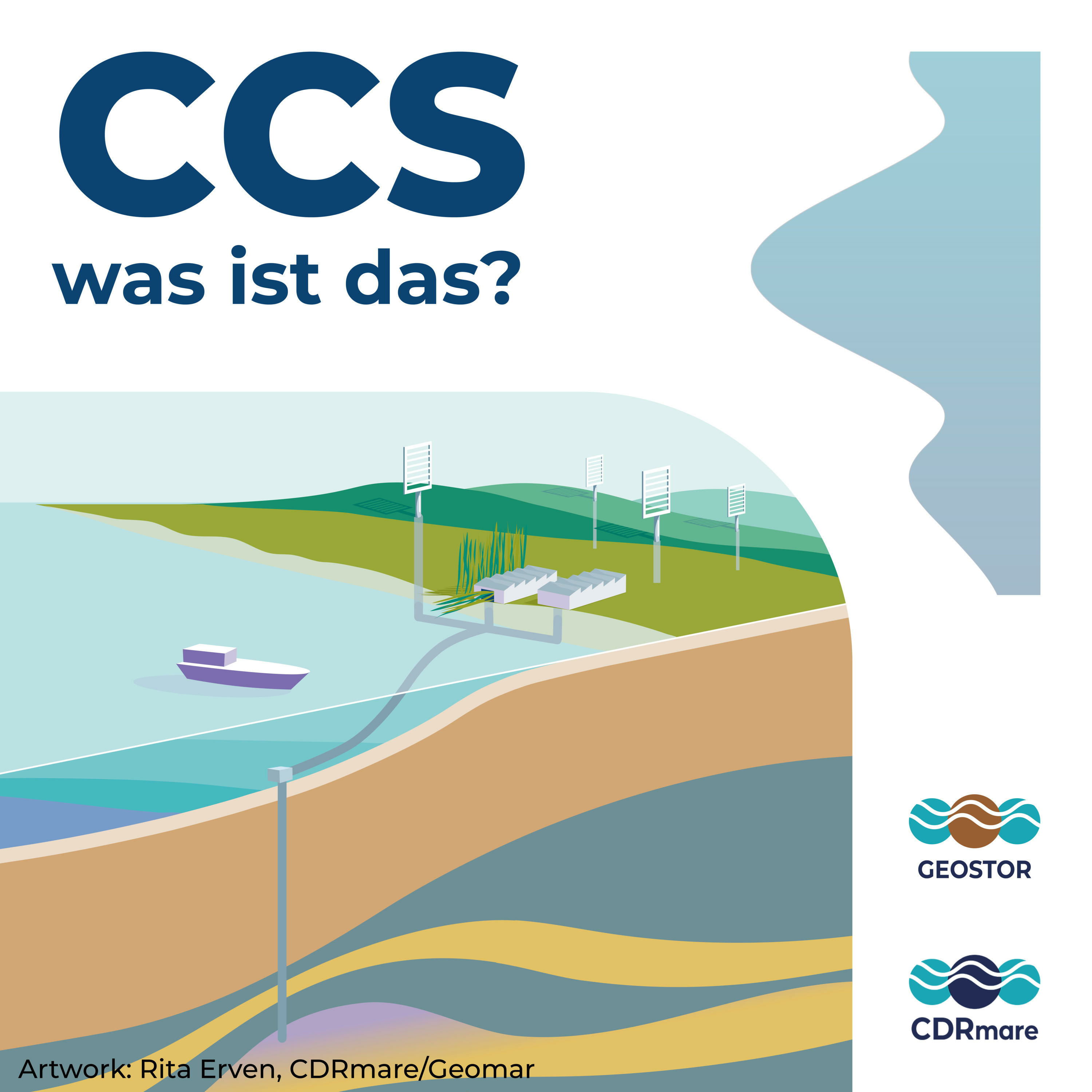
CCS – was ist das? // Folge 11 – Der GEOSTOR Bericht – Zwischenergebnis aus 3 Jahren Forschung

EPISODE · Jul 9, 2025 · 1H 5M

CCS – was ist das? // Folge 11 – Der GEOSTOR Bericht – Zwischenergebnis aus 3 Jahren Forschung

from CCS – was ist das? · host CCS – was ist das?

In dieser Podcastfolge spricht Kristin Hamann mit Prof. Dr. Klaus Wallmann, dem Koordinator des Forschungsverbundes GEOSTOR am GEOMAR Helmholtz-Zentrum für Ozeanforschung Kiel, über die Ergebnisse aus drei Jahren Forschung zur geologischen CO₂-Speicherung unter der deutschen Nordsee. Im Mittelpunkt steht der kürzlich veröffentlichte Zwischenbericht des Verbundes, der zentrale Fragen zur Machbarkeit, zu Risiken und Potenzialen einer CO2-Speicherung unter der deutschen Nordsee beleuchtet. Die beiden diskutieren, wie viel CO₂ tatsächlich unter der Nordsee gespeichert werden könnte, welche geologischen Strukturen dafür geeignet sind und welche rechtlichen, planerischen und ökologischen Herausforderungen es gibt. Außerdem geht es um die Unsicherheiten bei der Abschätzung der Speicherkapazitäten, um absehbare Nutzungskonflikte in der ohnehin stark beanspruchten Nordsee sowie um die Rolle von CCS als Baustein im Klimaschutz. Diese Folge unsere Podcasts ist somit auch der ideale Einstieg für alle, die sich bislang kaum mit dem Thema CO2-Speicherung tief unter dem Meer auseinandergesetzt haben. #CCS, #podcast , #klimaschutz Moderation: Kristin Hamann Gesprächspartner: Prof. Dr. Klaus WallmannProduktion: Ole DuggenTimestamps:01:19 – Welche Rolle spielt die CO₂-Speicherung im nationalen und internationalen Klimaschutz?03:01 – Welche Ziele und Fragestellungen verfolgt das Forschungsprojekt GEOSTOR?03:40 – Welche Themen behandelt der Zwischenbericht von GEOSTOR im Detail?07:13 – Warum wurde die deutsche Nordsee als Untersuchungsgebiet für CO₂-Speicherung ausgewählt?08:19 – Wie wurde die Speicherkapazität unter der deutschen Nordsee wissenschaftlich abgeschätzt?11:39 – Wie belastbar sind die ermittelten Zahlen zur CO₂-Speicherkapazität?13:22 – Welche Gebiete wurden bei der Abschätzung der Speicherkapazität einbezogen oder ausgeschlossen?13:58 – Wie verhält sich das CO₂-Speicherpotenzial zur jährlichen Emission z. B. der Zementindustrie?17:03 – Welche Erkenntnisse liefert die Simulation zur CO₂-Speicherung im Pilotgebiet A?17:19 – Wie wird ein geologisches Modell für CO₂-Speicherung aufgebaut und simuliert?20:35 – Welche Annahmen und Unsicherheiten beeinflussen die Aussagekraft des Modells?23:34 – Reicht das aktuelle Modell aus, um die Sicherheit der CO₂-Speicherung nachzuweisen?24:05 – Welche Chancen und Herausforderungen birgt die geplante Novelle des CO₂-Speichergesetzes?26:23 – Ist in der deutschen Nordsee überhaupt noch Platz für CO₂-Speicherprojekte?28:45 – Wie lassen sich Meeresschutz und CO₂-Speicherung miteinander vereinbaren?29:19 – Welche Umweltrisiken bestehen bei der Offshore-CO₂-Speicherung und wie wurden sie bewertet?36:53 – Wie kann ein Monitoring-Konzept gestaltet werden, das wissenschaftliche und ökologische Anforderungen erfüllt?39:19 – Wie lange muss das Monitoring nach Speicherschließung laufen und wer trägt die Kosten?42:06 – Fördert CCS ein „Weiter so“ mit fossilen Energien und wie lässt sich das verhindern?44:36 – Welche Rolle spielen fossile Unternehmen bei der Umsetzung von CCS?46:19 – Lohnt sich CCS trotz der hohen Kosten im Verhältnis zur Klimawirkung?48:06 – Wird CCS überschätzt und lenkt es von anderen Klimaschutzmaßnahmen ab?52:26 – Braucht Deutschland überhaupt Offshore-CO₂-Speicherung oder gibt es bessere Alternativen?Kontakt-Mailadresse: [email protected]: Songtitel & Künstler: “Astrisx”, von Blue Dot SessionsQuelle: Free Music Archivehttps://creativecommons.org/licenses/by-nc/4.0/

NOW PLAYING

CCS – was ist das? // Folge 11 – Der GEOSTOR Bericht – Zwischenergebnis aus 3 Jahren Forschung

0:00 1:05:52

No transcript for this episode yet

We transcribe on demand. Request one and we'll notify you when it's ready — usually under 10 minutes.

Managing Next Generation Energy Systems Cambridge University Background Stakeholders working with energy systems have to make complex decisions formulated from risk-based assessments about the future. The move towards more renewables in our energy systems complicates matters even further, requiring the development of an integrated power grid and continuous and steady transformation of the UK power system. Network flows must be managed reliably under uncertain demands, uncertain supply, emerging network technologies and possible failures and, further, prices in related markets can be highly volatile. Mathematicians working with engineers and economists, can make significant contributions to address such issues, by helping to develop fit-for-purpose models for next generation energy systems. These interdisciplinary approaches are looking to address a range of associated problems, including modelling, prediction, simulation, control, market and mechanism design and optimisation. This knowledge exchange workshop was part of the four months Res The Data Engineering Show The Firebolt Data Bros The Data Engineering Show is a podcast for data engineering and BI practitioners to go beyond theory. Learn from the biggest influencers in tech about their practical day-to-day data challenges and solutions in a casual and fun setting.SEASON 1 DATA BROSEldad and Boaz Farkash shared the same stuffed toys growing up as well as a big passion for data. After founding Sisense and building it to become a high-growth analytics unicorn, they moved on to their next venture, Firebolt, a leading high-performance cloud data warehouse.SEASON 2 DATA BROSIn season 2 Eldad adopted a brilliant new little brother, and with their shared love for query processing, the connection was immediate. After excelling in his MS, Computer Science degree, Benjamin Wagner joined Firebolt to lead its query processing team and is a rising star in the data space. For inquiries contact [email protected]: https://www.firebolt.io GSMC Classics: Soldiers of the Press GSMC Podcast Network Soldiers of the Press, was a war drama series, that ran from 1942 to 1945. The program, narrated by correspondents from the United Press, Walter Cronkike and Harrison Salisbury, told recent news from action during World War II. GSMC Classics presents some of the greatest classic radio broadcasts, classic novels, dramas, comedies, mysteries, and theatrical presentations from a bygone era. The GSMC Classics collection is the embodiment of the best of the golden age of radio. Let Golden State Media Concepts take you on a ride through the classic age of radio, with this compiled collection of episodes from a wide variety of old programs. ***PLEASE NOTE*** GSMC Podcast Network presents these shows as historical content and have brought them to you unedited. Remember that times have changed and some shows might not reflect the standards of today’s politically correct society. The shows do not necessarily reflect the views, standards, or beliefs of Golden State Media Concepts or the GSMC Classics: Stars over Hollywood GSMC Podcast Network Stars over Hollywood was a variety radio show that ran from 1941 to 1954, on CBS. The show featured stories of drama and romance with some comedy in them and starred big stars such as Alan Ladd, Joan Crawford, Mary Astor, Phil Harris, and Basil Rathbone. GSMC Classics presents some of the greatest classic radio broadcasts, classic novels, dramas, comedies, mysteries, and theatrical presentations from a bygone era. The GSMC Classics collection is the embodiment of the best of the golden age of radio. Let Golden State Media Concepts take you on a ride through the classic age of radio, with this compiled collection of episodes from a wide variety of old programs. ***PLEASE NOTE*** GSMC Podcast Network presents these shows as historical content and have brought them to you unedited. Remember that times have changed and some shows might not reflect the standards of today’s politically correct society. The shows do not necessarily reflect the views, standards, or beliefs of Golden State
URL copied to clipboard!