
EPISODE · May 25, 2026 · 19 MIN
Fiduciary Duties In Selecting Designated Investment Alternatives
from Cultural Commentary Project · host AlterEcoArtist
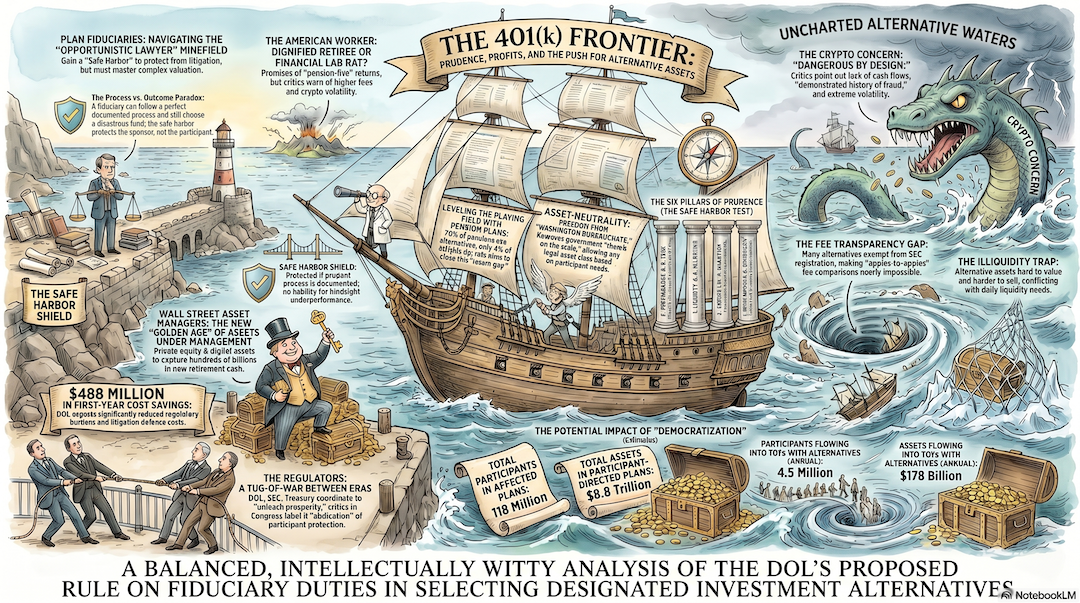
Fiduciary Duties in Selecting Designated Investment Alternatives https://www.regulations.gov/document/EBSA-2026-0166-0001 Comment Deadline June 1, 2026 The Cultural Commentary Project taps into a powerful, often underused tool: the public comment system. Every time laws are proposed, public comments are required to be considered—this is your chance to make your voice count. Whether it’s about local transit or national policy, your thoughts matter. By submitting your art as a comment, you can help drive change and bring a fresh perspective to the table. https://www.siembieda.com/cultural-commentary-project The proposed regulation, "Fiduciary Duties in Selecting Designated Investment Alternatives," while designed to give fiduciaries more confidence in offering alternative assets, has raised significant concerns regarding participant risk, fee transparency, and the potential for a fundamental transfer of financial liability from plan managers to workers. Public and Stakeholder Concerns Critics and observers have highlighted several areas where the rule may negatively impact retirement savers: Shift of Risk from Fiduciaries to Participants: A primary concern is that the process-based safe harbor protects the decision-making process of fiduciaries rather than the financial outcomes for participants. Under this framework, if a fiduciary follows a well-documented process using the rule's six factors, they may be shielded from legal liability even if the chosen investment suffers severe losses or becomes illiquid. This is viewed by some as a "fiduciary trap" where administrative paperwork protects sponsors while workers bear the full weight of investment failure. High and Complex Fees: Alternative assets like private equity and hedge funds typically carry much higher and more sophisticated fee structures than traditional index funds, including performance-based fees and "carried interest." There are concerns that these layered fees can significantly erode long-term savings, and the proposed rule does not require fiduciaries to select the lowest-cost option. Opacity and Fee Transparency Gaps: A major criticism involves the use of Collective Investment Trusts (CITs) as vehicles for these assets. Because CITs are not registered with the SEC, they are not subject to the same standardized fee disclosure requirements as mutual funds, making it difficult for fiduciaries and participants to conduct "apples-to-apples" cost comparisons. Liquidity and Valuation Risks: Alternative assets are often illiquid and difficult to value accurately on a daily basis. Critics worry that participants who need immediate access to their funds—for loans, hardship withdrawals, or job changes—may face redemption delays or be forced to sell at "stale" or inflated valuations that do not reflect true market reality. Volatility of Speculative Assets: The rule's asset-neutral stance effectively reverses prior cautionary guidance on digital assets like cryptocurrency. Opponents argue that allowing highly volatile assets with no meaningful track record or cash flows into retirement accounts is "dangerous by design" and threatens the financial security of working families. Potential for Market Overcrowding: Some analysts warn that a massive influx of 401(k) capital into private markets could lead to increased competition for top-tier managers and higher fees, potentially diluting the very "risk premium" these investments are supposed to provide. Quantified and Economic Costs The Department of Labor's Regulatory Impact Analysis (RIA) identifies several direct and indirect costs associated with the rule: Monetized Compliance Costs: Rule Review: The DOL estimates a one-time cost of $103.9 million in the first year for plans and service providers to review and understand the new regulation. Documentation: Providing additional documentation from independent fiduciaries to named fiduciaries is expected to cost approximately $1.1 million annually. Unquantified and Transfer Costs: Higher Investment Fees: While not a direct regulatory cost to the plan sponsor, the increased use of alternative assets will result in higher management and performance fees paid by participants to investment companies. Market Transfers: The rule is expected to cause a transfer of revenue from financial institutions that sponsor traditional stocks and bonds to those that sponsor alternative investments, such as private equity firms and hedge funds. Potential Losses: There is an inherent risk that if the rule results in significant flows into alternative assets that then underperform, it could negate efforts to improve retirement security. Conversely, the DOL expects these costs to be offset by significant cost savings from reduced litigation risk, estimating a reduction of $592.8 million annually in time spent by investment committees researching and discussing the legal landscape.
What this episode covers
Fiduciary Duties in Selecting Designated Investment Alternatives https://www.regulations.gov/document/EBSA-2026-0166-0001 Comment Deadline June 1, 2026 The Cultural Commentary Project taps into a powerful, often underused tool: the public comment system. Every time laws are proposed, public comments are required to be considered—this is your chance to make your voice count. Whether it’s about local transit or national policy, your thoughts matter. By submitting your art as a comment, you can help drive change and bring a fresh perspective to the table. https://www.siembieda.com/cultural-commentary-project The proposed regulation, "Fiduciary Duties in Selecting Designated Investment Alternatives," while designed to give fiduciaries more confidence in offering alternative assets, has raised significant concerns regarding participant risk, fee transparency, and the potential for a fundamental transfer of financial liability from plan managers to workers. Public and Stakeholder Concerns Critics and observers have highlighted several areas where the rule may negatively impact retirement savers: Shift of Risk from Fiduciaries to Participants: A primary concern is that the process-based safe harbor protects the decision-making process of fiduciaries rather than the financial outcomes for participants. Under this framework, if a fiduciary follows a well-documented process using the rule's six factors, they may be shielded from legal liability even if the chosen investment suffers severe losses or becomes illiquid. This is viewed by some as a "fiduciary trap" where administrative paperwork protects sponsors while workers bear the full weight of investment failure. High and Complex Fees: Alternative assets like private equity and hedge funds typically carry much higher and more sophisticated fee structures than traditional index funds, including performance-based fees and "carried interest." There are concerns that these layered fees can significantly erode long-term savings, and the proposed rule does not require fiduciaries to select the lowest-cost option. Opacity and Fee Transparency Gaps: A major criticism involves the use of Collective Investment Trusts (CITs) as vehicles for these assets. Because CITs are not registered with the SEC, they are not subject to the same standardized fee disclosure requirements as mutual funds, making it difficult for fiduciaries and participants to conduct "apples-to-apples" cost comparisons. Liquidity and Valuation Risks: Alternative assets are often illiquid and difficult to value accurately on a daily basis. Critics worry that participants who need immediate access to their funds—for loans, hardship withdrawals, or job changes—may face redemption delays or be forced to sell at "stale" or inflated valuations that do not reflect true market reality. Volatility of Speculative Assets: The rule's asset-neutral stance effectively reverses prior cautionary guidance on digital assets like cryptocurrency. Opponents argue that allowing highly volatile assets with no meaningful track record or cash flows into retirement accounts is "dangerous by design" and threatens the financial security of working families. Potential for Market Overcrowding: Some analysts warn that a massive influx of 401(k) capital into private markets could lead to increased competition for top-tier managers and higher fees, potentially diluting the very "risk premium" these investments are supposed to provide. Quantified and Economic Costs The Department of Labor's Regulatory Impact Analysis (RIA) identifies several direct and indirect costs associated with the rule: Monetized Compliance Costs: Rule Review: The DOL estimates a one-time cost of $103.9 million in the first year for plans and service providers to review and understand the new regulation. Documentation: Providing additional documentation from independent fiduciaries to named fiduciaries is expected to cost approximately $1.1 million annually. Unquant
NOW PLAYING
Fiduciary Duties In Selecting Designated Investment Alternatives
No transcript for this episode yet
Similar Episodes
No similar episodes found.