
EPISODE · Aug 14, 2025 · 56 MIN
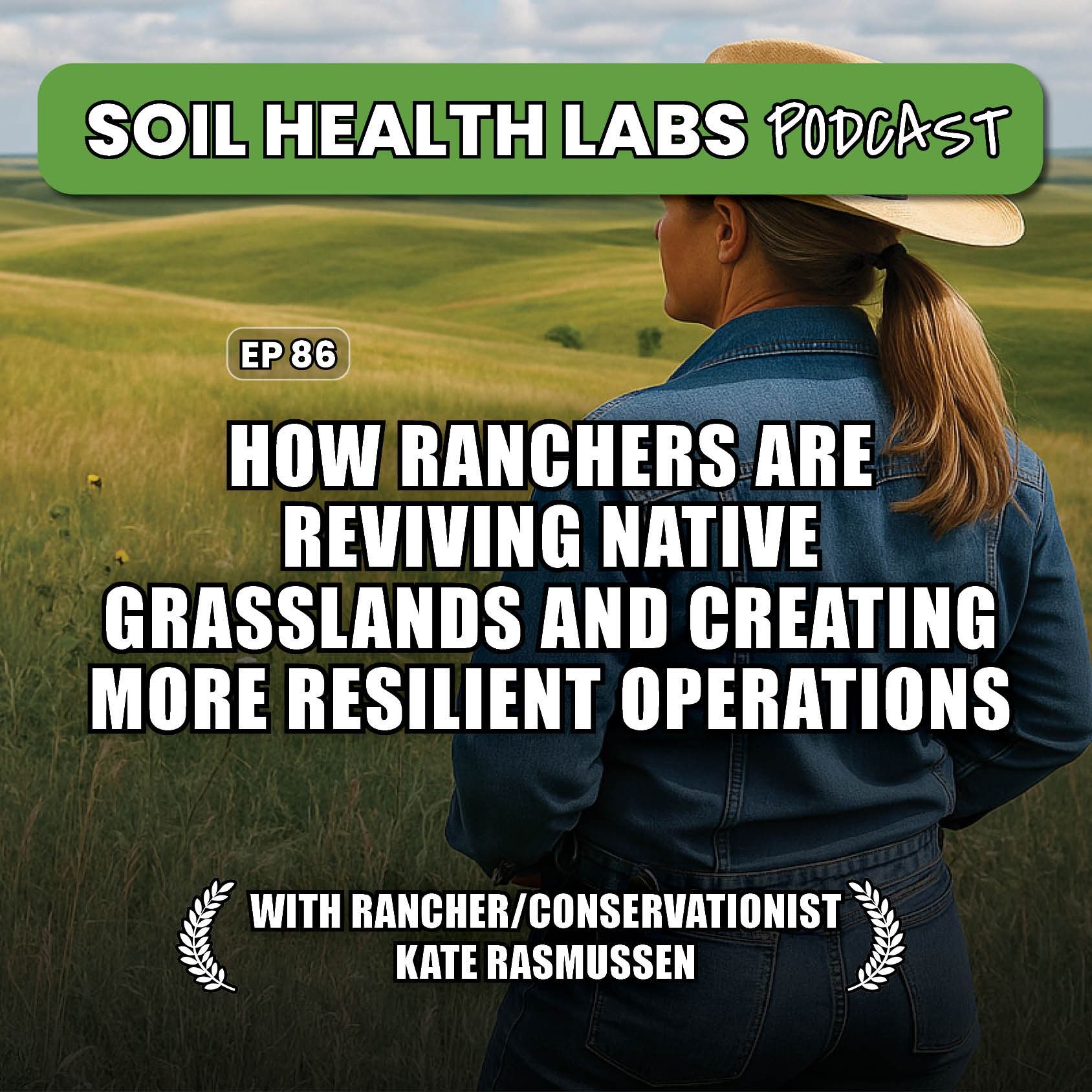
How Ranchers are Reviving Native Grasslands and Creating More Resilient Operations
from Soil Health Labs · host Soil Health Labs
🧲 Quotable Quotes “When people don't understand much about the prairie, it just kind of looks like this monolith… just one FLAT thing. But really, it's like an old growth forest — full of life.” - Kate Rasmussen“Once you learn about it, your brain can look for it — and it completely changes how you see your place.” - Kate Rasmussen👩🌾 Meet Our GuestKate Rasmussen grew up ranching in the South Dakota Badlands on her family's cattle operation. Today, she's a Grasslands Conservationist with the World Wildlife Fund (WWF) based out of Spearfish, SD. Drawing from deep personal experience, Kate bridges the worlds of wildlife conservation and sustainable ranching across South Dakota, Montana, Nebraska, and Wyoming.🌾 Episode Highlights🐄 Reconciling Ranching and ConservationKate speaks candidly about the lingering perception that livestock and conservation are at odds.Through WWF’s Sustainable Ranching Initiative, she’s helping producers see how managing for wildlife and profit can go hand in hand.Her team works at the intersection of grazing management, prairie restoration, and community resilience.💡 Program Spotlight: WWF’s Sustainable Ranching InitiativeKate outlines two core programs:Grassland Reseeding Program: Funds and supports native reseeding efforts with technical guidance.RSVP (Ranch Systems and Viability Planning): Offers infrastructure cost-share, education stipends, ecological monitoring, and peer networking.📍 Geography MattersTheir focus area includes:Western South DakotaEastern MontanaNebraska SandhillsNortheast Wyoming🧠 Insights & Advice for LandownersStart where you are: Kate encourages a judgment-free, continuum-based approach to grazing changes — from season-long grazing to adaptive strategies.Peer learning is key: Real change happens when ranchers talk to ranchers, not from prescriptive outside voices.Pain points drive change: Crisis often catalyzes innovation, but support networks make the transition manageable.🌱 Reseeding: Hope and Hard TruthsReseeding is slow, uncertain, and resource-intensive.Projects like those with the Lower Brule Sioux Tribe show it can work with good prep and patience.Kate urges understanding of succession — that weeds and forbs are part of nature’s recovery plan.Seedbanks may hold surprises — prairie species can emerge decades later!🔬 Monitoring & CarbonWWF gathers soil and vegetation data (including organic matter), but does not run a carbon offset program to avoid restricting producers’ future opportunities.🤝 Ecology Meets EconomyKate sees sustainable ranching as a circular model — one that supports community, wildlife, and good food production.She’s passionate about facilitating relationships between ranchers, organizations, and conservation partners.🐦 Closing ReflectionsGet curious: Kate encourages landowners to explore what’s already living on their land.Tools like Merlin Bird ID make learning easy — and fun for kids too!Discovering wildlife shifts your perception of place and makes change exciting.🔗 Mentioned in This EpisodeSouth Dakota Grassland Coalition – Mentor NetworkSouth Dakota Grassland InitiativeLaura Kahler’s Podcast EpisodeMerlin Bird ID app – Free download for bird identification🙌 Thank You, Kate!From prairie reseeding to sheep shearing to rolling up sleeves in Spearfish, Kate Rasmussen reminds us that conservation begins with community and that we all have a role to play — no matter where we are on the journey.
NOW PLAYING
How Ranchers are Reviving Native Grasslands and Creating More Resilient Operations
No transcript for this episode yet
Similar Episodes
Mar 19, 2026 ·34m
Feb 18, 2026 ·11m
Feb 11, 2026 ·45m
Nov 12, 2025 ·35m
Oct 17, 2025 ·40m