
EPISODE · Sep 30, 2021 · 11 MIN
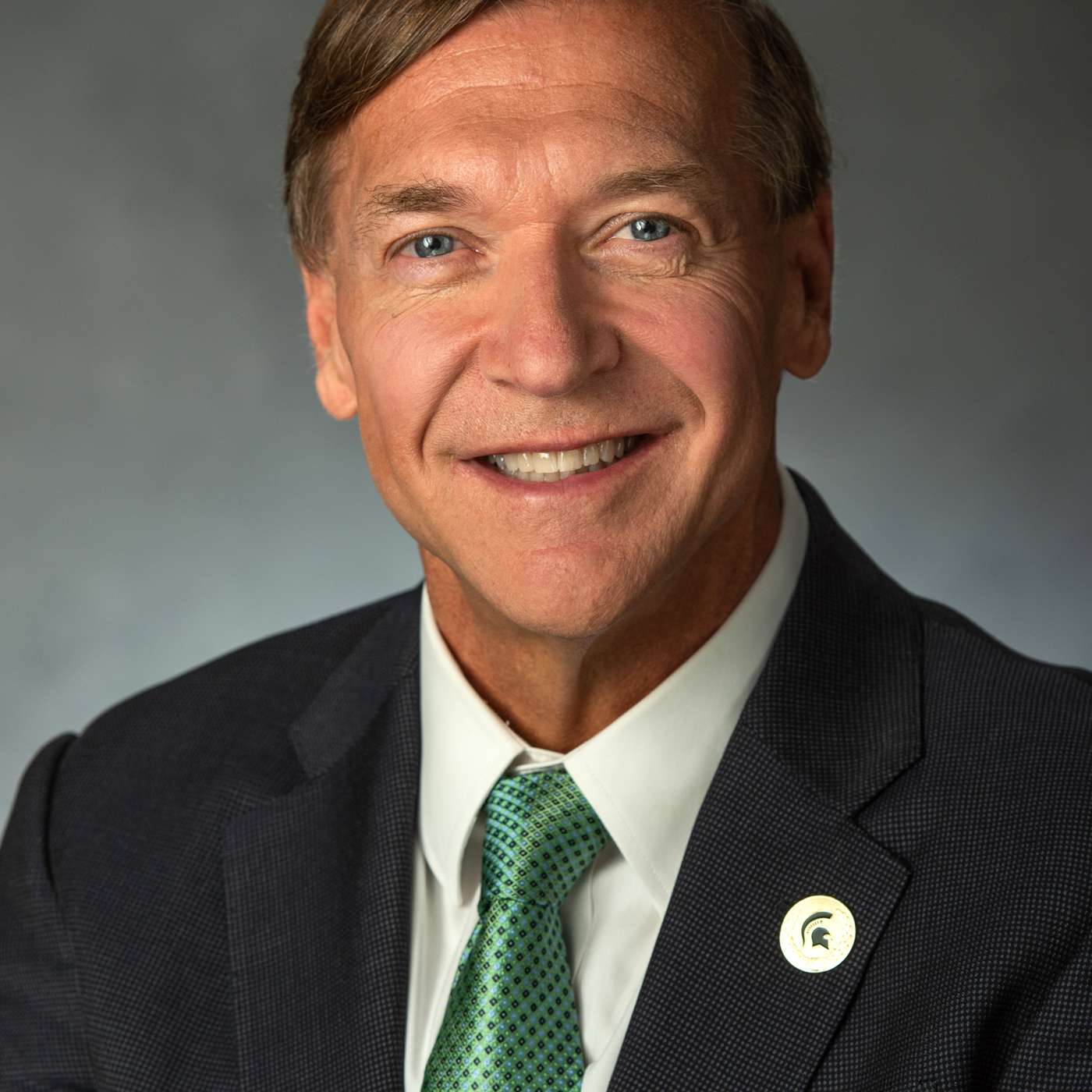
Michigan State University President Stanley’s September 30, 2021 Letter to the MSU Community
from MSU Today with Russ White · host Russ White
Samuel L. Stanley Jr., M.D.:Russ, it's always great to be with you. As you say, it's a beautiful day right now in East Lansing, so wonderful we could spend it with everybody outside. That's great.Russ White:Homecoming week, sir, just a great time really once a year at a minimum for Spartans to reflect on how important this place was to them and continues to be, right?Samuel L. Stanley Jr., M.D.:Yeah, Homecoming's a great description for it, isn't it? It's a chance for people to come to their Spartan home. I missed the last two. Rained out my first year and then the pandemic struck the second. So it's wonderful for me to be able to experience this for the first time. And I'm looking forward to the parade and all the wonderful things that are going to happen. Of course, our Homecoming champion, Barbara Ross-Lee, the famous member of the Spartan community who was the first Black woman to be a dean of a medical school. So, it's a great distinction to bring her back and it ties in so much for the sense of community and respect we have at MSU.Russ White:And one of the things that makes MSU great is the many academic programs. There are a lot of rankings that come up. How important are those ranking to you? They're indicative I'm sure, but never tell the whole story, right?Samuel L. Stanley Jr., M.D.:I think you summarized it really well. They do matter. I would never say they don't matter because there are people who pay attention to them, and they are kind of an external benchmark of how you're doing compared to peers. On the other hand, it's very complex. You can go up and down for reasons that may not have completely to do with mission. So, I don't take them quite so serious, but I do think they matter. And they certainly matter to some students and parents I think who are very interested as well. So, it's a great achievement, I think. I look at our supply chain program and what they've done year after year to rank at the top is spectacular. I look at some of our other programs. Packaging continues to do very well. Our work in music continues to be a strong department. All across the board really we have strength, but it's nice when these programs get called out. And the Times is a stringent ranking and so to be number 35 among universities in the U.S. is a big deal.Russ White:A couple of ways to highlight our collaborative ethos at MSU is the partnership with Henry Ford Health System. As that evolves, what should we know right now about that?Samuel L. Stanley Jr., M.D.:It continues to evolve towards closer collaboration. And we're finding many different ways to partner. They're such a powerful health system. Their reach is wide, their numbers are large, and they deliver quality care and quality research. So they have a research endeavor in human health that approximates ours. So together, coming together, we're finding so many different ways we can work together to improve health. And that improves right at the delivery of health to work on understanding disparities better, to work on more remote things such as diet and nutrition which are critical to human health, but which we don't always think about when we're thinking about healthcare.Russ White:And MSU has many partners in the automotive industry. We're working with Ford on some composite materials that are lighter and sustainably-based, Dr. Larry Drzal and his team. Our mobility future was highlighted too by our University Research Corridor collaboration with Wayne State and Michigan but talk a little bit about mobility and where it's going and how MSU research is fitting into our mobility future.Samuel L. Stanley Jr., M.D.:So, Michigan of course has always been the home of mobility and in the United States and really must lead the way. And so I think we're looking for ways to continue that leadership. And I think we have a number of allies in trying to do that. So, as you said, we have about 50 researchers at MSU who are studying mobility. We've done work to turn this campus into a course where one can study autonomous vehicles and learn more about how to make them safe, efficient, and effective. And I think these are things that really help keep us in the lead. So, I met with the Business Leaders of Michigan a couple weeks ago and this was top on their list was ways we could collaborate. I heard Bill Ford talk about what he sees as the future of Ford and mobility obviously is very much a part of that.Russ White:And President Stanley, what about that beautiful STEM Teaching and Learning Facility you helped open a couple of weeks ago? Talk about the building, but also what's going to go on inside of it.Samuel L. Stanley Jr., M.D.:It's a showcase for teaching STEM in the United States. And it makes total sense with our outstanding Natural Sciences group, our Engineering group, and our College of Education. We're well-positioned to lead in this area. And that building, that's a flagship building. And again, I think one of the participants in the dedication said, ‘This is the best teaching science facility in the world.’ And I'm not going to argue with them. I think it's amazing. And the way it was built from the old power plant and incorporates some of the historical components of that, it looks towards the future and makes it all the more exciting for our students. So, this is a place where our students are going to be able to come together. They're going to be able to learn science, technology, engineering, and mathematics and do it with hands on experience that can't be replicated in other places. So, I couldn't be more excited about it. And of course it's an amazing building, but the people we're going to put in it are pretty amazing as well.Russ White:I think it was Senator Stabenow who so aptly described the building that way, sir. And if you add an A for arts to STEM and make STEAM, we're opening the Billman Music Pavilion, another really wonderful facility. And again, our generous donors play such a big role in that too.Samuel L. Stanley Jr., M.D.:That's so exciting and those listening carefully to this broadcast may be able to hear a little from the Billman because I think they're practicing right next door to us right now. And it's wonderful. It's one of the benefits of being in Cowles House is we get to hear them. But donors really made this happen. There was a significant contribution from the university as well, but really donors brought this program to completion. And if you haven't seen it, you have to tour the Billman Pavilion. It added about 40 percent of space to the music building, but that space is transformational space with the kind of studios, soundproofing and so on to really allow us to teach music to a great group of students in the best way possible. I'm so excited about it. Jim forger has done an incredible job of shepherdi...
NOW PLAYING
Michigan State University President Stanley’s September 30, 2021 Letter to the MSU Community
No transcript for this episode yet
Similar Episodes
No similar episodes found.