
EPISODE · Feb 21, 2026 · 40 MIN
Micro 35: Chlamydia
from Clinical Deep Dives · host Dr Manaan Kar Ray
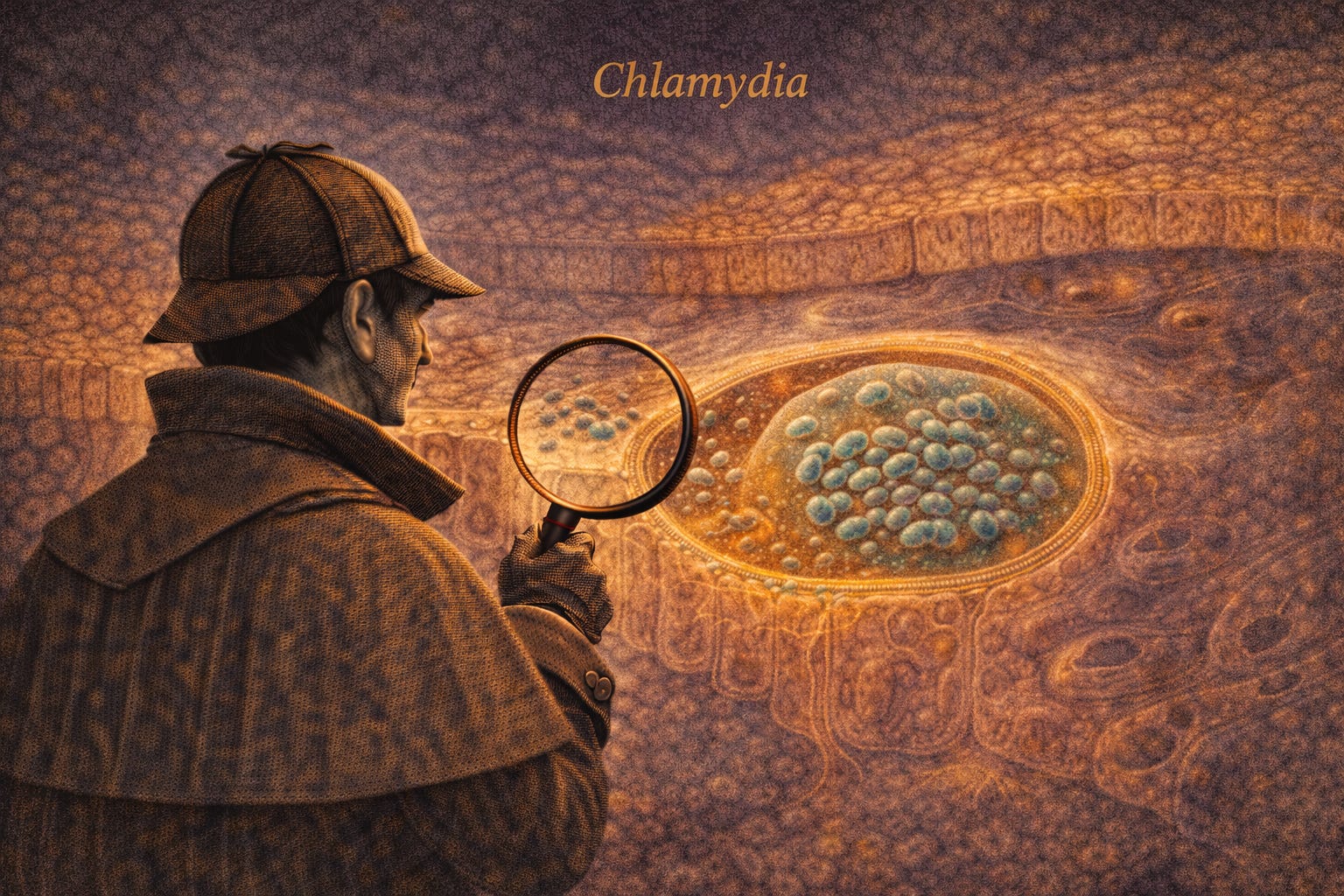
This episode explores Chlamydia, obligate intracellular bacteria distinguished by a unique biphasic developmental cycle. Drawing from Murray’s Chapter 35, it focuses on how structural simplicity and intracellular dependence shape both diagnosis and disease.The narrative centres on Chlamydia trachomatis, which alternates between an infectious elementary body and a replicative reticulate body within host cells. This transformation allows efficient transmission and protected intracellular growth.Clinical syndromes are organised by serovar:* Urogenital infection and pelvic inflammatory disease* Neonatal conjunctivitis and pneumonia* Trachoma as a leading cause of preventable blindness* Lymphogranuloma venereum as invasive diseaseThe episode also introduces Chlamydophila pneumoniae and Chlamydophila psittaci, linking respiratory disease to person-to-person or zoonotic exposure.Conceptually, Chlamydia illustrates replication through transformation rather than binary fission alone. Clinically, it reinforces the importance of nucleic acid amplification testing, as culture is impractical.Persistent inflammation - rather than acute destruction - often defines long-term complications.Key Takeaways* Chlamydia are obligate intracellular bacteria* They possess a biphasic developmental cycle* Urogenital infection is frequently asymptomatic* Chronic inflammation leads to reproductive complications* Diagnosis relies on molecular methods This is a public episode. If you'd like to discuss this with other subscribers or get access to bonus episodes, visit drmanaankarray.substack.com/subscribe
NOW PLAYING
Micro 35: Chlamydia
No transcript for this episode yet
Similar Episodes
No similar episodes found.