
EPISODE · Feb 24, 2026 · 46 MIN
Micro 49: Orthomyxoviruses
from Clinical Deep Dives · host Dr Manaan Kar Ray
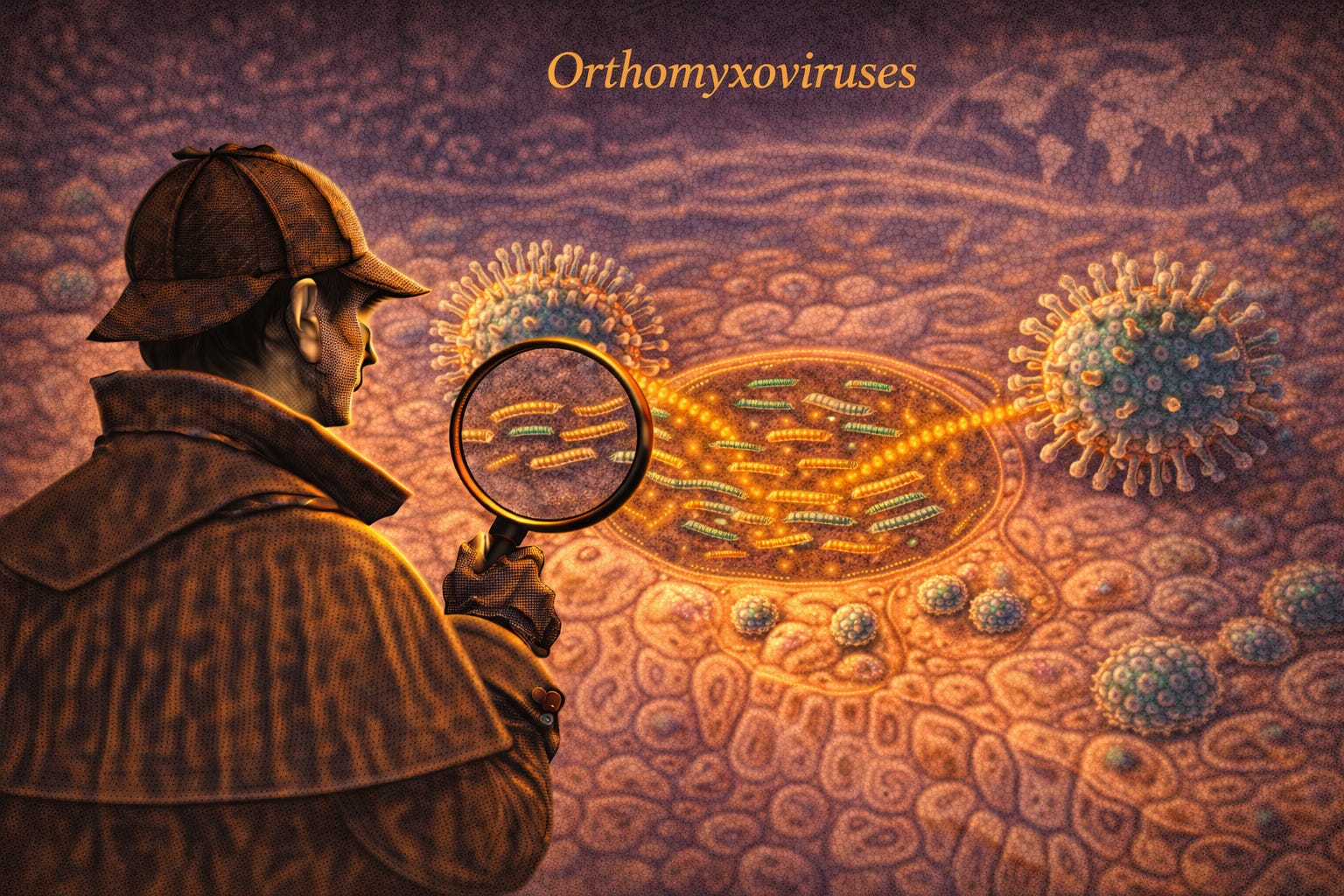
This episode explores the orthomyxoviruses, the viral family that includes influenza viruses. Drawing from Murray’s Chapter 49, it examines how genome segmentation enables evolutionary change and periodic global outbreaks.Orthomyxoviruses are enveloped negative-sense single-stranded RNA viruses with segmented genomes. This segmentation permits reassortment when multiple strains infect the same host cell - the molecular basis of antigenic shift.Two key mechanisms define influenza evolution:* Antigenic drift - gradual mutation of surface glycoproteins* Antigenic shift - abrupt reassortment leading to novel strainsThe surface proteins haemagglutinin (HA) and neuraminidase (NA) determine viral entry and release. Host range is influenced by receptor specificity and species transmission patterns.Clinically, influenza ranges from self-limited respiratory illness to severe pneumonia and systemic inflammatory complications. Annual vaccination reflects the dynamic nature of antigenic drift.Conceptually, orthomyxoviruses demonstrate that genomic architecture shapes epidemiology. Segmentation equals adaptability.Key Takeaways* Orthomyxoviruses are segmented negative-sense RNA viruses* Antigenic drift results from gradual mutation* Antigenic shift results from reassortment* HA and NA are key surface glycoproteins* Vaccination must adapt to viral evolution This is a public episode. If you'd like to discuss this with other subscribers or get access to bonus episodes, visit drmanaankarray.substack.com/subscribe
NOW PLAYING
Micro 49: Orthomyxoviruses
No transcript for this episode yet
Similar Episodes
No similar episodes found.