
EPISODE · Mar 4, 2026 · 38 MIN
Micro 76: Cestodes
from Clinical Deep Dives · host Dr Manaan Kar Ray
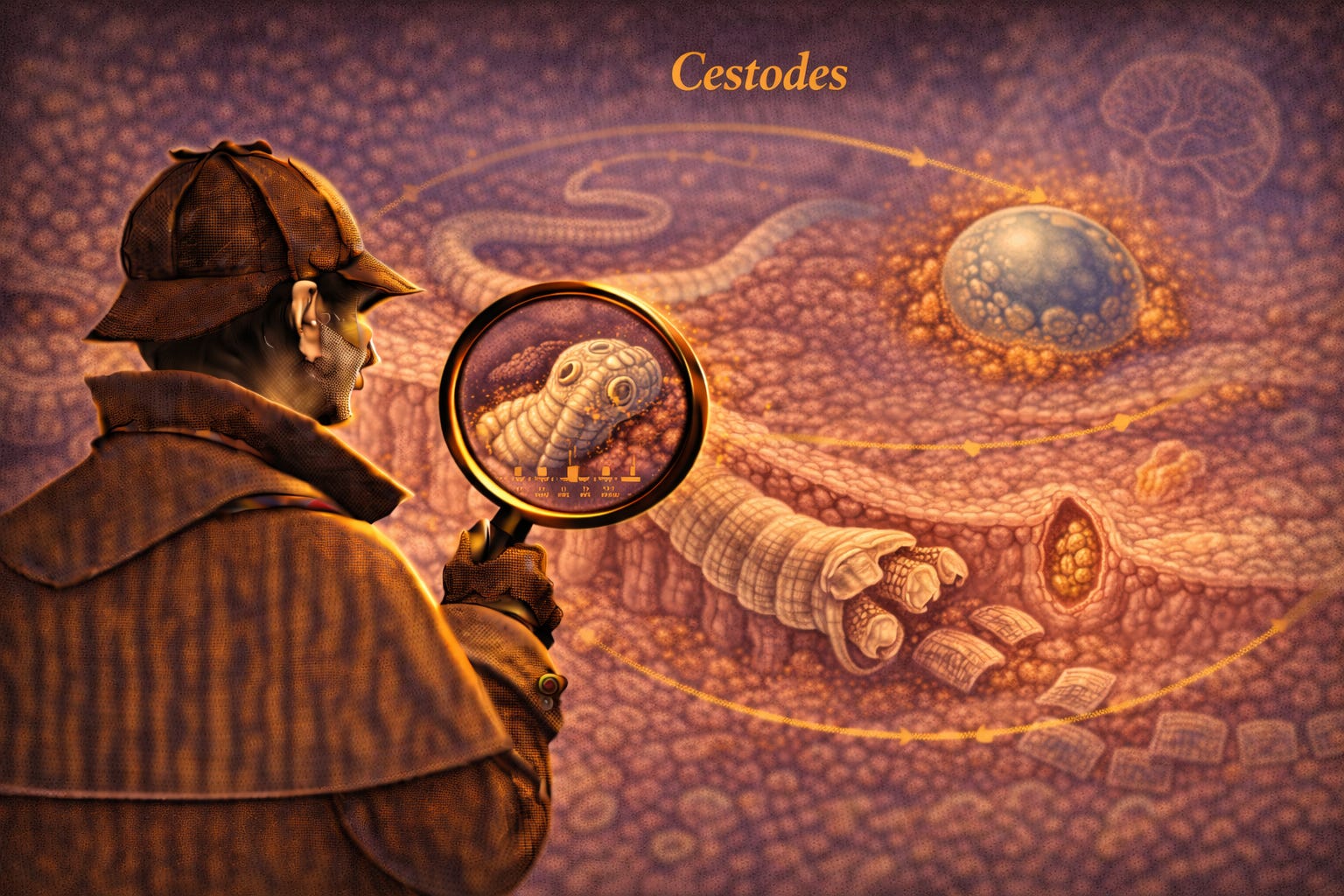
This episode examines cestodes, or tapeworms - segmented flatworms characterised by a scolex for attachment and chains of proglottids. Drawing from Murray’s Chapter 76, it explores both intestinal colonisation and tissue-invasive larval disease.Cestodes consist of:* Scolex - head with hooks or suckers* Proglottids - reproductive segments* Eggs and larvae - capable of tissue invasionTwo major disease patterns emerge:* Intestinal tapeworm infection (e.g., Taenia saginata) - often mild, sometimes asymptomatic* Tissue cystic disease (e.g., Taenia solium cysticercosis, Echinococcus hydatid disease) - larval cysts in brain, liver, or lungsIn tissue infections, pathology results from space-occupying cysts and inflammatory responses upon rupture.Conceptually, cestodes illustrate dual-phase disease - luminal adulthood and tissue larval pathology. Clinically, dietary exposure and animal contact are key epidemiologic factors.Key Takeaways* Cestodes are segmented flatworms* Scolex enables intestinal attachment* Larval forms can invade tissue* Cysticercosis and hydatid disease cause space-occupying lesions* Prevention involves food safety and animal control This is a public episode. If you'd like to discuss this with other subscribers or get access to bonus episodes, visit drmanaankarray.substack.com/subscribe
NOW PLAYING
Micro 76: Cestodes
No transcript for this episode yet
Similar Episodes
No similar episodes found.