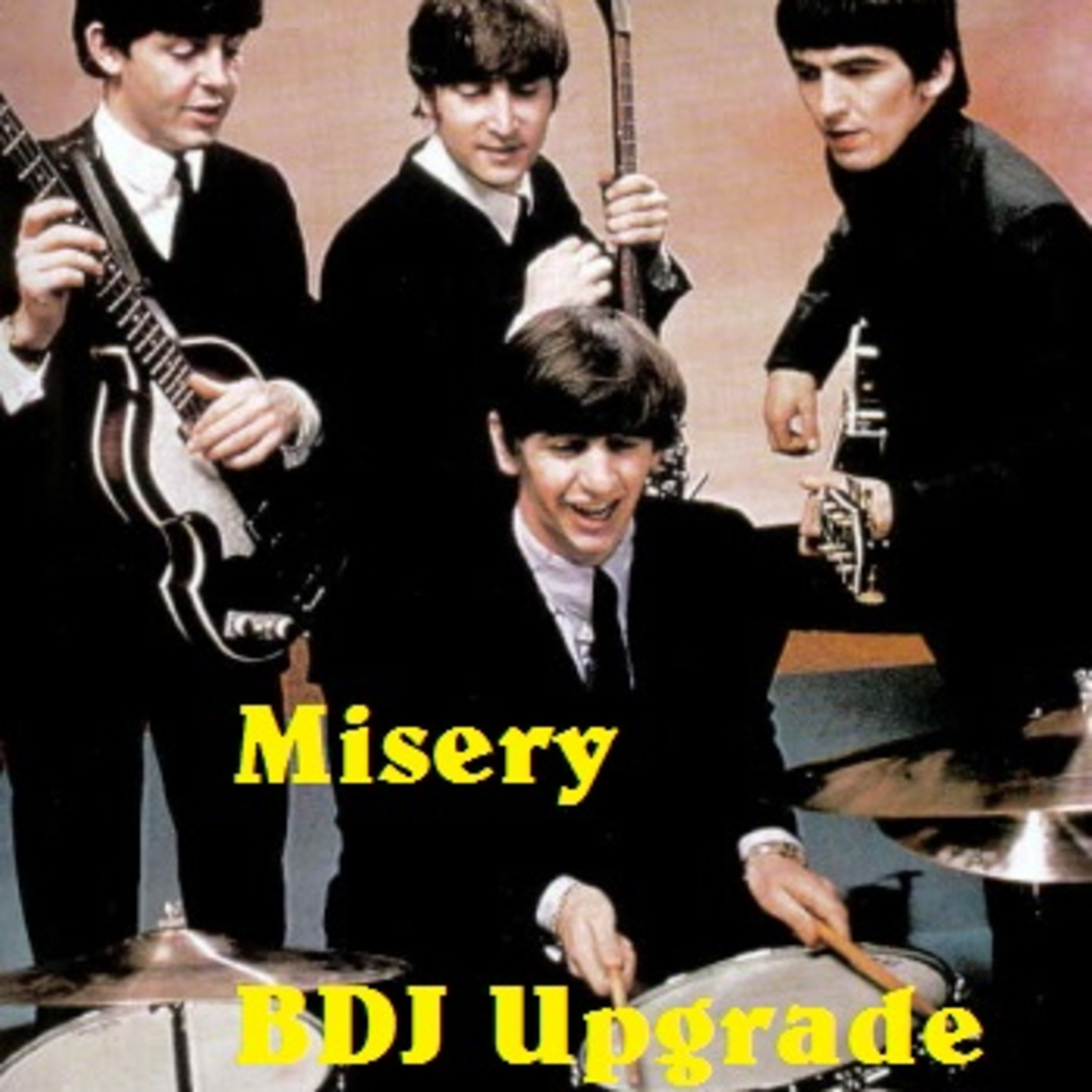
Misery (BDJ Upgrade)

EPISODE · Dec 31, 2013 · 1 MIN

Misery (BDJ Upgrade)

from BDJ's Cellar Full of Remixes · host BDJ

"Misery" was written for Helen Shapiro on 26 January 1963, and later completed at Paul McCartney's Forthlin Road home.This is the official version of things, but wouldn't it be problematic for Helen Shapiro to sing "I'm the kind of guy who never used to cry"? For this reason or another, Shapiro didn't use it and British singer and entertainer Kenny Lynch recorded it instead, thus becoming the first artist to cover a Lennon–McCartney composition. He had only a minor hit with it, though. Kenny Lynch's version of the song put a soulful spin on the pop song, which caused a little dissension from Lennon, mostly because of his utilizing the skills of British session guitarist Bert Weedon. The original first line of the song, as sung by Kenny Lynch, was “You’ve been treating me bad”, whereas, during the Beatles’ recording of the song, the line was changed to “The world is treating me bad.”The Beatles recorded "Misery" on 11 February 1963 in 11 takes, the last take being used for the commercial release. For this upgrade, we used take 1 and take 7.“Take One” of the song was complete and performed with great vocal enthusiasm. Ringo even puts in a little drum fill after the second verse which he dropped later. Already in place was the ending with John and Paul’s alternating “ooohs” and “la-la-las,” although they sounded fresher and more vibrant this first time around. The only fault in this take was George Harrison’s rhythmic guitar run in the bridges of the song, which weren’t in time.Takes 2-5 were incomplete. Take 6 was complete but not used; George added guitar fills at the end of the verses, that George Martin probably didn't like. These fills were omitted in Take 7. Interestingly, George Harrison managed to play all kinds of fills when thy played Misery on various BBC sessions! Note also, Kenny Lynch's version has these guitar fills! And he has a - piano - solo too.It is remarkable that the lyrics still changed during the recording session, since there is a change in the last verse somewhere between takes 1 and 7, the takes we used for this upgrade: in the second bridge. “Can’t she see she’ll always be the only one, only one” is replaced with “She’ll remember and she’ll miss her only one, lonely one”. Usually in Beatles songs, as well as the established song structure of the day, the bridge is identical when repeated. And Kenny Lynch's version has "Please come back to me" instead of 'Send her back to me".Slight change in the outro too, where John sings Ooom instead of Oooh.George Martin added piano to take 11 on February 20th, ending up with take 16. Thi is how it featured on the LP Please Please Me, and on the EP "The Beatles (No 1)", first issued 1 November 1963.Takes 1 and 7 are otherwise very similar, so perfect material for this true stereo upgrade. See if you (too) like it better than the official release!

NOW PLAYING

Misery (BDJ Upgrade)

0:00 1:45

No transcript for this episode yet

We transcribe on demand. Request one and we'll notify you when it's ready — usually under 10 minutes.

Photo Breakdown Scott Wyden Kivowitz Photo Breakdown is a podcast in which we explore the world of photography with a trusted guide, host Scott Wyden Kivowitz. His expertise and passion bring the industry to life as we explore the stories, trends, and ideas shaping it today. Join us as we dissect everything from incredible photographs and creative techniques to the latest gear releases and hot topics in the photography community.In each episode, we break down what’s happening behind the scenes - whether it’s making a powerful image, a candid discussion on industry trends, or a reflection on the tools and technology changing how we make photographs. You’ll get insights, expert opinions, and a fresh perspective on what’s top of mind for photographers right now.Anticipate short, engaging episodes brimming with ideas and inspiration. Be part of the conversation by sharing your thoughts, voice notes, and comments. Your participation is what makes our community vibrant and dynamic.It’s more than just photography - everyth The Last Outlaws Impact Studios at UTS In a History Lab season like no other, we're pulling on the threads of one of Australia's great misunderstood histories, moving beyond the myths to learn what the Aboriginal brothers Jimmy and Joe Governor faced in both life and death.Australia's budding Federation is the background setting to this remarkable story, that sees the Governor brothers tied to the inauguration of a 'new' nation and Australia's dark history of frontier violence, racial injustice and the global trade and defilement of Aboriginal ancestral remains. This Impact Studios production is a collaboration with the Governor family, UTS Faculty of Law and Jumbunna Institute for Indigenous Education and Research.The Last Outlaws teamKatherine Biber - UTS Law Professor and Chief InvestigatorAunty Loretta Parsley - Great-granddaughter of Jimmy Governor and the Governor Family Historian Leroy Parsons - Governor descendant, Narrator and Co-WriterKaitlyn Sawrey - Host, Writer and Senior ProducerFrank Lopez - Writer, Managing Next Generation Energy Systems Cambridge University Background Stakeholders working with energy systems have to make complex decisions formulated from risk-based assessments about the future. The move towards more renewables in our energy systems complicates matters even further, requiring the development of an integrated power grid and continuous and steady transformation of the UK power system. Network flows must be managed reliably under uncertain demands, uncertain supply, emerging network technologies and possible failures and, further, prices in related markets can be highly volatile. Mathematicians working with engineers and economists, can make significant contributions to address such issues, by helping to develop fit-for-purpose models for next generation energy systems. These interdisciplinary approaches are looking to address a range of associated problems, including modelling, prediction, simulation, control, market and mechanism design and optimisation. This knowledge exchange workshop was part of the four months Res Not All At Once Kendall Weihe Two guys talking shop once a week. Mostly about the intersection of technology and money.
URL copied to clipboard!