
EPISODE · Nov 19, 2018 · 51 MIN
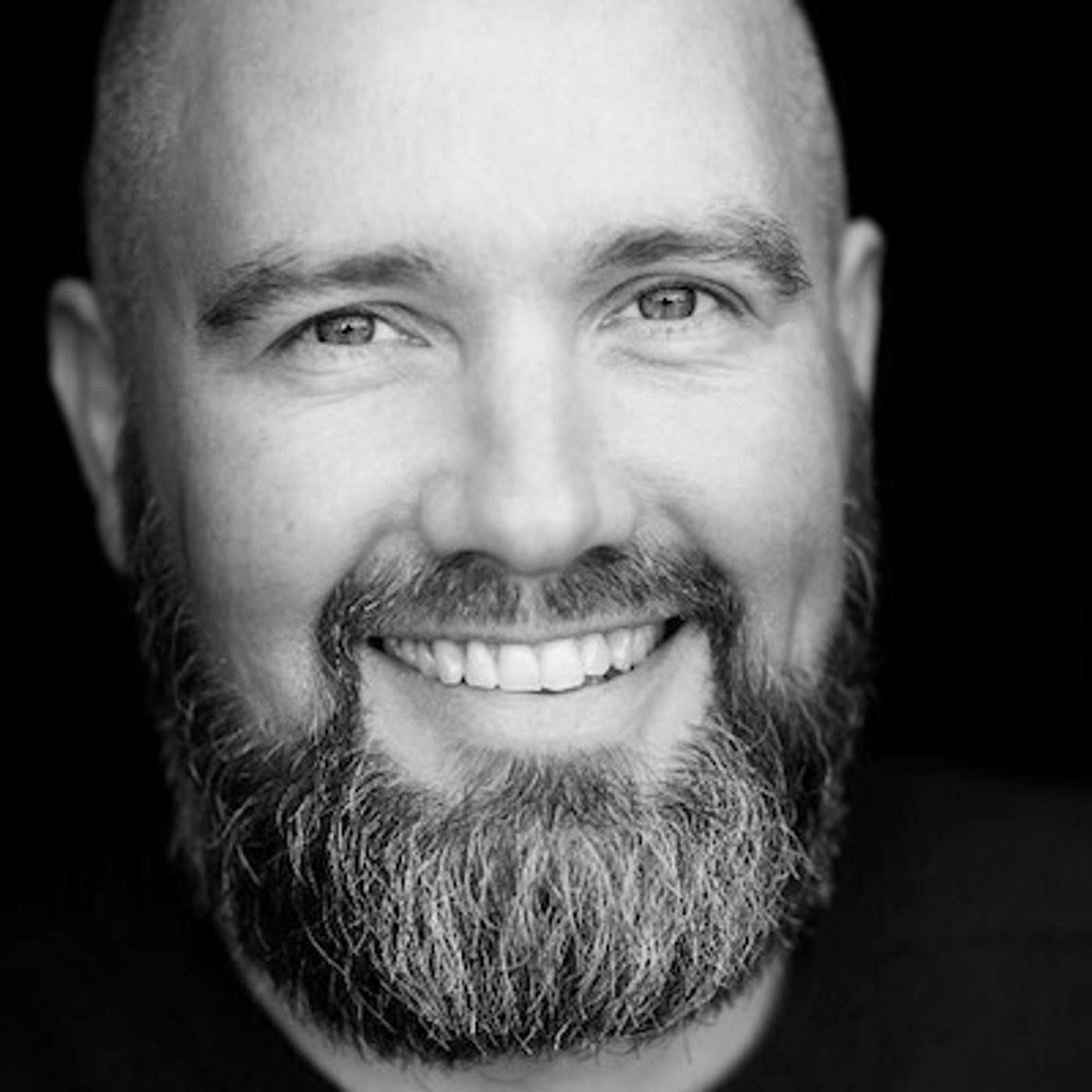
Morten Raahauge, Chief Experience Officer
from The Experience Designers · host Steve Usher
Want to connect with Morten?www.linkedin.com/in/morten-raahauge-9823368/Books we discussed:The Experience Economy - Review hereExponential Organisations - Review hereExperience Designers Ep 2(We use a mix of automated transcript software and editing for readability)Steve (Host): [00:00:14] Hi Morten, thank you very much for joining me for this episode.Morten: [00:00:20] My pleasure.Steve (Host): [00:00:20] Good stuff. So we've got a few things we wanted to cover off today as part of this interview or discussion. A lot will be centered around the employee experience and the evolution and where we think this could be heading and how H.R. departments could be developing the employee experience and playing a big part in this. Steve (Host): [00:00:48] I think one of the things for me just to give some context is that I think generally right now the employee experiences is a really hot topic. I think we've gone from a period probably in the last ten years where there's always been a focus on employee engagement and certainly in the UK there was lots of research undertaken by a chap called David McCleod. He did some work under the previous UK government Labour government and latterly into the Conservative government which is around employee engagement and looking at it from a kind of top down perspective and more recently with the evolution on employee experience, it tends to be that kind of bottom up approach, looking at shaping and creating experiences for employees. Steve (Host): [00:01:41] So I guess this falls in line with some of the experience economy stuff, which I'm sure we'll cover. What's your view around around this, where do you think we are around the topic of employee experience right now? What driving this? Morten: [00:02:00] Well I think there's a lot of discussion on the topic and what I've been noticing is that people seem to have a little bit of unnecessary difficulties. You can sort of attack this from an array of different angles. And for me it's pretty simple because I'm a fully certified experience economy expert. So for me the whole methodology is there but it's really just applying experience design to this new area. Just as you would with any other business or business area. It's just another business area that needs to go through the same sort of change. Morten: [00:02:53] So the methodology is there and there's a lot of models. And I think if this is something you want to work with. Then all the models all the ways of viewing things that's in the experience economy can be applied in a pretty straightforward way and easily implemented. So for me it's easy, but it seems to be there's a big discussion also, the different parts you know. Okay so what's the employee experience here? What's the employee experience there? And one other thing when you talk about experience, it usually centers on things that are sort of experiences by themselves. So in the experience economy you often speak about concerts or festivals or you know tourism stuff like that. But this is really a way of looking at things that could be applied to anything and especially in business and still make a lot of sense. So it doesn't have to be sort of above the experience you've just got to work in the morning. I mean you can you can even work on that if you want to. Steve (Host): [00:04:05] So just taking from the other functions or other business areas that have gone through this change. I mean H.R. and I think learning and development tend to be the ones that kind of lag behind I think, is my view within organisations. Which is crazy because it's the most people focussed areas. For the listeners out there that are sitting in a human resource department or talent department what kind of symptoms do you think that they will be seeing within the organization that would I guess lean well to kind of say we need to look at adopting or engaging some kind of experience design. Morten: [00:04:48] Well, when I worked with experience design in other areas the first thing you really need. Well first you have to decide that this is what you want to do. I mean you can't just. Well I'll do some of it. So if it gets to be a strategic approach I think that's good. And I think the way H.R. could look at it is that if you want to step up the H.R. Then this is definitely a way to go. Morten: [00:05:16] There's something about the name, I mean H.R. human resources and if you if you look at resources as a word in itself it's like people are being dug up from the ground or picked off trees and they're really not because they're they're actually human. So, in the commodities industry, which would be all the other kinds of resources, metals and crops etc... In this economy the business imperative is to supply availability. So what H.R. is doing right now is they have this commodities approach to people. So what they do is they supply availability, so they have a steady influx of people to the organization. Morten: [00:06:03] The other thing they're doing is linked to the product economy where they where they control the costs. So that would be sort of negotiating your salary or bonus programs and stuff like that. So really right now what they do in H.R. is that they're stuck in a sort of a narrative that is linked to the commodities and to the goods economy. And in the progression of economic value, the next economy is a service economy then it's an experience economy and then it's a transformation economy. Morten: [00:06:35] But what does H.R. and you probably have to change the name, but what does HR look like if it's a service. What does it look like if it's an experience and that would be employee experience and what does it look like if it's the transformation economy. Morten: [00:06:50] So a lot of things are linked to the way they speak about things so. So we we discussed this briefly, so you had this is where talent acquisition, so the notion that you acquire talent just as you would acquire buildings, machinery or physical assets, I can't get my head around that, why would talk about people in a way that sort of puts them on the same level as a piece of machinery. I don't get that. It's very much this industrial mindset about what work is and what people is. I think in many ways, this is a bit harsh but I think in many ways H.R. is dehumanizing humans because they speak about them in ways that makes them not human. Morten: [00:07:41] There's this big Danish company the other day a novel, you probably heard of them. They had to lay off 1300 people. And they way they speak about it is not that they destroy, I mean at least momentarily the lives of 1300 people. No they're just cutting back. I mean, what's that about? Morten: [00:08:03] So there's this lack of empathy, there's this lack of understanding that people wake up in the morning with with real aspirations about themselves and what they want to do in a workplace or in their private life. So how can you sort of ta...
NOW PLAYING
Morten Raahauge, Chief Experience Officer
No transcript for this episode yet
Similar Episodes
No similar episodes found.