
EPISODE · Apr 22, 2026 · 20 MIN
OACRA | Ch. 5 — The Parliament of Models: Algorithmic Pluralism as a Democratic Safeguard
from EDO·OS | Governance of the Future
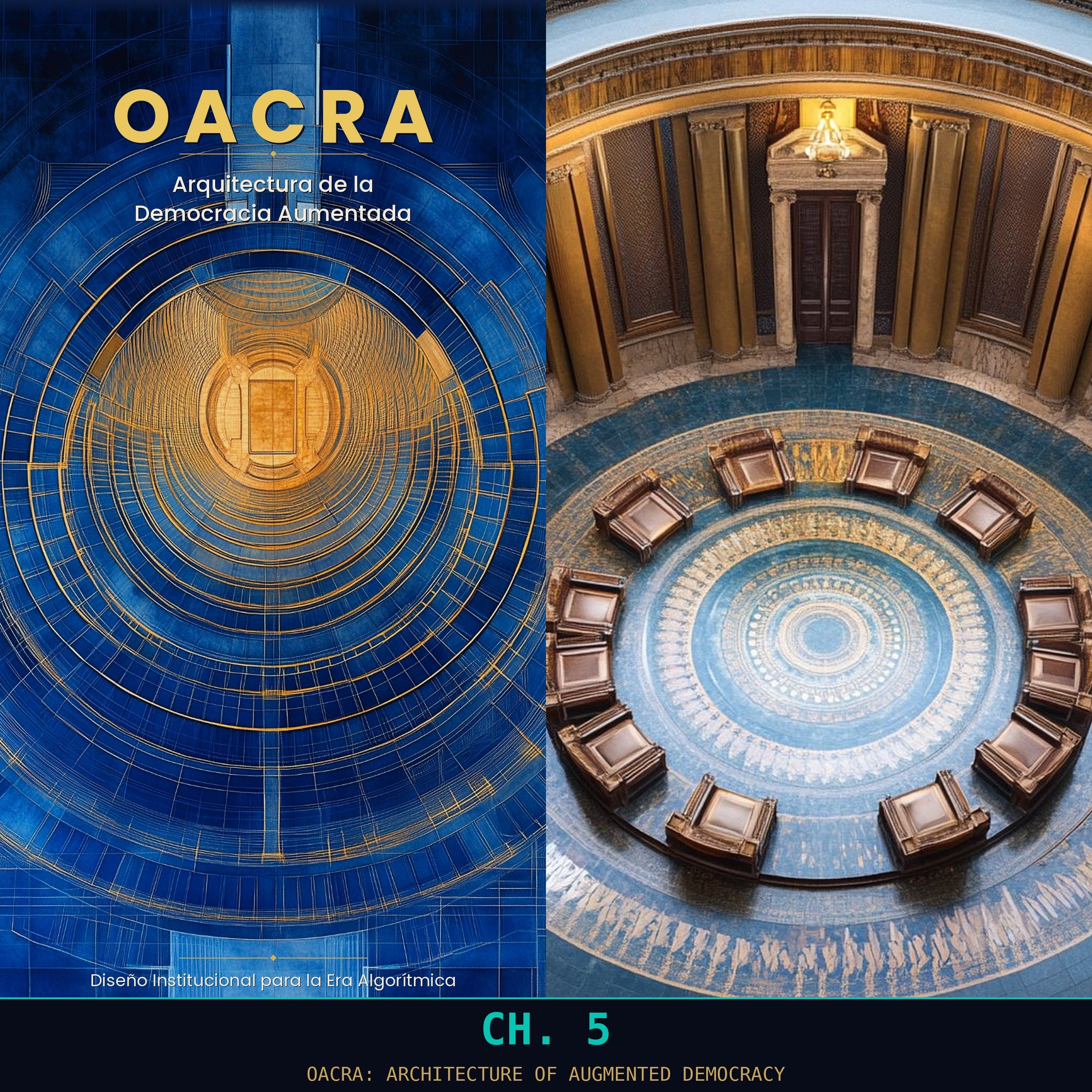
If perfect algorithmic fairness is mathematically impossible, how can artificial intelligence evaluate legislation without imposing a single moral philosophy on democratic deliberation?In 2016, a dispute between ProPublica and Northpointe exposed something deeper than a flawed algorithm. ProPublica showed that COMPAS —a criminal risk assessment tool used in U.S. courts— flagged Black defendants as high-risk at significantly higher false positive rates than white defendants. Northpointe countered that the system was properly calibrated: a score of "7" carried the same meaning for both groups. Both claims were true —under different definitions of fairness— and Alexandra Chouldechova went on to prove, formally, that those definitions cannot all be satisfied at once except under trivial conditions.This episode lays out OACRA's architectural answer to that impossibility: the Parliament of Models, a multi-axiological evaluation system in which four models assess every bill in parallel, each grounded in a distinct and often incompatible philosophical tradition:1. Utilitarian-Economic Model (Bentham/Mill): maximizing aggregate welfare.2. Egalitarian-Rawlsian Model: improving the condition of the least advantaged.3. Cultural Identity Model (Taylor/Kymlicka): recognition and cultural autonomy.4. Deontological Model (Kantian): inviolable fundamental rights.The chapter grounds this design in Rawls's reasonable pluralism, Mouffe's agonistic democracy, and Chouldechova's formal impossibility theorem. It walks through the technical architecture that keeps each evaluation independent, and sets out five structural limitations together with their mitigations. Two illustrative cases —land expropriation for a hydroelectric megaproject, and hate speech regulation— show how the four models can reach sharply opposing verdicts on the same law, forcing legislators to make their value choices explicit rather than hiding them behind technical language.The democratic contribution here is not to "settle" axiological conflicts but to make them transparent, auditable, and open to deliberation. Chouldechova's result (2017) carries a clear implication: if no single metric of algorithmic fairness can satisfy every reasonable criterion of justice, then pluralism across models is not a concession to relativism —it is the only position consistent with intellectual honesty.—🔹 OACRA — Algorithmic Office for Enhanced Regulatory QualityJesús Bernal Allende | Escuela del Deber-Optimizar y la Soberanía de la Evidenciahttps://a.co/d/09Xzy0z8 🌐 https://edo-os.com 🔗 https://www.linkedin.com/in/jesus-bernal-allende-030b2795
NOW PLAYING
OACRA | Ch. 5 — The Parliament of Models: Algorithmic Pluralism as a Democratic Safeguard
No transcript for this episode yet
Similar Episodes
Mar 26, 2026 ·1m
Mar 19, 2026 ·34m
Feb 18, 2026 ·11m
Feb 11, 2026 ·45m