Pourquoi Google is so back? OpenAI en Code Rouge🚨?

EPISODE · Jan 13, 2026 · 45 MIN

Pourquoi Google is so back? OpenAI en Code Rouge🚨?

from A la French

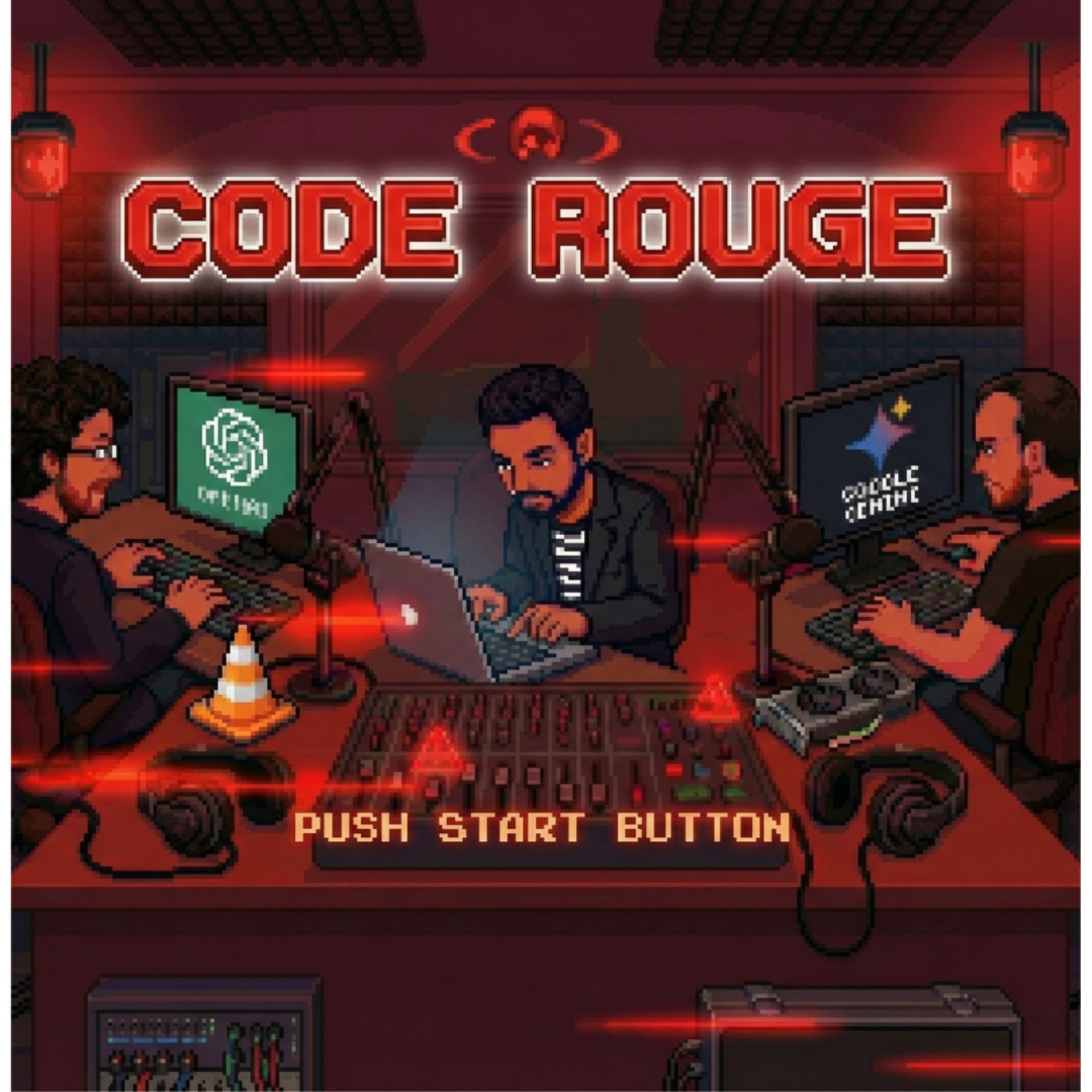
On ouvre cette saison avec un basculement majeur : on est sortis de l’ère “qui a le meilleur algo ?” pour entrer dans la compétition “qui a la meilleure usine à compute ?”.Pourquoi ? Parce que le compute devient un avantage stratégique comparable à l’électricité au XXᵉ siècle. Sans puces, datacenters et énergie : pas de modèles entraînés, pas d’inférence bon marché, pas d’autonomie industrielle.Dans cet épisode, on déroule les sujets suivants : 1) OpenAI en “code rouge” : pertes financières, pression concurrentielle et recentrage stratégique.2) Le réveil de Google avec Gemini 3, porté par une intégration massive dans Google Workspace et un avantage décisif sur les données et les puces (TPU).3) AWS Trainium 3 : nouvelle étape dans la guerre des puces IA, et question centrale du compute.Pourquoi Nvidia reste dominant : l’écosystème CUDA/PyTorch rend le training très difficile à déplacer. 4) La 2ème voie européenne : * Mistral 3 et la montée en puissance des modèles open-weight, * Gradium et la révolution du voice-to-voice à faible latence, * Vsora (puces) et UMA (robotique humanoïde), symboles d’une troisième voie européenne.Un épisode dense, entre analyse industrielle, enjeux géopolitiques et signaux forts de l’écosystème français et européen.Abonnez-vous pour ne pas rater la suite, et dites-nous en commentaire ce que vous pensez de cette “troisième voie” tech européenne.-------------------💬 On veut votre avis :Dites-nous en commentaire ce que vous pensez 👇👍 Pensez à liker, partager, et vous abonner pour la suite de la saison.Produit par : Fatima IdhammouProduction exécutive : BKERéalisateur : Nicolas JaluCadreurs : Florian Kuenemann, Fairooze ShariffIngénieur du son : Quentin GomezChef monteur : Victor BourdonGénérique (images assistées par IA)Production : AurevoircharlieProduit par : Anne-Lise LanglaisRéalisateur / DA image : Olivier LelardouxMusique originale : Keryan SerrainConseillers éditoriaux : Kevin Guive Echraghi, Hérétique, Ronan Letoqueux, NES ProductionRemerciements : l’équipe de Néon Noir, Camille Hamez, Natacha Holtzhausser, Samir Akacha, Elie Séonnet, Abdel-Hafid Cherrab, Paguy Shako.CréditsProductrice- Fatima IdhammouProduction exécutive : BKERéalisateur : Nicolas JaluCadreurs : Florian Kuenemann, Fairooze ShariffIngénieur du son : Quentin GomezChef monteur : Victor BourdonGénérique (images assistées par IA)Production : AurevoircharlieProduit par : Anne-Lise LanglaisRéalisateur / DA image : Olivier LelardouxMusique originale : Keryan SerrainConseillers éditoriaux : Ronan Letoqueux, NES ProductionRéseaux sociaux : Samir AkachaRemerciements : l’équipe de Néon Noir, Camille Hamez, Natacha Holtzhausser, , Elie Séonnet, Abdel-Hafid Cherrab, Paguy Shako Hébergé par Acast. Visitez acast.com/privacy pour plus d'informations.

NOW PLAYING

Pourquoi Google is so back? OpenAI en Code Rouge🚨?

0:00 45:44

No transcript for this episode yet

We transcribe on demand. Request one and we'll notify you when it's ready — usually under 10 minutes.

No similar episodes found.

MG Show MG Show The MG Show, hosted by Jeffrey Pedersen and Shannon Townsend, is a leading alternative media platform dedicated to uncovering the truth behind today’s most pressing political issues. Launched in 2019, the show has grown exponentially, offering unfiltered insights, comprehensive research, and real-time analysis. With a commitment to independent journalism and factual integrity, the MG Show empowers its audience with knowledge and encourages active participation in the political discourse. Photo Breakdown Scott Wyden Kivowitz Photo Breakdown is a podcast in which we explore the world of photography with a trusted guide, host Scott Wyden Kivowitz. His expertise and passion bring the industry to life as we explore the stories, trends, and ideas shaping it today. Join us as we dissect everything from incredible photographs and creative techniques to the latest gear releases and hot topics in the photography community.In each episode, we break down what’s happening behind the scenes - whether it’s making a powerful image, a candid discussion on industry trends, or a reflection on the tools and technology changing how we make photographs. You’ll get insights, expert opinions, and a fresh perspective on what’s top of mind for photographers right now.Anticipate short, engaging episodes brimming with ideas and inspiration. Be part of the conversation by sharing your thoughts, voice notes, and comments. Your participation is what makes our community vibrant and dynamic.It’s more than just photography - everyth The Last Outlaws Impact Studios at UTS In a History Lab season like no other, we're pulling on the threads of one of Australia's great misunderstood histories, moving beyond the myths to learn what the Aboriginal brothers Jimmy and Joe Governor faced in both life and death.Australia's budding Federation is the background setting to this remarkable story, that sees the Governor brothers tied to the inauguration of a 'new' nation and Australia's dark history of frontier violence, racial injustice and the global trade and defilement of Aboriginal ancestral remains. This Impact Studios production is a collaboration with the Governor family, UTS Faculty of Law and Jumbunna Institute for Indigenous Education and Research.The Last Outlaws teamKatherine Biber - UTS Law Professor and Chief InvestigatorAunty Loretta Parsley - Great-granddaughter of Jimmy Governor and the Governor Family Historian Leroy Parsons - Governor descendant, Narrator and Co-WriterKaitlyn Sawrey - Host, Writer and Senior ProducerFrank Lopez - Writer, Managing Next Generation Energy Systems Cambridge University Background Stakeholders working with energy systems have to make complex decisions formulated from risk-based assessments about the future. The move towards more renewables in our energy systems complicates matters even further, requiring the development of an integrated power grid and continuous and steady transformation of the UK power system. Network flows must be managed reliably under uncertain demands, uncertain supply, emerging network technologies and possible failures and, further, prices in related markets can be highly volatile. Mathematicians working with engineers and economists, can make significant contributions to address such issues, by helping to develop fit-for-purpose models for next generation energy systems. These interdisciplinary approaches are looking to address a range of associated problems, including modelling, prediction, simulation, control, market and mechanism design and optimisation. This knowledge exchange workshop was part of the four months Res
URL copied to clipboard!