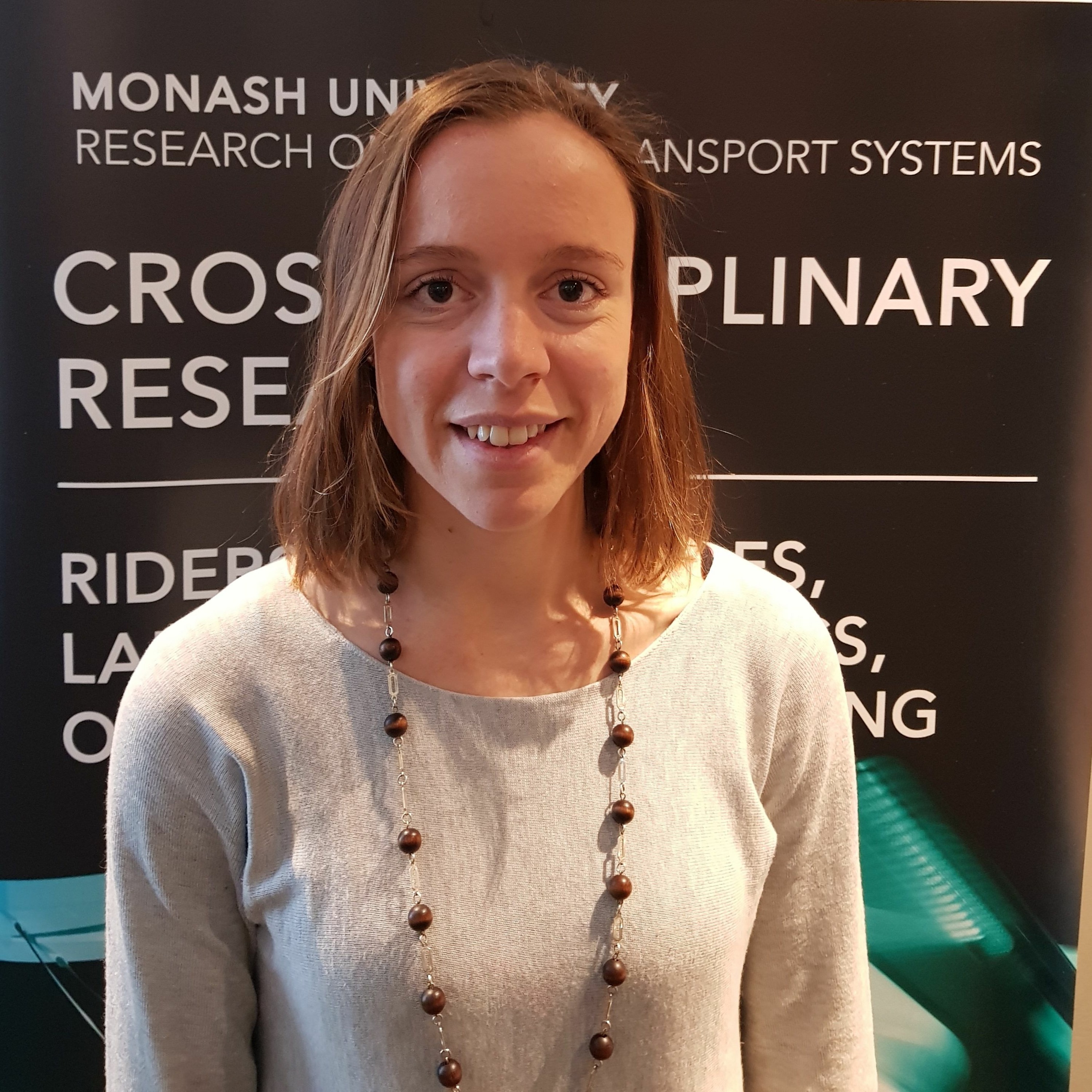
RT19 - Laura Aston - Linking the built environment to train, tram and bus use

EPISODE · Dec 13, 2020 · 37 MIN

RT19 - Laura Aston - Linking the built environment to train, tram and bus use

from Researching Transit · host Public Transport Research Group

In today’s show, Graham turns the tables on Laura, delving in to her research which unpacks the relationship between the built environment and public transport use. Laura starts by providing some context about the role of land use in influencing travel demand, before defining the term “built environment” in the context of travel behaviour. Land use is the fundamental unit of demand for transport within cities, and public transport is at its most efficient when it is integrated with the surrounding land use. When it comes to making choices about which mode to use, there are a broader set of built environment characteristics that affects choice; such as • land use intensity, • pedestrian permeability and amenity, • land-use mix and • the accessibility of destinations. Laura charts a brief history of transport and land use research and policy. They have in common a goal of understanding – or creating - transit-friendly, walkable neighbourhoods that reduce the need to travel. It’s a topic that has been turbocharged by COVID-19; in the interest of reducing crowding while ensuring people are able to fulfil their daily living necessities and enjoy a high quality of life in their neighbourhood “Space in cities is at a premium and transport corridors allow for efficient movement of people.” Despite an abundance of research, or perhaps because of it, there remains a lack of clarity about the importance of different built environment factors for encouraging transit use. Another gap Laura sought to address was whether there were significant differences in the predictors of transit use by mode. Laura sought to understand whether demand for urban bus use was associated with a different set of urban form features compared to rail. However, exploring this question required first addressing pre-existing bias in the location of different modes in a network. For example, bus, by virtue of its flexible routing, usually provides more coverage in lower density areas away from mixed-use activity centres than rail. The first empirical study in Melbourne addressed this mode location bias and identified that the demand models for individual modes were different (2). This was affirmed by further analysis that drew on an even larger dataset spanning three multimodal transit networks, complementing the Melbourne dataset with rich data for Boston and Amsterdam’s urban form and transit ridership. In fact, few factors are common between modes across the study areas. “[transit] mode is one of the contextual factors that needs to be taken into account when you are trying to accurately predict demand, or build models for planning”. This research highlighted that bus demand also shows a significant link to urban form. Better understanding the psychological pathways by which the built environment affects perceptions about bus travel may provide a key to unlock successful bus-oriented development. Visit the full shownotes on the website for links to Laura's publications: http://publictransportresearchgroup.info/?p=51790 Check out other great mass transit podcasts, and subscribe for instant downloads by visiting Feedspot’s Top 20 list. https://blog.feedspot.com/mass_transit_and_public_transport_podcasts/ Sign up for updates when we release shows: http://eepurl.com/g9tCdb Music from this episode is from https://www.purple-planet.com

NOW PLAYING

RT19 - Laura Aston - Linking the built environment to train, tram and bus use

0:00 37:29

No transcript for this episode yet

We transcribe on demand. Request one and we'll notify you when it's ready — usually under 10 minutes.

Thriving Mom Tribe | Practical Health Solutions for Moms Lindsay Rattay, Nutritional Therapy Practitioner The Go-To Podcast for all Moms who want to have a Thriving home. Do you struggle to find the balance between holistic health and living in the world?Are you tired of trying every diet yourself and still not feeling good?Do you find yourself researching for hours how to find the best remedy for your child’s sickness but end up feeling defeated?You want to be metabolically healthy but don’t know where to start?Do you wish you could feel confident in how you feed your family during the week knowing that you have to eat out because life is busy?You just enjoy going to a restaurant and don’t want to feel guilty about it?Do you want a cookie and a healthy salad?I am Lindsay Rattay, I am so excited that you are here on the Thriving Mom Tribe Podcast. I remember being the mom who researched everything from nutrition to exercise. To feeling tired and depressed. Trying to find the balance of wanting more holistic options for my family while still raising busy kids. But I discovered easy For the Living and the Dead. Traces of the Holocaust EHRI In each episode of For the Living and the Dead, a Holocaust researcher talks about an object, now often in a museum, that tells a very personal story about the Holocaust. The first season of the EHRI Podcast has six episodes and features a teddy bear, mica-flakes, a postcard, gramophone discs, a magazine cover and the typewriter. The unique stories come from all over Europe – the Holocaust being a continent-wide phenomenon – ranging from Belgium to Ukraine, from Romania to Italy.This podcast season of six episodes is released every other week, starting 29 September 2022. In 2023, another season will follow.Music accreditation: Blue Dot Sessions, https://app.sessions.blue/ Tracks - Opening and closing: Stillness. Incidental, Gathering Stasis, Pencil Marks, Uncertain Ground, Marble Transit and Snowmelt. License Creative Commons Atttribution-NonCommercial 4.0 International (BB BY-NC 4.0). Ecosystemic Futures Dyan Finkhousen: CEO of Shoshin Works Ecosystemic Futures engages with the world’s elite thought leaders who are researching and leading meaningful development in areas that could impact society in the next half century. Provided by Shoshin Works in collaboration with NASA Convergent Aeronautics Solutions Project - Ecosystemic Futures explores technological advances and structural patterns that will help us better innovate, operate, and navigate in our increasingly connected world. Join the conversation as NASA leaders, and industry and policy luminaries share their perspectives with host Dyan Finkhousen, a leading strategist and global authority on ecosystemic solutions, and brilliant co-hosts. Techlore Talks Techlore Techlore Talks brings you in-depth conversations with the experts at the forefront of privacy, security, and digital rights. Hosted by Henry Fisher, founder of Techlore and long-time digital rights educator, each episode features meaningful discussions with the people building, researching, and advocating for digital freedom. From cybersecurity researchers and privacy tool developers to open-source advocates and digital rights activists—if they're shaping how we protect ourselves online, they're on this show.Topics include:• Privacy tools and technologies• Cybersecurity threats and defenses• Open-source software and development• Surveillance and digital rights• Encryption and data protection• Tech policy and advocacy• Digital sovereignty and freedomJust real conversations with real experts. New episodes released regularly. Subscribe now and join the community fighting for digital freedom.<p style='color:grey;
URL copied to clipboard!