
EPISODE · Dec 5, 2019 · 26 MIN
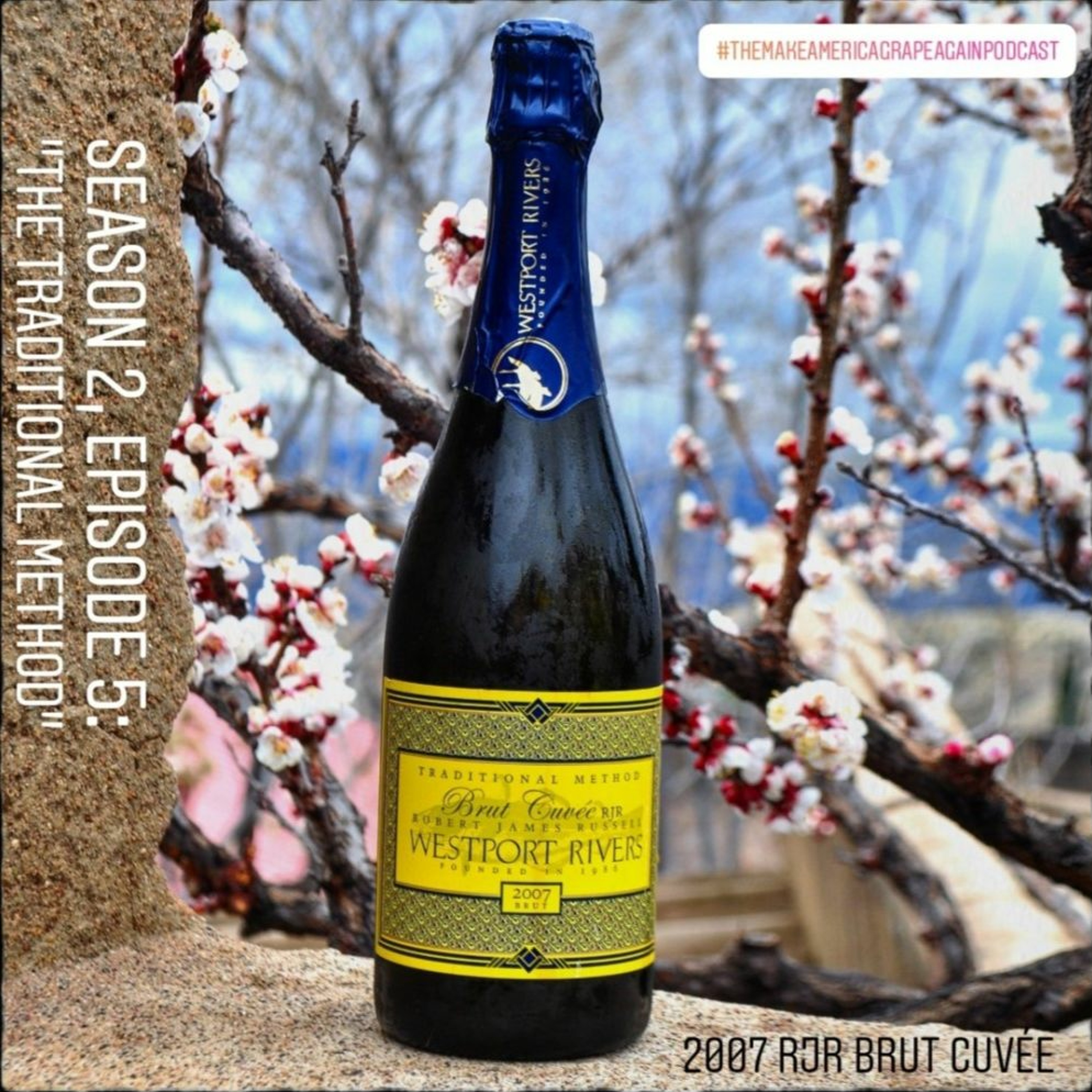
Season 2, Episode 5: The Traditional Method (RJR Brut Cuvee, Westport Rivers, MA)
from The Make America Grape Again Podcast · host The Wine Monk
We've had a couple of sparkling wines in this program before, but we've never really had a traditional method sparkling wine on the show before. Let's change that, with a look at the 2007 RJR Brut Cuvée, from Westport Rivers Winery, in Massachusetts. In case you were not aware, "traditional method" is code for the same method which is used to make Champagne in France; it's just that nobody outside of Champagne can use this word to describe a wine method, due to very strict provisions laid down by the EU and France. You will occasionally see wines made in this method labeled as 'Classic Method,' also. What these words mean is that the sparkling wine in question was bottle-fermented; that secondary fermentation which produced the bubbles occurred in the bottle in which the wine was sold. As you may have guessed from the implication above, sparkling wines made in the traditional method undergo two separate fermentations. The first, which is usually carried out in tanks, creates what is known as the base wine, which is still--no bubbles. If the wine in question is a non-vintage blend, the base still wines will be blended according to whatever style and quality requirements exist for the given produced to produce a unified flavor for the brand; or still wines from a given year will be blended together (which is likely what happened with this wine in question). This process, known as assemblage, ends with the blended wine put into bottles, along with a mixture of yeast and sugar to kick off a secondary fermentation. The bottles are then closed with the same sort of cap you see on a beer bottle. (In case you wanted to expand your French wine terms, this mix is known as the liqueur de tirage). Next up, the bottles are then placed on their sides in cellar environments, while that secondary fermentation begins. It is this secondary fermentation that creates the CO2 which gets trapped to become bubbles. After the second fermentation is complete the wines are left ‘sur lie‘ (resting on its lees – wine terminology for the dead yeast cells in each bottle) for any period of time the winemaker wishes. This could range from a mere 6 months to upwards of several years, like in the case of this vintage. The longer the wine rests on these lees, the more amino acids and other compounds that are in the dead yeast cells will break down and be released into the wine. Known as autolysis, this process is what adds toast, bread, and the yeasty character and aromas that are often associated with higher-end vintages made in this style. The final steps of this process are known as remuage and disgorgement, where the lees are removed from the bottle. The bottles are carefully rotated and shaken and slowly moved upside down so that the sediment in the bottle is slowly moved towards the neck of the bottle. This process is known as riddling--it can either be done by hand, or by automatic machinery. After the sediment has been gathered to this part of the bottle, the material must be disgorged--something done by freezing the neck of the bottle in a freezing brine bath. After being frozen, the cap is removed, and the bottle of frozen lees sediment will shoot out. The final step of this disgorging process is quickly topping off the bottle with a mixture known either as the dosage or ‘liqueur d’expédition. This is a mixture of wine and sugar, the amount of which is determined based on the eventual style of the wine. As an example, the dosage for the RJR Brut Cuvée probably contained somewhere between 6g and 15g/l of sugar; pretty standard for wines labeled as 'Brut'. After this, the bottle is closed with the traditional Champagne-style cork, with the wire cage (known as a muselet) and foil. The wine can now wait and age as long as the winemaker demands before being released to the adoring public. These styles of wine can age very well; as evidenced by our reaction to this bottle in the podcast.
NOW PLAYING
Season 2, Episode 5: The Traditional Method (RJR Brut Cuvee, Westport Rivers, MA)
No transcript for this episode yet
Similar Episodes
No similar episodes found.