
EPISODE · Dec 29, 2025 · 16 MIN
Tishuash
from Mythological Africans Podcast · host Mythological Africans
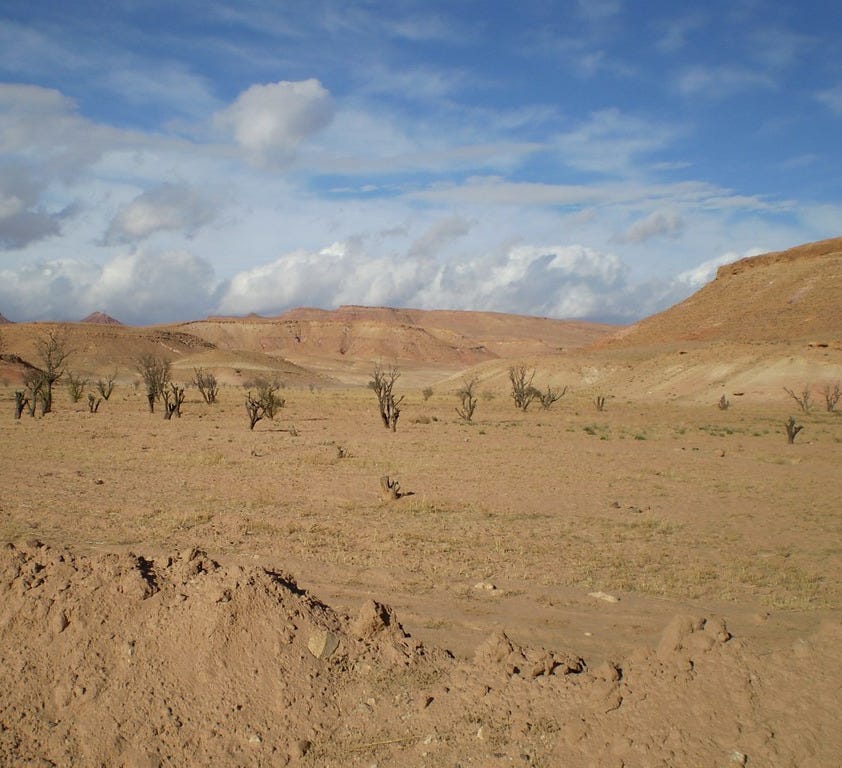
The average human in the modern context is largely cut off from deep and transformative encounters with the natural world. The reasons are manifold. Some people live in places where access is nonexistent or limited. Others have access but no time, buffeted as they are by their obligations and efforts to earn a living and take care of their families. Even when access and time are present, awareness and inclination might be lacking. Many people live within walking distance of great rivers, lakes, seas, oceans, deserts, plains, mountains, hills and forests, and yet, these land forms have faded to the background scenery of their lives.It might be hard for many of us, then, to imagine what it would be like to adopt a lifestyle whose maintenance, talk less of success, requires keen attention to and relationship with a land form. Yet, this is the lifestyle traditionally chosen by the Tuareg and other north African desert dwellers like the Sahrawis of Western Sahara. These people don’t only live in the Sahara desert, they actively claim it as theirs. But what does it mean to claim a land form as one’s own? And what could this mean for us present-day Africans?In the last Mythological Africans podcast episode of 2025, we probe at this question with insight drawn from Tuareg-Libyan Author Ibrahim al Koni’s “The Bleeding of the Stone” and reflections on the experiences of the Sahrawi of Western Sahara.… perhaps one way Africans can repair and reaffirm the bonds that tie us together is by looking again at the land forms that connect us. The mountains ranges that spread from country to country. The rivers that thread their ways from homeland to homeland. The forests in whose depths generation upon generation have lived. The deserts whose winds and waters have chiseled countless lineages. The seas and oceans that surround us. The hills, valleys, lakes, and plains whose siblings across the continent attest to the common stock from which we emerge. Maybe, just maybe, our future lies in our ability to look at them again and see more than land or resources. Maybe our future lies in remembering that they are a shared inheritance to be understood and stewarded.References* “The Bleeding of the Stone” by Ibrahim al-Koni. Interlink Publishing Group Inc.* Ellison, Mahan. “La amada Tiris, tierra de nuestros abuelos: The Affective Space of the Sahara in Hispano-Sahrawi Literature.” Review of the Center for the Studies of the Literature and Arts of North Africa 15.2–3 (2018): 73.* Benjaminsen, Tor A. “Does supply-induced scarcity drive violent conflicts in the African Sahel? The case of the Tuareg rebellion in northern Mali.” Journal of Peace Research 45.6 (2008): 819-836.* Mattingly, David, et al. “Desert Migrations: people, environment and culture in the Libyan Sahara.” Libyan Studies 38 (2007): 115-156.* Deubel, Tara Flynn. “Between homeland and exile: Poetry, memory, and identity in Sahrawi communities.” (2010). Diss. The University of Arizona.* Voices of a lost homeland: The poetry of Western SaharaCan’t Get Enough?* Tishuash by BadiStill Can’t Get Enough?The Watkins Book of African Folklore (…or The Mythological Africans Book) is out!The Watkins Book of African Folklore contains 50 stories, curated from North, South, East, West and Central Africa. The stories are grouped into three sections:* Creation myths and foundation legends (including the foundation legend of the Tuareg!)* Stories about human relationships and the cultural institutions they created* Animal tales (with a twist…the folktales are about some of the most unlikely animals!)I thoroughly enjoyed digging into the historical and cultural context out of which the stories, their themes, and protagonists emerge. There is something for everybody!Mythological Africans is reader-supported. To receive new posts and support my work, consider becoming a free or paid subscriber. Get full access to Mythological Africans at mythologicalafricans.substack.com/subscribe
NOW PLAYING
Tishuash
No transcript for this episode yet
Similar Episodes
No similar episodes found.