
PODCAST · leisure
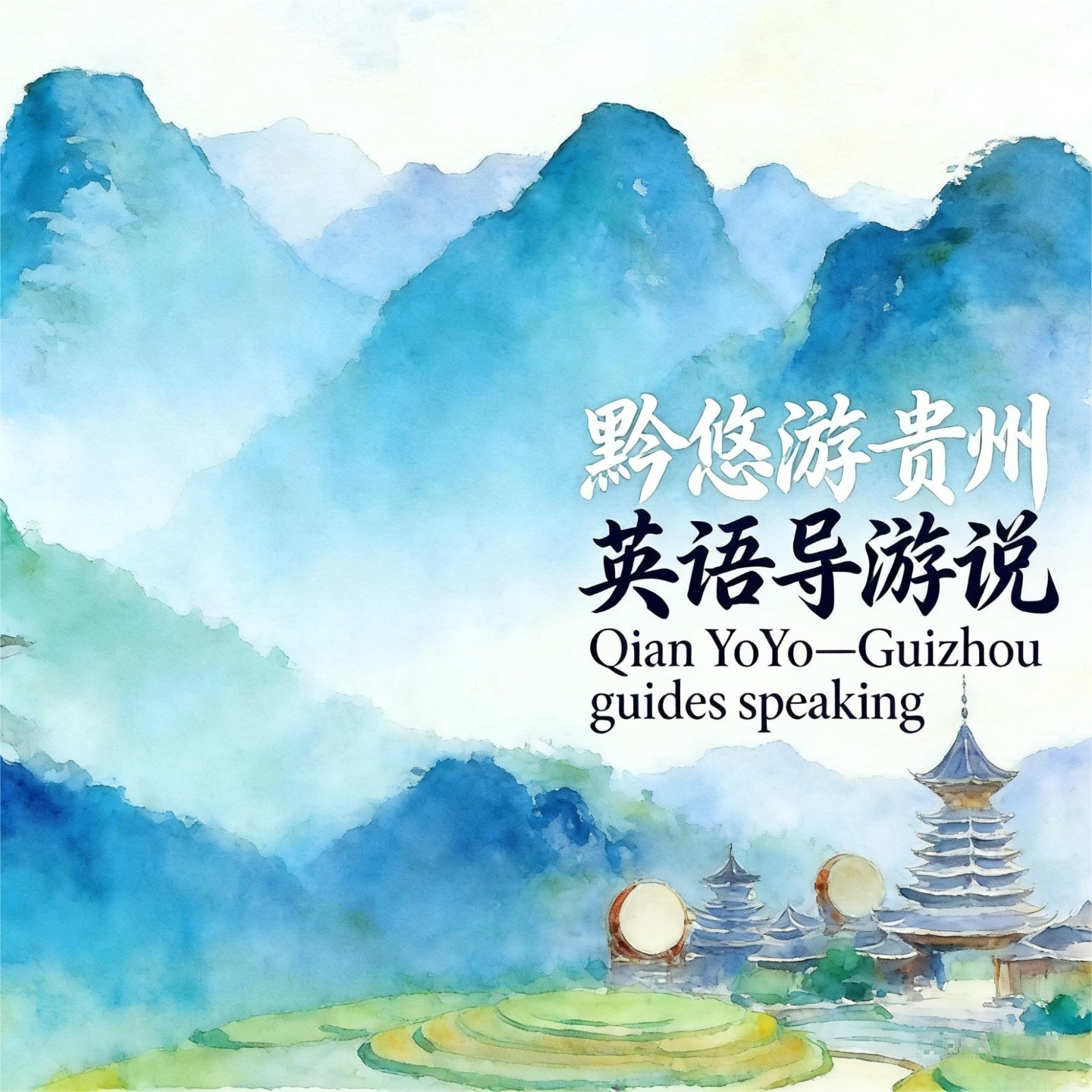
黔悠游贵州英文导游说---英文版
by Qian-YoYo
Whether you're preparing for the foreign language tour guide certificate exam, a novice entering the tour guide profession, a seasoned tourism practitioner, or a tourist planning to explore Guizhou, you'll find essential insights here from Qian YoYo. We invite a prominent Guizhou tourism figure to share stories on Guizhou tourism and foreign language tour guiding from a tour guide's first-person view. Follow to discover more!
-
6
Qian-YoYo|Legends of Guizhou: Listening to Ethnic
Episode topic: Legends of Guizhou: Listening to EthnicHosts: LuciaGuests: Howard、IvanDuration: 40 minutesAudience:1. Candidates preparing for the foreign language tour guide exam2. Foreign language tour guides3. Tourism industry practitioners4. Travel enthusiasts 00:51Welcome to Qian-YoYo, your go-to program for Guizhou English tour guiding. I’m your host, Lucia. In the next forty minutes, let’s embark on a journey across the land of Guizhou. Our topic today is Legends of Guizhou: Listening to Ethnic Voices.Known as a fairyland on the Yunnan-Guizhou Plateau, Guizhou boasts world-famous natural wonders and picturesque landscapes, including Huangguoshu Waterfall and Libo Zhangjiang Scenic Area.01:33Beyond the breathtaking landscapes, Guizhou is home to 17 ethnic groups that have lived here for generations, nurturing unique ethnic romance and timeless folk legends.Exquisite Miao silver ornaments, heavenly melodies of the Dong Grand Chorus, and the graceful tunes of Buyi traditional music — all these are precious cultural treasures of Guizhou.02:00They embody distinct ethnic characteristics and carry the most genuine and heartfelt warmth of life hidden deep in the mountains. Now, please join me in welcoming our two special guests today — Howard and Ivan.02:19Thank you so much for having us. It’s a great pleasure to share our stories and thoughts about Guizhou with all of you today.02:40Hi everyone! I’m Ivan. I’m thrilled to be here today to share wonderful stories about Guizhou with you all.02:53A very warm welcome to both of you. As foreign language tour guides, our daily work is closely connected with Guizhou’s rich and diverse ethnic cultures.We share local ethnic stories with global visitors in English, and pass on Guizhou’s unique cultural charm to the world.03:15I believe both of you have visited countless distinctive ethnic villages across Guizhou, and communicated a lot with local ethnic communities while guiding tours.Among all the ethnic groups you’ve encountered, which one has left the deepest impression on you?03:36Is there any unique cultural symbol or icon that can best represent this ethnic group?03:53Most of my tour groups head to southeastern and southwestern Guizhou, where three autonomous prefectures are located in the southern part of the province.I’ve been arranging my schedule for early May, from May 1st to 3rd — it’s the Labor Day holiday, and also the time when local communities in southeastern Guizhou celebrate an important traditional festival: the Sisters’ Festival.It’s one of the most lively and representative festivals of the Dong people, full of ethnic customs and romantic traditions.04:49During the festival, young men and women take part in the traditional courtship activity — Singing While Wandering. Young girls gather together, and young men come singing folk songs to court them. It’s such a romantic folk custom.05:22Speaking of special ethnic groups in Guizhou, I’ve always been curious about the Chuanqing People. I looked up relevant information online, and found their historical origins have long been controversial.05:38Thank you for your wonderful sharing. Every ethnic group in Guizhou has its own unique charm. Personally, I’m really fond of the Dong people.They are famous for three iconic cultural symbols: Dong Drum Towers, Wind-and-Rain Bridges, and the world-renowned Dong Grand Chorus.06:00Dong villages are built entirely of pure wood, without any metal nails or joints.The drum tower is the spiritual and cultural center of every Dong village, serving as a venue for village meetings, celebrations and daily gatherings.Wind-and-Rain Bridges, decorated with exquisite carvings, shelter pedestrians from wind, rain and sunshine all year round.06:17The Dong Grand Chorus is a precious intangible cultural heritage. It has no conductor and no musical accompaniment.Singers imitate the sounds of birds, running streams and all kinds of natural scenery, creating music that sounds like nature itself. The Dong people are born lovers of singing and dancing.06:39They also have distinctive costumes, delicate silver ornaments, traditional weaving and exquisite handicrafts.Their food culture is also unique, especially sour fish and sour meat, which are classic Dong delicacies. The Dong people are warm, hospitable and keep their ancient traditions well-preserved to this day.07:01Their simple lifestyle and profound folk culture make the Dong ethnicity truly unforgettable to every visitor.07:15Many tourists are curious about Guizhou’s ethnic cultures but know very little about them. Most have only seen online photos of Miao silver ornaments and Dong drum towers, with little idea of the interesting stories and cultural connotations behind these landmarks.07:36Today we’re going to talk about practical tips for foreign language tour guides when leading groups in Guizhou’s ethnic areas.Howard, you mentioned you interact most with the Miao people in your daily guiding work, and it’s the ethnic group you’d love to share with us today.07:58Could you share your personal stories and special bond you have with the Miao people?08:07Sure. I spend a lot of time touring around ethnic areas, and I’d like to share an interesting experience.A few years ago, I was invited by villagers in the mountainous area to attend a grand traditional festival — the Miao Drum Sacrifice Festival.It’s held once every 13 years, and the celebration lasts for three years in total. I happened to join the third and final year of the festival celebration.08:46It was such a precious experience to be invited by local villagers. All Miao villagers dressed up in their finest costumes, circled around the drum to the rhythm of drumbeats, and joined in the grand celebration.Young Miao girls were dressed in the most gorgeous ethnic costumes and silver ornaments.09:15Young men from neighboring villages were also invited, bringing with them the lusheng — a traditional bamboo wind instrument unique to the Miao and Dong people.As young girls danced in a circle on the square, young men followed along, many clearly fascinated by the young ladies.09:42I watched a young man walking slowly beside the girl he admired, playing the lusheng nonstop for over an hour just for her. His sincere musical expression really touched the girl.10:06This is part of the traditional Miao courtship custom. Later, the girl presented a flower sash to the young man as a token of affection.After the dancing and courtship, the parents of the young man and woman would meet to discuss their marriage, betrothal gifts and other wedding arrangements. It’s such a romantic and time-honored tradition.10:58Wow, what a well-preserved ancient tradition. These festival customs have been passed down in villages for centuries. It was such a precious experience for me to witness it in person.11:17Your sharing is truly touching. Those ordinary little details we often overlook are filled with warm cultural bonds, letting us gain new insights into the wisdom and life philosophy of the Miao people.Alright, now let’s turn to Ivan for his sharing.11:35You spoke highly of the Chuanqing People earlier. Do you have any unforgettable guiding stories or unique insights into this special ethnic community?11:58I first learned about the Chuanqing People in geography class. What impressed me most is that they mainly reside in Guizhou alone.They account for about 1.7 percent of Guizhou’s total population, and you can barely find settled Chuanqing communities in other provinces.12:25You can hardly find such a settled community anywhere outside Guizhou.12:30What a remarkable story. The culture of the Chuanqing People is filled with reverence for life and nature.Many of their little-known customs are time-honored traditions rooted deeply in their cultural identity.From daily communication with local residents to in-depth interpretation of cultural symbols, Ivan has given us a vivid introduction to this lesser-known group.13:02I believe all listeners, just like me, have gained a brand-new understanding of the Chuanqing People.From a professional tour guide’s perspective, when you give on-site explanations in ethnic settlements, is there any ethnic group you always spend extra time introducing in detail?13:39Why do you love sharing its stories with travelers? Which ethnic group do you prioritize introducing to tourists? Is it the Chuanqing People we just talked about?13:58When I lead tour groups, I always introduce to visitors that there is a special community in Guizhou called the Chuanqing People.They are not officially recognized as one of China’s 56 ethnic groups, yet their ID cards are marked with “Chuanqing” as their ethnic identity.Their name derives from their traditional clothing style.14:18They wear indigo blue long robes, which look nearly black in dim light, long enough to cover the knees.They coil their hair on top of the head fixed with silver threads, and traditionally wear straw sandals.They worship a mountain spirit totem in the image of a monkey, which has been passed down as their ancestral totem for generations.14:58Historical records say their ancestors were once saved by monkeys, which is why the monkey totem is respected and even reflected on their costumes.The Chuanqing People are mainly concentrated in Bijie and Liupanshui in Guizhou. There are two mainstream theories about their historical origins.15:18One theory holds that they are indigenous to Guizhou, known as ancient local tribes who have lived here since ancient times.Historical documents record they once lived alongside local tribes and fought side by side against the Qing Dynasty army in ancient times.Their costumes and living customs share many similarities with the Miao and other ethnic groups in Guizhou.15:47The other theory dates back to the early Ming Dynasty. Emperor Zhu Yuanzhang dispatched General Fu Youde with 30,000 troops to suppress rebellions in Yunnan and Guizhou.After quelling the unrest, to consolidate rule, the imperial court arranged immigrants from Jiangxi, Anhui and other places — including officials, farmers, merchants and soldiers’ families — to settle in Guizhou.This is the famous historical immigration event in Southwest China. These immigrants are the ancestors of the local Han settlement groups in Guizhou.16:15Many believe the Chuanqing People are descendants of these immigrant settlers who intermarried and integrated with local ethnic minorities.There are still academic disputes over their origin, and complete historical records to verify their exact lineage are now missing.16:48That’s why many people in Guizhou often confuse the Chuanqing People with other immigrant descendant groups.Notice that we always refer to them as a special community, not a formal ethnic minority.17:16Every officially recognized ethnic minority in China has a clear and complete historical and cultural origin.But the Chuanqing People lack a unified origin record, their traditional customs are not fully preserved, and very few people can still speak their ancestral language.17:46That’s why they are categorized as an unrecognized special ethnic community in China. It’s not that they are excluded, but that they do not fully meet the national criteria for independent ethnic minority identification.They are marked as “Chuanqing” on their ID cards as a special registered identity, though some electronic recognition systems cannot display the ethnic name properly.China has many such unique unrecognized ethnic communities, all part of the big Chinese ethnic family with fascinating stories to tell.18:07The Chuanqing People hold deep reverence for mountain spirits and their monkey totem. It is forbidden to harm or scold monkeys out of respect for their ancestral belief.During the Spring Festival, they have the custom of offering the first bowl of new rice to respected elders. They also have the tradition of not waking others up on New Year’s days, letting everyone rest and recharge for the new year.20:10That’s such a unique and heartwarming custom. Thank you for your detailed sharing.Howard, you have rich experience in leading international tour groups. Have you encountered any impressive little stories over your years of practice?20:47Sure, I have countless interesting stories. Let me share one that is both interesting and practical for every tour guide.I’ve guided foreign visitors to dozens of ethnic villages. I always believe a tour guide’s job is far more than just scenic introduction.In ethnic areas, we are like a cultural bridge connecting tourists and local villagers.21:05We need to dig into local traditions, introduce them to foreign visitors, and act as a cultural interpreter between two sides.I once guided a group of foreign visitors to a Miao village and had a precious encounter with the village shaman.21:39The visitors were very interested in Miao traditional beliefs and folk rituals. I was on good terms with the village shaman, so I politely asked if he could share his cultural traditions with our group.He kindly agreed. We visited his home, sat together, and he told us about ancient Miao traditions, ritual taboos, and how he would choose his successor as the village shaman in his old age.22:06It was such a valuable and eye-opening experience. My point is: tour guides should communicate more with local villagers, respect their culture, and dig out more authentic folk stories for visitors.22:27After hearing your story, I’ve gained so much new knowledge. In-depth interpretation of ethnic culture not only enriches tourists’ travel experience, but also makes local people feel respected and recognized.22:59This is exactly where the true meaning of a tour guide’s job lies. When it comes to Dong cultural inheritance, there is a famous local folk love story: Zhu Lang and Yang Mei.I wonder if you have ever told this story to foreign tourists during your guiding?23:26This story is just as touching as Romeo and Juliet in Western literature. It’s a classic tragic love story of the Dong people.There is also the well-known cultural landmark Chejiang Sanbao Village, which now has convenient highway and high-speed rail access.24:28Let me walk everyone through this legendary Dong love story. It is adapted from a real event during the Qianlong reign of the Qing Dynasty.Long ago in a Dong village, there lived a handsome young man named Zhu Lang and a beautiful, intelligent young lady named Yang Mei.24:55They fell deeply in love with each other through night singing and traditional Dong social activities.But at that time, there was an old custom of cross-cousin marriage — girls were forced to marry their maternal cousins.Yang Mei’s mother forced her to marry her cousin, and Zhu Lang’s family also arranged a cousin marriage for him.26:03They refused to accept the arranged marriage, so they decided to elope in pursuit of freedom and true love.They traveled a long way and finally settled in a remote village, working for a wealthy local landlord named Yin Yi.26:32Yin Yi was captivated by Yang Mei’s beauty and tried to take her for himself. He framed Zhu Lang and had him killed secretly.When Yang Mei learned the truth, she was heartbroken but determined to avenge her lover.27:06She made a clever plan: she beat the drum at the village drum tower and announced that whoever buried her husband’s body could marry her.The greedy Yin Yi took the bait and followed her into the mountains. Yang Mei finally killed him to avenge Zhu Lang.27:28This folk story fully shows the Dong people’s admiration for true love, their courage to fight against unfair old customs, and their yearning for a free and happy life.It also depicts the wisdom, bravery and kindness of Dong women, and the pursuit of freedom and equality among young Dong men and women.27:54When introducing ethnic cultures to foreign tourists, many guides easily make inappropriate remarks out of ignorance of local taboos.Today we’ll sum up some common mistakes and share simple English polite reminders that guides can use directly on site.28:20Ethnic groups living in mountainous areas have preserved ancient traditions for centuries. As tour guides, we must fully respect their customs and taboos.Some casual remarks that sound normal to outsiders may be extremely embarrassing, disrespectful or even offensive to local villagers.28:34I once took a group of international students to a remote Miao village. We stayed in the village for several days and arranged home-stay with local families.29:16We always arrange male and female students to stay with different families out of respect for local traditions.But two young male students kept close contact with local girls and even kissed in public, which greatly offended the host family.29:36The host family was furious, regarded it as a serious insult to their custom, and complained to the village chief and our tour guide team.30:06We kept apologizing repeatedly, but the family still refused to forgive easily.Finally, we turned to the village shaman for help. He hosted a traditional ritual to pray for blessings, offered sacrifices, and we presented gifts to the host family to make amends.30:45Only after the traditional ritual and sincere compensation did the family agree to forgive the students. It taught us a profound lesson on respecting ethnic taboos.31:06Thanks to our guests’ wonderful sharing today. In this episode, we’ve explored the unique cultures of the Miao, Dong and Chuanqing communities, together with practical tips for tour guide exam preparation, on-site guiding and travel planning.Every ethnic group in Guizhou hides precious legends and cultural stories worthy of being passed down to the world.31:33As English tour guides, we are storytellers and cultural bridges, linking Guizhou to the whole world.We hope today’s content brings valuable inspiration to foreign language guide candidates and all lovers of Guizhou ethnic culture.32:06We also invite you to visit Guizhou’s ethnic villages in person someday, and experience the charm of these living cultures firsthand.Our program is coming to an end. Thank you again to our guests for your sincere and wonderful sharing.32:28Short as each episode is, the charm of Guizhou’s ethnic legends is boundless.Stay tuned to Qian-YoYo, and listen to more stories of Guizhou told by professional English tour guides.Feel free to leave your questions and comments below, and we’ll see you in the next episode!34:11Okay! See you next time.
-
5
QianYoYo|Guizhou in Spring:A Local Guide`s Picks
QianYoYo— Guizhou English Guide speakingTopic: Guizhou in Spring:A Local Guide’s PicksHosts: Howard(Senior Instructor, Foreign Language Tour Guide Exam)Guests:Lucia (Newly Certified Foreign Language Tour Guide)Whether you are preparing for the foreign language tour guide certific exams are novel about to embark ona tour guide, career assist, tourism industry praitioner or even a tourist planning to explore Guizhou, you will found indispensable insights here from qian yoo.Title: Foreign tourists prioritize personal space, relaxed pacing, free time, rest, and deep cultural/historical context—contrasting with domestic tourists’ preference for dense schedules, direct communication, and value-driven efficiency04:39Cross-cultural communication requires simplifying language (short sentences, avoiding idioms), using gestures/photos for key information (e.g., meeting times, safety rules), and verifying comprehension through repetition and confirmation05:48Respectful navigation of cultural norms—including avoiding private questions, accommodating dietary/religious practices, and refraining from pressuring participation—is essential for trust-building06:51Title: Practical Advice for Certificate Candidates and Early-Career GuidesAction-oriented learning outweighs over-preparation; real-world engagement reveals that professional expectations are more attainable than anticipated08:04Guiding ethnic Chinese or overseas Chinese groups (e.g., ABCs, Southeast Asian Chinese) offers lower-stakes, supportive environments for beginners due to their linguistic flexibility, patience, and willingness to co-correct pronunciation and vocabulary11:36Pronunciation nuances matter: e.g., “unique” (/juːˈniːk/ vs. /ˈjuː.nɪk/) carry distinct semantic weight; peer feedback during guided tours serves as authentic, high-impact language training13:18Title: Guizhou’s Spring Attractions — Floral LandscapesMarch–April marks peak floral season across Guizhou, featuring azaleas, canola fields, cherry blossoms, and plum blossoms15:56Title: Guizhou’s Spring Attractions — Ethnic Festivals and Cultural ExpressionsSpring hosts vibrant ethnic festivals including the Miao Sisters’ Rice Festival (15th–17th day of the 3rd lunar month, primarily in Taijiang County), recognized as Asia’s oldest Valentine’s Day tradition18:17During the Sisters’ Rice Festival, Miao women dye glutinous rice with natural pigments (red, yellow, purple, green), wear elaborate silver ornaments and embroidered attire, sing love songs, dance to drum-and-luon music, and share symbolic rice dishes where bamboo = “I like you”, chili = “Let’s be friends”, and garlic = “I want to marry you”19:08The Dong March 3rd Festival features communal circle dancing around drums; rhythmic shifts (e.g., male drummers increasing tempo) dynamically influence dancers’ pace and engagement, illustrating inter-village cultural exchange and shared celebration21:00Title: Guizhou’s Spring Attractions — Seasonal CuisineSpring foraging yields tender, nutrient-rich wild greens—including dandelion, water celery, and bitter herbs—typically served raw in salads or lightly stir-fried to balance winter-heavy diets24:32Early-spring bamboo shoots are prized for crispness, tenderness, and subtle sweetness; locally celebrated in soups or stir-fries with smoked pork or cured bacon25:01Toona sinensis (Chinese toon sprouts, “chūn” in Chinese) — available only for a few weeks in early spring — feature a pungent herbal aroma and are classically prepared stir-fried with eggs or mixed into tofu; culturally emblematic of spring’s arrival26:20Core ConclusionsEffective foreign language tour guiding in Guizhou demands dual competence: precise linguistic delivery and deep contextual fluency in local ecology, ethnic traditions, and seasonal rhythms07:52Beginner guides benefit most from structured immersion in linguistically and culturally proximate groups (e.g., overseas Chinese) before advancing to fully foreign audiences, enabling iterative skill development without compromising service quality13:41Spring in Guizhou constitutes an integrated sensory experience—where floral landscapes, living ethnic festivals, and ephemeral seasonal foods collectively embody regional identity and serve as authentic entry points for cross-cultural storytelling29:01Action ItemsNew guides should prioritize shadowing opportunities with experienced English-speaking guides during peak spring tourism periods (March–April) to observe real-time adaptation to foreign tourist expectations03:20Tourism professionals and trainers should develop bilingual pronunciation guides highlighting high-impact lexical distinctions (e.g., “unique”) with audio examples and contextual usage notes13:00Promotional materials for Guizhou spring tourism must integrate synchronized itineraries linking floral sites (e.g., Baili Dujuan), festival dates (e.g., Sisters’ Rice Festival), and seasonal dining experiences (e.g., toon sprout dishes) to reflect experiential coherence
-
4
Qian YoYo Guizhou English Guide Speaking Let`s Free Talk
This is a fun, lively talk show where we share travel stories, English tips, and local culture from colorful Guizhou.Welcome to Qian YoYo: Guizhou English Guide Speaking!Join us for Let’s Free Talk — chat, laugh, and learn how to introduce Guizhou’s amazing scenery, food, and traditions in fluent English.Whether you’re a guide, a traveler, or just love Guizhou, this is your happy place to speak up and enjoy the journey!Come on~Main TipsAlice observed steady growth in inbound tourism industry04:27Catherine focused on multilingual tour guiding and received positive tourist feedback04:53Howard reduced Southeast Asian group tours to spend more time with family, continued guiding European/American groups, and conducted cultural research trips to Xi'an and Shaxi05:32Mia continued tour guiding while preparing for English tour guide certification exam with limited income growth07:37Lucia worked seasonally in Guizhou tourism while preparing for certification exam and formed meaningful connections with tourists08:06Helen transitioned from office work to tour guiding, experiencing personal growth and improved social interactions09:35Learning ExperiencesAlice obtained English tour guide and training certifications while learning Russian11:34Catherine managed training programs and provided emotional support to students, particularly working mothers13:00Howard conducted lectures at universities and government training sessions for tour guides15:08Mia focused on vocabulary, listening, and scenic spot commentary with teacher support16:11Lucia overcame introversion through training program and found consistent learning prevents negative moods17:20Helen credited structured classes with daily tasks for exam preparation success18:21Plans and WishesAlice plans to focus on English guide training and attract more newcomers to Guizhou inbound tourism20:36Catherine aims to expand platform offerings to multiple foreign language courses and attract like-minded professionals21:34Howard intends to persist in training program exploration and maintain learning mindset23:00Mia plans to become a "fresh product" in the platform23:51Lucia wants to return to tour guiding with improved English skills and make international friends25:00Helen hopes to improve English and begin guiding tourists in Guizhou25:08New Year WishesAlice: Everything will be fine25:46Catherine: (No specific wish stated)25:46Howard: (Chinese wish not translated)26:03Mia: Good health and peace for everyone26:21Lucia: Everyone earns more money26:31Helen: All wishes come true in 202626:35Core ConclusionsParticipants demonstrated consistent commitment to professional development in tour guiding industry04:16Cultural knowledge enhancement through research trips benefits tour guiding quality06:00Seasonal nature of Guizhou tourism requires adaptive work and study strategies08:06Emotional support and structured learning programs are crucial for student success in certification preparation12:17Pending ItemsAttract more newcomers to Guizhou inbound tourism industry20:52Expand training platform to include multiple foreign language courses21:45Develop more "fresh products" within the platform24:00
-
3
Qian-YoYo|New Year Tea Chat
With the fragrance of tea and the warm spirit of the Year of the Horse, welcome to the special Spring New Year Tea Chat episode of Qian-Yo Yo — Guizhou English Tour Guides Talk.This episode is co-hosted by Alice and Catherine. We are honored to invite Howard, a senior tutor for the Foreign Language Tour Guide Examination, together with long-term preparation student Mia, and short-term preparation students Lucia and Germán, for a relaxed and friendly conversation.They share practical exam strategies, learning experiences, industry insights and New Year wishes. You will hear professional guidance from the tutor and genuine voices from the students, supporting every English tour guide practitioner and exam candidate in Guizhou to achieve academic success in the new year, tell wonderful stories of Guizhou, and showcase the captivating scenery and cultural charm of our province to the world.Listen to Guizhou’s voice, explore Guizhou’s beauty, learn professional English, become an excellent tour guide — setting sail in the new spring, let’s tell the stories of Guizhou to the world together.Tips:1. Foreign language tour guide exam preparation requires focus on vocabulary accumulation, pronunciation accuracy, and logical expression skills.2. Training programs provide structured learning and peer motivation, proving more effective than self-study for exam preparation.3. Guizhou's tourism growth creates opportunities for English guides due to international visitors and cultural exchange programs.4. Xijiang Miao Village represents key cultural attractions requiring historical context and architectural knowledge for proper guiding.5. Consistent daily practice in listening and speaking is essential for language improvement and exam success.Main Content:Exam Preparation StrategiesLong-term training focuses on building a solid foundation through vocabulary accumulation, pronunciation correction, grammar analysis, and consistent expression practice.13:10Short-term training targets specific improvement areas for candidates with existing foundations, emphasizing fluency enhancement and cultural knowledge expansion.14:09Daily listening practice with online streamers helps improve comprehension skills gradually over time.19:13Active learning approach includes constant practice and forming foreign language thinking patterns through continuous application.27:29Motivation FactorsCareer advancement opportunities in Guizhou's growing tourism industry with increasing international visitors.16:53Financial benefits from leading foreign tourist groups compared to local groups.17:36Personal development goals including family education support and professional pride.18:13Cultural exchange aspirations to introduce Chinese culture and traditions to foreign tourists.26:04Training Program BenefitsStructured learning environment provides better motivation and accountability compared to self-study.20:19Teachers help summarize key points and supervisors ensure task completion efficiency.20:48Classroom learning saves time and provides clear direction for study focus areas.24:23Practical sessions offer real-world experience, such as airport check-in procedures and VIP gate access.29:47Guizhou Tourism FeaturesXijiang Miao Village represents ethnic culture with historical immigration background, architecture styles, and traditional customs.09:01Local cuisine includes unique dishes like sour fish soup, though caution advised due to fishbones, with explanations about flavor preferences relating to local circumstances.11:00Core ConclusionsConsistent practice and proper training structure are essential for successful exam preparation and language skill development.13:39Guizhou's tourism growth creates significant opportunities for foreign language tour guides.16:53Combination of self-study and professional training yields best results for exam preparation.29:22Action ItemsContinue daily listening practice using online resources for gradual improvement.19:13Join training programs for structured learning and professional guidance.19:57
-
2
Do What You Love, Earn What You Deserve
Huang Duan, a legendary English-speaking tour guide and top-tier mentor with 27 years in the industry, commands native-level English fluency. Specializing in high-end outbound tours, domestic English-speaking trips, and Guizhou’s in-depth local reception, he is a trailblazer in showcasing Guizhou’s ethnic culture globally.Motto:Being an English-speaking tour guide is far more than simply translating from Chinese to English. It requires a deep understanding of clients’ cultural backgrounds and lifestyle habits, enabling the more effective and meaningful communication of Chinese culture.Reception Experience:• Mr. Antony Leung Kam-chung, former Financial Secretary of Hong Kong, and his wife, Ms. Fu Mingxia• Mr. George Yeo, former Minister for Foreign Affairs of Singapore, and his wife• The U.S.-based “People to People” delegation• Harvard University alumni delegation for cultural exchange in Guizhou• Nike’s cultural photography team exploring Miao basketball traditions in Guizhou• The Rashed family, third-generation leaders of the globally prominent AlRashed business dynastyTheme:1. The English tour guide industry in Guizhou is experiencing significant growth with increased demand from both Southeast Asian and Western tourists, requiring more trained guides to meet upcoming needs.2. Current market trends show tourists now prefer immersive cultural experiences and local interactions rather than traditional sightseeing, making deeper cultural knowledge essential for guides.3. Professional development for tour guides should focus on three key areas: language proficiency, service attitude, and identifying unique strengths to deliver exceptional visitor experiences.4. The industry faces a critical need for training new English-speaking guides to handle expected increases in international visitors, particularly from Western countries.5. Passion for the profession is fundamental to long-term success, as genuine interest sustains guides through industry fluctuations and enhances service quality beyond basic requirements.Main Content:Career Beginnings and MotivationHoward graduated with an English major in 1998 and chose to work in the travel industry despite other stable career options, supported by his parents.01:51Obtained tour guide certification and gained experience across various departments within the travel agency.01:56Initial motivation was driven by interest in the relatively new travel industry in Guizhou rather than income.10:35Industry Evolution and Professional GrowthIndustry shift from scenic/historical commentary to immersive cultural experiences (local food, intangible heritage).04:08Income increased from ~500 RMB/day initially to over 1,000 RMB/day in peak seasons for foreign language guides.05:10Transitioned from domestic to international tour groups starting in 2001, focusing on Western European and American tourists.11:33Early market demand for English tour guides in Guizhou was low (10-20 guides) with minimal competition.14:27Key Career PhilosophyThree balancing keywords: Ability (language/service skills), Position (finding one's strengths), and Benefit (income/recognition).06:37Service excellence demonstrated through a 2003 German group case where extra effort (personalized dinners, wine) created exceptional customer satisfaction.24:19Critical mindset: Continuous learning ("learn till old age") and adapting to new tourist expectations beyond basic scenery/culture.28:48Pandemic Adaptation and Industry OutlookMaintained optimism during COVID-19 due to prior SARS experience, family support, and collaborative projects (e.g., developing camping sites).33:50Current market shows increased demand for English guides, particularly from Southeast Asian tourists, with expected growth from Western markets due to visa policies.40:12Future need for guides to knowledgeably cover broader topics (infrastructure, local developments) beyond traditional content.45:18Future PlansIndustry requires prepared, trained guides to meet rising tourist inflows.43:12Howard plans to transition to training new guides, emphasizing cultural communication skills and experience sharing.45:17Core ConclusionsSuccess requires balancing ability development, positional awareness, and benefit realization through continuous improvement.06:37Service attitude and extra effort create significant differentiation and customer loyalty beyond language skills.24:19Industry recovery and growth demand guide readiness through training and adaptation to new tourist expectations.43:08Passion forms the foundation of a sustainable career, while income provides necessary support; they are complementary.49:01Pending ItemsPrepare New Year special episode focusing on tour guide exam preparation strategies.51:21
-
1
QYY-GZ GS|Top GZ ETG Talk About China Travel
Huang Duan, a legendary English-speaking tour guide and top-tier mentor with 27 years in the industry, commands native-level English fluency. Specializing in high-end outbound tours, domestic English-speaking trips, and Guizhou’s in-depth local reception, he is a trailblazer in showcasing Guizhou’s ethnic culture globally.Motto:Being an English-speaking tour guide is far more than simply translating from Chinese to English. It requires a deep understanding of clients’ cultural backgrounds and lifestyle habits, enabling the more effective and meaningful communication of Chinese culture.Reception Experience:• Mr. Antony Leung Kam-chung, former Financial Secretary of Hong Kong, and his wife, Ms. Fu Mingxia• Mr. George Yeo, former Minister for Foreign Affairs of Singapore, and his wife• The U.S.-based “People to People” delegation• Harvard University alumni delegation for cultural exchange in Guizhou• Nike’s cultural photography team exploring Miao basketball traditions in Guizhou• The Rashed family, third-generation leaders of the globally prominent AlRashed business dynastyTheme:Travel has emerged as a global tourism phenomenon, amassing over 700 million views on overseas social media. It presents real and multi - faceted experiences of China to international audiences.The allure of Guizhou's tourism has extended beyond traditional ethnic villages. It now encompasses modern attractions such as super engineering projects, outdoor adventures, and world - class natural landscapes. Improvements in transportation infrastructure have notably cut down travel time within Guizhou. As a result, once - remote attractions like ethnic villages are now more accessible to tourists.The increasing demand for English - speaking tour guides calls for not only language proficiency but also practical knowledge of tourism operations, cultural storytelling, and itinerary customization. Visa - free policies and social media exposure have diversified tourist preferences. The younger generations are showing a growing interest in modern Chinese cities in addition to cultural destinations.- 00:00 Program introduction targeting foreign language tour guide certification candidates, tourism practitioners, and tourists interested in Guizhou- 02:31 Guest introduction: Howard, experienced English tour guide with 24 years in Guizhou tourism industry and certification exam interviewer- 05:35 China Travel emerged in 2024 as global tourism buzzword with 700M+ social media views- 10:16 Represents recovery of China's inbound tourism and cultural exchange between China and foreign countries- 10:48 Driven by visa-free policies, social media spread, and cultural tourism resources- 08:39 Unique resources: ethnic minority cultures, traditional villages, natural landscapes (mountains, rivers, canyons)- 15:21 Key destinations: Huangguoshu Waterfall, Miao villages, Libo Karst, rafting experiences- 23:31 Modern attractions: world's highest bridges (50% of top 10 in Guizhou), FAST radio telescope- 27:25 Transportation improvement: reduced travel time to ethnic villages from 3 days to 2 hours- 31:55 Current growing demand for English-speaking tour guides due to China Travel trend- 34:55 Need language ability, cultural knowledge, itinerary planning skills, and adaptability- 37:07 Certification examination required for foreign language tour guides- 38:15 Importance of practical training beyond book learning| Category | Specific Attractions | Notable Features || Natural Landscapes | Huangguoshu Waterfall | Magnificent waterfall scenery || | Wanfenglin | 10,000 peaks landscape || | Libo Karst | World natural heritage site || Cultural Sites | Miao Ethnic Villages | Traditional ethnic culture preservation || | Jinping Sky City | World nature heritage area || Modern Constructions | High Bridges | 50% of world's top 10 highest bridges || | FAST Telescope | Scientific tourism attraction || Adventure Activities | Rafting Experiences | Family-friendly adventure tourism || | Cave Exploring | Underground river adventures |- 08:47 Guizhou offers diverse experiences combining ethnic culture, natural scenery, and modern attractions- 17:51 China Travel represents significant opportunity for Guizhou to increase international visibility and inbound tourism- 27:00 Transportation improvements have made Guizhou more accessible to international tourists- 31:55 Growing demand requires more qualified English-speaking tour guides with comprehensive skills- 38:57 Continue professional development and training for tour guides to meet growing demand
We're indexing this podcast's transcripts for the first time — this can take a minute or two. We'll show results as soon as they're ready.
No matches for "" in this podcast's transcripts.
No topics indexed yet for this podcast.
Loading reviews...
ABOUT THIS SHOW
Whether you're preparing for the foreign language tour guide certificate exam, a novice entering the tour guide profession, a seasoned tourism practitioner, or a tourist planning to explore Guizhou, you'll find essential insights here from Qian YoYo. We invite a prominent Guizhou tourism figure to share stories on Guizhou tourism and foreign language tour guiding from a tour guide's first-person view. Follow to discover more!
HOSTED BY
Qian-YoYo
CATEGORIES
Loading similar podcasts...
URL copied to clipboard!