
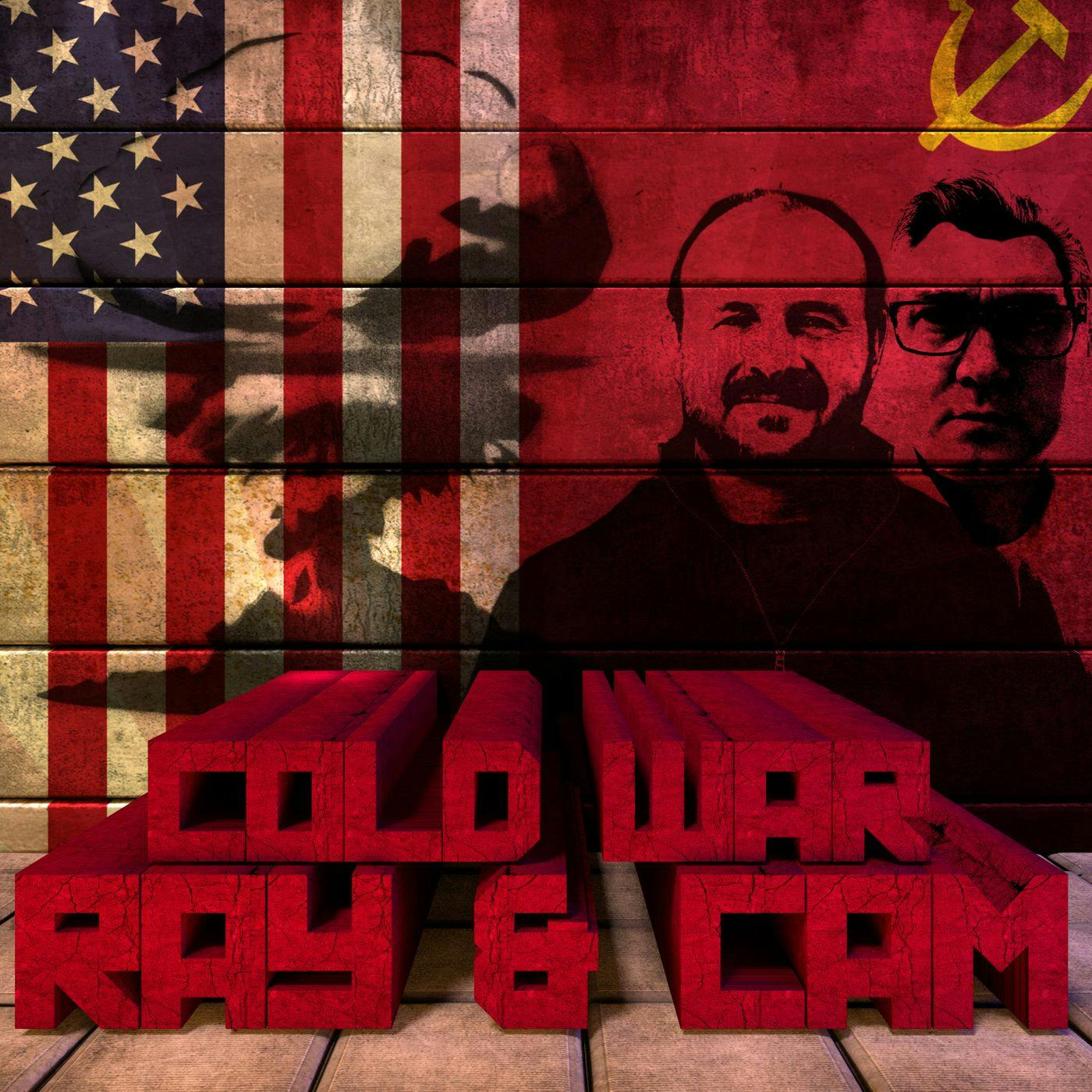
PODCAST · history
A COLD WAR
by Cameron Reilly & Ray Harris
A NSFW, detailed and funny long-form podcast about The Cold War.
-
326
CW 308 — The Land They Were Never Meant To Own (Free Preview)
On this episode we dig into the centrepiece of Cuba's revolution — the Agrarian Reform Act of 1959. We break down exactly what the law said, why even the Cuban Communist Party thought Castro was moving too fast, and how ordinary Cubans from all walks of life started pooling their own money to make it happen. And we set up the moment one wealthy, well-connected American walked into Eisenhower's office and arguably shaped US-Cuba policy for the next 75 years. Learn more about your ad choices. Visit megaphone.fm/adchoices
-
325
CW 308 — The Land They Were Never Meant To Own
On this episode we dig into the centrepiece of Cuba's revolution — the Agrarian Reform Act of 1959. We break down exactly what the law said, why even the Cuban Communist Party thought Castro was moving too fast, and how ordinary Cubans from all walks of life started pooling their own money to make it happen. And we set up the moment one wealthy, well-connected American walked into Eisenhower's office and arguably shaped US-Cuba policy for the next 75 years. Learn more about your ad choices. Visit megaphone.fm/adchoices
-
324
CW 307 — Fidel Does America
Fidel is the newly installed as Prime Minister of Cuba — and immediately does on a charm offensive to the United States, where he wows crowds, spars with Richard Nixon, and somehow convinces a CIA analyst he's basically anti-communist. Meanwhile, back in Washington, Eisenhower is conveniently playing golf... and quietly ordering the CIA to start planning Castro's removal. Learn more about your ad choices. Visit megaphone.fm/adchoices
-
323
CW 307 — Fidel Does America (Free Preview)
Fidel is the newly installed as Prime Minister of Cuba — and immediately does on a charm offensive to the United States, where he wows crowds, spars with Richard Nixon, and somehow convinces a CIA analyst he's basically anti-communist. Meanwhile, back in Washington, Eisenhower is conveniently playing golf... and quietly ordering the CIA to start planning Castro's removal. Learn more about your ad choices. Visit megaphone.fm/adchoices
-
322
Prime Minister Castro - Cold War #306 (free preview)
This week we're deep in the early days of Castro's Cuba — watching a revolutionary figure out he's now got to actually run a country. We cover Castro's sweeping reforms: dissolving Congress, banning political parties, freezing corrupt officials' assets, and the messy reality of ruling from outside the government before finally taking the job of Prime Minister. Along the way, Cameron and Ray dig into why Latin America has never managed to unite against US interference — and why, in 2026, that failure is playing out in real time as Cuba goes dark. Learn more about your ad choices. Visit megaphone.fm/adchoices
-
321
Prime Minister Castro - Cold War #306
This week we're deep in the early days of Castro's Cuba — watching a revolutionary figure out he's now got to actually run a country. We cover Castro's sweeping reforms: dissolving Congress, banning political parties, freezing corrupt officials' assets, and the messy reality of ruling from outside the government before finally taking the job of Prime Minister. Along the way, Cameron and Ray dig into why Latin America has never managed to unite against US interference — and why, in 2026, that failure is playing out in real time as Cuba goes dark. Learn more about your ad choices. Visit megaphone.fm/adchoices
-
320
CW 305 — Revolutionary Justice (or: Shut the Fuck Up, You Dropped Atomic Bombs) (Free Preview)
This week we dig into the messy aftermath of Castro's victory — the revolutionary tribunals, the firing squads, and the international blowback that followed. We also get into Fidel's complicated personal life, including his stunning mistress Naty Revuelta, his secret illegitimate daughter Alina, and the gatekeeper Celia Sanchez who kept everyone at arm's length. Plus, Britain tells Castro to get stuffed when he asks for an apology, and Castro fires back at American media hypocrisy with some genuinely ballsy rhetoric. Learn more about your ad choices. Visit megaphone.fm/adchoices
-
319
CW 305 — Revolutionary Justice (or: Shut the Fuck Up, You Dropped Atomic Bombs)
This week we dig into the messy aftermath of Castro's victory — the revolutionary tribunals, the firing squads, and the international blowback that followed. We also get into Fidel's complicated personal life, including his stunning mistress Naty Revuelta, his secret illegitimate daughter Alina, and the gatekeeper Celia Sanchez who kept everyone at arm's length. Plus, Britain tells Castro to get stuffed when he asks for an apology, and Castro fires back at American media hypocrisy with some genuinely ballsy rhetoric. Learn more about your ad choices. Visit megaphone.fm/adchoices
-
318
CW 304 — The Dove Has Landed (Free Preview)
It's January 1959, and Fidel Castro has just pulled off the impossible — a ragtag band of bearded rebels from the Sierra Maestra mountains has toppled the Batista dictatorship, and all of Cuba is euphoric. In Episode 304 of A Cold War, Cameron and Ray follow Castro's triumphant five-day journey from Santiago to Havana, tracking the 32-year-old revolutionary as he rolls into the capital on top of a tank, delivers a famously humble speech at Camp Columbia with a white dove settling on his shoulder, and is introduced to 50 million Americans via a very enthusiastic Ed Sullivan. But the honeymoon can't last forever. Behind the jubilation lies a country that needs to be governed, and Castro — equal parts rock star, military commander, and political improviser — is only sleeping two or three hours a night while trying to hold together a fractious coalition of communists, right-wingers, student radicals, and old rebels, none of whom entirely agree on what comes next. The rival Directorio Revolucionario seizes tanks and weapons demanding their share of glory, the new president Manuel Urrutia is already a problem in the making, and Che Guevara is quietly recovering from asthma at a beach house, wrestling with his own role in the new order. Celia Sánchez controls access to Castro like a one-woman firewall, while Castro himself roams Havana in a Jeep, micromanaging everything and holding shadow meetings with Communist Party secretary Blas Roca, knowing he needs their discipline and organisation but unable to admit it publicly. Cameron and Ray draw brilliant parallels between Castro's messianic arrival and Elvis Presley's Vegas comeback — both men defying expectations, both arriving in a blaze of spectacle after years in the wilderness — and ask the big question: can a revolutionary actually become a ruler? Learn more about your ad choices. Visit megaphone.fm/adchoices
-
317
CW 304 — The Dove Has Landed
It's January 1959, and Fidel Castro has just pulled off the impossible — a ragtag band of bearded rebels from the Sierra Maestra mountains has toppled the Batista dictatorship, and all of Cuba is euphoric. In Episode 304 of A Cold War, Cameron and Ray follow Castro's triumphant five-day journey from Santiago to Havana, tracking the 32-year-old revolutionary as he rolls into the capital on top of a tank, delivers a famously humble speech at Camp Columbia with a white dove settling on his shoulder, and is introduced to 50 million Americans via a very enthusiastic Ed Sullivan. But the honeymoon can't last forever. Behind the jubilation lies a country that needs to be governed, and Castro — equal parts rock star, military commander, and political improviser — is only sleeping two or three hours a night while trying to hold together a fractious coalition of communists, right-wingers, student radicals, and old rebels, none of whom entirely agree on what comes next. The rival Directorio Revolucionario seizes tanks and weapons demanding their share of glory, the new president Manuel Urrutia is already a problem in the making, and Che Guevara is quietly recovering from asthma at a beach house, wrestling with his own role in the new order. Celia Sánchez controls access to Castro like a one-woman firewall, while Castro himself roams Havana in a Jeep, micromanaging everything and holding shadow meetings with Communist Party secretary Blas Roca, knowing he needs their discipline and organisation but unable to admit it publicly. Cameron and Ray draw brilliant parallels between Castro's messianic arrival and Elvis Presley's Vegas comeback — both men defying expectations, both arriving in a blaze of spectacle after years in the wilderness — and ask the big question: can a revolutionary actually become a ruler? Learn more about your ad choices. Visit megaphone.fm/adchoices
-
316
CW 303 — Fangio, Fatigues, and the Fall of Batista
It’s April 1958, and Cuba is a powder keg with a sputtering fuse. Fulgencio Batista is bleeding support from every direction — the church, the business elite, even his American backers — while Fidel Castro’s rebel movement is growing stronger in the Sierra Maestra mountains. But before the final reckoning, the revolution nearly tears itself apart. Against Castro’s better judgment, the urban resistance pushes ahead with a general strike on April 9th — a catastrophic miscalculation. Batista’s forces, tipped off and fully prepared, crush it almost before it begins, leaving fifty dead in the streets and Castro furious, writing to his aide Celia Sánchez that he is “a shit who can decide nothing at all.” Then Batista doubles down, launching Operation End Fidel — a massive two-month military offensive with 10,000 soldiers, artillery, aviation, and armour sent into the mountains to destroy the rebellion once and for all. It fails completely. Entire battalions walk out of the Sierra without their weapons, handed over meekly to the Red Cross. Meanwhile, in one of the revolution’s strangest PR coups, Castro’s men kidnap Formula One legend Juan Manuel Fangio — “El Maestro” — on the eve of the Cuban Grand Prix, hold him politely in a safe house with a television, and release him after 26 hours, making Batista’s police look utterly helpless on the world stage. By December, Che Guevara and Camilo Cienfuegos are sweeping westward, capturing Santa Clara in a pivotal battle. On New Year’s Eve 1958, Batista dedicates a towering marble statue of Christ overlooking Havana Harbour — and then, at midnight, quietly grabs his passport, loads crates of cash (some $400 million) onto a plane, and flees to the Dominican Republic and the welcoming arms of fellow dictator Trujillo. By New Year’s morning, the Cuban media is reporting it all, church bells are ringing across the island, and Castro is already on the radio making clear that whatever new junta Batista’s generals try to install, the revolution will accept nothing less than total victory — on his terms, and his alone. Learn more about your ad choices. Visit megaphone.fm/adchoices
-
315
CW 303 — Fangio, Fatigues, and the Fall of Batista (Free Preview)
It’s April 1958, and Cuba is a powder keg with a sputtering fuse. Fulgencio Batista is bleeding support from every direction — the church, the business elite, even his American backers — while Fidel Castro’s rebel movement is growing stronger in the Sierra Maestra mountains. But before the final reckoning, the revolution nearly tears itself apart. Against Castro’s better judgment, the urban resistance pushes ahead with a general strike on April 9th — a catastrophic miscalculation. Batista’s forces, tipped off and fully prepared, crush it almost before it begins, leaving fifty dead in the streets and Castro furious, writing to his aide Celia Sánchez that he is “a shit who can decide nothing at all.” Then Batista doubles down, launching Operation End Fidel — a massive two-month military offensive with 10,000 soldiers, artillery, aviation, and armour sent into the mountains to destroy the rebellion once and for all. It fails completely. Entire battalions walk out of the Sierra without their weapons, handed over meekly to the Red Cross. Meanwhile, in one of the revolution’s strangest PR coups, Castro’s men kidnap Formula One legend Juan Manuel Fangio — “El Maestro” — on the eve of the Cuban Grand Prix, hold him politely in a safe house with a television, and release him after 26 hours, making Batista’s police look utterly helpless on the world stage. By December, Che Guevara and Camilo Cienfuegos are sweeping westward, capturing Santa Clara in a pivotal battle. On New Year’s Eve 1958, Batista dedicates a towering marble statue of Christ overlooking Havana Harbour — and then, at midnight, quietly grabs his passport, loads crates of cash (some $400 million) onto a plane, and flees to the Dominican Republic and the welcoming arms of fellow dictator Trujillo. By New Year’s morning, the Cuban media is reporting it all, church bells are ringing across the island, and Castro is already on the radio making clear that whatever new junta Batista’s generals try to install, the revolution will accept nothing less than total victory — on his terms, and his alone. Learn more about your ad choices. Visit megaphone.fm/adchoices
-
314
The Mountain Shadow Government - Cold War 302 (Cuban Revolution #27)
In this episode, Cameron and Ray dive into the pivotal year of 1958, charting Fidel Castro’s transition from a guerrilla insurgent to the head of a sophisticated shadow government. As the Rebel Army swelled from a handful of survivors to a force of thousands, Castro moved beyond mere military resistance to establish a "veritable military agrarian state" within the Sierra Maestra. We explore the infrastructure of the revolution—including hospitals, schools, and even cigar factories—and the strategic brilliance of Law Number Three, which promised "land to the tiller." Meanwhile, back in Havana, Fulgencio Batista’s grip on power began to fracture as he lost the support of the Catholic Church, the judiciary, and eventually his primary benefactor, the United States. From the humorous origins of "Ray Crocs" to the grim reality of domestic sabotage, this episode examines how the revolutionary movement effectively out-governed the state before the final blow was ever struck. Learn more about your ad choices. Visit megaphone.fm/adchoices
-
313
The Mountain Shadow Government - Cold War 302 (Cuban Revolution #27)
In this episode, Cameron and Ray dive into the pivotal year of 1958, charting Fidel Castro’s transition from a guerrilla insurgent to the head of a sophisticated shadow government. As the Rebel Army swelled from a handful of survivors to a force of thousands, Castro moved beyond mere military resistance to establish a "veritable military agrarian state" within the Sierra Maestra. We explore the infrastructure of the revolution—including hospitals, schools, and even cigar factories—and the strategic brilliance of Law Number Three, which promised "land to the tiller." Meanwhile, back in Havana, Fulgencio Batista’s grip on power began to fracture as he lost the support of the Catholic Church, the judiciary, and eventually his primary benefactor, the United States. From the humorous origins of "Ray Crocs" to the grim reality of domestic sabotage, this episode examines how the revolutionary movement effectively out-governed the state before the final blow was ever struck. Learn more about your ad choices. Visit megaphone.fm/adchoices
-
312
The Miami Pact - Cold War 301
In this episode, Cameron and Ray delve into the complex internal and external power struggles facing Fidel Castro in the late 1950s as he attempts to consolidate his leadership over the anti-Batista movement. The discussion highlights the stark divide between Castro’s rural guerrilla army—influenced by the increasingly Marxist leanings of Raul Castro and Che Guevara—and the urban resistance led by Frank País, who sought middle-class and American support. The hosts explore the "draconian" discipline maintained within the rebel ranks, including the summary execution of spies, and the elimination of rival revolutionary groups like the Directorio Revolucionario after their failed 1957 assassination attempt on Batista. The episode concludes with Castro’s calculated rejection of the "Miami Pact," a move designed to prevent the old political elite from co-opting the revolution and to ensure that his guerrilla forces remain the ultimate authority in a post-Batista Cuba. Learn more about your ad choices. Visit megaphone.fm/adchoices
-
311
Castro Goes Viral. - CW 300 (Free)
Episode 300 marks a major waypoint for the Cold War Podcast, and the discussion dives straight back into the hard mechanics of revolution. Castro is alive, hiding in the Sierra Maestra with a tiny guerrilla force, but survival alone isn’t victory. This episode explores the real problem facing Fidel Castro in 1957: how to overthrow a dictator when you barely have a few dozen fighters, almost no supplies, and multiple rival revolutionary movements competing for legitimacy. Cameron and Ray unpack how revolutions are built in parallel layers—mountain guerrillas, urban resistance networks, propaganda operations, logistics pipelines, and political alliances—and how Castro slowly stitched these together into something that looked like a shadow government. The episode focuses heavily on Castro’s extraordinary media strategy, his manipulation of foreign journalists, and the way American media unexpectedly turned him into a global celebrity before he ever seized power. Along the way, the discussion examines the growing ideological tensions between urban moderates and radical guerrillas, the role of figures like Che Guevara, Celia Sánchez, and Frank País, and the contradictions of courting middle-class support while drifting steadily toward Marxism. By the end, the revolution is no longer just a jungle insurgency—it’s a fragile, volatile coalition hurtling toward open confrontation. Learn more about your ad choices. Visit megaphone.fm/adchoices
-
310
Castro Goes Viral - CW 300
Episode 300 marks a major waypoint for the Cold War Podcast, and the discussion dives straight back into the hard mechanics of revolution. Castro is alive, hiding in the Sierra Maestra with a tiny guerrilla force, but survival alone isn’t victory. This episode explores the real problem facing Fidel Castro in 1957: how to overthrow a dictator when you barely have a few dozen fighters, almost no supplies, and multiple rival revolutionary movements competing for legitimacy. Cameron and Ray unpack how revolutions are built in parallel layers—mountain guerrillas, urban resistance networks, propaganda operations, logistics pipelines, and political alliances—and how Castro slowly stitched these together into something that looked like a shadow government. The episode focuses heavily on Castro’s extraordinary media strategy, his manipulation of foreign journalists, and the way American media unexpectedly turned him into a global celebrity before he ever seized power. Along the way, the discussion examines the growing ideological tensions between urban moderates and radical guerrillas, the role of figures like Che Guevara, Celia Sánchez, and Frank País, and the contradictions of courting middle-class support while drifting steadily toward Marxism. By the end, the revolution is no longer just a jungle insurgency—it’s a fragile, volatile coalition hurtling toward open confrontation. Learn more about your ad choices. Visit megaphone.fm/adchoices
-
309
Castro Is Dead. Long Live Castro - CW 299
In this episode, Cameron and Ray pick up the Cuban Revolution story at its most fragile moment: Fidel Castro has just landed in eastern Cuba with 82 men, most of them dead, scattered, or captured within days. Batista’s regime confidently declares Castro dead, the international press runs with it, and the revolution appears finished before it has begun. But history, as usual, has other plans. From hiding under sugarcane leaves to scraping together a band of 19 survivors in the Sierra Maestra, Castro learns guerrilla warfare the hard way. The episode traces his first small victories, the brutal countermeasures of the Batista regime, and the human cost borne by peasants caught in between. The story then pivots to one of the most consequential acts of propaganda in Cold War history: Castro’s calculated courtship of the international press. Through Herbert Matthews’ risky journey into the mountains and his front-page New York Times reporting, the world learns that Fidel Castro is very much alive, organised, and growing. This episode explores how myth, media, theatre, and violence intertwine at the birth of a revolution—and how a handful of men with rifles, cigars, and a journalist changed global perceptions overnight. Learn more about your ad choices. Visit megaphone.fm/adchoices
-
308
The Worst Landing in Revolutionary History - CW 298
Episode 298 follows Fidel Castro’s disastrous return to Cuba aboard the *Granma* and the near-total collapse of his carefully laid plans within days of landing. What was meant to be a coordinated uprising turns into a brutal fight for survival as delays at sea, bad weather, poor logistics, and immediate detection by Batista’s forces leave Castro’s men sick, starving, scattered, and under constant aerial and ground attack. Drawing heavily on Castro’s later reflections and Che Guevara’s diaries, the episode explores leadership under failure, revolutionary psychology, and the razor-thin line between annihilation and persistence. With only a handful of surviving fighters and a few rifles, Castro reframes catastrophe into resolve, convinced that even seven guns are enough to win a revolution. Learn more about your ad choices. Visit megaphone.fm/adchoices
-
307
To Cuba or to Martyrdom - CW 297
In this episode of *The Cold War*, Cameron and Ray trace the strange, lucky, unlikely, often chaotic road that led Fidel Castro, Che Guevara, and their small band of exiles from a rented farm outside Mexico City to the deck of the *Granma* in late 1956. The show follows their botched guerrilla training, their arrest by Mexican police, Che’s absolute refusal to hide his communism, the ideological debates that erupted right inside the interrogation room, and the role of former presidents of Mexico and Cuba in getting them released. Fidel’s memoirs come alive in long excerpts about Stalin, Trotsky, Che’s stubborn fearlessness, and the enormous role of luck in history. The episode finishes with Che’s own recollection of meeting Fidel, forging their bond, and boarding the *Granma* with the now-famous vow: *“In 1956, we will be free or we will be martyrs.”* Learn more about your ad choices. Visit megaphone.fm/adchoices
-
306
When Fidel Met Che - Cold War 296
In this episode, Fidel Castro steps out of prison in 1955 and straight into revolutionary planning. We trace his transformation from imprisoned dissident to a man preparing an armed insurrection in exile. We explore his belief in luck, conviction and humility, his frustrating attempt to re-enter Cuban politics, his move to Mexico, and his first electrifying meeting with Ernesto “Che” Guevara. Cameron and Ray dig into why Castro’s charisma made him dangerous to Batista, how Che’s time in Guatemala radicalised him, and how American corporate interests helped crush democracy in Latin America. Along the way we hear about cigars, motorcycle diaries, CIA “successes” that produced decades of bloodshed, Cuban rum, and why delusional certainty sometimes wins revolutions. Learn more about your ad choices. Visit megaphone.fm/adchoices
-
305
History Will Absolve Me - CW 295 Preview
Fidel Castro’s first attempt to ignite revolution in Cuba ends in disaster — but also forges the legend. We follow the aftermath of the failed 1953 Moncada Barracks raid: the brutal reprisals, Fidel’s near-execution, the unlikely lieutenant who saves him, the public opinion shift as Batista’s regime overreaches, and Fidel’s transformation from fiery idealist to imprisoned revolutionary intellectual. We hear how History Will Absolve Me is born, what Fidel is reading behind bars (spoiler: Trotsky and Roosevelt), and how his personal life gets… complicated. By the time he’s released after only two years, Castro is no longer just a nuisance — he’s become the most famous man in Cuba and an unstoppable symbol of rebellion.  Learn more about your ad choices. Visit megaphone.fm/adchoices
-
304
History Will Absolve Me - CW 295
Fidel Castro’s first attempt to ignite revolution in Cuba ends in disaster — but also forges the legend. We follow the aftermath of the failed 1953 Moncada Barracks raid: the brutal reprisals, Fidel’s near-execution, the unlikely lieutenant who saves him, the public opinion shift as Batista’s regime overreaches, and Fidel’s transformation from fiery idealist to imprisoned revolutionary intellectual. We hear how History Will Absolve Me is born, what Fidel is reading behind bars (spoiler: Trotsky and Roosevelt), and how his personal life gets… complicated. By the time he’s released after only two years, Castro is no longer just a nuisance — he’s become the most famous man in Cuba and an unstoppable symbol of rebellion.  Learn more about your ad choices. Visit megaphone.fm/adchoices
-
303
Castro’s First Swing: The Moncada Misfire (preview)
In this episode, Cam and Ray bring their trademark banter and historical nerdery to the story of Fidel Castro’s first attempt at revolution — the ill-fated 1953 Moncada Barracks attack. What starts as a coup joke about Batista’s boredom quickly spirals into a lively mix of history and comedy. We follow a 26-year-old Fidel as he decides that ballots and lawsuits won’t topple a corrupt regime, so he turns to bullets instead. The episode explores his planning, paranoia, and sheer audacity as he leads a small group of poorly armed men in a doomed assault on one of Cuba’s largest military garrisons. Along the way, the boys detour into mobsters, Catholic apostles, ham-radio fanatics, and whether Ray actually has friends who play pool. By the end, we’re left with Fidel’s first great failure — the Moncada disaster — and the foreshadowing of the revolution to come. Learn more about your ad choices. Visit megaphone.fm/adchoices
-
302
Castro’s First Swing: The Moncada Misfire - Cold War #294
In this episode, Cam and Ray bring their trademark banter and historical nerdery to the story of Fidel Castro’s first attempt at revolution — the ill-fated 1953 Moncada Barracks attack. What starts as a coup joke about Batista’s boredom quickly spirals into a lively mix of history and comedy. We follow a 26-year-old Fidel as he decides that ballots and lawsuits won’t topple a corrupt regime, so he turns to bullets instead. The episode explores his planning, paranoia, and sheer audacity as he leads a small group of poorly armed men in a doomed assault on one of Cuba’s largest military garrisons. Along the way, the boys detour into mobsters, Catholic apostles, ham-radio fanatics, and whether Ray actually has friends who play pool. By the end, we’re left with Fidel’s first great failure — the Moncada disaster — and the foreshadowing of the revolution to come. Learn more about your ad choices. Visit megaphone.fm/adchoices
-
301
CW #293 (preview) - Castro’s Crossroads
In this preview of Cold War #293, Cameron and Ray dig into the aftermath of Batista’s March 1952 coup in Cuba and how it shaped Fidel Castro’s early strategies. The conversation explores Castro’s proclamation denouncing the coup, his first failed attempts to rally the public, and why the Cuban people weren’t yet ready for revolution. We see how Castro pivoted from politics to pamphlets, protests, lawsuits, and eventually the realization that only a professional revolutionary force could succeed. Along the way, the hosts connect Batista’s propaganda playbook with U.S. media bias, draw parallels to Iran’s 1953 coup, and reflect on the timeless tactics of seizing power. They also detour into the Mob’s growing influence in Havana and the darker history of honeypot operations linking Epstein, Maxwell, and intelligence agencies. For full episodes, check out Cam & Ray Cold War in the podcast app of your choice or go to acoldwar.com. Learn more about your ad choices. Visit megaphone.fm/adchoices
-
300
CW #293 - Castro’s Crossroads
In this episode of Cold War, Cameron and Ray dig into the aftermath of Batista’s March 1952 coup in Cuba and how it shaped Fidel Castro’s early strategies. The conversation explores Castro’s proclamation denouncing the coup, his first failed attempts to rally the public, and why the Cuban people weren’t yet ready for revolution. We see how Castro pivoted from politics to pamphlets, protests, lawsuits, and eventually the realization that only a professional revolutionary force could succeed. Along the way, the hosts connect Batista’s propaganda playbook with U.S. media bias, draw parallels to Iran’s 1953 coup, and reflect on the timeless tactics of seizing power. They also detour into the Mob’s growing influence in Havana and the darker history of honeypot operations linking Epstein, Maxwell, and intelligence agencies. Learn more about your ad choices. Visit megaphone.fm/adchoices
-
299
CW #292 Preview - Batista’s Bloodless Coup: Havana 1952
In this preview of episode of The Cold War, Cameron and Ray take us to Havana in 1952, when Fulgencio Batista staged a meticulously planned coup d’état. They walk through the midnight maneuvers at Camp Columbia, the arrest of generals, the swift control of communication hubs, and the apathy of the Cuban people after years of corruption. We see how Batista positioned himself as “the man” while suspending civil liberties, dissolving Congress, and reassuring both the Americans and local elites. Alongside this, Fidel Castro makes his first serious moves as a revolutionary—drafting a proclamation condemning Batista’s coup and beginning the trajectory that would define his life. The conversation ties Batista’s actions to lessons from Rome, Mussolini, and even contemporary American politics, blending history, irony, and sharp commentary. Learn more about your ad choices. Visit megaphone.fm/adchoices
-
298
CW #292 - Batista’s Bloodless Coup: Havana 1952
In this episode of The Cold War, Cameron and Ray take us to Havana in 1952, when Fulgencio Batista staged a meticulously planned coup d’état. They walk through the midnight maneuvers at Camp Columbia, the arrest of generals, the swift control of communication hubs, and the apathy of the Cuban people after years of corruption. We see how Batista positioned himself as “the man” while suspending civil liberties, dissolving Congress, and reassuring both the Americans and local elites. Alongside this, Fidel Castro makes his first serious moves as a revolutionary—drafting a proclamation condemning Batista’s coup and beginning the trajectory that would define his life. The conversation ties Batista’s actions to lessons from Rome, Mussolini, and even contemporary American politics, blending history, irony, and sharp commentary. Learn more about your ad choices. Visit megaphone.fm/adchoices
-
297
CW #291 Free - The Lawyer for the Poor
In this episode, Cameron and Ray continue the story of Fidel Castro’s early years, charting his transformation from a fiery young activist entangled with street gangs into a determined reformer and aspiring politician. They explore how Castro navigated gang violence in Havana, his involvement with the nonviolent September 30th movement, his bold courtroom defenses, and his law practice dedicated to the poor. The episode also covers his growing disillusionment with Cuba’s political parties, his clashes with President Prío’s corruption, his unlikely meeting with Batista, and his relentless drive to clean up his reputation and pursue political power. Along the way, Cam and Ray weave in colorful anecdotes, wry humor, and comparisons to figures from Rome and Napoleon to highlight the revolutionary forces shaping Castro’s trajectory. Learn more about your ad choices. Visit megaphone.fm/adchoices
-
296
CW #291 - The Lawyer for the Poor
In this episode, Cameron and Ray continue the story of Fidel Castro’s early years, charting his transformation from a fiery young activist entangled with street gangs into a determined reformer and aspiring politician. They explore how Castro navigated gang violence in Havana, his involvement with the nonviolent September 30th movement, his bold courtroom defenses, and his law practice dedicated to the poor. The episode also covers his growing disillusionment with Cuba’s political parties, his clashes with President Prío’s corruption, his unlikely meeting with Batista, and his relentless drive to clean up his reputation and pursue political power. Along the way, Cam and Ray weave in colorful anecdotes, wry humor, and comparisons to figures from Rome and Napoleon to highlight the revolutionary forces shaping Castro’s trajectory. Learn more about your ad choices. Visit megaphone.fm/adchoices
-
295
CW 290 Free - The Making Of Fidel
Cameron and Ray pick up Fidel Castro’s story in 1948 as he returns from Colombia in the wake of the Bogotazo riots. We follow Castro through his early 20s as he campaigns for Eduardo Chibás, clashes with Havana police over accusations of corruption, and narrowly escapes being framed for murder. The conversation dives into the student-led bus fare protests—linked to shady U.S. business deals—that propelled Castro into the spotlight. We hear about his whirlwind romance and three-month honeymoon in the United States, his growing fascination with Marxist thought, and his balancing act between rival student gangs and political factions. The episode ends with the murder of his close friend, fellow activist Manolo Fuentes, a turning point that forces Castro to reconsider his alliances and the dangerous reality of Havana’s violent political landscape. Learn more about your ad choices. Visit megaphone.fm/adchoices
-
294
CW 290 - The Making of Fidel
Cameron and Ray pick up Fidel Castro’s story in 1948 as he returns from Colombia in the wake of the Bogotazo riots. We follow Castro through his early 20s as he campaigns for Eduardo Chibás, clashes with Havana police over accusations of corruption, and narrowly escapes being framed for murder. The conversation dives into the student-led bus fare protests—linked to shady U.S. business deals—that propelled Castro into the spotlight. We hear about his whirlwind romance and three-month honeymoon in the United States, his growing fascination with Marxist thought, and his balancing act between rival student gangs and political factions. The episode ends with the murder of his close friend, fellow activist Manolo Fuentes, a turning point that forces Castro to reconsider his alliances and the dangerous reality of Havana’s violent political landscape. Learn more about your ad choices. Visit megaphone.fm/adchoices
-
293
CW 289 Free - The Rise Of Fidel
In this episode, Cam and Ray kick off their deep dive into the life and legend of Fidel Castro. Picking up from the Batista coup of 1952, they trace Fidel’s early years—born illegitimate on his father’s sugar plantation, educated by Jesuits, and shaped by political violence. We follow Fidel through elite boarding schools, law school radicalisation, and his early attempts to overthrow regimes across Latin America. From jumping ship with a machine gun to surviving student death threats, Castro emerges as a man driven by revolutionary ideals, a hunger for justice, and an almost messianic sense of destiny. Along the way, we encounter Perón, Guevara, Trujillo, and Gabriel García Márquez—and we get a glimpse of the revolutionary vanguard that would eventually upend Cuba forever. Learn more about your ad choices. Visit megaphone.fm/adchoices
-
292
CW 289 - The Rise Of Fidel
In this episode, Cam and Ray kick off their deep dive into the life and legend of Fidel Castro. Picking up from the Batista coup of 1952, they trace Fidel’s early years—born illegitimate on his father’s sugar plantation, educated by Jesuits, and shaped by political violence. We follow Fidel through elite boarding schools, law school radicalisation, and his early attempts to overthrow regimes across Latin America. From jumping ship with a machine gun to surviving student death threats, Castro emerges as a man driven by revolutionary ideals, a hunger for justice, and an almost messianic sense of destiny. Along the way, we encounter Perón, Guevara, Trujillo, and Gabriel García Márquez—and we get a glimpse of the revolutionary vanguard that would eventually upend Cuba forever. Learn more about your ad choices. Visit megaphone.fm/adchoices
-
291
CS 288 Preview - Seven Governments, One Puppetmaster
In this raucous and revelatory episode of The Cold War Podcast, Cameron and Ray finally reach the man of the hour: Fulgencio Batista. From humble military stenographer to kingmaker of a chaotic Cuba, Batista’s rise is traced through coups, constitutions, and crushing dissent. Cameron performs a blistering freestyle rap tribute to Ray (“Ray Bear Has No Hair”), then the duo dive into Batista’s reign, the boom years of WWII, puppet governments, violent suppression of opposition, and the eerie parallels to authoritarian creep in modern democracies. The episode also explores the cultural fallout of constant violence, Fidel Castro’s formative influences, and the suicide of Eduardo Chibás on live radio—a moment that cemented Castro’s revolutionary zeal. Come for the history, stay for the dick jokes, cos this one’s got everything. Learn more about your ad choices. Visit megaphone.fm/adchoices
-
290
CW 288 Member - Seven Governments, One Puppetmaster
In this raucous and revelatory episode of The Cold War Podcast, Cameron and Ray finally reach the man of the hour: Fulgencio Batista. From humble military stenographer to kingmaker of a chaotic Cuba, Batista’s rise is traced through coups, constitutions, and crushing dissent. Cameron performs a blistering freestyle rap tribute to Ray (“Ray Bear Has No Hair”), then the duo dive into Batista’s reign, the boom years of WWII, puppet governments, violent suppression of opposition, and the eerie parallels to authoritarian creep in modern democracies. The episode also explores the cultural fallout of constant violence, Fidel Castro’s formative influences, and the suicide of Eduardo Chibás on live radio—a moment that cemented Castro’s revolutionary zeal. Come for the history, stay for the dick jokes, cos this one’s got everything. Learn more about your ad choices. Visit megaphone.fm/adchoices
-
289
Cold War #287 (free)
In this episode of the Cold War podcast, Cam and Ray continue their wild ride through Cuban history, focusing on the rise and fall of Gerardo “Macho Man” Machado, the proto-strongman president who turned Cuba into a playground for rich tourists—and a pressure cooker for everyone else. From political repression and violent union crackdowns to communist organizing and student uprisings, this chapter sets the stage for Cuba’s eventual revolution. Along the way, we meet fascinating figures like Julio Antonio Mella (the OG Castro prototype), discuss the communist roots of Cuban resistance, and learn how America played both arsonist and firefighter in the region. Plus: cigars, lesbians, and martinis. You’re welcome. Learn more about your ad choices. Visit megaphone.fm/adchoices
-
288
Cold War #287 - The Fall of Macho Man Machado
In this episode of the Cold War podcast, Cam and Ray continue their wild ride through Cuban history, focusing on the rise and fall of Gerardo “Macho Man” Machado, the proto-strongman president who turned Cuba into a playground for rich tourists—and a pressure cooker for everyone else. From political repression and violent union crackdowns to communist organizing and student uprisings, this chapter sets the stage for Cuba’s eventual revolution. Along the way, we meet fascinating figures like Julio Antonio Mella (the OG Castro prototype), discuss the communist roots of Cuban resistance, and learn how America played both arsonist and firefighter in the region. Plus: cigars, lesbians, and martinis. You’re welcome. Learn more about your ad choices. Visit megaphone.fm/adchoices
-
287
Cold War #286 - The Macho Man Cometh (Cuban Revolution #11)
In this wild episode, Cam and Ray kick things off with a “Cam-hole” into the politics and economics of Cuba in the early 20th century. From rigged elections to sugar-fueled financial collapses, and from macho presidents to the American colonization of Cuba’s economy, it’s a vivid portrait of how imperialism, tourism, and opportunistic strongmen shaped the island nation. Expect dead bankers, disco communists, FDR parallels, Einstein in the slums, Hemingway’s horniness, and some brutal political satire. Learn more about your ad choices. Visit megaphone.fm/adchoices
-
286
285 - Cuban Schemes & Sugar Dreams
In this episode, Cam and Ray pick up the story of post-independence Cuba as it slides from colonialism into an economic and racial stranglehold orchestrated by the United States. They trace the rise and fall of early Cuban presidents like José Miguel Gómez and Mario García Menocal, highlighting the rampant corruption, U.S.-controlled infrastructure, and systematic exclusion of Black Cubans from political and economic power. From the installation of U.S. companies like ITT and United Fruit to the brutal repression of the Independent Colored Party in 1912, the episode paints a damning portrait of Cuba as a pseudo-independent client state. Cam and Ray also reflect on the romanticised myths of American benevolence, challenge common perceptions of anarchism, and tie it all into modern parallels of power, race, and empire. Learn more about your ad choices. Visit megaphone.fm/adchoices
-
285
CW #284 - Freedomish
In this episode, Cameron opens with a wild midnight ER visit that turns into a rumination on aging, mortality, and kung fu-induced hypochondria. Once the chest pains are out of the way, we pick up where we left off on Cuba’s “independence” after the Spanish-American War - President Tomás Estrada Palma, the illusion of Cuban self-rule under the Platt Amendment, and the classic U.S. playbook of indirect colonialism. We unpack how American businesses flooded Cuba, bought up the land, rigged elections, and backed friendly elites. Learn more about your ad choices. Visit megaphone.fm/adchoices
-
284
#28 - Yalta: Let The Small Birds Sing
Like he had before Tehran, FDR refused the idea of an Anglo-American bloc when he and Churchill met briefly in Malta before the conference. He's trying hard to avoid putting Stalin on the defensive. Because he knows that in the game of wartime diplomacy, the player with the most troops on the ground had the loudest voice. HOW TO LISTEN If you're already a subscriber, you can listen to the full show in the player below or subscribe through iTunes or any podcast player. If you haven't heard any of the series and want to know if you'll like it before you sign up, you can listen to the first six episodes totally free and the first 20 minutes of our premium episodes using the player above. You might want to start with Episode 1, unless of course you're an old school George Lucas fan, in which case feel free to start at Episode IV. We don't recommend it though. L If you haven't already, join our Facebook page and you'll be in the running to win prizes in our regular "Share The Love" and other competitions. If you'd like a chance to win a prize, write a funny or insightful review on iTunes. Learn more about your ad choices. Visit megaphone.fm/adchoices
-
283
Cold War #283 - The Platt Amendment
Following the Spanish-American War, the U.S. Occupation Government of Cuba forced elections. They tried to engineer Cuba into voting to become one of the United States - instead the Cuban people chose independence. So the U.S. introduced the Platt Amendment, aimed at long term control over Cuba's military and economy while declaring them to be a sovereign nation. Learn more about your ad choices. Visit megaphone.fm/adchoices
-
282
CW 282 - Rigging Democracy
We look at the complexities surrounding America's occupation of Cuba at the dawn of the 20th century - General Leonard Wood’s appointment as governor, his controversial educational and economic reforms favoring American interests, and the racial tensions arising from imported labor practices. We look at America's strategic objectives behind colonial expansion, comparisons to Britain's occupation tactics in Egypt, and the intricacies of Cuba's manipulated elections aimed at ensuring American influence persisted post-occupation - the realities of imperialism, independence movements, and geopolitical manipulation, setting the stage for understanding the roots of the Cuban revolution. Learn more about your ad choices. Visit megaphone.fm/adchoices
-
281
Cold War 281 - The American Land Grab
Towards the end of 1899, a new American governor was appointed in Cuba - General Leonard Wood, the recent commander of the Rough Riders along with Teddy Roosevelt. He set up thousands of free schools and introduced economic reforms - which caused a massive wave of dispossession and bankruptcy and enabled an American land grab. Learn more about your ad choices. Visit megaphone.fm/adchoices
-
280
Cold War 280 - A U.S. Military Dictatorship
So, it's 1898, the Spanish have evacuated the island of Cuba after 400 years of rule, and the United States have taken their place. They ran Cuba as a military dictatorship. General Brooke, the first U.S. governor of the island, said, "There is not a sensible man who thinks we can leave for a long time." Learn more about your ad choices. Visit megaphone.fm/adchoices
-
279
Cold War 279 - Gunpowder In Hell (Cuban Revolution #4)
When the U.S. troops landed in Cuba, it changed the nature of the war. The old racism returned. Of course, when the war was over in July, the U.S. had no intention of letting the Cuban people have their independence. As the commander of US forces in Cuba said: "Why, these people are no more fit for self-government than gunpowder is for hell." In the fight for freedom, lives had been lost and the country had been wiped out economically. Yet the Cubans still weren't going to get their independence. Learn more about your ad choices. Visit megaphone.fm/adchoices
-
278
Cold War 278 - Rough Riders, Buffalo Soldiers
So in January of 1898, the Cubans were on the verge of victory in their battle for independence against Spain. And while the US government was happy to see Spain out of the picture, they had no intention of allowing Cuba to be independent. Since the days of Jefferson back in the 1790s, almost every presidential administration in Washington had imagined Cuba would eventually be US territory. The newly elected President, William McKinley, wanted to take Cuba without war if possible. But some, like future President Teddy Roosevelt, couldn't wait to turn it into a war. Learn more about your ad choices. Visit megaphone.fm/adchoices
-
277
Cold War #277 - José Martí (Cuban Revolution #2)
In this episode we introduce one of Cuba's greatest heroes - José Martí. Castro frequently referred to Martí as the “intellectual author” of the Cuban revolution. He fought to free Cuba from Spain and to protect it from the hungry ambitions of the United States. Meanwhile, the creation of "Yellow Journalism" invented the modern American propaganda playbook - how to convince the country to go to war to protect the commercial interests of a few rich men. Learn more about your ad choices. Visit megaphone.fm/adchoices
No matches for "" in this podcast's transcripts.
No topics indexed yet for this podcast.
Loading reviews...
ABOUT THIS SHOW
A NSFW, detailed and funny long-form podcast about The Cold War.
HOSTED BY
Cameron Reilly & Ray Harris
CATEGORIES
Loading similar podcasts...
URL copied to clipboard!