
PODCAST · business
Afri-CAN by Pharo Foundation
by Afri-CAN Podcast
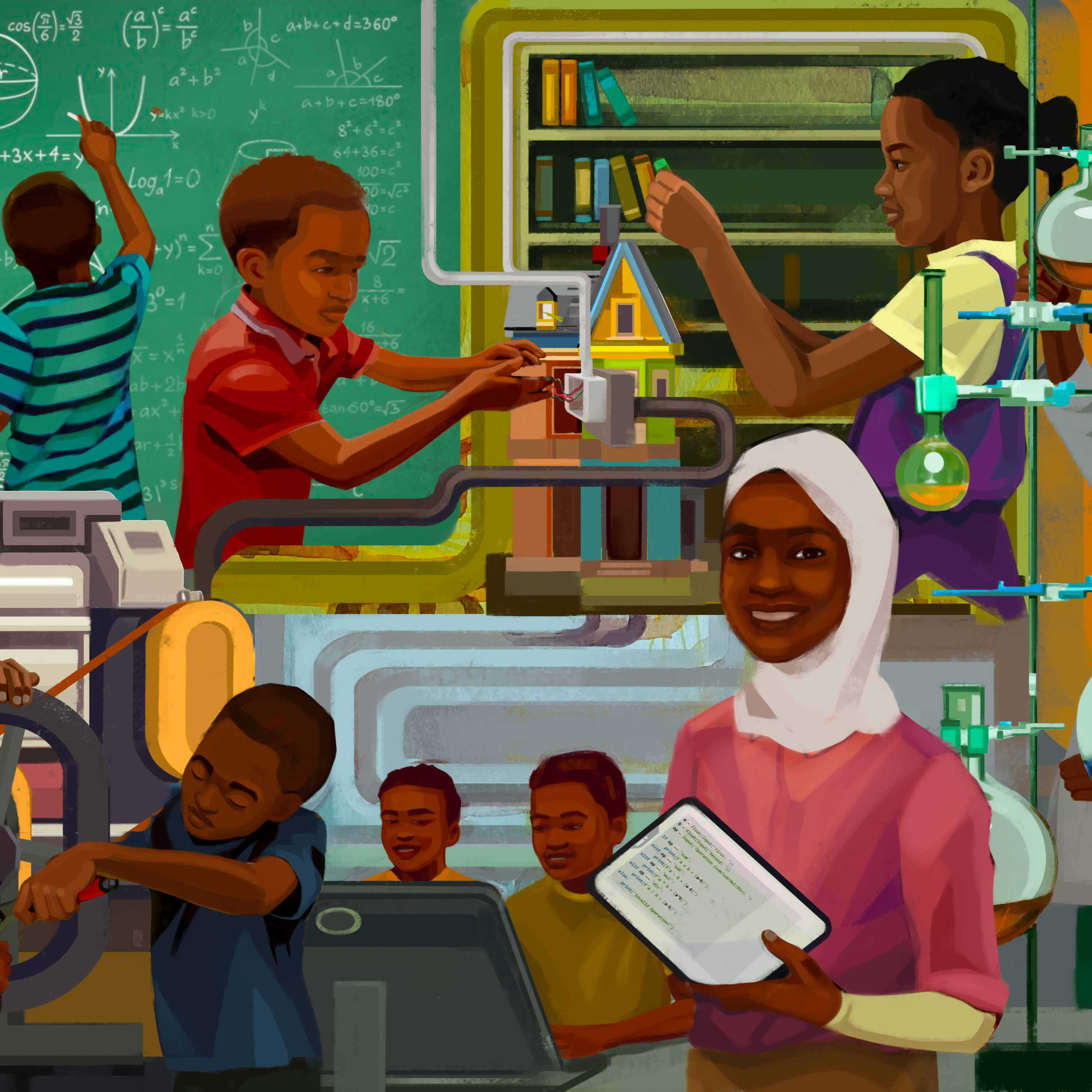
Africa: lost continent, aid-dependent basket case of economic development failures? Forget the old clichés. Francesca Beausang and her guests explore the ideas and concrete innovations through which Africa is becoming a model of innovation-driven development for the world. Afri-CAN is a podcast run by Pharo Foundation, a mission-driven, impact-oriented organisation that designs, funds and operates economic development programmes towards a vibrant, productive and self-reliant Africa.
-
43
Forced Migration, Climate Change, and the Fight to Stay
In this episode of Afri-CAN, we speak with Rania Sharshr, Director of Climate Action at IOM, about the human story behind climate-driven migration.As climate emergencies become more frequent and more severe, communities around the world are being forced to make impossible choices. But as Rania explains, many people do not want to leave their homes or depend on endless cycles of assistance. They want long-term solutions that allow them to adapt, rebuild, and stay.Together, we explore why climate migration must be understood through people’s lived experiences, not just data. We also discuss the role of local governments, the private sector, and communities themselves in shaping practical, lasting responses to the climate challenges they face.
-
42
Feeding Recovery in Rwanda
What if food security is only half the story?In this episode of Afri-CAN, we sit down with Nassir Katuramu, CEO of Solid’Africa, to explore a question that does not get asked enough: if a country can produce enough food, why do so many people still struggle to access the nutrition their bodies actually need? Solid’Africa is a Rwanda-based organisation focused on ending nutrition insecurity, and its work starts with one simple but powerful idea: food should not just fill people up, it should help them heal. We unpack how Solid’Africa identified a major gap in access to nutrient-dense meals, especially for vulnerable hospital patients, and built a one-of-a-kind model around medically tailored meals designed to support recovery. The conversation also looks at how the organisation works across the supply chain and alongside government to make that model possible at scale. It is a thoughtful conversation about food, health, dignity, and what development looks like when we focus not just on feeding people, but nourishing them.
-
41
Venture Labs, Failure, and Startup Success in Africa
What does it really take for entrepreneurs in Africa to succeed — and are venture labs part of the answer?In this episode of Afri-CAN, we explore how venture labs can help build stronger startups by giving aspiring founders the space to test ideas, fail fast, learn quickly, and grow with the right support. We also look at what these innovation models still lack, how they compare to accelerators and similar programmes, and what may be holding back deeper, more meaningful innovation across the continent.Joining us are Lyndsay Holley Handler, Co-Founder & Managing Partner at Delta40 Venture Studio; Jannek Hagen, Rwanda Country Director at Pharo Foundation and the mind behind Pharo Foundation’s new venture lab set to launch by the end of 2026; and Stephen Khan, a Master’s student at the University of Edinburgh studying entrepreneurship and innovation. Together, they unpack the role of venture labs in Africa’s startup ecosystem and discuss the “3 C’s” they believe are limiting true innovation on the continent.
-
40
Can Solar Power Help Feed Africa?
What does climate action look like when it starts on the farm?In this episode of Afri-CAN, we speak with Jon Saunders, COO of SunCulture, about how the company is helping smallholder farmers across Africa through affordable solar-powered technology. SunCulture’s model centres on off-grid solar systems designed to improve access to irrigation and farm productivity, while also making that technology more accessible through financing and support. We explore the story behind SunCulture, the problem they are trying to solve, and why this work matters far beyond agriculture. At the heart of the conversation is a bigger question: how can climate innovation strengthen food security in Africa, and why does that matter not just for the continent, but for global stability too? This is a thoughtful conversation about technology, resilience, and what it takes to build practical solutions that meet people where they are.
-
39
Africa, Innovation, and the Rise of Civilisations
What helps civilisations flourish — and what causes them to fall behind?In this episode of Afri-CAN, we are joined by Johan Norberg, author of Peak Human, to explore the role of innovation in the rise of the world’s most secure and prosperous societies. Drawing on the ideas behind his work, Johan reflects on how progress happens when people are free to experiment, borrow, combine and improve ideas in ways that no planner could ever fully predict.We also examine what happens when fear begins to overpower curiosity, and how civilisational decline can follow when societies become less open to exchange, experimentation and outside influence. The conversation looks at why imitation often comes before innovation, how cultures of optimism are built, and why openness to new ideas matters so deeply for long-term progress.Finally, we bring the discussion to Africa today: what can the continent learn from the history of flourishing civilisations, and what kind of role models are needed to show that the impossible can, in fact, be done?
-
38
Are Soft Skills Africa’s Missing Link?
What really helps young people make the transition from school to work in Africa: technical skills or soft skills?In this episode of Afri-CAN, Wendy Cunningham from the World Bank makes the case for soft skills — or, as she puts it, socio-emotional behavioural skills — as a crucial part of employability and success. She explores how these skills affect earning potential, job opportunities, and business performance, and explains which ones matter most for both employees and entrepreneurs across Africa.The conversation also looks at the bigger picture: how investing in these skills among young people could create lasting change across the continent. From education to enterprise, this episode asks whether Africa may need to think differently about what truly prepares people for work.
-
37
Scaling Quality Early Childhood Education in Africa
How can Africa scale high quality education that develops the whole child?In this episode, we define quality education as academic rigour plus scientific inquiry, critical thinking, and socio emotional development, producing learners who can engage global issues from a locally grounded perspective. Nafisa Shekhova (Aga Khan Foundation) explores innovations to expand early childhood education for low income and internally displaced children, including thoughtful use of EdTech and partnerships with existing community models such as Quoran based schools (madrasas).Follow Afri CAN on Spotify and Apple Podcasts for more conversations on development and innovation across Africa.
-
36
Music, Consciousness, and Student Success
How can African education systems support both academic results and the deeper life skills students need to succeed?In Music, Consciousness, and Student Success, we explore how music and consciousness-based learning help develop the “whole child” — strengthening resilience, focus, and long-term outcomes from pre-school to tertiary education.Guests: Kimball Gallagher (Juilliard-trained pianist, founder of 88 International) and Tahirih Danesh, PhD (Law) (CEO, Africa College Foundation; leading Education Town).Follow Afri-CAN on Spotify and Apple Podcasts for more conversations on innovation, development, and what’s working across Africa.
-
35
A Lost Boy’s Fight for Water Justice
Water can be life, livelihood – or a trigger for conflict. In this episode of Afri-CAN, we explore how rivers, wetlands and shared basins shape both survival and geopolitics in Africa.Our guests are Edoardo Borgomeo, water management lecturer at the University of Cambridge and award-winning expert on water planning under climate change, and Deng Chol, one of the former “Lost Boys of Sudan”, now a doctoral researcher at Oxford studying the socio-hydrology of the Sudd wetlands.Deng shares his powerful journey of walking over a thousand miles as a child and the story of a water system serving millions of people in South Sudan that almost became a pawn in regional power struggles. Together, he and Edoardo unpack how we can move from water as a source of tension to water as a platform for cooperation, combining diplomacy, science and ancient practices.Listen to find out what it would take to build truly peaceful water agreements in Africa – and why the future of entire communities can depend on how we share a single river.
-
34
What Eco-Labels Mean for Investors
Impact investment is booming, and up to half of it now targets environmental goals. But how do fisheries in Africa and other developing regions actually access that capital? In this Afri-CAN episode, we dig into the blue economy with Kaspar Baumann, Partner at impact-investment firm Clarmondial, and Amanda Lejbowicz, Fisheries Sustainability Expert at the Marine Stewardship Council (MSC). They explain how fisheries standards and certification work, why investors need robust evidence of environmental performance, and how governments, financiers and coastal communities can align around sustainable fish stocks, decent jobs and export growth. From improvement programmes and loan guarantees to the realities of measuring environmental impact on the water, this conversation shows how sustainability can move from a label on a packet to a genuine investment signal, and what that might mean for countries such as Somaliland.
-
33
Development without Destruction
What happens when environmental sustainability and economic development pull in different directions, and what if they don’t have to? In this Afri-CAN episode, we sit down with Aziliz Le Rouzo, Researcher at the Stockholm Environment Institute (SEI) leading the Amplifying Stories of Agroecology Practices and Principles (ASAPP) project, and Nhilce Esquivel, Research Fellow and Climate Resilience Lead in SEI’s Sanitation and Health team. Together, they unpack the hard questions: who should be cutting emissions, who is forced to adapt, and why climate change is as much about justice as it is about carbon. We explore how degrowth and agroecology challenge traditional ideas of “catching up”, and what it means to build food, water and sanitation systems that restore ecosystems instead of depleting them. From Bolivian farmers growing crops at 4,000 metres to African countries navigating green protectionism and carbon border taxes, this conversation asks whether development itself needs to be redefined. If you’ve ever wondered whether environmental solutions like agroecology and degrowth are realistic in low- and middle-income countries – or how local knowledge and co-creation can reshape adaptation on the ground – this episode is for you.
-
32
Are Young People Investable?
When a university degree can increase someone’s income many times over, who should carry the risk of paying for it – the student, the state, or society as a whole? In this episode of Afri-CAN, we explore how Income Share Agreements (ISAs) are changing access to higher education in Africa. Instead of taking on traditional debt, students commit to paying back a small percentage of their income only once they have meaningful employment, with built-in caps and protections. The result is a revolving fund that can support generation after generation of learners. Our guests are Batya Blankers, CEO and Founder of Chancen International, and Nkazimulo Zitha, Managing Director of Pharo Schools. Together they unpack what it means to say “youth are investable”, share data on graduation, employment and repayment rates from Chancen’s ISA model in Rwanda and South Africa, and reflect on how Pharo Schools thinks about sustainable financing across its scholarship and school networks. It is a thoughtful, hopeful conversation that goes right to the heart of education, finance and development.
-
31
From War to Enterprise in Somaliland
What does it mean to rebuild an economy almost from scratch? In this episode, we travel to Somaliland, a country that emerged from civil war with its private sector in ruins and has had to reinvent its institutions, markets and businesses largely on its own. We speak with Hana Kaise, Co-founder and General Partner of Bilow Capital, and Ahmed Ali Mohamed, Co-founder of Bilow Capital, serial entrepreneur and ecosystem builder, about how they are working from within to unlock the potential of small and medium enterprises. Together, they unpack why finance alone is not enough, how the Bilow Venture Lab helps founders become truly “investment ready” in a Somaliland context, and how the Rise platform is giving diaspora Somalis a trusted path to invest back home. It is a hopeful, grounded conversation about patient capital, collaboration and what it really takes to grow a resilient private sector in a place the world often overlooks.
-
30
From Information Overload to Better Policy
We live in an age of information overload, where producing research and “impact evidence” has become a priority, but turning all this knowledge into something that genuinely informs the choices of policy makers remains a major challenge. In this episode, we look at evidence synthesis, which is the disciplined process of bringing many studies together and analysing them to see what the overall evidence actually shows. Rather than building reforms around a single striking study, we explore what it means to ground decisions in a shared evidence base and how this can change the way education systems learn, adapt and improve over time. Our guests discuss how this way of working can be woven into the everyday machinery of government, why organisational culture and incentives matter just as much as rigorous methods, and where artificial intelligence might either strengthen or distort the process. From questions of whose evidence is included to the emerging role of “evidence labs” in low- and middle-income countries, the conversation offers a fresh and thoughtful lens on research, power and policy. Joining the discussion are Samuel Kembou, a global lead for Learning and Evidence at the Jacobs Foundation who helps shape dynamic learning and impact measurement across education systems, and Jonathan Kay, Head of Evidence Synthesis at the Education Endowment Foundation who leads work turning global education research into practical guidance for schools and policy makers.
-
29
Inside Pharo Foundation’s Camel Cam
What if artificial intelligence could help us understand water in a way that transforms whole communities? In this episode, we explore how Pharo Foundation is working with AI, computer vision, and geospatial data to rethink what it means to measure and manage water in Somaliland. We look at why access to water is so central to education, agriculture and livelihoods, and how better information can help development organisations move from good intentions to truly informed decisions. You will hear how “Camel Cam”, Pharo’s AI enabled monitoring system, is changing the way we see the impact of rural dams and opening new questions about what effective water projects really look like. Rather than focusing on the technology for its own sake, our guests reflect on how AI can act as an accelerator for local expertise, not a replacement for it. Joining the conversation are Dr Jay Taneja, a computer scientist at the University of Massachusetts Amherst who leads the STIMA Lab on infrastructure measurement and analytics, and Dennis Cheruiyot, a Machine Learning Engineer at Pharo Foundation who builds AI driven monitoring systems for water resources in Somaliland.
-
28
Satellites, Inequality and the Future of AI
What if we could see poverty from space and respond to it faster and more fairly? In this episode, we explore the new frontier of geospatial AI and Earth observation: the science and craft of observing our planet from space and turning those images into insight. From jagged coastlines and dense forests to changing seasons and expanding cities, satellites are quietly capturing the patterns of life on Earth every day. Our guests unpack how these patterns, when combined with artificial intelligence, can help us understand where need is greatest and how to target support more effectively. They discuss why many popular AI solutions still depend on smartphones and constant connectivity, and why that leaves millions of people invisible to the digital economy. Stories from places like Cameroon and Togo bring this challenge to life and highlight promising examples of geo targeted social protection that work even where the internet does not. Joining the conversation are Dr Rachel Adams, Founding CEO of the Global Centre on AI Governance and a leading voice on AI, inequality and global governance, and Vivek Sakhrani, Vice President of Product and Solutions at Atlas AI who leads the company’s global Geo AI portfolio across international development and supply chain analytics. If you are curious about how advanced technology can serve people who are often left out of technological progress, this conversation offers a clear and accessible guide to a complex and rapidly evolving field.
-
27
Why Culture Matters in Construction
Across Africa, low cost housing is too often treated as a numbers game. But this episode leans into a different vision: design that is practical and low cost, yet still protective, dignified and rooted in local life.Drawing from work with Ghana’s Ga communities along the West African coast, we explore how thoughtful choices can help increase safety, strengthen communities, and confront everyday environmental pressures like climate constraints and plastic in waterways. We also look at why seemingly simple architecture can create a sense of pride and cultural belonging. Joining us are Julian Mowbray, Partner at Mowbray Architects, and Maria Alonso, Partner at Mowbray Architects. Together, we unpack how architecture can turn big development ideals into spaces that expand people’s freedoms in daily life.
-
26
Will Finance Drive the Future of Development?
Across the world, small and medium enterprises carry the greatest financial risk, even when they are the least able to absorb it. What if finance could be rebalanced to make opportunity fairer for everyone?In this episode, we explore how rethinking foreign exchange (FX) risk and moving it from local entrepreneurs to global markets could unlock billions for sustainable projects in developing economies. Joining the discussion are Roopal Kanabar, CEO of Sustainabar, and Christopher Hunter, Chief Risk Officer at Pharo Management.Together, they discuss how innovative financial tools could bridge the worlds of development and finance, lowering the cost of capital, empowering small businesses, and creating a fairer, more resilient global economy.
-
25
Why Agriculture Still Holds Africa’s Future
Africa holds some of the world’s most fertile land, yet more than 340 million people face hunger and over 80% of staple food is still imported. Why has a continent with so much potential struggled to feed itself, and what will it take to change that?In this episode, we explore whether agriculture can drive Africa’s next economic transformation. Joining us are Dr Linda Davis, Founder and CEO of Giraffe Bioenergy, which is building East Africa’s first integrated cassava-to-ethanol ecosystem, and Professor David Luke, Professor in Practice and Strategic Director at the LSE Firoz Lalji Institute for Africa.Together, they unpack how innovation, trade policy, and local entrepreneurship can help Africa move from dependence to resilience, turning its farms into engines of food security, climate-smart growth, and sustainable prosperity.
-
24
Scaling Good Teaching in Africa: New Models, New Hope
Good teaching means something different to everyone, and in this episode we ask our guests what constitutes good teaching to them, how to systematise it, and how it can be scaled up.We are delighted to be joined by two teaching experts in this episode. The first is Dr. Fay Hodza, the Global Senior Director of Programmes at PEAS (Promoting Equality in African Schools). PEAS believe that every young person should have access to a quality education which provides them with the knowledge and skills they need to lead fulfilling and successful lives after school. They support young people to succeed from the moment they start school, right through to graduation from secondary. They run one of the largest school networks in sub-Saharan Africa, with a particular focus on secondary schools. Each year, 20,000+ students learn at their 38 schools.Alongside Fay, we have Pharo School’s own Majiwa Benson, the School Principal of Pharo School Homosha. This is our girls only, free boarding school in the remote province of Benishangul Gumuz Region, Ethiopia. Despite its remote location and the challenges that come with this, the school is one of the highest performing at regional and national level, with 100% of pupils achieving a grade above the 50% pass rate vs only 8.4% of pupils at national level, for two years in a row. Majiwa joins us to offer his thoughts on how this has been achieved and to share the teaching methods that have served him well across his career.
-
23
When Policy Works: How Moldova Transformed Childcare Access
In this episode we continue under our ‘scaling-up’ theme and explore the work of Street Child, an organisation which supports children's safety and education in low-resource environments and emergencies across 25+ countries in Eastern Europe, South Asia, and Sub-Saharan Africa. We examine their Early Childhood Education programme in Moldova and how it was turned into a national priority. The programme was introduced after the Russian invasion of Ukraine, when large numbers of Ukrainian families sought refuge in Moldova. Estimates show 1/8 children in Moldova are Ukrainian refugees. So Street Child launched an initiative to provide education to refugee learners, but they also scaled up Early Childhood Education for Moldovans, enabling many women to join the labour force. On this episode, we talk with Ramya Madhavan, Global Director of Advisory for Street Child, and Mihaela Iurascu, Coordinator of the National Program on Childcare at the Ministry of Labour and Social Protection of Moldova. We look at the Moldovan experience, how Street Child's Early Childhood Education programme was turned into a national priority, and how we can learn from their initiative in other contexts.
-
22
Why Education Is the Forgotten Child of International Aid
Welcome back! Season 2 of Afri-CAN is starting on the theme of what it takes to scale up good ideas in development. In this episode, we will concentrate on the policy environment and how one can create a platform which resonates with policy makers and obtain the funding that follows from that. Specifically, this episode looks at Education in the context of decreased development funding globally, and the political deprioritisation of education funding relative to other aspects of development.To help us understand how we have gotten to this point and what can be done to remedy the situation we have three expert guests joining us: Laura Savage, the Executive Director of the International Education Funders Group, Joseph Nhan-O'Reilly, the co-founder and executive director of the International Parliamentary Network for Education, and Geoff Adlide, previously the Director of Advocacy and Communications at the Global Partnership for Education.
-
21
Afri-CAN season 2 trailer
After a short summer break we are introducing to season 2 of Afri-CAN. Watch this space for full episodes out soo.
-
20
How removing obstacles to savings can accelerate productivity
Join us for the final episode of season 1 of Afri-CAN! At Pharo Foundation we understand the critical role savings can have and this is integral to our third mission of Productivity - part of which is to remove financial barriers to employment. Indeed, we have seen firsthand what savings can do for people in Savings Groups which we have set up for farming communities in Ethiopia.To discuss savings in more detail we have two guests on this episode:The first is Kenyan entrepreneur, Samuel Njuguna, the CEO and Co-Founder of Chumz - a Kenyan savings platform designed to build better financial habits using behavioural psychology and gamification to encourage its users to save.With him, we have Wangui Kimaru, Senior Programs Manager at Emerging Leaders in Kenya. This is an organisation with a purpose of empowering youth. Wangui initially used the Chumz platform in her personal life and then approached Samuel to integrate this platform at Emerging Leaders. Thanks for listening to season 1 - we look forward to recording season 2!
-
19
Episode 15: Education As Girl Power
According to the World Bank, a 1% increase in female education participation, can result in a 0.3% increase in average gross domestic product and gains of up to $15-30 trillion in lifetime productivity and earnings. In Africa specifically, we see the highest rate of female entrepreneurial activity globally, with approximately 24% of women engaged in business ventures. So, for Pharo Foundation, it is clear that educating girls is indeed an investment worth making and particularly where we work in East Africa.We share our commitment to educating disadvantaged girls with the renowned Malala Fund - an international, non-profit organization that advocates for girls' education. To highlight the critical impact of investing in girls education, this episode explores this topic with Malala Fund's, Saba Zewdu, Manager of their Ethiopia programmatic grant portfolio and Pharo Foundation's Head of Education in Ethiopia, Milkyas Solomon.
-
18
Episode 14: The dilemmas of a philanthropist
This episode takes place in-person at Pharo Management's London Office - the emerging market hedge fund which finances Pharo Foundation. In this special episode we take a look at philanthropy from the perspective of the philanthropist - discussing how they choose their causes and how they allocate their resources.To discuss this, we have Pharo Foundation's own founder, Guillaume Fonkenell. With him we have Jonathan Bayliss, the Co-Founder of EMpower UK, a charity which supports vulnerable young people in emerging market countries.
-
17
Episode 13: Savings Brains: Lessons From An Outstanding Early Childcare Programme
An estimated 250 million children in low and middle-income countries are at risk of not reaching their full developmental potential. Given Early Childhood Development (ECD) is one of Pharo Foundation's flagship programmes this is an important topic to us and we were keen to bring in Saving Brains experts to discuss this further.Saving Brains invests in bold, evidence-based innovations that nurture healthy brain development and strengthen caregiving in the earliest, most critical years of life—from pregnancy to age five. To discuss this and what we can learn from their work, today we are talking with Sanjana Janardhanan, Portfolio Manager, Saving Brains at Grand Challenges Canada and Dr. Vishwajeet Kumar, Chief Scientist at Community Empowerment Lab.
-
16
Episode 12: Democratising healthcare through innovation
This episode explores how we can optimise and increase access to healthcare through innovation, in contexts which are resource poor, such as Africa.To discuss this, we have brought on Niek Vesteegde, a tropical doctor turned entrepreneur, and Founder and CEO of Goal 3 - a social enterprise dedicated to transforming paediatric and neonatal healthcare through scalable, sustainable and data-driven solutions that are fit for context. With him, we have Alef Meulenberg, who is the co-founder of Rhiza Babuyile and Rhiza Holdings which implement an innovative sustainable developmental model in disadvantaged African communities.
-
15
Episode 11: Navigating outcomes-based financing
As Pharo Foundation's missions progress and we look to scale up our cost effective and evidence-based interventions, it's clear to us that utilising a range of innovative financing instruments to scale up our missions is critical. Among these instruments, outcomes-based financing is gaining traction and proving very effective. At its core, this method relies on a pre-agreed set of outcomes being achieved in order to trigger payments.To explore how this method works, and its benefits, we have spoken with Adriana Balducci, Head of Programme Development at the Education Outcomes Fund (EOF), and Chloe Edleston, Regional Lead for East Africa at Social Finance.
-
14
Episode 10: Education Made in Africa part 2: a Somaliland education
In a previous episode we spoke with Oxfam about how far we should go in introducing innovations that challenge local culture. In this episode, we focus on how this translates to the education that we provide to our youth. We explore how we can leverage local culture to shape our youth into unique critical thinkers.To address this question, we are focusing on Somaliland and our guests are two respected members of the local community: Muna Ahmed Jama, Pharo Foundation's Head of Education In Somaliland, and Dr. Jama Musse Jama, the founder and organiser of the Hargeisa International Book Fair and Director of the Hargeisa Cultural Centre.
-
13
Episode 9: Evaluating impact: art of science?
This episode focuses on one of the most important questionsin philanthropy: how do philanthropic organisations go about ascertaining that they are indeed doing all the good they set out to do in the first place? While most development philanthropists are well-intentioned, whether these goodintentions end up improving development outcomes is not a foregone conclusion. So, to help us look at how to carry out effective impact assessment and all this can mean, we have three experts joining us in this episode: Fabio Bezerra, Director of Design, Monitoring, Evaluation, Accountability and Learning at ForAfrika, Lina Henao, Monitoring, Evaluation, Research and Learning Director at iDE Mozambique and Ken Lee, Chief Research and Evaluation Officer at Pharo Foundation.
-
12
Episode 8: How to become an innovator
In this unique episode we are joined by Kidus Asfaw, Founderand CEO of Kubik - an Africa-based start-up transforming plastic waste into low-carbon construction materials that are cheaper and faster to build with than cement. Joining Kidus is our youngest guest to date, Helen Tekalign. A prodigious young student and already the winner of many local STEMcompetitions, Helen is in 8th grade at Pharo School Assosa located in a rural area of the BGRS state on the western edge of Ethiopia. The two discuss their entry into the field of STEM, and Kidus shares his journey from young tinkerer to CEO of his own successful start-up, and how he hopes to see Helen and other Ethiopian students like her do the same.
-
11
Episode 7: Exploring the boundaries between innovation and culture
This episode focuses on innovation in the most basic sense: the introduction of something new into an existing cultural context. Oxfam's Raissa Azzalini and Zakarie Abdi discuss sustainable, culturally appropriate, and environment-friendly Water, Sanitation and Hygiene solutions in fragile contexts.
-
10
Episode 6: The developmental state: from East Asia to Africa
This episode examines whether there are any lessons for Africa to learn from the development experience of East Asia. We want to look at what factors led relatively poor East Asian countries to develop so quickly and even saw them become technological innovators in the space of just a few decades.To make comparisons between these two continents and see how East Asia’s history can apply in Africa, we have brought on an expert in Development Studies and one of Pharo’s own leaders in innovation in East Africa. These are: James Putzel, Professor of Development Studies in the International Development Department at the London School of Economics and Political Science and Bethel Tsegaye, CEO of Pharo Ventures and Country Director of Pharo Foundation Ethiopia.
-
9
Episode 5: Diaspora and innovation
There is a cliché that the diaspora’s migration crowds out opportunities for home grown talent and national innovation through the so-called ‘brain drain’. However, there are many initiatives that defy this cliché and in this episode, we explore the many modalities through which the diaspora can make a positive difference both at an individual level and on a national scale, leading to increased innovation. To help us look at this we have brought on three expert guests who have each experienced the catalytic power of the diaspora. These are: Loksan Harley, Independent Migration and Diaspora Specialist and Executive Director at Homelands Advisory, Dominic Mwenja, CEO and Program Director at Miramar International Foundation and Funsho Allu, Board Member at Pharo Foundation and Founding Partner of TIA Capital.
-
8
Episode 4: Should we rethink philanthropy?
In this episode we explore the various existing models of philanthropy and whether those working in this sector can/should innovate in the way they do philanthropy. We cover a variety of models from direct delivery to effective altruism through flexible funding, and we reflect on their implications for measuring impact. Our expert guests are David Nash, Community Director at Effective Altruism UK, and Dr Steph Hayden a researcher from the University of Kent.
-
7
Episode 3: The Earthshot Prize: Catalysing African Solutions to Climate Change
According to the inter-continental panel on climate change, Africa is the continent most affected by this process. As such, in episode three we have brought in expert guests to tell us what the most cutting-edge environmental innovations are today, how we can support African innovators, and what it takes to get an idea from innovation to application.Our guests are Anuradha Bajaj, Chief Innovative Finance and Investment Officer at the Earthshot Prize, and Ronald Pfende, one of its finalists and Founder/CEO of d.light – a company that brings clean and affordable power to rural African communities.
-
6
Episode 2: Education Made In Africa
For episode two we welcome Professor Panos Hatziandreas, head of Lebawi International Academy in Ethiopia, and Dr. Anne Makena, co-director of the Africa Oxford Initiative, to discuss innovation in the context of African education.If done right, a good education system is arguably the best means of lifting a population out of poverty. Our expert guests explore what it means to get it right in the African context, with specific reference to the role of education technology.
-
5
Episode 1: The private sector as innovation catalyst
In Afri-can’s first episode, Pharo Foundation CEO Tom Mason and Chicago Booth Business School Jean-Pierre Dube debate the role of risk-taking, experimentation and profit in driving African innovation. Drawing on their experience, they bring examples of how the private sector acts as a catalytic investor, which enables economic development in Africa.
-
4
An introduction to Afri-can
Pharo Foundation's Global Director of Partnerships and Communications, Francesca Beausang, introduces our new podcast series Afri-can. In this series, she will be hosting a range of guests from the worlds of academia, philanthropy and business, to explore new approaches to development with a specific focus on African innovation.Look out for our first set of three episodes, which will go live on February 15th at 10 a.m. (GMT).
-
3
Afri-can podcast trailer
Ahead of the release of our first episode on February 15th, this trailer outlines what the brand new Afri-can podcast is about.Our host, Francesca Beausang, looks forward to introducing you to her expert guests and exploring the ideas and concrete innovations through which Africa is becoming a model of innovation-driven development for the world.
-
2
Are Young People Investable?
When a university degree can increase someone’s income many times over, who should carry the risk of paying for it – the student, the state, or society as a whole? In this episode of Afri-CAN, we explore how Income Share Agreements (ISAs) are changing access to higher education in Africa. Instead of taking on traditional debt, students commit to paying back a small percentage of their income only once they have meaningful employment, with built-in caps and protections. The result is a revolving fund that can support generation after generation of learners. Our guests are Batya Blankers, CEO and Founder of Chancen International, and Nkazimulo Zitha, Managing Director of Pharo Schools. Together they unpack what it means to say “youth are investable”, share data on graduation, employment and repayment rates from Chancen’s ISA model in Rwanda and South Africa, and reflect on how Pharo Schools thinks about sustainable financing across its scholarship and school networks. It is a thoughtful, hopeful conversation that goes right to the heart of education, finance and development.
We're indexing this podcast's transcripts for the first time — this can take a minute or two. We'll show results as soon as they're ready.
No matches for "" in this podcast's transcripts.
No topics indexed yet for this podcast.
Loading reviews...
ABOUT THIS SHOW
Africa: lost continent, aid-dependent basket case of economic development failures? Forget the old clichés. Francesca Beausang and her guests explore the ideas and concrete innovations through which Africa is becoming a model of innovation-driven development for the world. Afri-CAN is a podcast run by Pharo Foundation, a mission-driven, impact-oriented organisation that designs, funds and operates economic development programmes towards a vibrant, productive and self-reliant Africa.
HOSTED BY
Afri-CAN Podcast
CATEGORIES
Loading similar podcasts...
URL copied to clipboard!