
PODCAST · business
ARC ENERGY IDEAS
by ARC ENERGY RESEARCH INSTITUTE
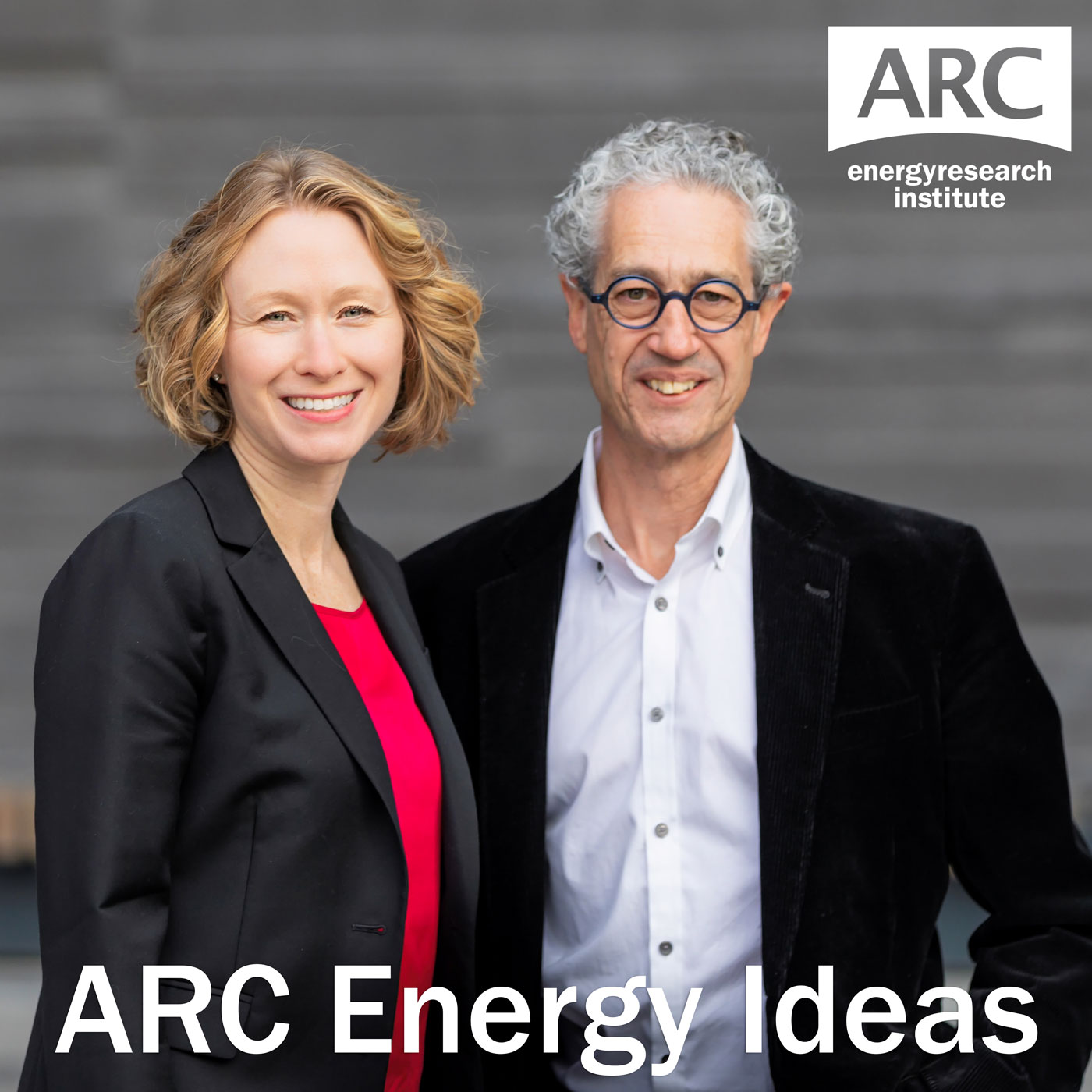
Join Peter Tertzakian and Jackie Forrest from the ARC Energy Research Institute as they explore trends that influence the energy business, including financial, political, environmental, technological, social and economic forces.
-
148
Canada’s 2030 Emissions Reduction Plan, GLOBE Forum and the IEA’s Tim Gould
Last week Peter attended GLOBE Forum 2022 in Vancouver, British Columbia. GLOBE Forum is Canada’s sustainability conference. At GLOBE, Peter and Tonja Leach, the executive director of Quest interviewed Tim Gould, the Chief Energy Economist at the IEA and we include a recording of their conversation on this podcast. Before that, Peter and Jackie discuss Canada’s 2030 Emissions Reduction Plan that was introduced during GLOBE by Canada’s Environment and Climate Minister and the Prime Minister. The plan aims to reduce greenhouse gas emissions in Canada by 40-45% by 2030 (compared to a 2005 baseline). Please review our disclaimer at: https://www.arcenergyinstitute.com/disclaimer/The post Canada’s 2030 Emissions Reduction Plan, GLOBE Forum and the IEA’s Tim Gould first appeared on ARC Energy Research Institute.
-
147
Russia’s War on Ukraine: A Security and Intelligence Perspective
This week our guest is Candyce Kelshall who has worked extensively with militaries and advising police forces around the world. Kelshall is currently the President of the Canadian Association for Security and Intelligence Studies (CASIS) –Vancouver, Adjunct Professor, Buckingham University Centre for Security and Intelligence Studies and Vice Chair at the Canadian Intelligence Network. Kelshall is also the Editor-in-Chief of the Journal of Intelligence, Conflict and Warfare and also a board member at the Canadian International Council – Vancouver. Here are some of the questions Peter and Jackie ask Candyce Kelshall: Will the financial sanctions on Russia be effective in influencing Putin’s actions? What if the severity of the sanctions is increased? What are the risks if NATO becomes directly involved in the Ukraine conflict? Could the conflict go beyond Ukraine’s border? Why is Russia’s army not taking over Ukraine as quickly as expected? What are some potential scenarios going forward? What are the risks of a Russia-China-West multi-polar world? On the podcast, Candyce Kelshall introduces the work of the American political scientist Francis Fukuyama who is known for his book “The End of History and the Last Man” (1992) that was based on an essay “The End of History” (1989). Kelshall also introduces the Russian political strategist Alexander Dugin who authored “Foundations of Geopolitics: The Geopolitical future of Russia” (1997) that predicted a number of Russian geopolitical strategies that did occur. See link to a recent op-ed Francis Fukuyama in the Financial Post “Francis Fukuyama: Putin’s War on the Liberal Order.” Please review our disclaimer at: https://www.arcenergyinstitute.com/disclaimer/The post Russia’s War on Ukraine: A Security and Intelligence Perspective first appeared on ARC Energy Research Institute.
-
146
Canada’s Journey to Export Oil to the World: An Interview with Ian Anderson, CEO of Trans Mountain Corp.
On this week’s podcast, we interview Ian Anderson, the President and CEO of Trans Mountain Corporation on how the pipeline expansion project is progressing. The Trans Mountain Expansion Project is expected to transport oil to Canada’s west coast by late 2023. Here are some of the questions Peter and Jackie ask Ian Anderson: Are the legal challenges for the project done? What is the status of construction? How much of the workforce is Indigenous? Did the BC floods last fall set the project back? In the most recent update, why did project costs almost double? Who pays for the increased costs? Do you expect other large oil pipelines to be built in North America? Does Russia’s war in the Ukraine change anything? Peter and Jackie also extend their congratulations to Ian on his retirement starting in April 2022 and thank Ian for his incredible dedication and leadership on this critically important project for Canada. To learn more about the Trans Mountain Expansion project visit: https://www.transmountain.com/project-overview Please review our disclaimer at: https://www.arcenergyinstitute.com/disclaimer/The post Canada’s Journey to Export Oil to the World: An Interview with Ian Anderson, CEO of Trans Mountain Corp. first appeared on ARC Energy Research Institute.
-
145
Ukraine War and the Implications for Global Energy Markets
This week Peter and Jackie talk about Russia’s invasion of Ukraine. What is the current situation with energy trade flows and markets due to the conflict? How much oil and gas supply could be cut off and what are the alternatives? Could Canadian energy supply help? Will high oil prices and geopolitical concerns accelerate the energy transition? Also discussed: Peter’s recent commentary titled “Cold War, Inflation and Spiking Oil Prices: Q&A Through Déjà vu.” The IPCC’s new report “Climate Change 2022: Impacts, Adaptation and Vulnerability.” A study that concludes that low carbon gas supply in British Columbia could be much larger than previously understood “BC Renewable and Low-Carbon Gas Supply Potential.” Please review our disclaimer at: https://www.arcenergyinstitute.com/disclaimer/The post Ukraine War and the Implications for Global Energy Markets first appeared on ARC Energy Research Institute.
-
144
An Interview with Murray Mullen, President and CEO of the Mullen Group
On this episode we welcome Murray Mullen, President and CEO of Mullen Group to the podcast. The Mullen group is one of Canada’s largest logistics providers. Here are some of the questions we asked Murray: What is the situation today with COVID related supply chain bottlenecks? Is there a shortage of truck drivers? How has online shopping impacted supply chain issues? What is your outlook for oil and gas oilfield service activity in Canada? What is realistic for decarbonizing the trucking feet? To learn more about Mullen Group visit: https://www.mullen-group.com/ Please review our disclaimer at: https://www.arcenergyinstitute.com/disclaimer/The post An Interview with Murray Mullen, President and CEO of the Mullen Group first appeared on ARC Energy Research Institute.
-
143
FortisBC: Moving Towards a Low Carbon Gas Future
This week Tyler Bryant, Strategic Advisor, Climate and Energy at FortisBC joins the podcast. FortisBC delivers renewable energy, natural gas and electricity to customers in British Columbia. Here are some of the questions we asked Tyler: What are the challenges of electrifying heating in Canada? What is renewable natural gas? How much renewable natural gas is possible? What is the potential carbon intensity reduction of gaseous fuels by blending hydrogen and renewable natural gas? Do you agree with cities in the US and Canada banning new natural gas connections? They also discuss a recent commentary by Jackie titled “Reduce, Reuse, Recycle and Reconsider the Future of Natural Gas.” To learn more about FortisBC’s renewable natural gas offering: https://www.fortisbc.com/services/sustainable-energy-options/renewable-natural-gas Please review our disclaimer at: https://www.arcenergyinstitute.com/disclaimer/The post FortisBC: Moving Towards a Low Carbon Gas Future first appeared on ARC Energy Research Institute.
-
142
Tune in for $90+ Oil Prices and Lessons on Electricity
With WTI oil prices over $90/B, Peter and Jackie update podcast listeners on the most recent oil market fundamentals. As a result of these higher prices, ARC has increased its estimates for Canadian industry revenue and cash flows. Finally, they discuss Jackie’s recent commentary “Turn out the lights and other lessons on electricity consumption.” This article was originally published for Let’s Talk Science and the Royal Society of Canada who have partnered to provide coverage on STEM programs and learning. To read other articles visit the “Let’s Talk Science” page at the Globe and Mail. To see the most current Western Canadian oil and gas drilling activity , view the ARC Energy Charts: Chart 35 is the Canadian gas drilling activity and Chart 37 is the oil drilling activity. The last page of the Energy Charts shows ARC’s estimates for Canadian industry metrics. Please review our disclaimer at: https://www.arcenergyinstitute.com/disclaimer/The post Tune in for $90+ Oil Prices and Lessons on Electricity first appeared on ARC Energy Research Institute.
-
141
BONUS: Decarbonizing Aviation
This week we would like to share another podcast with you, called “Energy vs Climate.” The three hosts are David Keith, Sara Hastings-Simon and Ed Whittingham. Every two weeks the trio, along with their guests, break down the trade-offs and hard truths of the energy transition in Alberta, Canada, and beyond. This episode is a discussion from October 2021 on the challenges of decarbonizing the Aviation sector with guest Dr. Steven Barrett of MIT’s Department of Aeronautics and Astronautics. If you like ARC Energy Ideas, we think you will also enjoy this podcast. We hope you find this episode insightful. To learn more about the podcast and to subscribe, visit their website: https://www.energyvsclimate.com/ Please review our disclaimer at: https://www.arcenergyinstitute.com/disclaimer/The post BONUS: Decarbonizing Aviation first appeared on ARC Energy Research Institute.
-
140
Everything Oil: Prices, Geopolitics, Volatility and Equity Markets
Brent oil price is near $90/B now and WTI is not far behind. Peter and Jackie discuss the latest price moves and drivers. They also muse over the return of geopolitical tensions in the oil markets. While geopolitics have historically been a significant factor in the oil markets and price formation, over the past decade the impact has been more muted. Finally, they review the volatile equity markets so far in 2022. Energy transition names have been under pressure while oil and gas equities have rallied. Please review our disclaimer at: https://www.arcenergyinstitute.com/disclaimer/The post Everything Oil: Prices, Geopolitics, Volatility and Equity Markets first appeared on ARC Energy Research Institute.
-
139
Low Carbon Steel: Canadian Steel Producers Move Towards Net-Zero 2050
This week Catherine Cobden joins our podcast. Catherine is the President and CEO of the Canadian Steel Producers Association (CSPA). Canadian steel is already some of the lowest carbon product in the world and the industry has announced goals to achieve net-zero carbon dioxide emissions by 2050. Here are some of the questions we asked Catherine: What are some of the technologies that can reduce the greenhouse gas emissions for producing steel? How advanced are these low carbon processes now? The Canadian federal government has a stated goal to reduce emissions between 40 and 45% by 2030, is this level of reduction realistic for the steel industry in that timeframe? Read more on CSPA’s goal to achieve net zero carbon dioxide emissions by 2050, in their “Climate Call to Action.” Please review our disclaimer at: https://www.arcenergyinstitute.com/disclaimer/The post Low Carbon Steel: Canadian Steel Producers Move Towards Net-Zero 2050 first appeared on ARC Energy Research Institute.
-
138
Canada Oil and Gas 2022: Another Bull Run, But Different and Another IEA Report
On this episode, Peter and Jackie review the ARC Energy Research Institute’s recently released outlook for the Canadian oil and gas economy for 2022. See the last page of our weekly ARC Energy Charts publication to review the 2022 estimate of revenue, cash flow and other metrics here. They also discuss a recent commentary by Peter titled “Meet the New Boom, Different from the Last Boom” that lists the many reasons why this oil bull run is different than past cycles. Finally, they review the new IEA report on Canada’s energy policies. The report provides recommendations on how the country can effectively manage its energy sector to achieve Canada’s GHG emission reduction goals. Download the IEA Canada 2022 Report here. Replay the IEA Canada 2022 Report launch video here. Please review our disclaimer at: https://www.arcenergyinstitute.com/disclaimer/The post Canada Oil and Gas 2022: Another Bull Run, But Different and Another IEA Report first appeared on ARC Energy Research Institute.
-
137
Seven Topics to Watch in 2022
Peter and Jackie start the year off by introducing seven topics that are likely to dominate energy and climate discussions in 2022. Oil Price Geopolitics Elections Inflation and the Economy Sustainable Finance Clean Energy Spending Energy and Climate Policy in the US and Canada See Prime Minister Justin Trudeau’s mandate letters: Minister of Environment and Climate Change and Minister of Natural Resources. Learn more about the Glasgow Financial Alliance for Net Zero (GFANZ) and read “Building a Private Finance System for Net Zero.” Please review our disclaimer at: https://www.arcenergyinstitute.com/disclaimer/The post Seven Topics to Watch in 2022 first appeared on ARC Energy Research Institute.
-
136
Year End: The Big Themes for 2021
On this week’s podcast we look back on the big themes that shaped 2021 by reviewing our past podcasts. Peter and Jackie also revisit their 2021 predictions made at the start of the year to see how well they did. View the ARC SnapChart on the Global EV Sales Data for 2021: Strong Showing for EV Sales in 2021 View the report on the economic potential of the energy transition for Alberta commissioned by Calgary Economic Development and Edmonton Global “Alberta Energy Transition.” Please review our disclaimer at: https://www.arcenergyinstitute.com/disclaimer/The post Year End: The Big Themes for 2021 first appeared on ARC Energy Research Institute.
-
135
Powering Canada’s Net Zero Future with Wind, Solar and Energy Storage
This week our guest is Robert Hornung, the founding President and CEO of the Canadian Renewable Energy Association (CanREA). The industry group is the voice for wind energy, solar energy and energy storage solutions in Canada. Recently CanREA released “Powering Canada’s Journey to Net-Zero: CanREA’s 2050 Vision” which sets an aspiration for Canada’s wind and solar capacity to increase 10-fold by 2050. Here are some of the questions Peter and Jackie asked Robert: What are the barriers to achieving CanREA’s vision for wind, solar and energy storage growth in Canada? Do you expect the Liberal government will move forward on plans for a net-zero electrical grid by 2035? Are Canadians accepting of new solar and wind projects in their communities? Do you think a federal grid counsel could advance the East-West grid in Canada? Visit CanREA’s website: https://renewablesassociation.ca/ Please review our disclaimer at: https://www.arcenergyinstitute.com/disclaimer/The post Powering Canada’s Net Zero Future with Wind, Solar and Energy Storage first appeared on ARC Energy Research Institute.
-
134
Omicron, Oil Price Drop and a Significant Decision from Canada’s Energy Regulator
Last Friday, November 26, oil prices dropped $US 10/B after a new COVID variant named Omicron was discovered. The same day, the Canada Energy Regulator (CER) made a historic decision to deny Enbridge’s application to enter into long-term contracts for 90% of the Mainline oil pipeline. Jackie and Peter discuss the volatile oil markets, the possible impacts to global oil demand and the significance of the CER’s decision to keep Canada’s dominant pipeline open access for all. View the CER’s full decision on the Enbridge Mainline Contracting Application (link). Please review our disclaimer at: https://www.arcenergyinstitute.com/disclaimer/The post Omicron, Oil Price Drop and a Significant Decision from Canada’s Energy Regulator first appeared on ARC Energy Research Institute.
-
133
An Interview with Andrew Weaver: Climate Scientist and Former BC Green Party Leader
This week our guest is Andrew Weaver. He is a climate scientist, professor at the University of Victoria, and former leader of the British Columbia Green Party. Here are some of the questions we asked Andrew: Why did you decide to become a politician? Is climate change contributing to BC’s extreme weather this year? How obtainable is the goal of limiting global warming to 1.5ºC? You have publicly supported the Liberal and BC climate plans, why did you face some criticism for this support? Why are you not supportive of BC LNG? Please review our disclaimer at: https://www.arcenergyinstitute.com/disclaimer/ The post An Interview with Andrew Weaver: Climate Scientist and Former BC Green Party Leader first appeared on ARC Energy Research Institute.
-
132
Autonomous Vehicle Expert Larry Burns on the Future of Mobility
This week Larry Burns joins our podcast. Larry is a Business Advisor on Mobility, Logistics, Manufacturing, Energy and Innovation—in short, he is a guru in the area of self-driving vehicles and mobility. Here are some of the questions we asked Larry: What level of autonomous driving has been achieved? Do people want fully autonomous vehicles? How would self-driving work for long distance heavy hauling? What about the “last mile” deliveries? Can self-driving work in extreme weather conditions, like the Canadian winter? How far in the future are flying taxis? To connect with Larry Burns, visit his website: lawrencedburns.org Please review our disclaimer at: https://www.arcenergyinstitute.com/disclaimer/The post Autonomous Vehicle Expert Larry Burns on the Future of Mobility first appeared on ARC Energy Research Institute.
-
131
First Week Highlights from COP26 and Energy Inflation
We start this week’s podcast sharing thoughts on the first week of the COP26 climate conference currently underway in Glasgow, Scotland. Highlights include the major goals of the conference and the announcement of a major initiative to mobilize private finance led by Mark Carney. We also cover the recent price inflation for oil and gas, including OPEC+, US shale oil and the importance of winter weather. See Morgan Brazilian’s article “Make the COP Boring Again.” Learn more about the Glasgow Financial Alliance for Net Zero and read “Building a Private Finance System for Net Zero.” Please review our disclaimer at: https://www.arcenergyinstitute.com/disclaimer/The post First Week Highlights from COP26 and Energy Inflation first appeared on ARC Energy Research Institute.
-
130
Fusion Energy: When Could Mini Stars Power the Planet?
This week, Dr. Arthur Turrell, author of the recently published book “The Star Builders – Nuclear Fusion and the Race to Power the Planet” joins the podcast. Arthur has a PhD in plasma physics and writes about fusion energy in a way that makes sense for the average person. Here are some of the questions Peter and Jackie asked Arthur: What are the advantages of fusion energy? How does it differ from nuclear fission? The National Ignition Facility (NIF) made global news this past summer breaking the previous records for fusion energy, why was this result significant? Realistically, how long before nuclear fusion is a commercial reality? To learn more about Arthur Turrell, visit his homepage: http://aeturrell.com/ Please review our disclaimer at: https://www.arcenergyinstitute.com/disclaimer/The post Fusion Energy: When Could Mini Stars Power the Planet? first appeared on ARC Energy Research Institute.
-
129
Canadian Investors Organize to Promote A Just Transition to Net Zero
On this week’s episode we interview Barbara Zvan, inaugural President and CEO of the University Pension Plan in Ontario. Barb is recognized as a leading voice on sustainable investing and was appointed to the Canadian Government’s Expert Panel on Sustainable Finance that released recommendations for increasing the amount of sustainable investment in Canada in 2019. Barbara tell us about a new initiative, called Climate Engagement Canada (CEC). CEC is a group of Canadian investors with $3 trillion of assets under management that will ask Canadian companies to be part of a just transition to net zero emissions. The initiative has leveraged Barbara’s leadership along with involvement from UN PRI, RIA Canada, SHARE and CERES. Barbara also provided an update on other sustainable finance activities in Canada, including the development of a Canadian taxonomy for green investing and new diversity initiatives. To learn more about Climate Engagement Canada (CEC), visit their website: https://climateengagement.ca/ Please review our disclaimer at: https://www.arcenergyinstitute.com/disclaimer/The post Canadian Investors Organize to Promote A Just Transition to Net Zero first appeared on ARC Energy Research Institute.
-
128
Energy Crisis: The Russian Perspective
This week, Matthew J. Sagers, Vice President at IHS Markit and head of the Russian and Caspian Energy Advisory service joins the podcast. Here are some of the questions we asked Matt Sagers: Why is the Nord Stream 2 pipeline so controversial? Why isn’t Russia ramping-up its natural gas exports to help Europe? Will the high prices for energy now accelerate the energy transition or slow it down? How do Russian oil and gas companies rate for ESG? Could Russia increase its oil production? To learn more about Matthew J. Sagers and connect, check out his page on the IHS Markit website. Please review our disclaimer at: https://www.arcenergyinstitute.com/disclaimer/The post Energy Crisis: The Russian Perspective first appeared on ARC Energy Research Institute.
-
127
EV Adoption: The North American Plug-in Problem
In this week’s podcast, Peter and Jackie talk about why the lack of charging infrastructure in North America is holding back the adoption of electric vehicles (EV). The charging problem is amplified because Canada and the United States do not mandate a standard electrical plug-in. Read Jackie’s commentary “Canada EV Mass Adoption: Are We There Yet?” Please review our disclaimer at: https://www.arcenergyinstitute.com/disclaimer/The post EV Adoption: The North American Plug-in Problem first appeared on ARC Energy Research Institute.
-
126
Lessons from the European Energy Crisis
Europe is heading into winter with historically low inventories of natural gas. The scarcity has driven up the global prices of every type of energy, including natural gas, coal and oil. Despite the rising commodity prices, energy supply has not been growing. On this week’s podcast, Jackie and Peter discuss the European energy crisis and the lessons it provides for energy security and energy transition. They also cover the results of the recent Canadian federal election and what can be expected for energy and climate policy in Canada. Please review our disclaimer at: https://www.arcenergyinstitute.com/disclaimer/The post Lessons from the European Energy Crisis first appeared on ARC Energy Research Institute.
-
125
Inflation: The Next Episode?
On this week’s Podcast, Jackie and Peter discuss how inflation and affordability have come into the spotlight. How is inflation measured and how much has it increased? What is the connection between oil price and inflation? And, if a more sustained period of inflation were to occur, what are the implications? See Peter’s recent commentary “A New Episode of the Oil Cycle: Inflation.” Please review our disclaimer at: https://www.arcenergyinstitute.com/disclaimer/The post Inflation: The Next Episode? first appeared on ARC Energy Research Institute.
-
124
Transforming Power Systems: An Interview with Scott Thon from AltaLink and Berkshire Hathaway Energy Canada
As you got out of bed this morning and flicked on the lights and coffee maker, how many of you thought about where the electricity came from? Scott Thon, the CEO of AltaLink and President and CEO of Berkshire Hathaway Energy Canada is our guest this week. Scott helps explain what is going on with the grids and wires we rely on, today and in the future. Here are some of the questions we asked Scott: What is the current state of power generation and grids, especially in Alberta? What are the pros and cons of centralized versus decentralized power generation systems? How will electricity systems change in the pursuit of net zero emissions? To learn more about AltaLink, see the website: https://www.altalink.ca/ Please review our disclaimer at: https://www.arcenergyinstitute.com/disclaimer/The post Transforming Power Systems: An Interview with Scott Thon from AltaLink and Berkshire Hathaway Energy Canada first appeared on ARC Energy Research Institute.
-
123
The Hydrogen Revolution: An Interview with Ballard Power President & CEO
Few in Canada know the pioneering work of Geoffrey Ballard and his Vancouver based fuel cell company called Ballard Power. Founded in 1979, it’s now recognized as one of the pre-eminent manufacturers of fuel cells in the world today. This week, the President & CEO of Ballard Power, Randy MacEwen joins our podcast. Here are some of the questions we asked Randy MacEwen: What is Ballard’s fuel cell technology, products and markets? How do fuel cells compare with batteries for mobility? There have been ups and downs with hydrogen in the past, is this time different? What might mobility look like in the mid-2030s? To learn more about Ballard Power, see the website: https://www.ballard.com/ Please review our disclaimer at: https://www.arcenergyinstitute.com/disclaimer/The post The Hydrogen Revolution: An Interview with Ballard Power President & CEO first appeared on ARC Energy Research Institute.
-
122
Back from Summer: Election, Weather, and IPCC Climate Report
The ARC podcast is back! This week we cover some of the big news over the summer break, including Canada’s upcoming federal election, the extreme weather experienced this past summer and the Intergovernmental Panel on Climate Change’s (IPCC) sixth climate report. Canadians head to the polls on September 20th in the federal election. What are the big election issues? What is expected for climate and energy? During a summer of extreme weather, the IPCC issued their Sixth Climate Assessment Report report in August. Peter and Jackie discuss the key findings, including the potential implications for future investment and government policy. See the NASA global fire map: https://firms.modaps.eosdis.nasa.gov/map/#d:24hrs;@0.0,0.0,3z Please review our disclaimer at: https://www.arcenergyinstitute.com/disclaimer/The post Back from Summer: Election, Weather, and IPCC Climate Report first appeared on ARC Energy Research Institute.
-
121
New Energyphile Story: Reinventing the Wheel
In this episode we showcase Peter’s new Energyphile story “Reinventing the Wheel”. What can companies facing radical disruption today learn from history? The McLaughlin Carriage Company was a leader in high-end carriages. Yet at the peak of its game, it started manufacturing automobiles. It’s a rare company that would, or could, make such a pivot — and so successfully. McLaughlin went on to become General Motors Canada. Energyphile is part museum, part library and part business school, to read and hear all of Peter’s stories visit: https://energyphile.org/stories/ The Energyphile stories are also available on numerous podcast apps, including Apple iTunes Podcasts and Spotify. Please review our disclaimer at: https://www.arcenergyinstitute.com/disclaimer/The post New Energyphile Story: Reinventing the Wheel first appeared on ARC Energy Research Institute.
-
120
Alberta CCUS Policy: An Interview with Tristan Goodman the President of EPAC
Responding to a very large number of carbon sequestration inquiries, the Alberta Government issued an Information Letter that proposes a centralized hub model for storing carbon in the province. This week, Tristan Goodman, the President of the Explorers and Producers Association of Canada (EPAC) joins the podcast to offer his perspective on Carbon Capture Utilization and Storage (CCUS) policy. In addition to central hubs, EPAC proposes that Alberta consider a distributed model for storing carbon throughout the province. Here are some of the questions Peter and Jackie asked Tristan: What are the advantages of considering distributed carbon storage, in addition to centralized hubs? What types of projects are better suited for a distributed model? Are CCUS projects associated with Enhanced Oil Recovery (EOR) or depleted hydrocarbon reservoirs treated differently than other projects? How are these issues being managed in the United States? Link to Alberta Government’s May 12, 2021 Information Letter on Carbon Sequestration Tenure Management To learn more about EPAC, visit the website: https://www.explorersandproducers.ca/ Please review our disclaimer at: https://www.arcenergyinstitute.com/disclaimer/The post Alberta CCUS Policy: An Interview with Tristan Goodman the President of EPAC first appeared on ARC Energy Research Institute.
-
119
Learn from History: Building Energy Security into the Energy Transition
As the world embarks on re-piping and re-wiring energy systems in the pursuit of decarbonization, the plan should be to make the future energy infrastructure more secure than the past. This week on the podcast, Jackie and Peter review several energy security learnings from history. In the pursuit of the best economics, often energy security is ignored. These vulnerabilities create problems later on. One example is the current situation with Enbridge Line 5, where the state of Michigan is trying to stop the pipe from operating. Other examples include the Texas Power outage, the cyber attack on the Colonial pipeline, and Europe’s dependence on Russian natural gas. Next we deliberate about the future, discussing Peter’s recent commentary “Suggestions for a More Energy Secure Future.” Other reading referenced in the podcast from Energyphile.org: The “Long Way Round” is a story about how Eastern Canada had to rely on Canadian oil shipped from the west and around the continent during the 1970s Oil Embargo. Use this link to hear the audio file and read the story. A vignette with a historical utility bill, the back of it exemplifies what people demand of their energy “Cheapest, Safest, Cleanest, Quickest.” Please review our disclaimer at: https://www.arcenergyinstitute.com/disclaimer/The post Learn from History: Building Energy Security into the Energy Transition first appeared on ARC Energy Research Institute.
-
118
Oil Sands Producers Announce Pathways to Net Zero Alliance
Canadian oil sands companies are typically rivals, but now they have announced a collective project for achieving net zero GHG emissions by 2050. Producers that account for 90% of oil sands production – Canadian Natural Resources, Cenovus Energy, Imperial, MEG Energy and Suncor Energy – have announced the “Oil Sands Pathways to Net Zero” initiative. This week, our guests – Rhona DelFrari, Chief Sustainability Officer and Senior Vice-President, Stakeholder Engagement at Cenovus and Pam McIntyre, Senior Vice-President, Safety, Risk Management and Innovation and Canadian Natural Resources – join the podcast. Here are some of the questions Peter and Jackie asked our guests: Explain the carbon capture system you envision, that spans a big geographical area from Fort McMurray to Cold Lake? Beyond CCUS, what other technology pathways are included? What are the cost expectations for the initiative? Who will pay? How does net zero oil sands benefit the Canadian economy? Please review our disclaimer at: https://www.arcenergyinstitute.com/disclaimer/The post Oil Sands Producers Announce Pathways to Net Zero Alliance first appeared on ARC Energy Research Institute.
-
117
Here Comes the Sun: Canada’s Solar Industry
Solar is starting to shine in Canada. Five utility scale solar projects have been announced in Alberta so far this year. Residential solar should benefit from newly announced federal government incentives. This week Nicholas Gall, the Director of Distributed Energy Resources at the Canadian Renewable Energy Association (CanREA) joins the podcast. Here are some of the questions Peter and Jackie asked Nicholas: What is the size of the solar market in Canada now? Why is Alberta getting all of these new solar projects? Why not other provinces? How will future costs and technology evolve? What are the federal government’s incentives for residential solar? And, finally, should Peter install solar panels on his roof? See the IEA report: “National Survey Report of PV Power Applications in Canada (2019)” jointly authored by Natural Resources Canada, CanmetEnergy and CanREA. To learn more about CanREA visit their website: https://renewablesassociation.ca/ Please review our disclaimer at: https://www.arcenergyinstitute.com/disclaimer/The post Here Comes the Sun: Canada’s Solar Industry first appeared on ARC Energy Research Institute.
-
116
High Pressure, Low Carbon and the IEA’s Net Zero 2050
This past week, Shell, Exxon and Chevron were all in the headlines as these three supermajors are being pushed, in the boardroom and courtroom, to transition more quickly towards a low carbon future. Adding to the pressure, the International Energy Agency (IEA) released their much-anticipated Net Zero 2050 Scenario, stating that no new oil and gas fields beyond those committed in 2021 are needed. On this week’s podcast, we review the IEA Net Zero 2050 Scenario. How fast does oil and gas production need to decline? Is the Canadian oil industry compliant with “no new oil and gas fields”? What is the growth of clean energy in this scenario? What has been the reaction? Download the IEA Report at https://www.iea.org/reports/net-zero-by-2050 Please review our disclaimer at: https://www.arcenergyinstitute.com/disclaimer/The post High Pressure, Low Carbon and the IEA’s Net Zero 2050 first appeared on ARC Energy Research Institute.
-
115
Capturing the Opportunity: Canadian CCUS Policy and Growth Prospects
Canada is a global leader in Carbon Capture Utilization and Storage (CCUS), with four large-scale operating projects. However, compared to the United States, new investment in Canada is not keeping pace. This week our guest is Beth (Hardy) Valiaho, Vice President, Strategy & Stakeholder Relations at the International CCS Knowledge Centre. Beth tells us about the state of CCUS in Canada and our competitive position. Here are some of the questions Peter and Jackie asked her: How are carbon dioxide emissions captured and stored? Is CCUS economic? What are the new Canadian policies that are supportive of CCUS, including the Clean Fuel Standard (CFS), the $170/tonne carbon tax and the proposed Canadian tax credit? How do we compare to the United States with respect to policy? To learn more about the International CCS Knowledge Centre, visit their website: https://ccsknowledge.com/ Provide feedback on future policy by taking the CCS Knowledge Centre’s survey: https://ccsknowledge.com/news/canadas-budget-2021-carbon-capture-and-storage Read the CCS Knowledge Centre’s recent report on incenting large scale CCS in Canada: https://ccsknowledge.com/initiatives/incentivizing-large-scale-ccs Please review our disclaimer at: https://www.arcenergyinstitute.com/disclaimer/The post Capturing the Opportunity: Canadian CCUS Policy and Growth Prospects first appeared on ARC Energy Research Institute.
-
114
Full Tank of Opportunity: The Future of Canadian Fuels
The Canadian Clean Fuel Standard (CFS) will come into force next year with the objective of lowering the carbon intensity of fuels, such as gasoline and diesel. This week David Schick, Western Canadian Vice President from the Canadian Fuels Association joins the podcast to talk about the future, including learnings from British Columbia’s Low Carbon Fuel Standard (LCFS) that has been in place for a decade. Here are some of the questions Peter and Jackie asked David: Has BC’s LCFS reduced the GHG intensity of gasoline and diesel? Has the policy increased BC’s reliance on low carbon fuel imports, or has it created new investment in domestic production capacity? How will Canadian fuels change by 2050? What are Canada’s inherent advantages for establishing a domestic low carbon fuels industry? To learn more about the Canadian Fuels Association, visit: https://www.canadianfuels.ca/ Please review our disclaimer at: https://www.arcenergyinstitute.com/disclaimer/The post Full Tank of Opportunity: The Future of Canadian Fuels first appeared on ARC Energy Research Institute.
-
113
Housing Price Wars: Will an Energy Efficient Home Win?
Housing prices in Canada are heating up again, and so are carbon taxes. In a price war, home energy efficiency may not be top-of-mind for buyers, but with rising carbon taxes maybe it should be. This week Jackie and Peter talk energy efficiency, including: How important is energy efficiency for achieving a low carbon future? What are the government incentives for energy efficiency? Will higher carbon taxes reduce the historic barriers for investing in energy efficiency? What is a heat pump? Are new business opportunities emerging for deploying efficiency? See Peter’s recent commentary “Location, Location, Inefficiency.” Please review our disclaimer at: https://www.arcenergyinstitute.com/disclaimer/ The post Housing Price Wars: Will an Energy Efficient Home Win? first appeared on ARC Energy Research Institute.
-
112
Economy, Budgets, and Climate Targets: An Interview with RBC’s John Stackhouse
In the past week, Canada and the United States committed to more ambitious GHG emission reduction targets, the Canadian government announced a historic budget, and the Bank of Canada provided an economic outlook. This week, John Stackhouse, Senior Vice President, Office of the RBC CEO, joined the podcast to discuss the recent announcements. Here are some of the questions Peter and Jackie asked John: What is RBC’s outlook for the Canadian economy? What is your reaction to the Canadian budget? Should Canadians be concerned by the federal debt and the potential for inflation? What is your outlook for Canadian oil and gas considering these aggressive GHG emission reduction goals? How will all these reductions be financed? How is ESG being used in corporate lending decisions? What is the definition of green finance, are reductions in oil and gas emissions included? Check out John Stackhouse’s recent book “Planet Canada: How Our Expats are Shaping the Future” Please review our disclaimer at: https://www.arcenergyinstitute.com/disclaimer/ The post Economy, Budgets, and Climate Targets: An Interview with RBC’s John Stackhouse first appeared on ARC Energy Research Institute.
-
111
Biden’s Energy and Climate Plans: Insights from the Brookings Institution
President Biden’s climate plans are starting to come into focus. The Whitehouse released “The American Jobs Plan” a few weeks ago, which included about $1 trillion of spending for clean energy and climate initiatives. The Whitehouse is also hosting a virtual Climate Summit this week with dozens of world leaders, and the United States is expected to announce an ambitious emissions reduction target for 2030. This week, our guest is Samantha Gross, Director of Energy Security and Climate Initiatives at the Brookings Institution, a nonprofit public policy organization based in Washington, DC. Here are some of the questions Jackie and Peter asked: What is the significance of this week’s Whitehouse Climate Summit? What are the top areas of clean energy spending in President Biden’s “American Jobs Plan”? What other policies may still be forthcoming – carbon tax, clean fuel standards, border adjustment taxes? What should the US oil and gas industry expect? To connect with Samantha Gross at the Brooking Institution, and to read her recent blogs and research, visit: https://www.brookings.edu/experts/samantha-gross/ Please review our disclaimer at: https://www.arcenergyinstitute.com/disclaimer/ The post Biden’s Energy and Climate Plans: Insights from the Brookings Institution first appeared on ARC Energy Research Institute.
-
110
Electric Vehicles: You Asked, We Answered
This week Jackie and Peter take on listener EV questions and comments. Here are some of the questions they tackled: Are EVs impacting oil demand and markets? Is degrading battery life a risk of EV ownership? How much range is lost due to cold weather? How do the economics of leasing vs buying compare? What about people without the luxury of a garage with adequate electrical capacity? And, if the energy for manufacturing the cars is factored in, are EVs still the lower GHG emissions option? Link to the IEA study that compares lifecycle greenhouse gas emissions over ten year lifetime, comparing EVs to ICE, as well as other technologies. Please review our disclaimer at: https://www.arcenergyinstitute.com/disclaimer/The post Electric Vehicles: You Asked, We Answered first appeared on ARC Energy Research Institute.
-
109
An Interview with Peter Zebedee: CEO of LNG Canada
LNG Canada’s $40 billion megaproject is taking shape. The project is the largest private sector investment ever made in Canada, and marks the birth of a new export industry. This week, the CEO of LNG Canada, Peter Zebedee joins the podcast to provide an update on the construction underway in Kitimat, British Columbia. Here are some of the questions we asked Peter Zebedee: What is the current long-term outlook for LNG demand? Is it possible for an LNG facility to be net-zero emissions? How would you describe support from Indigenous peoples impacted by the project? What is the state of the construction now, and how has COVID impacted progress? View current pictures of LNG Canada’s construction site: https://www.arcenergyinstitute.com/pictures-from-lng-canada/ See LNG Canada’s website: https://www.lngcanada.ca/ Link to Shell LNG Outlook 2021. Please review our disclaimer at: https://www.arcenergyinstitute.com/disclaimer/The post An Interview with Peter Zebedee: CEO of LNG Canada first appeared on ARC Energy Research Institute.
-
108
Clean Energy Investing: Is This Time Different?
Stock prices of companies in the clean energy space have rocketed-up over the past year. Even considering the recent pullback, most stocks are still up significantly. Clean energy investing is not new. There have been a few cycles in the past that have generally not ended well for investors. This week, Peter and Jackie discuss today’s market dynamics and what may have changed compared with the past. The mentioned article on direct air capture, including the estimated price for removing carbon dioxide at $US 250/tonne can be found here: “The Potential for Carbon Capture Tech is Captivating.” Please review our disclaimer at: https://www.arcenergyinstitute.com/disclaimer/The post Clean Energy Investing: Is This Time Different? first appeared on ARC Energy Research Institute.
-
107
An Interview with Martha Hall Findlay: Chief Sustainability Officer at Suncor Energy
What is the effort required to respond to investor ESG disclosure requirements? Should oil sands companies have access to “green financing” to fund emissions reduction projects? How do Suncor’s GHG emission reduction goals compare to other oil producers? What types of new energy technologies and projects is Suncor investing in? What is your perspective on Canadian federal climate policy, including $170/tonne carbon price by 2030 and the Clean Fuel Standard? These are just some of the questions we asked Martha Hall Findlay, Chief Sustainability Officer at Suncor Energy. Please review our disclaimer at: https://www.arcenergyinstitute.com/disclaimer/The post An Interview with Martha Hall Findlay: Chief Sustainability Officer at Suncor Energy first appeared on ARC Energy Research Institute.
-
106
Pedal to the Metals: Are There Limits to the Supply of EV Batteries?
This week our guest is Simon Moores, Managing Director of Benchmark Mineral Intelligence. Benchmark Mineral Intelligence offers price reporting and market intelligence for the supply chains of lithium ion batteries, electric vehicles and energy storage. Here are some of the questions Jackie and Peter asked Simon: What is driving the increase in lithium, cobalt, and nickel prices today? Are there new mineral mines coming? Are auto manufactures considering the battery supply chain in their ambitious growth plans? What about the geopolitics of battery production and minerals? To learn more about Benchmark Mineral Intelligence research and events visit: https://www.benchmarkminerals.com/ For access to the Energyphile Book Clubs, and other Energyphile content, signup here. Please review our disclaimer at: https://www.arcenergyinstitute.com/disclaimer/ The post Pedal to the Metals: Are There Limits to the Supply of EV Batteries? first appeared on ARC Energy Research Institute.
-
105
A Year Later: Nine Oily Lessons from the Pandemic
This week marks a year since the oil price war started and COVID-19 reached North America. While pandemic restrictions still remain, the oil markets have roared back. In this episode, Jackie and Peter discuss the recent ARC commentary “A 60-to-0 Round Trip: Nine Oily Lessons from the Pandemic.” For the energy industry, the events of the past 12 months have been a thought experiment turned reality. What have we learned? See the IEA’s “Achieving net-zero emissions by 2050” to view the assumptions around the impact of behaviour on GHG emissions. Please review our disclaimer at: https://www.arcenergyinstitute.com/disclaimer/ The post A Year Later: Nine Oily Lessons from the Pandemic first appeared on ARC Energy Research Institute.
-
104
Houston, We Have a Problem: Learnings from the Power Outage
Millions of Texans were left in the freezing cold when the electrical system fell short during a historic winter chill. The deadly event caused the electric system operator to cut about 35% of forecasted demand with blackouts. This week, our guests – Joshua Rhodes, Research Associate at the University of Texas at Austin and Founding Partner at IdeaSmiths LLC and Blake Shaffer, Assistant Professor in the Department of Economics and School of Public Policy at the University of Calgary – help us understand what happened and the lessons that can be applied to other jurisdictions, including in Alberta. Joshua and Blake recently wrote an op-ed titled “Lessons for Alberta from the Texas power blackout.” Here are some of the questions Peter and Jackie asked this week’s guests: Why did demand rocket up so fast? What sources of power generation (wind, solar, natural gas, coal and nuclear) fell short? What happened to power prices? What could have improved the situation (capacity markets, transmission interconnects with other jurisdictions, demand-side changes)? What are the lessons for Alberta? And critically, what does this event mean for the way we think about decarbonizing electrical grids? The power generation by fuel type in the first few weeks of February 2021 by the IEA: “Severe Power Cuts in Texas Highlight Energy Security Risks Related to Extreme Weather Events.” Blake’s tweet that shows the actual generation of different power sources vs expectations: https://twitter.com/bcshaffer/status/1364635620706971651 Please review our disclaimer at: https://www.arcenergyinstitute.com/disclaimer/ The post Houston, We Have a Problem: Learnings from the Power Outage first appeared on ARC Energy Research Institute.
-
103
Road Trip! Electric Vehicles and Canada’s Clean Fuel Standard
Are electric vehicles the new family car? Jackie’s family recently purchased an EV to find out. In this episode, Peter and Jackie discuss the economics and utility of EV ownership, including the barriers of limited high-speed charging infrastructure and the need for standardized plugs. Next is an update on Canada’s Clean Fuel Standard (CFS). The draft legislation was released in the Canada Gazette in December 2020 and the deadline to provide feedback on the proposed CFS policy is quickly approaching on March 4, 2021. View the draft CFS, starting on digital PDF page 108. Instructions to provide feedback are on digital PDF page 245. Please review our disclaimer at: https://www.arcenergyinstitute.com/disclaimer/ The post Road Trip! Electric Vehicles and Canada’s Clean Fuel Standard first appeared on ARC Energy Research Institute.
-
102
Oil Market Recovery: Bulls vs Bears
Last week the IEA described the oil markets as ‘fragile.’ In contrast, the price of oil has soared back from all time lows (and negative pricing) to its pre-COVID levels. This week Peter and Jackie discuss the arguments of the bulls and the bears. The bears are focused on weak oil demand, slow vaccine roll outs and prolonged lockdowns. The bulls see beyond this near-term fragility to the demand recovery. Next, we consider the climate impacts of constraining North American oil production. Rating agencies are downgrading oil and gas companies because of climate risk. New permits for oil and gas drilling on US Federal lands are paused. The presidential permit for the KXL pipeline is canceled. But how do these actions reduce GHG emissions and fight climate change? Subscribe to the Energyphile email to learn about future book club events. In Total’s recent investor outlook, slide 14, they present an outlook for a 10 MMB/d shortfall in oil supply by 2025. Please review our disclaimer at: https://www.arcenergyinstitute.com/disclaimer/ The post Oil Market Recovery: Bulls vs Bears first appeared on ARC Energy Research Institute.
-
101
Oil, Climate and Net-Zero 2050: What do Albertans Think?
The UN reported that net zero pledges from local governments and business have roughly doubled in less than a year. Canada has introduced a bill that would legally bind the government to achieving net-zero emissions by 2050. But what do the people of Alberta think? This week, our guests – Linda Coady, the executive director of the Pembina Institute, and Janet Brown, a pollster and political commentator – share the results from a poll of Albertans commissioned by the Pembina Institute. Here are some of the questions they asked: Is Alberta too dependent on oil and gas? What is the cause for the decline in investment in Canada’s oil and gas industry? How effective have efforts from the Alberta Government been in enhancing the reputation of the province’s oil and gas sector? And, do Albertans support or oppose the federal government’s net zero 2050 goal? See Pembina Institute’s press release on the polling titled “Two thirds of Albertans support reaching net-zero emissions by 2050”, including the detailed polling results. See the Energyphile vignette on hybrid products that have smoothed the energy transition in the past: “Easing into a New Energy Paradigm.” Please review our disclaimer at: https://www.arcenergyinstitute.com/disclaimer/ The post Oil, Climate and Net-Zero 2050: What do Albertans Think? first appeared on ARC Energy Research Institute.
-
100
Good News for Oil and Gas Stocks. Finally.
Oil and gas stocks can hardly compete for news headlines with the wild volatility of GameStop and the soaring price of Tesla. Yet there is good news to report. Year-to-date oil and gas equities have outperformed the overall market. Relative to March 2020 – when the stocks were crushed – some public oil and gas names are now up 3 or 4 times. This week, our guest Trent Boehm, Vice Chairman and Head of Energy Sales for STIFEL FirstEnergy, explains the equity markets. Peter and Jackie asked Trent: The overall market seems to have COVID immunity, has the strong performance surprised you? What has driven the recent move up in oil and gas stocks? How do investors value oil and gas companies now? How do investors value clean energy companies? What about other natural resource stocks, like lithium, copper and other battery metals, how have they performed? Read Peter’s recent commentary on the metal intensity of the energy transition “In With the New…and the Old Too.” Please review our disclaimer at: https://www.arcenergyinstitute.com/disclaimer/ The post Good News for Oil and Gas Stocks. Finally. first appeared on ARC Energy Research Institute.
-
99
Canada’s UNDRIP Bill C-15: Concerns and Unintended Consequences
This week our guest is Dale Swampy, President of the National Coalition of Chiefs (NCC). Dale recently wrote an op-ed titled “UNDRIP will slow, not hasten Indigenous development.” UNDRIP (the United Nations Declaration on the Rights of Indigenous Peoples) was drafted by the United Nations in 2007 with the goal of recognizing basic human rights of Indigenous people and their right to self-determination. While these goals are laudable, the concern is that the legislation could create even greater uncertainty for natural resources projects in Canada. Peter and Jackie ask Dale: What are your concerns with Bill C-15? Based on the 2020 Wet’suwet’en LNG pipeline conflict, consent for projects is already ambiguous, how does UNDRIP make it worse? How much consultation with Indigenous communities occurred prior to tabling the Bill? What is the status of Trans Mountain Indigenous equity ownership? Is there a better way to advance major projects on Indigenous lands in Canada? Visit the NCC’s website: https://coalitionofchiefs.ca/ Please review our disclaimer at: https://www.arcenergyinstitute.com/disclaimer/ The post Canada’s UNDRIP Bill C-15: Concerns and Unintended Consequences first appeared on ARC Energy Research Institute.
No matches for "" in this podcast's transcripts.
No topics indexed yet for this podcast.
Loading reviews...
ABOUT THIS SHOW
Join Peter Tertzakian and Jackie Forrest from the ARC Energy Research Institute as they explore trends that influence the energy business, including financial, political, environmental, technological, social and economic forces.
HOSTED BY
ARC ENERGY RESEARCH INSTITUTE
CATEGORIES
Loading similar podcasts...
URL copied to clipboard!