
PODCAST · society
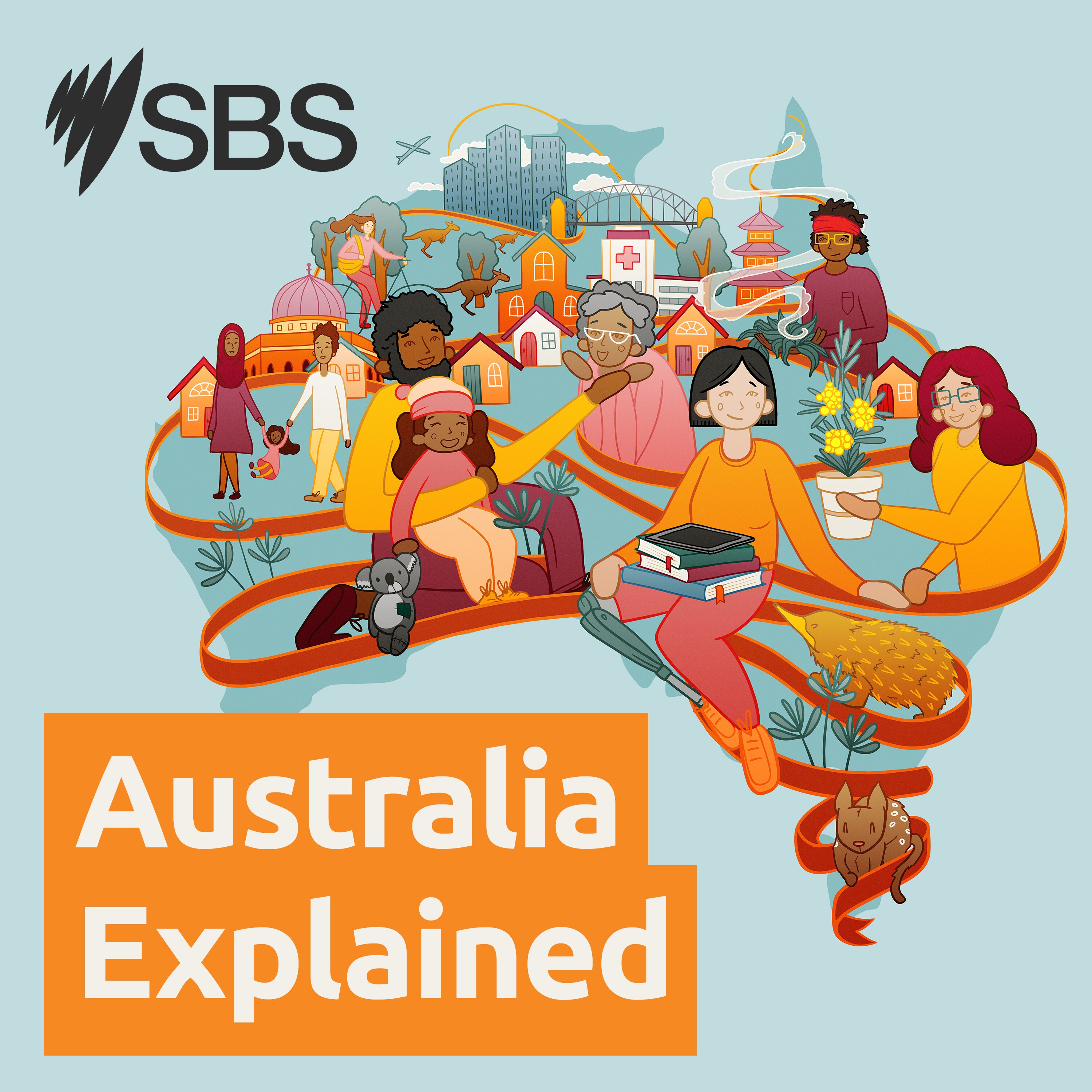
Australia Explained
by SBS
Everything you need to know when settling into life in Australia. Hear helpful information about health, housing, jobs, visas and citizenship, Australian laws and more.
-
445
Are you prepared for Australia’s flu season?
Influenza is a highly contagious viral infection. As flu season begins in Australia, here’s what you need to know to protect yourself, your family and the most vulnerable in our community.
-
444
Tips to reduce petrol costs | Fuel in Focus
Rising fuel prices are putting pressure on household budgets across Australia, and for many people, it’s changing the way they travel. So what can you do to reduce your fuel costs without giving up your daily routine? Here are some simple, practical ways to save money on petrol.
-
443
The overlooked story: Aboriginal and Torres Strait Islander service on Anzac Day
Each year Australians gather on Anzac Day to remember those who served in wars, conflicts and peacekeeping missions. But whose stories are we remembering? Are there stories we don’t always hear? In this episode we explore an important part of Australia’s history that has often been overlooked—the service of Aboriginal and Torres Strait Islander peoples.
-
442
Women’s legal services in Australia: Understanding your options
Workplace discrimination, gender-based violence and financial inequality—these are just some of the reasons why women need dedicated legal services. You don’t have to navigate the legal system alone. In Australia, free legal services exist to advocate for vulnerable women in ways that are safe, confidential and culturally appropriate.
-
441
Thinking of a career change? Here are some tips and options to consider
Looking to step into a new career? You're not the only one, the stats suggest. No matter your age, background or whether English is your first language, a career change at some point is almost inevitable nowadays. In Australia, support is available to help you through the process.
-
440
Australia’s unique wildlife: what makes it special and what’s at risk
Australia is one of the most biodiverse places on Earth, home to wildlife and plant species found nowhere else on the planet. In this episode of Australia Explained you’ll learn about what makes Australia’s biodiversity so special, the threats it faces and how we can all help protect it.
-
439
How to buy Indigenous art and craft ethically in Australia
Buying Aboriginal and Torres Strait Islander art can be meaningful, but how do you know if it's real and ethical? Fake art is still a problem in Australia, and protections are still developing. This guide helps you understand what to look for, what questions to ask, and where to buy safely. By choosing carefully, you can support First Nations artists and their communities.
-
438
Have you considered a career in translating and interpreting?
Have you ever considered using your bilingual skills to assist others? A career in translating and interpreting might be for you. In Australia you can train for a TAFE certificate all the way to Master’s degree prior to getting certified. In this episode we help you navigate the pathway to becoming a qualified practitioner.
-
437
Think before you pack: Australia’s customs and biosecurity rules explained
Customs is generally the first point of contact for people entering Australia. Our Border Force Officers are there waiting. They ensure that we don’t bring in prohibited goods that could threaten Australia’s unique environment, economy and communities. Before you zip up your suitcase, here’s what you need to know about what can—and can’t—cross the border, and what’s at stake if biosecurity rules are ignored.
-
436
How public and community housing works in Australia
In Australia, government-subsidised rental housing is available for eligible households. Assessment is based on need under criteria that vary depending on your state or territory. Here’s what to expect when applying for different types of housing assistance, some common myths around social housing and where to reach out for help.
-
435
More than style: How First Nations fashion is growing in Australia
If you’ve spent any time in Australia, you’ve probably noticed how relaxed the style is. You might notice activewear, surf brands and casual clothes everywhere. But there’s another side to Australian fashion. Aboriginal and Torres Strait Islander designers have been creating clothes and accessories for thousands of years — and that work is very much alive today. You’ll see it on runways, in global fashion campaigns and in everyday clothing. Find out what makes First Nations fashion different, how it connects to the environment and what you should be aware of if you want to wear it.
-
434
Your guide to using sunscreen in Australia
Australia’s sun can be harsh. And sunscreen is one key measure protecting us against harmful sun exposure. We asked three scientists about sunscreen facts, myths and choosing the right products.
-
433
How to recover from bushfires
Australia’s hot, dry climate and unique landscapes make it one of the most bushfire-prone countries in the world. As climate change drives higher temperatures and drier conditions, we can expect more frequent and more intense bushfires in the future. But once the fire is out, how do you return home safely, find support, and look after yourself?
-
432
How does IVF work in Australia?
Did you know that IVF is not the first, but in fact the last step in a sequence of fertility treatments? In Vitro Fertilisation is regulated by state and territory laws. It can also be expensive and emotionally challenging. Here’s what to expect when aiming to start a pregnancy with IVF in Australia.
-
431
Public transport in Australia: breaking down the basics
Like in most countries, public transport in Australia is the cheapest way to get around. It includes trams, buses, trains and ferry services. And each state or territory has its own transport network. However, navigating Australia’s public transport system with ease requires knowing the basics around how it works and what to expect.
-
430
What actually happened on January 26?
January 26 is one of the most debated dates in Australia’s history. Often described as the nation’s birthday, the day marks neither the formal founding of the colony nor the creation of the Commonwealth. Instead, it reflects a layered history shaped by colonisation, political decisions, and ongoing First Nations resistance. Understanding what actually happened on January 26 reveals why the date is experienced so differently across the country.
-
429
How to cater for your dietary restrictions
Australia is known as the allergy capital of the world. Our diverse population also means that we express our religious beliefs, ethics, health and personal choices through the food we eat. We called on some experts to help us navigate all the labelling, certifications and resources that can inform our food choices.
-
428
Your guide to camping in Australia
Going camping is an incredible way to experience Australia’s great outdoors whilst also taking a break from technology and daily routines. We unpack the benefits of camping, the preparation required, the equipment you should consider taking, and how to be a considerate camper.
-
427
How to cope during a heatwave in Australia
Summer in Australia can be very hot, and as our climate continues to warm, heatwaves are expected to become more frequent and more intense. In this episode of Australia Explained, we cover what a heatwave is, why they pose such a significant risk to human health, who is at most risk, and how to best prepare to cope with a heatwave.
-
426
Your first steps to engaging with Indigenous Australians
Connecting with Indigenous Australia can be daunting for a newcomer to the country. So, where do you start? We asked Yawuru woman Shannan Dodson, CEO of the Healing Foundation, about simple ways to engage with First Nations issues and people within your local community.
-
425
A parent’s guide to help teens adjust to social media age restrictions
Australia is restricting access to social media accounts for under-16s, and many families are wondering what it means in practice. While the rules place responsibility on tech platforms rather than young people or their parents, the changes may still create stress for teens who rely on social media to stay connected. Find out how the ban will work, why connection still matters, and how experts suggest supporting young people through the transition.
-
424
From black tie to casual: How to decode dress codes
You’ve received an invitation that reads “Dress code: Cocktail attire”. What is this ‘code’? And more importantly, what will you wear? In this episode, we demystify the most common dress codes so that you can feel comfortable at any event.
-
423
From Mabo to modern Australia: the ongoing story of native title
Australia is known around the world for its rich and diverse First Nations cultures. But when it comes to native title and land rights, you might still wonder what they actually mean. Discover what native title means in Australia, how it began with the Mabo Case, what the Native Title Act does, and why it matters for all Australians.
-
422
How to plan for your child’s financial future in Australia
Financial planning can feel stressful for any parent. When it comes to saving for your child’s future, knowing your options helps make informed decisions. And teaching your kid healthy money habits can be part of the process.
-
421
Dating or matchmaking: How to find a partner in Australia
Many newly arrived migrants in Australia seek relationships not only for romance but to regain a sense of belonging. Separation from loved ones often drives this need for connection. This episode explores how dating in Australia differs from more collectivist cultures and how newcomers can find partners. From social events and dating apps to professional matchmaking, it highlights how migrants can build confidence, connection, and safety as they find love in a new country.
-
420
What are Australia’s fishing laws and rules?
Thinking of going fishing in Australia? Make sure you are familiar with local regulations, including licensing systems, closed seasons, size limits, permitted gear, and protected species.
-
419
Understanding treaty in Australia: What First Nations people want you to know
Australia is home to the world’s oldest living cultures, yet remains one of the few countries without a national treaty recognising its First Peoples. This means there has never been a broad agreement about sharing the land, resources, or decision-making power - a gap many see as unfinished business. Find out what treaty really means — how it differs from land rights and native title, and why it matters.
-
418
How to donate blood in Australia
Each time you donate blood, you can save up to three lives. In Australia, we rely on strangers to donate blood voluntarily, so it’s a truly generous and selfless act. This ensures that it’s free when you need it—but it also means we need people from all backgrounds to donate whenever they can. Here’s how you can help boost Australia’s precious blood supply.
-
417
Road trips in Australia: What you need to know before hitting the road
There’s no better way to experience Australia than hitting the road. Between the wide-open landscapes, country bakery pies, and unexpected wildlife, a road trip lets you take in the country at your own pace. But even if you’ve driven overseas, Australia comes with its own set of challenges, especially when you venture off the beaten path.
-
416
Indigenous sport in Australia: Identity, culture and legacy
Indigenous Australian athletes have long inspired the nation, uniting communities and shaping our identity. Olympian Kyle Vander-Kuyp and Matildas goalkeeper Lydia Williams are two such Indigenous athletes that have shaped our national identity. Their stories show the power of sport to foster inclusion, equality, and pride for future generations.
-
415
How do you legally change your name in Australia?
Choosing to legally change your name is a significant life decision that reflects your personal circumstances. Each year, tens of thousands of Australians lodge an application through the Registry of Births, Deaths & Marriages. If you’re considering a change of name, this episode takes you through the process.
-
414
Introducing...Head Above Water series
Australia Explained podcast created a special new series called "Head Above Water." Meet comedians and good friends Sashi and Suren—one loves swimming and water, the other doesn’t like getting wet! Together they’re learning what Australians enjoy about water and how to get amongst it, from the basics of adult swimming lessons, to understanding how to spot a rip in the surf.
-
413
How to respond when encountering wildlife on your property
Australia is home to an array of diverse and beautiful wildlife, and knowing how to respond when you encounter wildlife in your home or on your property will help protect our precious wildlife species whilst keeping you, your family and your pets safe.
-
412
The cervical screening test that could save your life
Cervical cancer is preventable, but only if you catch it early. Cultural and personal barriers have often meant that women avoid cervical cancer testing. But now with the help of a world-leading test, Australia is aiming to eliminate cervical cancer by 2035. The test is a safe and culturally sensitive option for women from all backgrounds. Best of all it could save your life—or that of someone close to you.
-
411
להבין את זכויות הקרקע של האבוריג'ינים באוסטרליה
ייתכן ושמעתם את קריאות המחאה - "מה אנחנו רוצים? זכויות קרקע!" - אבל מה זה בעצם אומר? האדמה נמצאת בלב הזהות, התרבות והרווחה של האבוריג'ינים ותושבי איי מיצרי טורס. היא נקראת country וכוללת את היבשה, מקווי המים, השמיים וכל היצורים החיים. בפרק הזה של Australia Explained נבחן את סוגיית זכויות הקרקע של עמים ילידיים - מה הן כוללות, אילו שטחים נוגעים בדבר, מי יכול להגיש תביעות, ומהי ההשפעה על קהילות ילידיות.
-
410
What is forced marriage and what support is available in Australia?
A forced marriage occurs when one or both individuals do not consent freely, often due to threats, coercion, deception, or if they are under 16 or those with mental incapacities. No matter how long you've been living here, it's vital to know: You have the right to choose who you marry. In this episode, we'll explore the difference between arranged and forced marriage and where you can turn for help if you or someone you know is affected.
-
409
Understand Aboriginal land rights in Australia
You may hear the protest chant, “what do we want? Land rights!” —but what does it really mean? Land is at the heart of Aboriginal and Torres Strait Islander identity, culture, and wellbeing. Known as “Country,” it includes land, waterways, skies, and all living things. In this episode of Australia Explained, we explore Indigenous land rights—what they involve, which land is covered, who can make claims, and the impact on First Nations communities.
-
408
A beginner’s guide to owning a pet in Australia
Bringing a pet into your home can fill it with joy and companionship – but it also comes with important responsibilities. In Australia, new pet owners need to be aware of legal requirements, along with essential tips for training and caring for their animals.
-
407
Is Australian tap water safe to drink?
Access to safe drinking water is essential, and Australia’s often harsh environment means that our drinking water supplies are especially precious. With differences in the availability and quality of drinking water across the country, how do we know if it’s safe to drink? In this episode we get water experts to answer this question and more.
-
406
DIY Renovations: What you need to know before getting started
Many Australians love rolling up their sleeves and undertaking their own home improvements. But before you grab a hammer or paintbrush, it’s essential to understand the rules and risks so you can renovate safely and legally.
-
405
Australia’s Indigenous education gap and the way forward
Education is a pathway to opportunity, but for too long, Indigenous students in Australia have faced barriers to success. While challenges remain, positive change is happening. In this episode we’ll hear from Indigenous education experts and students about what’s working, why cultural education matters and how Indigenous and Western knowledge can come together to benefit all students.
-
404
What is a Justice of the Peace? When do you need one?
At some stage you will probably need help from a Justice of the Peace. It may be to prove your identity, to make an insurance claim or to certify copies of your legal documents in your language. JPs are trained volunteers who play a crucial role in the community by helping maintain the integrity of our legal system. So what exactly does a JP do and where can we find one when we need their services?
-
403
How to start your home business in Australia
Did you know that people offering taxi services from home need to register for Goods and Services Tax (GST)—regardless of how much they earn? Or that a fitness instructor needs local council approval to see clients at home? In this episode, we unpack the basic rules you need to know when setting up a home-based business in Australia.
-
402
How is alcohol regulated and consumed in Australia?
In Australia, alcohol is often portrayed as part of social life—especially at BBQs, sporting events, and public holidays. Customs like BYO, where you bring your own drinks to gatherings, and 'shouting' rounds at the pub are part of the culture. However, because of the health risks associated with alcohol, there are regulations in place. It’s also important to understand the laws around the legal drinking age, where you can buy or consume alcohol, and how these rules vary across states and territories.
-
401
First Nations representation in media: What’s changing, why it matters
The representation of Indigenous Australians in media has historically been shaped by stereotypes and exclusion, but this is gradually changing. Indigenous platforms like National Indigenous Television (NITV) and social media are breaking barriers, empowering First Nations voices, and fostering a more inclusive understanding of Australia’s diverse cultural identity. Learning about these changes offers valuable insight into the country’s true history, its ongoing journey toward equity, and the rich cultures that form the foundation of modern Australia. Understanding Indigenous perspectives is also an important step toward respectful connection and shared belonging.
-
400
How home and contents insurance works in Australia
Home and contents insurance is a safety net many households expect to rely on during difficult times. But it’s also a financial product that even experts can find challenging to navigate. Whether you own or rent your home, understanding your level of cover, knowing what fine print to look out for, and learning how to manage rising premiums can help you make more informed choices as a consumer.
-
399
Your guide to snow trips in Australia
Australia may be known for its beaches, but its snowfields offer unforgettable winter experiences—whether you're skiing, tobogganing, throwing snowballs, or seeing snow for the very first time. In this episode, we’ll guide you through everything you need to know for a snow trip, from what to pack and where to go, to how to stay safe, warm, and ready for fun.
-
398
How does media work in Australia?
A free, independent and diverse press is a fundamental pillar of democracy. Australia has two taxpayer-funded networks that serve the public interest (ABC and SBS), plus a variety of commercial and community media outlets. Although publicly funded media receives money from the government, it is unlike the state-sponsored outlets found overseas.
-
397
Would you consider nominating someone for an Order of Australia?
Do you know someone who makes an extraordinary impact in the community? It could be a person from any background or field of endeavour. You can help celebrate their achievements by nominating them for an Order of Australia. The more we recognise extraordinary members within our communities, the more Australia’s true diversity is reflected in the Australian honours list.
-
396
Who are the Stolen Generations?
Australia has a dark chapter of history that many are still learning about. Following European settlement, Aboriginal and Torres Strait Islander children were removed from their families and forced into non-Indigenous society. The trauma and abuse they experienced left deep scars, and the pain still echoes through the generations. But communities are creating positive change. Today these people are recognised as survivors of the Stolen Generations.
No matches for "" in this podcast's transcripts.
No topics indexed yet for this podcast.
Loading reviews...
Loading similar podcasts...
URL copied to clipboard!