
PODCAST · technology
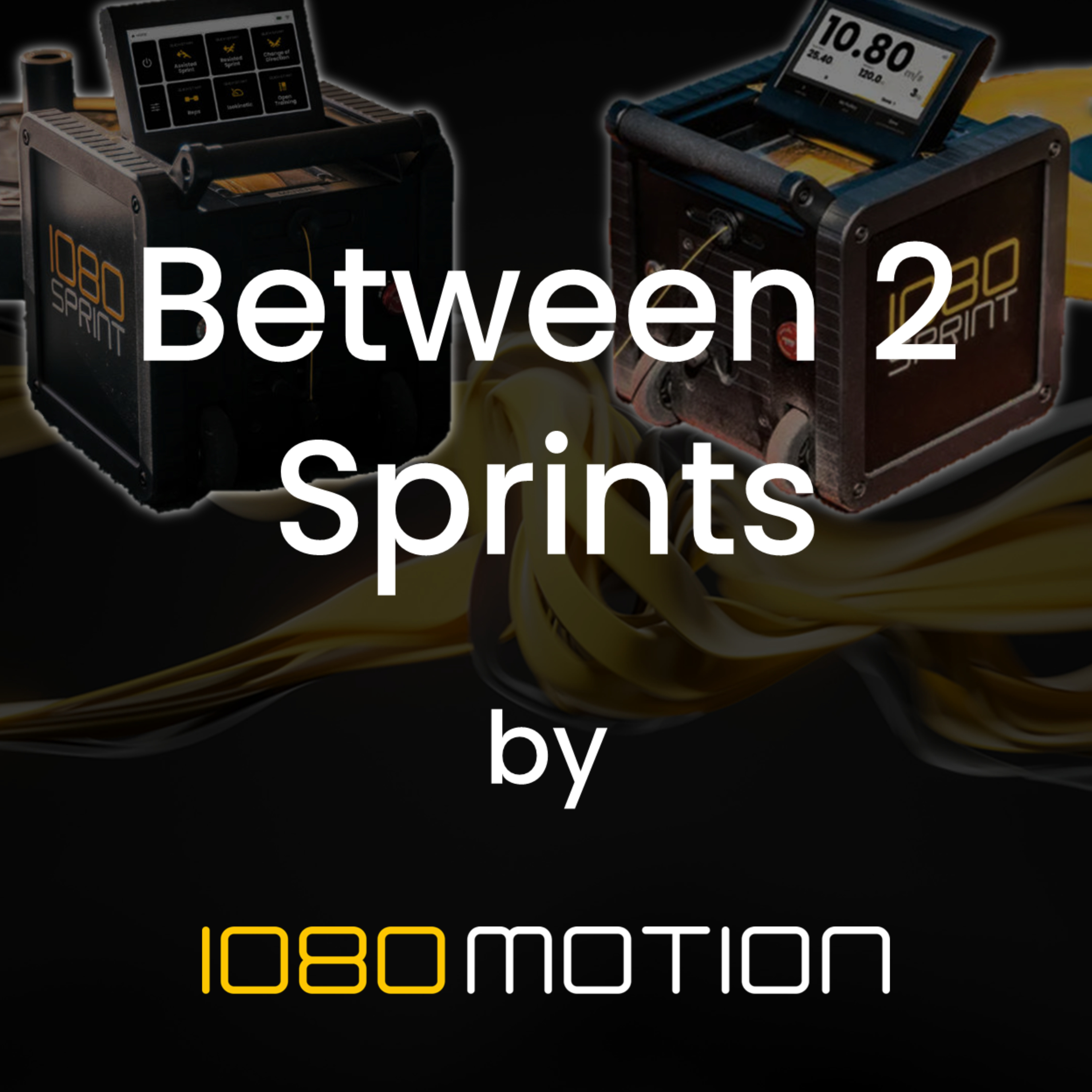
Between 2 Sprints
by 1080 Motion
Hosted by 1080 Motion, Between 2 Sprints is a coach-to-coach and athlete-to-coach conversation series focused on real training, real decisions, and the people doing great work behind the scenes.Each episode sits down with high-level coaches and athletes to unpack how they actually use motorized resistance, data, and intent to guide performance, rehab, and return-to-play.Just honest conversations about what works, what’s learned along the way, and how 1080 Motion technology and training systems evolve in the real world.
-
15
NFL Return-to-Play, Assisted Sprinting, and Deceleration Training with Matt Hobbs, Cleveland Browns
We sit down with Matt Hobbs, Reconditioning Coordinator and Performance Therapist for the Cleveland Browns. Matt shares his journey from collegiate performance to the NFL and how he uses motorized resistance to bridge the gap between rehab and real performanceWe dive into how return-to-play isn’t just about clearing athletes, but rebuilding acceleration, deceleration, and movement mechanics from the ground up. From early-stage ACL rehab progressions to late-stage assisted sprinting and change of direction work, Matt breaks down how he blends research, constraints-based coaching, and real-world applicationWe cover:-Matt’s path from Miami to Nebraska to the Cleveland Browns-Early exposure to 1080 and applying research to practice-Using motorized resistance in return-to-play and reconditioning-“1080 Projections” for rebuilding acceleration mechanics post-ACL-Constraint-led coaching vs traditional cueing-Assisted sprinting for speed development and late-stage RTP-Contrast sprinting: resisted, unresisted, assisted-Using velocity and split data to guide athlete progress-Educating athletes on performance metrics beyond top speed-Deceleration training and ADA as a key missing piece in footballMore episodes coming with coaches and practitioners applying speed training, return-to-play, and motorized resistance to build athletes who are not just cleared, but truly ready to perform
-
14
ACL Rehab, Mobile Sports Physical Therapy, and Using Data for Return to Play with Karen Bagnardi, Elite Motion Athlete
We sit down with Karen Bagnardi, physical therapist, Gray Institute Fellow, and owner of Elite Motion Athlete. Karen has spent more than 35 years in orthopedic and sports medicine physical therapy and now works with high-performance athletes across high school, collegiate, professional, and Olympic levelsKaren shares how she built a mobile sports physical therapy practice, bringing treatment directly to where athletes train, from gyms to hockey rinks. Using the 1080 Sprint as her portable clinic, she combines movement assessment, data-driven rehab, and sport-specific training to guide athletes safely back to competitionFrom ACL rehab and return-to-play testing to on-ice sprint training and collaboration with surgeons, Karen explains how objective data helps athletes progress faster while reducing reinjury riskWe cover:-Karen’s path from traditional sports PT to mobile high-performance rehab-Using the 1080 MAP and movement assessment to guide treatment-Applying motorized resistance to real sport movements-ACL rehab and tracking symmetry through force and velocity data-Using sprint graphs and performance curves to guide progression-Collaborating with surgeons, coaches, and skills trainers-Fine-tuning return-to-play decisions with objective metrics-Training hockey athletes directly on the ice with resisted sprinting-The business side of building a mobile sports performance practice-How data helps athletes return to sport faster and safer
-
13
NHL High Performance, Isokinetics, and Building a System Devan McConnell, Utah Mammoth Hockey Club
We sit down with Devan McConnell, High Performance Director for the Utah Mammoth and longtime NHL performance leader with the New Jersey Devils and Arizona Coyotes. Devan shares how motorized resistance became a cornerstone of his performance, reconditioning, and sports science system across multiple NHL organizationsWe dive into acceleration in hockey, isokinetic strength training, return-to-play integration, and how scaling from one Quantum to multiple Sprints and Cables changed what was possible in a team setting. From pitching performance tech to ownership to building an 8,000 square foot performance facility, this episode blends coaching, leadership, and system design at the highest level of professional hockeyWe cover:-Devan’s path from collegiate S&C to NHL High Performance Director-Early adoption of the 1080 Quantum and Sprint in New Jersey-Using acceleration as a primary KPI in hockey-Isokinetics for strength, power, and safe force production-Reconditioning long-term RTP cases with motorized resistance-Scaling from one unit to multiple Sprints and Cables in Utah-Training frontal and transverse plane power for hockey athletes-Integrating isokinetic resistance into bench press and split squats-How to justify performance technology to management and ownership-The future of hockey development: change of direction, on-ice sprinting, and applied experimentation
-
12
Hockey Speed, Isokinetics, and Building Culture with Data, with Charlie Bando
We sit down with Charlie Bando, co-owner of Bando Performance, a multi-location performance company in the Northeast specializing in hockey development. Charlie shares how he went from early exposure to motorized resistance to building it into the backbone of his training culture across four facilitiesWe dive into how the 1080 Sprint evolved from a speed tool into a full-system performance solution, including isokinetics, eccentric overload, in-season monitoring, and return-to-play integration. From junior hockey athletes to high-level prospects, Charlie explains how intent, data, and culture combine to drive real resultsWe cover:-How Bando Performance adopted the 1080 Sprint and scaled it across locations-Building a performance culture around speed and measurable intent-Using isokinetics for hockey-specific strength development-Running an omni-contraction model: eccentric, isometric, concentric emphases-Monitoring in-season fatigue and performance in collision sports-Integrating motorized resistance into return-to-play settings-Strength work vs on-ice speed development-Gamifying speed training for youth athletes-Scaling technology during high-volume summer training
-
11
High School Speed Training, Overspeed, and Building Buy-In with JT Ayers, Trabuco Hills High School
We sit down with JT Ayers, head track and field coach at Trabuco Hills High School. JT shares what it actually looks like to build a high-level speed program in a public school setting, from long-term planning and fundraising to earning trust from athletes, parents, and the community.We talk through why he waited to invest in equipment he truly believed in, how overspeed training changed both performance and safety in his program, and how he scales one 1080 Sprint 2 across a large roster. From resisted starts and contrast work to assisted sprinting, data tracking, and simple KPIs, this episode is a practical look at applying elite tools in a real high school environment.We cover:-JT’s background coaching high school and private-sector athletes-Long-term planning and fundraising for equipment you truly want-Why safety and reliability mattered for overspeed training-Using resisted sprints, contrast work, and simple loading strategies-Assisted sprinting and overspeed in a high school setting-Tracking a few key metrics without overcomplicating the process-Scaling one unit across a large roster-Creating training groups and athlete buy-in-Using data to support coaching eyes, not replace them-Building a culture of trust, patience, and long-term development
-
10
Performance, Return-to-Play, and Building Robust Athletes with Diwesh Poudyal, Champion PT and Performance
We sit down with Diwesh Poudyal, Director of Fitness at Champion PT & Performance. Diwesh breaks down how his team blends performance and physical therapy under one roof, and how the 1080 Sprint 2 has become a central tool across return to play, arm care, and high-level athletic development.We dig into how his use of motorized resistance evolved from basic resisted sprinting to precise manipulation of eccentric and concentric load, velocity, and direction. From MLB arm care and isokinetics to ACL rehab, assisted sprinting, and multidirectional work, this episode shows what happens when good PT principles meet intentional performance training.We cover:-Early learning curve with the 1080 and systemizing its use-Blending PT and performance in one integrated model-Isokinetic arm care for professional baseball players-Using eccentric overload for shoulder robustness-Load-velocity profiling for sprint and power development-Assisted sprinting for acceleration, decel, and high-speed exposure-Multidirectional drills for field sport athletes-Broad jumps, bounds, and horizontal loading in RTP-Using objective data to build confidence post ACL-Reverse engineering performance from late-stage RTP demandsMore episodes coming with coaches integrating performance, rehab, and data to build better athletes and smarter systems.
-
9
Speed, Deceleration, and Building Better Change of Direction with Michael Drach, Drach Performance Training
We sit down with Michael Drach, long-time speed coach and private-sector operator with over 20 years of experience training athletes from youth to the NFL. Michael walks through how his speed system evolved from sleds and bungees to motorized resistance, and why the 1080 Sprint became a turning point for both performance and business.We dig deep into change of direction, deceleration, and the eccentric-to-concentric transition that separates athletes who can cut from those who get stuck. From dialing in loads across age groups to applying overspeed with control, this episode is a practical look at how high-level speed training actually gets applied in a private setting.We cover:-Michael’s coaching background and evolution of his speed toolbox-From sleds and bungees to the 1080 Sprint and 1080 Sprint 2-Using instant feedback to drive intent and sprint quality-How he trains change of direction and amortization-Deceleration vs cutting and why both matter-Load selection for youth, high school, and elite athletes-Building confidence with heavier COD loads-Applying overspeed safely and progressively-Why max velocity is the hardest quality to improve-Using the 1080 as both a coaching and business advantageMore episodes coming with coaches breaking down speed, deceleration, and real-world training systems inside and outside the team setting.
-
8
Building Basketball Speed Systems, Rehab and RTP, and Real-World Application with Ryan Petersen, Chicago Bulls
We sit down with Ryan Petersen of the Chicago Bulls to talk through how speed training actually shows up in real environments, not just on paper. We dig into how he thinks about applying sprint work, resistance, and intent within the constraints of teams, athletes, and day-to-day coaching reality.The conversation centers on decision-making, context, and why tools like motorized resistance matter less for what they are and more for how they’re used. From setting up sessions to interpreting outputs and adjusting on the fly, this episode highlights the thinking behind building effective, adaptable speed systems.We cover:-Ryan’s coaching background and current setting-How sprint training fits inside real schedules and constraints-Using resistance and intent to shape outputs, not chase numbers-Decision-making during sessions vs preset plans-What actually transfers from training to sport-Lessons learned from applying speed work at scale-Where coaches tend to overcomplicate speed training-Why context matters more than protocols
-
7
Training and Using Data to Build Olympic-Level Speed with Sydney Milani, Team USA Bobsled
We sit down with Syd Milani, Team USA bobsled athlete and former All-American sprinter. Syd shares what bobsled is really like behind the scenes, from the blue-collar grind of moving 400lb sleds to the precision required to win hundredths of a second.We talk through her transition from track to bobsled, her experience training with the 1080 Sprint and 1080 Syncro at Alabama, and how data guided decisions around speed, strength, bodyweight, and push mechanics in the lead-up to the Olympics. This episode is a rare athlete perspective on how motorized resistance and real-time feedback actually shape elite performance.We cover:-What bobsled training really looks like behind the scenes-Using the 1080 Sprint as an athlete at Alabama Track-How individualized loading made team training competitive and fun-Training on the 1080 Syncro for positional strength and weak points-Gaining 20 lbs for bobsled and managing speed vs mass tradeoffs-Using load-velocity testing to guide training during weight gain-Refining sled push mechanics with motorized resistance-Identifying energy leaks, hand transitions, and horizontal force loss-How data supported technical changes that went against tradition-Translating watts, power, and intent to real-world bobsled performance
-
6
Lessons from the first 1080 Cable in Europe and Innovating Performance Training with Antheos Spiteri, Urban Zone (Malta)
We sit down with Antheos Spiteri, one of the most innovative coaches in Europe and the first practitioner on the continent to own a 1080 Cable. Based in Malta, Antheos blends performance, rehab, and sport-specific coaching with a mad-scientist level of creativity, using both the Sprint 2 and Cable to build stronger, faster, more resilient athletes.We dive into how he trains elite football players, how he uses motorized resistance indoors and on the pitch, and why having testing and training in the same system has changed his entire RTP process. From isokinetics to eccentric overload to game-like scenarios with overspeed and deceleration, Antheos shows what’s possible when you pair imagination with versatile tech.We cover:-How Antheos discovered motorized resistance and why 1080 fit his criteria-Using the Sprint 2 for plyos, deceleration, COD, perturbation, proprioception, and RTP-Creative ways he uses overspeed and resisted work during football-specific drills-Bringing the 1080 onto the pitch for game-like pressure, dribbling, finishing, and reactive scenarios-Using the Cable for heavy squats, isokinetic work, rotational power, Nordics, and machine integrations-Converting a leg extension machine into an isokinetic dynamometer-Why isokinetics and fine velocity adjustments matter for pain-free rehab-Testing and training simultaneously: power asymmetries, hop tests, force traces, and VDEC logic-How he manipulates eccentric load, ROM, and direction for limb symmetry and RTP-His advice for new users: attach it to everything and explore every mode
-
5
Next-Level College Baseball Speed Training with Ty Webb, Purdue University Baseball
We sit down with Ty Webb, Head of Baseball Strength and Conditioning at Purdue University. Ty brings a rare blend of football and baseball experience, plus years of running high-volume speed systems with multiple 1080 Sprint 2 units. His baseball program has become one of the fastest in college baseball, and he breaks down exactly how he's getting it done.We dig into how he first learned the system on the football side, how he adapted it to baseball, and how he uses resisted sprints, contrast work, profiling, and competitive feedback to build faster, more efficient players. From managing five 1080 Sprint 2 units to integrating speed work into live base-running sessions, Ty shows how to make tech work inside the flow of practice.We cover:-Ty’s journey from football S&C to leading Purdue Baseball’s performance program-Running a full football team on four Sprint 1 units and what he learned-Heavy and light resisted sprint setups, weekly structure, and flow-How simple constraints cleaned up asymmetries without over-coaching-Why he tracks peak power, average time, and multiple metrics beyond peak velocity-Using contrast work with jumps to expose and fix movement issues-Integrating the 1080 directly into base running and practice flow-Profiling position players and setting 80 percent target speeds-How Purdue Baseball’s latest 60-yard times validated the entire system-His plan for bringing assisted acceleration into baseball
-
4
Blending Rehab and Performance with Technology with Jordan Cook, B3 Better Sports Performance
We sit down with Jordan Cook, Director of Sports Performance and Rehab at B3 Better in Jacksonville, Florida. Jordan blends athletic training, strength and conditioning, and high-level return-to-play work, making him one of the most forward-thinking rehab coaches using the 1080 Sprint in the private sector.We get into how he learned the system, how he uses motorized resistance to bridge rehab and performance, and why isokinetics, force-time curves, and deceleration profiling have become cornerstones in his process. If you care about return-to-play, testing as training, or using tech to make better decisions in rehab, this one has a lot to take away.We cover:-Jordan’s path from England to the U.S. and into rehab and performance-How he first learned the 1080 and why it became a core part of his model-Using the 1080 for force-velocity and load-velocity profiling in private sector settings-Why isokinetic quad testing has become a major unlock for ACL rehab-How graph shapes expose deficits that average numbers hide-Building rehab systems where testing happens inside training-Using deceleration and ADA testing to profile horizontal braking-How he blends qualitative and quantitative metrics to guide progression-How he uses the 1080 to support teams, athletes, clinics, and consulting-His recommended “homework” for practitioners: decel profiling across distances
-
3
Elite Rugby Speed Training All Over the World with Jonathan Ward, Bristol Bears Rugby
Joining the show is with Jonathan Ward, current strength and conditioning coach with the Bristol Bears and one of the most versatile 1080 users anywhere in rugby. Jonathan has coached across Australia, France, and the UK, working with elite athletes across multiple systems while refining how he uses motorized resistance to drive speed development.We get into his first exposure to the 1080 in France, how he experimented his way into resisted sprints, assisted acceleration, and variable loading, and how he now integrates five Sprint units into the flow of a pro rugby club. If you're into resisted sprinting, force-velocity profiling, or using tech to individualize for wildly different body types, this one has a lot to steal.We cover:-Jonathan’s path from Australia to France to the Bristol Bears-Early days learning the 1080 and experimenting with assisted/resisted work-How rugby athletes of different sizes demand different setups-Why he shifted strong athletes to assisted acceleration and variable loading-How he uses 50 to 30 percent VDEC drops over specific distances-Coaching cues for variable loading and common errors he sees-How he integrates the 1080 into team environments with high buy-in-Why competition and live feedback improve intent and outcomes-His go-to homework for new 1080 users: resisted runs and load-velocity profiling-When to progress to variable resistance and assisted work
-
2
Assisted Sprinting, Elite Track and Field, and Mechanics with Will Collins, Fast University
We sit down with Will Collins, founder of Fast University and one of the most creative overspeed coaches in the game. Will works with athletes from youth to world-class, combining sprint coaching, consulting, marketing, and a whole lineup of side hustles that all orbit one thing: developing fast, efficient movers.We get into how he discovered the 1080 Sprint 2, what hooked him on overspeed, and how his approach has evolved from testing loads to building full systems around assisted drills, variable loading, and fine-tuned progressions. If you’re into max velocity, coordination, overspeed progression, or using tech to accelerate learning, this one delivers.We cover:-Will’s background coaching athletes internationally and domestically-The first time he saw the 1080 and why overspeed caught his attention-Why max velocity exposure is limited and how towing changes that-How overspeed helps athletes feel and learn technical positions-His early overspeed experiments vs. the precise system he uses now-The role of fine adjustments, assisted drills, and variable loading-How he primes athletes with front-side and cycle drills-When to use assisted sprinting vs. true overspeed-How he progresses loads, distances, and sessions safely-Real numbers, risks, and the “legal” versus “illegal” side of overspeed-Will’s advice for anyone starting their overspeed journey
-
1
Overspeed Sprinting, Lebron James, and Running Fast Fast with Eric Lichter, Plus 2 University
The first episode of Between 2 Sprints is joined by Eric Lichter, owner of Plus Two University in Columbus, Ohio. Eric’s been coaching for nearly 30 years, from training Ted Ginn Jr. and LeBron James to directing football performance at the Ohio State University, to building one of the most successful private speed programs in the country.We dig into his return to coaching, why tech changed the game for him, and how he’s using the 1080 Sprint to individualize training, build better movers, and do it at scale with seven units running every day. If you care about speed, LTAD, overspeed, or building a real system, this one has plenty to steal.We cover:-Eric’s background from private sector to Ohio State and back-Why he started using the 1080 and the story behind buying seven Sprint 1s-How he profiles every athlete with simple load-velocity testing-His current 3-month acceleration cycle and weekly structure-How he progresses assisted and overspeed sprinting safely-Why peak overspeed numbers predict race-day top speed-What he’s learned from 140,000+ sprints on the 1080-His take on long-term development for middle school and high school athletes-How to explain overspeed to parents, athletes, and hesitant coaches-The business side of using tech and why it pays for itself fast
We're indexing this podcast's transcripts for the first time — this can take a minute or two. We'll show results as soon as they're ready.
No matches for "" in this podcast's transcripts.
No topics indexed yet for this podcast.
Loading reviews...
ABOUT THIS SHOW
Hosted by 1080 Motion, Between 2 Sprints is a coach-to-coach and athlete-to-coach conversation series focused on real training, real decisions, and the people doing great work behind the scenes.Each episode sits down with high-level coaches and athletes to unpack how they actually use motorized resistance, data, and intent to guide performance, rehab, and return-to-play.Just honest conversations about what works, what’s learned along the way, and how 1080 Motion technology and training systems evolve in the real world.
HOSTED BY
1080 Motion
CATEGORIES
Loading similar podcasts...
URL copied to clipboard!