
PODCAST · health
Between Contractions
by Stephanie Dawson & Amsy Dees
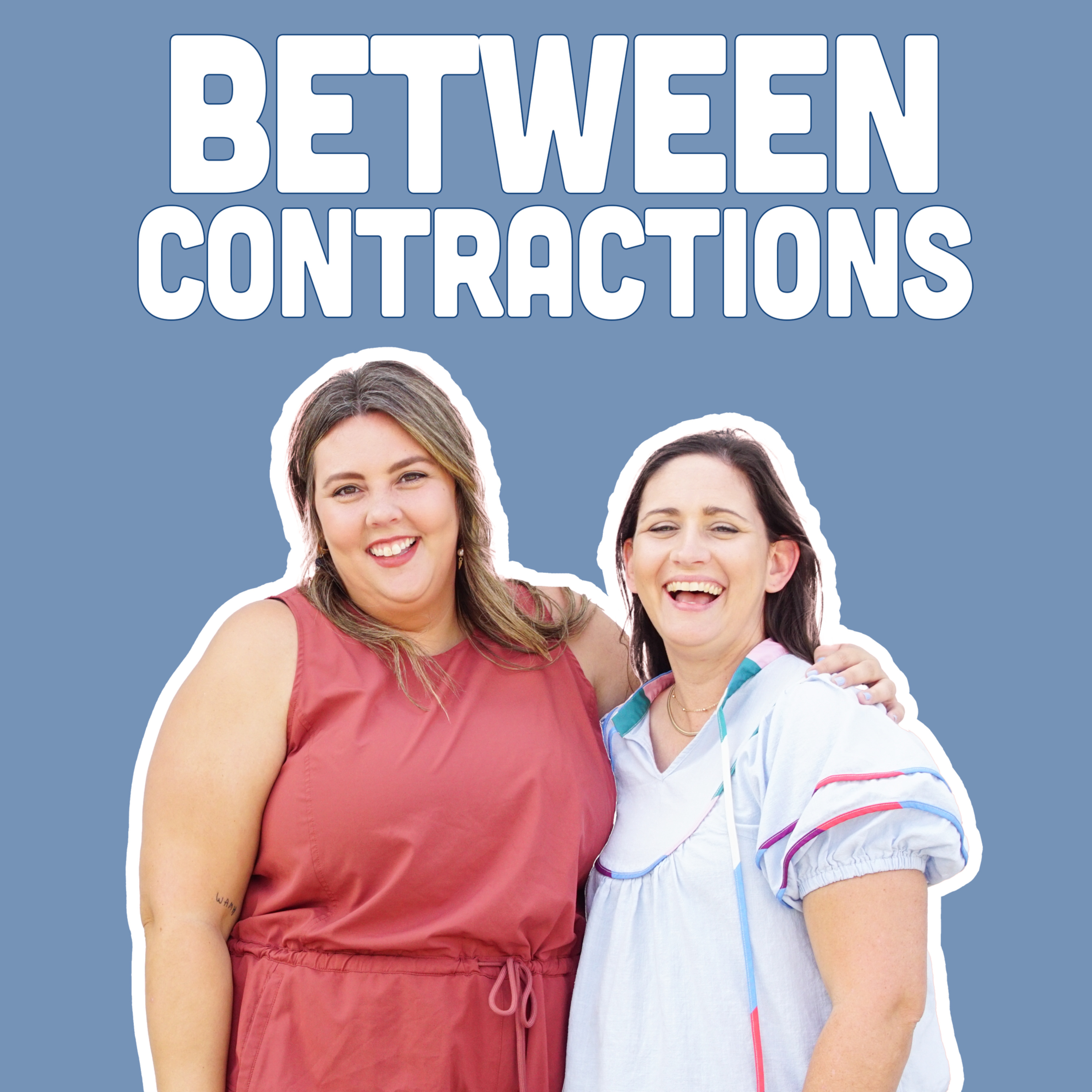
Between Contractions is a real, honest space where we talk about the hard stuff—between the hard stuff. Hosted by Amsy Dees, a certified birth and postpartum doula and Stephanie Dawson, a board-certified lactation consultant, this podcast brings together expert insight and real-life experience. Each episode is filled with practical tips, thoughtful conversations, and authentic stories designed to empower families as they navigate pregnancy, birth, and the postpartum journey.
-
21
#18 - Booby Traps: Common Pitfalls That Can Derail Your Milk Supply
In this episode, Amsy and Stephanie have a candid rundown of the most common "booby traps" — well-meaning but potentially harmful mistakes that can unknowingly undermine breastfeeding and milk supply. From flange sizing to clogged duct advice, they cover the things they wish more people knew before their feeding journey began. Topics covered: Flange fit — One of the most overlooked factors in pumping success. Using the wrong flange size (too big or too small) can reduce output and cause pain. Many people never get properly fitted and just use whatever comes in the box — don't wing it. Getting your period back — A temporary dip in supply around your cycle is a known and common occurrence. There are things you can do to manage it. Nipple confusion — myth or reality? — The hosts unpack the nuance around bottles and breastfeeding, including how flow preference (not confusion) is the more accurate concern, and why introducing a bottle sooner rather than later can actually help. High lipase milk — Some pumping parents produce milk that develops a soapy or metallic taste when stored. Introducing bottles earlier can help you catch this sooner, and scalding the milk before storing is one way to manage it. Tongue tie and body tension — Any baby with significant tension can present as if they have a tongue tie. Bodywork and pre-release prep matter, and follow-up with a knowledgeable lactation provider after any revision is essential for success. Clogged ducts — what NOT to do — Aggressive massage is outdated advice and can make things worse. Anti-inflammatory approaches and ice therapy are now better supported by evidence than heat and hard massage. Pumping timing after birth — "Always pump right away" and "don't pump yet" are both oversimplifications. The right answer depends entirely on your situation, which is why personalized guidance from an IBCLC matters so much. Lactational amenorrhea as birth control — Breastfeeding can suppress ovulation, but only under very specific conditions. Baby sleeping through the night, supplementing with formula, or going long stretches without feeding can disqualify you — so don't assume you're covered. Amsy Dees - @amsydees.doula // amsydeesdoula.com Stephanie Dawson - @grow.lakeland // growlakeland.com DISCLAMER: The views shared on this podcast are our own and do not represent any specific organization. This podcast is intended for educational and informational purposes only and is not a substitute for medical advice. Please consult your healthcare provider for guidance specific to your care.
-
20
#17 - Pain Relief Options in Labor — What You Actually Need to Know
In this episode, Amsy walks us through the medical pain relief options available during labor, from the lowest-intervention techniques all the way to the epidural. Whether you're planning an unmedicated birth, keeping your options open, or already know you want an epidural, this episode helps you understand what's actually available — and what to expect from each option. Options covered, from least to most intervention: Sterile water injections — Not a medication at all, just sterile water injected just under the skin of the lower back. It stings going in but can provide meaningful pain relief, particularly for back labor, by stimulating endorphin release. Low risk, lasts a couple of hours, and mainly administered by midwives. Not widely offered locally yet, but worth asking about. Nitrous oxide (laughing gas) — A handheld mask you control yourself during contractions. It doesn't eliminate pain but slows your reaction to it, creating a floaty, relaxed feeling. Fast acting and leavesyour system quickly if you don't like it. Notably, it does not cross the placenta. IV narcotic medication (e.g., fentanyl, Demerol) — Similar in effect to nitrous — takes the edge off and can help you rest between contractions in a long labor — but doesn't provide strong pain relief on its own. Does cross the placenta, so hospitals typically won't administer it past 8 cm or when delivery is imminent, due to the risk of the baby being too sleepy to breathe well at birth. The epidural — The most well-known option and the gold standard for pain relief in labor. A catheter is threaded into the lower back to deliver continuous numbing medication. Most people experience near-complete numbness from the waist down, though experiences vary. Dosage can often be adjusted up or down based on your preferences. Some hospitals now offer a patient-controlled button for small extra doses when needed. Risks include blood pressure drop (which providers prepare for), and rarely, a dural puncture headache. Topics covered: - How each option works and what it actually feels like - What crosses the placenta and what doesn't - Timing restrictions for IV pain meds - Epidural hot spots, one-sided effects, and dosage flexibility- The patient-controlled epidural boost button - Nitrous mask vs. mouthpiece — which works better and why- Sterile water injections: rare but worth knowing about Amsy Dees - @amsydees.doula // amsydeesdoula.com Stephanie Dawson - @grow.lakeland // growlakeland.com DISCLAMER: The views shared on this podcast are our own and do not represent any specific organization. This podcast is intended for educational and informational purposes only and is not a substitute for medical advice. Please consult your healthcare provider for guidance specific to your care.
-
19
#16 - Your Magic Number & What It Means for Your Milk Supply
In this episode Between Contractions, Stephanie breaks down the concept of "magic number" — a key but often overlooked factor in understanding and maintaining your milk supply. The conversation unpacks how breast storage capacity varies from person to person (and has nothing to do with breast size), and how knowing your magic number — the minimum number of times per day your breasts need to be emptied to maintain supply — can help you pump smarter, not harder. Whether you're a direct nurser, an exclusive pumper, or somewhere in between, this number is unique to you and can shape your entire feeding strategy. We also get personal, sharing our own pumping journeys, how we tracked output over time, and how Amsy used the magic number concept to gradually wean down pumping sessions while still meeting her goal of one year. Topics covered: - What "magic number" means and why it matters - Why breast size has no bearing on storage capacity or milk volume - How to figure out your own magic number - Using output tracking (apps or otherwise) to spot supply dips early - Overnight pumping: does it count, and when can you drop it- How to gradually reduce pumping sessions without tanking your supply - The reality of pumping with a toddler at home Amsy Dees - @amsydees.doula // amsydeesdoula.com Stephanie Dawson - @grow.lakeland // growlakeland.com DISCLAMER: The views shared on this podcast are our own and do not represent any specific organization. This podcast is intended for educational and informational purposes only and is not a substitute for medical advice. Please consult your healthcare provider for guidance specific to your care.
-
18
#15 - How To Avoid An Unnecessary Induction
In this episode of Between Contractions, Amsy walks listeners through what they need to know about labor inductions — specifically how to avoid one that may not be medically necessary. The conversation covers the limits of cervical exams as a predictive tool, why dilation numbers don't tell the whole story, and how a seemingly "unfavorable" cervix check can unnecessarily deflate a laboring person's confidence.The episode also touches on the Bishop Score, a tool used to assess how favorable an induction outcome might be, with an important distinction: it measures likelihood of success, not whether an induction is actually medically warranted. They also touch on how having a doula to help you navigate the pressure of induction at the end of pregnancy can make all the difference. Listeners walk away with practical tips for navigating induction conversations with their provider — including some satisfyingly sneaky ones. Topics covered: - What cervical exams can and can't tell you - Why dilation numbers shouldn't define your birth expectations- The Bishop Score: what it measures and what it doesn't - Tips for asking the right questions and advocating for yourself- How a doula can help you navigate induction pressure - Why provider choice matters when it comes to induction cultureAmsy Dees - @amsydees.doula // amsydeesdoula.com Stephanie Dawson - @grow.lakeland // growlakeland.com DISCLAMER: The views shared on this podcast are our own and do not represent any specific organization. This podcast is intended for educational and informational purposes only and is not a substitute for medical advice. Please consult your healthcare provider for guidance specific to your care.
-
17
#14 - Is Formula The Secret To Marriage Equality? (We Don't Think So)
In this episode of Between Contractions, Amsy and Stephanie respond to a viral article (see link below) suggesting that partners should give bottles in order to bond with their newborn and share in feeding responsibilities. While we appreciate the good intentions behind the idea, they push back on the notion that bottle feeding is the primary — or best — way for a non-breastfeeding partner to be involved. The conversation covers why well-meaning night bottles can actually backfire for breastfeeding moms (hint: engorgement, pumping, and extra dishes), and offers practical alternatives — like holding the baby after feeds, bringing mom food and water, taking early-evening or early-morning baby shifts, and handling all household tasks during the postpartum recovery period. We also discuss how the division of labor naturally shifts over time: in the first two weeks, the birthing parent's only job is to rest, feed, and bond — everything else falls to the partner. That balance gradually evolves as the weeks and months go on. The episode wraps with a reminder that a supportive partner is one of the single biggest predictors of breastfeeding success, and that support looks like so much more than feeding. Topics covered: - Why "give a bottle so dad can bond" misses the bigger picture - How night bottle feeds can unintentionally undermine milk supply- Practical ways partners can support breastfeeding without a bottle - A shift-based night strategy that protected one host's sleep- How parental roles evolve from birth through toddlerhood- Bed sharing: why 75% of families do it even if they said they never would New York Times Artice: https://www.nytimes.com/2026/02/01/opinion/baby-formula-marriage-equality.html Amsy Dees - @amsydees.doula // amsydeesdoula.com Stephanie Dawson - @grow.lakeland // growlakeland.com DISCLAMER: The views shared on this podcast are our own and do not represent any specific organization. This podcast is intended for educational and informational purposes only and is not a substitute for medical advice. Please consult your healthcare provider for guidance specific to your care.
-
16
#13 - Healthy Start Coalition with Amy Beascoechea
In this episode of Between Contractions, Amsy talks with Amy Beascoechea from the Healthy Start Coalition about a free, statewide program supporting families from pregnancy through early childhood. Healthy Start connects parents to resources, education, and support—regardless of income or insurance—with the goal of helping every baby have a healthy beginning. They highlight key services like home visiting, developmental support, and the Grow Doula Program, which provides Medicaid-covered doulas to support moms through pregnancy, birth, and postpartum. The episode also introduces the Fatherhood Initiative, designed to equip and encourage dads in their parenting journey. Amy clears up common misconceptions, emphasizing that Healthy Start is a judgment-free support system—not a government monitoring program. The takeaway: accessible, compassionate support can make a lasting difference for both parents and babies. Amsy Dees - @amsydees.doula // amsydeesdoula.com Stephanie Dawson - @grow.lakeland // growlakeland.com DISCLAMER: The views shared on this podcast are our own and do not represent any specific organization. This podcast is intended for educational and informational purposes only and is not a substitute for medical advice. Please consult your healthcare provider for guidance specific to your care.
-
15
#12 - De-Influencing Your Baby Registry (Part 2)
In this episode of Between Contractions, we continue our conversation about de-influencing your baby registry, taking a closer look at which products are truly helpful for new parents and which ones may be more hype than necessity. Building on the previous episode, we share honest feedback based on real-life experiences working with families in the early postpartum season. We will discuss several commonly recommended baby products, breaking down the pros, the potential drawbacks, and when certain items might actually make life easier. Along the way, we emphasize the importance of focusing less on gadgets and more on education, support, and simple tools that genuinely serve both baby and parents. With humor, practical insight, and a realistic perspective, this episode helps expecting parents approach their registry with confidence—choosing items that truly support their transition into life with a newborn rather than feeling pressured by trends or marketing. Amsy Dees - @amsydees.doula // amsydeesdoula.com Stephanie Dawson - @grow.lakeland // growlakeland.com DISCLAMER: The views shared on this podcast are our own and do not represent any specific organization. This podcast is intended for educational and informational purposes only and is not a substitute for medical advice. Please consult your healthcare provider for guidance specific to your care.
-
14
#11 - De-Influencing Your Baby Registry (Part 1)
In this episode of Between Contractions, we have some fun “de-influencing your baby registry” by breaking down popular baby products and whether they’re actually helpful—or just clever marketing. Drawing from real client experiences and professional insight, we talk honestly about which items are worth considering and which ones might not live up to the hype. Out conversation covers a range of commonly recommended products, including breastfeeding tools, pumps, positioning pillows, formula machines, bottle warmers, wipe warmers, and more. Along the way, we explain how some gadgets can create unnecessary stress, give misleading information, or replace the value of hands-on support and education. With a mix of humor and practical advice, this episode encourages parents to keep things simple, trust their instincts, and focus on what truly supports feeding and caring for their baby—rather than feeling pressured to buy every trending product. It’s an honest look at how less can often be more when preparing for life with a newborn. Amsy Dees - @amsydees.doula // amsydeesdoula.com Stephanie Dawson - @grow.lakeland // growlakeland.com DISCLAMER: The views shared on this podcast are our own and do not represent any specific organization. This podcast is intended for educational and informational purposes only and is not a substitute for medical advice. Please consult your healthcare provider for guidance specific to your care.
-
13
#10 - The First Latch
In this episode of Between Contractions, we focus on one of the most important early moments after birth: the first latch. Stephanie, a board certified IBCLC unpacks why those first hours matter, how early feeding can shape the breastfeeding journey, and what families can do to set themselves up for success. The conversation covers what a good latch looks and feels like, common challenges in the immediate postpartum window, and how skin-to-skin contact, positioning, and patience all play a role. We also discuss how birth experiences, medications, and hospital routines can impact that first feeding—and how to advocate for uninterrupted time when possible. With practical tips and encouragement, this episode reminds listeners that while the first latch is important, it doesn’t have to be perfect. Support, education, and early guidance can make a significant difference in building confidence and establishing a strong feeding foundation. Amsy Dees - @amsydees.doula // amsydeesdoula.com Stephanie Dawson - @grow.lakeland // growlakeland.com DISCLAMER: The views shared on this podcast are our own and do not represent any specific organization. This podcast is intended for educational and informational purposes only and is not a substitute for medical advice. Please consult your healthcare provider for guidance specific to your care.
-
12
#9 - The T.E.A.M Method: Coping Through Labor Without Meds
In this episode of Between Contractions, we introduce the TEAM method—a practical framework designed to help families navigate pregnancy, birth, and postpartum decisions with clarity and confidence. T standing for Touch, E for Environment, A for Accessories and M for Movement. Amsy Dees - @amsydees.doula // amsydeesdoula.com Stephanie Dawson - @grow.lakeland // growlakeland.com DISCLAMER: The views shared on this podcast are our own and do not represent any specific organization. This podcast is intended for educational and informational purposes only and is not a substitute for medical advice. Please consult your healthcare provider for guidance specific to your care.
-
11
#8 - Use Your B.R.A.I.N.S.
In this episode of Between Contractions, we discuss how to make informed decisions during labor using the BRAIN acronym—a simple tool to help parents slow down, ask questions, and feel confident when choices arise in birth. We will walk through each step of BRAIN: Benefits, Risks, Alternatives, Intuition, and Nothing (what happens if we wait?), explaining how this framework can reduce fear, improve communication with providers, and support families in making decisions that align with their values and birth goals. Rather than focusing on controlling birth, this episode encourages listeners to prepare for the unexpected by building decision-making confidence. It’s a practical and empowering conversation about advocacy, flexibility, and staying grounded during labor. Amsy Dees - @amsydees.doula // amsydeesdoula.com Stephanie Dawson - @grow.lakeland // growlakeland.com DISCLAMER: The views shared on this podcast are our own and do not represent any specific organization. This podcast is intended for educational and informational purposes only and is not a substitute for medical advice. Please consult your healthcare provider for guidance specific to your care.
-
10
#7 - Birth Plans: Why They Matter
This episode of Between Contractions focuses on creating a birth plan and why it matters. We explain that a birth plan isn’t about controlling every detail of labor, but about clarifying preferences, preparing mentally, and helping partners and care providers advocate effectively. We will discuss how birth plans build confidence, align the support team, and encourage communication with medical staff. The conversation covers what to include in a birth plan, such as top priorities, pain-management preferences, labor and delivery choices, newborn care, feeding plans, and possible scenarios like induction or C-section. We emphasize keeping birth plans short, clear, and flexible, while also thinking through unexpected situations so families feel informed rather than overwhelmed. We will also highlight the value of working with a doula or knowledgeable provider to walk through options, understand hospital policies, and prepare for different outcomes. Ultimately, this episode encourages families to see a birth plan as a tool for communication, collaboration, and empowerment—not a rigid script for birth. Amsy Dees - @amsydees.doula // amsydeesdoula.comStephanie Dawson - @grow.lakeland // growlakeland.comDISCLAMER: The views shared on this podcast are our own and do not represent any specific organization. This podcast is intended for educational and informational purposes only and is not a substitute for medical advice. Please consult your healthcare provider for guidance specific to your care.
-
9
#6 - Process NOT Procedure: A Look At Oral Ties & How To Fix Them (Special Guest: Dr. Katie Peeples)
In this episode of Between Contractions we sit down with chiropractor Dr. Katie Peeples to unpack the facts, myths, and gray areas surrounding tongue ties (also known as tethered oral tissues). Tongue ties are everywhere on the internet—but what do they actually mean, and when do they really matter?Together, they explain what a tongue tie really is, how it affects feeding, and why function matters more than appearance. The conversation explores common signs parents might notice—like painful latching, poor milk transfer, reflux, gas, body tension, and feeding fatigue—and how tongue ties can impact the whole body through the fascial system. They also discuss potential long-term effects, including speech challenges, airway development, sleep issues, and oral development.You’ll hear why tongue ties are often misunderstood or inconsistently diagnosed, why collaborative care is so important, and what it looks like when lactation support and bodywork work together. Stephanie and Dr. Katie walk through treatment options, including conservative support, bodywork, and tongue tie release—emphasizing that every family’s decision is valid and should be fully informed.Whether you’re a new parent, expecting, or supporting families professionally, this episode offers clarity, compassion, and practical insight into a topic that can feel overwhelming—and reminds listeners that informed, empowered choices are always the goal.Amsy Dees - @amsydees.doula // amsydeesdoula.comStephanie Dawson - @grow.lakeland // growlakeland.comDr. Katie Peeples - @achievechiro // achievechirocare.janeapp.comDISCLAMER: The views shared on this podcast are our own and do not represent any specific organization. This podcast is intended for educational and informational purposes only and is not a substitute for medical advice. Please consult your healthcare provider for guidance specific to your care.
-
8
#5: Building A Better Support Circle (Part 3 - Postpartum)
In this episode of Between Contractions, we wrap up our birth team series by focusing on the postpartum season—often the most overlooked phase of support. They discuss why planning for postpartum matters just as much as preparing for birth and how the right support can ease the transition into life with a new baby. The conversation explores different types of postpartum support, including partners and family, postpartum doulas, mental health professionals, lactation support, and community resources. They highlight common challenges families face after birth—physical recovery, emotional shifts, feeding questions, and identity changes—and how proactive support can reduce overwhelm and isolation. This episode encourages listeners to think beyond “getting through birth” and instead build a postpartum plan that prioritizes rest, healing, and care. It’s a reassuring reminder that you were never meant to do postpartum alone—and that support is a strength, not a failure. Amsy Dees - @amsydees.doula // amsydeesdoula.comStephanie Dawson - @grow.lakeland // growlakeland.com DISCLAMER: The views shared on this podcast are our own and do not represent any specific organization. This podcast is intended for educational and informational purposes only and is not a substitute for medical advice. Please consult your healthcare provider for guidance specific to your care.
-
7
#4: Building A Better Support Circle (Part 2 - Birth)
In this episode of Between Contractions, the conversation breaks down the roles of the birth-day team, including medical providers like midwives or OBs, nurses, birth assistants, and doulas. They explain how medical providers focus on clinical safety, while doulas provide continuous emotional, physical, and informational support—filling a gap that often exists during labor. This episode helps listeners understand who does what during birth, how these roles work together, and how to choose support that aligns with your needs, values, and birth setting. It’s an empowering look at building a birth-day team that helps you feel supported, informed, and not alone.
-
6
#3: Building A Better Support Circle (Part 1 – Pregnancy)
In this episode of Between Contractions, we begin a new series on building your birth team, starting with the pregnancy season. They discuss why support during pregnancy matters and how the right team can improve comfort, confidence, and overall birth outcomes. The conversation covers key members of a prenatal support team—including partners or chosen support people, doulas, chiropractors, pelvic floor physical therapists, mental health therapists, lactation consultants, and medical providers like midwives and OBs. Along the way, they share personal stories and practical insights to help families feel informed and empowered. This episode encourages listeners to view support as essential, not optional, and to build a prenatal team that aligns with their needs and values. This is part one of a three-part series, with the birth team coming next. Amsy Dees - @amsydeesdoula // amsydeesdoula.comStephanie Dawson - @grow.lakeland // growlakeland.comDISCLAMER: The views shared on this podcast are our own and do not represent any specific organization. This podcast is intended for educational and informational purposes only and is not a substitute for medical advice. Please consult your healthcare provider for guidance specific to your care.
-
5
#2: Where to Deliver? Choosing Between Home, Birth Center, or Hospital
In this episode of Between Contractions, we explore the pros, cons, and safety considerations of home birth, birth centers, and hospital births—breaking down who each option may be best for and why there’s no one-size-fits-all answer. Where you give birth can shape how safe, supported, and empowered you feel.We share practical questions to guide your decision, respond to common real-life scenarios, and remind you that the right birth location is the one that aligns with your body, your baby, and your values—even if that choice changes along the way.Amsy Dees - @amsydees.doula // amsydeesdoula.comStephanie Dawson - @grow.lakeland // growlakeland.comDisclaimer: The views shared on this podcast are our own and do not represent any specific organization. This podcast is intended for educational and informational purposes only and is not a substitute for medical advice. Please consult your healthcare provider for guidance specific to your care.
-
4
#1: Nesting or Needing Help? Understanding the Nesting Instinct vs. Overwhelm
In this episode of Between Contractions, we explore the difference between the nesting instinct and prenatal overwhelm. While nesting is a natural, biologically driven urge to prepare for baby—often marked by excitement, focus, and bursts of energy—overwhelm stems from emotional overload, fear, and pressure to “do everything right.”We break down the key signs of each, helping listeners identify whether their motivation is coming from confidence or anxiety. The conversation offers practical tools for managing overwhelm, including asking for help, setting boundaries, using checklists, and prioritizing rest. We also discuss when it’s time to seek additional support and why caring for your mental and emotional well-being is just as important as preparing your home.This episode encourages expecting parents to trust their instincts, tune into their energy and emotions, and remember that nesting should feel supportive—not exhausting.Amsy Dees - @amsydees.doula // amsydeesdoula.comStephanie Dawson - @grow.lakeland // growlakeland.comDisclaimer: The views shared on this podcast are our own and do not represent any specific organization. This podcast is intended for educational and informational purposes only and is not a substitute for medical advice. Please consult your healthcare provider for guidance specific to your care.
-
3
Coming Soon....
Check back soon for full episodes
No matches for "" in this podcast's transcripts.
No topics indexed yet for this podcast.
Loading reviews...
ABOUT THIS SHOW
Between Contractions is a real, honest space where we talk about the hard stuff—between the hard stuff. Hosted by Amsy Dees, a certified birth and postpartum doula and Stephanie Dawson, a board-certified lactation consultant, this podcast brings together expert insight and real-life experience. Each episode is filled with practical tips, thoughtful conversations, and authentic stories designed to empower families as they navigate pregnancy, birth, and the postpartum journey.
HOSTED BY
Stephanie Dawson & Amsy Dees
Loading similar podcasts...
URL copied to clipboard!