
PODCAST · health
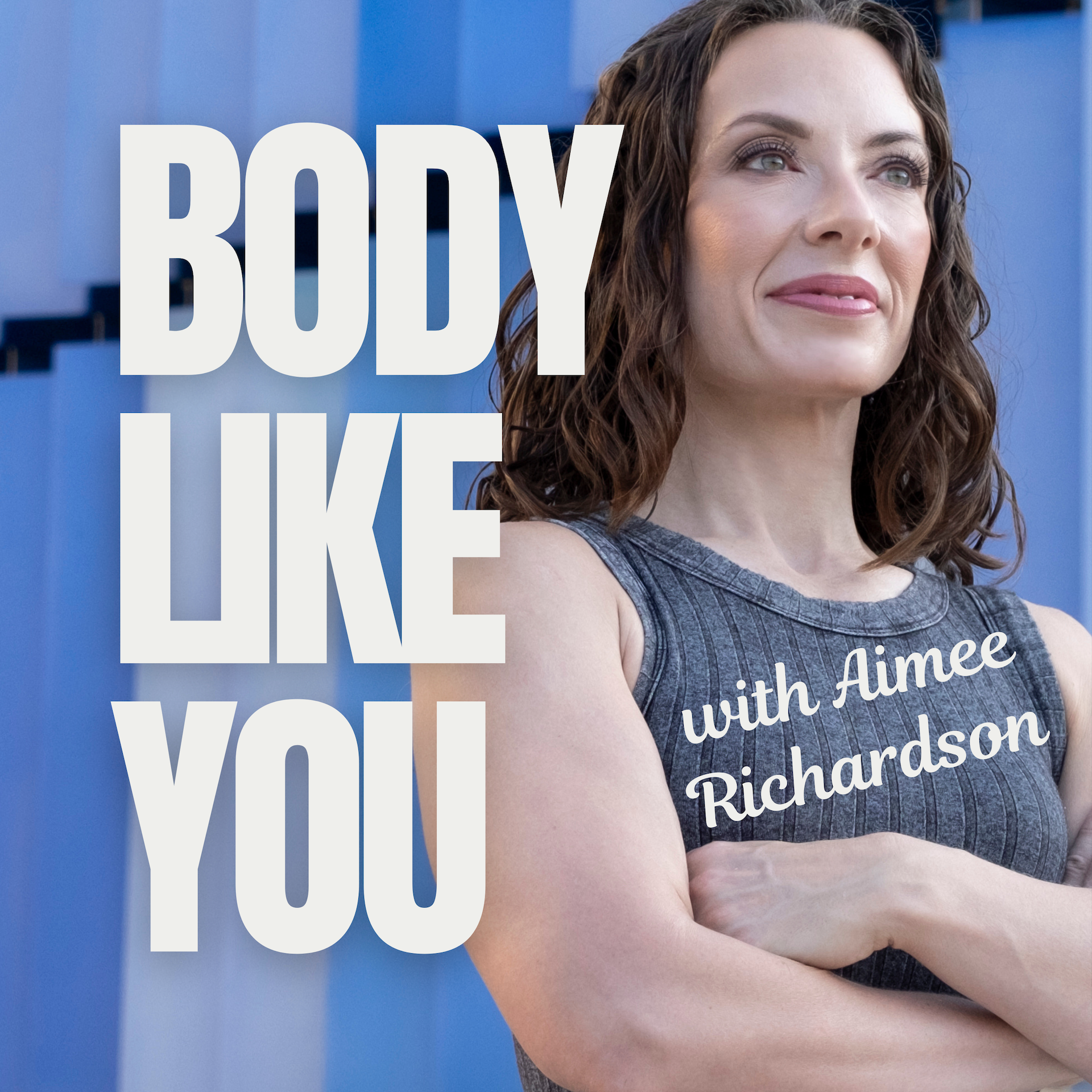
Body Like You
by Aimee Richardson
This podcast is for everyone who is tired of thinking about food all the time with nothing to show for it. Join me as we go deeper than what's on your plate into the brain skills that result in real change. You don't need another nutrition coach telling you to eat more vegetables or that we all have the same 24-hours in a day. Real change starts in your brain by changing your thoughts about your body and yourself. This is mindset coaching on steriods!
-
27
31. Thoughts that Encourage Self-Sabotage: I Can't Change Because of Other People
For 1:1 coaching inquiries, find me:Web: framenutrition.coEmail: [email protected]: @coachaimee.nutritionIn this episode, Aimee explores one of the most common limiting beliefs that keeps people stuck: “I can’t change because of other people.”Aimee unpacks how fears about upsetting partners, children, friends, or family can become a convincing reason to avoid taking care of your body. She explains why you cannot control other people’s thoughts or emotions, why neglecting yourself does not actually protect your relationships, and how to approach change with both accountability and compassion.This episode is the first in a series on limiting beliefs around health, food, exercise, and body composition, designed to help you recognize the thoughts that keep you stuck and move forward without shame.
-
26
30. Bought Sense: Why Failure Is the Cost of Real Change With Your Body and Everything Else
For 1:1 coaching inquiries, find me:Web: framenutrition.coEmail: [email protected]: @coachaimee.nutritionHappy eating!!Have you ever noticed how babies fail over and over in their efforts to walk, but never quit? Even if they have a few tantrums along the way? Imagine if babies could feel shame or create stories around how hard it is to learn how to walk. How many of them would never learn to walk in the first place?The lessons that truly change us often cost something: time, money, ego, comfort, or even an old identity. To change your relationship to your body and how you treat it, you will likely need to fail multiple times at many things. And failure has a cost, usually an emotional one. If you can't manage your emotions around failure, you miss all of the lessons. And you'll stay stuck. Learning how to fail at eating and exercise For anyone who has felt like a failure with food, body goals, consistency, or fat loss, this episode reframes failure as an essential part of learning rather than proof that something is wrong with you. You’ll learn why perfectionism, shame, and fear of failure keep so many high-achieving people stuck, and how practicing self-compassion can help you turn small failures into meaningful data instead of reasons to quit.
-
25
29. Why “I Deserve This” Is Keeping You Stuck
For 1:1 coaching inquiries, find me:Web: framenutrition.coEmail: [email protected]: @coachaimee.nutritionHappy eating!!Have you ever gotten to the end of a horrible week or a bad day at work and said, "I deserve to DoorDash?" Or if you're out to eat with your friends, do you get dessert and tell yourself that you've earned it?This is an incredibly common dynamic that is hurting your relationship with food.On the surface, it seems like telling yourself you deserve to eat delicious things would be empowering! But what we'll explore in this episode is how telling yourself you deserve to eat delicious things is actually a type of emotional bypassing.You’ll learn why food is not a reward, why exercise is not punishment, and why your body does not operate according to morality. Instead of framing eating around being “good” or “bad,” this episode offers a more compassionate and honest approach: you have unconditional permission to eat, and you also have a responsibility to understand the trade-offs of your choices. This is a powerful listen for anyone healing their relationship with food, trying to stop emotional eating, or working to break free from food guilt and all-or-nothing thinking.If you’re tired of feeling stuck between craving pleasure and fearing the consequences of eating, this episode will help you rethink food morality, understand the emotional function of your eating habits, and build a more peaceful, grounded relationship with your body.
-
24
28. Liking Your Body On Vacation Part 3
For 1:1 coaching inquiries, find me:Web: framenutrition.coEmail: [email protected]: @coachaimeerHappy eating!!This episode is packed with practical tips for eating well on vacation without overcomplicating it. We cover simple ways to stay more consistent while still enjoying your trip, including planning ahead for meals that actually matter, booking a room with a fridge or kitchenette, keeping easy grocery staples on hand, and using balanced breakfasts, packed lunches, and backup fast-casual options to make travel days less chaotic.You’ll also hear realistic strategies for handling restaurants, airport food, alcohol, snacks, and social pressure so you can feel more in control of your choices without slipping into all-or-nothing thinking. If vacation usually throws off your eating routines, this episode will give you approachable tools to make things feel easier.And, of course, we're going to cover more about your mindset on vacation, because what's going on between your ears is often more important than what's on your plate.
-
23
27. Liking Your Body On Vacation - Part 2
For 1:1 coaching inquiries, find me:Web: framenutrition.coEmail: [email protected]: @coachaimeerHappy eating!!In this episode of Body Like You, Aimee shares practical tools for improving body image on vacation and navigating the emotional challenges that can come with beach trips, summer travel, photos, swimsuits, and being out of your normal routine. If you’ve ever struggled with body dissatisfaction, negative thoughts about your appearance, or anxiety about how your body looks while traveling, this episode offers compassionate, actionable support.Amy explains why vacation body image issues are so common, how your brain can turn body insecurity into a threat response, and what to do when those thoughts start to spiral. She walks listeners through simple mindset shifts and coping tools, including setting goals for both yourself and your body, creating supportive boundaries around food and alcohol, using thought work to interrupt self-criticism, practicing opposite action, and leaning into positive sensations to stay grounded.This episode is especially helpful for anyone working on body image healing, food freedom, emotional eating, or a healthier relationship with their body while still wanting to enjoy vacation fully. Whether you’re feeling self-conscious in a swimsuit, avoiding photos, or battling all-or-nothing thinking around eating and travel, this conversation will help you approach your trip with more self-compassion, confidence, and peace.
-
22
26. Liking Your Body On Vacation - Part 1
I would love to see if we'd work well together!For 1:1 coaching inquiries, find me:Web: framenutrition.coEmail: [email protected]: @coachaimeerWhy does body image get worse on vacation? In this episode, Aimee explores the psychology of body image on vacation and explains why so many people struggle with feeling bigger, more self-conscious, or uncomfortable in their bodies while traveling. She breaks down the science of body perception, including why your brain’s view of your appearance can shift so quickly and how factors like bloating, water retention, alcohol, disrupted routines, mirrors, social comparison, and vacation photos can intensify body image anxiety. If you’ve ever felt insecure in a bathing suit, hated the way you looked in pictures, or felt frustrated by vacation weight gain fears, this episode offers compassionate insight and practical perspective to help you feel less alone and more at ease in your body while traveling.Happy eating.
-
21
25. Summer Body Anxiety: How to Build Real Body Confidence Without Crash Dieting
The weather is getting hotter, and your next vacation is on the horizon. Maybe you're planning something involving bikinis or swim trunks. And while that sounds like a lot of fun, you're also feeling a bit nervous about how you look in a bathing suit. Or, maybe you feel a general sense of body anxiety around wearing shorts and tank tops. It's the time of year that predatory fitness and wellness coaches are ready to swoop in to sell you the ultimate solution to your body dissatisfaction: the Six Week Shred.If you've ever been tempted to lock in for several weeks because a program promised insane results, or maybe you do a crash diet every year before vacation, this podcast will cover what's really going on. Before you sign up for any program that promises "30 POUNDS In 30 DAYS," be sure you can confidently answer the two main questions I pose in this episode. Chances are doing what you've always done and expecting this to be the year you're finally going to love your body is a teeny weeny bit of a fantasy.For coaching inquiries:Web: framenutrition.coEmail: [email protected]: @coachaimeer
-
20
24. Urge Surfing for Cravings: A Self-Compassion Approach to Emotional Eating.
Hey friends! We're back for a second week talking about cravings and how to manage them. And if you know anything about behavior change, you already know you're not going to hear anything about willpower or discipline here.But managing cravings and emotional eating does require the willingness to be uncomfortable and tapping into your courage to change.In this episode, I talk about why cravings can feel so intense and what to do when food urges seem out of control. I explain how cravings are created in the brain, why willpower alone usually is not enough, and how self-compassion can help you change your eating patterns without shame. I also share the practice of urge surfing, a mindfulness-based tool that helps you pause, observe cravings, and let them pass without automatically acting on them. We explore the role of dopamine, emotional eating, food cues, and neuroplasticity, and I explain why you are not broken if food feels harder for you than it seems for other people.This episode is for anyone struggling with cravings, secret eating, or feeling powerless around food and wanting a more compassionate, sustainable approach to nutrition and behavior change.For more information about the work of Alan Gordon, check out his book The Way Out (written with Alon Ziv).Also, the podcast Tell Me About Your PainFor coaching inquiries:Web: framenutrition.coEmail: [email protected]: @coachaimeer
-
19
23. The Wanting is Not the Liking: Cravings and Food Noise 101
Happy eating, everyone.This week I'm kicking off a little series on the part of pleasure eating that tends to upset everyone. It's the compulsive, relentless drive to eat things that we know aren't the best for our bodies or don't align with our goals. Most of us have experienced cravings, and some of us suffer from unwanted cravings to the point that it negatively impacts our lives.Once you understand the the part of your brain that makes you yearn for food isn't the same part that likes what you are eating, you can start to notice when intense desire for food comes and how often it predicts happiness on your end.Brains are very plastic and can be changed. You are not destined to a life of being mentally trapped by the food around you.This one rule about craving and yearning changed my life forever, not just around food, but also around shopping, achievements, and so much more.If you want support navigating a brain that can't stop thinking about food, 1:1 coaching is the best way to work with me:For coaching inquiries:[email protected]: @coachaimeer30-min FREE introduction calls offered on my website
-
18
22. Can You Want to Look Better and Be Healthy Without Damaging Your Body Image?
Happy eating, everyone!This week I'm talking about a very common fight I see in the online health and wellness community. On one side, you have people who say, "It's perfectly normal to work out for vanity." or "Everyone works out too look good. Stop pretending."On the other side, you have people who almost...look down on...anyone who mentions anything aesthetic about their fitness and nutrition goals. As with most things, the truth lies in how your brain evolved to keep you alive, bringing nuance to your appearance goals, and leaning on what we know about positive body image to help you love your work. Even if right now you can't stop wanting a flat abs and a big butt.You don't have to be ashamed or embarrassed about your body goals.ANDYou will be happier and more satisfied if you look deeper into your motivations so you're taking care of yourself in a joyful and empowering way.I hope you find some relief and some things to think about after this episode.As always, 1:1 Coaching Inquiries [email protected] check out framenutrition.coIG: @coachaimeer
-
17
21. Why Do Scale Fluctuations Still Upset Me Even When I Know They’re Normal?
If you’ve ever watched the scale jump up and instantly felt your mood drop, even while your rational brain says “it’s just water weight," this episode is for you. We break down why intellectualizing scale fluctuations doesn’t calm the emotional hit, especially when fat loss is your goal and the number feels like a verdict on your effort.You’ll learn what’s actually happening in your body (and your nervous system) when weight bounces day to day, why “just don’t be upset” backfires, and how to respond in a way that reduces spiraling without pretending you don’t care. I’ll share practical tools for handling scale-triggered anxiety in the moment, separating fat loss progress from daily weigh-ins, and building a scale relationship that supports your goals instead of sabotaging them.If stepping on the scale keeps bumming you out, even though your rational brain understands the scale isn't everything, you might find relief in 1:1 coaching!For coaching inquiries: framenutrition.coI offer 30 min, no obligation free calls to assess if we're a good fit. Otherwise, learn more about me and Frame Nutrition on IG: @coachaimeerHappy eating!
-
16
20. People Versus Food: A quick tool to help you reorient yourself when food noise is yelling for your attention
Hi friends! Aimee's back, post-laryngitisEver notice how food can hijack your attention at parties, dinners, or restaurants—especially when you’re a food-focused person? In this episode, we unpack a simple mindfulness tool called “People vs Food” to help you decide in advance whether a social situation is primarily about connection or a unique food experience. We talk about why food fixation happens, how shame makes change harder, and how to gently redirect your attention back to the people you’re with. An important reminder: tools only help when they’re used with compassionate motives, not fear or self-judgment.If you try People Vs Food this week, let us know how it worked!1:1 Coaching inquries: framenutrition.coIG: @coachaimeerAimee loves to hear from you! [email protected]
-
15
19. Why Body Comparison Happens And How to Stop the Spiral
Have you ever been mid-workout, feeling strong, energized, proud? Then you glance in the mirror, see someone with the perfect body, and your mood drops instantly? That jealousy-anger-sadness-shame spiral is more common than you think, and it isn’t proof you’re a bad person.In this episode, Aimee unpacks why body comparison happens (hint: your brain is scanning for resources and safety), why “looking better” doesn’t solve body dissatisfaction, and how to interrupt the cycle with a simple 5-step Body Comparison Playbook.You’ll learn how to:Recognize “competitive social mentality” and upward comparisonSeparate from the inner critic without trying to win beauty standardsRepair your relationship with your body using compassion (not forced positivity)Replace comparison with communityTry the playbook this week and notice what changes: in your workouts, your mood, and how you feel in your own skin.For 1:1 Coaching see FrameNutrition.CoIg: @coachaimeerI'd love to hear from you!
-
14
18. Why Perfectionism Keeps You Stuck (and What to Do Instead)
When perfectionism shows up, it doesn’t just raise your standards, it tries to protect you from vulnerability, judgment, and uncomfortable emotions. In this episode, Aimee shares how quickly the brain can turn “not perfect” into “this will be a failure.”You’ll learn why intellectualizing often doesn’t calm perfectionism, how perfectionism becomes a safety strategy that fuels procrastination and all-or-nothing habits, and what it looks like in exercise, nutrition, and body image.In this episode, Aimee covers:Why perfectionism is about fear of being seen as imperfect, and why you can’t control other people’s thoughtsPerfectionism vs. high standards (self-compassion is the difference)Perfectionism is procrastination in a different font, and how “it doesn’t count” keeps you stuckThe risks of perfectionism with eating A self-compassion practice for when your inner critic spikesLearning to turn toward the messy emotions underneath your perfectionism can help you be as content as possibly while doing the difficult work of fat loss, muscle building, or just accepting that your body is inherently good exactly as it is. If your own perfectionism is getting in the way of taking positive care of your body, 1:1 coaching support may be exactly what you need.1:1 coaching inquiries: framenutrition.coIG: @coachaimeerAs always, Aimee loves to hear your thoughts about the episode!
-
13
17. Do You Actually Need a “Perimenopause Plan” to Take Care of Your Body?
Perimenopause has become one of the loudest and confusing conversations in health and wellnessIn this episode, Aimee Richardson cuts through the noise to unpack what’s actually happening to your body during perimenopause, and what’s just fear-based marketing designed to sell you supplements, programs, and panic.Drawing from both lived experience and evidence-based research, Aimee explores metabolism myths, fat gain fears, cortisol anxiety, insulin resistance, GLP-1 chatter, and the emotional weight of body changes in midlife. You’ll learn why menopause does not automatically slow your metabolism, what really drives body composition changes, and why you don’t need a “special” perimenopause diet or workout plan to take care of yourself.This episode also goes deeper into body image, aging, fat phobia, and the profound identity shift that comes with this stage of life. If you’re navigating perimenopause and feeling overwhelmed, betrayed by your body, or pressured to “fix” yourself, this conversation offers clarity, compassion, and a grounded path forward.PMID 23439422PMID 30843880PMID 31461147PMID: 34385400Dr. Colenso-Semple Weighted Vests: What the Science Actually Sayshttps://www.swanstudy.org/PMID: 28074888IG: @coachaimeerFor coaching inquiries: framenutrition.co
-
12
16. If you want to enjoy more discipline, you have to start with more capacity first.
Discipline isn’t something you’re born with—it’s something that emerges when you have the capacity to change.In this episode, Aimee reframes discipline as an outcome, not a personality trait, and introduces a more compassionate, sustainable approach to behavior change. Instead of relying on restriction, punishment, or willpower at all costs, she explores what actually makes change possible: building emotional, psychological, and logistical capacity.You’ll learn why many diets and fitness plans quietly create more suffering, how life stress, body image distress, and emotional exhaustion limit your ability to follow through, and why fat loss alone rarely fixes how you feel in your body. Aimee breaks down the real skills required for long-term change, including distress tolerance, emotional regulation, boredom tolerance, and setting goals that are just outside your comfort zone—without triggering burnout or shame.This episode is for anyone who feels stuck in cycles of “starting over,” believes they just need more discipline, or is trying to change their body during an already demanding season of life. If you want to treat your body with care and still move toward your goals, this conversation will change how you think about behavior change from the ground up.... Let us know what you think!IG: @coachaimeerMail: [email protected] 1:1 coaching inquiries framenutrition.co
-
11
15. What if discipline isn’t about willpower, grit, or suffering at all?
In this episode of Body Like You, Aimee challenges the cultural belief that discipline is a personality trait reserved for “good” or “hardworking” people. Instead, she breaks down the psychology of behavior change, explaining why knowing what to do with nutrition, exercise, or body image rarely leads to lasting results.You’ll learn why discipline is something that happens on the back end, not something that is part of your personality, and how emotional regulation, self-compassion, and self-regulation skills create consistency without punishment. From fat loss frustration and diet burnout to exercise resistance and shame-based motivation, this episode explores how your brain is wired to resist change and what to do instead.If you’ve ever felt undisciplined, stuck in all-or-nothing thinking, or trapped in cycles of dieting and self-criticism, this episode offers a more sustainable, compassionate path forward.Key topics include:Discipline vs. self-regulation in behavior changeEmotional regulation Self-compassion as the foundation for consistencyBreaking shame-based fitness and nutrition habitsSustainable fat loss and healthy habit formationPerfect for listeners interested in behavior change psychology, mindset coaching, body image healing, and creating healthy habits that actually last.To learn more about Karin Nordin's amazing body of work, check out her IG: @karinnordinphdFor 1:1 coaching inquiries check out framenutrition.coAnd of course, Aimee loves to hear from you via DM: @coachaimeerHappy eating!
-
10
14. What Your 2026 Goals Are Really About: Leverage the Psychology of Motivation to Get What You Want (and Need)!
t’s a new year, and once again, your body goals are calling. In this episode of Body Like You, Aimee breaks down why wanting to change your body often comes with resistance, mixed emotions, and frustration — especially when it comes to weight loss, fat loss, exercise, dieting, and health goals — and why that tension is actually a normal part of behavior change. You’ll learn why ambivalence doesn’t mean you’re failing, why consistency is built through inconsistency, and how self-compassion plays a critical role in sustainable change.Through personal stories and powerful mindset shifts, this episode challenges the idea that confidence comes after you lose weight or reach your goal and offers a kinder, more effective approach to motivation, discipline, mindset, and long-term habit change.If you’re entering 2026 wanting to lose weight, improve your relationship with food, exercise more consistently, or finally follow through on your New Year’s resolutions, this episode will change the way you think about motivation, your inner critic, and what it actually takes to create sustainable weight loss and lasting behavior change.
-
9
13. First Listener Q&A! Mind Body Lag: Why You Still Feel Bigger After Weight Loss + What Supplements and Protein Powder I Use
What happens when your body changes but your brain has not caught up yet?In this Q&A-style episode of Body Like You, Aimee explores mind body lag, also known as phantom fatness, a common experience after weight loss, body composition changes, or dieting. She explains why you may feel larger than you actually are, how the brain’s threat and safety system distorts body image, and why this disconnect is not a personal failure or something that needs to be fixed.Aimee breaks down the four components of body image including body perception, beliefs, emotions, and behaviors, and explains how these factors can influence continued fat loss pursuits, self criticism, or compassionate self care. If you have ever looked back at old photos and wondered why you were so hard on yourself, this episode offers powerful insight into how the brain evaluates appearance in the present versus the past.In the second half of the episode, Aimee answers a listener question about supplements, protein powder, and nutrition advice. She shares which supplements she personally uses, why most people should avoid unnecessary supplementation, and how to think about protein intake, satiety, and appetite regulation in a more compassionate and sustainable way. This includes guidance for people using GLP 1 medications, people with low appetite, and those trying to build realistic nutrition habits.This episode is a reminder that you do not need to know exactly what your body looks like to treat it well, and that self compassion, body respect, and health focused behaviors matter far more than appearance based goals.Send any questions you might like covered on a future episode to [email protected]: @coachaimeerFor 1:1 coaching inquiries, visit framenutrition.coReferences for this episode:PMID 32309406Gencer et al, 2021, Circulation, Volume 144, Issue 25 PMID 27677775PMID 33868177 PMID 25412152
-
8
12. How Treating Your Body Like a Person Creates Lasting Self-Compassion
What if the key to taking care of your body wasn’t more motivation, but a better relationship?In this episode, Aimee introduces a powerful reframe: treating your body as if it were another person you care about. Instead of pushing, criticizing, or trying to fix your body out of fear or dissatisfaction, she explores how compassionate motives emerge when you relate to your body the way you would a friend, child, or partner—someone whose needs matter, even when it’s inconvenient.Through personal stories of pregnancy, chronic pain, weight loss, and burnout, Aimee explains how separating you from your body makes compassion easier, and why this shift creates a kind of motivation that doesn’t burn out. When your body isn’t an enemy or a project, caring for it becomes an act of respect rather than punishment.This episode challenges the idea that self-discipline and intensity are the only paths to change, and offers a different way forward, one where you listen, respond, and do small favors for your body because it’s on your side, not because you’re trying to escape shame.If you’ve ever felt stuck in cycles of all-or-nothing motivation, this conversation offers a radically more sustainable way to care for your body for life.
-
7
You're Not Unmotivated: How Compassion Creates the Fuel that Fear Never Could
Why does motivation disappear the moment you need it most? Why does changing your body feel so urgent… and yet so impossible to sustain?In this episode of Body Like You, Aimee explores the real fuel behind lasting change—and why most of what we’ve been taught about motivation actually works against us. From dieting in a panic to trying to scare ourselves into better health, she breaks down how fear-based motivation (whether rooted in body shame or future health risks) can spark short-term action but almost always burns out.Drawing on neuroscience, body image work, and personal experience, Aimee explains why your brain treats body changes as a survival threat—and how that wiring keeps you stuck in cycles of urgency, self-criticism, and starting over. She shares how fear once propelled her own health journey, why it helped at first, and why it ultimately wasn’t enough to support lifelong care.The episode then introduces a radically different approach: using compassion—not punishment—as the engine for sustainable motivation. Aimee offers a powerful reframe for relating to your body—one that doesn’t require self-hatred, panic, or constant discipline—and invites you to experiment with a new way of listening to what your body actually needs.If you’re exhausted by extremes, frustrated that “knowing better” hasn’t led to change, or wondering what motivation is supposed to feel like when it actually lasts, this episode opens the door to a more humane—and more effective—path forward.
-
6
10. The Real Reason You Panic When You Can't Workout
This week, Aimee starts with how to nourish your body when you’re sick and your routine gets thrown off. But knowing how to eat when you're sick or injured isn't usually the biggest obstacle. Beneath the practical questions about nutrition, there’s often a quiet sense of urgency. A low-grade panic. A worry that has nothing to do with vitamins or hydration.That’s when the conversation shifts into what this episode is really about: the fear of fat gain.Using insights from Tabitha Farrar’s book Fear of Weight Gain, Aimee unpacks why disruptions to our workout schedule or eating patterns can evoke so much anxiety, even when the circumstances are mild or temporary. She explains how this fear is wired early, how it differs from cultural fatphobia, and why it can make taking care of yourself during illness feel emotionally loaded.You’ll learn how to recognize the subtle ways this fear shows up and how to start rewiring it with awareness, compassion, and small courageous actions.If you’ve ever struggled to rest when you’re sick or felt uneasy about letting your body change, this episode offers a new way to think about caring for yourself, even when life interrupts your plans.
-
5
9. Introducing C.A.R.E.: the tool I use to prepare my brain for events, parties, and functions as a food-focused person.
In this episode, Aimee walks you through her signature CARE Method—a simple, powerful mindset tool designed to help food-focused eaters navigate parties, events, and any environment filled with delicious, high-dopamine “pleasure foods.” You’ll learn how to: ✨ Connect with your emotional state before you arrive ✨ Assess vulnerabilities like stress, sleep, mood, or hunger ✨ Reorient your attention toward what you really want from the event ✨ Engage in future-oriented thinking so tonight’s choices feel aligned with tomorrow’s goalsWhether you’re heading into the holiday season, a big night out, or just want to feel more grounded around food, Aimee’s CARE Method offers an empowering, shame-free way to support your brain and body. If you’ve ever felt triggered by food at gatherings, or find yourself eating more than you intended, this episode gives you the mindset shift you’ve been looking for.Contact me for 1:1 coaching:IG: @[email protected]
-
4
8. Every single bit of advice I have for Thanksgiving: Travel, Self-Care, Pleasure Eating, Body Image, and (Difficult) Family
For 1:1 Coaching Inquiries see [email protected]: @coachaimeer
-
3
7. Curating Your Pleasure Eating Experience
In this episode, Aimee takes you inside one of the most powerful mindset shifts she teaches her clients: curating your pleasure eating experience. Just in time for the season of treats, traditions, and food-driven moments, Aimee breaks down why pleasure eating is emotional, complicated, and absolutely worth understanding if you want a healthier relationship with food.You’ll hear how to move away from shame, drama, and “I can’t trust myself” thinking, and into an abundance mindset where you have full autonomy over what’s truly worth it. Aimee shares her signature pleasure scale, real client stories, and practical questions that help you become more selective, more empowered, and way less stressed around delicious food.If you’ve ever found yourself overeating out of habit or regretting the trade-offs after a night out, this episode will change the way you approach higher-calorie foods forever. Learn how to enjoy what you love, skip what isn’t up to your standards, and finally take the guilt out of pleasure eating.Perfect for anyone wanting more freedom, confidence, and clarity around food, especially during the holidays.For 1:1 Coaching inquiriesCheck out my website framenutrition.coIG: @coachaimeerHappy eating!
-
2
6. Are you someone who wants to change, but feels overwhelmed? Here's the first place I'd tell you to start if you were my client.
Ever feel like you want to get healthier but have no idea where to start? You’re not alone. In this episode, Aimee opens up about losing 80 pounds, quitting smoking, and learning how to care for her body without falling for diet culture traps. You’ll hear why calories aren’t the enemy, how small changes really do add up, and what it means to show yourself compassion while you figure it all out.In this episode, you’ll learn:Why “not knowing where to start” is more emotional than informational — and how to move past that block.The surprising truth about calories: they’re not the enemy, they’re your body’s life force.How to make small, compassionate nutrition shifts — like tweaking your fast-food order — that move you toward better health without perfectionism.Why under-eating can sabotage your goals just as much as overeating.How to build sustainable habits rooted in kindness, not shame.For 1:1 coaching, check out my website! FrameNutrition.coIG: @coachaimeer
-
1
Is Time your biggest obstacle to making real change with diet and exercise? Why time is never your issue, and what's really going on.
This week Aimee discusses everyone's favorite limiting belief, "I don't have enough time." We're busier than ever these days, and it feels impossible to do everything well. There's a reason our brains offer up a lack of time as a good reason to not begin or continue health-seeking behaviors. It's so reasonable and feels so true.Thoughts about time are a useful clue that something else is going on. Find out what and how to deal in this week's episode.1:1 coaching inquires: framenutrition.co30-min free intro calls availableInstagram: @coachaimeer
-
0
The Holidays are here! How to reframe your holiday eating and drinking so you are finally in control.
Have you ever felt like it was impossible to eat like a normal person during the holidays? With Halloween upon it, it's the start to the 2025 holiday season. It's a time of anticipation, joy, and excitement, but also pressure, unrealistic expectations, and exhaustion. There's a story that tends to come with the holiday season around indulgences with food. The idea that -this is someone's only chance,-or that the holidays won't be the same without a particular kind of food,-or that eating too much or drinking too much don't matter,tend to abound. It throws most of us into a black and white space with food and the holidays. Either you eat well and are miserable emotionally or you fully embrace hedonism and feel like crap physically.This week's pod is all about expanding the concept of eating well and living well during the holidays. The answer to being happy with your holiday experiences isn't confined to just two options. Part of compassionate caretaking for your body and living a full life requires rejecting scarcity thinking and choosing what matters to you.1:1 coaching inquiries: FrameNutrition.coIG: @coachaimeer
-
-1
Your inner critic is not your enemy: how to coexist with that nasty voice inside of your head.
This week, Aimee explores that familiar jerk inside of our heads: your inner critic. A strong inner critic is a common experience for people who are driven and love to achieve important things. When it comes to nutrition, fat loss, and other types of body care, your inner critic may be ready to call you names the minute you're not perfect. It may feel like this is what keeps you from going off track. And while that might be true (until it isn't), there's a huge emotional toll to letting your inner critic go hog wild.The truth is that your inner critic isn't your enemy. She or he exists to protect you from other, scarier things. If you're ready to make peace with your inner critic, you'll need to be willing to do what it takes to let he or she finally take a break.For coaching inquiries, schedule a free 30-min call with me at framenutrition.coI'd love to hear what you think on IG: @coachaimeer
-
-2
Do you want to lose body fat to look good naked or to take care of yourself? Probably both. Why motivation matters for success.
This week, Aimee discusses why most of us come into fat loss for many different reasons, some having to do with what other people think about us and some having to do with our own body respect. Find out why it's completely normal to worry about how you look naked (no, you are not vain), and why it still in your best interest to cultivate motivation that comes from within.
-
-3
My story: How I went from a sedentary smoker who loved fast food to a nutrition coach fascinated with body image.
Welcome to the first official episode of Body Like You! This week, Aimee talks a bit about her history with obesity, food focus, and smoking and the path that took her from struggling with food to helping others with fearless nutrition, body image, and self-compassion.For 1:1 Coaching see FrameNutrition.coFind me on Instagram @coachaimeer
-
-4
Body Like You - Trailer
Welcome to Body Like You!
We're indexing this podcast's transcripts for the first time — this can take a minute or two. We'll show results as soon as they're ready.
No matches for "" in this podcast's transcripts.
No topics indexed yet for this podcast.
Loading reviews...
ABOUT THIS SHOW
This podcast is for everyone who is tired of thinking about food all the time with nothing to show for it. Join me as we go deeper than what's on your plate into the brain skills that result in real change. You don't need another nutrition coach telling you to eat more vegetables or that we all have the same 24-hours in a day. Real change starts in your brain by changing your thoughts about your body and yourself. This is mindset coaching on steriods!
HOSTED BY
Aimee Richardson
Loading similar podcasts...
URL copied to clipboard!