
PODCAST · society
Bread and Salt
by Maria Schumann
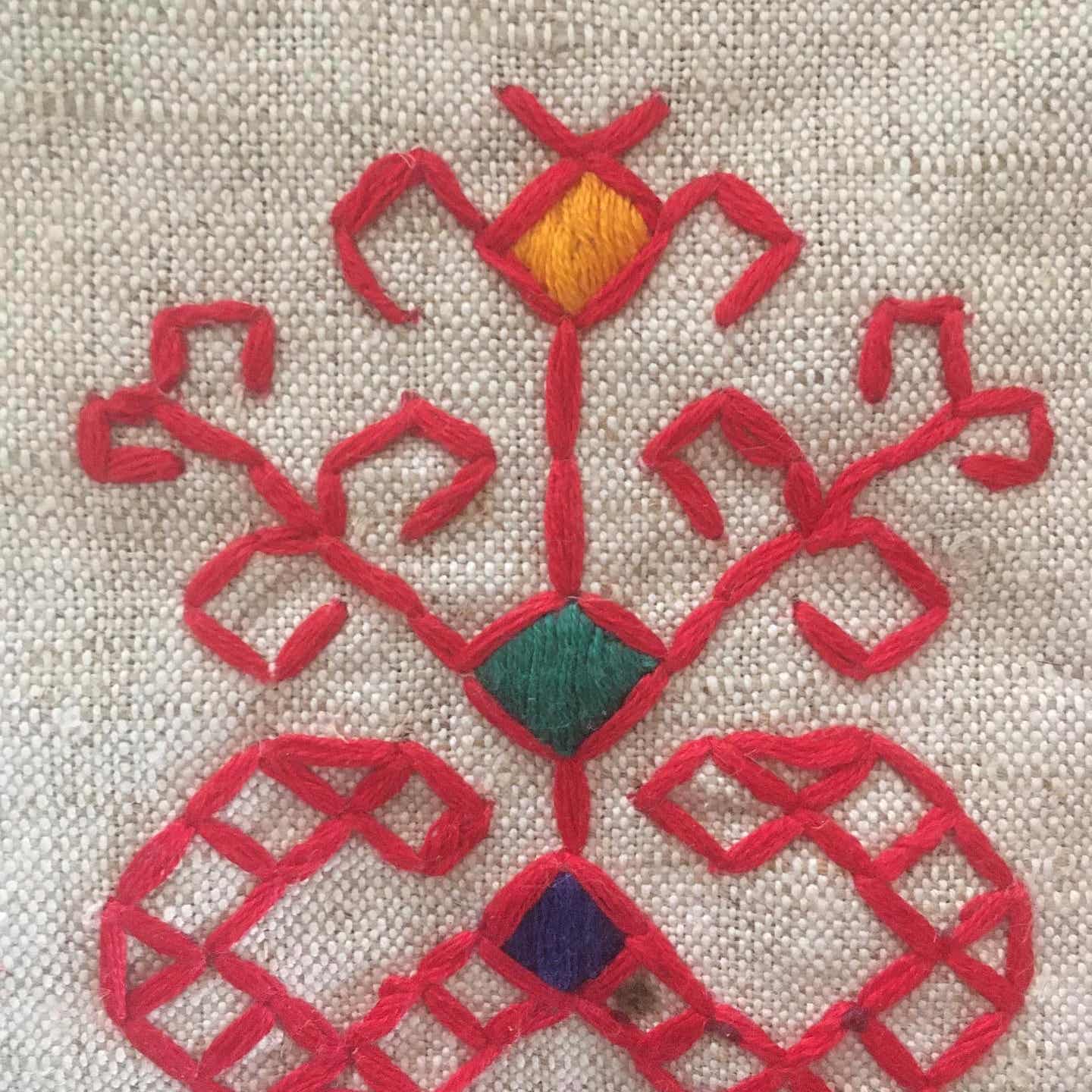
My grandmother was born in a tiny village in Russia just six years before the Russian Revolution. She died 93 years later in a wealthy Connecticut bedroom community. Her life journey spanned continents, two world wars, ideologies, and religions. This is my podcast about her and my quest to find out more about her life and the world she came from. Family history, folklore, pagan gods, and traditional folk song on one hand. Revolution, communism, capitalism, the cold war, cults, and the formation of NATO on the other. breadandsalt.substack.com
-
8
Red Banner Farm
I made this episode 2 years ago, when Rafah was being invaded, and before the student encampments were crushed. It's not 2 hours long, I was just too impatient to figure out how to edit out the hour of silence at the end. Or maybe that needs to be there. What's it like to be a teenager during a communist revolution? I dive into Pearl Buck's account of my grandmothers life "Talk About Russia With Masha Scott". Pear Buck interviewed my grandmother in the early 40's and published the book in 1945 when my grandmother was just 34 years old and still very much a believer in the Soviet system. Get full access to Bread and Salt at breadandsalt.substack.com/subscribe
-
7
My Grandfather: From Kropotkin to Nixon
“The Bolsheviks planned their economy and gave opportunities to young men and women. Furthermore, they had got away from the s fetishization of material possessions which my parents had taught me was one of the basic ills of our American civilization. I saw that most Russians ate only black bread, wore one suit until it disintegrated and used old newspapers for writing letters and office memoranda rolling cigarettes, making envelopes and for various personal functions. I was about to participate in the construction of this society. I was going to be one of many who cared not to own a second pair of shoes but who built blast furnaces, which were their own. It was September 1932 and I was 20 years old.”My grandfather, the son of American radical Scott Nearing, grew up surrounded by socialists, pacifists, and leftist organizers and intellectuals. By the time he was in his 30’s, he had wholeheartedly embraced capitalism and worked for the right leaning Time-Life corporation.Note: THe episode is 55 minutes long, NOT 2 hrs. Uploading here takes so long I'm not going to reupload! Get full access to Bread and Salt at breadandsalt.substack.com/subscribe
-
6
Communist Lover Part 2
In this episode: a contest for the best communist song; Ernst Thaelman: Fighter Against Fascism; the Abraham Lincoln Brigade, and more. Get full access to Bread and Salt at breadandsalt.substack.com/subscribe
-
5
Valentine's Special: My Grandmother's Communist Lover
In this episode, I discover the identity of my Grandmother’s lover. His name is Lan Adomian. He’s Ukrainian Jewish, he’s a composer, and he’s a communist. In 1930s New York City, he’s directing futurist musicals about robots and capitalism, in Yiddish. His friends are putting on pageants commemorating Lenin in Madison Square Garden, where hundreds of dancers use their bodies to make a massive hammer and sickle formation. He’s part of the first Yiddish proletarian camp for workers and organizers, a place where campers argue about Marx and Lenin and sing communist songs in the swimming pool…..Music Notes:Music Notes, part 1:Zinovy Shulman, Soviet Jewish singer, 1949 “Shpazirn Zaynen Mir Beyde Gegangen”2.”Las Puertas de Madrid” Music Lan Adomian. Words Miguel Hernandez. Sung by Ana Vega, from her album Canciones De Lucha Songs of Battle3.”In Praise of Learning” Words Bertold Brecht, Music Hans Eisler. 1935. Chorus New Singers. Conductor, Lan Adomian. Piano Marc Blitztein. Solo Mordecai Bauman.4.”In Ale Gasn” The song is actually a combination of two songs, arranged by Zalman Mlotek, musician, conductor, arranger and an authority in Yiddish folk and theater music. Mlotek arranged the song for a documentary movie called Free Voice of Labor: The Jewish Anarchists (1980).5. “The Internationale” by Pierre Degyeter. 1935. Chorus New Singers. Conductor, Lan Adomian. Piano Marc Blitztein. Solo Mordecai Bauman.6. Zinovy Shulman. 7. Henry Cowell, Aeolian Harp. Fausto Bongelli, piano.Bits and Pieces:1.“ Joe Worker” by Marc Blitztein. Piano/conductor: Rodney Lister. Julia Cavallaro, mezzo-soprano* “Square Set” Herbert Haufrecht* “Ostinato” Henry Cowell* “Joe Hill” Earl Robinson5. Mécanique No. 1, George Anthell6. “To an Unkind God” Ruth Crawford Seeger7. “Song of the Dark Woods” Elie Siegmeister8. “In dem land Sibir” sung by Chana Yachness and Rukhele Yachness. I couldn’t find any recordings of Jacob Schaefer’s music. But this song was part of his 1937 yiddish revolutionary folk operetta, “A Bunt Mit a Statshke” Get full access to Bread and Salt at breadandsalt.substack.com/subscribe
-
4
"We didn't talk about the old country" : The Grandmother Project
“The Grandmother Project” is an interview series adjacent to, but not directly related to, the story of my Russian grandmother. The idea was born when I started telling everyone about my podcast, and so many people said: “how interesting. I have a Russian grandmother too” (or Ukrainian, Belarusian, Latvian, Lithuanian…) Most of them were Jewish. And I thought, this is part of the story. My grandmother’s story, I am finding, is all about context: what was happening in her world, who were her friends, where was she living, what were her friends doing? The wider context: what were other people’s Russian-Ukrainian-Baltic-Jewish-or not Jewish grandmothers doing? Where are the overlaps, what’s similiar with my grandmother’s life and what is different? This is way too huge of a topic for me to really wrap my mind around, which is why I am limiting it to the mothers, grandmothers, and great grandmothers of my Vermont friends and neighbors. I don’t expect to come to any grand conclusion, just to gather the stories together and share them. While my grandmother’s family had their share of suffering, they did not experience pogroms or death camps like some of my friends grandparents did. And that’s part of the story too.I met with Jules Rabin on his front porch in Marshfield Vermont on a beautiful sunny day last fall. Jules is a bread baker, anthropologist, gardener extraordinaire, and scholar. He is also the oldest person I know— almost 100. In this episode, he talks about his parents and their hard early lives, growing up Jewish in the deeply antisemitic world of Belarus and Lithuania of the late 19th century. He also talks about chicken soup, the Haskalah, laundry, bread, and so much more. Get full access to Bread and Salt at breadandsalt.substack.com/subscribe
-
3
The Box in the Basement. Episode 3
I find a box in the basement, filled with my grandmother’s journals. I read from my the journals, written in the early 1940s, just after she had emigrated to the U.S. She’s a liberated Soviet woman, struggling with learning English, taking care of her two kids, deeply homesick for Russia, traveling around and giving talks about her childhood to raise money for Russian war relief. And she’s in love— but not with my grandfather.Music: Theme song , “Welcome Dear Guests” by Kostroma, from their album “Over the Sea”. https://kedry-gift-store.myshopify.com/ facebook:https://www.facebook.com/KostromaVocal“Stepan Razin’s Dream” from “Songs of Russia Volume 1” https://www.instagram.com/vek.backstage/ youtube.com/vekchannel“Kupalo” sung by Evgeniy Bagrintsev : https://www.instagram.com/bagrintsev_evgenii/?hl=en“Ne Dlya Menya” sung by Stepan and Valentina Nestorovy: https://www.youtube.com/channel/UC-pkOpwAC20BnOL3N_jmksg https://www.instagram.com/sokol_nesterovy/?hl=enLyrics: Not for me comes spring, Not for me the river Don will spill. There is a girl's heart clogged With delightful feelings - not for me.Not for me flowering gardens, In the valley blooming grove, There nightingale meets spring, He will sing not for me.Not for me murmuring brooks, Flowing diamond jets, There a maiden with black eyebrows, She grows not for me.Not for me comes Easter, At the table all relatives will gather, "Christ is risen" shall pour from the lips, 1 Easter day is not for me.Not for me the flowers bloom, The fragrant rose will fade Pick a flower and it will whither Such a life is not for me.For me there is a piece of lead, Which will dig into my white body And bitter tears will flow - Such a life, brother, waiting for me.https://lyricstranslate.com Get full access to Bread and Salt at breadandsalt.substack.com/subscribe
-
2
Little House In the Big Russian Woods. Episode 2
Once, a long time ago, in a little log cabin in a little village in the middle of Russia, there lived a girl named Masha. Her parents were peasants , and they grew all of their own food, and her mother grew flax, processed it, spun it and wove it into clothes for the family.Far away in the big cities of Moscow and St. Petersburg, a revolution had happened and huge changes were taking place. But in the little village of Laikova-Khrapovitskaya, those events were scarcely even noticed, and it was years before big changes came to the village.Masha lived there with her mother and father, Her brothers, Vasya and Sasha, and her sisters, Tanya, Anya, and Shura…..The songs played in this episode:1. Welcome Dear Guests Russian traditional by Kostroma from their album “Over the Seas” . To support Kostroma:https://kedry-gift-store.myshopify.com/ facebook:https://www.facebook.com/KostromaVocal2. “Girls Are Walking” Russian traditional. Pokrovsky Ensemble from their album “Faces of Russia”. https://thedmitripokrovskyensemble.bandcamp.com/album/the-wild-field3. “Wild Bull” Belarussian traditional. Volya Ensemble, from their album “Forest Tweets”. https://volya.bandcamp.com/album/forest-tweets4. “Kak Pa Moryu” the Pennywhistlers, from their 1963 album ;”The Pennywhistlers” https://open.spotify.com/album/6BHovKHHAlUBMCLAzYT4qZ 5. “Oj Lyaseyeli Husli” by Werchowyna from their album “Oj Zza Hory”. https://www.facebook.com/zespol.werchowyna/6.”Geese Fly” Dmitri Pokrovsky Ensemble from their album “Wild Fields” https://thedmitripokrovskyensemble.bandcamp.com/album/the-wild-field7. Summer solstice songs by Volya. From their album “Long Journey” https://open.spotify.com/artist/3XjoXOcyhVmGLwtAacLUrk8.”Byeli Dyen” sung by Pyotr Valentinovich ensemble. Words by A. Tarkovsky, music by A. Manotskov. Follow them : https://www.youtube.com/@peter.valentinovich https://www.instagram.com/peter.valentinovich/?hl=en9. “Kak Nad Yarom” sung by Stepan and Valentina Nesterovy. Follow them: https://www.instagram.com/peter.valentinovich/?hl=en https://vk.com/sokol_nesterovy Get full access to Bread and Salt at breadandsalt.substack.com/subscribe
-
1
Welcome Dear Guests: Episode 1
My grandmother, Maria Ivanovna Dikareva Scott, called “Masha” by most, and “Babushka” by me and her other grandchildren, was born in a tiny log cabin, in the tiny village of Laikova Khrapovitskaya, in the central Western province of Tver, Russia, six years before the Russian Revolution in 1911. She died 93 years later in her home in suburban Ridgefield Connecticut. Her life was deeply impacted by the huge historical events that she lived through and skirted on the edges of: the First World War, the Russian Revolution, Stalin’s 5 year plan and the industrialization of Russia, Stalin’s purges, the Second World War, the Cold War. Get full access to Bread and Salt at breadandsalt.substack.com/subscribe
-
0
War
I have war on my mind. In 1943, my grandmother was living in New York City with her two young daughters, my mother and aunt. I think of her, waiting to hear news from home. My aunt remembers how when she would get a letter from Russia — a rare occurrence— she would sit the kids down, read the letter aloud, and cry and cry. Because the news was always terrible. In this episode, I connect my grandmother’s experience of World War 2 from a distance with my experience as a far away spectator of the war in Gaza. This is not the first episode. I have seven other episodes, coming soon, about Russian folklore and love and revolution and peasant life and communism and a great interview with Jules Rabin about his Jewish- Russian/Lithuanian family and an interview with my mother about her grandfather. But right now, at this moment in time, I just need to talk about war.During the day it’s never far off. I listen to news and podcasts as I work. I talk about it with my husband over coffee. I check my instagram and twitter excessively throughout the day. Are the people in Gaza that I follow still alive? Were they bombed at night, were their children murdered, were they stripped naked and hauled off by the IDF to be tortured and imprisoned? Are they starving, are their kids starving, are they sick, do they have any water at all? Every time I think it can’t possibly get any worse, it does. Watching their stories and faces flit across the screen, I am reminded of the holographic Princess Lea from the first Star Wars pleading: “Help me. You are our only hope. Help me, help me.” And wish, like crazy, that I could be like Luke Skywalker, and learn a magical power from an ancient geezer that enables me, against all odds, to defeat the Empire— but, NO. I go to protests and vigils and meetings, write posts and it all seems pathetically ineffectual against the monstrous war machine.At night it haunts my dreams, I wake up in the middle of the night in a sweat, heart pounding. Imagining what it would feel like to have bombs dropping around me, to hear the screams of the buried alive, to smell the smoke and burnt flesh and dead. How can it be, that I live here in this beautiful snow covered peaceful countryside, while across the globe millions of people are living in what can only be described as hell on earth? How can it be?This brings me to my grandmother. From 1942-46 she was living in an apartment in New York City with her two young daughters, my mother and aunt. And her family— her parents, her sisters Tanya, Anya, Shura, Katya, and Sonya, and her brothers Vasya and Grisha, and all of their families,— they were all living in a war zone. Because Hitler invaded the Soviet Union in June of 1941, just 6 months after my grandparents fled.The Nazis named this invasion “Operation Barbarossa”. It was the largest invasion ever. The numbers are so huge they are incomprehensible. 27 million Soviets killed. 7.5 million civilians killed, 2 million of them Soviet Jews. 3.3 million Soviet prisoners of war were killed by the Nazis. Armies of millions. Millions starved to death. Perhaps most people know the basic outlines of this war: I knew next to nothing until I started researching my grandmother’s life. From what I have read— admittedly, just skimming the surface— this is what has stood out for me.First: The Germans reason for invasion was like most wars: they wanted land and resources. They called it “lebensraum” living space. The gentle sounding phrase— isn’t that nice? a little extra living room for the German people! — masked their genocidal intent. The Slavs were considered subhuman and the idea was to empty the Soviet Union of them through imprisonment, ethnic cleansing and murder— and then steal their land and resources. They deliberately used starvation as a weapon of war, feeding their massive army with food stolen from Soviet peasants. Second: The invasion was justified to their population as a war against an existential threat: both on an ideological front (communism or “Judeo-Bolshevism”) and on a racial front: the Slavs, like the Jews, were considered subhuman animals.Third: The Germans called it a war of annihilation, and had a more brutal stance towards the Soviets than towards the non Jewish populations of other countries they invaded like France, Holland, Norway. German soldiers were instructed to ignore all rules of war and to collectively punish civilian populations for acts of resistance , resulting in massive, massive, death and destruction in the Soviet Union.In my grandmothers oblast (region) of Tver, then called Kalinin, over 1000 villages were destroyed. 10 or more cities were destroyed. In the city of Rzhev (130 miles away from my grandmother’s village) one of the most brutal battles of the war was fought. Out of a population of 56,000, only 150 people remained. 25,000 fled, the remaining 20,000 were killed. 95% of the houses in Rzhev were completely destroyed.My grandmother’s village, Udomlya, was not destroyed. The German army was turned back when they were 100 miles away. In the second half of this episode, I read tweets and posts from Gaza. Here are the names of the accounts I reference:Ahmed Kouta @princekouta / Ahmed El-Madhoun @madhoun95 / Abdalhadi Alijla @alijla2021 / Refaat al Areer @itranslate123 / Dr. Mustafa Elmasri @Gaza_Psych / Ahmed Shameya @ahmedshameya99 / Nour Naim @NourNaim88 / Hind Khoudary @Hind_Gaza / Motaz Azaiza @azaizamotaz9 /Eman Basher @SometimesPooh / Sarah @SarahSalibi Thank you to these incredible doctors, journalists, poets, mothers, human beings for taking the time to share, in English, their experience of this war. Music: 1) “Welcome Dear Guests” Russian traditional by Kostroma from their album “Over the Seas” . 2) “Black Raven” Russian traditional by Kostroma. To support Kostroma: https://kedry-gift-store.myshopify.com/ facebook:https://www.facebook.com/KostromaVocal 3) “Mourning for Muhammed” Circassian traditional by Jrpjej from their album “After The War Comes Funeral: Circassian Songs of Resistance and Sorrow 1763-1864” To support Jrpjej: https://oredrecordings.bandcamp.com instagram: @jrpjej Get full access to Bread and Salt at breadandsalt.substack.com/subscribe
We're indexing this podcast's transcripts for the first time — this can take a minute or two. We'll show results as soon as they're ready.
No matches for "" in this podcast's transcripts.
No topics indexed yet for this podcast.
Loading reviews...
ABOUT THIS SHOW
My grandmother was born in a tiny village in Russia just six years before the Russian Revolution. She died 93 years later in a wealthy Connecticut bedroom community. Her life journey spanned continents, two world wars, ideologies, and religions. This is my podcast about her and my quest to find out more about her life and the world she came from. Family history, folklore, pagan gods, and traditional folk song on one hand. Revolution, communism, capitalism, the cold war, cults, and the formation of NATO on the other. breadandsalt.substack.com
HOSTED BY
Maria Schumann
Loading similar podcasts...
Frequently Asked Questions
How many episodes does Bread and Salt have?
Bread and Salt currently has 9 episodes available on PodParley. New episodes are automatically indexed when they're published to the podcast feed.
What is Bread and Salt about?
My grandmother was born in a tiny village in Russia just six years before the Russian Revolution. She died 93 years later in a wealthy Connecticut bedroom community. Her life journey spanned continents, two world wars, ideologies, and religions. This is my podcast about her and my quest to find...
How often does Bread and Salt release new episodes?
Bread and Salt has 9 episodes. Check the episode list to see recent publication dates and frequency.
Where can I listen to Bread and Salt?
You can listen to Bread and Salt on PodParley by clicking any episode. We provide an embedded audio player for direct listening, and you can also subscribe via your preferred podcast app using the RSS feed.
Who hosts Bread and Salt?
Bread and Salt is created and hosted by Maria Schumann.
URL copied to clipboard!