
PODCAST · business
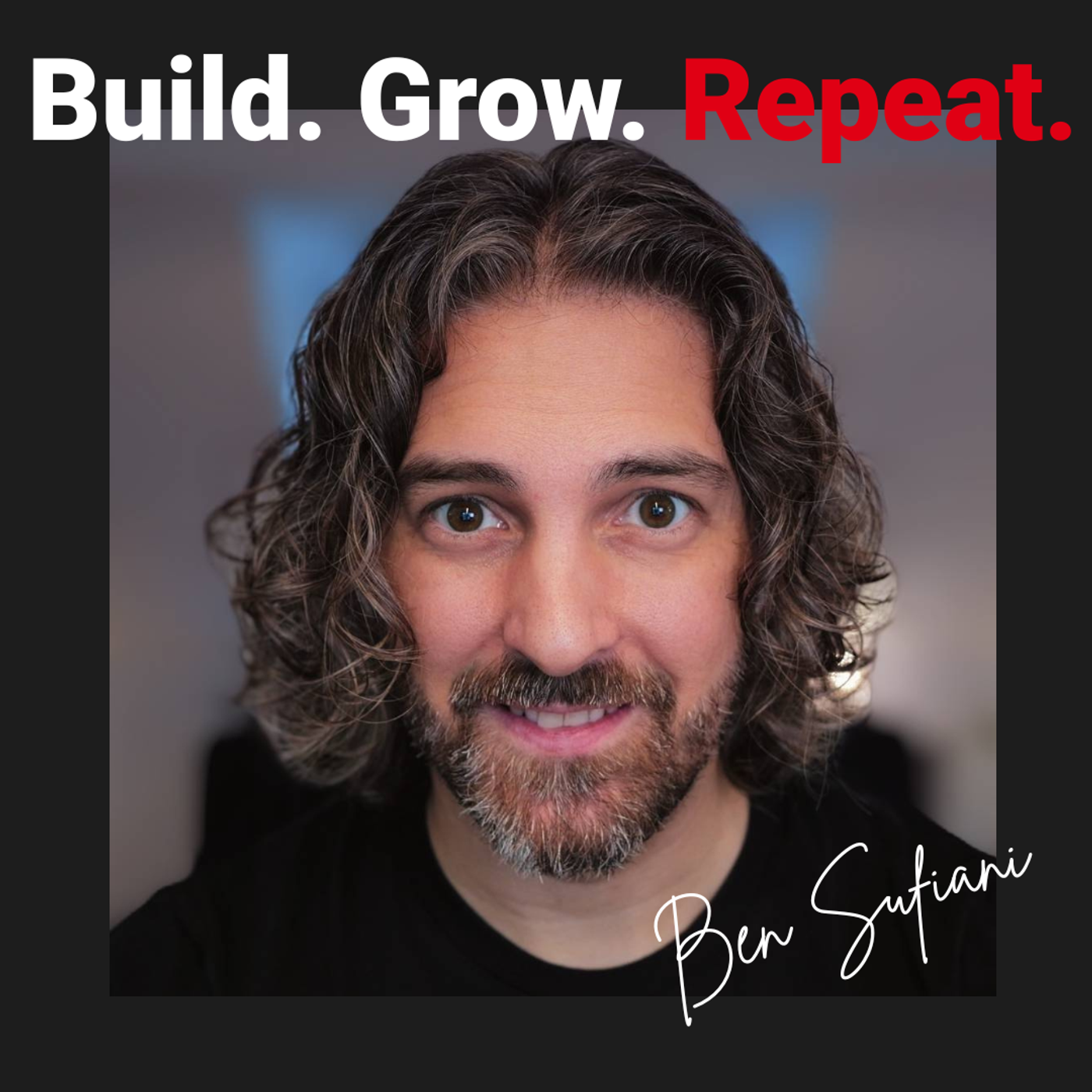
Build. Grow. Repeat.
by Ben Sufiani
Build. Grow. Repeat. is the podcast for skilled professionals and early-stage founders who want to build a real product and grow predictable revenue — without hustle culture, or “get rich quick” fantasies.This show helps you close the gap between building a product with vibe coding and growing with growth marketing by treating them as one craft. Every episode is designed to give you something you can actually use: a clearer decision, a tighter customer journey, a better experiment, or a concrete next step you can run this week.What you’ll learn here:Build faster (without needing to know how to code): vibe code real software and offers quickly — and validate what matters before you over-invest.Grow calmly and predictably: positioning, funnels, pricing, and experiments that turn attention into revenue without persuasion theater.Run on signals, not just vibes: activation,
-
19
The Pirate Launch Kit for Your Next Agentic SaaS
What if 80% of every weekend hackathon was already built before you sat down?Every new agentic SaaS project starts at the same wall: auth, database, payments, deploy, AI streaming, env-var roulette. By the time the magic interaction is in reach, the weekend is over. The Pirate Launch Kit is a skill that scaffolds that whole 80% from an empty folder to a deployed, working agentic app shell — landing page, login, streaming chat — on your own URL, before you write a single line of product code.The bigger shift behind it: SaaS itself is changing shape. PowerPoint gave humans tools. Google Slides put those tools in the cloud. Gamma and Claude Design crossed the line — the human is no longer the worker, the human is the supervisor. The new shape of SaaS is a UI built around an agent that does the work. The Kit is opinionated about that shape and ships with the primitives it needs.The video walks the four layers — Frontend, Backend, Agent, Builder — tool by tool, with the why behind every pick. Then a full live demo in VS Code: empty folder, install the skill, answer one question, and watch a private GitHub repo, a Vercel project, env vars, password gate, AI Gateway, and a streaming chat agent appear on a live URL — in minutes, not a weekend.This is not theory. The Kit is being built in public. Send feedback after you try it.IN THIS EPISODE00:00:00 – The 80% scaffolding tax00:00:33 – Demo preview: empty folder to deployed agentic app00:02:30 – Bridesmaid hackathon + the Forge pattern00:05:00 – The new shape of SaaS (PowerPoint → Gamma → Claude Design)00:08:50 – Layer 1: Frontend (Next.js, Tailwind, shadcn/ui, AI Elements, Playwright)00:13:43 – Layer 2: Backend (Vercel, Clerk, Neon + Drizzle, Stripe, Resend, PostHog)00:18:50 – Layer 3: Agent (Vercel AI SDK, AI Gateway, Workflow SDK, Chat SDK)00:22:55 – Layer 4: Builder (Claude Code, Vercel plugin, MCP servers, CLIs)00:28:55 – Live demo: empty folder to live agentic app00:42:45 – Phase 2 preview + how to send feedbackDEEP DIVE LINKS📖 Full Article: https://pirateskills.com/insights/pirate-launch-kit🧪 Vibe Coding Cologne — Wed May 6th: free monthly meetup (offline + Zoom): https://pirateskills.com/events/vibe-coding-cologne/2026-05-06⚓ Pirate Lab — Wed May 13th: free Zoom session, this week's deeper dive on what we shipped: https://pirateskills.com/pirate/lab/2026-05-13🎧 Spotify: https://open.spotify.com/show/7kFl0BJiOYih8yqQTRR9SN🍎 Apple Podcasts: https://podcasts.apple.com/us/podcast/build-grow-repeat/id1870561487🗓️ All upcoming events: https://pirateskills.com/events💬 Connect with me on LinkedIn: https://www.linkedin.com/in/bensufiani/
-
18
Build & Grow Your Way To More MRR
Your SaaS has a ceiling it will hit — and it's already programmed in by two numbers.Back from MicroConf Portland with the slide that reframed everything: Max MRR = New MRR ÷ Churn. Jason Cohen showed Kit's real revenue chart flattening at $150k/month, and underneath the math was the two-sided formula I'd been teaching for years without realizing it. Build · Grow · Repeat is not a tagline — it's the calculator.This episode walks through both halves with the speakers who made them concrete. Defense: Jason Cohen on obsessing about churn, Alex Pham on pricing as a retention lever (C.R.E.A.M.), Anthony Eden on operational excellence as a silent moat. Offense: Gia Laudi's painkiller positioning, Nick Disabato's Pain-Dream-Fix homepage (including a /nickdfy skill I built that rewrote our homepage in his style), Amanda Natividad on publishing for zero clicks, Einar Vollset on the 20% growth-rate cliff that halves your exit multiple.The personal arc underneath: before vibe coding I could only pull Grow levers. Now the Build half is reachable too — and the math says that's where the biggest unlock sits.Live from MicroConf Portland. Bring your own numbers.IN THIS EPISODE00:00:00 – Back from MicroConf Portland00:00:48 – Two halves, one ceiling: Jason Cohen's Max MRR formula00:04:19 – Build · Grow · Repeat: the two halves vibe coding unlocks00:07:23 – Defense: obsess about churn first00:10:10 – Alex Pham: pricing as a retention lever (C.R.E.A.M.)00:12:18 – Anthony Eden: operational excellence as a silent moat00:13:07 – Offense: Gia Laudi on painkiller positioning00:14:45 – Nick Disabato's Pain-Dream-Fix (and the /nickdfy skill)00:16:32 – Amanda Natividad: publishing for zero clicks00:18:39 – Einar Vollset: growth rate as a valuation lever00:22:06 – Run the Max MRR calculator on your own businessDEEP DIVE LINKS📖 Full Article: https://pirateskills.com/insights/build-grow-mrr🧪 Forge Preview — Wed Apr 22, 18:00 Berlin: Free live walk-through of Builder Forge + Growth Forge — see which half of the ceiling to push first: https://pirateskills.com/pirate/forge/preview/2026-04-22🎧 Spotify: https://open.spotify.com/show/7kFl0BJiOYih8yqQTRR9SN🍎 Apple Podcasts: https://podcasts.apple.com/us/podcast/build-grow-repeat/id1870561487🗓️ All upcoming events: https://pirateskills.com/events💬 Connect with me on LinkedIn: https://www.linkedin.com/in/bensufiani/
-
17
Not Zero-Human, But Augmented-Human
What if the "Zero-Human Company" everyone's hyping is actually a trap?The frustrations behind it are real – managing humans is distracting, most early hires can barely pull their own weight, and getting to traction is often easier with 3 people than 15. But removing all humans strips out the ambition, the taste, the soul.This episode lays out the counter-position: the Augmented-Human Company. A small, focused crew where AI removes what's holding each person back – so they can give the contribution only they can give. Real examples from Papermark, Typefully, Oleve, and Gamma. Plus the thread from Rob Walling's "Start Small, Stay Small" to Karpathy's Iron Man Suit metaphor.Published live from MicroConf Portland – the very community built on intentional smallness.WHO THIS IS FORA founder tempted by the "zero human" hype but sensing something's offA bootstrapper who wants to stay small without scaling back ambitionsA vibe coder building their first product and wondering how far a tiny team can goSomeone who's tried hiring and found it harder than doing it with fewer peopleIN THIS EPISODE00:00:00 – The Zero-Human Trap00:00:46 – Why the frustrations behind it are real00:02:00 – The brutal trade-off small teams always faced00:03:06 – Building alone gets old fast00:03:49 – Karpathy's Iron Man Suit metaphor00:04:52 – What an Augmented-Human Company actually looks like00:06:50 – The intellectual lineage: Walling → Naval → Altman → Shipper00:10:04 – Real examples: Papermark, Typefully, Oleve, Gamma00:12:54 – The Repeat Layer: Build, Grow, Repeat00:14:49 – The new way to build companiesDEEP DIVE LINKS📖 Full Article: https://pirateskills.com/insights/augmented-human🧪 Builder Lab – Apr 15: https://pirateskills.com/build/lab/2026-04-15🎧 Spotify: https://open.spotify.com/show/7kFl0BJiOYih8yqQTRR9SN🍎 Apple Podcasts: https://podcasts.apple.com/us/podcast/build-grow-repeat/id1870561487🗓️ All events: https://pirateskills.com/events💬 LinkedIn: https://www.linkedin.com/in/bensufiani/
-
16
Our First OpenClaw Teammate
What happens when you stop treating AI as an assistant — and start onboarding it like a real teammate?The leap from "AI power tool" to "AI teammate" had nothing to do with smarter models. The missing piece was infrastructure and onboarding — a workspace, communication channels, tool access, and clear responsibilities. The same things you'd invest in for a human hire.Meet ChristAIna — our first OpenClaw agent. She runs on a €12/month Hetzner server, has access to Slack, Gmail, Calendar, GitHub, Linear, Attio, Vercel, and Resend, and she works while we sleep. Morning briefings at 7:30 AM, CRM pipeline management, code deploys, email monitoring, and nightly memory consolidation — all on a schedule.This is the full setup after one month of real usage: the tools, the skills, the memory system, the 7 Slack channels, the automated routines — and everything that still breaks. Not theory. A two-person team that added an AI as crew member #3.IN THIS EPISODE00:00:00 – Meet our first OpenClaw teammate00:00:44 – The problem: assistant vs. teammate00:02:09 – The crew: Ben, Christina, and ChristAIna00:03:19 – The foundation: OpenClaw + Hetzner + openclaw-infra00:05:50 – Onboarding an AI teammate: tools, skills, and memory00:13:48 – Coding: Claude Code on the server00:15:30 – What she actually does: 7 Slack channels00:16:43 – The morning briefing deep dive00:20:51 – Automated routines: cron jobs and heartbeats00:23:59 – What still breaks00:25:47 – Where "Repeat" gets interestingDEEP DIVE LINKS📖 Full Article: https://pirateskills.com/insights/first-openclaw-teammate🎧 Spotify: https://open.spotify.com/show/7kFl0BJiOYih8yqQTRR9SN🗓️ All upcoming events: https://pirateskills.com/events💬 Connect with me on LinkedIn: https://www.linkedin.com/in/bensufiani/
-
15
How we built an AI Startup in 48 hours
What happens when a non-technical couple locks themselves into a 48-hour hackathon with an engagement ring and an idea?Most people think building an AI product requires months of learning or a technical co-founder. Christina spent weeks scrolling through Bridebook and WedStay — generic catalogs, no personalization, nothing that understood her taste. Then one shower conversation turned frustration into a product vision: what if you could talk to a wedding planner that actually gets you?This is the full behind-the-scenes breakdown of every product decision and tech choice — from picking next-forge over a simple template, to the moment fal.ai generated a visualization of our dream wedding and Christina was astonished. Ten product needs, ten tech decisions, each explained from both the non-technical and technical perspective.Honest disclaimer: we didn't follow our own Pirate Launch Plan. We set up Stripe and auth too early. The visualization feature worked 30 minutes before the deadline. And production deployment almost broke everything on Saturday night.But we made it: https://www.bridesmaid.love/de is live.WHO THIS IS FOR- A founder who's stuck between "I use AI tools" and "I shipped a product with AI"- A non-technical builder wondering what it actually takes to go from idea to live product- A vibe coder preparing for a hackathon who wants to see what's realistic in 48 hours- A couple or team where one person has the domain knowledge and the other has the tech instinctIN THIS EPISODE00:00:00 – How we built an AI startup in 48 hours00:00:34 – Scratch your own itch: Christina's wedding app frustration00:03:15 – The product we wanted to use: chat-first wedding planning00:05:54 – 10 product decisions, 10 tech choices00:07:15 – AI SDK + AI Gateway: a conversation that does things00:09:57 – Real-Time Scribe: talk, don't type00:10:39 – fal.ai: show me my dream wedding00:12:08 – Clerk, Stripe, Claude Code: the rest of the stack00:14:54 – Christina's hackathon experience (in her own words)00:17:12 – The honest weekend recap: what went wrong00:19:46 – What's next: events, Builder Forge, and your turnDEEP DIVE LINKS📖 Full Article + All 10 Tech Decision Cards: https://pirateskills.com/insights/startup-in-48-hours🏗️ Builder Forge Q2 April 1st — Build your own AI product with guided support: https://pirateskills.com/build/forge🎧 Spotify: https://open.spotify.com/show/7kFl0BJiOYih8yqQTRR9SN🍎 Apple Podcasts: https://podcasts.apple.com/us/podcast/build-grow-repeat/id1870561487🗓️ All upcoming events: https://pirateskills.com/events💬 Connect with me on LinkedIn: https://www.linkedin.com/in/bensufiani/
-
14
The AI Skill Path for Founders
Everyone's using AI. Nobody knows where they actually stand.There's no shortage of AI tools, tutorials, and hype. But there's no map. No way to know: am I a beginner who thinks they're advanced, or someone further along than I realize? And what should I actually learn next?I couldn't find a clear progression path, so I built my own. The AI Skill Path is a 6-level framework — from Landlubber to Admiral — that shows you where you are, what you already unlock at that level, and what it takes to reach the next one. Each level covers both the Build track and the Grow track.This isn't about collecting tools. It's about knowing which capabilities matter at your stage — and ignoring everything else until you get there.WHO THIS IS FORA founder who uses ChatGPT daily but isn't sure what the next level looks likeA vibe coder who ships apps but hasn't touched AI marketing yetA marketer experimenting with AI content but not building anything technicalSomeone drowning in AI FOMO who wants a clear, honest progression pathIN THIS EPISODE00:00:00 – The problem: there is no map00:01:11 – The principle underneath every level: relationship to initiation00:02:39 – The 6 levels overview00:02:52 – Level 1: Landlubber — the ChatGPT user00:04:36 – Level 2: Deckhand — persistent context and better prompting00:07:19 – Level 3: Navigator — vibe coding simple tools and automations00:09:30 – Level 4: Corsair — owning your stack and building real SaaS00:13:43 – Level 5: Captain — proactive agents working for you00:17:29 – Level 6: Admiral — orchestrating multi-agent systems00:20:36 – Do you really need to go all the way?00:24:48 – Find your level and start from thereDEEP DIVE LINKS 📖 Full Article + Self-Assessment Checklist: https://pirateskills.com/insights/ai-skill-path 🎤 Forge Preview — Mar 25th: https://pirateskills.com/pirate/forge/preview/2026-03-25 🏗️ Builder Forge (starts April 1st): https://pirateskills.com/build/forge 🎧 Spotify: https://open.spotify.com/show/7kFl0BJiOYih8yqQTRR9SN 🍎 Apple Podcasts: https://podcasts.apple.com/us/podcast/build-grow-repeat/id1870561487🗓️ All upcoming events: https://pirateskills.com/events 💬 Connect with me on LinkedIn: https://www.linkedin.com/in/bensufiani/
-
13
The Pirate Launch Plan
What would you do if you only had 48 hours to build and launch a startup from scratch?The old playbook said: build a landing page, run a survey, do customer development interviews, then build. But vibe coding changed that — it's now faster to build a working MVP than to set up a survey campaign. That changes the order of operations completely.The Pirate Launch Plan is a 6-stage operating system for going from zero to shipped and launched in a single sprint. It alternates between building and growing from hour one — so you never build in a vacuum. Whether you're at a hackathon or doing a weekend sprint, you follow the same stages in the same order.Honest context: this comes from someone who ran 150 landing pages and built 6 apps (two with over a million users) using the old validation playbook. That experience still applies — but the execution has fundamentally changed.WHO THIS IS FORA vibe coder who wants a clear, repeatable plan for launching new projectsA founder who builds first and markets later (and wants to stop doing that)Someone preparing for a hackathon and wants to maximize their 48 hoursA non-technical builder who needs an AI-native stack that won't create security surprisesIN THIS EPISODE00:00:00 – What if you only had 48 hours?00:00:30 – The old validation playbook vs. vibe coding00:02:09 – Y Combinator: 25% using AI for 95% of coding00:03:05 – Stage 1: Lock the idea — problem, audience, solution00:06:06 – Stage 2: Build the magic interaction00:09:40 – Stage 3: Make first contact00:13:11 – Stage 4: Build the MVP — database, auth, payments00:17:00 – First do it, then do it right, then do it better00:17:53 – Stage 5: Grow — organic, paid, or outreach00:23:00 – Stage 6: The Build-Grow-Repeat loop00:27:07 – Now it's your turnTOOLS & RESOURCES MENTIONED🖥️ Cursor / Claude Code (AI code editors): https://cursor.com / https://anthropic.com⚡ Next.js + Vercel (framework + hosting): https://vercel.com🔐 Clerk (authentication): https://clerk.com🗄️ Supabase (database): https://supabase.com💳 Stripe (payments): https://stripe.com📊 PostHog (analytics): https://posthog.comDEEP DIVE LINKS📖 Full Article + Ship Plan Checklist: https://pirateskills.com/insights/pirate-launch-plan🔧 The Vibe Coding Stack (referenced in video): https://pirateskills.com/insights/vibe-coding-stack🏴☠️ Vibe Hackathon Cologne — Mar 20th: https://pirateskills.com/vibe-hackathon-cologne🗓️ All upcoming events (free): https://pirateskills.com/events
-
12
The Vibe Marketing Stack That Grows
What would it look like to run a full customer acquisition engine — content, ads, website, data, analytics, emails, and sales — without an agency, without a team, and without losing your mind?Turns out it's possible. Vibe marketing applies the same principle as vibe coding: AI does the heavy lifting, you steer with intent. After 12 weeks of building and running this system, every layer is connected, agent-driven, and working day and night.There's a live look at the full weekly content cascade, real attribution data from the Supabase user table, PostHog dashboards and A/B tests set up entirely by an AI agent, the Attio CRM pipeline reviewed daily by Christina (an OpenClaw assistant), and the stack configurator in the article that generates an AI discussion prompt for your own setup.This is not theory. It's a working system.WHO THIS IS FORA founder who can ship products but freezes when it comes to growthA marketer ready to take their skills to the nth degree with AIA solo operator who wants leverage, not headcountIN THIS EPISODE00:00:00 – What Vibe Marketing Is and Who It's For00:03:31 – Layer 1: Planning & Orchestration00:08:45 – Layer 2: Content Marketing00:31:01 – Layer 3: Ad Campaigns00:36:08 – Layer 4: Website00:39:16 – Layer 5: Data & Identity00:44:33 – Layer 6: Analytics & Optimization00:47:32 – Layer 7: Message Sequences00:51:20 – Layer 8: CRM & Sales00:54:25 – Stack Configurator & Closing CTATOOLS & RESOURCES MENTIONED🖥️ Cursor (AI IDE — orchestration hub): https://cursor.com🦾 OpenClaw (autonomous agent): https://openclaw.ai🖼️ Fal.ai (AI image + video generation): https://fal.ai🎬 Riverside (video recording + podcast): https://riverside.fm📅 GetLate (social scheduling with MCP): https://late.com📊 PostHog (analytics + A/B testing): https://posthog.com🗄️ Supabase (database + MCP): https://supabase.com📧 Resend (email + React Email templates): https://resend.com🏆 Attio (lightweight CRM with MCP): https://attio.comDEEP DIVE LINKS📖 Full Article: https://pirateskills.com/insights/vibe-marketing-stack🗓️ All upcoming events (free): https://pirateskills.com/events💬 Connect with me on LinkedIn: https://www.linkedin.com/in/bensufiani/
-
11
AI for Muggles
What if learning AI felt less like a computer science lecture and more like getting your letter from Hogwarts? Turns out, building your own website with AI is the best way to experience the magic everyone's talking about — and the simplest place to start. No databases, no user accounts, no moving parts. Just images, text, and a layout that changes when you talk to it. This episode walks through the full journey: from a 5-minute taste using v0 (a chat-based builder) to the real setup with Cursor, GitHub, and Vercel — the tools that let you own what you build and keep going. Along the way, there's a live demo of building a pirate-themed wizarding shop, a hackathon landing page that shipped in two hours, real-time debugging, and the exact prompts you can copy and use yourself. The setup steps are a one-time thing. Once you push through them, you earn the magic wand — and everything after that is just talking to your website. WHO THIS IS FOR A non-technical founder who keeps hearing about AI but hasn't built anything yet Someone who's been meaning to make a personal website but never had the time A curious beginner who tried ChatGPT but wants to go further Anyone who wants to learn vibe coding without drowning in developer jargon IN THIS EPISODE 00:00:00 – Welcome to AI for Muggles 00:02:52 – Try the magic: build a website in 5 minutes with v0 00:11:32 – Why a website is the perfect first project 00:12:48 – Proof: a hackathon landing page in 2 hours 00:16:05 – The real way — vibe coding step by step 00:17:02 – Step 1: Set up Cursor, your AI code editor 00:24:03 – Step 2: Create your Next.js project 00:30:18 – Step 3: Build and customize your website 00:41:27 – Step 4: Save your work with Git and GitHub 00:56:57 – Step 5: Go live on Vercel 01:08:27 – Why the real way beats chat builders TOOLS & RESOURCES MENTIONED 🖥️ Cursor (AI code editor): https://cursor.com 🌐 v0 (chat-based website builder): https://zero.app 💜 Lovable (chat-based website builder): https://lovable.dev 🔵 Base44 (chat-based website builder): https://base44.com 📦 GitHub (code storage and collaboration): https://github.com 🚀 Vercel (website hosting): https://vercel.com ⚛️ Next.js (web framework): https://nextjs.org DEEP DIVE LINKS 📖 Full Article: https://pirateskills.com/insights/ai-for-muggles 🧪 Growth Lab — Mar 11: Free online session on growth marketing with AI: https://pirateskills.com/grow/lab 🏴☠️ Vibe Hackathon Cologne — Mar 20–22: Build a real product in one weekend with AI: https://pirateskills.com/vibe-hackathon-cologne 🎧 Spotify: https://open.spotify.com/show/7kFl0BJiOYih8yqQTRR9SN 🍎 Apple Podcasts: https://podcasts.apple.com/us/podcast/build-grow-repeat/id1870561487 🗓️ All upcoming events (free): https://pirateskills.com/events 💬 Connect with me on LinkedIn: https://www.linkedin.com/in/bensufiani/
-
10
Vibe Code Your Real Work
Most founders use AI to build products.In this Captain’s Insight article, we show a different application: using vibe coding to automate the operational work behind your product — the repetitive setup, coordination, and admin that quietly consumes hours every week.The episode walks through how we at Pirate Skills rebuilt its internal event system:- 84 events planned for the year- Google Calendar + Zoom connected via API- Automated invitations, reminders, and follow-ups- A custom Event Prep dashboard showing what’s done and what’s missingWhat used to require ongoing manual coordination was reduced to half a day of setup — and will take roughly an hour next quarter.This isn’t about building a bigger product.It’s about removing friction from real work and letting internal tools compound.WHO THIS IS FOR- Founders who say: “I don’t have time to build with AI.”- Builders who picked their stack but still feel overwhelmed- Operators drowning in repetitive admin work- Anyone curious how to start vibe coding without going fully publicIN THIS EPISODE00:00:00 – Intro: vibe coding your real work00:01:11 – “Where am I supposed to get the time?”00:02:03 – The first internal tool that became a SaaS (Captain)00:02:58 – The events problem (Christina + operational dependencies)00:03:52 – The Event Prep dashboard concept00:04:56 – “84 events” → why tooling beats doing it manually00:05:46 – Why helper tools are insanely practical (the advantages)00:09:15 – Giving AI access to Google Calendar + Zoom (API keys)00:12:48 – The 3 questions to choose what to automate00:14:59 – Build vs buy: “build for the gap” rule00:22:21 – Compounding tools → your own operating system (“Ironman suit”)DEEP DIVE LINKS📖 Read the full article (with Ship Plan & prompts):https://pirateskills.com/insights/vibe-code-your-real-work🧪 Builder Lab — Monthly vibe coding workshop (next: March 18)https://pirateskills.com/build/lab📈 Growth Lab — Monthly vibe marketing workshop (next: March 11)https://pirateskills.com/grow/lab🏴☠️ Builder Forge — 6-week cohort (next: April 1st)https://pirateskills.com/build/forge🎧 Spotifyhttps://open.spotify.com/show/7kFl0BJiOYih8yqQTRR9SN?si=vS7cYQ3MTL6L2tFBlWZghw🍎 Apple Podcastshttps://podcasts.apple.com/de/podcast/build-grow-repeat/id1870561487🗓️ All upcoming eventshttps://pirateskills.com/events💬 Connect with mehttps://www.linkedin.com/in/bensufiani/
-
9
The Vibe Coding Stack That Ships
What separates a vibe coder who ships week after week from someone who hits a wall after their first demo? The answer isn't talent or technical background — it's the stack. Most builders start with one-shot tools that feel magical at first, then run into limited debugging, no data ownership, and payment integrations that barely work. The stack that actually lets you ship real products is one where every layer compounds: each tool makes the others more powerful over time. This episode walks through all 7 layers live — from choosing your AI hub (Lovable vs. Cursor vs. Claude Code) to setting up payments with Stripe — making a real decision at each step. The interactive Stack Builder in the article lets you follow along and leave with a copy-paste blueprint you can hand to any AI and start building. Honest admission: this comes from a non-developer perspective. Experienced devs will spot simplifications — and that's fine. The goal is helping founders who don't come from a development background make confident tool decisions they won't regret. This is a real stack, building a real product, with real revenue. Not theory. WHO THIS IS FOR A founder who tried vibe coding tools but hit a wall of complexity Someone choosing between Lovable, Cursor, and Claude Code for their first real SaaS A non-developer who wants to understand the tech stack without the jargon A builder ready to move from demo to product with payments and auth IN THIS EPISODE 00:00:00 – The vibe coding stack that ships 00:00:25 – Why most vibe coders hit a wall 00:04:36 – What makes a stack compound 00:05:53 – The 7 layers explained 00:07:13 – Layer 1: Choosing your AI hub 00:08:28 – Quick take on AI models 00:13:36 – Layer 2: How your code ships to users 00:17:46 – Layer 3: Making your app look professional 00:20:01 – Layer 4: Where your data lives 00:21:45 – Layer 5: How users sign in 00:23:34 – Layer 6: Turning demos into businesses 00:25:06 – Layer 7: Operations — analytics, email, PM, automation TOOLS & RESOURCES MENTIONED 🖥️ Cursor (AI code editor): https://cursor.com 💬 Lovable (chat-based AI builder): https://lovable.dev 🤖 Claude Code (terminal AI tool): https://anthropic.com ⚡ Next.js + Vercel (framework + hosting): https://vercel.com 🎨 shadcn/ui (component library): https://ui.shadcn.com 🗄️ Supabase (database): https://supabase.com 🔐 Clerk (authentication): https://clerk.com 💳 Stripe (payments): https://stripe.com 📊 PostHog (analytics): https://posthog.com 📧 Resend (email): https://resend.com 📋 Linear (project management): https://linear.app ⚙️ n8n (automation): https://n8n.io DEEP DIVE LINKS 📖 Full Article + Interactive Stack Builder: https://pirateskills.com/insights/vibe-coding-stack 🧪 Builder Lab — Feb 18: Walk through the Stack Builder live, make decisions together, and leave with your stack ready to go: https://pirateskills.com/build/lab 🎧 Spotify: https://open.spotify.com/show/7kFl0BJiOYih8yqQTRR9SN 🍎 Apple Podcasts: https://podcasts.apple.com/us/podcast/build-grow-repeat/id1870561487 🗓️ All upcoming events (free): https://pirateskills.com/events 💬 Connect with me on LinkedIn: https://www.linkedin.com/in/bensufiani/
-
8
Meet Jarvis, My Vibe Manager
What happens when you move your business strategy, OKRs, and project management into your codebase — and let AI run it?The counterintuitive discovery that kept me organized, productive, and sane as a solo founder: your codebase is a better home for business context than Notion, Asana, or Google Docs. Once AI can read your strategy, goals, and bottlenecks without you re-explaining them, planning and execution merge into the same conversation.WHO THIS IS FORA founder or builder drowning in scattered toolsTried Notion or Asana but still feel scatteredRunning a solo operation and need leverage, not overheadIN THIS EPISODE00:00:00 – Meet Jarvis, my vibe manager00:01:10 – Why I moved my business out of Notion into code00:05:20 – What is "vibe management"?00:06:46 – The three layers: context brain, Cursor, Linear00:09:07 – Live demo: voice planning with Wispr Flow00:11:09 – AI executes a real task while I talk00:15:07 – Why Linear + MCP is the missing piece00:18:04 – Why vibe management feels therapeutic00:21:03 – Real example: Vibe Hackathon built in hours00:24:22 – The sycophancy question: will AI just agree?00:29:21 – The future: AI agents as teammates00:31:53 – Try the 7-Day Vibe Management SetupTOOLS & RESOURCES MENTIONED🖥️ Cursor (AI code editor): https://cursor.com📋 Linear (project management): https://linear.app🎙️ Wispr Flow (voice-to-text): https://wispr.com🤖 Claude by Anthropic: https://anthropic.com🔌 Linear MCP for Cursor: https://linear.app/integrations/cursor📝 Cursor + Linear blog post: https://cursor.com/blog/linearDEEP DIVE LINKS📖 Full Article: https://pirateskills.com/insights/vibe-management🧪 Growth Lab — Feb 11: Discuss this episode live with Ben, ask questions, and get help setting up your own vibe management system: https://pirateskills.com/grow/lab/2026-02-11🎧 Spotify: https://open.spotify.com/show/7kFl0BJiOYih8yqQTRR9SN🍎 Apple Podcasts: https://podcasts.apple.com/us/podcast/build-grow-repeat/id1870561487🗓️ All upcoming events: https://pirateskills.com/events💬 Connect with me on LinkedIn:https://www.linkedin.com/in/bensufiani/
-
7
Message Testing with AI Creatives
What does AI change about message testing and marketing decisions?In this episode, I walk you through how I use AI to turn message testing from a “nice-to-have” into a repeatable, data-driven system.As a growth marketer, I’ve always believed in testing — but like most teams, it often slipped to a B-priority because it took too long. AI changes that completely. What used to take weeks of creative work, coordination, and iteration can now be done in hours — if you structure it correctly.I break down my full end-to-end workflow, using a real campaign for Vibe Coding Cologne, including positioning, angle generation, AI creatives, Meta Ads experiments, and how to interpret the data without fooling yourself.This is not theory. It’s real spend, real numbers, and a few uncomfortable lessons where my own assumptions lost.We talk about:- Why most marketers get stuck on a “local maximum” in their messaging- How AI collapses the cost and speed of message testing- Using positioning frameworks (April Dunford) to generate better angles- Letting AI create options — and humans curate decisions- Image vs. video ads: what actually converted better- CTR vs. conversions and why deeper funnel signals matter more- Why your favorite message is often not the best one- How to kill losing messages early and double down on winnersThis episode is especially relevant if you’re:- A founder or operator doing your own growth- A marketer tired of guessing what should work- Running B2B or community-driven campaigns- Using AI and want leverage — not noiseTimestamps00:00:00 – Why message testing matters (and why we avoid it)00:02:00 – The “local maximum” problem in marketing00:05:10 – How AI changes the economics of testing00:07:20 – Positioning before creatives (April Dunford framework)00:11:10 – Adding pain points to strengthen AI outputs00:13:30 – Defining the campaign and ideal customer profile00:15:40 – Generating strong message angles with AI00:18:50 – Creating AI image creatives fast00:23:10 – Turning static images into video ads00:26:20 – Building a reusable prompt & style library00:30:00 – Structuring Meta Ads for message testing00:34:30 – Budgets, ad sets, and what’s “enough” data00:38:30 – CTR vs. conversion tracking00:42:40 – Reading the first real results00:47:20 – The surprising winner: community beats autonomy00:52:30 – Images vs. videos: what actually converted00:56:50 – Why Meta attribution is not the source of truth01:01:40 – Verifying results in your own database01:05:20 – What this taught me about my audience01:08:50 – How to scale winners and kill losers01:11:40 – Final advice: stop guessing, start testingLINKS📖 Full Article: https://pirateskills.com/insights/message-testing🧪 Join a free Growth or Builder Lab: https://pirateskills.com/events💬 Follow on LinkedIn: https://www.linkedin.com/in/bensufiani/
-
6
Embracing AI at Your Own Pace
What does AI actually change for non-technical operators?In this conversation, I’m joined by Anna Nadeina, Head of Growth at saas.group and host of the SaaS Unbound podcast. Anna has spent years working with founders and SaaS teams — without a technical background — and now sits front-row as AI reshapes how modern companies operate.We talk about:- How non-technical marketers and operators can really use AI- The moment AI stopped being a gimmick and became a daily work tool- Practical AI workflows in content, growth, and podcasting- Why tools like ChatGPT, Riverside, and Descript change leverage — not just speed- Where human judgment still matters (and always will)- What founders and operators should focus on now instead of chasing toolsThis episode is especially relevant if you’re:- A non-technical founder or operator- A growth marketer navigating AI tools- Building or operating SaaS products- Curious how AI fits into real workflows — not demos00:00:00 – Intro & why this conversation matters00:02:10 – Anna’s background: marketer, operator, non-technical by choice00:05:00 – Working in a founder-heavy, technical SaaS world00:08:10 – First real exposure to AI in everyday work00:11:30 – When AI stopped being hype and became useful00:15:00 – How non-technical operators actually learn AI00:18:40 – AI workflows in growth, content, and marketing teams00:22:30 – Podcasting with AI: tools, leverage, and quality00:26:10 – What AI is good at vs. where humans still win00:30:20 – Decision-making, taste, and judgment in an AI world00:34:20 – How SaaS teams adopt AI without breaking workflows00:38:10 – Advice for founders and operators right now00:42:10 – What the next 1–2 years will demand from operators00:44:30 – Final thoughts & wrap-upLINKS:📖 Full Article: https://pirateskills.com/insights🧪 Join a free Growth or Builder Lab: https://pirateskills.com/events💬 Follow on LinkedIn: https://www.linkedin.com/in/bensufiani/Follow Anna on LinkedIn: https://www.linkedin.com/in/anna-nadeina/
-
5
My First 365 Days of Vibe Coding
What does it really look like to commit to vibe coding for a full year — as a non-developer founder who's spent most of his career on growth? In this episode, I walk you through my first 365 days of building real software with AI: the decision, the frustration, the turning points, the tools, the communities, and the systems that finally made it feel sustainable. This isn't a "watch me build" tutorial. It's the story behind the craft — and the lessons that can save you months if you're starting now. If you're a founder, operator, or senior professional who wants to ship real products without waiting for a CTO or agency, stop getting stuck in tool chaos and false starts, and build with evidence instead of hype — this episode is for you. CHAPTERS: 00:00 Story time: 365 days of vibe coding 00:42 Day zero + the decision to build 02:20 The dependency problem (why I had to learn this) 03:31 The challenge + first momentum 07:43 Q1: frustration → learning the fundamentals 11:06 My favorite learning resources (YouTube channels) 14:42 Tooling choices: V0 → Cursor (and why) 16:59 First product + first paying customers ("The Captain") 18:08 Q2: community + rebuilding Pirate Skills (Next.js) 22:15 MCP servers + the stack that changed everything 26:16 Q3: turning chaos into systems (Builder Codex) 29:16 Next projects + Forge origins (Signal Log) 31:25 Q4: growth again + codifying the system (Growth Codex) 32:41 The cost curve + how to think about AI spend 39:02 Switching to Claude Code (current experiment) 40:20 What I'd do differently + your next steps LINKS: 📖 Read the full article: https://pirateskills.com/insights/365-days-vibe-coding 🎬 Watch on YouTube: https://www.youtube.com/watch?v=cg73bjjKo5w 🧪 Join a free Growth or Builder Lab: https://pirateskills.com/events 💬 Follow Ben on LinkedIn: https://linkedin.com/in/bensufiani — Build. Grow. Repeat. is the Pirate Skills podcast for founders, operators, and senior professionals learning to build and grow real products with AI. New episodes weekly.
-
4
Ship Something Complete Every Week
For builders and marketers tired of half-finished projects piling up — the scope rule that turns building into progress your users can actually feel.Read the full article on here:https://pirateskills.com/insights/ship-every-weekor watch on YouTube:https://www.youtube.com/watch?v=4dZfR-_LGyECheers,Benhttps://www.linkedin.com/in/bensufiani/
-
3
The Calm Builder Funnel: One Channel. One Journey. One Offer.
For builders and marketers drowning in complexity who want one system that works — clarity before scale, signal before noise.Before you can scale, you need one customer journey that works. Not seven half-baked funnels — one complete path from attention to purchase that proves itself with real data. This insight helps you choose your one channel, design your one journey, and position your one offer. The 7-Day Journey Plan walks you through building it this week.Read the full article on here:https://pirateskills.com/insights/calm-builder-funnelor watch on YouTube:https://www.youtube.com/watch?v=bWq-CreUFiECheers,Benhttps://www.linkedin.com/in/bensufiani/
-
2
You don't need a better idea, you need one you will commit to
For founders stuck in ideation mode. By Sunday, you'll have committed to one idea and validated your first assumption.The real reason you're stuck isn't lack of ideas — it's lack of ownership. Most aspiring founders have dozens of ideas but commit to none. This insight helps you pick one idea you're willing to stand behind and run your first validation experiment this week.Read the full article on here:https://pirateskills.com/insights/commitment-over-ideasor watch on YouTube:https://www.youtube.com/watch?v=F9hKmEV79B0Cheers,Benhttps://www.linkedin.com/in/bensufiani/
We're indexing this podcast's transcripts for the first time — this can take a minute or two. We'll show results as soon as they're ready.
No matches for "" in this podcast's transcripts.
No topics indexed yet for this podcast.
Loading reviews...
ABOUT THIS SHOW
Build. Grow. Repeat. is the podcast for skilled professionals and early-stage founders who want to build a real product and grow predictable revenue — without hustle culture, or “get rich quick” fantasies.This show helps you close the gap between building a product with vibe coding and growing with growth marketing by treating them as one craft. Every episode is designed to give you something you can actually use: a clearer decision, a tighter customer journey, a better experiment, or a concrete next step you can run this week.What you’ll learn here:Build faster (without needing to know how to code): vibe code real software and offers quickly — and validate what matters before you over-invest.Grow calmly and predictably: positioning, funnels, pricing, and experiments that turn attention into revenue without persuasion theater.Run on signals, not just vibes: activation,
HOSTED BY
Ben Sufiani
CATEGORIES
Loading similar podcasts...
URL copied to clipboard!