
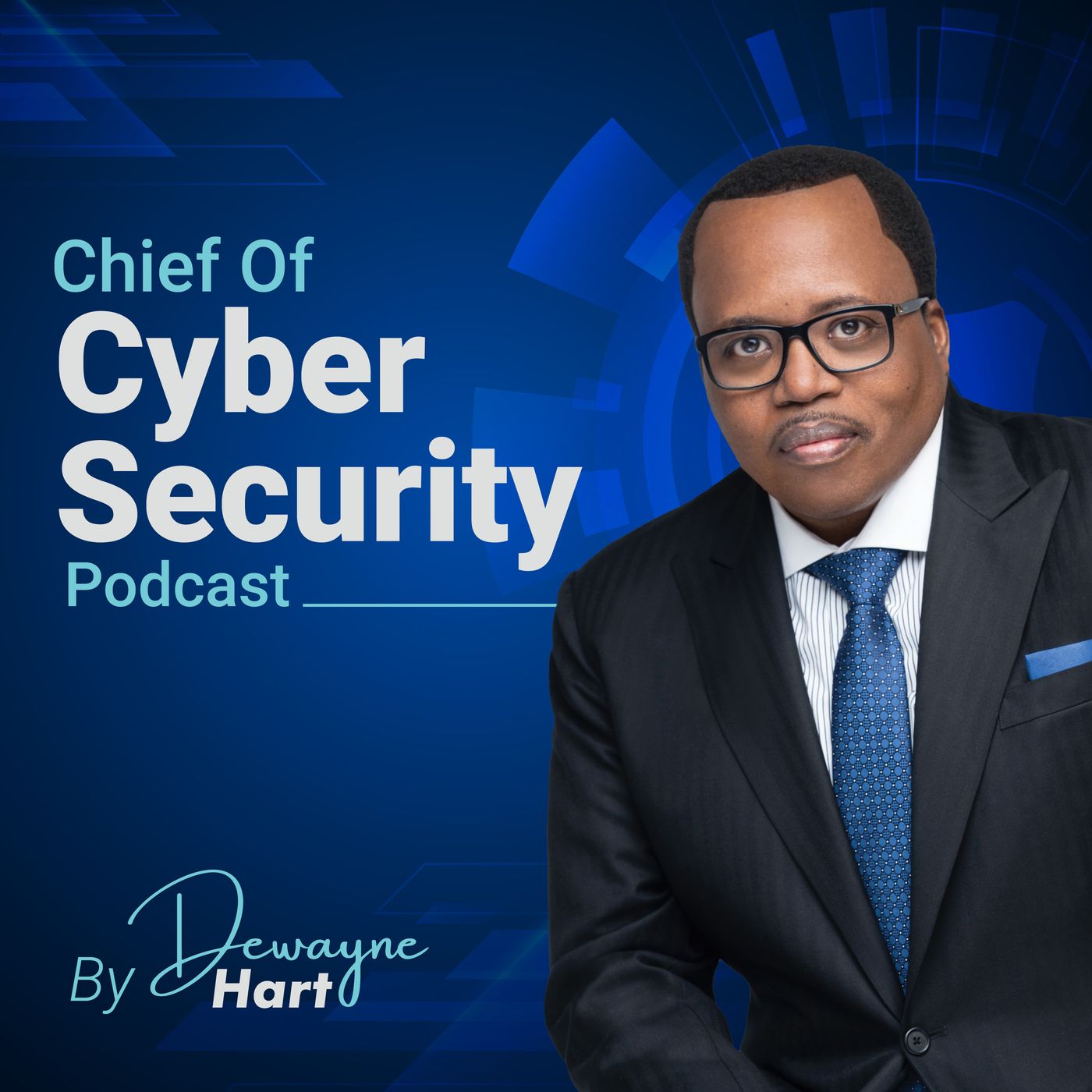
PODCAST · technology
Chief of Cybersecurity
by Dewayne Hart
Welcome to the Chief of Cybersecurity Podcast hosted by Dewayne Hart where we provide learning and discuss relevant information concerning the cybersecurity workforce, business development, and best practices. You can find more information for SEMAIS at www.semais.net and a list of authored publications at www.DewayneHart.com
-
70
Cyber Leadership: Start Driving Business Value
In the second of six episodes of Cybersecurity Leadership: Winning Strategies in the Age of AI, Dewayne Hart explores how many cybersecurity programs are still viewed as cost centers and shows leaders how to change that perception. Learn to transform cybersecurity into a strategic advantage by connecting initiatives to measurable business outcomes. Hart emphasizes purpose-driven leadership, trust-building, and ROI-focused strategies, guiding executives to define their mission, inspire teams, and cultivate habits that generate lasting organizational value. Essential for leaders aiming to elevate security in AI-enhanced digital environments and drive measurable impact across the enterprise.
-
69
Why AI Is Reshaping Cyber Leaders
The Cybersecurity Leadership: Winning Strategies in the Age of AI podcast series explore how executives can transform cybersecurity from a technical function into a strategic business advantage. Across six episodes, Dewayne Hart, cybersecurity expert and author, shares insights on leading in an AI-driven threat landscape, building security-first cultures, and aligning cyber initiatives to organizational goals. Episode 1 sets the stage, revealing why Hart wrote the book: to guide leaders in evolving traditional approaches for the AI era, strengthen executive accountability, and implement strategies that drive measurable value and resilience in modern digital environments.
-
68
Cybersecurity Leadership: How to Become a Business Champion and Strategize
In today’s digital landscape, every business is a target. Cyber threats are evolving, and businesses need champions. Are you ready to step up and become the Cybersecurity Business Champion?Imagine leading your organization with confidence, knowing you have the strategies and tools to combat cyber threats. As a champion, one will not only protect the business but also drive innovation and growth, and play a pivotal role in steering an organization’s cybersecurity strategy. They are responsible for advocating the importance of cybersecurity at all levels of the organization, from the boardroom to the front lines. By bridging the gap between technical cybersecurity measures and business strategy, they ensure that security considerations are integrated seamlessly into every facet of the business. Their expertise and leadership are instrumental in developing resilient cybersecurity frameworks that not only protect against current threats but also anticipate and prepare for future challenges. Join this podcast to learn effective strategies to navigate cybersecurity in a business while securing your enterprise.In this podcast , we'll reveal the secrets to staying ahead of the competition and establishing yourself as a thought leader in the cybersecurity space. From understanding the latest threats and trends to developing a winning business strategy, we'll cover it all. Get ready to elevate your cybersecurity business and take the crown!
-
67
Cybersecurity Leadership: How to Become a Business Champion and Strategize
In today’s digital landscape, every business is a target. Cyber threats are evolving, and businesses need champions. Are you ready to step up and become the Cybersecurity Business Champion?Imagine leading your organization with confidence, knowing you have the strategies and tools to combat cyber threats. As a champion, one will not only protect the business but also drive innovation and growth, and play a pivotal role in steering an organization’s cybersecurity strategy. They are responsible for advocating the importance of cybersecurity at all levels of the organization, from the boardroom to the front lines. By bridging the gap between technical cybersecurity measures and business strategy, they ensure that security considerations are integrated seamlessly into every facet of the business. Their expertise and leadership are instrumental in developing resilient cybersecurity frameworks that not only protect against current threats but also anticipate and prepare for future challenges. Join this podcast to learn effective strategies to navigate cybersecurity in a business while securing your enterprise.In this podcast , we'll reveal the secrets to staying ahead of the competition and establishing yourself as a thought leader in the cybersecurity space. From understanding the latest threats and trends to developing a winning business strategy, we'll cover it all. Get ready to elevate your cybersecurity business and take the crown!
-
66
Cybersecurity Leadership: Tips to Measure Security Capabilities and Protect the Enterprise
Security capabilities are the backbone of any effective defense system. They encompass a range of tools and practices designed to protect assets, information, and people from threats. At their core, security capabilities help organizations identify vulnerabilities and mitigate risks. This proactive approach is essential in today’s fast-evolving threat landscape, where cyber-attacks and physical breaches are increasingly sophisticated.One powerful aspect of security capabilities is their ability to integrate various technologies. From firewalls and intrusion detection systems to biometric authentication, these tools work together to create a robust defense. Additionally, security capabilities empower teams through data analysis and threat intelligence. By monitoring activities in real-time, organizations can respond swiftly to potential incidents, minimizing damage and ensuring continuity. Training and awareness are also vital. Security capabilities focus on educating employees about potential risks and best practices, transforming them into the first line of defense against threats.This podcast explores what makes security capabilities so powerful. Get ready to unlock the full potential of security capabilities and take your organization's security to the next level. Whether you're a security professional, IT manager, or business leader, this podcast is a must-watch for anyone looking to stay ahead of the threats and protect their organization's assets.
-
65
Cybersecurity Leadership: Tips to Measure Security Capabilities and Protect the Enterprise
Security capabilities are the backbone of any effective defense system. They encompass a range of tools and practices designed to protect assets, information, and people from threats. At their core, security capabilities help organizations identify vulnerabilities and mitigate risks. This proactive approach is essential in today’s fast-evolving threat landscape, where cyber-attacks and physical breaches are increasingly sophisticated.One powerful aspect of security capabilities is their ability to integrate various technologies. From firewalls and intrusion detection systems to biometric authentication, these tools work together to create a robust defense. Additionally, security capabilities empower teams through data analysis and threat intelligence. By monitoring activities in real-time, organizations can respond swiftly to potential incidents, minimizing damage and ensuring continuity. Training and awareness are also vital. Security capabilities focus on educating employees about potential risks and best practices, transforming them into the first line of defense against threats.This podcast explores what makes security capabilities so powerful. Get ready to unlock the full potential of security capabilities and take your organization's security to the next level. Whether you're a security professional, IT manager, or business leader, this podcast is a must-watch for anyone looking to stay ahead of the threats and protect their organization's assets.
-
64
Cybersecurity Leadership: Ways to Develop Your Organization's Cybersecurity Culture
In today's digital landscape, it is crucial to develop a strong cybersecurity culture within your organization to protect sensitive data and fend off hackers. This podcast explores essential strategies for cybersecurity leadership that will empower your team and create a culture of security awareness. Discover how to foster collaboration, promote best practices, and instill a proactive mindset among your employees.We’ll discuss practical steps organizations can take to cultivate a cybersecurity-first approach, ensuring that everyone from the top down is engaged and committed to safeguarding valuable information. Join us to learn how to make your cybersecurity culture so robust that hackers will think twice before targeting your organization!
-
63
Cybersecurity Leadership: Ways to Develop Your Organization's Cybersecurity Culture
In today's digital landscape, it is crucial to develop a strong cybersecurity culture within your organization to protect sensitive data and fend off hackers. This podcast explores essential strategies for cybersecurity leadership that will empower your team and create a culture of security awareness. Discover how to foster collaboration, promote best practices, and instill a proactive mindset among your employees.We’ll discuss practical steps organizations can take to cultivate a cybersecurity-first approach, ensuring that everyone from the top down is engaged and committed to safeguarding valuable information. Join us to learn how to make your cybersecurity culture so robust that hackers will think twice before targeting your organization!
-
62
Cybersecurity Leadership: Your Role and Responsibilities
Today, it is particularly important to understand job duties and responsibilities in the fast-paced cybersecurity landscape due to the many threats we face. Cybersecurity leaders encounter similar challenges. They are often required to effectively communicate, build resilience, and become advocates for the business.However, to do this, they must first understand their role and how it impacts security, as well as earn the trust of the boardroom with their leadership. Join us as we examine key leadership responsibilities and offer advice on excelling in the cybersecurity domain. Whether you are an experienced professional or just starting your leadership career, having clarity about your duties will enable you to work more effectively and achieve growth.We will discuss: - The importance of understanding your job description - How to communicate effectively with your team and supervisors - Strategies for managing your workload and prioritizing tasks - Tips for continuous learning and professional development. Don't miss out on this opportunity to improve your understanding of cybersecurity leadership.
-
61
Cybersecurity Leadership: Your Role and Responsibilities
Today, it is particularly important to understand job duties and responsibilities in the fast-paced cybersecurity landscape due to the many threats we face. Cybersecurity leaders encounter similar challenges. They are often required to effectively communicate, build resilience, and become advocates for the business.However, to do this, they must first understand their role and how it impacts security, as well as earn the trust of the boardroom with their leadership. Join us as we examine key leadership responsibilities and offer advice on excelling in the cybersecurity domain. Whether you are an experienced professional or just starting your leadership career, having clarity about your duties will enable you to work more effectively and achieve growth.We will discuss: - The importance of understanding your job description - How to communicate effectively with your team and supervisors - Strategies for managing your workload and prioritizing tasks - Tips for continuous learning and professional development. Don't miss out on this opportunity to improve your understanding of cybersecurity leadership.
-
60
Why Norfolk State University (NSU) Cyber Curriculum Is A Blueprint for HBCUs
Interested in pursuing a career in cybersecurity? Look no further than Norfolk State University's Cyber Curriculum! As a blueprint for other Historically Black Colleges and Universities, NSU's comprehensive program covers everything from network security to ethical hacking. With the increasing demand for cybersecurity professionals, it's more important than ever for HBCUs to equip their students with the necessary tools to succeed in this fast-growing field. NSU's Cyber Curriculum has been designed to meet industry standards and prepare students for real-world challenges. By modeling their program, other HBCUs can provide their students with the knowledge and skills needed to excel in the cybersecurity industry. Join us in advocating for cybersecurity education at HBCUs and help empower the next generation of cybersecurity professionals. By bridging the gap and increasing diversity in the cybersecurity workforce, we can ensure a safer and more secure future for all. Let's work together to make a difference!
-
59
From the National Cyber Director: No Degree Required
The new National Cyber Director, Harry Coker, stated that the White House intends "to reduce unnecessary barriers" federal contractors face in filling cybersecurity jobs, like requirements for four-year college degrees. The plan aims to build a cybersecurity workforce without needing a traditional four-year degree. The benefit is that individuals can gain valuable skills and experience through alternative pathways such as apprenticeships, certifications, and on-the-job training. This initiative opens up opportunities for people from diverse backgrounds to enter the cybersecurity field and contribute to national security. Join us on this podcast as we dissect the strategy's rationale, impact, and outcomes. Will it reduce college entrance or bolster cybersecurity? How will job positions be affected, and should your pay be reduced due to the change? Let's talk!
-
58
Why AI and Hackers Are Becoming Closer
With technology rapidly advancing, hackers have adopted AI-driven tactics to carry out their cyber attacks with unprecedented sophistication. Join us on this captivating journey as we uncover the dark web of AI-powered hacking techniques and the potential threats they pose to our digital security. Throughout this eye-opening video, we will explore the various ways hackers exploit AI algorithms, machine learning, and automation to infiltrate systems, steal sensitive data, and compromise online privacy. From AI-powered botnets to autonomous malware, the hacker's toolkit has evolved, requiring us to stay vigilant and well-informed about the potential risks lurking behind our screens. Furthermore, we will discuss the emerging challenges faced by cybersecurity professionals who strive to defend against these AI-driven attacks. As hackers exploit the vast capabilities of AI, defenders must constantly adapt to develop robust countermeasures that can detect, combat, and mitigate these evolving threats effectively.
-
57
Unveiling The Dark Side of AI: It's About Business
As AI continues to evolve and revolutionize traditional practices, it's crucial for entrepreneurs, corporate leaders, and decision-makers to understand its true implications. Through insightful analysis and thought-provoking examples, we unmask the business implications of AI, which often remain obscured by its mesmerizing abilities. Discover how AI can reshape market dynamics, disrupt industries, and challenge conventional business models. Moreover, we expose the potential risks associated with AI implementation, including job displacement, data privacy concerns, and ethical dilemmas. It's important for businesses to navigate these obstacles while embracing AI's potential, striking a delicate balance between innovation and responsibility. Join us as we raise awareness about the need for ethical AI practices, responsible decision-making, and the significance of human oversight.
-
56
CISA Has Healthcare Covered, This Podcast Tells You Why
In this informative video, we delve into the crucial role played by the Cybersecurity and Infrastructure Security Agency (CISA) in safeguarding public health care. Join us as we explore how CISA employs its expertise to protect our invaluable healthcare systems from malicious actors, ensuring the well-being and security of our communities. Discover the various cybersecurity measures implemented by CISA to fortify public healthcare infrastructure against cyber threats and vulnerabilities. Gain insights into their proactive strategies, incident response capabilities, and continuous monitoring practices that help maintain the seamless operation of our healthcare systems. Additionally, we explore how CISA collaborates with public health agencies, healthcare providers, and stakeholders to conduct risk assessments, develop effective mitigation strategies, and share critical information. Through this podcast, listeners gain valuable insights into how CISA's cybersecurity expertise shapes and strengthens the healthcare landscape, ensuring the continuity of critical services. Safeguarding public health care starts with staying informed about the efforts and contributions of agencies like CISA. Don't miss this eye-opening discussion on "The Essential Role of CISA: Safeguarding Public Health Care" and learn how this agency's initiatives help protect health care systems.
-
55
We can Improve Healthcare Cybersecurity, Please Listen
The healthcare sector is particularly vulnerable to cybersecurity risks, and the stakes for patient care and safety are exceptionally high. Healthcare facilities are attractive targets for cybercriminals due to their size, technological dependence, sensitive data, and vulnerability to disruptions. Cyber incidents affecting hospitals and health systems have led to extended care disruptions caused by multi-week outages, patient diversion to other facilities, and strain on acute care provisioning and capacity, causing canceled medical appointments, non-rendered services, and delayed medical procedures (particularly elective procedures). More importantly, they put patients' safety at risk and impact local and surrounding communities that depend on the availability of the local emergency department, radiology unit, or cancer center for life-saving care. In this podcast, we discuss healthcare cybersecurity programs and operations and understand the importance of fortifying them in today's digital landscape. Join us as we explore practical strategies, cutting-edge technologies, and insights to enhance healthcare cybersecurity. Discover critical techniques for safeguarding sensitive patient data, preventing cyber threats, and ensuring the confidentiality and integrity of healthcare systems. Stay up-to-date with industry practices and learn how to optimize your organization's healthcare framework. Don't miss out on this valuable resource for anyone involved in healthcare cybersecurity. Watch and listen now and bolster your healthcare cybersecurity programs and operations!
-
54
How Does The Federal Government Modernization Strategy Affect Cybersecurity?
Cybersecurity modernization has several connectors and outcomes. The methodology requires the federal government to consider change, protection, and return on investment. Many agencies, such as the VA, CDC, and Department of Defense (DoD), have strategized and optimized their cyber protection programs based on modernization standards. Are we safe, and where does the federal government stand? Are there additional practices that can improve its modernization efforts? Newer tools and legacy systems are being discussed, and agencies are making significant progress. Despite the growth, cybersecurity plays a vital role in how modernization achieves its milestones and how the government approaches cybersecurity. We are back again! So, join the discussion and gather relevant information about the government modernization strategy and its effects on cybersecurity.
-
53
Will AI Provide Value or Added Risks for Government IT Systems?
Due to stored data and security classification, the federal government's IT systems are more critical and sensitive. Over the years, many agencies have been challenged to protect and ensure proper safeguards are implemented. Now, AI has surfaced and created answers as well as concerns. What do we know - The added value for rapid data analysis and efficiency has created a need for AI. The news outlets have presented views and concerns about AI, but will the businesses and end users cease using or developing AI? How will the government address the change and need for AI? Some have even voiced that AI is a threat to humanity. What's apparent is that the POTUS executive order advanced AI as a resource and vital technology. The safeguards are needed, and technology vendors must balance AI and risk. Utilizing the technology is in favor of many government entities. You cannot miss this podcast – we will discuss critical areas of AI and its impact on government cybersecurity efforts.
-
52
Secrets and Value To Cybersecurity Authoring and Writing
Many technical professionals have vast knowledge and desire to be heard. Some have resorted to podcasting, writing, or authoring publications. As someone who has done each, I believe they all provide the chance to market careers and business. Beyond a podcaster, writing, and authoring books, the value extends into many ventures. One was the chance to deliver written content on topics such as AI for the Forbes Technology Council. Join me on this podcast as Rich Casanova of Global Podcast Studios moderates and asks critical questions concerning being an author, speaker, and enthusiast for cybersecurity.
-
51
Mastering The Cybersecurity Mindset Part 3 - Building Cyber Connectors Platforms
Critical systems and applications must remain available as organizations digitally modernize and onboard technologies. Typical failures are supposed to withstand cyber stress and sustain availability – since proper planning, vulnerabilities, attacks, and risk states should be known. Shifting blame is not an option, which forces resiliency to become active and responsive. With an absent resilient strategy, organizations are risk-prone! When "Mastering the Cybersecurity Mindset," readers can develop early indications and strategies to connect security to real-world requirements. Each will learn how the connected technologies, roadmaps, and holistic defense methodology operate and correlate them to continual engagement, proactive defense, and disruption. It's somewhat similar to a puzzle with many parts – so can you piece it together? This is where "The Cybersecurity Mindset" takes action and transitions security into our social, technical, and business environments.
-
50
Mastering The Cybersecurity Mindset Part 2 - Maturing Cybersecurity for Your Enterprise
Every genre of business and public agencies strives for maturity. The core requires practical and fundamental approaches following a simple methodology: "Increase Protection and Lower Risk." As simple as it sounds, many have failed. These deficiencies are developed through failing to understand where risk operates and what actionable steps or actions are required with governmental requirements such as CMMI. Realizing that maturity grades effort and indicates where you stand within the security domain is imperative. The Cybersecurity Mindset illustrates various concepts and security approaches to mature and drive cyber readiness.
-
49
Mastering The Cybersecurity Mindset Part 1 - Utilize Readiness Concepts to Operate Programs
Do you know what's on your network? That's a serious question that many cannot answer. When invoking "The Cybersecurity Mindset," the reader can relate cyber visibility as a threat reduction tool. Many enterprises have "blindspots," misconfigured systems, and have loss tracking of their cybersecurity programs. When continuous visibility is at its peak, organizations can discover untreated systems and where true risk operates. With various programs such as Asset, Configuration, and Vulnerability Management, cyber leaders must invoke a security mindset that can detect, prevent, and reduce "blind spots." When "Mastering the Cybersecurity Mindset" and focusing on situational awareness, risk-based concepts, and wearing "The Hackers Hat," leaders can also "Beat hackers To the Finish Line."
-
48
Secret Tips To Master IT Certifications
Many well-to-do professionals struggle to understand IT certifications and how to pass their examinations. Some have resorted to trial and error to pass. Others have studied and still have no success. Would there be a secret code for the examinations? In this podcast, I explain tips and tricks to help you master IT certifications. If you're looking for a new career or hope to advance your current one, mastering IT certifications is essential! Please join my Youtube channel as well.
-
47
Secrets to Mastering Effective Cybersecurity Skills
With all the changes and technologies surfacing, cybersecurity teams must become the best and gather valuable skill sets. The time had changed when we spoke of cybersecurity; now it's about the required skill sets. You can spend time, energy, and resources determining what skill sets are needed, but the truth is actual. If you're searching for a cybersecurity job, you must master the skills necessary to succeed. Listed and join me on YouTube as I share some secrets to mastering practical cybersecurity skills in this podcast.
-
46
How To Choose The Perfect Cybersecurity Job
As cyber criminals regularly launch more sophisticated attacks and with fewer barriers to entry, cybersecurity professionals are more in demand than ever before. Security engineers are becoming increasingly hard to find and expensive to hire. Because of this, there has never been a better time for you to turn your IT passion into a career in cybersecurity. Think you have what it takes to become the next data-protecting cybersecurity expert? If you're looking for more ways to level up your skill set, check out this podcast and learn what jobs best suit your passion.
-
45
Cracking the Code: Your Guide to Entering Cybersecurity
There has been a great discussion concerning strategies to break into cybersecurity. Many interested people have spent time wondering about the proper steps and requirements. They have also resorted to various platforms with broken promises. This sounds all too familiar and requires an in-depth discussion. By the end of this podcast, you'll know everything you need to start working in cybersecurity. If you want to learn more about this exciting field, join my YouTube channel today!
-
44
ChatGPT and the new AI are wreaking havoc on cybersecurity
Generative artificial intelligence is transforming cybersecurity, aiding both attackers and defenders. Cybercriminals are harnessing AI to launch sophisticated and novel attacks at large scale. And defenders are using the same technology to protect critical infrastructure, government organizations, and corporate networks. Generative AI has helped bad actors innovate and develop new attack strategies, enabling them to stay one step ahead of cybersecurity defenses. AI helps cybercriminals automate attacks, scan attack surfaces, and generate content that resonates with various geographic regions and demographics, allowing them to target a broader range of potential victims across different countries. Cybercriminals adopted the technology to create convincing phishing emails. The AI-generated text helps attackers produce highly personalized emails and text messages more likely to deceive targets. We will discuss whether newer technologies pose risks or support our digital landscape and whether ChatGPT is our worst enemy!
-
43
California's vulnerable water system faces many cyber infrastructure threats
"Water systems, like other public utility systems, are part of the nation's critical infrastructure and can be vulnerable targets when someone desires to affect public safety adversely. In California, where epic Sierra Nevada snowpack and "the big melt" have substantially increased the stakes for reservoir managers, officials say they're taking steps to protect the state's water systems from hackers, terrorist attacks, and natural disasters, such as the flooding that temporarily severed the Los Angeles Aqueduct — the city's water lifeline that connects to the Owens Valley. But experts say the challenges are numerous. Many of the systems in California and nationwide are still operating with outdated software, poor passwords, aging infrastructure, and other weaknesses that could leave them at risk. We will discuss its impact on the nation's critical infrastructure and why risks still occur despite government guidance.
-
42
Toyota Vulnerability Management Practices Are Weak
Automobile manufacturer Toyota recently announced a data breach that may have exposed the emails of up to 300,000 customers for nearly five years. Toyota says the breach resulted from a subcontractor posting source code for Toyota’s “T-Connect” app on the software development platform GitHub in December 2017. This code included an access key to the data server that hosted the email addresses and customer management numbers of T-Connect users. The publicly available source code was found on September 15th, 2022, when Toyota changed the access key. We will explain why the lapse in remediating vulnerabilities can lead to many risks, which may later disrupt corporate operations.
-
41
How Does AI Affect Public Safety During The 2024 Olympics
Public safety has drawn a new wave of concern from many 2024 Olympics and government officials in France. AI can help bolster protection and rapidly determine threat actors and terrorists. Still, citizens worry about public safety and privacy. In this episode, we will breakdown AI and public safety concerns and also include its benefits and risks. As a listener, you will better understand why public safety and AI operate best when balance security is applied.
-
40
How Cybersecurity Can Unlock Business Success
Cybersecurity is now a must-have for any business, and it's no longer a matter of if but when a cyberattack will impact its operations. The emergence of cyberattacks and various exploits has changed our cybersecurity engagements. Often, when we hear of business disruption and cybersecurity, it's an after-situation. Proactive engagements, planning, operational resilience, and cyber protection strategies are foundational to accelerating business operations. In this episode, we discuss how cybersecurity can unlock business success. The podcast will highlight a few scenarios businesses must require, design, and implement to counter risks and cyberattacks. By following these secret strategies, corporations can become more resilient, increase their value proposition, and support their clients.
-
39
How Cyber Insurance Costs Impacts The Healthcare Industry!
As cyberattacks become more prevalent, insurance companies are forced to raise the rates. This has serious consequences for the healthcare industry, struggling to stay afloat in the face of rising costs. Every citizen depends on healthcare – so what's the connection? You have heard of telemedicine, remote surgeries, and robotic medical inventions, but who is responsible when they fail? The product owner, healthcare system, and surgical professional are all affected. Downstream liability and risks are sometimes silent. In this session, we'll discuss cyber insurance's impact; and connect how operational commitment and risk trade-offs balance a defense strategy.
-
38
Secret Tips On Addressing The Cybercrime Growth Part 2
While many online scams have originated out of older schemes, scammers are always finding new ways to play them out. Scammers love to pose as legitimate organizations like banks, hoping to trick you into handing over details, but as we’ve become accustomed to dealing with organizations online, the potential for trickery has grown exponentially.This podcast extends information on cybercrime towards scams, criminals stealing information, and persistent criminals.
-
37
Secret Tips On Addressing The Cybercrime Growth Part 1
In the fast-paced, high-stakes world of risk management, keeping informed about recent developments and cutting-edge trends is beyond essential. There are various insights to address cyber security management challenges and to accelerate security programs and infrastructure advances. The end state makes a firm determination whether cybercrime is outperforming cyber protection.This podcast provides insights that reflect the ever-changing aspects of technology and system disruption through cybercrime and examines how human behavior can become solid defensive shields.
-
36
Online Scams Target Veterans and Active Duty Members
Online Scams Target Veterans and Active Duty Members The U.S. has the most robust and powerful military in the world, and though its fighting men and women can win wars, they often appear defenseless against popular online scams. In the military, you have a young population on the web. Service members are targeted by websites that claim to offer special military discounts on everything from cars to apartments for rent. But the low-priced car never arrives, and the easy-to-find apartment they rented is already occupied. This podcast will focus on safety measures and protection standards for military personnel.
-
35
How to Protect Your Church From Hackers & Cyber Attacks
With so many important concerns occupying the time of church leaders, issues related to church computers can quickly become vulnerable. Cyber threats pose significant challenges for churches and other organizations. Any church that uses computer systems to conduct business operations should consider managing cyber risks. These attacks could create risks that mostchurches are unprepared to confront. Some incidents may lead to temporary frustration, such as its website availability. The most serious could cause a data breach for employees and members. Identity theft, disclosure of personal information like medical records, and simple embarrassment are all potential problems that can result from a cyber attack. A church can have legal obligations to keep some information confidential, which may not be excused in a cyberattack. This podcast will discuss why churches should raise safeguards due to the elevated criminal activity against their members and employees.
-
34
Secret Tips to Keep Your Cryptocurrency Safe From Cybercrime
Bitcoin and other types of cryptocurrencies have exploded onto the market in recent years, and based on virtual currency's popularity, it seems to be here to stay. Cryptocurrencies are digital or virtual currencies secured by cryptography, with many using decentralized networks based on blockchain technology – an open, distributed ledger that records transactions in code. Crypto is stored in a digital "wallet" on a website, computer, or an external hard drive. To put it simply, Investopedia defines cryptocurrencies as systems that allow for secure online payments denominated in virtual "tokens." The first cryptocurrency launched a little over a decade ago, was created by Satoshi Nakamoto, who described it as "an electronic payment system based on cryptographic proof instead of trust." Other common types of cryptocurrency include Litecoin, Namecoin, Dogecoin, Ethereum, Cardano, and others. In March 2021, there were reportedly over 18.6 million bitcoins in circulation, with a total market cap of around $927 billion. Technology has made almost every aspect of our lives – and the lives of criminals – easier. The blockchain has fostered an ecosystem in which illicit actors can efficiently operate anonymously and internationally, stalling financial investigations and setting the stage for increased crypto crime. BitCoin has been excellent and volatile when investing, but deeper concerns, such as ransomware and financial fraud, are lurking beneath your bank account. Do you feel rich? This podcast will reveal SECRET tips to keep your cryptocurrency safe from cybercrime. By following these tips, you'll be able to keep your coins safe from hackers and thieves.
-
33
How To Transition Cybersecurity Awareness Month Into A Common Practice
Since 2004, the President of the United States and Congress have declared October to be Cybersecurity Awareness Month, helping individuals protect themselves online as threats to technology and confidential data become more commonplace. The Cybersecurity and Infrastructure Security Agency (CISA) and the National Cybersecurity Alliance (NCA) lead a collaborative effort between government and industry to raise cybersecurity awareness nationally and internationally. Although it's done in October, there is a need to extend and continually practice cyber safety. This interview session brings into attention on why cyber awareness is important and how to extend learning outside of October.
-
32
Improving Businesses Cybersecurity Engagements
Business engagements for cybersecurity have focused on being the medium between suppliers, customers, and hackers. Many organizations suffer significant security risks due to changing risk profiles and attack surfaces. The management strategies may invoke defense tactics, but unless they have an accurate indicator of their landscape, they are prone and subject to failure.This podcast discusses several gaps, security visibility, and concerns businesses must address for cyber resilience and risk reduction. Listeners will gain insight into business engagements and their cybersecurity relationships.
-
31
Cybersecurity in the School System
The shift to remote education and online learning has prompted many schools to increase their digital protection. Before COV19, online education entities and K-12 learned through classroom instructions. Since the change, many K-12 students are learning from home, and college students\' enrollment has increased. Both come at a cybersecurity cost, but there is a need for remote learning. How safe are our educational systems? Well, this podcast will dissect some of the events and issues that cause concerns; and highlight protection standards. Our youths should feel safe!
-
30
The Automobile Industry is Facing Cybersecurity Risks.
We drive our cars daily and enjoy the luxury of the many features, but security risks are embedded. The cybersecurity landscape has no boundaries, and just as if healthcare, financial, and educational entities face risk – so does the automotive industry. Increasing demand for connected and semi-autonomous vehicles has led to a growing demand for connected vehicle devices in automobiles.This increased the complexity of vehicle architecture and software codings, which made cars more vulnerable to cyber-attack. The market for automotive cybersecurity solutions has been developing rapidly to safeguard vehicles from such attacks. This interview brings into focus how automobiles are at risk.
-
29
Supply Chain Management and Cybersecurity
Supply chain management (SCM) is the active management of supply chain activities to maximize customer value and achieve sustainable competitive advantage. It represents a conscious effort by the supply chain firms to develop and run supply chains in the most effective & efficient ways possible. Supply chain activities cover everything from product development, sourcing, production, and logistics to the information systems needed to coordinate these activities. Many risks exist where 3rd part vendors are risks but can be controlled through active security and managing protocols that outline vendor relationships.
-
28
TikTok Says It\'s Putting New Limits on Chinese Workers\' Access to U.S. User Data
TikTok is working on a deal with the Biden administration that would \"fully safeguard\" the app in the U.S. and quell fears about the Chinese government\'s accessing Americans\' data, according to a letter TikTok sent to nine Republican senators. This issue raises concern about having information sharing, privacy, and data protection as critical control across social media accounts. This interview considers why data protection and privacy is a business risk but can be remediated with safe practices.
-
27
COVID-19 has transformed how companies operate today.
With 50 percent to 90 percent of staff working remotely, organizations are now looking at remote work as the new working style in the future. While working remotely has its benefits, one of the biggest challenges it presents is cyber security problems. Remote working has a lot of benefits, including increased productivity, improved employee mental health, and reduced costs in office space. But it also has its challenges. Your remote employees may be unknowingly putting your company\'s data at risk. Working from home can potentially lead to data breaches, identity fraud, and a host of other negative consequences. This interview sessions brings to light the nuances and approaches to making remote working cyber safe.
-
26
How Does Human-Behavior Affect Cybersecurity Success
This podcast session examines users\' risk contribution and behavior patterns that can cause significant disruption to enterprise cybersecurity practices. It also mentions how cyber awareness programs can succeed when positive behavioral techniques are integrated. The discussion points examine values, morals, and how the cybersecurity mindset aligns with behavioral norms. Listeners can gain information advantage in resolving negative behavioral traits before they become a risk.
-
25
How To Effectively Use Cybersecurity Tools - It\'s Beyond Reporting
Every security team has used cybersecurity tools to produce or analyze data feeds. Tools such as Splunk, Nessus, Arsigsight, McAfee ePO (Antivirus), End-Point Detection, and Response applications are available. However, the proper and efficient use outside of reporting is overlooked. This podcast session examines common pitfalls and gaps deployed that end-users and management teams deploy for in-house tools. The discussion focuses on different policy tuning, employee usage, and why users can collect hygiene data and drive defense strategies when adequately using cybersecurity tools.
-
24
Utilizing A Holistic Defense Approach To Secure Your Environment
Holistic defense is a traditional but rarely spoken concept when cybersecurity practices are introduced. This podcast session extracts the elements and knowledge required to drive system thinking as a holistic defense strategy. The discussions focus on the security development lifecycle and combining security integration and engineering as a defense strategy. Listeners gain an understanding of how the \"Security Puzzle\" and thinking holistically operate together.
-
23
Cybersecurity for Small Businesses - What Do you Need to Know?
Small businesses possess an individual brand and hold responsibility for protecting internal information and clients\' data. This podcast session outlines the importance of protecting information assets, clients, and vendor information and projecting behavioral practices that ensure employees\' buy-in to cyber awareness. Listeners and business owners gain the advantage in understanding why \"Brand Protection\" is a top-down approach.
-
22
Transferring Digital Modernization Into the Cyber Security Mode of Thinking
This podcast addresses the growing need for digital modernization and its key objectives for cybersecurity. The discussion points outline how legacy systems and modernization concepts can reduce cyber threats and transform business operations. The critical areas discussed are automation, adaptive technology research, digitalization into the workforce, and transformation practices.
-
21
What Transferrable Skillsets Do Military Veteran Offer To Cybersecurity
The military veteran workforce brings advanced skillsets and aligned training that models the cybersecurity culture. This podcast examines and brings to attention how their skillsets are designed with a \"Cybersecurity Seed,\" and much of their experience is transferrable and relatable to cybersecurity. The concepts of information secrecy, intelligence gathering, and human firewall theories are discussed.
No matches for "" in this podcast's transcripts.
No topics indexed yet for this podcast.
Loading reviews...
ABOUT THIS SHOW
Welcome to the Chief of Cybersecurity Podcast hosted by Dewayne Hart where we provide learning and discuss relevant information concerning the cybersecurity workforce, business development, and best practices. You can find more information for SEMAIS at www.semais.net and a list of authored publications at www.DewayneHart.com
HOSTED BY
Dewayne Hart
CATEGORIES
Loading similar podcasts...
URL copied to clipboard!