
PODCAST · history
China's Living Legends
by China's Living Legends
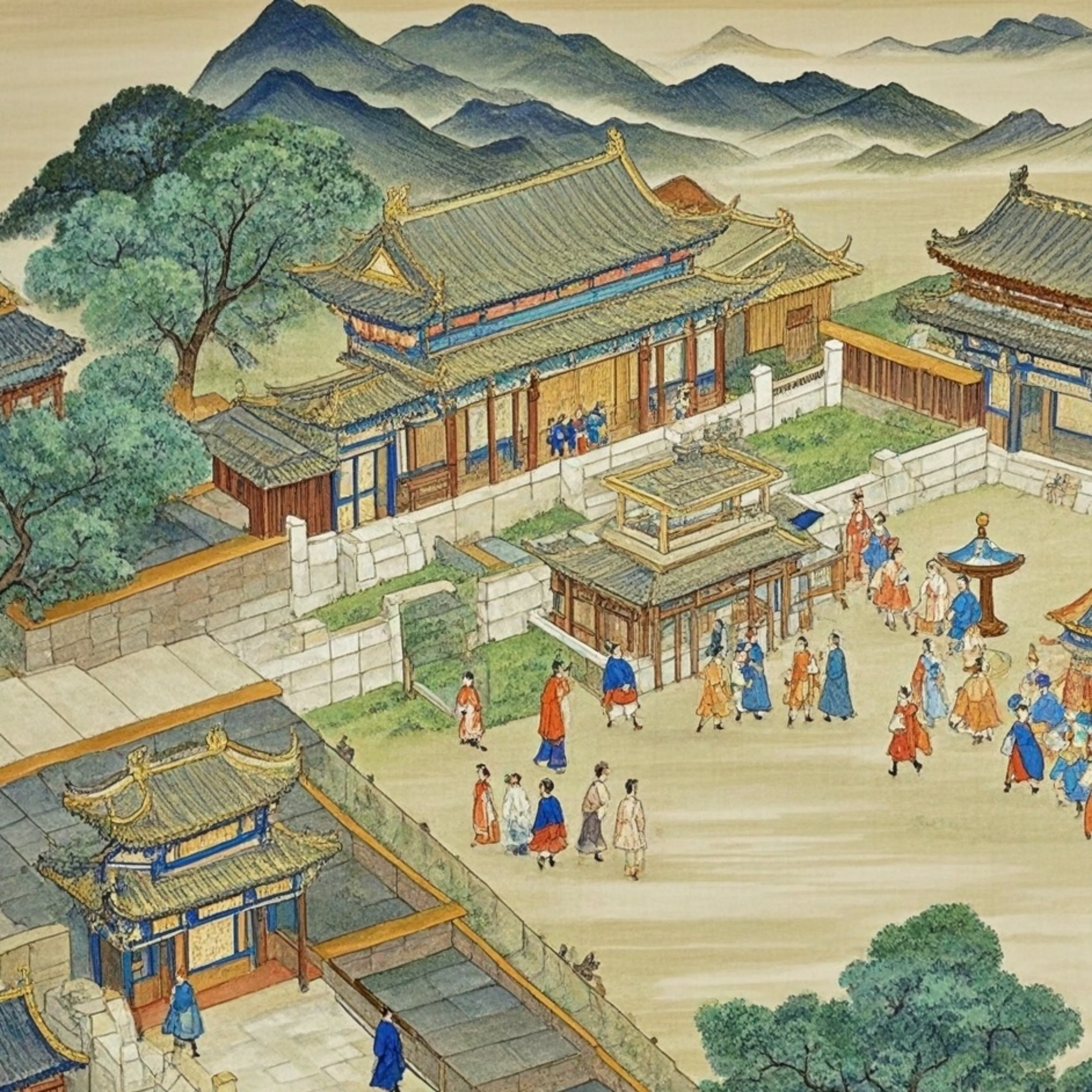
Welcome to "China's Living Legends" your gateway to the enchanting world of Chinese stories, legendary heroes, and the art of martial combat. Dive into captivating tales that blend ancient myths with the rich history of Chinese martial arts. From epic battles and courageous warriors to the wisdom of historical figures, our channel explores the fascinating intersections of folklore and history.
-
107
How Extortion Destroyed the Ming Dynasty
https://youtu.be/z57cvvYGdxU
-
106
How starvation wages fueled imperial corruption
History doesn’t always collapse in one moment.Sometimes, it happens through a few critical decisions.In this video, we break down three turning points in Chinese history:— A reform that made the empire rich, then collapsed— A conqueror who burned the capital after winning— A system that lost control and gave power to the wrong peopleThese are the moments that changed everything.https://youtu.be/z57cvvYGdxU
-
105
How ZhangJuzheng almost saved Ming China
History doesn’t always collapse in one moment.Sometimes, it happens through a few critical decisions.In this video, we break down three turning points in Chinese history:— A reform that made the empire rich, then collapsed— A conqueror who burned the capital after winning— A system that lost control and gave power to the wrong peopleThese are the moments that changed everythinghttps://youtu.be/z57cvvYGdxU
-
104
The silver trap that broke imperial China
History doesn’t always collapse in one moment.Sometimes, it happens through a few critical decisions.In this video, we break down three turning points in Chinese history:— A reform that made the empire rich, then collapsed— A conqueror who burned the capital after winning— A system that lost control and gave power to the wrong peopleThese are the moments that changed everything.https://youtu.be/z57cvvYGdxU
-
103
In This Family, Girls Didn’t Survive
Uncover the profound, often unacknowledged, influence of Jiang Shi, mother of the legendary Zeng Guofan, in this deep dive into late Qing Dynasty history. While Zeng Guofan stands as one of Imperial China's most pivotal figures, his character, intellect, and moral fortitude were meticulously forged in the 'matriarchal crucible' of his early life.https://youtu.be/fFr7ZNbaFdM
-
102
China’s Empire Couldn’t Function Without Corruption
Through these stories, we uncover a deeper truth:Corruption in Ming China wasn’t just a failure — it was part of how the system worked.If you’re interested in history, political systems, or how power really operates, this is a story you can’t miss.https://youtu.be/_CBtvemTLZI
-
101
Why This Empire Needed Corruption to Survive
Was corruption actually necessary for an empire to function?In the Ming Dynasty, one of China’s most powerful and centralized regimes, the system faced a paradox: officials were expected to be perfectly moral — but were paid too little to survive.The Blank-Seal Case, exposing the deep flaws in bureaucratic control https://youtu.be/_CBtvemTLZI
-
100
Did the Yuan Dynasty Pave the Road to Collapse? The Price of Predatory Taxation
Delve into the intricate fiscal policies of the Yuan Dynasty. This deep dive explores how their 'predatory taxation' and focus on immediate imperial gain, while initially fueling an empire, ultimately sowed the seeds of its collapse. We draw striking parallels to concepts like the 'Stationary Bandit,' compare Yuan's extractive model with historical attempts at sustainable governance, and examine its echoes in Western financial history. Discover the timeless lessons about balancing fiscal needs with popular welfare, the rise of merchant classes, and the true cost of imperial ambition. #yuandynasty #EconomicHistory #HistoryExplained #Imperialism #ComparativeHistory #FiscalPolicy #AncientChina #SilkRoads #Governance #historicalanalysis https://youtu.be/44BYpzXZibE
-
99
When a Government Tried to Buy an Entire Economy
Dive deep into an unprecedented comparative historical analysis that shatters conventional narratives. Our latest report, drawing on over 900 meticulous comparisons, unveils the startling parallels between the Southern Song Dynasty's complex economic policies—from its pioneering paper currency (*huizi* & *jiaozi*) and state-owned farmland initiatives (*guanzhuang*) to its struggles with elite power and peasant unrest—and pivotal developments in medieval and early modern Western Europe.Explore how the Song's 're-purchasing' of state farmland mirrors aspects of England's Enclosure Movement, or how its paper money crisis foreshadows the disastrous *Assignats* of the French Revolution. Witness the sophisticated, yet ultimately fragile, financial instruments of the Song empire, and their uncanny resemblance to the challenges faced by European monarchs grappling with debt, taxation, and central authority (e.g., Magna Carta, Exchequer, Mercantilism).This isn't just a history lesson; it's a profound exploration of universal economic principles, the cyclical nature of power struggles, and the enduring consequences of state intervention. From the debates of the Physiocrats to the rise of banking houses, discover how ancient China's fiscal innovations and failures offer critical insights for understanding today's global economy.https://youtu.be/aOQvnxwdDYc
-
98
How Zhang Juzheng almost saved Ming China
History doesn’t always collapse in one moment.Sometimes, it happens through a few critical decisions.In this video, we break down three turning points in Chinese history:— A reform that made the empire rich, then collapsed— A conqueror who burned the capital after winning— A system that lost control and gave power to the wrong peopleThese are the moments that changed everything.https://youtu.be/z57cvvYGdxU
-
97
The Unseen Blueprint: How Ancient Chinese Education Forged a Dynasty's Savior
Uncover the extraordinary early education of Zeng Guofan, the pivotal figure who saved the Qing Dynasty. This in-depth exploration reveals the strategic brilliance behind the Xi Lin Academy, the rigorous classical curriculum that shaped his intellect, and the socio-economic pressures driving elite status in 19th-century China. Discover how ancient wisdom and clan ambition laid the foundation for one of history's most influential scholar-officials. #ZengGuofan #ChineseHistory #QingDynasty #Confucianism #HistoricalAnalysis #AncientChina #EliteEducation #Statecraft #ImperialChina #HistoricalFigures #TaipingRebellionhttps://youtu.be/XZoX9bn7IhA
-
96
Beyond Gold: Why Ancient Chinese Reputation Was Your Ultimate Currency.
Delve into a forgotten chapter of Chinese history with our latest dossier on Zeng Yuping, a figure whose personal journey illuminates the profound societal values of agrarian China. This deep dive explores the monumental weight of reputation, a commodity more valuable than gold or skill, and the existential dread of squandering an ancestral legacy. Witness the crucible of public mockery and its transformative power, leading to a profound *metanoia* – a radical change of mind and resolve. We dissect the psychological pressures of lineage-based societies and the universal human drive to overcome shortcomings, drawing parallels from ancient Stoicism to modern personal development. Unpack the enduring lessons of diligence, self-reflection, and the disciplined pursuit of excellence. Join us as we uncover how the echoes of ancient honor and shame continue to shape personal branding and public perception in our digital age.https://youtu.be/XZoX9bn7IhA
-
95
How Did A Poor Boy Rise To Power In Imperial China?
Could the destiny of a nation be foretold by a farmer's dream and the wisdom of his ancestors? Dive deep into the surprising origins of one of China's most influential, yet controversial, historical figures.This video explores the humble beginnings of Zeng Guofan, a man whose life and legacy continue to spark debate centuries later. We journey back to a remote mountain village in Hunan, where the Zeng family, humble farmers for generations, planted the seeds of a future titan. You'll discover the early life of Zeng Guofan's grandfather, Zeng Yuanji, a man whose diligent work ethic and foresight laid the foundation for the family's modest prosperity. Learn about the significant land holdings that were not just a source of sustenance but also a testament to familial legacy, even becoming ancestral sacrifice lands.https://youtu.be/9F0zlHtSdm0
-
94
Why Li Bai Wrote “Invitation to Wine”
https://youtu.be/XcGKYpPDR7AIn Chinese literary history, few poets are as legendary as Li Bai. Known for his romantic spirit and love of wine, he is often remembered as the carefree genius of the Tang Dynasty.But was his famous poem Invitation to Wine really just a joyful celebration of drinking and freedom?In this video, we explore the deeper historical context behind the poem. Beneath its bold rhythm and passionate tone lies a more complicated story — one shaped by political disappointment, personal frustration, and the emotional intensity that defined Li Bai’s life.We will also examine how the poem evolved from earlier folk-song traditions and how linguistic changes over time have influenced the way modern readers understand its rhythm and meaning.Rather than a simple drinking song, Invitation to Wine may reveal something much more profound: Li Bai’s extraordinary ability to transform personal struggle and emotional honesty into timeless poetry.👍 SUPPORT THE CHANNEL https://buymeacoffee.com/sldingIf this documentary helps you understand China’s history and economics,you can support the channel for the price of a coffee each month.or 👇🏻https://www.youtube.com/channel/UCPzyNlqbL2heFLK_JvgV_sw/join
-
93
Why Qin Invented Two Prime Ministers — and Still Lost Control
In 309 BC, the State of Qin made a radical political decision.Instead of one prime minister, it created two.The goal was simple:to weaken the “Number Two” — the most dangerous position in any political system.By dividing executive power into Left and Right Prime Ministers, Qin’s rulers hoped to prevent another Zhang Yi — a man whose influence once rivaled the throne itself.But history had other plans.Drawing on archaeological evidence and classical records, this video explores how the title Cheng-she-ahng emerged, why the dual–prime minister system was designed, and why it ultimately failed to solve the core problem of power.This is not just a story about ancient China.It reflects a deeper political pattern described by the Iron Law of Oligarchy:no matter how institutions are designed, power tends to concentrate — not fragment.Kings try to divide authority.Bureaucracies try to balance factions.Yet again and again, gravity pulls power back toward a single dominant figure.From Qin’s court politics to modern organizations, this tension between institutional design and human ambition remains unresolved.History doesn’t repeat — but it rhymes.Chapter Preview00:00:00 The Paradox of Delegation: The King’s Greatest Threat 00:02:42 The Historical Mystery: Identifying the Missing Prime Minister 00:05:12 Replacing Zhang Yi: Preventing a Monopolistic Successor 00:10:48 The Iron Law of Oligarchy: Why Organizations Centralize 00:16:10 Trapped by the Warrior Code: Why Functional Splits Failed 00:19:11 Engineering Rivalry: The Mismatch of Foreigner and Prince 00:22:05 The Reversion to Singularity: The Gravitational Pull of Power 00:23:58 Lessons from the Three Kingdoms: The Failure of Shared Regency 00:26:05 The Final Dilemma: Outsourcing Conflict to Secure the Thronehttps://youtu.be/zcJki52V_cc
-
92
The Famous Brotherhood That Never Happened (Three Kingdoms Truth)
The Oath of the Peach Garden is one of the most famous brotherhood stories in Chinese culture.But historically, it never happened.Official records from the Three Kingdoms period show no evidence that Liu Bei, Guan Yu, and Zhang Fei ever swore a blood oath. So why did this story become one of the most powerful moral symbols in Chinese history?The answer lies not in emperors or elites—but in the lives of urban commoners.Early folk versions of the story emerged in cities where traditional clan structures had collapsed. Migrants, small merchants, and laborers survived through sworn brotherhoods and “found families.” These early tales often portrayed the three heroes not as nobles, but as struggling traders—men dreaming of rising from nothing.Some versions were brutal, featuring grotesque sacrifices to prove loyalty. Others were surprisingly humorous, focusing on arguments over seniority and status. These were not heroic myths—they were survival contracts.Over centuries, storytellers, opera performers, and writers refined these raw street legends.Finally, Romance of the Three Kingdoms transformed a practical alliance into a sacred mission—loyalty, righteousness, and devotion to the state.This video explores how a grassroots survival pact evolved into a moral epic—and why its values still shape Chinese culture today.https://youtu.be/jrQDETTNpME
-
91
Why Ancient China's Highest Honor Became Worth Less Than Dirt
Imagine earning a Nobel Prize by buying it at Walmart for $5.That's what happened to ancient China's noble titles.Under the Qin Dynasty, titles were rare honors—you needed to kill enemies in battle or donate massive amounts of grain during a famine.Under the Han Dynasty? Titles became so cheap and common, they were basically worthless paper.https://youtu.be/HR_3v6BfgdI
-
90
The 1,000-Year Paradox: Why China's Empires Were Obsessed with Property-part4
A single tax law survived the fall of four dynasties and defined China for a millennium. But the system was built on a lie, fueled by paradox, and required constant, brutal adjustment.This is a deep dive into the unseen institutional core of Imperial China, tracing the evolution of its land, labor, and fiscal systems from the chaos of the post-Han era to the stability of the Ming.We unpack the three foundational pillars that held the empire together—and the catastrophic failures that forced their evolution:I. The Equal Field System (Juntian)The paradox: Why the state constantly redrew land maps for commoners but never touched the wealthy aristocracy.The strategic genius of Wei Min Jie Chan (Creating Property for the People): Stabilizing the masses by turning state-owned wasteland into a political contract and a secure tax base.https://youtu.be/ve1tgyExXnI
-
89
The 1,000-Year Paradox: Why China's Empires Were Obsessed with Property-part3
A single tax law survived the fall of four dynasties and defined China for a millennium. But the system was built on a lie, fueled by paradox, and required constant, brutal adjustment.This is a deep dive into the unseen institutional core of Imperial China, tracing the evolution of its land, labor, and fiscal systems from the chaos of the post-Han era to the stability of the Ming.We unpack the three foundational pillars that held the empire together—and the catastrophic failures that forced their evolution:I. The Equal Field System (Juntian)The paradox: Why the state constantly redrew land maps for commoners but never touched the wealthy aristocracy.The strategic genius of Wei Min Jie Chan (Creating Property for the People): Stabilizing the masses by turning state-owned wasteland into a political contract and a secure tax base.How this system ensured the territorial integrity of the empire for centuries.II. The Sui Paradox: Death by WealthThe most spectacular fiscal collapse in history: Why the Sui Dynasty, with 60 years of food reserves, imploded in less than two decades.The fatal error: Choosing the cheapest, most violent method—Corvée Labor—which destroyed the agrarian economy and led to 40% monthly mortality on state projects.The ultimate lesson: No treasury can save a state if its policies push its people past the point of physical survival.III. The Immortal Two Tax Law (Liang Shui Fa)The moment of collapse: How the old poll tax model was mathematically guaranteed to fail under population growth, leading to mass flight and the crisis of taxing "ghosts."The radical solution of 780 AD: Converting messy obligations (grain, silk, and mandatory labor) into two predictable payments based on property/land asset value.The Millennium-Long Legacy: This reform ended physical serfdom, created the modern taxpayer, and became the unshakeable fiscal foundation that survived the fall of the Tang, Song, Yuan, and Ming Dynasties.https://youtu.be/ve1tgyExXnI
-
88
The 1,000-Year Paradox: Why China's Empires Were Obsessed with Property-part2
A single tax law survived the fall of four dynasties and defined China for a millennium. But the system was built on a lie, fueled by paradox, and required constant, brutal adjustment.This is a deep dive into the unseen institutional core of Imperial China, tracing the evolution of its land, labor, and fiscal systems from the chaos of the post-Han era to the stability of the Ming.We unpack the three foundational pillars that held the empire together—and the catastrophic failures that forced their evolution:I. The Equal Field System (Juntian)The paradox: Why the state constantly redrew land maps for commoners but never touched the wealthy aristocracy.The strategic genius of Wei Min Jie Chan (Creating Property for the People): Stabilizing the masses by turning state-owned wasteland into a political contract and a secure tax base.How this system ensured the territorial integrity of the empire for centuries.II. The Sui Paradox: Death by WealthThe most spectacular fiscal collapse in history: Why the Sui Dynasty, with 60 years of food reserves, imploded in less than two decades.The fatal error: Choosing the cheapest, most violent method—Corvée Labor—which destroyed the agrarian economy and led to 40% monthly mortality on state projects.The ultimate lesson: No treasury can save a state if its policies push its people past the point of physical survival.III. The Immortal Two Tax Law (Liang Shui Fa)The moment of collapse: How the old poll tax model was mathematically guaranteed to fail under population growth, leading to mass flight and the crisis of taxing "ghosts."The radical solution of 780 AD: Converting messy obligations (grain, silk, and mandatory labor) into two predictable payments based on property/land asset value.The Millennium-Long Legacy: This reform ended physical serfdom, created the modern taxpayer, and became the unshakeable fiscal foundation that survived the fall of the Tang, Song, Yuan, and Ming Dynasties.https://youtu.be/ve1tgyExXnI
-
87
The 1,000-Year Paradox: Why China's Empires Were Obsessed with Property-part1
A single tax law survived the fall of four dynasties and defined China for a millennium. But the system was built on a lie, fueled by paradox, and required constant, brutal adjustment.This is a deep dive into the unseen institutional core of Imperial China, tracing the evolution of its land, labor, and fiscal systems from the chaos of the post-Han era to the stability of the Ming.We unpack the three foundational pillars that held the empire together—and the catastrophic failures that forced their evolution:I. The Equal Field System (Juntian)The paradox: Why the state constantly redrew land maps for commoners but never touched the wealthy aristocracy.The strategic genius of Wei Min Jie Chan (Creating Property for the People): Stabilizing the masses by turning state-owned wasteland into a political contract and a secure tax base.How this system ensured the territorial integrity of the empire for centuries.II. The Sui Paradox: Death by WealthThe most spectacular fiscal collapse in history: Why the Sui Dynasty, with 60 years of food reserves, imploded in less than two decades.The fatal error: Choosing the cheapest, most violent method—Corvée Labor—which destroyed the agrarian economy and led to 40% monthly mortality on state projects.The ultimate lesson: No treasury can save a state if its policies push its people past the point of physical survival.III. The Immortal Two Tax Law (Liang Shui Fa)The moment of collapse: How the old poll tax model was mathematically guaranteed to fail under population growth, leading to mass flight and the crisis of taxing "ghosts."The radical solution of 780 AD: Converting messy obligations (grain, silk, and mandatory labor) into two predictable payments based on property/land asset value.The Millennium-Long Legacy: This reform ended physical serfdom, created the modern taxpayer, and became the unshakeable fiscal foundation that survived the fall of the Tang, Song, Yuan, and Ming Dynasties.https://youtu.be/ve1tgyExXnI
-
86
Why Accepting Free Land Started the War That Killed 400,000
Free land. Sounds good, right?Wrong.When the small state of Han suddenly gave strategic territory to Zhao instead of Qin, it triggered a diplomatic explosion that ended with 400,000 people buried alive.This is the story of how one "gift" became the deadliest trap in ancient Chinese history.━━━━━━━━━━━━━━━━━━━━━━🎯 ZHAO'S IMPOSSIBLE CHOICEThe Debate Inside Zhao's Court:Option 1: Refuse the Land- Advisor's Warning: "It's a trap. Han is shifting trouble to us."- Risk: Offend Han, but avoid Qin's wrath- Outcome if chosen: Probably surviveOption 2: Accept the Land- Advisor's Argument: "If we refuse, we look weak. Qin will attack anyway."- Risk: Enrage Qin, trigger war- Outcome: Zhao accepted—400,000 diedZhao chose Option 2. Fatal mistake.https://youtu.be/ZTf72UZGs24
-
85
Why Ancient Workers Could Buy Homes in 2 Years (Then It Took 100)
Imagine buying a house with just 2 years of salary.That was real in ancient China—during the Han Dynasty.Then it got worse. Way worse.Tang Dynasty: 30 years for a government official.Song Dynasty: 100+ years for an ordinary worker.Ming Dynasty: Prices crashed (finally).Qing Dynasty: Back to unaffordable again.This is the 2,000-year story of how housing went from dream to nightmare—and back again.https://youtu.be/f6no-n-4pQE
-
84
How One State Killed 1.5 Million People (And Got Rewarded For It)
1.5 million people beheaded. By one state. In 100 years.Sounds impossible, right? Historians thought so too.But ancient Qin State actually did it—and we have the receipts.This is the story of history's most efficient killing machine, and the insane incentive system that made it work.⚔️ THE NUMBERS- Total enemy heads taken by Qin: 1.5+ million- Battle of Changping alone: 400,000 killed- Time period: ~100 years during Warring States- Method: Decapitation for military merit- Reward: One head = one rank promotion + land + moneyhttps://youtu.be/mhszwgOkHGg
-
83
Aristocrats vs Scholars: The Birth of China’s Meritocracy
For centuries, China's aristocracy held absolute power through nepotism and family connections. Then came a radical system that changed everything—the Imperial Exam.In this episode, we explore how a single innovation dismantled centuries of aristocratic control and transformed society. We trace three pivotal talent selection methods:The Recommendation System → Corrupt patronage, where connections mattered more than ability The Nine-Rank System → Aristocratic gatekeeping that locked ordinary people out of power The Imperial Exam → A meritocratic breakthrough that allowed commoners to rise to the highest positionsWhat made the exam system so revolutionary? How did it actually work? And why does this 1,500-year-old system still shape modern China through the Gaokao?Join us as we break down the genius, contradictions, and lasting impact of one of history's most consequential reforms.https://youtu.be/hZQofN3K6Uo
-
82
Han Didn't Fall—It Got Cancer: When the 1% Killed an Empire
Rome fell. China reunified. Why?The answer isn't about barbarians, military strength, or Confucian values. It's about money—specifically, who controlled the land, taxes, and people.After both empires collapsed, a powerful aristocratic class emerged in each civilization. In Rome, they won. In China, the state fought back—and won.This is the story of China's "Wealth War" against its own 1%.⚔️ WHAT YOU'LL LEARN:The Deep State Problem How aristocratic clans (Shih-zoo 士族) controlled 80%+ of China's land, taxes, and population—making centralized rule impossible. Sound familiar?Rome's Failure vs China's Success Why Roman emperors couldn't break the Senate and landowners, but Chinese dynasties found a way.The Three Weapons - Equal Field System (均田制): State reclaimed land ownership- Tax Reform: Forced the rich to pay their share- Three Chiefs System (三长制): Recaptured population control from clansThe North vs South BattleHow northern regimes successfully crushed aristocratic power while southern dynasties failed—and why this determined who would reunify China.🎯 KEY QUESTIONS ANSWERED:- What was China's "Deep State" in the 4th-6th centuries?- How did emperors destroy aristocratic clans without causing civil war?- Why couldn't Rome do the same thing?- What role did land, tax, and population control play in reunification?📊 THE HISTORICAL IMPACT:- Aristocratic clans controlled: 80%+ of land, most tax revenue, majority of population- Equal Field System: Redistributed land to peasants under state control- Result: Sui and Tang dynasties reunified China (Rome never reunified)💡 THE BRUTAL LESSON:Empires don't collapse just from external enemies. They collapse when internal elites capture too much wealth and power. China solved this problem. Rome didn't.The difference between reunification and permanent fragmentation? Destroying your own 1%.https://youtu.be/Jjr8OPMNTXo
-
81
China’s First Economic War: State Control vs Free Market
Two sides. One debate. 2,000 years of consequences.In 81 BC, Confucian scholars faced off against Finance Minister Sang Hongyang in ancient China's most consequential economic debate. The question: Should the state control key industries, or should the people be free to trade?The scholars won the argument—but lost the policy battle.Their ideas became official ideology. Sang Hongyang's state monopolies became the crisis toolbox. And for the next 2,000 years, every Chinese dynasty flip-flopped between these two systems depending on whether times were good or desperate.This is the Salt and Iron Debate—and it's still not settled.🎯 WHAT YOU'LL LEARN:- The Confucian case for "Passive Governance" (small government, free trade)- Sang Hongyang's defense of "Active Governance" (state monopolies, big spending)- Why the "winners" became ideology and the "losers" became policy- How this 2,000-year-old debate predicted modern left vs right argumentshttps://youtu.be/DcGDsQCIjfo
-
80
How China Taxed Its Way to Power — and Almost Destroyed Itself
For 500 years, ancient China tried every fiscal system — from brutal control under Shang Yang to desperate reforms under the Han. This is how taxation built, ruled, and nearly destroyed empires.Ancient China tried everything—from Shang Yang's iron-fisted control to the Han Dynasty's desperate tax relief. This is the story of how empires learn the hard way that fiscal policy isn't just about collecting money—it's about survival.⚔️ WHAT YOU'LL LEARN:Part 1 - Shang Yang's System The "founding engineer" of Chinese empire built more than just tax laws—he designed an entire social control system that lasted 2,000 years. Household registration. Joint liability. Military meritocracy. This wasn't reform—it was total institutional redesign.Part 2 - Han Dynasty's Tax Relief Disaster They cut taxes to almost nothing. Sounds great, right? Wrong. When you can't collect land taxes properly, you tax people's heads instead—and suddenly, the rich get richer while farmers become serfs or rebels. The empire nearly collapsed from "benevolence."Part 3 - Sang Hongyang's State Monopolies A child prodigy turned finance minister who asked: What if the state controlled ALL strategic industries? Salt. Iron. Everything. His answer became the blueprint for Chinese imperial economics for two millennia—and sparked one of history's greatest economic debates.🎯 KEY QUESTIONS ANSWERED:- Why did Shang Yang's brutal system work (until it didn't)?- How can tax cuts destroy an empire?- Why did ancient China invent state monopolies 1,700 years before Europe?- What's the real cost of "squeezing" vs "breathing"?📊 THE HISTORICAL IMPACT:- Shang Yang: Transformed Qin from weak state to superpower (then Qin collapsed in 15 years)- Han Tax Relief: Cut rates to 1/30th of harvest (created landlord oligarchy crisis)- Sang Hongyang: State monopolies generated 50%+ of imperial revenue (and endless controversy)🔗 RELATED VIDEOS:https://youtu.be/9DWm_kDgDo0https://youtu.be/cvUBMOkKGqk
-
79
The 'Blank Year' Strategy That Killed 400,000 | Battle of Changping
Everyone blames the general. But 400,000 soldiers didn't die because of bad leadership - they died because one side had Amazon, and the other had a corner store.The Battle of Changping (260 BC) wasn't just another ancient war. It was a masterclass in how superior logistics, diplomatic isolation, and strategic patience can turn courage into a death sentence.🎯 What You'll Learn:- Why Qin spent a mysterious "blank year" before the final battle- How Qin's supply chain worked like ancient Amazon (vs Zhao's mom-and-pop logistics)- The brilliant diplomatic betrayal that left Zhao completely isolated- Why this wasn't about "book smart vs battle smart" - it was about systems vs individuals⚔️ THE NUMBERS:- 1 million+ soldiers involved- 46 days of siege- 450,000 Zhao troops trapped- 400,000+ buried alive after surrender- Only 240 survivorsThis battle didn't just kill hundreds of thousands - it sealed the fate of the Warring States period and paved the way for China's first empire.https://youtu.be/2G-wmHcLnz0
-
78
The Reformer Who Died by His Own Law
Shang Yang is one of the most controversial figures in Chinese history. He transformed the marginalized state of Qin into an invincible war machine, ultimately enabling it to unify all of China.But why was this "genius" architect ultimately devoured by the very system he created, meeting a gruesome end by being "torn apart by chariots"?This video dives deep into the true story of Shang Yang's reforms, dismantling the popular "comeback" myth of the Qin state. We will reveal:Was Qin Truly "Weak"? Before Shang Yang's arrival, was Qin really on the brink of collapse as legend suggests? Or was this "crisis narrative" a brilliant piece of political marketing?The Forgotten Forerunner: Meet Duke Xian of Qin. Why can he be considered the true founder of Qin's reforms, whose military victories (like beheading 60,000 at the Battle of Ximen) had already proven Qin's strength?https://youtu.be/9DWm_kDgDo0
-
77
Ancient China's "Gentlemen's Rules" of War | When Battles Were Fought Like Duels
During Spring and Autumn Period, war wasn’t just about victory — it was about virtue.This episode explores how ancient Chinese aristocrats turned the battlefield into a stage for honor, ritual, and hierarchy.From the Battle of An to Yen-ling, noble warriors followed strict rules:Not to shoot a fleeing nobleman 🏹To exchange ritual gifts with captured rulers 🎁To fight with chariots as a symbol of rank and civilization 🚩But when facing the “barbaric” Jung and Ti tribes, all courtesy vanished — revealing how moral order was tied to class and culture.By the end, we’ll uncover how this “gentleman’s war” preserved both the safety and the wealth of those who fought it.📚 This is more than a story of war — it’s a story of how ritual defined early Chinese powerhttps://youtu.be/J_KpJ7IRylc
-
76
The Siege That Changed China: How Jinyang Led to the Warring States
The Battle of Jinyang marked the end of China’s Spring and Autumn Period and the rise of the Warring States. This episode explores how ancient historians and modern scholars interpreted this turning point in Chinese history.From the Zuo Zhuan’s cryptic final entry—designed to emphasize a deadly feud within the Jin aristocracy—to Sima Guang’s Zizhi Tongjian, which turned the story into a moral lesson that “virtue outweighs talent,” each account reveals a different layer of meaning.Yet behind these moral narratives lies a ruthless act of Realpolitik: the Han and Wei clans’ strategic betrayal of the Zhi, a move that reshaped China’s political landscape for centuries to come.The floodwaters receded, but the world had changed forever. The old rules of honor and tradition were dead, replaced by a new, brutal pragmatism and the philosophy of Legalism, which would shape China for centuries to come.Chapter Preview00:00 - The Riddle of Jinyang02:05 - A World of Warlords05:57 - The Fatal Insult08:54 - The Seeds of War: Land & Greed12:42 - A Tale for Emperors: Virtue vs. Talent16:25 - The Arrogant Boast20:04 - Realpolitik: The Ruthless Calculation23:21 - The End of an Era25:01 - The Lesson of Jinyanghttps://youtu.be/gGjvU-3uORs
-
75
The Ruthless Genius of Emperor Taizong: How One Emperor Defined a Civilization
🏛️ The shocking true story of Li Shimin (Emperor Taizong): the prince who murdered his brothers at the Xuanwu Gate to seize the throne—and became one of China's greatest emperors.📚 This 2-hour documentary covers:- The brutal power struggle that defined the Tang Dynasty- The Xuanwu Gate Incident: fratricide and survival- How Taizong created China's Golden Age- His complex legacy: tyrant or visionary?⏱️ Chapter Preview00:00:17 - Introduction: The Paradox of a Sage King 圣君的悖论00:02:54 - The Warrior Prince: Forging a Commander 统帅的锻造00:06:44 - The Inner Circle: The Kuan-Lung Clique's Power 关陇集团00:08:40 - A Clash of Powers: The Emperor vs. the Aristocracy 皇帝与贵族00:12:03 - Rewriting History: The Founding of the Tang Dynasty 唐朝的建立00:32:08 - The Wars of Unification: A Commander's Crucible00:33:52 - Learning from Defeat: The First Major Test00:37:02 - The Patient Strike: Mastering the Fabian Strategy00:40:08 - Winning Loyalty: The Recruitment of Yuchi Jingde00:42:26 - High-Stakes Gamble: The Decisive Battle for the Central Plains00:54:33 - The Gathering Storm: The Brothers' Rivalry00:59:00 - The Xuanwu Gate Incident: A Bloody Path to Power01:12:30 - The Transformation: Forging the Reign of Zhenguan01:25:00 - Pillars of Rule: Merit, Law, and Consultation01:28:40 - The Emperor's Regrets: Later Years01:29:20 - The Quagmire: The Gaogouli Campaign01:40:42 - The Sins of the Father: The Succession Crisishttps://youtu.be/69CyZ50tSd0
-
74
How One Farmer's Field Sparked a 1,000-Year War.
In 594 BC, the small state of Lu introduced the world’s first land-based tax—a reform that would reshape Chinese civilization for 2,000 years.This wasn’t just about revenue. It was about turning unmotivated farmers into productivity machines, and creating the foundation for the world’s longest-lasting empire.👉 In this video:How feudal “public fields” failed farmersThe bold reform that made land personalWhy China solved taxation 1,000 years before EuropeThe surprising lessons for today’s economyChapter Preview:00:00 Lu's Tax Revolution05:49 China's Land Tax: A Millennial Struggle11:37 China's Two-Tax Revolutionhttps://youtu.be/9nYypK3UHT4
-
73
Betrayed! The Tragic End of General Meng Tian
What if a legendary general's greatest crime wasn't treason, but a forbidden act against the Earth itself? This is the bizarre and tragic story of Meng Tian, the architect of the Great Wall, whose final words pointed not to his enemies, but to a mysterious sin...This is the epic story of Meng Tian, the brilliant architect and military commander of the Qin Dynasty. Tasked with defending the newly unified empire from the constant threat of the nomadic Xiongnu warriors, Meng Tian didn't just win battles—he reshaped the world. Under his command, hundreds of thousands of workers connected and fortified the Great Wall of China, and engineered the incredible 700km "Straight Road" by leveling mountains and filling valleys.But his monumental success made him a powerful enemy at court. When the emperor died suddenly, Meng Tian was caught in a ruthless political conspiracy, orchestrated by the eunuch Zhao Gao and Prime Minister Li Si, who feared his influence and loyalty to the true heir. A forged decree sealed his fate.Join us as we explore the life of a man praised for his genius but condemned by history for enabling a tyrant. We uncover the dark political intrigue that led to his downfall and the haunting mystery of his final words, where he claimed his true crime wasn't disloyalty, but something far stranger: "severing the earth's veins".https://youtu.be/1VUYujBple8
-
72
How China’s Imperial Exam Created the World’s First Meritocracy
What if your future didn’t depend on your family name—but on one brutal exam?For over 1,300 years, China’s Imperial Examination system promised to turn peasants into officials and redefined what power meant in one of the world’s greatest civilizations.In this feature-length documentary, discover the epic rise and fall of the world’s first meritocracy—a system that shaped dynasties, transformed politics, and left behind a paradox that still echoes today.Chapters:The Birth of Meritocracy – How emperors used the exam to crush the aristocracy and centralize power.The Golden Age – The Song Dynasty’s innovations, including anti-cheating technologies that still inspire us today.The Rat Race & Collapse – How the exam became a suffocating “involutionary machine,” draining creativity and hastening a dynasty’s downfall.From revolutionary ideals to a soul-crushing rat race, the Imperial Examination reveals a timeless question:👉 Do our systems of education and selection create true opportunity—or just a smarter cage?https://youtu.be/bydM8n8v68U
-
71
The Shocking Tax That Changed China Forever
In 594 BC, the small state of Lu introduced the world’s first land-based tax—a reform that would reshape Chinese civilization for 2,000 years.This wasn’t just about revenue. It was about turning unmotivated farmers into productivity machines, and creating the foundation for the world’s longest-lasting empire.👉 In this video:How feudal “public fields” failed farmersThe bold reform that made land personalWhy China solved taxation 1,000 years before EuropeThe surprising lessons for today’s economyhttps://youtu.be/9nYypK3UHT4
-
70
How China’s Imperial Exam Created the World’s First Meritocracy
What if your future didn’t depend on your family name—but on one brutal exam?For over 1,300 years, China’s Imperial Examination system promised to turn peasants into officials and redefined what power meant in one of the world’s greatest civilizations.In this feature-length documentary, discover the epic rise and fall of the world’s first meritocracy—a system that shaped dynasties, transformed politics, and left behind a paradox that still echoes today.https://youtu.be/bydM8n8v68U
-
69
Shaolin, Inc.: The Ancient Roots of the Billionaire Monk
Imagine a Buddhist monk, a master of Zen and martial arts, living a life of spiritual detachment. Now, imagine his personal fortune potentially rivaling that of Elon Musk. How is this possible?This isn't just one man's story. It's an echo of a 1,000-year-old pattern.Join us on a deep dive into history, where we uncover how ancient Buddhist monasteries became powerful economic empires, operating with the same logic as medieval Christian churches. You will discover the surprising political games, the social vacuums they filled, and the simple piece of farming technology that brought it all crashing down.From ancient manors to a modern "CEO Monk," this is the untold story of the eternal tightrope walk between faith and fortune.https://youtu.be/kVx3789aBoM
-
68
From Confucian Scholar to China’s Sherlock: The Story of Di Renjie
What if China’s greatest detective lived not in the 1800s…but in the Tang Dynasty? 🕵️♂️Di Renjie wasn’t just a bureaucrat—he fought corruption, survived Wu Zetian’s brutal politics, and became the inspiration for centuries of crime novels.From imperial court intrigues to the origins of “public case” stories—and even the films and TV series we see today—this is the untold story of the real-life Sherlock Holmes of China.👉 Think detectives are a modern invention? Di Renjie proved otherwise—over a thousand years ago.https://youtu.be/eJASjLsBKLs
-
67
Workplace Secrets from Ancient China’s Bureaucracy
Zero Trust, golden parachutes, and flexible work weren’t born in Silicon Valley—they were pioneered in Ancient China.For over a thousand years, Chinese emperors managed their empires like Fortune 500 CEOs. From Zero Trust identity checks to shadow cabinets, forced executive rotations, and the world’s first pension systems, China’s rulers built management tools still relevant today.In this video, you’ll discover four groundbreaking practices from China’s imperial past:Zero Trust Security — how emperors prevented fraud and impersonation with multi-layer verification.Generalist vs Specialist Leadership — why shadow cabinets and hidden advisors shaped survival.Tang Dynasty Work Culture — elite flexible schedules vs brutal frontline workloads, and the invention of executive rotation.Han Dynasty’s Golden Parachute — the world’s first executive pension, ensuring smooth power transitions.👉 Ancient China wasn’t just making history—it was inventing management.https://youtu.be/fHA2V4NAvZ0
-
66
From Confucian Scholar to China’s Sherlock: The Story of Di Renjie
What if China’s greatest detective lived not in the 1800s…but in the Tang Dynasty? 🕵️♂️Di Renjie wasn’t just a bureaucrat—he fought corruption, survived Wu Zetian’s brutal politics, and became the inspiration for centuries of crime novels.From imperial court intrigues to the origins of “public case” stories—and even the films and TV series we see today—this is the untold story of the real-life Sherlock Holmes of China.👉 Think detectives are a modern invention? Di Renjie proved otherwise—over a thousand years ago.https://youtu.be/eJASjLsBKLs
-
65
How the Ming Emperor’s Secret Police Helped Destroy the Dynasty
What if the deadliest weapon in the Ming Dynasty wasn’t a sword or an army—but the emperor’s own “startup”?This is the shocking business case study of the Jinyiwei, the Emperor’s brutal secret police. Born as an elite guard sworn to protect the throne, they evolved into a super-agency—a mix of the FBI, CIA, and Secret Service—with unchecked power and zero accountability.How did a tool for control turn into a monster that undermined the empire from within? And what can today’s CEOs learn from this 600-year-old cautionary tale?🔥 In this video, we uncover:The Origin Story: From Elite Bodyguards to a Terrifying Secret PoliceThe Paradox of Loyalty: How Absolute Devotion Bred Corruption & ChaosThe Unseen Cancer: How Unchecked Power Destroys an Organization from WithinThe Aftermath: Timeless Leadership Lessons Hidden in a Fallen Empirehttps://youtu.be/qwiV7TwP7tE👇🏻 donationhttps://buymeacoffee.com/slding
-
64
Mulan’s Untold Story: What Disney Never Showed You
Who was the real Mulan? 🌸In this video, we dive into the historical Ballad of Mulan, tracing her origins from the Northern Dynasties, through Tang and Song Dynasty reinterpretations, all the way to modern adaptations. Discover how Mulan's story evolved—her missing surname, the changing focus on chastity and heroism, and how 20th-century plays and Disney's 1998 film reshaped her image for global audiences.We explore:- The Northern Dynasties roots of the Ballad of Mulan- How Tang Dynasty revisions transformed the story- The Song Dynasty's focus on Mulan's virtues and challenges- Republican-era proto-feminist plays like Zuo Ganchen's- Disney's 1998 Mulan and its global cultural impacthttps://youtu.be/bvYPzDGsfeE
-
63
How Bureaucracy Kept China’s Empire Alive
They feared generals. Distrusted ministers. And reshaped their entire government just to stay on top.Welcome to 2,000 years of political chess in Imperial China—where the real game wasn’t war, but control.From the Zhou Dynasty to the Qing, Chinese emperors ruled not just with armies or laws, but with design. Every power structure—civil or military, central or local—was part of a strategy to protect the throne from rivals within the system.📌 In this video, we explore five key mechanisms of ancient Chinese political survival:🔹 1. Civil vs. Military Power: Why Officials SplitIn early China, noblemen fought and governed. But as wars became longer and more complex, the administration split in two—giving rise to a tension between scholars and soldiers that lasted for centuries.🔹 2. Prime Ministers & Power BalancingWhy did emperors keep firing their most capable ministers? Learn how “small titles with big power” became the emperor’s secret tool to sideline bureaucratic threats—from the Qin Chancellor to Tang’s Three Departments to the Qing Grand Council.🔹 3. Guarding the Throne: The Imperial Military WebThe emperor’s life depended on carefully balanced inner guards, outer guards, and city patrols. From Han to Ming, military units were designed to watch each other—and sometimes to spy on the emperor’s own court.🔹 4. Why China Kept Changing Its ProvincesEach dynasty redrew the map to wrestle control from powerful regions. From Qin’s commanderies to Tang’s circuits and Yuan’s provinces, these shifts tell the story of central power tightening its grip on a sprawling empire.🔹 5. Death, Reputation & Politics: The Evolution of Posthumous TitlesFrom moral judgments to political theater, discover how honorific titles like “Wen” or “Wu” reflected changing views of legitimacy—and why “Temple names” turned from rare honors into routine labels.📚 This episode uncovers the engineering logic behind China's bureaucratic state—how institutions were designed not just to govern millions, but to keep emperors alive.https://youtu.be/kAkyTOJq0EA
-
62
Why did Qin Shi Huang build an empire that couldn’t last?
He unified China with unmatched power. So why did it all fall apart in just 14 years?In this deep-dive documentary, we uncover how Qin Shi Huang, the First Emperor of China, built one of the most ambitious empires in history—and why it couldn’t last.📌 Inside this 1.5-hour video, you’ll discover: 1. Imperial UnificationHow Qin replaced the feudal system with a centralized commandery-county systemThe impact of unifying script, currency, measurements, and infrastructureWhy these reforms shaped China for the next 2,000 years📌 2. Military Expansion and Infrastructure ProjectsThe northern campaign against the Xiongnu and the building of the Great WallThe southern conquest of Baiyue and the engineering marvel of the Ling CanalHow forced migration and massive labor shaped Qin rule📌 3. Ideological Control and Thought SuppressionThe truth about the burning of books and burial of scholarsWhy Qin sought absolute control over education and knowledgeHow later dynasties copied these systems more subtly📌 4. Personal Obsessions and the Empire’s CollapseQin Shi Huang’s shift from empire-building to immortality-seekingThe influence of mystical geography, eastern sea voyages, and power paranoiaThe political chaos after his death: faked edicts, royal purges, and civil collapse🧭 If you're interested in:Ancient China • Rise and Fall of Empires • Political Power • Legalism • Authoritarian Rule • Historical LegacyThis video is for you.https://youtu.be/eZs5FZ_jSjI
-
61
Why did Tang officers work one day and rest one day?
Discover why China’s bloodiest civil war sparked one of its greatest literary movements.In this video, we explore why the An Lushan Rebellion—a brutal civil war that shattered the Tang dynasty—became the unlikely catalyst for a literary renaissance.Discover how trauma, leisure, and power struggles shaped the birth of chuanqi, the short story genre that changed Chinese literature forever.Why did disaster fuel creativity? And what does that say about the role of art in times of crisis?👉 Watch now to discover the secret lives of China’s most literate bureaucrats.📚 This video is based entirely on primary Chinese-language historical sources.🧠 All research, reading, and scriptwriting were done by @ChinaLivingLegends in Chinese.🤖 Modern AI tools (Notion, Xmind, NotebookLM, translation, voice) were used solely for productivity — the insights and narrative are fully human-curated.🔒 © All rights reserved. Please do not reupload or reuse this content without permission.💡 All donations go toward AI tools and editing gear I use to create these videos.💌 https://buymeacoffee.com/slding📚 Want to explore more ancient Chinese wisdom knowledge?🌿 Treasures of Chinese Flora– 100 plant profiles with health tips https://amzn.to/45FE9GN🌀 Balance Your Life: A Modern Guide to Traditional Chinese Medicine [Bilingual content (English + Chinese)] Free for KUhttps://amzn.to/44cFHpk#TangDynasty #ChuanqiStories #PoetryAndPower #HistoryBehindTheDesk #HiddenHistories#ChineseHistory #AnLushanRebellion #AncientChina #LiteraryHistory #HistoryExplained #DynastyCollapse #ChuanqiStories #CulturalBoom #1000YearsSerieshttps://youtu.be/PQAruf8j4kg
-
60
Ming Officials Were Paid Starvation Wages—Here’s Why They Didn’t Revolt
Think your salary is low?Hai Rui, the Ming Dynasty’s most honest official, could barely afford to eat—despite serving the emperor.This episode explores how China’s imperial salary system trapped officials in poverty, why corruption became normalized, and what it says about institutional failure across dynasties.❣️If You Like My Video 👇🏻:💌https://buymeacoffee.com/sldingThis episode examines the roots of low official salaries in ancient China, using the Ming Dynasty and Hai Rui as key case studies. We explore how Zhu Yuanzhang’s “ancestral system” froze wages, why officials had to cover administrative costs from their own pockets, and how this led to a culture of “unwritten rules” and corruption.You'll also discover:- Why early Ming prices misled the emperor- How hidden perks blurred the line between honesty and survival- What Qing reforms fixed—and what they couldn’tIf this surprised you, drop a comment. What would you do as a starving official?https://youtu.be/u5EZdDC4YPw
-
59
How Liu Bang Outsmarted Xiang Yu and Took the Empire with No Army
⚔️ Liu Bang didn’t win through strength — he won through strategy.While Xiang Yu dominated the battlefield, Liu Bang mastered the political chessboard.In this episode, we dive deep into the Chu-Han Contention, revealing the tactics and betrayals that determined the future of China.🧠 What You’ll Discover:The meaning behind the phrase “Liu Bang ultimately gains the realm”Liu Bang’s fake emotional stunt to delay Xiang Yu — and why it workedThe suspicious death of Emperor Yi and what it revealed about shifting loyaltiesHow historical records like Zizhi Tongjian and Records of the Grand Historian differWhy Liu Bang’s cunning—not military power—decided the fate of the empirehttps://youtu.be/yaXiu5e-Fbk
-
58
Why Did China’s Greatest General Almost Die Unknown?
📺 Rejected. Forgotten. Then Feared.Long before Liu Bang ruled China, there was one man whose mind won the war.His name was Han Xin — and his strategies changed Chinese history forever.⚔️ But everything changed.From the shadows of disgrace, Han Xin emerged as Liu Bang’s secret weapon, mastering battlefield strategies that shattered armies and outwitted rivals. His daring moves turned the tides in the brutal Chu-Han Contention.https://youtu.be/mD07fnFwVs8
No matches for "" in this podcast's transcripts.
No topics indexed yet for this podcast.
Loading reviews...
ABOUT THIS SHOW
Welcome to "China's Living Legends" your gateway to the enchanting world of Chinese stories, legendary heroes, and the art of martial combat. Dive into captivating tales that blend ancient myths with the rich history of Chinese martial arts. From epic battles and courageous warriors to the wisdom of historical figures, our channel explores the fascinating intersections of folklore and history.
HOSTED BY
China's Living Legends
CATEGORIES
Loading similar podcasts...
URL copied to clipboard!