
PODCAST · society
Alienated Voices
by Can Sinan Canpolat
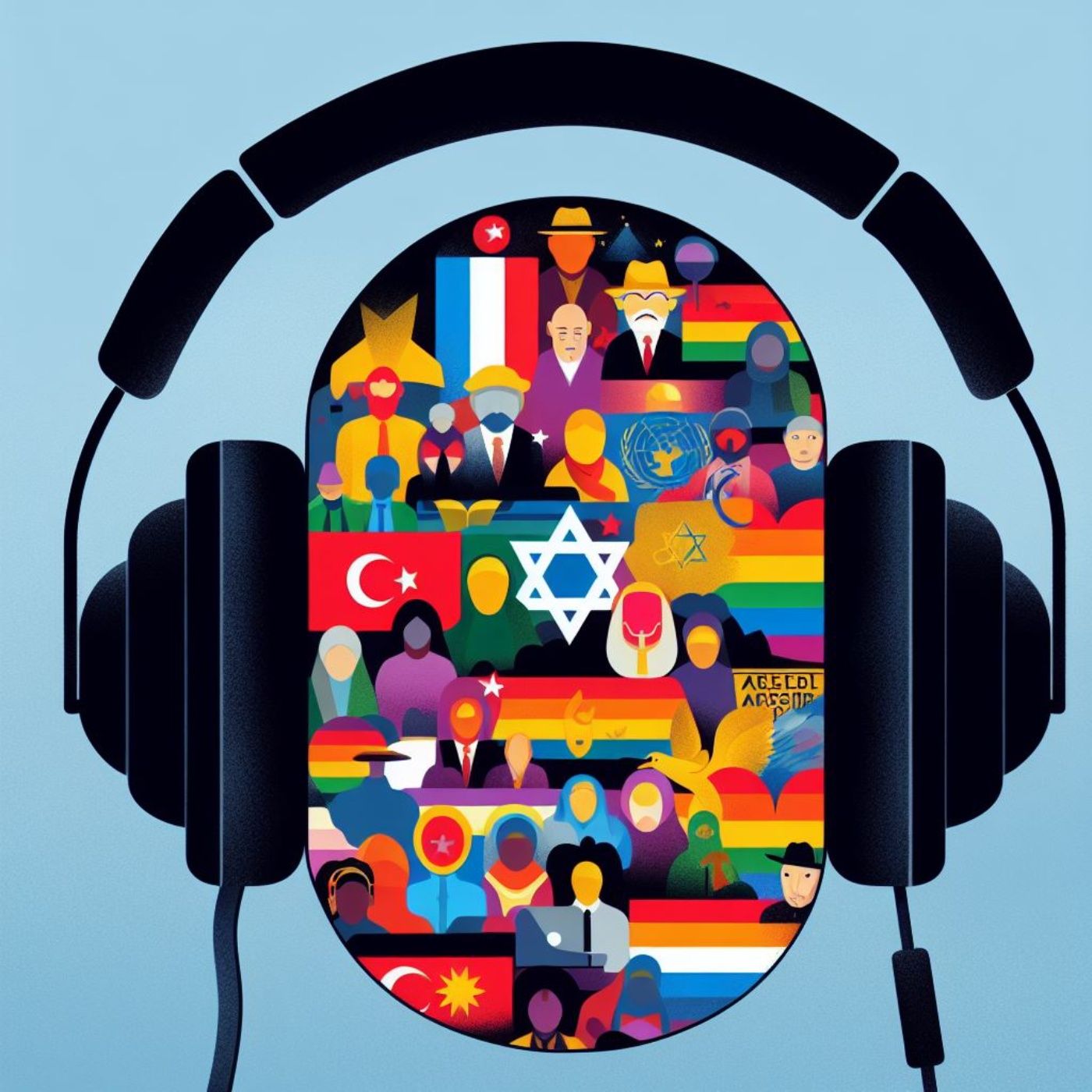
I monthly host 2-3 people of various sexually and socially oppressed minority groups in Turkey, ranging from queer individuals, Syrians, refugees, Jews, and Armenians to Kurdish people. I try to shed light on the systematic subjugation and suppression of these minorities by the Turkish population and government. All of these minorities are frequently denied fundamental human rights, and their progress in society is hindered simply because of their ethnicity or religion. By making the stories and hardships of these minorities known to the public, this podcast aims to change the world's and the Turkish public's perception of minorities, ultimately contributing to creating a more peaceful, inclusive, and progressive country.
-
25
Episode 25: The life of a Turkmen girl
Today, our guest is Kayra Naz, a Turkmen and Zaza Kurd teenager living in Turkey. We had a very productive and civil conversation. We discussed some of the existential challenges surrounding the Turkmen communities and how these obstacles can not impede their progress. I realized how intertwined our cultures are with that of Turkmen. We shared very interesting anecdotes about each other's cultures and delved into the wonders of Anatolian tapestry. She mentioned an intriguing and inspiring family tradition passed down for centuries. I really admired her determination to preserve her family traditions and her commitment to celebrating her unique identity. I believe that she is an excellent example of a young culture advocate.
-
24
Episode 24: The Dual Heritage of a Jewish-Turkish Woman
Today, my guest is Adiva, a Sephardic Jew from Turkey. My guest today cherishes her dual heritage both from Turkey and the USA. She spoke Ladino at home, a language that intertwined Spanish, Hebrew, and Turkish in the bustling streets of her city. But life was not always easy for Adiva. The remnants of past prejudices lingered, and she often faced discrimination. We exchanged ideas on the complicated situation in Palestine. We conveyed our sentiments about existential crises worldwide and the apathy to combat the issues that matter to human life the most. We tried not to evaluate global incidents from religious, ethnocultural, or emotional perspectives but rather remained politically and emotionally neutral as much as possible.
-
23
Episode 23: An Egyptian Muslim Woman’s struggle with hijab in Turkey
Our guest is Alaa, an Egyptian woman living in Turkey. As a final-year medical student studying in Turkey, she described the various challenges she faced as a hijabi woman in Turkey. She said that although Turkey is a predominantly Muslim country, she has encountered some people who called her “Syrian” and harassed her physically and verbally just because of her appearance. We discussed Turks' tendency to confuse every Arab with Syrians and associate them with terrorism and threats. We touched upon the hardships of accepting everyone as they are and not discriminating against someone just because of their race or ethnicity. She is a role model for those who have been oppressed in Turkey just because of their religious views.
-
22
Episode 22: Discussing the Armenian-Turk Relationship
Our guest is Jirayir, an Armenian-Turk living in Turkey. He was born in Turkey and his family has been living in Turkey for three generations. His grandfather was a victim of the Armenian Genocide of 1915. They escaped death by taking refuge in the western side of Anatolia. He said that when he was a child, he was afraid of speaking Armenian, and his father also did not let him speak Armenian in public. In his business life, he was discriminated against multiple times by Turkish nationalists, and he was also verbally harassed by government officials in many instances. He commented on the debate over the Armenian Genocide of 1915 and offered his perspective on the discussion.
-
21
Episode 21: The culture and life of Zaza Kurds
Our guest today was Kayra, a half-Zaza Kurd and half-Turkmen teenager living in Turkey. We discussed some of the prevalent issues facing the Zaza Kurds in Turkey. She mentioned that Zaza Kurds face both political and cultural restrictions for their identities and would like greater freedom in Turkish society. We had an insightful conversation about the role of Zaza Kurds in Turkish culture and society and how their cultural characteristics have evolved over the years. She believes that her minority community must be upheld and respected. She also mentioned some ongoing policies in action to protect and preserve this invaluable community in Turkey.
-
20
Episode 20: A clash of the east and west - An Izmir-born Syrian Woman
Today, my guest was Esma Efendi. She is a Turkish-born Syrian Anchorwoman working at TRT Arabic. Her mother is Turkish and from Izmir, while her father is Syrian. Her background spans two completely disparate cultures and identities. She was at the clash of the East and West all from the beginning. She is extremely knowledgeable about The Syrian civil war and its political, social, and economic ramifications. She has experienced many incidents of discrimination and structural segregation. She has tried to preserve and protect many forgotten traditions of the Syrian culture that are overlooked in Turkey. We discussed some difficult topics regarding the massive influx of migrants and the ongoing state of instability in both Turkey and Syria. We hope our two countries can set aside their differences and find a common ground for peace.
-
19
Episode 19: Discussing the recent anti-immigration protests with an Egyptian
Today, our guest was Muhammed, an Egyptian living in Turkey. This wasn't a typical Alienated Voices episode, as we mainly discussed the recent sociopolitical events dominating the fabric of our country. We saw racist and xenophobic protests arising towards the Syrians and immigrants in many parts of the country. We discussed why the anti-immigration sentiment emerged in many countries like Turkey in the first place. He shared his experiences with the Turkish people and how he navigated this society. We uphold the view that if we embrace each other's differences, we could build a more inclusive and comprehensive country.
-
18
Episode 18: Tragedies and Triumphs of Bosnians in Turkey
In this powerful episode of Alienated Voices, Talha shares his family’s harrowing journey as Bosnian refugees who fled the war and genocide of the 1990s. While they have found success in Turkey, running a thriving textile business, their displacement was not a choice—it was a means of survival. Talha reflects on how xenophobia and Islamophobia ignited the conflict and how his family carries the trauma of torture and loss. He also highlights the ongoing displacement of people worldwide, emphasizing that no one should be forced to leave their homeland to escape violence and persecution. The episode urges listeners to recognize that while refugees may succeed, the cost of losing their home and culture is immense, and speaking out against injustice is essential to ensuring “never again” truly means something.
-
17
Episode 17: The hardships of an Armenian Teenager in Turkey
Our guest was Deni, an Armenian teenager living in Turkey. He gave specific examples of discrimination and exclusion he experienced in Turkish society. He emphasized the need to uphold minorities and offer them the opportunity to voice themselves. He cherishes his multicultural and ethnic identity and celebrates the diverse hub of Istanbul. Deni believes Istanbul is the epitome of the intersection of multiple ethnicities, cultures, and opinions and serves as a testament to the power of unity and mutual respect. His insights are invaluable in paving the way for a more progressive and inclusive society in Turkey.
-
16
Episode 16: The bicultural identity of an Iranian girl
My guest was Melody, an Iranian teenager living in Turkey. We mainly talked about how her bicultural background affects her appreciation of both cultures, languages, and societies. She said that she regrets not learning more about the history and culture of Iran and urges young Iranian teenagers not to lose touch with their native society. She also mentioned how speaking multiple languages is extremely challenging as she feels like she is not adept in either of them. She finds synonyms for a word in different languages, which makes her communication even more difficult. She hasn’t faced any major discrimination or structural bias in her education and social life, although she is struggling with adapting to the Turkish language in her school.
-
15
Episode 15: A Venezuelan's struggle with Turkey's immigration system
After you read this, I strongly urge you to listen to the whole episode as it provides crucial observations and real-life experiences about the government’s immigration policies. Our guest was Anthony, a Venezuelan Spanish teacher currently residing in Turkey. His experiences are unmatchable. The amount of struggles and hardships he experienced as a foreigner is beyond words. We talked about the inherent discrimination and bias toward foreigners in Turkey’s immigration system and the tendency of government agencies to discriminate against people based on their race or place of origin. He says that if you are American or European, they ask for fewer documents; however, if you are Latin-American, they ask for documents that you can not even provide. He states that the process is worsened to make it unbearable and unsustainable for unprivileged foreigners to come, study, and live in Turkey. He also told me that his experiences as a tourist and as a permanent resident in Turkey completely differ. We also talked about the structural corruption within the education system, along with the incompetence of many government officers in the immigration department. I hope that everyone listens to this as it really enriches your perception of Turkey’s stance on immigration and its relationship with foreigners.
-
14
Episode 14: The language barrier between the Kurds and Turks
Our guest was Elvan, a senior from Istanbul. As a Kurdish girl in Turkey, she described her experiences in the social and educational environment. She says she can not comprehend the jokes about the Kurdish identity and admits to being ridiculed and humiliated by reckless students’ mockery. She explained how her relatives and family had difficulty receiving assistance from the government and NGOs during the earthquake of February 2023 because of the language barrier between the majority of the villagers in southeastern Turkey and the municipalities. In fact, she states that her mother was not allowed to speak Kurdish in the elementary school and was oppressed by the police. The structural discrimination and bias toward the Kurds are evident even in the mainstream media outlets that frame the Kurds with violence. Therefore, we sought to change this perspective by evincing the victimhood of the Kurdish community and how that victimhood can not be exploited or politicized by society in any way. We upheld that eradicating the concept of ethnicity as a whole should be society’s main priority to build a united and flourishing structure.
-
13
Episode 13: Turkey vs. Iran: Women's Rights
In this podcast, we had Anahita as our guest, a teenage woman of Iranian-Turkish descent living in the USA. We discussed the differences in women's rights between Turkey and Iran. Anahita shared her experiences from her visits to Iran as a teenager, where she had to wear the hijab constantly, impacting her physically and emotionally. We explored the contrast between religion and faith, agreeing that faith is personal while religion tends to be more structured. We also touched on how religion can sometimes serve the interests of a select few. Our aim was to provoke thought among our listeners.
-
12
Episode 12: ChatGPT and other AI art’s bias toward the Kurds
Our guest was Safir, a Kurdish teenage girl living in Turkey. She is originally from Adıyaman, a southeastern city in Turkey, but she then moved to Istanbul to pursue education in one of the best high schools in Turkey. She talked about this transition in her life. She gave examples of some extent of discrimination and bias she and her family experienced as a result of a significant change in their residence and social community. She said that people would have that typical judgemental gaze whenever they learned that she is Kurdish. We discussed the potential bias and prejudice that AI platforms like ChatGPT can have when it comes to generating stereotypical characteristics of the minority. She believes that the system of feeding, training, processing, and acquiring value from AI represents the reality of differing perspectives and stereotypical norms. If you are curious to test the impartiality of AI, use either chatGPT or binge AI art to write this phrase: "Create a podcast cover art for a Kurdish man in Turkey."
-
11
Episode 11: Discussing immigration with a Bulgarian Turk
Our guest is Serra, a Bulgarian Turk living in Turkey. Her mother, as a teenager, was deported from Bulgaria by the authorities just because she was Turkish and had to migrate to Turkey. However, what she experienced in Turkey was not so inclusive and encapsulating. She was not considered Turkish and was treated as a foreigner by her neighbors. Her mother also faced significant educational hardships in Turkey. At first, she could not speak Turkish fluently and was not used to the education system in Turkey. We discussed the issue of immigration and how it has become a decisive political issue in Turkey. We also talked about the impact of globalization on immigration and the development of countries. We upheld the idea that immigration is not a political or economic issue but an issue of compassion, benevolence, and humanity.
-
10
Episode 10: Children of Anatolia: Armenians in Turkey
Our guest is Alek, an Armenian teenager living in Turkey. He thinks he does not belong to any particular country, neither Turkey nor Armenia. When he visited Armenia as an Armenian athlete living in Turkey, he was discriminated against and ostracized. He says Armenia does not consider Armenians living in Turkey as true Armenians, which makes him feel lost and “stuck between two walls.” Just because of his ethnicity, he is denied the right to exist in a country where he would be safe and included. Many of his friends have indirectly or directly ridiculed him for being Armenian and have repeatedly made jokes about his identity. To fit in, he has to bear with those jokes because he does not have any minority friends in his school. He took part in an episode of the podcast “Reign of Chains,” where he and one of his Kurdish friends talked about the structural bias and segregation perpetrated against Kurds and Armenians in Turkey’s education system. We also discussed how not just alienated and marginalized minorities but also many young and educated bright minds of Turkey have no choice but to leave the country for the safer and more inclusive West.
-
9
Episode 9: The structural discrimination against the Kurds in Turkey
Our guest is Rojhat. He is from Van, a southeastern city of Turkey where most of the population is Kurdish. He talks about the structural bias and discrimination against the Kurdish people in Turkey. He gives several examples of incidents in which he was treated disrespectfully and disdainfully by many of his friends. His family has long had tensions and disagreements with the police. For instance, his grandmother was beaten up by the police when she was young just because she spoke Kurdish. He says that his name lets away his ethnicity before people even get to know him. His family purposefully did not teach him Kurdish because they did not want Rojhat to be mocked in school or social communities for his Kurdish accent.
-
8
Episode 8: The prejudice against Syrians and Arabs
Our guest is Ahmed, a Jordanian medical student studying in Turkey. Because he is of middle eastern descent and has a darker skin color, he was associated with being a Syrian refugee multiple times in his work environment. Patients verbally and physically harassed him for having an appearance that resembles that of a Syrian refugee, which he finds to be extremely offensive and disrespectful. We discussed the underlying reasons for the rampant discrimination and segregation toward Syrians and Arabs in Turkey. He has encountered several instances in which Turkish doctors brazenly assaulted pregnant Syrian women. He reiterated the unquestionable statement that doctors must carry out the duty of treating every patient the same way regardless of their gender, ethnicity, religion, or race.
-
7
Episode 7: The struggles of a Kurdish teenager in Turkey
Our guest is Berjin, a high school student from Turkey. She is Kurdish. She has faced discrimination and racism many times in her school, social community, and neighborhood. She says that her typical Kurdish name shapes other people’s perceptions and immediately constructs an impression of her. In her environment, people associate being Kurdish with disgrace and lowness. Berjin exemplifies several incidents of discrimination against her and her family. She believes that respect is what Turkey lacks at the moment, and to establish peace, both Kurdish and Turkish people must set aside their ingrained prejudices toward each other. She calls for unity over a rift.
-
6
Episode 6: The state of the Syriac community within Turkey
Today, my guest was Gül, a Syriac woman living in Turkey. She shared her experience growing up in Turkey as a Syriac. Having a double identity has undoubtedly shaped her upbringing. She mentioned that the Syriacs are generally welcomed positively within the Turkish community, mainly because they have not been as demanding and persistent in their minority rights as other significant groups like Armenians or Kurds. Therefore, mentioning Syriacs does not trigger any negative emotions in Turkish people. However, this assimilation into Turkish society has drawn the partial eradication of some of the cultural and historical treasures of the Syriac community. She believes that we need to enact greater measures to defend and preserve the Syriac culture and community by promoting more intra-marriages between Syriac people and seeking the support of UNESCO.
-
5
Episode 5: The hatred toward homosexuality in Turkey
Our guest is Serdar, who was born in Turkey and lived there until graduating from Bogaziçi University. He is an active member of the gay community in Istanbul. He says that he was a privileged gay person as his family and his high school environment could not have been more accepting and inclusive. He elaborated on what it means to be gay for him and when he actually came out as gay to his family, friends, and community. He has been living in the United States for more than 40 years, but he has never cut ties with the gay community in Turkey. We had an informative conversation about Turkey’s political parties’ stance against progressive ideologies. We agreed that the left-wing opposition parties in Turkey fail to embrace basic human rights and values.
-
4
Episode 4: The culture and life of the Laz People
In this episode of Alienated Voices, we explore the inspiring success story of the Laz people, an ethnic group from Turkey's Black Sea region. Host Can Sinan interviews Mehmet, a proud Laz community member, who shares how the Laz have seamlessly integrated into Turkish society while preserving their rich cultural heritage. From their unique language, Lazuri, to contributions in construction, music, and cuisine, the Laz people exemplify the power of tradition in modern times. Discover how Laz cultural festivals, folk dances like the Horon, and delicious dishes like Laz böreği continue to thrive, along with efforts to revitalize the Laz language for future generations. This episode celebrates the Laz people’s vibrant role in Turkey's cultural mosaic.
-
3
Episode 3: Being a queer person in Turkey
Our guest is Nilsu, a high school student from Turkey. She identifies as a lesbian-questioning unlabelled queer person. She explained what it means and how it feels to be a queer person in a predominantly Muslim country. She mentioned several cases of discrimination and bullying she encountered in her environment. Although she believes that she is a privileged queer person because of having a rather respectful and inclusive family and social environment, she scathingly condemned the government’s brutal stance against the queer community. We discussed the incumbent government’s inhumane treatment of LGBTQ+ people and labeling them undermining nouns. She is a true inspiration for the queer people in Turkey who are unable to speak up for themselves and are intimidated by society’s reaction. She encouraged them not to be afraid to embrace themselves and reiterated that it is not their fault that they think and feel differently than the customary way.
-
2
Episode 2: The unscrutinized racism toward Africans in Turkey
Our guest is Medical practitioner Jamal from Ghana. He moved to Turkey to study in medical school and pursue undergraduate research. We had an enlightening conversation about fitting in Turkey, integrating into the culture, and the essentiality of language. He elaborated on several instances of discrimination, segregation, and racism that he encountered in Turkey. We discussed both the positive and negative aspects of Turkish culture, and he was the quintessence of a respectful and forthright foreigner. He showed a commendable posture of denouncing prejudices and misconceptions about the Africans in Turkey, shedding light on a more interactive and engaging relationship between Africans and Turks.
-
1
Episode 1: The heartbreaking yet inspiring life of a Palestinian doctor in Turkey
Our guest is Doctor Mahmut, a Palestinian doctor who has moved to Turkey from Lebanon to study medical school. We had a wonderful and inspiring conversation about his experiences in Turkey, how he fit in, and what he encountered. Ranging from the Gaza conflict to the discrimination against Arabs in Turkey due to the ongoing Syrian refugee crisis, our topics of conversation necessitated mutual respect and understanding toward any group of ethnicity or race. We touched upon the West's twisted narrative of the Middle East and why human life matters to him the most.
We're indexing this podcast's transcripts for the first time — this can take a minute or two. We'll show results as soon as they're ready.
No matches for "" in this podcast's transcripts.
No topics indexed yet for this podcast.
Loading reviews...
ABOUT THIS SHOW
I monthly host 2-3 people of various sexually and socially oppressed minority groups in Turkey, ranging from queer individuals, Syrians, refugees, Jews, and Armenians to Kurdish people. I try to shed light on the systematic subjugation and suppression of these minorities by the Turkish population and government. All of these minorities are frequently denied fundamental human rights, and their progress in society is hindered simply because of their ethnicity or religion. By making the stories and hardships of these minorities known to the public, this podcast aims to change the world's and the Turkish public's perception of minorities, ultimately contributing to creating a more peaceful, inclusive, and progressive country.
HOSTED BY
Can Sinan Canpolat
Loading similar podcasts...
URL copied to clipboard!