
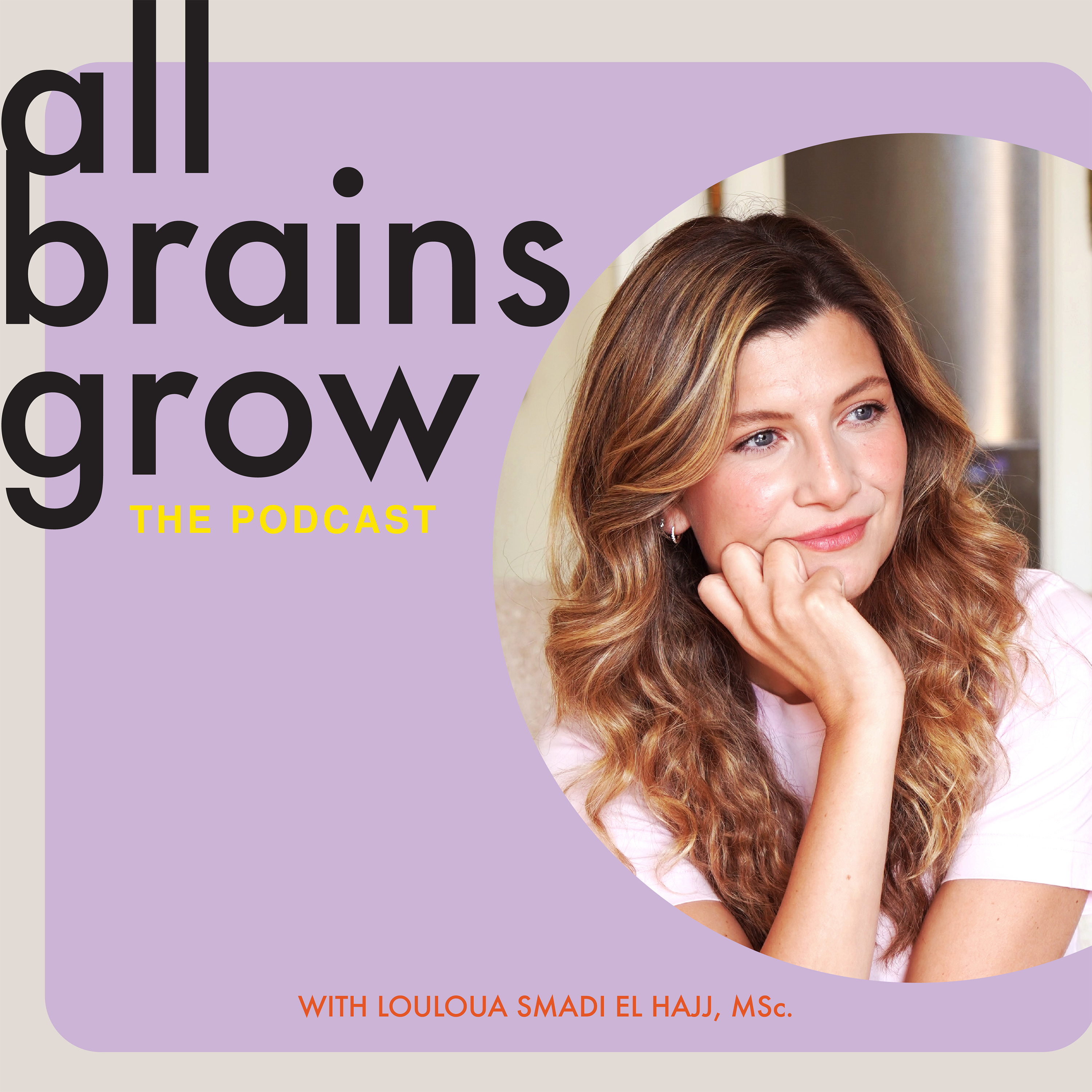
PODCAST · education
All Brains Grow
by Louloua Smadi El Hajj
Progress can often feel impossible. Whether you’re parenting a neurodivergent child, navigating a life-changing conflict, or struggling to help yourself, it’s easy to feel stuck and overwhelmed. But I’ve learned through my journey—from growing up with an autistic brother, raising a deaf son with cochlear implants, to working as a neurotherapist—that growth is always within reach. Every brain can learn and adapt, no matter the diagnosis.Hosted by Louloua Smadi El Hajj, founder of the educational platform All Brains Grow and author of ”From Client to Clinician”, this podcast offers tools, stories, and conversations to help guide you through possibilities which you might have thought unimaginable.I’ll be sharing insights from inspiring caregivers, experts, and my personal experiences, answering questions like: ”How can I support my child’s development at home?”, ”What therapies or interventions are most effective?”, ”How do I manage challenging behaviours?”, ”How do I take care of mysel
-
31
What If You Stopped Saying “Stop” to Behaviors? (And What to Do Instead)
What if the word “stop” is doing more harm than good? As caregivers, siblings, and parents of neurodivergent and disabled children, we often ask behaviors to stop, not out of frustration or lack of love, but because we want our loved ones to be accepted, included, and safe in the world. In this video, I talk about two essential steps when responding to behaviors: Step 1: Choose love and acceptance first Before teaching, before correcting, before explaining... we choose to be okay with the behavior. Not because we want it to stay forever, but because stopping a behavior without understanding the need behind it often creates more distress, not less. Step 2: Teach to the effect of the behavior, not the behavior itself Instead of saying “stop,” we teach cause and effect, gently, specifically, and in context. We explain how a behavior impacts others, the environment, or the moment, while still respecting the person’s need to regulate. Behaviors are not random. They are not “bad.” They are signals from a nervous system doing its best to regulate, cope, and survive. And don’t forget, all brains can grow. About Me: Hi, I’m Louloua, a mom, sister, neurotherapist, author and founder of All Brains Grow. I'm on a mission to empower families raising neurodivergent children by equipping them with the tools, confidence, and clarity they need at home and in real life. When you’re ready, here’s three ways I can help out 👇️ FREE GUIDE “5 ways to deal with meltdowns without feeling helpless" so you can feel in control when your child is out of control - https://www.allbrainsgrow.com/freebie... MY BOOK "From Client to Clinician: The Transformative Power of Neurofeedback Therapy for Families Living with Autism and Other Special Needs" - https://www.amazon.com/Client-Clinici... LEARN ABOUT BIOPLAY: aka biofeedback through play, our signature behavioral approach that feeds the brain intentionally through feedback, in order to create change physiologically and behaviorally, created by Dr Lynette Louise - https://www.allbrainsgrow.com/services
-
30
Believe They Understand: How Expanding Expectations Builds Stronger Brains
Does my autistic or neurodivergent child understand what I’m saying? This is a question so many parents carry quietly, and one I’ve asked myself countless times, as a sister, mother and neurotherapist. In this episode, I share why believing that our children understand, truly understand, can change the entire trajectory of their lives. After years of working with families and growing up alongside my autistic brother, I’ve learned that our expectations shape the brain just as much as any therapy session. I tell the story of a teenage autistic boy and a simple moment with a pack of cookies that revealed something powerful: when we expand our explanations, raise the bar, and presume competence, we open the door to independence, connection, and real neuroplastic change. This conversation is about giving our loved ones the information, feedback, and belief they need to grow. Not perfectly. Not instantly. But over time, because the brain is always learning. If you’ve ever wondered whether your child truly understands you, or worried that your efforts aren’t “landing,” this episode will help you see their potential through a completely different lens. And remember, all brains can grow. ------- About Me: Hi, I’m Louloua! I'm a mom, sister, neurotherapist, author and founder of All Brains Grow. I'm on a mission to empower families raising neurodivergent children by equipping them with the tools, confidence, and clarity they need at home and in real life. When you’re ready, here’s three ways I can help out 👇️ FREE GUIDE “5 ways to deal with meltdowns without feeling helpless" so you can feel in control when your child is out of control. MY BOOK "From Client to Clinician: The Transformative Power of Neurofeedback Therapy for Families Living with Autism and Other Special Needs" GROW WITH BIOPLAY aka biofeedback through play, our signature behavioral approach that feeds the brain intentionally through feedback, in order to create change physiologically and behaviorally, created by Dr Lynette Louise.
-
29
The Epilogue: A Season of Growth
After 28 episodes, I’m closing this season with a quiet reflection on the voices that shaped this past year: parents, siblings, therapists, educators, and experts. And the ones I hope to hear more from in the next. You’ll hear moments from the most personal interviews, people who were brave enough to say things out loud they’d never said before. And you’ll hear from the mothers I sat with, privately and tenderly, who trusted me with their stories. This episode isn’t a summary. It’s a turning point. A reminder that growth isn’t always loud or linear, and that understanding someone deeply can be more powerful than changing them. Thank you for listening, for showing up, and for allowing this season to be a space for honesty. We’ll be back soon, with more voices, more truths, and maybe this time, a few more visuals. With love, Louloua You can find me: Instagram @allbrainsgrow www.allbrainsgrow.com
-
28
The Music Teacher Who Broke the Rules — By Setting Them with Joan Koenig
Joan Koenig didn’t just teach music, she redefined how it should be taught. In this fun episode, I sit down with Joan in the heart of her music school, surrounded by pianos, harps, and joyful noise, to talk about what truly makes a child learn. From welcoming my deaf son into her classroom with open arms, to creating a school where joy and discipline live side by side, Joan challenges the traditional rules of education, by setting better ones. We explore the power of rhythm, structure, and laughter in learning; the societal myths that make us believe education should be hard; and how music creates connection even when language or hearing is missing. Whether you’re a parent, teacher, or simply someone who believes in kids, this conversation will leave you hopeful, and maybe a little emotional. Because maybe the secret to great education… is joy. Joan Koenig is founder of L’école Koenig and author of “The Musical Child”. Head to www.allbrainsgrow.com for resources on how best to support your differently abled child.
-
27
The Teacher-Therapist-Parent Trap with Yasmine D. Chamseddine
Ever felt like you're stuck in the middle? Between professional advice, school expectations, and your own gut instinct? In this episode, Yasmine D. Chamseddine joins us to unpack the quiet tension so many parents feel when navigating therapy, education, and advocacy. From late diagnoses and school pressure to the unspoken rules of “collaboration,” we explore what happens when everyone has a plan for your child, except you. This is the episode for every parent who’s ever wondered: Am I allowed to question this? Do I really get to say no? Raw, validating, and filled with truth that rarely gets airtime.
-
26
How Real Change Happens
We all want to create change, in our lives, in our children, in our families. But sometimes, without realizing it, our desire for growth turns into pressure, frustration, or even quiet rejection. In this episode, Louloua shares the hard truth about where real, lasting change actually begins: not with fixing what’s wrong, but with loving what is. She unpacks the difference between change driven by fear and change rooted in belief, and opens up about her personal journey — from chasing her son’s speech to rediscovering joy, connection, and a new way forward. You’ll also hear the story of her autistic brother, the meltdowns that shaped their family, and the unexpected lessons that came once they stopped resisting and started listening. If you’ve ever felt stuck, unsure how to help, or afraid of doing it wrong, this episode is for you. Head to www.allbrainsgrow.com for resources on how best to support your loved ones.
-
25
It Takes Two: Rethinking Speech with Sarah Oudet
What if speech therapy wasn’t just about the child, but about empowering the parent too? In this episode, I reconnect with Sarah Oudet, a speech therapist, autism researcher, and mother of three, to explore how her professional and personal journeys have come full circle. Years ago, Sarah coached me through a parent-led speech program for my son, Talal. What stayed with me was this: the sessions weren’t really about him, they were about me. We talk about the Hanen program, what “parent-led” actually means, and why coaching the caregiver may be the most effective way to support communication and development, especially in bilingual and neurodivergent families. Sarah also shares her experience raising an autistic son in France, the challenges of navigating diagnosis in a culture that resists labels, and how she’s learned to balance therapeutic strategies with parenting values at home. Whether you’re a parent, therapist, or educator, this conversation is a gentle but powerful reminder: You’re not on the sidelines. You’re at the center of your child’s growth. Head to www.allbrainsgrow.com for resources on how best to support your neurodivergent child.
-
24
What If It’s Not a Motor Issue, But a Belief Issue?
In this solo episode, I share a powerful question a dad recently asked me about his autistic son—one that opened the door to a much deeper conversation about motivation, brain development, and how we teach. His son has psychomotor difficulties with his hands but loves cooking. Should he be encouraged to pursue it, even if it's hard? Or is that setting him up to fail? We explore why ability is only part of the story—and why belief, emotional safety, and how we teach matter just as much as what we teach. I walk you through the principles of BioPlay, how to create a learning environment that feels joyful and light, and why fun is not a luxury—it's a requirement for growth. If you’ve ever wondered how to support your child’s passions while still being realistic, or how to strike the balance between challenge and compassion, this episode is for you. Head to www.allbrainsgrow.com for resources on how best to support your neurodivergent child at home and in real life.
-
23
The Sensory Obsession with Dr Lynette Louise
What if your autistic child never learns to like something like sand? Will it hold them back? Will it mean they’re not “regulated”? In this episode, I’m joined once again by my mentor, Dr. Lynette Louise, to unpack one of the most misunderstood topics in the world of autism: sensory regulation. I open the conversation with a story about my autistic brother—his intense stims, the sounds, the taps, the stillness. These sensory experiences are deeply familiar to so many of us, but what do they actually mean? Are they obstacles to learning? Clues to something deeper? Or simply part of the child’s natural way of being? Together, we challenge the way sensory sensitivities are often pathologized or treated like checkboxes in therapy. From a parent worrying about her son’s aversion to sand to the over-reliance on sensory rooms and swings, we dive into how misunderstanding sensory behavior can distract us from the real work of connection, teaching, and growth. Dr. Lynette reminds us: it’s not about fixing everything—it’s about understanding what matters to your child and what doesn’t. Because sometimes, nothing bad happens if your child doesn’t like sand. This episode is an invitation to look beyond the obsession with regulation and see the child in front of you. Head to www.allbrainsgrow.com for resources on how best to support your neurodivergent child at home and in real life.
-
22
A Phone Call with My Autistic Brother
Every evening around 5pm, Milo calls. It’s a rhythm as familiar as the streets of Paris he walks while on the phone. In this episode, I share one of those calls. It might sound like a simple sibling exchange, full of repeated phrases, reminders, and offbeat transitions, but listen closely, and you’ll hear something much deeper. This isn’t just a phone call. It’s a window into neurodivergent communication, into the rituals that bring comfort, connection, and meaning for my autistic brother. It’s also a reminder that a person's behaviors, however repetitive or "different", don’t limit their capacity for independence, love, or joy. I recorded this conversation not because it was extraordinary, but because it was ordinary. Because it reflects a truth I want every parent, sibling, and loved one of an autistic person to understand: your child, your sibling, your person can live a rich, connected, meaningful life. Even if they repeat things. Even if the way they engage looks different. Let this episode be a small invitation to listen differently, love more fully, and believe in what’s possible. Head to www.allbrainsgrow.com for resources on how best to support your neurodivergent child or loved one.
-
21
Playtime With Purpose
If you’ve ever sat on the floor surrounded by toys thinking, “What am I even doing?” — this episode is for you. I used to hear “Just play with him, that’s how he’ll learn!” all the time when my son was little. So I tried. I got on the floor. I brought out the toys. I used every technique I knew as a professional. But it still felt… off. Boring. Exhausting. Honestly, like a waste of time. It wasn’t until I shifted how I saw play — not as a goal, but as a response — that things started to click. In this solo episode, I’m sharing the exact mindset change that helped me turn play from something I dreaded into one of the most powerful tools for connection and learning with my child. Especially if your child is neurodivergent, this can be the missing piece that makes play feel meaningful again. I’ll walk you through: How to become more magnetic than a screen (without acting like a clown) Why chasing milestones makes play harder — and what to do instead The power of fast, positive feedback (for them and for you) If play feels pointless, or like it only leads to shutdowns or meltdowns, maybe you don’t need to change what you’re doing… just how you’re looking at it. This one’s especially for the tired parents who’ve quietly given up on play. There’s another way—and it works. Head to www.allbrainsgrow.com for resources on how best to support your neurodivergent child.
-
20
Hearing from the Other Side - The Husband Version with Tarek El Hajj
In this deeply personal and long-awaited episode, I sit down with someone you’ve heard about —but never from: my husband, Tarek. For the first time ever, he shares his side of our journey as parents navigating the unknown. From the early signs of our son Talal’s silence, to the heartbreak and relief of finally getting a diagnosis—Tarek opens up about what it felt like to be a father, a partner, and a man in a moment where everything felt uncertain. We talk about the panic attacks, the misdiagnoses, the grief timelines that didn’t match, and the heavy guilt I carried for not seeing what he saw sooner. We talk about hearing loss, about autism fears, about being “crazy” in the face of denial. And most of all, we talk about what it really means to co-parent a disabled child—when your emotional experiences look nothing alike. This is not a perfect story. It’s a raw one. It’s the story of two people who processed their son’s needs on entirely different timelines—and still found a way to meet in the middle. This is for every parent who has ever felt out of sync with their partner, every father who stays quiet because he thinks he has to, and every family searching for clarity when the world is giving none. It’s also a reminder: Your story matters—even if it doesn’t look like everyone else’s. Head to www.allbrainsgrow.com for support & resources to learn how to best help your neurodivergent child.
-
19
Making Periods Fun: The Most Underrated Conversation About Autistic Girls with Emilee Coblentz
What if we approached periods not with dread — but with cupcakes, herbal pads, and real conversations about autonomy, hormones, and radical love? In this heartfelt and raw episode, journalist and mother Emilee Coblentz joins Louloua to talk about parenting her autistic teenage daughter through puberty — and everything that came with it: the medication, the aggression, the grief, the joy, and the quiet revolution of learning to accept what is, rather than chase what might be. They dive into the parts of autism parenting rarely talked about — from how sensory-friendly period products made all the difference, to how a mirror at the dinner table helped reduce messy eating, to what it means to let your child be fully seen in a world that often tries to hide them. This conversation is for any parent who's ever wrestled with control, faith, fear — and still decided to love louder. 🔗 Show Notes & Resources: Emilee’s essay on the diagnosis process in USA Today Puberty resources for autistic teens by autistic authors): The Autism-Friendly Guide to Periods by Robyn Steward Menstruation visual support The Honey Pot Co. herbal-infused pads Emilee recommends Head to www.allbrainsgrow.com for support & resources
-
18
Hormones and Hugs: The Chalak Family Story
Riwa Derbas Chalak joins me from Lebanon to share the story of her son Ziad, who is now 14 and entering a new phase of his autism journey. As Ziad moves through adolescence, Riwa opens up about the shifts her family has made—stepping away from traditional therapy, encouraging independence, and embracing real-life learning. We talk about what it means to trust your instincts as a parent, the emotional toll of changing course after years of structure, and the powerful wins that come with seeing your child grow. From cooking and rock climbing to working without a shadow teacher, Ziad’s progress is a reminder that milestones don’t stop after early intervention—they evolve. This is a conversation about hope, courage, and the ongoing process of finding what works—together, as a family. Head to www.allbrainsgrow.com for support and resources
-
17
Communicating with My Deaf Son
When my son wasn't talking yet, I felt lost. As a neurotherapist, I thought I had the tools — but nothing was working. I didn’t know yet that he was deaf, and every day felt like a guessing game. In this episode, I share the raw, honest journey of trying to connect with him before we had answers. If you're in that uncertain communication space — waiting for a diagnosis, wondering what’s “wrong,” or feeling like your child just can’t or won’t communicate — this episode is for you. I’ll walk you through the shift I made that changed everything: from waiting and worrying… to shaping communication in real time. You’ll learn: Why “wait and see” isn’t enough What it means to “shape as you wait” How to respond in ways that help your child want to communicate Why improving brain function is key — no matter the diagnosis This episode is part story, part strategy — and it’s all heart. Don’t miss the free upcoming workshop on Tuesday April 29 with Dr. Lynette Louise and Krystel Alhayek. We’ll be diving even deeper into the tools that get kids communicating — with or without words. Save your seat at: www.allbrainsgrow.com/registerapril29
-
16
Healing Through Fitness: Joelle’s Transformation
When Joelle Lahlouh became a mother, nothing prepared her for what was to come. In this moving episode, Joelle opens up about raising her son Mounir, who was later diagnosed with a rare genetic condition and autism. She shares the emotional journey of unlearning everything she thought motherhood would be, navigating uncertainty, and hitting rock bottom — before choosing a new path rooted in healing, resilience, and self-prioritization. We talk about the power of mindset, the critical role fitness played in her recovery, and how supporting your own well-being as a parent can be the most impactful way to support your child. Whether you're a parent, professional, or someone touched by neurodivergence, Joelle’s story will leave you feeling seen, inspired, and reminded that strength can look like starting over. Head to www.allbrainsgrow.com for support and resources.
-
15
Autism Myths or Inconvenient Truths? 5 autism beliefs that may be stopping growth
In this heartfelt and honest conversation, Host Louloua Smadi El Hajj and guest Krystel Alhayek come together for Autism Awareness Month to unpack 5 common myths about autism that may be standing in the way of real growth—for parents, professionals, and autistic individuals themselves. From the damaging belief that autistic children are just being “difficult,” to the myth that they always need supervision or must be “fixed” to live a happy life, this episode invites you to gently unlearn and reframe outdated ideas. Louloua and Krystel bring their personal and professional experiences to the table, offering real-life examples, thoughtful reflections, and a much-needed reminder: when we change the lens, we change the possibilities. ✨ Whether you’re a parent, teacher, therapist, or just curious about how to better support autistic individuals, this episode will leave you feeling informed, empowered, and hopeful. 💬 Have more myths you think we should bust? Send them our way—we’d love to keep the conversation going. Head to www.allbrainsgrow.com for parent support and resources
-
14
From Sister to Sister: Growing Up with Milo
What does it really feel like growing up with an autistic sibling? In this intimate and emotional conversation, I'm joined by my youngest sister, Yasmine Smadi, for the first time on All Brains Grow. Together, we open up about what it was like growing up in a loud, unpredictable home shaped by love, neurodivergence, and therapy programs—centered around our autistic brother, Milo. Yasmine reflects on: Being the “quiet kid” in a family of chaos Watching her parents evolve through neurofeedback and the Son-Rise Program® Finding her own bond with Milo—sometimes as the little sister, sometimes as the big one How those early experiences led her to become a teacher and advocate for inclusion The power of leading with love in education and at home This episode is a love letter to all the siblings who walk alongside autism—whether they feel seen or not. If you’ve ever wondered how autism shapes family roles, childhood memories, and career paths… this one’s for you.
-
13
How to Move from Stuck to Clear: The Reset That Changes Everything
Ever feel like your emotions are getting in the way of how you want to show up in tough moments? In this episode, I share The Reset Strategy—a powerful mindset shift that helps you pause, clear the noise, and respond with intention. Whether you're navigating conflict, meltdowns, or your own overwhelm, this tool can help you break free from emotional loops and get back to what matters most. 💬 Want more strategies like this? Book a free discovery call to learn how BioPlay can support you and your child at home.
-
12
In Conversation with the Legendary Dr. Lynette Louise
When guiding a neurodivergent child, how do we balance teaching them new skills while respecting who they inherently are? In this powerful conversation, I sit down with Dr Lynette Louise, neurotherapist, mother of eight (six with special needs), and creator of BioPlay, to explore the art of teaching, motivation, and connection. We discuss: ✅ The difference between teaching and changing a child ✅ Why motivation is just as crucial as regulation ✅ How to set high expectations while embracing the present moment ✅ The power of listening and genuine connection in neurodivergent communication If you resonated with this conversation, this is exactly what 1:1 BioPlay support looks like—tailored, insightful guidance to help your child grow in a way that works for their unique brain. 💡 Want to bring BioPlay into your home? Book a free discovery call today and explore how this transformative approach can support your family. 👉 Click Here To Learn More & Book Your Free Call
-
11
Is Flexibility the Key to Helping Neurodivergent Kids Thrive? with Krystel Alhayek
Supporting neurodivergent children in learning, communication, and daily life requires more than just structure—it requires flexibility. In this episode of All Brains Grow, I sit down with Krystel Alhayek, a neurodiversity specialist and my teammate at All Brains Grow, to explore how adapting our approach can lead to real progress for children who think and learn differently. We discuss: - Why flexibility is essential when working with neurodivergent kids - The balance between structure and adaptability in learning and behavior - How allowing stimming, choices, and natural learning leads to better outcomes - Why rigid expectations can hinder progress—and what to do instead If you’ve ever felt stuck trying to help a child fit into a system that doesn’t work, this episode is for you. Tune in to discover practical, science-backed strategies that help create an environment where growth happens naturally. 🎧 Listen now and start embracing flexibility for better learning and connection. Head to allbrainsgrow.com/podcast for resources and support
-
10
Beyond Burnout: How Parents of Autistic & Dyspraxic Kids Can Reclaim Their Well-Being with Léa Chawki
Are you constantly running on empty? Do you feel like no matter how much “self-care” you do, burnout keeps creeping back in? You’re not alone. Parents of autistic and dyspraxic/ developmental coordination disorder (DCD) kids experience some of the highest levels of stress, anxiety, and exhaustion, yet their own well-being is often overlooked. In this episode of All Brains Grow, I sit down with clinical psychologist and PhD candidate Lea Chawki, who studies the mental health of parents raising neurodivergent children. We break down: - Why traditional self-care often fails parents of autistic & dyspraxic kids - What research shows actually helps—from mindset shifts to real-life strategies - How to move beyond survival mode and start feeling stronger, calmer, and more in control If you’ve ever felt guilty for taking a break, overwhelmed by daily challenges, or just worn out from advocating for your child, this episode is for you. Real talk, research-backed insights, and practical tools—because your well-being matters too.
-
9
Mom, Not Teacher: The Hardest Lesson to Learn in Autism Parenting For Jessica Behna Beydoun
As parents, we want to teach our kids everything—how to navigate the world, how to grow, how to thrive. But when does teaching become too much? When does guiding turn into pushing? And how do we strike the balance between structure and freedom? Jessy is the perfect example of this. A lifelong educator, she spent years shaping how children learn, only to realize that when it came to raising her autistic son, Nathan, she had to unlearn everything she thought she knew. In this conversation, we talk about the limits of teaching—how too much structure can take the joy out of learning, yet too little can leave a child lost. Jessy shares her journey of stepping back, of shifting from being a teacher to simply being a mom, and how she’s still learning every day.
-
8
Reclaiming Our Narrative: Deema Al Alami on Culture, Education & Books
Raising children who are deeply connected to their culture, proud of their heritage, and confident in their identity is more important than ever. In this episode, I sit down with Deema Al Alami, a Palestinian educator, author, and advocate, who has spent over 16 years shaping the way children and families engage with Arabic culture through literature and education. From co-authoring books like “48 Stories of Exile” on body safety and Palestinian heritage to launching the Arab Child Summit, Deema is on a mission to help Arab parents embrace their values while raising the next generation. We talk about the power of reading, the challenges of parenting in a world full of outside influences, and why creating stories that reflect our realities matters. If you've ever questioned whether you're "doing parenting right" or struggled to find children's books that speak to your experience, this episode is for you. You can get your copy of "48 Stories of Exile From Palestine" with proceeds going to the PCRF here: https://www.48stories.com/products/48-stories-of-exile-from-palestine For more ressources and support, find us at https://allbrainsgrow.com/podcast/
-
7
Unlocking Potential In Occupational Therapy With Raghida Ashkar
Join me as I explore The Developing Child Center in Dubai with neuro-pediatric occupational therapist Raghida Ashkar. From her personal journey in post-war Lebanon to her work with neurodiverse children, Raghida shares her empathetic, hands-on approach to therapy while guiding us through the center’s neuroscience and sensory rooms. Her philosophy is simple yet profound: believe in every child's potential and work tirelessly to help them achieve it.
-
6
Discipline vs. Connection: How To Navigate The Parenting Dilemma With The Wise Parent
There’s no universal blueprint for parenting—especially when it comes to balancing connection and correction. In this episode, I sit down with Karen Abou Jaoude and Sarah Raslan, the minds behind The Wise Parent, to explore their transformative approach to parenting. Combining their Arab roots with a Western perspective, they offer insights into navigating the complex dynamics of discipline, connection, and fostering resilience in children. Drawing from their coaching experiences and our shared reflections, we discuss how small shifts in awareness and intentionality can create meaningful change—not just in parenting but in shaping the next generation. Whether you're a parent or simply curious about the ripple effect of connection, this conversation will leave you inspired to rethink what it means to guide, nurture, and grow.
-
5
Hooked on Struggle: Why It’s Blocking Your Growth
What does it really take to change? In this solo episode, I share a raw and personal experience about transforming my 15-month-old daughter's chaotic sleep patterns into peaceful nights, and what it taught me about the science—and struggle—of change. I dive into the invisible addictions that hold us back, the roles we unconsciously play in perpetuating problems—both our own and those of others—and how rewiring our brains can create lasting transformation. As we step into a new year, let’s uncover the messy, rewarding truth about growth and the power we have to create real change—not just for ourselves, but for the people we love. Head to www.allbrainsgrow.com/podcast for support and resources.
-
4
From Cerebral Palsy to a Dancing Queen - Maya’s Story
Leila Nashabe shares her journey of raising her daughter Maya, who was diagnosed with cerebral palsy. From the confusing early days of the diagnosis to the incredible moment of watching Maya dance on stage, Leila walks us through the struggles, the sacrifices, and the little victories that meant the world to her family. This isn’t just about cerebral palsy; it’s about a mother who had to slow down, shift her whole world, and find a new balance between who she was and who she needed to be for her daughter. Maya’s journey to the stage, despite all the odds, shows just how far love and belief can take you. Every challenge can lead to a beautiful, defiant dance. Head to www.allbrainsgrow.com/podcast for support and resources.
-
3
Sexual Health & Autism in the Middle East: How One Uncomfortable Conversation Can Change Lives with Dr Asmahan Saleh Khalil
Let’s be honest: Talking about sexual health isn’t exactly a strength—or a regular habit—in the Arab world. These topics are often shrouded in taboo and remain under-researched in our region. But no matter how uncomfortable they make us, these conversations are essential. In this episode, Dr. Asmahan shares transformative insights on how to navigate these discussions with honesty and practicality. She offers a realistic framework for families in the region and reminds us that sometimes, the first step is simply learning to say the words we tend to whisper out loud.
-
2
How Croissants Helped A Mom Let Go: Autism and Living Independently with Rim Smadi
Kicking off our first guest episode with the inspiration behind All Brains Grow: my mom.. Growing up, she made it all look effortless, as if caring for my autistic brother came naturally. But when I sat down and asked her intentional questions, I realized how far from the truth that illusion was. My brother, now an independent 30-year-old and a sous-chef, wouldn’t be the man he is today without her unwavering support. Head to www.allbrainsgrow.com/podcast for support and resources
-
1
Before We Begin: A Foreword to All Brains Grow
A prelude to the All Brains Grow podcast, where I share the story I always return to when I ask myself, “Why am I doing all of this?” Even now, I sometimes struggle to find the courage to talk about my heaviest burdens. But the story I share here reminds me why it’s worth opening up, no matter how hard it feels. You’ll notice my emotions take over—I can’t help it. It’s this kind of raw honesty and intimacy that I hope to bring to every conversation on this show. Because sometimes, the stories that hurt the most to share are the ones that begin to free us. Head to www.allbrainsgrow.com/podcast for support and resources
We're indexing this podcast's transcripts for the first time — this can take a minute or two. We'll show results as soon as they're ready.
No matches for "" in this podcast's transcripts.
No topics indexed yet for this podcast.
Loading reviews...
ABOUT THIS SHOW
Progress can often feel impossible. Whether you’re parenting a neurodivergent child, navigating a life-changing conflict, or struggling to help yourself, it’s easy to feel stuck and overwhelmed. But I’ve learned through my journey—from growing up with an autistic brother, raising a deaf son with cochlear implants, to working as a neurotherapist—that growth is always within reach. Every brain can learn and adapt, no matter the diagnosis.Hosted by Louloua Smadi El Hajj, founder of the educational platform All Brains Grow and author of ”From Client to Clinician”, this podcast offers tools, stories, and conversations to help guide you through possibilities which you might have thought unimaginable.I’ll be sharing insights from inspiring caregivers, experts, and my personal experiences, answering questions like: ”How can I support my child’s development at home?”, ”What therapies or interventions are most effective?”, ”How do I manage challenging behaviours?”, ”How do I take care of mysel
HOSTED BY
Louloua Smadi El Hajj
Loading similar podcasts...
URL copied to clipboard!