
PODCAST · health
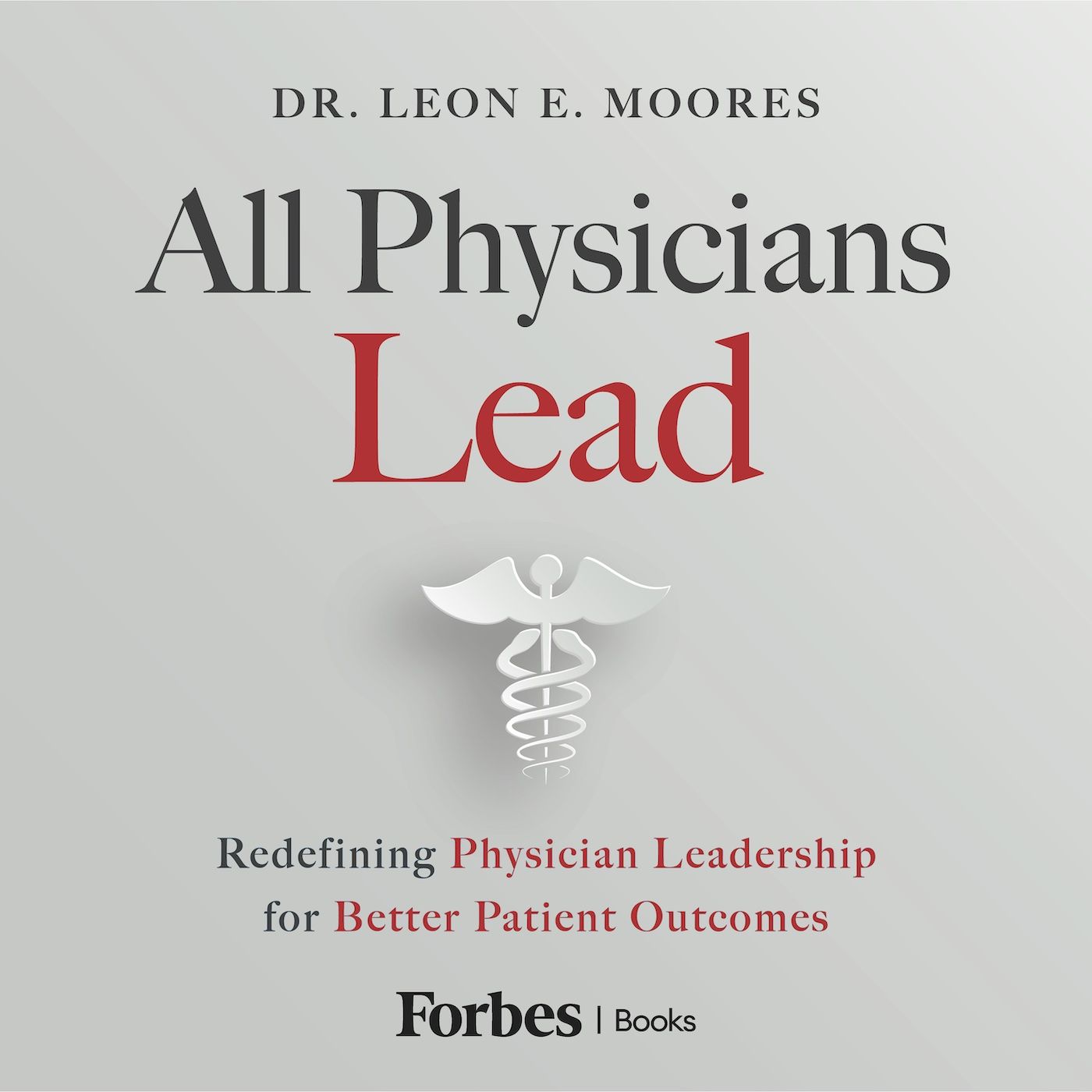
All Physicians Lead
by Dr. Leon E. Moores
Leadership is a core part of every doctor's day. Still, our common connotation of physician leadership doesn’t recognize that or emphasize its development as a key skill set for all physicians. The Forbes Books Podcast, "All Physicians Lead," reveals how accepting that you are leading and reflecting on it with the intent to improve can transform your impact, relationships, and patient outcomes. Dr. Leon Moores welcomes fellow physicians, scientists, and thought leaders to discuss tangible ways doctors can elevate their ability to care for patients through practical leadership training. Discover why leadership should be woven into every physician's education and career. When doctors fully enter their role as leaders of healthcare teams, performance and patient outcomes improve. This podcast prescribes leadership development strategies to help physicians reach their greatest potential because when physicians become better leaders, patients win.
-
32
Dr. Dean Taylor on Why Every Physician Is a Leader (And Why It Matters Now)
What does it take to build better physician leaders and why does it matter for patient care?In this episode of All Physicians Lead, Dr. Leon Moores sits down with Dr. Dean Taylor, orthopedic surgeon, former U.S. Army Colonel, and founder of the Healthcare Leadership Foundation, to explore why leadership is one of the most overlooked skills in medicine.Dr. Taylor shares how his journey from West Point to Duke shaped his approach to leadership, and why emotional intelligence, teamwork, and self-awareness are essential for improving patient outcomes. The conversation breaks down the gap in medical education, where physicians are expected to lead without ever being formally trained to do so.You’ll hear how small leadership behaviors impact entire care teams, why most doctors learn leadership the hard way, and what needs to change to create more patient-centered healthcare systems.If you’re a physician, healthcare leader, or anyone interested in leadership under pressure, this episode offers a clear and practical framework for leading better.🔑 WHAT YOU’LL LEARNWhy every physician is already a leader, whether they realize it or notHow emotional intelligence drives better patient outcomesThe biggest gap in medical education todayHow leadership impacts team performance and patient trustWhy self-awareness is the foundation of effective leadershipHow small moments shape culture inside healthcare teamsWhat the future of physician leadership looks like⏱️ CHAPTERS / TIMESTAMPS0:00 Intro: Why leadership matters in healthcare1:08 Meet Dr. Dean Taylor2:11 The idea behind “All Physicians Lead”4:29 West Point and leadership foundations7:15 From military to medicine at Duke10:26 Defining leadership in healthcare12:59 Why leadership makes you a better human14:27 The “fellow humans” mindset18:18 Leadership across disciplines20:40 The problem with medical education22:29 Why self-awareness is critical24:50 Emotional intelligence explained28:00 Leadership and patient outcomes30:10 Why current training falls short31:54 What needs to change in medical schools33:27 The self-awareness breakdown (real example)37:55 A patient story that changes everything39:04 The power of teamwork in care42:28 Leadership under pressure45:15 What healthcare can learn from the military47:28 Why doctors are never taught to lead49:33 Leadership mentors and influences53:18 The legacy of John Feagin 54:47 Biggest lessons from 20 years of leadership work57:46 The future of healthcare leadership
-
31
The Leadership Mistake Even Top Doctors Make Under Pressure | Dr. Richard Winters
What do you do when you're the leader and there’s no clear answer?In this episode of All Physicians Lead, Dr. Leon Moores sits down with Dr. Richard Winters to break down what leadership actually looks like in high-pressure environments.From the ER to the boardroom, leadership is not about having the answer. It is about asking better questions, building shared reality, and making decisions when the path forward is unclear.Dr. Winters shares real stories from his journey, including:Going from a struggling student to Mayo Clinic physicianThe leadership mistakes even experienced leaders still makeWhy “fixing problems” fails at home and at workHow to lead teams through uncertainty and complexityThe difference between coaching, mentoring, and managingIf you lead a team, run a business, or want to become more effective under pressure, this conversation will change how you think about leadership.Subscribe for more conversations with leaders designing the future.⏱️ TIMESTAMPS0:00 – Intro: Leadership under pressure0:35 – Why leadership in healthcare is uniquely difficult1:25 – From D-minus student to Mayo Clinic physician2:58 – Choosing emergency medicine over surgery6:01 – How leadership roles actually begin8:36 – Learning leadership through failure10:37 – Why leadership mistakes are normal12:18 – The gap in leadership training for physicians14:19 – Frameworks that actually help leaders think16:17 – Command vs collaboration: finding balance17:45 – Why healthcare decisions are not top-down20:02 – Why leadership evolves at every stage21:56 – The “fixer” mindset and why it fails at home24:18 – Default leadership styles and their limits25:33 – How stress impacts leadership performance26:21 – Decision-making in complex environments28:31 – The problem with meetings29:10 – “Now what?” and stepping into leadership31:01 – Why best practices fail in changing environments33:11 – Leading through uncertainty and change35:58 – AI in healthcare and leadership implications38:54 – Building shared reality (critical leadership skill)42:30 – Blind spots and why leaders miss key signals43:54 – Common leadership mistakes44:24 – Should you get an MBA?46:08 – Mentor vs coach vs manager explained52:11 – When to use storytelling as a leader54:36 – Advice for new leaders57:44 – Asking better questions vs having answers58:23 – The danger of “us vs them” leadership59:00 – Final thoughts#Leadership
-
30
Physician Voice in a Digital World With Dr. Kevin Pho
On this episode of All Physicians Lead, Dr. Leon Moores sits down with Dr. Kevin Pho, practicing internal medicine physician and founder of KevinMD, one of the most trusted platforms in health care.Kevin shares how a simple blog post written after a patient encounter turned into a national voice for physicians, nurses, and patients. He explains why doctors must take ownership of their online presence, how AI and tools like ChatGPT Health are reshaping medicine, and why leadership now requires partnership with patients rather than control.From physician burnout to patient trust, from digital disruption to the privilege of practicing medicine, this conversation offers a grounded look at what leadership means inside today’s healthcare system.What You Will Learn• Why patients now know more about you before they enter the exam room• How AI and online tools are changing medical decision making• Why doctors must engage online to fight misinformation• How KevinMD became a safe place for physician voices• Why vulnerability leads to better leadership in medicine• How physician advocacy improves patient outcomesKey Moments• 00:01 Kevin explains how a patient reading his blog changed his career• 00:03 How AI scribes and ChatGPT Health are entering clinical practice• 00:05 Why doctors should stop fighting patient use of online tools• 00:10 How Kevin balances medicine, media, and family• 00:14 Why KevinMD became a voice for burned out physicians• 00:18 How physician vulnerability builds stronger healthcare systems• 00:21 Why doctors must correct misinformation online• 00:31 Why patient care must drive every leadership decision• 00:37 What COVID revealed about risk, fear, and the medical profession• 00:45 Why young doctors must manage their digital reputation• 00:48 Kevin’s closing message on the privilege of practicing medicineAbout Dr. Kevin PhoDr. Kevin Pho is a practicing internal medicine physician in New Hampshire and the founder of KevinMD, one of the most influential platforms in health care. What began as a blog now reaches millions of readers and features real stories from doctors, nurses, and patients across the country. Kevin also hosts the Podcast by KevinMD, coaches physicians, and speaks nationally on leadership, digital health, and physician voice.
-
29
From the Frontlines to the Future: Dr. Eric Holmboe on Leadership, Learning, and Lifelong Growth
In this episode of All Physicians Lead, Dr. Leon Moores sits down with Dr. Eric S. Holmboe, the CEO of Intealth and a lifelong advocate for outcomes-based medical education. Drawing from a distinguished career that spans the U.S. Navy, Yale University, and the Accreditation Council for Graduate Medical Education (ACGME), Dr. Holmboe shares how leadership, reflection, and curiosity have guided his journey from general medical officer to global thought leader. He reflects on the formative lessons of military medicine, the origins of the competency movement, and the importance of addressing “unwarranted variation” in both clinical practice and leadership. The conversation explores how physicians can embrace lifelong development, model emotional intelligence, and create psychologically safe environments that empower their teams and improve patient outcomes. Listen to learn how Dr. Holmboe’s lifelong commitment to curiosity and continuous learning can help every physician lead with greater purpose, humility, and impact.
-
28
Dr. Stephen Beeson on Human Development, Culture, and Clinician Impact
Dr. Leon Moores sits down with Dr. Stephen Beeson, family physician, leadership expert, and founder of Practicing Excellence, for a compelling conversation about what it truly means for physicians to lead. From a pivotal dinner at the Spaghetti Factory that shifted his career from music to medicine, to spearheading culture transformation at Sharp HealthCare, Dr. Beeson shares the personal and professional lessons that led him to champion the development of frontline clinicians.In this episode, you'll hear how leadership at the clinical microsystem level can be the most powerful force for change in healthcare—impacting patient outcomes, team engagement, retention, and financial performance. Dr. Beeson also unpacks why organizations must stop treating leadership like an executive-only trait and start equipping every physician with the skills to connect, collaborate, and lead effectively.If you believe in the power of purpose, culture, and people development, this conversation is your blueprint for transforming healthcare from the inside out.
-
27
Compassion, Curiosity & Change: Dr. Rachel Thompson on Leading Healthcare’s Human Revolution
Dr. Rachel Thompson, Chief Medical Officer at Core Clinical Partners and past president of the Society of Hospital Medicine, joins Dr. Leon Moores to explore the heart of physician leadership. Tracing her journey from childhood animal rescuer to pioneer of the hospital medicine movement, Thompson reveals how "compassion and curiosity" became her guiding stars. She reflects on pivotal leadership lessons - like the humbling "forms committee" incident that taught her the power of collaborative systems -and emphasizes how every physician influences outcomes daily, regardless of formal title.The conversation dives into practical strategies for humanizing healthcare: Thompson champions AI documentation tools that restore clinician-patient connection by reclaiming hours lost to charting. She shares powerful examples of breaking down silos - from co-managing complex cases with surgeons to multidisciplinary rounds that unlocked capacity for 450+ additional monthly patient transfers at one hospital. Critically, she urges leaders to shift from reactive "firefighting" to proactive design, highlighting how slowing down to build intentional workflows reduces length-of-stay and reignites joy in practice.Closing with wisdom for emerging leaders, Thompson advocates curiosity as the ultimate leadership tool: "Be willing to lead, flex your style without sacrificing values, and always seek to understand others' realities." This episode is a masterclass in transforming pressure into purpose - essential listening for physicians and healthcare innovators committed to building systems where both patients and caregivers thrive.
-
26
From Scalpel to Strategy: Crafting Leadership in Medicine and Beyond with Dr. Kevin R. Loughlin
Dr. Leon Moores sits down with Dr. Kevin R. Loughlin, a retired urologist and seasoned medical leader, to explore the intersection of medicine, leadership, and lifelong learning. Dr. Loughlin shares his unconventional journey from aspiring lawyer to renowned surgeon, driven by influential books like The Making of a Surgeon and role models such as his father and a high school English teacher. He reflects on the pivotal realization that "leaders are made, not born," emphasizing the importance of integrity, humility, and continuous growth.The conversation delves into the critical gaps in leadership training within medical education, the value of interdisciplinary perspectives (like his mid-career MBA), and the responsibility of physicians to lead not just in hospitals but in their communities. Dr. Loughlin candidly discusses balancing a demanding career with family life, the art of stepping back from clinical practice, and his post-retirement passion for climate advocacy—proving leadership extends far beyond the OR.You’ll gain actionable insights on fostering teamwork, embracing humility, and navigating leadership transitions, all underscored by Dr. Loughlin’s wit and wisdom. Whether you’re a trainee, practicing physician, or seasoned leader, this episode is a compelling reminder of how intentional leadership transforms patient care, communities, and careers.
-
25
From the Military to Medicine: Leadership Lessons with Dr. Gerald Harmon
In this insightful episode of All Physicians Lead, Dr. Leon Moores sits down with Dr. Gerald Harmon—a distinguished physician, retired U.S. Air Force Major General, and Interim Dean of the University of South Carolina School of Medicine. With decades of leadership in military medicine, healthcare administration, and medical education, Dr. Harmon shares his remarkable journey, from his rural South Carolina roots to his pivotal roles in shaping healthcare policy and education.Listeners will gain invaluable wisdom as Dr. Harmon breaks down his "Four Cs" of leadership—Competence, Confidence, Compassion, and Character—and discusses how these principles guide physicians at every stage of their careers. He reflects on the importance of service, the challenges of work-life balance, and the enduring impact of small acts of kindness in medicine. From memorable patient stories to lessons learned in the military and organized medicine, this conversation is a masterclass in leadership, resilience, and the power of making a difference.Whether you're a medical student, practicing physician, or healthcare leader, Dr. Harmon's insights will inspire you to embrace your role as a leader—both in and out of the clinic. Tune in for a heartfelt and motivating discussion that underscores why All Physicians Lead.
-
24
Cultivating Compassion and Excellence in Healthcare Leadership with Dr. Joshua Hartzell (Part Two)
In the second part of this compelling episode, Dr. Moores continues his conversation with Dr. Joshua Hartzell, a retired Army Colonel, infectious disease specialist, and leadership expert. Dr. Hartzell shares more about his journey into military medicine, his experiences as a battalion surgeon during deployment, and the profound leadership lessons he learned in high-stakes environments. The discussion delves into the importance of humility, empowering team members, and the critical role of mentorship in both military and medical settings. Dr. Hartzell reflects on his time as a program director at Walter Reed, emphasizing the value of setting high standards while supporting trainees through personal and professional challenges. The episode also explores the balance between clinical responsibilities and leadership development, offering practical advice for physicians navigating multiple roles. Dr. Hartzell shares key takeaways from his book on leadership in healthcare, focusing on the power of caring leadership, the importance of developing others, and the ongoing journey of personal growth as a leader. Tune in for an inspiring and insightful conversation that highlights the intersection of military discipline, medical expertise, and compassionate leadership. Whether you're a physician, healthcare professional, or leader in any field, this episode offers valuable lessons on how to lead with care, purpose, and excellence.
-
23
Cultivating Compassion and Excellence in Healthcare Leadership with Dr. Joshua Hartzell (Part One)
In this engaging episode of the All Physicians Lead podcast, Dr. Leon Moores sits down with Dr. Joshua Hartzell, a retired Army Colonel, seasoned leader in military medicine, and faculty member at MGH Institute of Health Professions. With over 25 years of experience in internal medicine, infectious diseases, and leadership development, Dr. Hartzell shares his journey from a small town in Pennsylvania to becoming a respected figure in healthcare leadership. The conversation delves into the importance of leadership in medicine, the inspiration behind Dr. Hartzell's new book on cultivating excellence and compassion in healthcare leadership, and the challenges physicians face in balancing care for their patients with care for their teams. Dr. Hartzell emphasizes the value of feedback, delegation, and creating a culture of psychological safety in healthcare settings. He also offers practical advice for aspiring authors and leaders, drawing from his own experiences in writing and leadership development. Tune in to hear insightful stories, leadership lessons, and actionable strategies that can help healthcare professionals at all levels become more effective and compassionate leaders. Whether you're a physician, nurse, or healthcare administrator, this episode is packed with wisdom to inspire and guide you on your leadership journey.
-
22
Humanizing Leadership in Healthcare: A Conversation with Owen Dahl (Part Two)
In Part 2, Dr. Leon Moores and Owen Dahl discuss the critical traits and strategies for effective physician leadership, emphasizing the importance of communication, trust, and engagement in fostering collaboration and improving patient outcomes. Owen highlights the role of informal leaders and physician champions in driving successful change and shares insights into addressing common challenges such as revenue cycle inefficiencies, patient flow issues, and compensation structures. He underscores the value of coaching, mentoring, and education in creating a culture of growth, accountability, and teamwork, aligning organizational goals with patient-centered care. By focusing on purpose, collaboration, and humanizing interactions, physicians can enhance both patient experiences and organizational success. The episode concludes with reflections on the transformative impact of physician leadership and the shared commitment to delivering better healthcare outcomes.
-
21
Humanizing Leadership in Healthcare: A Conversation with Owen Dahl (Part One)
In this episode of All Physicians Lead, hosted by Dr. Leon Moores, healthcare consultant and author Owen Dahl shares insights from his decades-long career in healthcare leadership, consulting, and practice management. Owen recounts his journey from managing rural hospitals to becoming a consultant focused on improving physician practices, particularly smaller groups. He discusses the application of lean principles and Six Sigma in healthcare, highlighting how these methodologies can streamline workflows, reduce waste, and enhance patient care. Drawing from his book, Humanizing Lean Leadership in Healthcare, Owen emphasizes the importance of engaging employees, fostering collaboration, and creating psychological safety to drive meaningful improvements. Through personal anecdotes, including his own healthcare journey, Owen underscores the critical role of physicians as leaders who influence both organizational success and patient outcomes, regardless of formal titles. Together, Dr. Moores and Owen explore how leadership and teamwork are essential in delivering exceptional care.
-
20
Leadership, Passion, and Navigating Challenges with Dr. Maria Granzotti (Part Two)
In the second part of this engaging conversation, Dr. Leon Moores and Dr. Maria Granzotti delve deeper into her career journey and leadership philosophy. Dr. Granzotti shares pivotal moments that shaped her trajectory as a healthcare leader, from addressing inefficiencies in emergency care to navigating the immense challenges of the COVID-19 pandemic. Together, they explore the essential qualities of physician leadership, such as active listening, adaptability, and fostering collaboration across healthcare teams. Dr. Granzotti recounts her experience balancing the clinical and administrative aspects of care, emphasizing how focusing on quality and safety ultimately drives value. She also reflects on the importance of passion in sustaining a medical career and provides practical advice for emerging physician leaders.
-
19
Leadership, Passion, and Navigating Challenges with Dr. Maria Granzotti (Part One)
Dr. Leon Moores sits down with Dr. Maria Granzotti, a distinguished physician executive with over 15 years of healthcare leadership experience and a strong foundation in Emergency Medicine. Dr. Granzotti shares her inspiring journey, starting as a young girl influenced by her grandmother—a nurse with over 50 years of experience—and rising to serve as Chief Medical Officer for multiple healthcare systems. The conversation explores her transition from clinical emergency medicine to leadership roles, her decision to pursue an MBA, and her insights on balancing clinical work with administrative responsibilities. She offers a candid perspective on the challenges of maintaining clinical credibility while embracing increasingly strategic roles in healthcare.
-
18
Leadership and Legacy: Dr. Doreen Addrizzo-Harris on Saying Yes to Opportunity (Part Two)
In Part Two, Dr. Leon Moores continues his insightful conversation with Dr. Doreen Addrizzo-Harris, a renowned pulmonary and critical care physician and leader. Dr. Addrizzo-Harris delves deeper into her 23 years as a program director, sharing her approach to mentoring young physicians, cultivating leadership skills, and fostering empathy and professionalism within healthcare teams. The discussion touches on the power of reflection, managing stress in high-stakes environments, and the profound lessons learned during the COVID-19 pandemic. Dr. Addrizzo-Harris also shares her journey of leadership within CHEST (American College of Chest Physicians), providing invaluable advice for those seeking to balance professional commitments with personal well-being. Tune in for an inspiring and practical exploration of leadership, resilience, and the joy of patient care, as Dr. Addrizzo-Harris reflects on her experiences and offers timeless wisdom for physicians and leaders alike. Don’t miss this powerful conclusion to a two-part conversation!
-
17
Leadership and Legacy: Dr. Doreen Addrizzo-Harris on Saying Yes to Opportunity (Part One)
In this episode of All Physicians Lead, Dr. Leon Moores sits down with Dr. Doreen Addrizzo-Harris, a Professor of Medicine at NYU Grossman School of Medicine and Director of the NYU Bronchiectasis and NTM Program. Dr. Addrizzo-Harris shares her inspiring journey from a jazz-dancer dreamer to a renowned physician, educator, and leader in pulmonary and critical care medicine. With candor and warmth, she discusses her path to leadership, the value of saying "yes" to opportunities, and the profound lessons she's learned along the way. Listen in as Dr. Addrizzo-Harris reflects on her approach to patient care, teaching, and mentorship, and how small moments of connection and empathy can transform the medical experience—for both patients and physicians. Dr. Moores and Dr. Addrizzo-Harris also explore strategies to cultivate leadership, manage burnout, and restore joy in medicine. Whether you're a healthcare professional, leader, or enthusiast, this episode is packed with insights on finding purpose and making a meaningful impact in healthcare.
-
16
Leading with Vision: Empowering Physicians to Drive Healthcare Transformation with Dr. Shlomit Schaal (Part Two)
Dr. Leon Moores continues his insightful conversation with Dr. Shlomit Schaal, an accomplished physician and academic leader, in this episode of All Physicians Lead. Dr. Schaal shares her experiences in healthcare leadership, focusing on how to inspire teams and cultivate innovation in a medical environment. She emphasizes the importance of nurturing collaboration between clinical and administrative teams to drive impactful change. The discussion also touches on her leadership philosophy of empowering individuals to bring their best ideas forward, ensuring a culture of continuous improvement. Dr. Schaal highlights the significance of resilience and adaptability in navigating the ever-evolving healthcare landscape. Listeners will gain valuable perspectives on leading through challenges and fostering a culture of excellence in healthcare organizations.
-
15
Leading with Vision: Empowering Physicians to Drive Healthcare Transformation with Dr. Shlomit Schaal (Part One)
In this episode of All Physicians Lead, Dr. Leon Moores is joined by Dr. Shlomit Schaal, a prominent figure in clinical ophthalmology and healthcare leadership. Dr. Schaal shares her inspiring journey from her medical beginnings to becoming Executive VP and Chief Physician Executive at Houston Methodist and a professor at Weill Cornell Medical College. She discusses the critical role of leadership in medicine, emphasizing how visionary thinking and innovative approaches can transform healthcare. Dr. Schaal highlights the challenges physicians face today, particularly in balancing patient care with administrative duties, and offers practical strategies for empowering medical professionals to lead more effectively. Throughout the conversation, she delves into the importance of resilience, adaptability, and continued learning in shaping future healthcare leaders. Listeners will gain valuable insights into the evolving landscape of medical leadership and what it takes to succeed at the highest levels of healthcare administration.
-
14
Leading with Purpose: Dr. J. Stephen Jones on Embracing Physician Leadership (Part Two)
In part two of All Physicians Lead, Dr. Leon Moores continues his conversation with Dr. J. Stephen Jones, President and CEO of Inova Health System. Dr. Jones reflects on leadership development at Inova, discussing the organization's focus on fostering a culture of inclusivity and collaboration among physicians and non-physician staff alike. He shares insights into Inova's strategic goals, including the launch of their "second transformation curve" and the critical role of leadership in achieving system-wide excellence in patient care.Dr. Jones also opens up about his decision to join Inova after a successful tenure at Cleveland Clinic, explaining how the opportunity to unify an already exceptional medical community drew him to Northern Virginia. He offers advice to aspiring physician leaders on choosing the right leadership path and balancing positional authority with humility and teamwork. Dr. Jones emphasizes the importance of maintaining clinical credibility and engaging with non-physician colleagues to drive innovation and success. The conversation wraps up with a look at the future of healthcare, as Dr. Jones shares his vision for Inova's continued growth andcommitment to delivering the highest quality patient care. He encourages physicians to be thoughtful in their leadership journey, underscoring that while formal leadership roles can be rewarding, there is equal value in clinical excellence.
-
13
Leading with Purpose: Dr. J. Stephen Jones on Embracing Physician Leadership (Part One)
In this episode of All Physicians Lead, Dr. Leon Moores speaks with Dr. J. Stephen Jones, the President and CEO of Inova Health System. Dr. Jones shares insights from his extensive career in healthcare leadership, beginning with his unlikely path from a small-town farm boy to leading one of the largest nonprofit healthcare providers in the Washington, D.C., area. He discusses the importance of saying "yes" to the right opportunities, building credibility as a physician leader, and the vital role of empathy and authenticity in effective leadership. Dr. Jones emphasizes that all physicians, whether in clinical or leadership roles, must embrace their role as leaders, helping patients navigate toward better outcomes. He and Dr. Moores explore how physician leadership directly impacts patient care, from improving organizational safety measures to ensuring teamwork across departments. Dr. Jones also provides advice for physicians looking to develop leadership skills, encouraging them to intentionally seek out learning opportunities, listen more than speak, and remain open to the complex challenges of healthcare systems. This conversation offers invaluable lessons for physicians striving to enhance their leadership capabilities and make a meaningful impact on patient care.
-
12
Redefining Physician Leadership: A Conversation with Renee DeSilva on Self-Awareness, Communication, and Community (Part Two)
In Part 2, Dr. Leon Moores continues his insightful conversation with Renee DeSilva, CEO of The Health Management Academy. The discussion delves deeper into crucial aspects of healthcare leadership in healthcare organizations. Renee shares her perspective on creating diversity in our environments and representation at all levels. The conversation then shifts to the challenges of physician burnout and resilience, with Renee emphasizing the need for systemic changes alongside individual strategies. Dr. Moores and Renee explore the impact of COVID-19 on healthcare professionals and discuss emerging technologies aimed at reducing administrative burdens. They also address the evolving landscape of healthcare leadership, including the challenges posed by AI and cybersecurity threats. The episode concludes with inspiring advice for aspiring physician leaders, encouraging them to embrace challenges and shape the future of healthcare. This thought-provoking discussion offers valuable insights for healthcare professionals at all stages of their careers.
-
11
Redefining Physician Leadership: A Conversation with Renee DeSilva on Self-Awareness, Communication, and Community (Part One)
Dr. Leon Moores engages in a thought-provoking conversation with Renee DeSilva, CEO of The Health Management Academy. Drawing from her extensive experience advising healthcare leaders at the highest levels, Renee shares valuable insights on the critical role physicians play as leaders in all aspects of their work. The discussion explores key topics such as self-awareness, psychological safety, effective communication, and the importance of seeking and receiving feedback. Dr. Moores and Renee offer practical advice for physicians at all career stages to enhance their leadership skills and make a positive impact on healthcare delivery. They also delve into The Health Management Academy’s approach to leadership development, including their physician leadership programs and fellowship opportunities. This episode provides actionable strategies for healthcare professionals to recognize and cultivate their leadership potential, emphasizing the power of community in driving health forward.
-
10
From Mississippi to Mayo and Back: Dr. John Studdard’s Path to Leadership (Part Two)
In the second part of their conversation, Dr. Leon Moores and Dr. John Studdard dive deeper into the critical role of leadership development for physicians. Dr. Studdard shares how mentors from his time at the renowned Mayo Clinic encouraged him to get involved with national organizations like the American College of Chest Physicians (CHEST). He recounts his path to leadership within CHEST, including serving as president, and his work representing the organization during the historic 1998 negotiations with the tobacco industry. The physicians discuss the importance of advocacy and using one's platform to drive positive change on issues that impact patient health. Dr. Studdard candidly reflects on aspects of leadership he might approach differently now, emphasizing the need to listen empathetically and make others feel valued. The conversation explores how professional medical societies can better cultivate the next generation of physician leaders through mentorship, sponsorship, and increased transparency. Dr. Studdard offers advice for young doctors looking to develop their leadership abilities, emphasizing the value of taking initiative and fostering relationships with experienced mentors. Throughout the dialogue, both physicians underscore how strengthening leadership skills allows doctors to elevate team performance, relationships with patients, and ultimately, clinical outcomes. The episode highlights leadership as an essential but often underemphasized competency for physicians to master.
-
9
From Mississippi to Mayo and Back: Dr. John Studdard’s Path to Leadership (Part One)
In this episode of the "All Physicians Lead" podcast, Dr. Leon Moores sits down with Dr. John Studdard, a pulmonary and critical care physician with nearly 40 years of experience. The two explore Dr. Studdard's journey from growing up in Mississippi to his medical training at the renowned Mayo Clinic and his subsequent career in private practice back home. Dr. Studdard reflects on the powerful influence his Southern upbringing had on his worldview and drive to give back to his community. He shares insights from his decades in private practice, highlighting the efficiencies and close teamwork that defined that environment. The physicians discuss how leadership manifests differently in academic versus private settings and the value of continuous learning from colleagues. Dr. Studdard candidly examines aspects of his career he might approach differently with the benefit of hindsight, advocating for more emphasis on teaching and questioning norms. The conversation underscores how self-reflection enables physicians to elevate their leadership skills and impact throughout their careers. By accepting their inherent roles as leaders, doctors can transform team dynamics, relationships with patients, and ultimately, clinical outcomes.
-
8
The Credible Expert Leader: Dr. Amanda Goodall on Why Physicians Can Make Great Leaders (Part Two)
After explaining her "theory of expert leadership" and its relevance to the healthcare field, Amanda Goodall shares what motivated her to create an Executive Master's program specifically tailored for physician leaders at Bayes Business School. She discusses the unique challenges and opportunities that physicians face when taking on leadership roles within healthcare organizations. The program aims to equip doctor-leaders with the essential management and leadership skills to complement their clinical expertise. Goodall emphasizes the importance of integrating leadership development into medical training and continuing education. Goodall also offers advice for physicians interested in stepping into leadership positions. When clinical mastery is combined with trained leadership skills, doctors can become tremendously effective and credible leaders capable of driving meaningful change for their teams and organizations.About Amanda Goodall PhD: Dr. Goodall is Professor in Leadership at Bayes Business School (formerly Cass). Her main work analyses the relationship between leadership, management and organizational performance. It shows that leaders who have a deep understanding of the core business (‘expert leaders’) are associated with better organizational performance, higher employee job satisfaction and fewer quits. Being a good manager alone is not sufficient. Evidence supporting the ‘theory of expert leadership’ comes from business, healthcare, universities, Formula 1, basketball, and among professionals. She has also done important research into gender differences in pay and negotiation, and writes on diversity more broadly. Amanda publishes in academic journals, practitioner publications (e.g. HBR) and in the media (e.g. Financial Times). In June 2023 she released a business book titled “Credible: The power of Expert Leadership”, with Basic Books and Public Affairs (Hachette). She has been a research fellow at Cornell, IZA Institute of Labor Economics in Bonn, University of Zurich and Yale University. Based on her research, she created the Executive Masters in Medical Leadership a program tailored to the needs of physicians. Her work is available at www.amandagoodall.com Amanda began her career at 16 in the fashion industry, followed by a decade working with campaigning and charitable organizations, before graduating from the London School of Economics. After a few years working with university leaders she completed her PhD in leadership at Warwick Business School in 2007, which was published in 2009, “Socrates in the Boardroom’, Princeton University Press”.
-
7
The Credible Expert Leader: Dr. Amanda Goodall on Why Physicians Can Make Great Leaders (Part One)
In the latest episode of All Physicians Lead, Dr. Leon Moores sits down with Amanda Goodall, PhD, Professor of Leadership at Bayes Business School and author of "Credible: The Power of Expert Leaders." Dr. Goodall shares her groundbreaking research showing that organizations led by those with deep expertise in the core business tend to outperform those led by generalist managers alone. Her "theory of expert leadership" is backed by extensive data from industries like business, healthcare, universities, auto racing, and professional sports. Dr. Goodall explains why doctors and physicians, as subject matter experts, can be particularly effective leaders when they embrace leadership roles in addition to their clinical duties. The conversation explores tangible ways physicians can develop their leadership skills to elevate team performance and drive better patient outcomes. Dr. Moores and Dr. Goodall discuss the importance of weaving leadership training into medical education and continuing education for practicing physicians. Listeners will gain insights into cultivating credibility as an expert leader, overcoming resistance to physician leadership, and striking the right balance between clinical and administrative responsibilities. This episode reinforces the core message that all physicians already lead daily, and can maximize their positive impact by intentionally developing leadership capabilities.About Amanda Goodall PhD: Dr. Goodall is Professor in Leadership at Bayes Business School (formerly Cass). Her main work analyses the relationship between leadership, management and organizational performance. It shows that leaders who have a deep understanding of the core business (‘expert leaders’) are associated with better organizational performance, higher employee job satisfaction and fewer quits. Being a good manager alone is not sufficient. Evidence supporting the ‘theory of expert leadership’ comes from business, healthcare, universities, Formula 1, basketball, and among professionals. She has also done important research into gender differences in pay and negotiation, and writes on diversity more broadly. Amanda publishes in academic journals, practitioner publications (e.g. HBR) and in the media (e.g. Financial Times). In June 2023 she released a business book titled “Credible: The power of Expert Leadership”, with Basic Books and Public Affairs (Hachette). She has been a research fellow at Cornell, IZA Institute of Labor Economics in Bonn, University of Zurich and Yale University. Based on her research, she created the Executive Masters in Medical Leadership a program tailored to the needs of physicians. Her work is available at www.amandagoodall.com Amanda began her career at 16 in the fashion industry, followed by a decade working with campaigning and charitable organizations, before graduating from the London School of Economics. After a few years working with university leaders she completed her PhD in leadership at Warwick Business School in 2007, which was published in 2009, “Socrates in the Boardroom’, Princeton University Press”.
-
6
Educating the Next Generation of Uniformed Health Professionals with Dr. Jonathan Woodson (Part Two)
In part two, Dr. Leon Moores explores Dr. Jonathan Woodson's time serving as Assistant Secretary of Defense for Health Affairs under President Obama. Dr. Woodson explains why identifying core values is crucial for any leader seeking to enact change, particularly in complex bureaucracies like the massive Defense Health Agency. He shares key insights from reorganizing military medicine to better integrate services across the Army, Navy, and Air Force.Tune in for an in-depth discussion on the intricacies of leading major health and governmental organizations as well as Dr. Woodson’s perspectives on the values ethical leaders need to guide decisions.About Dr. Jonathan Woodson: Dr. Woodson is the seventh President of the Uniformed Services University of the Health Sciences (USU). As such, he is responsible for the academic, research, and leadership mission of the university, which includes a combined total of more than 2,500 students in the F. Edward Hébert School of Medicine and its associated graduate programs in the biomedical sciences and public health, the Daniel K. Inouye Graduate School of Nursing, the university’s Postgraduate Dental College, and the College of Allied Health Sciences. Through its graduate and undergraduate programs, the University has more than 11,500 alumni, many of whom serve the nation as uniformed health providers or civilian scientists. Dr. Woodson also oversees more than 15 research centers and the Armed Forces Radiobiology Research Institute (AFRRI).Prior to his current position, Dr. Woodson was a Lars Anderson Professor in Management and Professor of the Practice at Boston University’s (BU) Questrom School of Business. He holds joint appointments as a professor of Surgery at the School of Medicine and a professor of Health Law, Policy, and Management at the School of Public Health. He established and led the BU university-wide Institute for Health System Innovation and Policy.From 2010-2016, Dr. Woodson was Assistant Secretary of Defense for Health Affairs and Director of the Tricare Management Activity in the United States Department of Defense (DoD). He was the principal advisor to the Secretary of Defense for all health and force health protection-related issues and ensured the effective execution of the DoD medical mission. He exercised authority, direction, and control over the Defense Health Agency, USU, AFRRI, Defense Center of Excellence for Psychological Health and Traumatic Brain Injury, and the Tricare Health Plan serving 9.5 million beneficiaries.Before his appointment to the DoD by President Obama in 2010, Dr. Woodson was a professor of Surgery and Associate Dean for Students, Diversity, and Multicultural Affairs, and senior attending vascular surgeon at Boston Medical Center. In 2016, he was appointed as a member of the USU Board of Regents and later served as its chair. Dr. Woodson retired at the rank of Major General, United States Army Reserve, and as Commander of the United States Army Reserve Medical Command, Pinellas Park, Florida, in June 2022 after 36 years of service. His military deployments include Saudi Arabia for Operation Desert Storm, Kosovo, and Operation Enduring Freedom and Operation Iraqi Freedom. He is a former senior medical officer with the National Disaster Management System, through which he responded to the September 11, 2001, attack on the World Trade Center.Dr. Woodson is a graduate of the City College of New York and the New York University School of Medicine. He received his postgraduate medical education at Massachusetts General Hospital, Harvard Medical School, and completed residency training in internal medicine, as well as general and vascular surgery. He is board-certified in internal medicine, general surgery, vascular surgery, and critical care surgery. He also holds a master’s degree in strategic studies (concentration in strategic leadership) from the United States Army War College. In 1992, he was awarded a research fellowship at the Association of American Medical Colleges Health Services Research Institute.
-
5
Educating the Next Generation of Uniformed Health Professionals with Dr. Jonathan Woodson (Part One)
In this week's episode of All Physicians Lead, Dr. Leon Moores is joined by Dr. Jonathan Woodson, the seventh President of the Uniformed Services University of the Health Sciences. As president, Dr. Woodson oversees USU's academic and research missions across medicine, nursing, public health, and more, shaping the next generation of military health professionals. Prior to his current role, Dr. Woodson served as the top health advisor in the Obama Administration's Department of Defense. He has also held various academic leadership positions and professorships focused on health policy, management, and surgery. A retired Major General, Dr. Woodson brings decades of military, medical, and policy experience to further USU's vital mission of educating and developing uniformed health professionals. Tune in to hear his unique perspectives on leadership, medicine, and military health.About Dr. Jonathan Woodson: Dr. Woodson is the seventh President of the Uniformed Services University of the Health Sciences (USU). As such, he is responsible for the academic, research, and leadership mission of the university, which includes a combined total of more than 2,500 students in the F. Edward Hébert School of Medicine and its associated graduate programs in the biomedical sciences and public health, the Daniel K. Inouye Graduate School of Nursing, the university’s Postgraduate Dental College, and the College of Allied Health Sciences. Through its graduate and undergraduate programs, the University has more than 11,500 alumni, many of whom serve the nation as uniformed health providers or civilian scientists. Dr. Woodson also oversees more than 15 research centers and the Armed Forces Radiobiology Research Institute (AFRRI).Prior to his current position, Dr. Woodson was a Lars Anderson Professor in Management and Professor of the Practice at Boston University’s (BU) Questrom School of Business. He holds joint appointments as a professor of Surgery at the School of Medicine and a professor of Health Law, Policy, and Management at the School of Public Health. He established and led the BU university-wide Institute for Health System Innovation and Policy. From 2010-2016, Dr. Woodson was Assistant Secretary of Defense for Health Affairs and Director of the Tricare Management Activity in the United States Department of Defense (DoD). He was the principal advisor to the Secretary of Defense for all health and force health protection-related issues and ensured the effective execution of the DoD medical mission. He exercised authority, direction, and control over the Defense Health Agency, USU, AFRRI, Defense Center of Excellence for Psychological Health and Traumatic Brain Injury, and the Tricare Health Plan serving 9.5 million beneficiaries. Before his appointment to the DoD by President Obama in 2010, Dr. Woodson was a professor of Surgery and Associate Dean for Students, Diversity, and Multicultural Affairs, and senior attending vascular surgeon at Boston Medical Center. In 2016, he was appointed as a member of the USU Board of Regents and later served as its chair. Dr. Woodson retired at the rank of Major General, United States Army Reserve, and as Commander of the United States Army Reserve Medical Command, Pinellas Park, Florida, in June 2022 after 36 years of service. His military deployments include Saudi Arabia for Operation Desert Storm, Kosovo, and Operation Enduring Freedom and Operation Iraqi Freedom. He is a former senior medical officer with the National Disaster Management System, through which he responded to the September 11, 2001, attack on the World Trade Center. Dr. Woodson is a graduate of the City College of New York and the New York University School of Medicine. He received his postgraduate medical education at Massachusetts General Hospital, Harvard Medical School, and completed residency training in internal medicine, as well as general and vascular surgery. He is board-certified in internal medicine, general surgery, vascular surgery, and critical care surgery. He also holds a master’s degree in strategic studies (concentration in strategic leadership) from the United States Army War College. In 1992, he was awarded a research fellowship at the Association of American Medical Colleges Health Services Research Institute.
-
4
Medical Education, Leadership, and Organizational Development: A Conversation with Dr. James K. Stoller from Cleveland Clinic (Part Two)
The conversation continues as Dr. Stoller opens up about the evolution of his mindset as both a leader and physician over his extensive career. He reflects on the critical leadership lessons he's learned along the way and the mentors who shaped his perspective. Dr. Stoller also shares some of the most impactful leadership advice he's received over the years. Tune in to hear Dr. Stoller's unique insights on developing leadership capabilities as a physician and the mindsets required to empower and inspire future generations of medical professionals. Dr. Moores and Dr. Stoller share a thoughtful dialogue on the importance of continued growth and learning for leaders in medicine and education. Don't miss this intimate discussion with one of medicine's greatest contemporary leaders.About James K. Stoller: Dr. Stoller is the Chair of the Education Institute at Cleveland Clinic. In this role, he oversees the function of the 11 centers within the Education Institute. From Continuing Medical Education and the Cleveland Clinic Lerner College of Medicine to Scientific Publications and the Center for Educational Resources, these centers cover a wide variety of educational communities. Dr. Stoller interfaces with academic partners and collaborates closely with all institute leaders. Dr. Stoller also holds the Jean Wall Bennett Professorship in Emphysema Research at the Cleveland Clinic Lerner College of Medicine and is the Samson Global Leadership Academy Endowed Chair. He is also an Adjunct Professor of Organizational Behavior at the Weatherhead School of Management at Case Western Reserve University.Previously, Dr. Stoller was the Associate Chief of Staff and Vice Chairman of Internal Medicine at the Cleveland Clinic. Dr. Stoller graduated from Yale University School of Medicine. He completed his Internal Medicine residency at Peter Bent Brigham Hospital in Boston. He completed fellowships in pulmonary/critical care medicine at Brigham and Women’s Hospital in Boston and Yale University School of Medicine. He also completed a fellowship in critical care medicine/anesthesiology at Massachusetts General Hospital in Boston. Dr. Stoller earned a master’s degree in organizational development and analysis from the Weatherhead School of Management of Case Western Reserve University. He was also a Robert Wood Johnson Clinical Scholar at Yale University School of Medicine. Dr. Stoller is a diplomate in internal medicine and pulmonary disease of the American Board of Internal Medicine. He has authored more than 15 books, 72 chapters, 249 peer-reviewed reports and 119 abstracts.
-
3
Medical Education, Leadership, and Organizational Development: A Conversation with Dr. James K. Stoller from Cleveland Clinic (Part One)
This week on All Physicians Lead, Dr. Leon Moores is joined by the illustrious Dr. James K. Stoller, Chairman of the Education Institute at Cleveland Clinic. With decades of experience as a leader in medicine, education, and organizational development, Dr. Stoller shares his wisdom from a storied career shaping the future of medical education. Tune in as Dr. Moores and Dr. Stoller discuss Dr. Stoller's groundbreaking research, prolific writing, and far-reaching accomplishments across clinical expertise, academic rigor, and organizational leadership. This inspiring episode features insights from one of the most influential physician-educators of our time.About James K. Stoller: Dr. Stoller is the Chair of the Education Institute at Cleveland Clinic. In this role, he oversees the function of the 11 centers within the Education Institute. From Continuing Medical Education and the Cleveland Clinic Lerner College of Medicine to Scientific Publications and the Center for Educational Resources, these centers cover a wide variety of educational communities. Dr. Stoller interfaces with academic partners and collaborates closely with all institute leaders. Dr. Stoller also holds the Jean Wall Bennett Professorship in Emphysema Research at the Cleveland Clinic Lerner College of Medicine and is the Samson Global Leadership Academy Endowed Chair. He is also an Adjunct Professor of Organizational Behavior at the Weatherhead School of Management at Case Western Reserve University.Previously, Dr. Stoller was the Associate Chief of Staff and Vice Chairman of Internal Medicine at the Cleveland Clinic. Dr. Stoller graduated from Yale University School of Medicine. He completed his Internal Medicine residency at Peter Bent Brigham Hospital in Boston. He completed fellowships in pulmonary/critical care medicine at Brigham and Women’s Hospital in Boston and Yale University School of Medicine. He also completed a fellowship in critical care medicine/anesthesiology at Massachusetts General Hospital in Boston. Dr. Stoller earned a master’s degree in organizational development and analysis from the Weatherhead School of Management of Case Western Reserve University. He was also a Robert Wood Johnson Clinical Scholar at Yale University School of Medicine. Dr. Stoller is a diplomate in internal medicine and pulmonary disease of the American Board of Internal Medicine. He has authored more than 15 books, 72 chapters, 249 peer-reviewed reports and 119 abstracts.
-
2
Lifelong Service: A Conversation with Dr. Ronald Blanck, the 39th Surgeon General of the United States Army (Part Two)
After discussing his storied career, Dr. Blanck imparts an invaluable leadership insight that anyone can apply. Before diving into his experiences in combat zones, we'll hear about some of the unexpected challenges he faced during his academic journey. His candid perspectives provide lessons for aspiring medical professionals and leaders alike. Tune in to gain wisdom from this groundbreaking military physician turned masterful mentor. Dr. Blanck shares both clinical expertise and leadership acumen that continue to benefit the armed forces, the medical community, and society as a whole.About Ronald Blanck: Dr. Blanck began his military career in 1968 as a medical officer and battalion surgeon in Vietnam. He retired 32 years later as a Lieutenant General and Surgeon General of the U.S. Army and commander of the U.S. Army Medical Command — with more than 46,000 military personnel and 26,000 civilian employees throughout the world.During his distinguished military career, Dr. Blanck also served as commander of Walter Reed Medical Center North Atlantic Region Medical Command, director of professional services, and chief of Medical Corps Affairs for the U.S. Army Surgeon General. Other assignments included assistant chief of the General Medicine Service in the Department of Medicine at Walter Reed, assistant dean of student affairs at the Uniformed Services University School of Medicine, and chief of the Department of Medicine at Brooke Army Medical Center.His academic credentials include teaching positions at Georgetown University, George Washington University, Howard University School of Medicine, The Uniformed Services University, the University of Texas Health Science Center at San Antonio, and the University of North Texas Health Science Center.Dr. Blanck’s military honors include Distinguished Service Medals, the Defense Superior Service Medal, the Legion of Merit, the Bronze Star, and Meritorious Service and Army Commendation Medals.Dr. Blanck continues to be consulted as an advisor on bioterrorism issues and an expert in preparing the medical community to respond to mass casualty incidents or those involving weapons of mass destruction. In addition to his many speaking engagements and advisory positions, he now chaired task forces on bioterrorism for both the Texas Medical Association and the American Osteopathic Association.
-
1
Lifelong Service: A Conversation with Dr. Ronald Blanck, the 39th Surgeon General of the United States Army (Part One)
In the premiere episode of All Physicians Lead, Dr. Leon Moores is joined by distinguished guest Dr. Ronald Blanck. Dr. Blanck rose to become the 39th Surgeon General of the United States Army, the first D.O. ever appointed to this prominent position. Throughout his storied 32-year military career, Dr. Blanck provided compassionate care and strong leadership. Since retiring from active duty, he has continued to advise on critical issues like bioterrorism preparedness and response, lending his invaluable knowledge to the medical community. Dr. Blanck's voice remains vital, and Dr. Moores is honored to host this respected physician, dedicated military leader, and lifelong public servant. Tune in to hear their inspiring discussion!About Ronald Blanck: Dr. Blanck began his military career in 1968 as a medical officer and battalion surgeon in Vietnam. He retired 32 years later as a Lieutenant General and Surgeon General of the U.S. Army and commander of the U.S. Army Medical Command — with more than 46,000 military personnel and 26,000 civilian employees throughout the world.During his distinguished military career, Dr. Blanck also served as commander of Walter Reed Medical Center North Atlantic Region Medical Command, director of professional services, and chief of Medical Corps Affairs for the U.S. Army Surgeon General. Other assignments included assistant chief of the General Medicine Service in the Department of Medicine at Walter Reed, assistant dean of student affairs at the Uniformed Services University School of Medicine, and chief of the Department of Medicine at Brooke Army Medical Center.His academic credentials include teaching positions at Georgetown University, George Washington University, Howard University School of Medicine, The Uniformed Services University, the University of Texas Health Science Center at San Antonio, and the University of North Texas Health Science Center.Dr. Blanck’s military honors include Distinguished Service Medals, the Defense Superior Service Medal, the Legion of Merit, the Bronze Star, and Meritorious Service and Army Commendation Medals.Dr. Blanck continues to be consulted as an advisor on bioterrorism issues and an expert in preparing the medical community to respond to mass casualty incidents or those involving weapons of mass destruction. In addition to his many speaking engagements and advisory positions, he now chaired task forces on bioterrorism for both the Texas Medical Association and the American Osteopathic Association.
We're indexing this podcast's transcripts for the first time — this can take a minute or two. We'll show results as soon as they're ready.
No matches for "" in this podcast's transcripts.
No topics indexed yet for this podcast.
Loading reviews...
ABOUT THIS SHOW
Leadership is a core part of every doctor's day. Still, our common connotation of physician leadership doesn’t recognize that or emphasize its development as a key skill set for all physicians. The Forbes Books Podcast, "All Physicians Lead," reveals how accepting that you are leading and reflecting on it with the intent to improve can transform your impact, relationships, and patient outcomes. Dr. Leon Moores welcomes fellow physicians, scientists, and thought leaders to discuss tangible ways doctors can elevate their ability to care for patients through practical leadership training. Discover why leadership should be woven into every physician's education and career. When doctors fully enter their role as leaders of healthcare teams, performance and patient outcomes improve. This podcast prescribes leadership development strategies to help physicians reach their greatest potential because when physicians become better leaders, patients win.
HOSTED BY
Dr. Leon E. Moores
Loading similar podcasts...
URL copied to clipboard!