
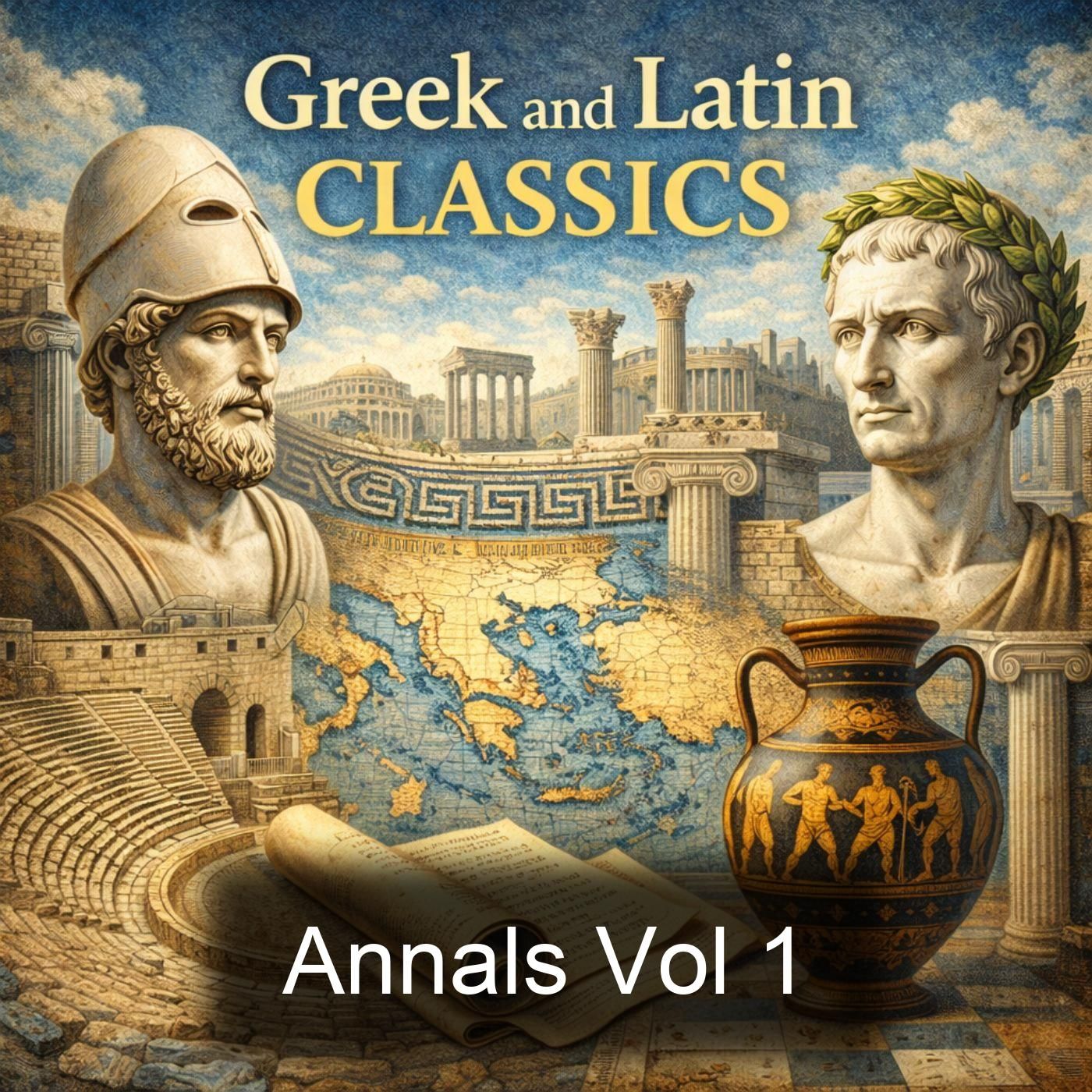
PODCAST · history
Annals Vol 1
by Publius Cornelius Tacitus
In his final masterpiece, The Annals, Tacitus masterfully chronicles the tumultuous years following Augustus Caesars death in 14 AD. Although he aimed to write at least 16 books, several sections have been lost to history, including books 7-10 and parts of books 5, 6, 11, and 16. The narrative culminates with Tiberiuss death, leaving us to ponder how Tacitus would have depicted the reigns of Caligula and Claudius, leading into the dramatic events of Nero’s rule and his death in June 68 AD. Tacituss ambition for a comprehensive history of the early Empire remains unfulfilled, as he passed away before detailing the lives of Nerva and Trajan. This gripping historical account, rich with insight, offers a captivating glimpse into a critical era of Roman history, leaving us to wonder about the depths of Tacituss intended revelations. (Summary from Wikipedia.)
-
12
012 - Book 3 Part 4
In his final masterpiece, The Annals, Tacitus masterfully chronicles the tumultuous years following Augustus Caesars death in 14 AD. Although he aimed to write at least 16 books, several sections have been lost to history, including books 7-10 and parts of books 5, 6, 11, and 16. The narrative culminates with Tiberiuss death, leaving us to ponder how Tacitus would have depicted the reigns of Caligula and Claudius, leading into the dramatic events of Nero’s rule and his death in June 68 AD. Tacituss ambition for a comprehensive history of the early Empire remains unfulfilled, as he passed away before detailing the lives of Nerva and Trajan. This gripping historical account, rich with insight, offers a captivating glimpse into a critical era of Roman history, leaving us to wonder about the depths of Tacituss intended revelations. (Summary from Wikipedia.)
-
11
011 - Book 3 Part 3
In his final masterpiece, The Annals, Tacitus masterfully chronicles the tumultuous years following Augustus Caesars death in 14 AD. Although he aimed to write at least 16 books, several sections have been lost to history, including books 7-10 and parts of books 5, 6, 11, and 16. The narrative culminates with Tiberiuss death, leaving us to ponder how Tacitus would have depicted the reigns of Caligula and Claudius, leading into the dramatic events of Nero’s rule and his death in June 68 AD. Tacituss ambition for a comprehensive history of the early Empire remains unfulfilled, as he passed away before detailing the lives of Nerva and Trajan. This gripping historical account, rich with insight, offers a captivating glimpse into a critical era of Roman history, leaving us to wonder about the depths of Tacituss intended revelations. (Summary from Wikipedia.)
-
10
010 - Book 3 Part 2
In his final masterpiece, The Annals, Tacitus masterfully chronicles the tumultuous years following Augustus Caesars death in 14 AD. Although he aimed to write at least 16 books, several sections have been lost to history, including books 7-10 and parts of books 5, 6, 11, and 16. The narrative culminates with Tiberiuss death, leaving us to ponder how Tacitus would have depicted the reigns of Caligula and Claudius, leading into the dramatic events of Nero’s rule and his death in June 68 AD. Tacituss ambition for a comprehensive history of the early Empire remains unfulfilled, as he passed away before detailing the lives of Nerva and Trajan. This gripping historical account, rich with insight, offers a captivating glimpse into a critical era of Roman history, leaving us to wonder about the depths of Tacituss intended revelations. (Summary from Wikipedia.)
-
9
009 - Book 3 Part 1
In his final masterpiece, The Annals, Tacitus masterfully chronicles the tumultuous years following Augustus Caesars death in 14 AD. Although he aimed to write at least 16 books, several sections have been lost to history, including books 7-10 and parts of books 5, 6, 11, and 16. The narrative culminates with Tiberiuss death, leaving us to ponder how Tacitus would have depicted the reigns of Caligula and Claudius, leading into the dramatic events of Nero’s rule and his death in June 68 AD. Tacituss ambition for a comprehensive history of the early Empire remains unfulfilled, as he passed away before detailing the lives of Nerva and Trajan. This gripping historical account, rich with insight, offers a captivating glimpse into a critical era of Roman history, leaving us to wonder about the depths of Tacituss intended revelations. (Summary from Wikipedia.)
-
8
008 - Book 2 Part 4
In his final masterpiece, The Annals, Tacitus masterfully chronicles the tumultuous years following Augustus Caesars death in 14 AD. Although he aimed to write at least 16 books, several sections have been lost to history, including books 7-10 and parts of books 5, 6, 11, and 16. The narrative culminates with Tiberiuss death, leaving us to ponder how Tacitus would have depicted the reigns of Caligula and Claudius, leading into the dramatic events of Nero’s rule and his death in June 68 AD. Tacituss ambition for a comprehensive history of the early Empire remains unfulfilled, as he passed away before detailing the lives of Nerva and Trajan. This gripping historical account, rich with insight, offers a captivating glimpse into a critical era of Roman history, leaving us to wonder about the depths of Tacituss intended revelations. (Summary from Wikipedia.)
-
7
007 - Book 2 Part 3
In his final masterpiece, The Annals, Tacitus masterfully chronicles the tumultuous years following Augustus Caesars death in 14 AD. Although he aimed to write at least 16 books, several sections have been lost to history, including books 7-10 and parts of books 5, 6, 11, and 16. The narrative culminates with Tiberiuss death, leaving us to ponder how Tacitus would have depicted the reigns of Caligula and Claudius, leading into the dramatic events of Nero’s rule and his death in June 68 AD. Tacituss ambition for a comprehensive history of the early Empire remains unfulfilled, as he passed away before detailing the lives of Nerva and Trajan. This gripping historical account, rich with insight, offers a captivating glimpse into a critical era of Roman history, leaving us to wonder about the depths of Tacituss intended revelations. (Summary from Wikipedia.)
-
6
006 - Book 2 Part 2
In his final masterpiece, The Annals, Tacitus masterfully chronicles the tumultuous years following Augustus Caesars death in 14 AD. Although he aimed to write at least 16 books, several sections have been lost to history, including books 7-10 and parts of books 5, 6, 11, and 16. The narrative culminates with Tiberiuss death, leaving us to ponder how Tacitus would have depicted the reigns of Caligula and Claudius, leading into the dramatic events of Nero’s rule and his death in June 68 AD. Tacituss ambition for a comprehensive history of the early Empire remains unfulfilled, as he passed away before detailing the lives of Nerva and Trajan. This gripping historical account, rich with insight, offers a captivating glimpse into a critical era of Roman history, leaving us to wonder about the depths of Tacituss intended revelations. (Summary from Wikipedia.)
-
5
005 - Book 2 Part 1
In his final masterpiece, The Annals, Tacitus masterfully chronicles the tumultuous years following Augustus Caesars death in 14 AD. Although he aimed to write at least 16 books, several sections have been lost to history, including books 7-10 and parts of books 5, 6, 11, and 16. The narrative culminates with Tiberiuss death, leaving us to ponder how Tacitus would have depicted the reigns of Caligula and Claudius, leading into the dramatic events of Nero’s rule and his death in June 68 AD. Tacituss ambition for a comprehensive history of the early Empire remains unfulfilled, as he passed away before detailing the lives of Nerva and Trajan. This gripping historical account, rich with insight, offers a captivating glimpse into a critical era of Roman history, leaving us to wonder about the depths of Tacituss intended revelations. (Summary from Wikipedia.)
-
4
004 - Book 1 Part 4
In his final masterpiece, The Annals, Tacitus masterfully chronicles the tumultuous years following Augustus Caesars death in 14 AD. Although he aimed to write at least 16 books, several sections have been lost to history, including books 7-10 and parts of books 5, 6, 11, and 16. The narrative culminates with Tiberiuss death, leaving us to ponder how Tacitus would have depicted the reigns of Caligula and Claudius, leading into the dramatic events of Nero’s rule and his death in June 68 AD. Tacituss ambition for a comprehensive history of the early Empire remains unfulfilled, as he passed away before detailing the lives of Nerva and Trajan. This gripping historical account, rich with insight, offers a captivating glimpse into a critical era of Roman history, leaving us to wonder about the depths of Tacituss intended revelations. (Summary from Wikipedia.)
-
3
003 - Book 1 Part 3
In his final masterpiece, The Annals, Tacitus masterfully chronicles the tumultuous years following Augustus Caesars death in 14 AD. Although he aimed to write at least 16 books, several sections have been lost to history, including books 7-10 and parts of books 5, 6, 11, and 16. The narrative culminates with Tiberiuss death, leaving us to ponder how Tacitus would have depicted the reigns of Caligula and Claudius, leading into the dramatic events of Nero’s rule and his death in June 68 AD. Tacituss ambition for a comprehensive history of the early Empire remains unfulfilled, as he passed away before detailing the lives of Nerva and Trajan. This gripping historical account, rich with insight, offers a captivating glimpse into a critical era of Roman history, leaving us to wonder about the depths of Tacituss intended revelations. (Summary from Wikipedia.)
-
2
002 - Book 1 Part 2
In his final masterpiece, The Annals, Tacitus masterfully chronicles the tumultuous years following Augustus Caesars death in 14 AD. Although he aimed to write at least 16 books, several sections have been lost to history, including books 7-10 and parts of books 5, 6, 11, and 16. The narrative culminates with Tiberiuss death, leaving us to ponder how Tacitus would have depicted the reigns of Caligula and Claudius, leading into the dramatic events of Nero’s rule and his death in June 68 AD. Tacituss ambition for a comprehensive history of the early Empire remains unfulfilled, as he passed away before detailing the lives of Nerva and Trajan. This gripping historical account, rich with insight, offers a captivating glimpse into a critical era of Roman history, leaving us to wonder about the depths of Tacituss intended revelations. (Summary from Wikipedia.)
-
1
001 - Book 1 Part 1
In his final masterpiece, The Annals, Tacitus masterfully chronicles the tumultuous years following Augustus Caesars death in 14 AD. Although he aimed to write at least 16 books, several sections have been lost to history, including books 7-10 and parts of books 5, 6, 11, and 16. The narrative culminates with Tiberiuss death, leaving us to ponder how Tacitus would have depicted the reigns of Caligula and Claudius, leading into the dramatic events of Nero’s rule and his death in June 68 AD. Tacituss ambition for a comprehensive history of the early Empire remains unfulfilled, as he passed away before detailing the lives of Nerva and Trajan. This gripping historical account, rich with insight, offers a captivating glimpse into a critical era of Roman history, leaving us to wonder about the depths of Tacituss intended revelations. (Summary from Wikipedia.)
We're indexing this podcast's transcripts for the first time — this can take a minute or two. We'll show results as soon as they're ready.
No matches for "" in this podcast's transcripts.
No topics indexed yet for this podcast.
Loading reviews...
ABOUT THIS SHOW
In his final masterpiece, The Annals, Tacitus masterfully chronicles the tumultuous years following Augustus Caesars death in 14 AD. Although he aimed to write at least 16 books, several sections have been lost to history, including books 7-10 and parts of books 5, 6, 11, and 16. The narrative culminates with Tiberiuss death, leaving us to ponder how Tacitus would have depicted the reigns of Caligula and Claudius, leading into the dramatic events of Nero’s rule and his death in June 68 AD. Tacituss ambition for a comprehensive history of the early Empire remains unfulfilled, as he passed away before detailing the lives of Nerva and Trajan. This gripping historical account, rich with insight, offers a captivating glimpse into a critical era of Roman history, leaving us to wonder about the depths of Tacituss intended revelations. (Summary from Wikipedia.)
HOSTED BY
Publius Cornelius Tacitus
Loading similar podcasts...
Frequently Asked Questions
How many episodes does Annals Vol 1 have?
Annals Vol 1 currently has 12 episodes available on PodParley. New episodes are automatically indexed when they're published to the podcast feed.
What is Annals Vol 1 about?
In his final masterpiece, The Annals, Tacitus masterfully chronicles the tumultuous years following Augustus Caesars death in 14 AD. Although he aimed to write at least 16 books, several sections have been lost to history, including books 7-10 and parts of books 5, 6, 11, and 16. The narrative...
How often does Annals Vol 1 release new episodes?
Annals Vol 1 has 12 episodes. Check the episode list to see recent publication dates and frequency.
Where can I listen to Annals Vol 1?
You can listen to Annals Vol 1 on PodParley by clicking any episode. We provide an embedded audio player for direct listening, and you can also subscribe via your preferred podcast app using the RSS feed.
Who hosts Annals Vol 1?
Annals Vol 1 is created and hosted by Publius Cornelius Tacitus.
URL copied to clipboard!