
PODCAST · music
Audiotopsy
by Audiotopsy: Dissecting our Emotional Relationship with Music
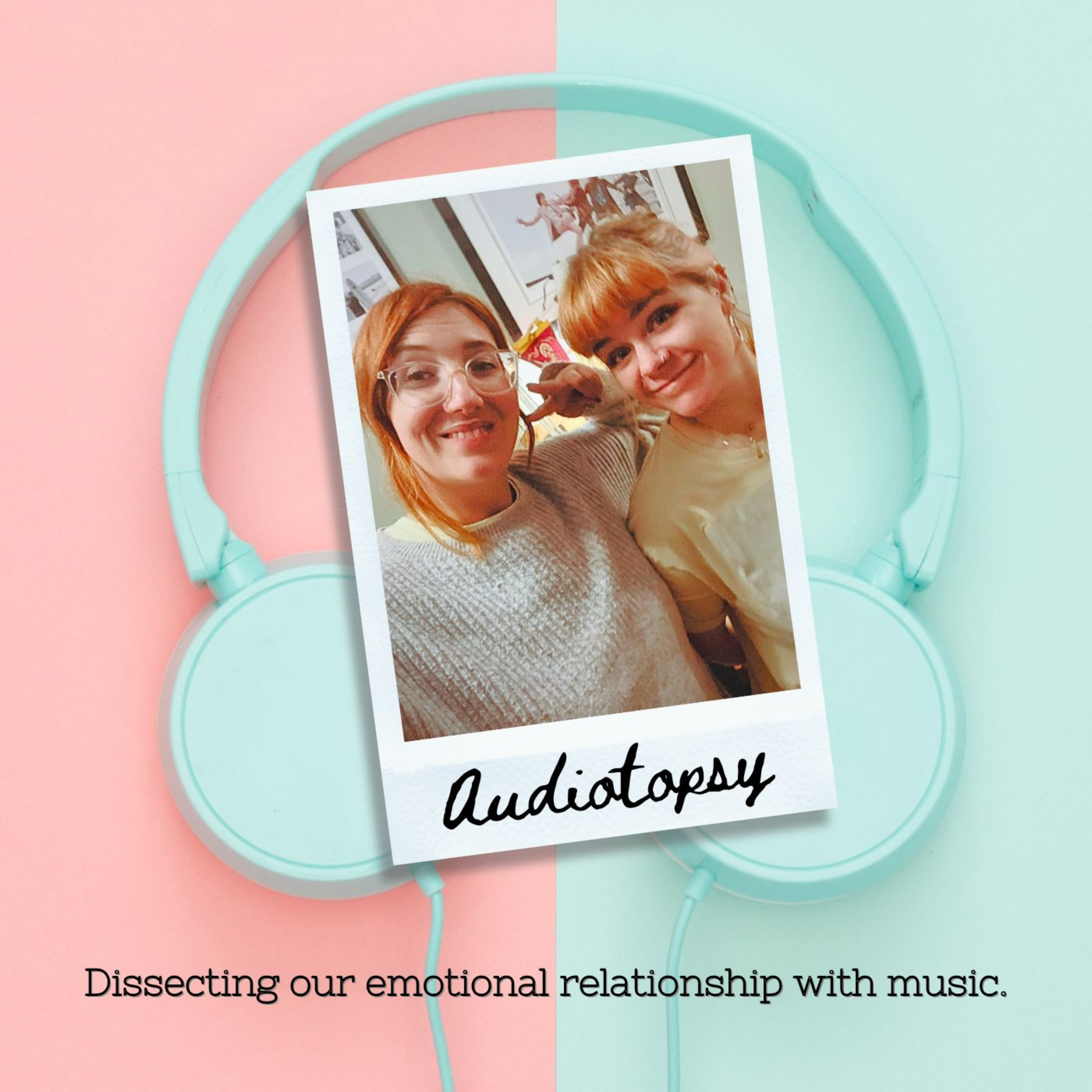
Dissecting our emotional relationship with music. Come with us as we explore how music psychology can explain how our favourite pop songs just seem to get us right in the feels!
-
6
FIVE: The Drop
In this episode, We explore the genre of Electronic Dance Music and discuss the psychology behind why we often have such strong emotional reactions to the breakdown, build up and drop sections of an EDM track. We explore the musical tools used by DJs and producers to make us feel all the things every time we listen and we're contextualising all of this in the wonderful work of one of our favourite music psychologists, David Huron. References Fikentscher, K. (2000) “You better work!”: Underground dance music in new york city. Hanover, N.H.: University Press of New England. Huron, D. (2006) Sweet anticipation: Music and the psychology of expectation. The MIT Press. Solberg, R. & Dibben, N. (2019) Peak experiences with electronic dance music: Subjective experiences, physiological responses, and musical characteristics of the break routine. Music Perception, 36 (4). pp. 371-389. DOI: https://doi.org/10.1525/mp.2019.36.4.371 Solberg, R. (2014) “Waiting for the bass to drop”: Correlations between intense emotional experiences and production techniques in build-up and drop sections of electronic dance music. Dancecult 6(1):61-82. DOI:10.12801/1947-5403.2014.06.01.04 Turrel, A., Halpern, A., & Javadi, A. (2019) When tension is exciting: an EEG exploration of excitement in music. bioRxiv 637983. DOI: https://doi.org/10.1101/637983
-
5
FOUR: The Chills
Goosebumps, chills, frission - whatever you call it, its counted as one of the most intense emotional experiences we can have when listening to music. In this episode, we explore what it is about music and our own psychology that gives us that special tingly feeling when listening to certain songs. We'll explore the theory and contextualise it in a couple of songs that we find particularly spine tingling. References Bannister, S. (2020a). A survey into the experience of musically induced chills: Emotions, situations and music. Psychology of Music, 48(2), 297–314. https://doi.org/10.1177/0305735618798024 Blood, A. J., & Zatorre, R. J. (2001). Intensely pleasurable responses to music correlate with activity in brain regions implicated in reward and emotion. Proceedings of the National Academy of Sciences of the United States of America, 98(20), 11818–11823. https://doi.org/10.1073/pnas.191355898 de Fleurian, R., & Pearce, M. T. (2021). Chills in music: A systematic review. Psychological Bulletin, 147(9), 890–920. https://doi.org/10.1037/bul0000341 Grewe, O., Nagel, F., Kopiez, R., & Altenmüller, E. (2007). Listening to music as a re-creative process: Physiological, psychological, and psychoacoustical correlates of chills and strong emotions. Music Perception, 24(3), 297–314. https://doi.org/10.1525/mp.2007.24.3.297 Koelsch, S. (2010). Towards a neural basis of music-evoked emotions. Trends in Cognitive Sciences, 14(3), 131–137. https://doi.org/10.1016/j.tics.2010.01.002 Panksepp, J. (1995). The emotional sources of "chills" induced by music. Music Perception, 13(2), 171–207. https://doi.org/10.2307/40285693 Sachs, M. E., Ellis, R. J., Schlaug, G., & Loui, P. (2016). Brain connectivity reflects human aesthetic responses to music. Social Cognitive and Affective Neuroscience, 11(6), 884–891. https://doi.org/10.1093/scan/nsw009 Sloboda, J. A. (1991). Music structure and emotional response: Some empirical findings. Psychology of Music, 19(2), 110–120. https://doi.org/10.1177/0305735691192002
-
4
THREE: Lauren's Songs
Join us for episode 3 where we're dissecting 2 songs chosen by Lauren for their ability to make her feel all the things! We're going from one extreme to the other today as we analyse the songs and discuss the psychological theory that supports how in the world such contrasting songs can evoke such powerful emotions. Reference List Bowling, D. (2013) A vocal basis for the affective character of musical mode in melody. Frontiers in Psychology, 4. https://doi.org/10.3389/fpsyg.2013.00464 Cameron, D.J., Dotov, D., Flaten, E., Bosnyak, D., Hove, M. & Trainer, L. (2022) Undetectable very-low frequency sound increases dancing at a live concert. Current Biology 32, R1201–R1225, https://www.cell.com/action/showPdf?pii=S0960-9822%2822%2901535-4 Garrido, S., & Schubert, E. (2011). Individual differences in the enjoyment of negative emotion in music: a literature review and experiment. Music Perception, 28(3), 279–296. https://doi.org/10.1525/mp.2011.28.3.279 Garrido, S., & Schubert, E. (2013). Adaptive and maladaptive attraction to negative emotions in music. Musicae Scientiae, 17(2), 147–166. https://doi.org/10.1177/1029864913478305 Matthews, T. E., Witek, M. A. G., Thibodeau, J. L. N., Vuust, P., Penhune, V. B. (2022) Perceived motor synchrony with the beat is more strongly related to groove than measured synchrony. Music Perception 29 (5): 423–442. https://doi.org/10.1525/mp.2022.39.5.423 Sachs, M., Damasio, A., & Habibi, A. (2021). Unique personality profiles predict when and why sad music is enjoyed. Psychology of Music, 49(5), 1145–1164. https://doi.org/10.1177/0305735620932660 Stupacher, J., Hove, M. J., Janata, P. (2016) Audio features underlying perceived groove and sensorimotor synchronisation in music. Music Perception 33(5):571-589, DOI:10.1525/mp.2016.33.5.571 Van der Zwag, M., Westerink, J., Van der Broek, E. L. (2011) Emotional and psychophysiological responses to tempo, mode, and percussiveness. Musicae Scientiae 15(2):250-269. DOI:10.1177/1029864911403364 Zeloni, G., & Pavani, F. (2022). Minor second intervals: A shared signature for infant cries and sadness in music. i-Perception, 13(2), 20416695221092471. https://doi.org/10.1177/20416695221092471
-
3
TWO: Kelly's Songs
It's time for episode 2! Join us as we put 2 songs chosen by Kelly under the microscope in order to examine how and why she has such a strong emotional relationship with them. We start by breaking down the musical elements of each song and then we dive into the wonderful world of music psychology in an attempt to explain the hold that these two songs have over Kelly's heart strings. Also, you'll be introduced to the work of Lauren's favourite music psychologist ever, the legend that is David Huron. References Huron, D. (2014) The effects of emotional expression on vibrato. Journal of voice: official journal of the Voice Foundation 29(2) DOI:10.1016/j.jvoice.2014.06.007 Huron, D. (2015) Affect induction through musical sounds: an ethnological perspective. Philosophical Transactions of The Royal Society B Biological Sciences, 370(1664) DOI:10.1098/rstb.2014.0098 Meyer, L. B. (1956) Emotion and meaning in music. University of Chicago Press. Google Scholar Mirrae, Y. (2020). Exploring melismatic singing and the effects of emotional expression in contemporary music (Version 1). Macquarie University. https://doi.org/10.25949/19433801.v1
-
2
ONE: The Theory Episode
Have you ever wondered why music makes us feel such strong emotions? Music has the power to motivate us, energise us, lift our mood or even reduce us to tears, but how? In this first episode, we introduce the podcast and discuss the psychology behind our emotions as well as current theories on how and why music makes us feel things. To kick things off on a cheery note, we also discuss the last songs we cried to and try not to get embarrassed about what they were. You don't need to be a psychologist or a musician to enjoy this podcast! You just need a love of music and a healthy curiosity about how it manages to get us right in the feels. References: Cherry, K. (2023, February 27). Overview of the 6 Major Theories of Emotion. Verywell Mind. https://www.verywellmind.com/theories-of-emotion-2795717#:~:text=Physiological%20theories%20suggest%20that%20responses Jones, M. R. (Ed.). (2010). Music perception: Current research and future directions. In M. R. Jones, R. R. Fay, & A. N. Popper (Eds.), Music perception (pp. 1–12). Springer Science + Business Media. https://doi.org/10.1007/978-1-4419-6114-3_1 Huron, D. B. (2006) Sweet anticipation: Music and the psychology of expectation. Cambridge, Mass.: MIT Press. [electronic resource] Koelsch, S. (2014) Brain correlates of music-evoked emotions. Nat Rev Neurosci 15, 170–180 https://doi.org/10.1038/nrn3666 Mitterschiffthaler, M.T. et al. (2007) A functional MRI study of happy and sad affective states induced by classical music. Human brain mapping, 28(11), pp. 1150–1162. doi:10.1002/hbm.20337 Sloboda, J. A. (1991). Music structure and emotional response: Some empirical findings. Psychology of Music, 19(2), 110–120. https://doi.org/10.1177/0305735691192002 Sloboda, J. A., & Juslin, P. N. (2001). Psychological perspectives on music and emotion. In P. N. Juslin & J. A. Sloboda (Eds.), Music and emotion: Theory and research (pp. 71–104). Oxford University Press.
-
1
Trailer: An Introduction to Audiotopsy
What's it all about? Well, hopefully this little intro gives you the gist and whets your appetite for things to come! Thanks for listening - please like and subscribe to catch our first full episode coming January 31st 2024!
We're indexing this podcast's transcripts for the first time — this can take a minute or two. We'll show results as soon as they're ready.
No matches for "" in this podcast's transcripts.
No topics indexed yet for this podcast.
Loading reviews...
ABOUT THIS SHOW
Dissecting our emotional relationship with music. Come with us as we explore how music psychology can explain how our favourite pop songs just seem to get us right in the feels!
HOSTED BY
Audiotopsy: Dissecting our Emotional Relationship with Music
CATEGORIES
Loading similar podcasts...
Frequently Asked Questions
How many episodes does Audiotopsy have?
Audiotopsy currently has 6 episodes available on PodParley. New episodes are automatically indexed when they're published to the podcast feed.
What is Audiotopsy about?
Dissecting our emotional relationship with music. Come with us as we explore how music psychology can explain how our favourite pop songs just seem to get us right in the feels!
How often does Audiotopsy release new episodes?
Audiotopsy has 6 episodes. Check the episode list to see recent publication dates and frequency.
Where can I listen to Audiotopsy?
You can listen to Audiotopsy on PodParley by clicking any episode. We provide an embedded audio player for direct listening, and you can also subscribe via your preferred podcast app using the RSS feed.
Who hosts Audiotopsy?
Audiotopsy is created and hosted by Audiotopsy: Dissecting our Emotional Relationship with Music.
URL copied to clipboard!