
PODCAST · education
Better Relationships Through Research
by Produced by PodTechs
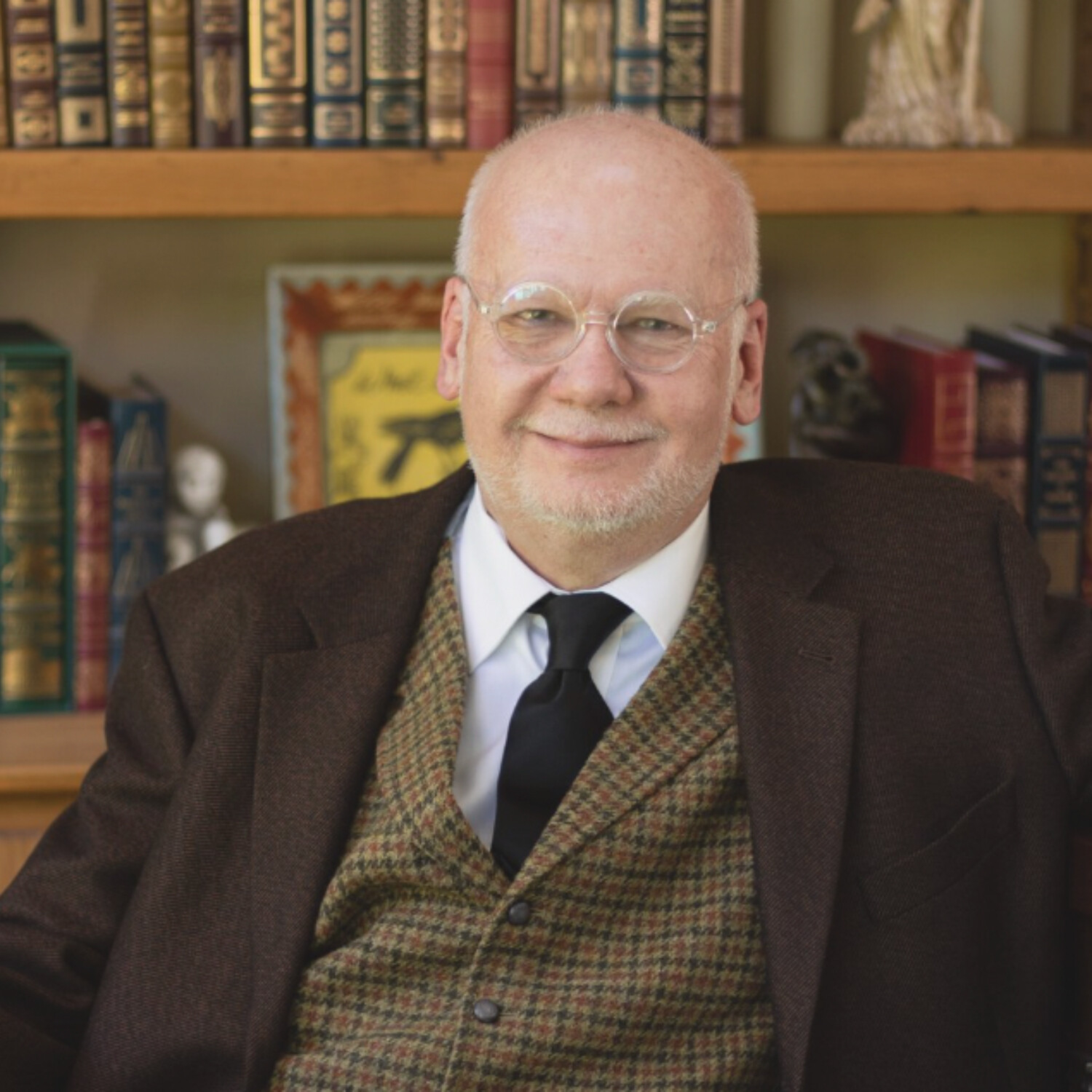
Hosted by Daniel Dashnaw who is a published researcher, a serial entrepreneur, a father, and a grandfather.Mr. Dashnaw has a Master's (MA) in Marriage and Family Therapy from Antioch of New England, and a Master’s (MS) in Labor Studies from the University of Massachusetts at Amherst.
-
13
Deprogramming Desire — with Dr. Chris Donaghue
What happens when a respectfully monogamous therapist sits down with one of the most outspoken voices in modern sex therapy? In this episode, Daniel Dashnaw talks with Dr. Chris Donaghue, psychotherapist, media personality, and author of Rebel Love and Sex Outside the Lines, about what it really means to “deprogram” desire. Together, they explore how culture, capitalism, trauma, and shame shape our erotic blueprints, and how conscious relationships can transform those inherited scripts. Donaghue discusses how his views on monogamy have evolved over time, the balance between freedom and commitment, and why both can serve as crucibles for growth when chosen consciously. Daniel and Chris also dive deep into the tension between attachment and differentiation, how to stay connected to another without losing yourself. Along the way, they confront the cultural fetishization of safety, the developmental work of risk and truth-telling, and how growth often begins right where comfort ends. You’ll Hear About: Why sexual shame is less personal than culturalHow capitalism and religion shaped our ideas of love and fidelityThe “fetish of safety” and why growth demands riskThe difference between attachment and differentiation in relationshipsHow both monogamy and nonmonogamy can serve consciousness—when chosen intentionally Guest: Dr. Chris Donaghue is a psychotherapist and the author of Sex Outside the Lines and Rebel Love. His work challenges mainstream ideas about monogamy, desire, and moralized sexuality, inviting people to cultivate more authentic, embodied, and compassionate forms of connection. If this episode stirred something in you, curiosity, discomfort, or simply the desire to think more deeply about love and commitment. I invite you to explore my written work on the blog. Each post extends these conversations with research-based commentary on relationships, intimacy, and the hidden dynamics that shape how we love. You’ll find articles on attachment, conflict, sexuality, and the psychology behind the habits that make relationships thrive. Visit the blog to keep learning, stay connected, and deepen the work.
-
12
Is Your “Type” Just Clay? The Science of Attraction & Shifting Ideals
We all think we have a type, tall and outdoorsy, witty and bookish, maybe even someone who can fold a fitted sheet. But what if “your type” isn’t destiny? What if it’s clay, malleable, reshaped by your experiences and choices? In this episode of Better Relationships Through Research, marriage and family therapist Daniel Dashnaw unpacks a new study published in the Personality and Social Psychology Bulletin that literally rewired people’s romantic preferences. The findings reveal that attraction isn’t a fixed script, it’s more like jazz: improvisational, adaptive, and deeply influenced by the values you choose to emphasize. Daniel explores: - Why “ideal partner preferences” matter in relationship science - How our minds reframe traits, seeing flaws as quirks or strengths - The two big forces at work: motivated projection (seeing more of what you value in your partner) and situation selection (choosing environments where those traits thrive) - Why attraction lists often fail in real life, and how to focus on safety, connection, and being truly seen - The takeaway? Your type is flexible. It bends with your experiences, with what you choose to value, and with how you decide to see your partner. ✨ Support Daniel’s Work If this podcast or Daniel’s blog has sparked reflection or given you tools for your own relationships, consider supporting his work. You can now make micro-donations through Buy Me a Coffee, PayPal, or Cash App—with direct links available in the footer of Daniel’s website. Regular supporters also gain access to private posts and deeper dives into the research behind love and intimacy.
-
11
Growing Into Love, The Science of Positive Illusions & The Michelangelo Effect
Romantic comedies sell us the myth of instant compatibility, find your soulmate, cue the fireworks, and live happily ever after. But real couples know love doesn’t just arrive fully formed; it’s something you grow into. In this solo episode of Better Relationships Through Research, marriage and family therapist Daniel Dashnaw unpacks what decades of psychology research reveals about how partners truly shape each other over time. From positive illusions that soften our view of each other’s quirks, to the Michelangelo Effect that shows how couples sculpt one another’s best selves, Daniel explores why long-term love is less about perfection and more about growth. You’ll hear about: - Why happy couples don’t see each other with “cold-eyed objectivity” - How attraction and even “our type” bend to fit the partner we choose - What supportive chiseling looks like versus controlling critique - The science of self-expansion: how two lives intertwine into a shared future - At its core, this episode reveals why “growing into your partner” isn’t a consolation prize, it’s the quiet mechanism that makes commitment last. ✨ Support Daniel’s Work If Daniel’s blog or podcast has been meaningful to you, consider supporting with a small donation. New micro-donation options are now available directly through Buy Me a Coffee, PayPal, and Cash App. You’ll find the links in the footer of Daniel’s website, where regular supporters will also gain access to private posts and deeper dives.
-
10
7 Hidden Signs of a Healthy Love Nobody Talks About
Healthy relationships don’t always sound dramatic. Often, they sound like quiet understanding in the kitchen, like a pause in the middle of conflict, or like a gentle “That makes sense.” In this follow-up to his previous episode on relationship language, Daniel Dashnaw shares seven more phrases emotionally secure people say, and what they reveal about trust, connection, and repair. From “I don’t need you to fix it” to “How can I love you better right now?” each phrase is rooted in attachment science, co-regulation, and the ethics of care. Daniel explores how these everyday words aren’t just nice, they’re neuroscience-backed signals of real emotional safety and partnership. 💬 if you’re a therapist, in a relationship, or just trying to love better, this episode offers real-world language that fosters deeper intimacy and secure functioning. 🧠✨ Want to support Daniel’s ad-free, research-based podcast? You can now buy him a coffee through the link in the footer of his website. Every micro-contribution helps keep this work going.
-
9
7 Phrases That Signal Real Relationship Health
In this monologue episode, Daniel Dashnaw shares seven phrases that reveal the heart of a healthy relationship, not just in words, but in how they shape the nervous system, build trust, and support lasting connection. From “I don’t feel like I have to walk on eggshells with you” to “Let’s figure out how this fits into both of our lives,” Daniel explores what these statements really mean, and why they matter. Drawing on clinical insight and attachment science, he explains how language can reflect deep safety, co-regulation, and secure functioning in partnerships. are you building a new relationship or strengthening a long-term one? These seven statements can become guideposts for emotional attunement and resilient love. Want to support Daniel’s work? You can now buy him a coffee via the link in the footer of his website. Every micro-contribution helps keep this podcast ad-free and deeply researched.
-
8
Why “Tough Love” Fails and What Actually Works
In this episode of Better Relationships Through Research, Daniel sits down with renowned educator, author, and therapist Dr. Linda Metcalf, PhD. With decades of experience in both clinical settings and public education, Linda brings a refreshing, compassionate lens to therapy and school systems alike. Together, they explore: ✅ The origin and power of Solution-Focused Narrative Therapy ✅ How to engage neurodivergent clients and couples using postmodern approaches ✅ The essential role of language, curiosity, and emotional safety in school settings ✅ Why teacher burnout affects students—and how to rehumanize classrooms ✅ Her work training entire schools to shift from punishment to curiosity and connection ✅ What we can learn from the “throwaway kids” who thrive when given a voice ✅ Her belief that resistance doesn’t exist—only the need for more flexible therapists Whether you're a clinician, educator, parent, or simply someone curious about reshaping systems for better connection, this conversation is rich with heart, strategy, and hope.
-
7
The Mental Load: How to Ask for Shared Responsibility Without Starting a War
In this Monologue episode, marriage and family therapist Daniel Dashnaw explores one of the most emotionally charged topics in modern relationships: the invisible mental load. From meal planning and remembering birthdays to managing household logistics and emotional weather, many partners—often women—carry an unspoken weight that goes unacknowledged until it explodes. Daniel walks listeners through why this conversation so often triggers defensiveness and how to have it differently: with vulnerability, clarity, and a shared desire to rebalance the partnership. You’ll learn: Why the phrase “Why didn’t you just ask?” can be so triggeringHow cultural patterns and relational dynamics shape the mental loadA 5-step framework for talking about shared responsibility without blameWhat true mental co-ownership looks like—and how to invite it Whether you’re feeling burned out, unseen, or just ready for deeper teamwork, this episode offers a compassionate guide to preserving love before resentment takes root. Visit www.danielcouplestherapy.com for more writing, or connect with Daniel on Instagram.
-
6
Is Marriage Bad for Your Brain? Debunking the Research on Cognitive Decline
You may have seen the headline: Divorced and unmarried people have less cognitive decline than those who are married. Surprising? Yes. But is it true? In this solo monologue, therapist Daniel Dashnaw unpacks a widely circulated study from Florida State University that claims being single may protect your brain. Daniel takes a critical look at the methodology behind the research—highlighting its failure to distinguish marital status from marital quality—and explains why the nuance really matters. Through clinical insight and common sense, Daniel offers a more grounded perspective on how intimate relationships affect cognitive health, memory, and well-being over time. He explores how loving partnerships can serve as emotional anchors and cognitive mirrors, helping us track changes, reduce stress, and live longer, fuller lives. This is a must-listen for anyone curious about the real science behind relationships and longevity—without the media spin. 📝 Read more about Daniels views on relationships on his blog at danieldashnawcouplestherapy.com 🎧 Better Relationships Through Research is available wherever you get your podcasts.
-
5
Rick Miller on Love & Communication
In this episode of Better Relationships Through Research, Daniel sits down with internationally recognized psychotherapist Rick Miller, LICSW. Known for his pioneering work with gay men and experiential therapy, Rick brings his decades of clinical experience to an honest and deeply insightful conversation about emotional connection, sexuality, intimacy, and the evolving dynamics of open relationships. Together, they explore: How mindfulness and body awareness can enhance relationship workWhy some gay couples succeed in navigating open relationships—and what straight couples can learn from themThe emotional labor behind non-monogamyWhy therapists need to be trained in sexual healthRick’s new workbook, Opening Up: A Communication Workbook for Male Couples (Available April 17 at https://www.rickmiller.biz/opening-up)The importance of being honest about professional limitations—and why some therapists should refer clients elsewhere when it comes to sexual complexity Whether you’re a therapist, a couple navigating modern intimacy, or simply curious about the edges of relational growth, this conversation is full of wisdom, compassion, and refreshing honesty. Timestamps: 00:00 – Introduction to Rick Miller and his clinical background 01:22 – Rick’s upcoming workbook: Opening Up for Male Couples 02:07 – Experiential therapy, mindfulness, and emotional attunement 03:27 – QR code meditations & integrating tech in therapy 04:34 – Keynote talk preview: “Learning from Gay Male Couples” 05:21 – Therapist missteps in handling open relationships 06:18 – Building frameworks from clinical intuition vs. research 08:03 – Sliding door analogy for non-monogamy 09:31 – Emotional labor and open relationships 11:03 – Real-world examples of navigating polyamory and openness 14:10 – Historical context of gay male sexuality 16:01 – Esther Perel, Michel Weiner-Davis, and evolving views on infidelity 18:13 – The tension between honesty, mystery, and disclosure 19:28 – Monogamy, culture, and shifting generational values 20:48 – Rick's evolution in couples therapy and LGBTQ+ dynamics 22:15 – Stories of real couples navigating love, loss, and renewal 25:09 – Restoring intimacy and communication in long-term relationships 26:16 – Encounter with Michele Weiner-Davis & challenging therapist stereotypes 27:53 – Surveillance culture and privacy in relationships 28:47 – Sexual disconnection in long-term partnerships 30:11 – Realistic expectations for sexual intimacy over time 31:09 – Rick’s reflections on writing the new workbook 33:00 – Visibility and support for gay male couples in literature 36:14 – Outsourcing open relationship work to specialists 37:06 – Merging sexuality and psychotherapy: a growing movement 39:16 – Resources for therapists seeking training in sexual health 40:23 – The rise of modern, inclusive therapists 41:07 – The need for more authentic dialogue about sex 42:21 – Rick’s nonprofit Gay Sons & Mothers and upcoming film 43:18 – Closing thoughts and gratitude 📣 If you enjoyed this conversation, be sure to visit Daniel’s blog and website for more articles, interviews, and insights exploring the intersections of research, intimacy, and therapeutic growth. Subscribe, leave a review, and share this episode with someone you know navigating the evolving landscape of modern relationships.
-
4
Parenting, Resilience, and Emotional Connection: A Conversation with Erica Komisar
In this episode, host Daniel Dashnaw speaks with psychoanalyst, parent coach, and author Erica Komisar about the critical role of emotional presence in the early years of child development and the rising challenges of adolescent anxiety in today’s world. Erica shares practical, research-backed strategies for parents to foster healthy attachment, recognize anxiety, and build resilience in their children. Key Takeaways: Why the first three years of a child’s life are foundational for emotional and psychological well-being. How societal pressures, technology, and changing cultural norms impact family dynamics. The role of parental attunement and curiosity in supporting adolescent mental health. Practical steps to nurture secure connections and navigate modern stressors. Erica’s compassionate approach offers a roadmap for parents, therapists, and caregivers looking to strengthen family bonds amidst the challenges of our fast-paced, often disconnected culture. Erica Komisar is the author of Being There and Chicken Little: The Sky Isn’t Falling and a seasoned expert in family mental health, featured in The Wall Street Journal and Thrive Global. If you enjoyed this conversation, explore Daniel’s extensive library of blogs on relationship research and family therapy at https://danieldashnawcouplestherapy.com/
-
3
Exploring Infidelity in American Culture
In this insightful episode of the Better Relationships Through Research podcast, host Daniel Dashnaw delves into the complex and often controversial topic of infidelity in American culture. Drawing from various examples in popular media, Daniel explores how cultural tropes around infidelity have evolved and their impact on societal attitudes and personal relationships. Key topics discussed include: - The portrayal of infidelity in movies and TV shows like Fatal Attraction and Mad Men. - The dichotomy between infidelity as a moral failure and as a quest for personal fulfillment. - Gender dynamics and how they shape narratives around cheating in relationships. - The historical and social contexts that have influenced American views on fidelity and marriage. Daniel challenges listeners to critically examine these cultural narratives and consider how they influence our personal values and relationship choices. Tune in to gain a deeper understanding of how infidelity is depicted and its broader implications on relationships in society. 🔔 Subscribe to our channel for more episodes focusing on relationship research and counseling practices! #BIPOC #Infidelity #CouplesTherapy #GottmanMethod #Therapy #CulturalSensitivity #RelationshipAdvice
-
2
Addressing BIPOC Infidelity with Dr. Vagdevi V. Meunier, PsyD
In this episode, we delve deep into the complexities of infidelity within BIPOC relationships and how cultural dynamics shape therapeutic practices. Join host Daniel Dashnaw and special guest Dr. Vagdevi Meunier as they explore the Ecological Couples System Diagram (ECSD), a groundbreaking framework that integrates cultural sensitivity with the Gottman Method to better understand and treat infidelity in BIPOC couples. Key topics covered: - The role of cultural myths and stereotypes in infidelity - How therapists can avoid clinical missteps when working with BIPOC couples - The importance of customized training and models in couples therapy - Real-life examples of cultural misunderstandings in therapeutic settings - Don't miss this insightful conversation aimed at bridging the cultural gaps in therapy and fostering better therapeutic outcomes for BIPOC relationships 🔔 Subscribe to our channel for more episodes focusing on relationship research and counseling practices! #BIPOC #Infidelity #CouplesTherapy #GottmanMethod #Therapy #CulturalSensitivity #RelationshipAdvice
-
1
Mona Kay of Neurodiverse Love
Join Daniel Dashnaw and Mona Kay on a journey through the intricate landscapes of monotropism, a cognitive process of neurodiverse humans which sometimes challenges a neurotypical partner. In this episode, we delve into the challenges and nuances faced by those whose minds tend to focus intensely on a single interest or task for long periods, often making transitions daunting. From the struggles of shifting attention to the difficulties of adapting to new environments, Daniel and Mona explore how monotropism shapes everyday experiences. Through self-awareness and using a sensory profile, couples can more deeply understand why each of their brains and nervous systems is sensitive. to particular stimuli. Mona will also explain how critical a Sensory Profile can be to helping neurodivergent clients to better describe their emotions. Our discussion will also uncover the multifaceted nature of monotropic thinking and its impact on individuals across various neurodivergent profiles. But our exploration continues beyond there. We also tackle the vexing issue of transitions—those pivotal moments when monotropic minds can be particularly challenged. Mona describes how Neurodiverse communication often goes awry. She advises that the advantages of being brief and "bullet-pointy" as opposed to "paragraphy," will come when we lose the habit of being "hyper-verbal." Whether it's transitioning between tasks, environments, or social contexts, we unravel the complexities and offer practical strategies for navigating these transitions with greater ease and confidence. Mona discusses the importance of working with the right therapist. You'll also learn about specific tools, such as Mona's neurodiverse workbook and card deck for couples. So, whether you're a neurodivergent partner seeking validation and understanding, a caregiver striving to support your loved one, or simply curious about the fascinating intricacies of the human mind, tune in to gain valuable insights into the problems of monotropism, and the new skill sets to aid transition into a loving neurodiverse relationship.
We're indexing this podcast's transcripts for the first time — this can take a minute or two. We'll show results as soon as they're ready.
No matches for "" in this podcast's transcripts.
No topics indexed yet for this podcast.
Loading reviews...
ABOUT THIS SHOW
Hosted by Daniel Dashnaw who is a published researcher, a serial entrepreneur, a father, and a grandfather.Mr. Dashnaw has a Master's (MA) in Marriage and Family Therapy from Antioch of New England, and a Master’s (MS) in Labor Studies from the University of Massachusetts at Amherst.
HOSTED BY
Produced by PodTechs
Loading similar podcasts...
URL copied to clipboard!