
PODCAST · sports
BiKoPia
by BiKoPia
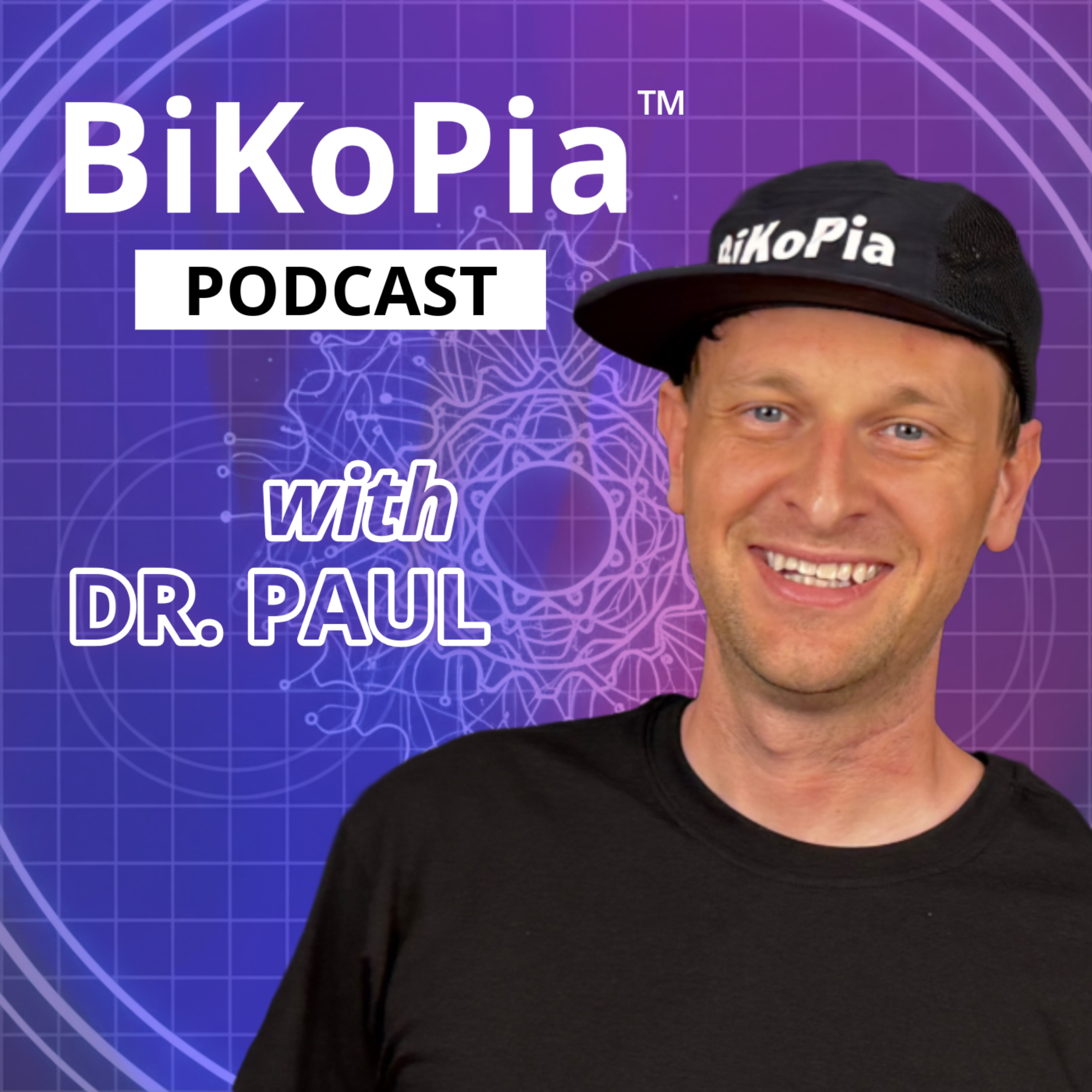
Welcome to the BiKoPia™ Podcast. If you want to understand the science behind your everyday ride, you've come to the right spot. Hosted by Dr. Paul, the Founder of BiKoPia™.
-
1
The N+1 Bikes Trap | BiKoPia 1
Why do we always feel like we need just one more bike? In this episode of the BiKoPia™ podcast, Dr. Paul, the Founder of BiKoPia™ discusses why the infamous N+1 Bikes equation is actually a trap. While the cycling world jokes that the ideal number of bikes is the number you have plus one, the research suggests this mindset leads to a "never-ending more" that doesn't actually make us happier. Using his marketing background, Paul breaks down the psychological fallacies that keep us scrolling through bike listings: Gear Acquisition Syndrome (GAS): This is when we try to buy a version of ourselves. We treat our bikes as a reflection of our identity, often buying gear to fit a certain "persona" created by marketers. Hedonic Adaptation: Also known as the "moving goalpost." You get a massive dopamine spike when you unbox a new $10,000 bike, but your brain eventually returns to a baseline, and that "new bike high" fades. The Diderot Effect: Named after a French philosopher, this is the consumption spiral. Buying one nice thing, like a carbon frame, makes your other parts look "cheap" or inferior, forcing you to upgrade everything else to match. The Paradox of Choice: The idea that more is actually less. Having too many bikes can cause decision fatigue and stress. Instead of enjoying the ride, you spend your time wondering if you should have picked the other bike. Are you a "Maximizer" who researches every detail to death, or are you happy with "good enough"? Join Dr. Paul as he challenges the N+1 Bikes status quo and proposes a new equation for happiness: N-1 Bikes. SourcesHerbst & Mintz (2021): Gear Acquisition Syndrome, Consumption and Identity in Popular Music.Lyubomirsky (2021): The Hedonic Adaptation: The Positive and Negative Experiences.Grant McCracken (1988). "The Diderot Effect: A Theory of the Social Meaning of Consumer Goods."Barry Schwartz (2004): The Paradox of Choice: Why More Is Less.Timestamps00:00 N+1 Bikes Trap04:30 Gear Acquisition Syndrome08:52 Hedonic Adaptation13:08 Diderot Effect19:13 Paradox of Choice29:25 N-1 BikesCreator DisclaimerThe content (including but not limited to stories) shared on bikopia.com and Bikopia LLC’s social media accounts is for entertainment and informational purposes only. Read our full creator disclaimer for more information: https://bikopia.com/pages/creator-disclaimer
We're indexing this podcast's transcripts for the first time — this can take a minute or two. We'll show results as soon as they're ready.
No matches for "" in this podcast's transcripts.
No topics indexed yet for this podcast.
Loading reviews...
ABOUT THIS SHOW
Welcome to the BiKoPia™ Podcast. If you want to understand the science behind your everyday ride, you've come to the right spot. Hosted by Dr. Paul, the Founder of BiKoPia™.
HOSTED BY
BiKoPia
CATEGORIES
Loading similar podcasts...
URL copied to clipboard!