
PODCAST · arts
Books Brothers Podcast
by Books Brothers
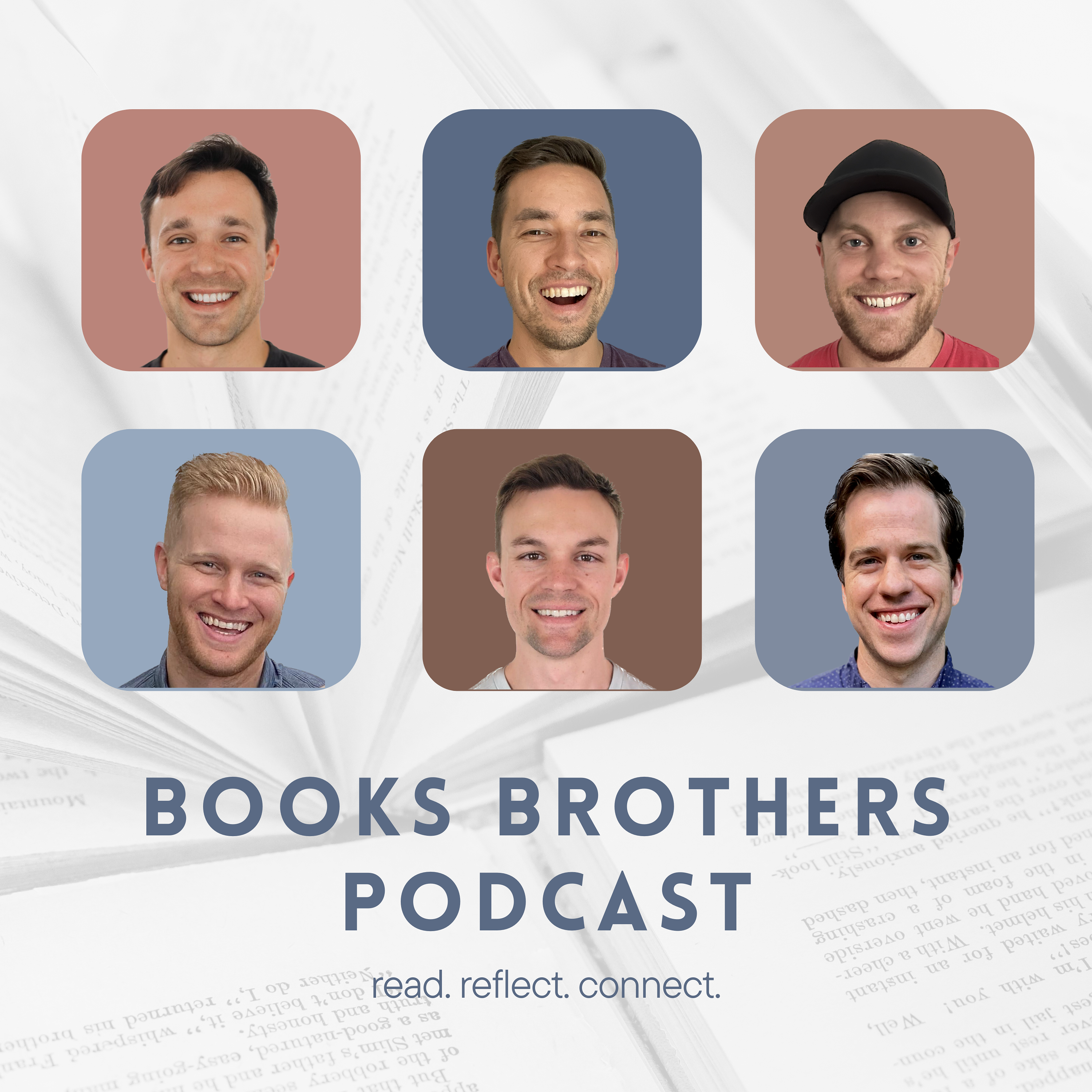
Read. Reflect. Connect. Long-time friends and fraternity brothers Adam (“Stehlin”), Adam (“Flez”), Garrett, Matt, Robb, and Thomas decided to record and share their bookclub as a podcast. You can join alongside them as they read, reflect, and connect to become better men.Connect with us at [email protected].
-
65
Episode 61: Create Shared Meaning (Principle 7)
Garrett leads the discussion of Principle 7: “Create Shared Meaning” and the Afterward from The 7 Principles for Making Marriage Work by John Gottman, PhD.0:31 - “They Don’t Make ‘Em Like They Used To” - Video GamesPrinciple 7 Discussion - “Create Shared Meaning”4:50 - Which Shared Meaning pillar is the most robust in your relationship? Explain why.11:30 - Which Shared Meaning pillar do you want to develop most, and why?25:28 - Robb previews our next book: Becoming a King: The Path to Restoring the Heart of a Man by Morgan SnyderThat wraps up Season 8! We’ll take the next month off. When we return, we’ll read Becoming a King: The Path to Restoring the Heart of a Man by Morgan Snyder.You can buy the book on Amazon by clicking here.You can also borrow it at your local library. Don’t have a library card, or unsure where your local library is? Search on Google Maps, or find your local library by clicking here.Follow us on Instagram @booksbrotherspodcastEmail us at [email protected] subscribe and give us a review! We would really appreciate it.Until next month, read, reflect, and connect.
-
64
Episode 60 - Overcome Gridlock (Principle 6)
Stehlin leads the discussion of Principle 6: “Overcome Gridlock” from The 7 Principles for Making Marriage Work by John Gottman, PhD.2:12 - “The One Thing” - Robb shares his experience going through some of the book’s activities this month.4:18 - “They Don’t Make ‘Em Like They Used To” - Common 90s phrasesPrinciple 6 Discussion - “Overcome Gridlock”8:10 - What are some dreams or core values that you or your spouse hold that have led to conflict in the past?25:11 - What are some ways that you’ve sought to overcome some unsolvable problems in the past? What have you found to be successful?Next week, we’ll discuss Principle 7: “Create Shared Meaning” and the Afterward (pgs. 260-284).You can buy the book on Amazon by clicking here.You can also borrow it at your local library. Don’t have a library card, or unsure where your local library is? Search on Google Maps, or find your local library by clicking here.Follow us on Instagram @booksbrotherspodcastEmail us at [email protected] subscribe and give us a review! We would really appreciate it.Until next week, read, reflect, and connect.
-
63
Episode 59 - Solve Your Solvable Problems (Principle 5)
Flez leads discussion of chapters 9 and 10, which includes Principle 5: “Solve Your Solvable Problems” from The 7 Principles for Making Marriage Work by John Gottman, PhD.0:36 - “They Don’t Make ‘Em Like They Used To” - SnacksPrinciple 5 Discussion - “Solve Your Solvable Problems”4:24 - Share an example of when you did not approach a difficult topic with a soft start up. How did that conversation go? What could you have done differently?9:50 - Think about your last argument. Did either of you throw out a repair attempt? How did you respond to it? What can you do in the future to better seek and receive repair attempts?17:21 - Who is the “saver” and the “spender” in your relationship? Has that caused arguments?31:55 - Why do you think people shy away from talking about porn?Next week, we’ll discuss Principle 6: “Overcome Gridlock” (pgs. 236-259).You can buy the book on Amazon by clicking here.You can also borrow it at your local library. Don’t have a library card, or unsure where your local library is? Search on Google Maps, or find your local library by clicking here.Follow us on Instagram @booksbrotherspodcastEmail us at [email protected] subscribe and give us a review! We would really appreciate it.Until next week, read, reflect, and connect.
-
62
Episode 58 - Let Your Partner Influence You (Principle 4)
Stehlin leads discussion of chapters 7 and 8, which includes Principle 4: “Let Your Partner Influence You” from The 7 Principles for Making Marriage Work by John Gottman, PhD.(2:04) - “They Don’t Make ‘Em Like They Used To” - HairstylesPrinciple 4 Discussion - “Let Your Partner Influence You”(9:15) - What are your thoughts and attitudes towards this chapter regarding “let your partner influence you?(14:30) - Were there any aspects of this chapter, as men, that you disagreed with?(24:10) - What are some perpetual problems that you face in your marriage? What are some of the ways you’ve coped with them well or poorly?Next week, we’ll discuss Principle 5: “Solve Your Solvable Problems” and Chapter 10: “Coping with Typical Solvable Problems” (pgs. 160-235).You can buy the book on Amazon by clicking here.You can also borrow it at your local library. Don’t have a library card, or unsure where your local library is? Search on Google Maps, or find your local library by clicking here.Follow us on Instagram @booksbrotherspodcastEmail us at [email protected] subscribe and give us a review! We would really appreciate it.Until next week, read, reflect, and connect.
-
61
Episode 57 - Turn Toward Each Other Instead of Away (Principle 3)
Robb leads discussion of Principle 3: “Turn Toward Each Other Instead of Away” from The 7 Principles for Making Marriage Work by John Gottman, PhD.(1:55) - “The One Thing”(2:30) - “They Don’t Make ‘Em Like They Used To” - Best 90s TV ShowsPrinciple 3 Discussion - “Turn Toward Each Other Instead of Away”(8:25) - How have you ever caught yourself thinking hatt taking a vacation is the key to improving your marriage, instead of focusing on everyday connections? Why do we tend to glorify vacation instead of the beauty of everyday life?(18:30) - Guys share recent examples in their relationship where they have not turned toward their partner(31:07) - How do you see stress-reducing conversations play out today with your spouse? Are there any steps in stress reducing that you consistently succeed or fail at?Next week, we’ll discuss Principle 4: “Let Your Partner Influence You” and chapter 8: “The Two Kinds of Marital Conflict” (pgs. 115-159).You can buy the book on Amazon by clicking here.You can also borrow it at your local library. Don’t have a library card, or unsure where your local library is? Search on Google Maps, or find your local library by clicking here.Follow us on Instagram @booksbrotherspodcastEmail us at [email protected] subscribe and give us a review! We would really appreciate it.Until next week, read, reflect, and connect.
-
60
Episode 56 - Nurture Your Fondness and Admiration (Principle 2)
Thomas leads discussion of “Principle 2: Nurture Your Fondness and Admiration” from The 7 Principles for Making Marriage Work by John Gottman, PhD.(0:40) - “They Don’t Make ‘Em Like They Used To” - Cable TV(6:59) - “The One Thing” - Thomas highlights his one takeaway from Principle 2Principle 2 Discussion - “Nurture Your Fondness and Admiration”(10:00) - How do your own habits either help or hurt nurturing fondness and admiration with your partner?(21:42) - What times make it hard to express fondness and admiration to your partner?Next week, we’ll discuss Principle 3: “Turn Toward Each Other Instead of Away” (pgs. 87-114).You can buy the book on Amazon by clicking here.You can also borrow it at your local library. Don’t have a library card, or unsure where your local library is? Search on Google Maps, or find your local library by clicking here.Follow us on Instagram @booksbrotherspodcastEmail us at [email protected] subscribe and give us a review! We would really appreciate it.Until next week, read, reflect, and connect.
-
59
Enhance Your Love Maps (Principle 1), Brooke Joins the Show, and Blockbuster (S8.E2) - Ep. 55
Flez leads discussion of “Principle 1: Enhance Your Love Maps” from The 7 Principles for Making Marriage Work by John Gottman, PhD.(0:31) - “They Don’t Make ‘Em Like They Used To” - Blockbuster(3:49) - “The One Thing” - Garrett and Brooke discuss their thoughts on last week’s episode as it relates to their marriagePrinciple 1 Discussion - “Enhance Your Love Maps”(9:59) - What is something new that you’ve learned about your partner recently that’s surprised you? How do you make an effort to stay updated on her life?(18:18) - Have you ever realized that you did not know something important about your partner? How did that impact your relationship?(28:32) - What keeps you from staying updated on your partner’s world? How do you overcome those challenges?Next week, we’ll discuss Principle 2: “Nurture Your Fondness and Admiration” (pgs. 67-86).You can buy the book on Amazon by clicking here.You can also borrow it at your local library. Don’t have a library card, or unsure where your local library is? Search on Google Maps, or find your local library by clicking here.Follow us on Instagram @booksbrotherspodcastEmail us at [email protected] subscribe and give us a review! We would really appreciate it.Until next week, read, reflect, and connect.
-
58
S8.E1 - 7 Principles for Making Marriage Work
Welcome to Season 8! Garrett : The 7 Principles for Making Marriage Work by John Gottman, PhD.(1:06) - “They Don’t Make ‘Em Like They Used To”(7:00) - “The One Thing” - Stehlin shares why he recommended the book to read for this season(9:28) - Chapter 1 Discussion: What myth about having a happy marriage did you believe in the most?(28:39) - Chapter 2 Discussion: How have you seen Positive Sentiment Override (PSO) and/or Negative Sentiment Override (NSO) impact your marriage? If you've experienced NSO, how did you combat it?(37:29) - Which of the 4 Horsemen do you struggle with the most in your marriage? If willing to share, which stages have you experienced in your own marriage? With both questions, how did you respond in your relationship, and what was the result?Next week, we’ll discuss Principle 1: “Enhance Your Love Maps” (pgs. 53-66).You can buy the book on Amazon by clicking here.You can also borrow it at your local library. Don’t have a library card, or unsure where your local library is? Search on Google Maps, or find your local library by clicking here.Follow us on Instagram @booksbrotherspodcastEmail us at [email protected] subscribe and give us a review! We would really appreciate it.Until next week, read, reflect, and connect.
-
57
Season 8 Teaser! - 7 Principles for Making Marriage Work
Season 8 begins next week! Garrett and Stehlin preview the Brook Brothers' next book: The 7 Principles for Making Marriage Work by John Gottman, PhD.Are you married, pursuing marriage, or hope to be married some day? Read, reflect, and connect with the guys as they read "one of the best marriage books." Gottman takes us into his Seattle "Love Lab" where he scientifically researched and analyzed hundreds of couples for what makes love last and marriages prosper. We hope you join alongside us in thejourney to better ourselves and our own marriages!For episode 1, we’ll discuss the Introduction through the first 3 chapters: “Inside the Seattle Love Lab: The Truth About Happy Marriages,” “What Does Make Marriage Work?”, and “How I Predict Divorce” (pgs. 1-52).You can buy the book on Amazon by clicking here.You can also borrow it at your local library. Don’t have a library card, or unsure where your local library is? Search on Google Maps, or find your local library by clicking here.Follow us on Instagram @booksbrotherspodcastEmail us at [email protected] subscribe and give us a review! We would really appreciate it.Until next week, read, reflect, and connect.
-
56
S7.E7 - Endurance - Part 7
Stehlin leads our discussion of Part 7 from Endurance: Shackleton’s Incredible Voyage by Alfred Lansing.- (3:59) What were your overall thoughts on this section and the book as a whole?- (9:42) Which stage of this survival journey sounds like the hardest part for you?- (13:57) What are situations in your life where you had to exhibit extreme physical or mental resilience?- (28:16) What were your thoughts on Shackleton leading the rescue efforts and seeing the rescue of the entire crew all the way through?That wraps up Season 7! Our next book will be The 7 Principles for Making Marriage Work by John Gottman, Ph.D.You can buy the book on Amazon by clicking here.You can also borrow it at your local library. Don’t have a library card, or unsure where your local library is? Search on Google Maps, or find your local library by clicking here.Follow us on Instagram @booksbrotherspodcastEmail us at [email protected] subscribe and give us a review! We would really appreciate it.We’re taking next week off, so we’ll see you in two weeks! Until then - read, reflect, and connect.
-
55
S7.E6 - Endurance - Part 6
Stehlin leads our discussion of Part 6 from Endurance: Shackleton’s Incredible Voyage by Alfred Lansing.- (1:30) The guys share their general thoughts on Part 6 of the book- (9:44) What component of the voyage sounded most miserable?- (22:20) This story is considered to be one of the greatest expedition survival achievements in history. What were your thoughts when you read that they made it to the island safely?- (27:15) What is your personal greatest achievement?Next week we’ll discuss Part 7 (pages 323 - 353).You can buy the book on Amazon by clicking here.You can also borrow it at your local library. Don’t have a library card, or unsure where your local library is? Search on Google Maps, or find your local library by clicking here.Follow us on Instagram @booksbrotherspodcastEmail us at [email protected] subscribe and give us a review! We would really appreciate it.See you next week! Until then - read, reflect, and connect.
-
54
S7.E5 - Endurance - Part 5
Robb leads our discussion of Part 5 from Endurance: Shackleton’s Incredible Voyage by Alfred Lansing.(2:11) Would you have preferred to be one of the five to go on the 800+ mile voyage or stay behind on the island waiting to be rescued?(10:32) What was the last time you had to get creative with something? What problem were you trying to solve, and how did it work out?(26:49) If you got to pick one meal, what would it be?Next week we’ll discuss Part 6 (pages 273 - 321).You can buy the book on Amazon by clicking here.You can also borrow it at your local library. Don’t have a library card, or unsure where your local library is? Search on Google Maps, or find your local library by clicking here.Follow us on Instagram @booksbrotherspodcastEmail us at [email protected] subscribe and give us a review! We would really appreciate it.See you next week! Until then - read, reflect, and connect.
-
53
S7.E4 - Endurance - Part 4
Welcome to the 50th episode!! This week Robb leads our discussion of Part 4 from Endurance: Shackleton’s Incredible Voyage by Alfred Lansing.(3:08) Have you ever looked forward to something so much only to find it completely different from what you expected?(13:00) Have you ever faced a force working against you so strongly despite your efforts? What was the context of the situation and how did you overcome it?(25:31) When was the last time you found yourself lost? How did you manage to get to where you needed to go?Next week we’ll discuss Part 5 (pages 223 - 272).You can buy the book on Amazon by clicking here.You can also borrow it at your local library. Don’t have a library card, or unsure where your local library is? Search on Google Maps, or find your local library by clicking here.Follow us on Instagram @booksbrotherspodcastEmail us at [email protected] subscribe and give us a review! We would really appreciate it.See you next week! Until then - read, reflect, and connect.
-
52
S7.E3 - Endurance - Part 3
This week Flez leads our discussion of Part 3 from Endurance: Shackleton’s Incredible Voyage by Alfred Lansing.(4:38) When did you have to let go of something or someone that represented hope or comfort in your life? How did it affect you? How did you move forward?(11:45) How do you balance between staying hopeful and realistic in tough situations? Have you ever had a time when you were blinded by optimism?(15:51) If you were stuck in Shackleton’s crew, what’s the weirdest or funniest thing you’d do to keep everyone’s spirits up, and how do you think the crew would react?(25:02) What rituals or routines have helped you endure a tough or uncertain period of your life? Why do you think these habits make such a big difference when everything else feels out of control?Next week we’ll discuss Part 4 (pages 175 - 221).You can buy the book on Amazon by clicking here.You can also borrow it at your local library. Don’t have a library card, or unsure where your local library is? Search on Google Maps, or find your local library by clicking here.Follow us on Instagram @booksbrotherspodcastEmail us at [email protected] subscribe and give us a review! We would really appreciate it.See you next week! Until then - read, reflect, and connect.
-
51
S7.E2 - Endurance - Part 2
This week Garrett leads our discussion of Part 2 from Endurance: Shackleton’s Incredible Voyage by Alfred Lansing. 1:50: In what ways do you feel caught up in life’s fast-paced environment and miss out on the pleasures of the ordinary and the mundane? 12:55: What amenities do you take for granted? In what ways could you grow and develop in self-reliance? 32:40: What is it about losing faith or hope that is so important to the human psyche? What can the Endurance story teach us in this regard about the everyday moments of our lives at home and at work?Next week we’ll discuss Part 3 (pages 123 - 174).You can buy the book on Amazon by clicking here.You can also borrow it at your local library. Don’t have a library card, or unsure where your local library is? Search on Google Maps, or find your local library by clicking here.Follow us on Instagram @booksbrotherspodcastEmail us at [email protected] subscribe and give us a review! We would really appreciate it.See you next week! Until then - read, reflect, and connect.
-
50
2024 Year in Review
The guys reflect on 2024, from the books they read both together and individually, as well as their highlights from the book club this year.0:23 - The guys briefly recap each book they read this year and why it interested them11:32 - What was your favorite book we read this year, and why?19:40 - What takeaways from the books we read this year have you applied to your life?32:07 - What was the highlight of the year for you in the book club?42:45 - What's one of your favorite books this year that we didn't read?Link to The Daily episode on ultraprocessed foods here.And that’s a wrap for 2024! We’ll return next week in 2025 and discuss Part 2 of Endurance: Shackleton’s Incredible Voyage by Alfred Lansing (pages 75 - 121).You can buy the book on Amazon by clicking here.You can also borrow it at your local library. Don’t have a library card, or unsure where your local library is? Search on Google Maps, or find your local library by clicking here.Follow us on Instagram @booksbrotherspodcastEmail us at [email protected] subscribe and give us a review! We would really appreciate it.Happy New Year! Until next week - read, reflect, and connect.
-
49
S7.E1 - Endurance - Part 1
Welcome back to Season 7 of the Books Brothers Podcast! Adam (“Flez”) leads our discussion of Part 1 from Endurance: Shackleton’s Incredible Voyage by Alfred Lansing.0:27 - What’s the dumbest situation you’ve ever gotten yourself into, and how did you get out of it?4:28 - What’s a time when you had to step up and lead even if you weren’t ready, and how did it go?15:27 - When life hits you with the unexpected, how do you keep your head in the game?22:11 - When have you had to make a call between chasing your own goals and doing what’s best for someone else? Looking back, do you think you made the right choice?25:12 - What’s the funniest thing you’ve seen someone do to lighten the mood in a tough situation?We’ll take the next week off for Christmas. The following week we’ll publish a “Year in Review” episode. We’ll then return to the book in 2025 and discuss Part 2 (pages 75 - 121).You can buy the book on Amazon by clicking here.You can also borrow it at your local library. Don’t have a library card, or unsure where your local library is? Search on Google Maps, or find your local library by clicking here.Follow us on Instagram @booksbrotherspodcastEmail us at [email protected] subscribe and give us a review! We would really appreciate it.See you next week! Until then - read, reflect, and connect.
-
48
Best of Gates of Fire
Listen to some of the highlights of our conversation reading through and discussion Gates of Fire: An Epic Novel of the Battle of Thermopylae by Steven Pressfield. Book 1: What does “honor” and “legacy” mean to you, and how do these words influence your actions? (0:30 - 12:43) Book 2: What are your thoughts on the value of brotherhood in the development of a Spartan warrior? How does the brotherhood of Spartan culture compare to today? (12:44 - 33:45) Book 3: What are you thoughts on Dienekes’ leadership style in Spartan culture - is he an exception or does he embody Spartan culture? What are your thoughts on the quote, “Habit will be your champion”? (33:46 - 46:22) Book 4: What was more honorable, Arete lying to keep the baby alive, or remaining silent and the child being killed? (46:23 - 1:13:47) Book 5: What is the opposite of fear, and how do you overcome fear? How do you balance the tension between love and duty in your own life? Do you feel the tension between personal desires and responsibilities in your relationships? (1:13:47 - 1:34:24) Book 6: What are your thoughts on the interaction between Xeones and Diomache? Do you agree with her perception of the world? What examples of leadership stuck out to you in this book? What character traits are the most important in a leader? (1:34:25 - 1:50:32) Book 7: What do you want to be true of yourself and this group of friends that will be passed down and learned from 2,000 years from now? (1:50:33 - 2:04:41) Book 8: Which character do you most identify with? Which character do you want to most identify with? The guys share their favorite parts of the book and any final thoughts (2:04:42 - 2:21:38) Thomas previous our next book, Endurance: Shackleton’s Incredible Voyage written by Alfred Lansing. (2:21:39 - 2:23:57)That wraps up Season 6! Our next book will be Endurance: Shackleton’s Incredible Voyage by Alfred Lansing.You can buy the book on Amazon by clicking here.You can also borrow it at your local library. Don’t have a library card, or unsure where your local library is? Search on Google Maps, or find your local library by clicking here.Follow us on Instagram @booksbrotherspodcastEmail us at [email protected] subscribe and give us a review! We would really appreciate it.See you next week! Until then - read, reflect, and connect.
-
47
Special Episode! 1st Annual Retreat: Grand Canyon
Stehlin leads our discussion as the guys recap our first annual retreat! The guys accomplished their “Misogi Challenge” by completing a rim-to-river-rim hike at the Grand Canyon, spanning 20+ miles and 5,000+ feet of elevation gain. Why did we decide to go on a retreat like this? (1:11 - 3:02) What are some of the events that stuck out to you the most on the trip? (3:03 - 5:42) What did you think of the hike? How did the duration of the hike compare to your expectations? (5:43 - 13:48) How does this hike rank on the list of hardest things you’ve ever done? (13:49 - 19:10) What connections did you observe between the hike/retreat and the books we’ve read together? (19:11 - 22:50) Did being uncomfortable add another layer to the brotherhood component? (22:51 - 24:39) Would you encourage other guys to do something similar? If so, why? (24:40 - 25:24)Our next book will be Endurance: Shackleton’s Incredible Voyage by Alfred Lansing.You can buy the book on Amazon by clicking here.You can also borrow it at your local library. Don’t have a library card, or unsure where your local library is? Search on Google Maps, or find your local library by clicking here.Follow us on Instagram @booksbrotherspodcastEmail us at [email protected] subscribe and give us a review! We would really appreciate it.See you next week! Until then - read, reflect, and connect.
-
46
S6.E8 - Gates of Fire - Book 8
Garrett leads our discussion of Book 8: “Thermopylae” from Gates of Fire: An Epic Novel of The Battle of Thermopylae by Steven Pressfield. Recap of Book 8 (0:48 - 4:29) What does it say about Rooster’s character arc starting from his repeated denial of being offered to become a Spartan citizen because of his hatred of them to ultimately becoming a Spartan captain? (4:30 - 9:00) What can we learn from the Spartans and their culture of building resolve around certain values that never crack and dissolve when faced with inevitable pressures in life? (9:01 - 11:43) Which character do you most identify with? Which character do you want to most identify with? (11:44 - 20:33) The guys share their favorite parts of the book and any final thoughts (20:34 - 25:11) Thomas previous our next book, Endurance: Shackleton’s Incredible Voyage written by Alfred Lansing. (25:12 - 27:31)That wraps up Season 6! Our next book will be Endurance: Shackleton’s Incredible Voyage by Alfred Lansing.You can buy the book on Amazon by clicking here.You can also borrow it at your local library. Don’t have a library card, or unsure where your local library is? Search on Google Maps, or find your local library by clicking here.Follow us on Instagram @booksbrotherspodcastEmail us at [email protected] subscribe and give us a review! We would really appreciate it.See you next week! Until then - read, reflect, and connect.
-
45
S6.E7 - Gates of Fire - Book 7
Garrett leads our discussion of Book 7: “Leonidas” from Gates of Fire: An Epic Novel of The Battle of Thermopylae by Steven Pressfield. Stehlin provides a brief recap of the Book Brothers’ first annual retreat! Stay tuned for a full recap episode of the retreat (0:38 - 2:55) Recap of Book 7 (2:56 - 8:54) What are you called to do in life that your family and friends can help you live out until your death? (8:55 - 19:19) What do you want to be true of yourself and this group of friends that will be passed down and learned from 2,000 years from now? (19:20 - 26:49) What’s an example of something a country like the United States could accomplish if communities, cities, and states came together in a united cause the same way the Hellas city-states came together? (26:50 - 35:55)Next week we’ll discuss Book 8: “Thermopylae” (pages 357 - 384).You can buy the book on Amazon by clicking here.You can also borrow it at your local library. Don’t have a library card, or unsure where your local library is? Search on Google Maps, or find your local library by clicking here.Follow us on Instagram @booksbrotherspodcastEmail us at [email protected] subscribe and give us a review! We would really appreciate it.See you next week! Until then - read, reflect, and connect.
-
44
S6.E6 - Gates of Fire - Book 6
Adam (“Flez”) leads our discussion of Book 6: “Dienekes” from Gates of Fire: An Epic Novel of The Battle of Thermopylae by Steven Pressfield. What are your thoughts on the theme of sacrifice in this book? (0:38 - 6:31) What’s an example of something that you have seen the level of effort and sacrifice correlate to success in your life? (6:32 - 10:28) What are your thoughts on the interaction between Xeones and Diomache? Do you agree with her perception of the world? (10:29 - 20:07) What examples of leadership stuck out to you in this book? What character traits are the most important in a leader? (20:08 - 25:28) What were your overall thoughts on this book? (25:29 - 29:32)Next week we’ll discuss Book 7: “Leonidas” (pages 315 - 356).You can buy the book on Amazon by clicking here.You can also borrow it at your local library. Don’t have a library card, or unsure where your local library is? Search on Google Maps, or find your local library by clicking here.Follow us on Instagram @booksbrotherspodcastEmail us at [email protected] subscribe and give us a review! We would really appreciate it.See you next week! Until then - read, reflect, and connect.
-
43
S6.E5 - Gates of Fire - Book 5
Adam “Flez” leads our discussion of Book 5: “Polynikes” from Gates of Fire: An Epic Novel of The Battle of Thermopylae by Steven Pressfield. How do we as men relate to the burden of leadership and weigh this responsibility in our professional and personal lives (0:42 - 15:22) What does courage look like in everyday life for men today? What personal challenges have required courage from you, even in the face of fear? (15:23 - 21:06) What is the opposite of fear, and how do you overcome fear? (21:07 - 30:17) How do you balance the tension between love and duty in your own life? Do you feel the tension between personal desires and responsibilities in your relationships? (30:17 - 39:06)Next week we’ll discuss Book 6: “Dienekes” (pages 243 - 314).You can buy the book on Amazon by clicking here.You can also borrow it at your local library. Don’t have a library card, or unsure where your local library is? Search on Google Maps, or find your local library by clicking here.Follow us on Instagram @booksbrotherspodcastEmail us at [email protected] subscribe and give us a review! We would really appreciate it.See you next week! Until then - read, reflect, and connect.
-
42
S6.E4 - Gates of Fire - Book 4
Garrett leads our discussion of Book 4: “Arete” from Gates of Fire: An Epic Novel ofHe Battle of Thermopylae by Steven Pressfield.- 0:38 - 7:35: Garrett recaps the book- 7:36 - 18:32: The guys discuss their thoughts on the book. - 18:33 - 26:25: What was more honorable, Arete lying to keep the baby alive, or remaining silent and the child being killed?Next week we’ll discuss Book 5: “Polynikes” (pages 187 - 241).You can buy the book on Amazon by clicking here.You can also borrow it at your local library. Don’t have a library card, or unsure where your local library is? Search on Google Maps, or find your local library by clicking here.Follow us on Instagram @booksbrotherspodcastEmail us at [email protected] subscribe and give us a review! We would really appreciate it.See you next week! Until then - read, reflect, and connect.
-
41
S6.E3 - Gates of Fire - Book 3
Adam (Stehlin) leads our discussion of Book 3: “Rooster” from Gates of Fire: An Epic Novel of The Battle of Thermopylae by Steven Pressfield. The guys discuss the contrast between Rooster’s and Xeones’ drastically different dispositions towards Sparta in light of their different upbringings (0:38 - 8:39) Thoughts on Polynikes’ berating of Alexandros and his view on the purpose and value of war? Are there any applications to this today? (8:40 - 23:03) Thoughts on Dienekes’ leadership style in Spartan culture - is he an exception or does he embody Spartan culture? (23:04 - 29:52) The guys discuss the quote: “Habit will be your champion” (29:53 - 34:35)Next week we’ll discuss Book 4: “Arete” (pages 161 - 186).You can buy the book on Amazon by clicking here.You can also borrow it at your local library. Don’t have a library card, or unsure where your local library is? Search on Google Maps, or find your local library by clicking here.Follow us on Instagram @booksbrotherspodcastEmail us at [email protected] subscribe and give us a review! We would really appreciate it.See you next week! Until then - read, reflect, and connect.
-
40
S6.E2 - Gates of Fire - Book 2
Adam (Stehlin) leads our discussion of Book 2: “Alexandros” from Gates of Fire: An Epic Novel of The Battle of Thermopylae by Steven Pressfield. Book 2 recap (0:41 - 3:17) What are your thoughts on the value of brotherhood in the development of a Spartan warrior? (3:18 - 6:52) How does the brotherhood of Spartan culture compare to today? (6:53 - 21:41) The guys share some of their hardest training sessions and whether brotherhood was involved (21:42 - 26:51 The guys share their experiences of mentorship and the benefits they’ve experienced in their lives (26:52 - 30:07) What are your thoughts on Leonidis’ leadership style? How does it compare to how you view your own leadership style? (30:08 - 35:13)Next week we’ll discuss Book 3: “Rooster” (pages 119 - 159).You can buy the book on Amazon by clicking here.You can also borrow it at your local library. Don’t have a library card, or unsure where your local library is? Search on Google Maps, or find your local library by clicking here.Follow us on Instagram @booksbrotherspodcastEmail us at [email protected] subscribe and give us a review! We would really appreciate it.See you next week! Until then - read, reflect, and connect.
-
39
S6.E1 - Gates of Fire - Book 1
Welcome back to Season 6 AND Year 2 of the Books Brothers Podcast!Robb leads our discussion of Book 1: “Xerxes” from Gates of Fire: An Epic Novel of The Battle of Thermopylae by Steven Pressfield. The guys discuss the character “Tripod” who died in training during a whipping for not calling off the beating and the idea of someone belonging to a cause greater than oneself (1:06 - 10:59) What are necessary causes in today’s day and age to fight for? (11:00 - 23:52) The guys share examples of experiences turning a weakness or limitation into a strength (23:53 - 35:03) What does “honor” and “legacy” mean to you, and how do these words influence your actions? (35:04 - 42:47)Next week we’ll discuss Book 2: “Alexandros” (pages 63 - 118).You can buy the book on Amazon by clicking here.You can also borrow it at your local library. Don’t have a library card, or unsure where your local library is? Search on Google Maps, or find your local library by clicking here.Follow us on Instagram @booksbrotherspodcastEmail us at [email protected] subscribe and give us a review! We would really appreciate it.See you next week! Until then - read, reflect, and connect.
-
38
Scarcity Brain Replayed - Chapters 11-Epilogue
We’re approaching one full year of the Books Brothers Podcast! As we prepare for the next book, we look back at some of the highlight discussions from the past year. Today’s episode is our last episode from Season 2, when we read Scarcity Brain by Michael Easter. Chapter 11: “Happiness” - (4:24 - 41:15)When would you say that you’ve been the happiest in your life? (4:24 - 20:46)When have you relied most on prayer in your life? How did that make you feel/increase your faith? (20:47 - 33:09)What did you find particularly interesting in the Benedictine monks’ view of work and purpose? (33:10 - 41:15) Epilogue: “What We Do Now” - (41:16 - 1:06x:07)Our next book is Gates of Fire: An Epic Novel of the Battle of Thermopylae by Steven Pressfield. You can buy the book on Amazon by clicking here.You can also borrow it at your local library. Don’t have a library card, or unsure where your local library is? Search on Google Maps, or find your local library by clicking here.Follow us on Instagram @booksbrotherspodcastEmail us at [email protected] subscribe and give us a review! We would really appreciate it.See you next week! Until then - read, reflect, and connect.
-
37
The Sexual Mask Replayed - The Mask of Masculinity
We’re approaching one full year of the Books Brothers Podcast! As we prepare for the next book, we look back at some of the highlight discussions from the past year. Today’s episode is all the way back from season 1, The Mask of Masculinity by Lewis Howes. Revisit the guys’ discussion on “The Sexual Mask” chapter from the book.Intro and chapter reading recap (1:38 - 4:31)“The Sexual Mask” discussion (4:32 - 51:24) What was your viewpoint of Neil Strauss’ story? How did you perceive him and the purpose that his book set out to accomplish? (4:32 - 22:02) How have we been a sounding board with each other to talk about our struggles with the sexual mask? How have our relationships helped heal both ourselves and others? (22:07 - 42:31) What are some freedoms we have experienced from removing the sexual mask? (42:31 - 51:24)Our next book is Gates of Fire: An Epic Novel of the Battle of Thermopylae by Steven Pressfield. You can buy the book on Amazon by clicking here.You can also borrow it at your local library. Don’t have a library card, or unsure where your local library is? Search on Google Maps, or find your local library by clicking here.Follow us on Instagram @booksbrotherspodcastEmail us at [email protected] subscribe and give us a review! We would really appreciate it.See you next time! Until then - read, reflect, and connect.
-
36
Panel Discussion - The Anxious Generation
The guys bring on two healthcare professionals to share their career experiences and their thoughts on The Anxious Generation: How the Great Rewiring of Childhood Is Causing an Epidemic of Mental Illness by Jonathan Haidt. Our guests today are Dr. Brooke Mueller, MD, a board-certified pediatrician, and Jamie Heimos, M. Ed, LPC, NCC, a licensed professional mental health counselor. The guys introduce the two guest panelists. The panelists share why they chose their career fields, as well as embarrassing stories about the guys (1:25 - 14:06) As health care professionals, what are some of your biggest takeaways from the book? (14:07- 18:07) Can you share some examples of extreme social media use behavior with your patients/clients? What practical guidance do you give them in response? (18:08 - 26:45) What is your average weekly screen time usage? (26:46 - 30:43) In your respective practices, how have you seen the transition from play-based childhood to phone-based childhood? (30:44 - 35:57) Is social media addiction similar to alcohol addiction, where the younger you start drinking alcohol, the more likely you are to deal with alcoholism? (35:58 - 43:16) The panelists share their experience seeing the influence the “Great Rewiring” is having particularly with your female clients (43:17 - 53:01) In light of the author’s comments related to the “Digital Divide”, the panelists share their experience witnessing and treating patients in marginalized communities that are experiencing this exacerbated educational inequality as it pertains to phone and social media use (53:02 - 58:03) The panelists share remarkable stories of their patients/clients taking action towards healthier social media use. They also share collection action steps parents and individuals can make to positively affect their lives and the lives of their children and communities. (58:04 - 1:08:11) Jamie Heimos shares what she’s doing in the community and how you can get involved! (1:08:12 - 1:09:19)How to Connect with Jamie Jamie’s Instagram: @balanceandbloomstl Website: http://www.balanceandbloomcounselingstl.com/ Register for the Novel Neighbor’s second book club meet-up in St. Louis, MO, to discuss The Anxious Generation here.Additional resources Wait Until 8th: here Link to Let Grow: here Link to aligned organizations to Let Grow: hereOur next book is Gates of Fire: An Epic Novel of the Battle of Thermopylae by Steven Pressfield. You can buy the book on Amazon by clicking here.Follow us on Instagram @booksbrotherspodcastEmail us at [email protected] subscribe and give us a review! We would really appreciate it.See you next time! Until then - read, reflect, and connect.
-
35
Best of The Anxious Generation
The Books Brothers’ best discussions from The Anxious Generation: How the Great Rewiring of Childhood Is Causing an Epidemic of Mental Illness by Jonathan Haidt.Introduction and Part 1: A Tidal Wave (1:14 - 36:34) What are your thoughts on the author’s metaphor of “Kids [today] growing up on Mars”? When did you receive your first smartphone? The guys share their own negative experiences and consequences from their own phone use / screen time through the years.Part 2: “The Backstory: The Decline of the Play-Based Childhood” (36:35 - 54:20) What are your thoughts on the author’s comments that there has been a decrease of risky play in the physical world but an increase in risky play in the virtual world?Part 3: “The Great Rewiring: The Rise of the Phone-Based Childhood” (54:21 - 1:09:08) What are some specific ways you’ve combated against letting your phone and other technologies affect your spiritual life?Part 4: “Collection Action for Healthier Childhood” and the Conclusion (1:09:09 - 1:29:28) How much do you agree or disagree with the statement Haidt addresses as it relates to technology / social media use: “I agree with making changes, but it’s too late”, and why? What is one thing you plan to apply from this book in your community (family, church, neighborhood, school, etc)? The guys share what’s next for the podcast, including our first ever panel interview, as well as the next book.Additional resources Link to Let Grow: here Link to aligned organizations to Let Grow: here September is National Suicide Prevention Month. We all can help prevent suicide. Learn how here. If you or someone you know is in crisis, you can call or text 988 to reach the national Suicide & Crisis Lifeline and connect with a trained crisis counselor. You can also text HOME to 741-741 to reach the Crisis Text Line.We’ll see you next week for our first ever panel interview! Join us as we speak with a Licensed Professional Counselor and a Pediatrician to discuss topics from The Anxious Generation even further.When we return in October, we’ll read Gates of Fire: An Epic Novel of the Battle of Thermopylae by Steven Pressfield. You can buy the book on Amazon by clicking here.You can also borrow it at your local library. Don’t have a library card, or unsure where your local library is? Search on Google Maps, or find your local library by clicking here.Follow us on Instagram @booksbrotherspodcastEmail us at [email protected] subscribe and give us a review! We would really appreciate it.See you in two weeks! Until then - read, reflect, and connect.
-
34
S5.E4 - The Anxious Generation - Ch. 9 - Conclusion
Garrett leads our discussion of Part 4: “Collection Action for Healthier Childhood” and the Conclusion from The Anxious Generation: How the Great Rewiring of Childhood Is Causing an Epidemic of Mental Illness by Jonathan Haidt. Part 4 recap (2:06 - 7:45) Which author’s recommendations for healthier childhood do you like best? (7:46 - 32:25) How much do you agree or disagree with the statement Haidt addresses as it relates to technology / social media use: “I agree with making changes, but it’s too late”, and why? (32:26 - 42:07) What is one thing you plan to apply from this book in your community (family, church, neighborhood, school, etc)? (42:08 - 52:28) The guys share what’s next for the podcast, including our first ever panel interview, as well as the next book (52:29 - 54:48)Additional resources Link to Let Grow: here Link to aligned organizations to Let Grow: here Of Boys and Men: Why the Modern Male Is Struggling, Why It Matters, and What to Do about It by Richard V. Reeves - link “This Relationship is Destroying Your Family” by Dad Tired podcast - link September is National Suicide Prevention Month. We all can help prevent suicide. Learn how here. If you or someone you know is in crisis, you can call or text 988 to reach the national Suicide & Crisis Lifeline and connect with a trained crisis counselor. You can also text HOME to 741-741 to reach the Crisis Text Line.We’ll see you in two weeks for our first even panel interview! Join us as we speak with a Licensed Professional Counselor and a Pediatrician to discuss topics from The Anxious Generation even further.When we return in October, we’ll read Gates of Fire: An Epic Novel of the Battle of Thermopylae by Steven Pressfield. You can buy the book on Amazon by clicking here.You can also borrow it at your local library. Don’t have a library card, or unsure where your local library is? Search on Google Maps, or find your local library by clicking here.Follow us on Instagram @booksbrotherspodcastEmail us at [email protected] subscribe and give us a review! We would really appreciate it.See you in two weeks! Until then - read, reflect, and connect.
-
33
S5.E3 - The Anxious Generation - Ch. 5-8
Adam (“Stehlin”) leads our discussion of Part 3: “The Great Rewiring: The Rise of the Phone-Based Childhood” from The Anxious Generation: How the Great Rewiring of Childhood Is Causing an Epidemic of Mental Illness by Jonathan Haidt. Which of the 4 social harms the author describes can you relate to most as it relates to your relationship with your phone and social media? (0:42 - 18:42) What strikes you the most about the impacts of social media use on boys and girls, and how can you relate specifically to how it impacts boys and men? (18:43 - 43:38) What are some specific ways you’ve combated against letting your phone and other technologies affect your spiritual life? (43:39 - 56:41) The guys compare their average weekly screen time reports. See who uses their phone the most, and the least! (56:42 - 59:43)Next week we’ll discuss Part 4 (chapters 9 - Conclusion): “Collection Action for Healthier Childhood” (pages 219 - 295).You can buy the book on Amazon by clicking here.You can also borrow it at your local library. Don’t have a library card, or unsure where your local library is? Search on Google Maps, or find your local library by clicking here.Follow us on Instagram @booksbrotherspodcastEmail us at [email protected] subscribe and give us a review! We would really appreciate it.See you next week! Until then - read, reflect, and connect.
-
32
S5.E2 - The Anxious Generation - Ch. 2-4
Thomas leads our discussion of Part 2: “The Backstory: The Decline of the Play-Based Childhood” from The Anxious Generation: How the Great Rewiring of Childhood Is Causing an Epidemic of Mental Illness by Jonathan Haidt.Chapter 2: “What Children Need to Do in Childhood” (0:58 - 17:47) In light of the author’s comments about “safetyism” and supervised vs. unsupervised play, when do you recall the first times playing unsupervised? What were some of the most memorable (and possibly dangerous) moments?Chapter 3: Discover Mode and the Need for Risky Play (17:48 - 40:27) What are some examples of activities you did as a kid that culturally would be deemed too unsafe and irresponsible to allow as a parent today? (17:48 - 23:56) What are your thoughts on the author’s comments that there has been a decrease of risky play in the physical world but an increase in risky play in the virtual world? (23:57 - 40:27)Chapter 4: “Puberty and the Blocked Transition to Adulthood” (48:28 - 1:00:18) What rites of passage did you experience growing up? (48:28 - 58:17) A brief discussion about myelination and role it plays in “cementing” experiences during childhood development through a process of “neurons that fire together wire together”, thus emphasizing the importance of having proper and healthy development during pre-teen and teenage years (58:18 - 1:00:18)Next week we’ll discuss Part 3 (chapters 5-8): “The Great Rewiring: The Rise of the Phone-Based Childhood” (pages 111 - 218)You can buy the book on Amazon by clicking here.You can also borrow it at your local library. Don’t have a library card, or unsure where your local library is? Search on Google Maps, or find your local library by clicking here.Follow us on Instagram @booksbrotherspodcastEmail us at [email protected] subscribe and give us a review! We would really appreciate it.See you next week! Until then - read, reflect, and connect.
-
31
S5.E1 - The Anxious Generation - Intro-Ch.1
Welcome back to Season Five of the Books Brothers Podcast! Thomas leads our discussion of the Introduction and Part 1 from The Anxious Generation: How the Great Rewiring of Childhood Is Causing an Epidemic of Mental Illness by Jonathan Haidt.Introduction (1:30 - 17:25) What are your thoughts on the author’s metaphor of “Kids [today] growing up on Mars” (1:30 - 4:08) When did you receive your first smartphone? (4:09 - 17:25)Part 1: A Tidal Wave (17:26 - 51:00) The guys share their own negative experiences and consequences from their own phone use / screen time through the years (17:26 - 35:14) The guys share their own experiences and thoughts on parents’ sense of ability or powerlessness to control their kids’ technology and social media use (35:15 - 51:00)Next week we’ll discuss Part 2 (chapters 2-4): The Backstory: The Decline of Play-Based Childhood.You can buy the book on Amazon by clicking here.You can also borrow it at your local library. Don’t have a library card, or unsure where your local library is? Search on Google Maps, or find your local library by clicking here.Follow us on Instagram @booksbrotherspodcastEmail us at [email protected] subscribe and give us a review! We would really appreciate it.See you next week! Until then - read, reflect, and connect.
-
30
S4.E7 - Psychology of Money - Ch. 19-Postscript
Welcome back to the last episode of the Books Brothers Podcast! Listen as Flez leads our discussion of chapters 19, 20, and the Postscript from The Psychology of Money: Timeless Lessons on Wealth, Greed, and Happiness by Morgan Housel. Chapter 19: “All Together Now” - How has your behavior impacted your financial success more than the strategies you’ve used? (0:33 - 10:59) Chapter 20: “Confessions” - Have you ever made a financial decision that you later regretted, and what did you learn from it? (11:00 - 23:29) “Postscript: A Brief History of Why the U.S. Consumer Thinks the Way They Do” - What historical events shaped your financial behavior, and how did it do so? (23:30 - 31:49) What are your biggest takeaways from the book, and what can you apply to your life? (31:50 - 39:34) Matt previews the next book! (37:57 - 39:35)We’ll take the month of July off! When we return in August, we’ll read The Anxious Generation: How the Great Rewiring of Childhood Is Causing an Epidemic of Mental Illness by Jonathan Haidt.You can buy the book on Amazon by clicking here.You can also borrow it at your local library. Don’t have a library card, or unsure where your local library is? Search on Google Maps, or find your local library by clicking here.Follow us on Instagram @booksbrotherspodcastEmail us at [email protected] subscribe and give us a review! We would really appreciate it.See you next week! Until then - read, reflect, and connect.
-
29
S4.E6 - Psychology of Money - Ch. 17-18
Welcome back to another episode of the Books Brothers Podcast! Listen as Thomas leads our discussion of chapters 17-18 from The Psychology of Money: Timeless Lessons on Wealth, Greed, and Happiness by Morgan Housel. Chapter 17: “The Seduction of Pessimism” (0:51 - 18:43)Do you become lured into pessimism more than you should? Why are we prone to be like this? (0:51 - 8:10)How has the author’s reflections on optimism and historical growth of financial markets impacted how you view finances through an optimistic or pessimistic lens? (8:11 - 18:43) Chapter 18: “When You’ll Believe Anything” - (18:44 - 32:04)Can any of you admit to wanting to believe something ludicrous about how the world works or your financial situation, but later come to a realization that you were kidding yourself? (18:44 - 28:49)On the concept of “control”, what are examples of finances that you don’t fully understand but pretend to in order to have some semblance of peace? Conversely, are there financial matters you’ve come to terms with not having control over? (28:50 - 32:04)Next week we’ll discuss chapters 19 - Postscript (pages 203 - 238).You can buy the book on Amazon by clicking here.You can also borrow it at your local library. Don’t have a library card, or unsure where your local library is? Search on Google Maps, or find your local library by clicking here.Follow us on Instagram @booksbrotherspodcastConnect with us at [email protected] subscribe and give us a review! We would really appreciate it.See you next week! Until then - read, reflect, and connect.
-
28
S4.E5 - Psychology of Money - Ch. 15-16
This week, Thomas leads our discussion of chapters 15-16 from The Psychology of Money: Timeless Lessons on Wealth, Greed, and Happiness by Morgan Housel. Chapter 15: “Nothing’s Free” (0:51 - 29:55) - Have you ever tried to get “cute” with your finances and attempted to outsmart everyone else or make some quick cash, but in retrospect it wasn’t a good idea? Chapter 16: “You and Me” (29:56 - 50:55) - Do you take investors’ advice at face value, or have you first considered what your own financial and investment goals are when listening to others’ opinions?Resources referenced or discussed in today’s episode: Article related to early 401K withdrawals - here Link to The Daily podcast episode about the 401K - here Article related to history of “In God We Trust” being added to U.S. currency - here Article related to Thomas Jefferson’s “Bible” - here Article related to the “Great Wealth Transfer” - hereNext week we’ll discuss chapters 17 - 18 (pages 175 - 202).You can buy the book on Amazon by clicking here.You can also borrow it at your local library. Don’t have a library card, or unsure where your local library is? Search on Google Maps, or find your local library by clicking here.Follow us on Instagram @booksbrotherspodcastConnect with us at [email protected] subscribe and give us a review! We would really appreciate it.See you next week! Until then - read, reflect, and connect.
-
27
S4.E4 - Psychology of Money - Ch. 12 - 14
Welcome back to another episode of the Books Brothers Podcast! Listen as (Adam) Stehlin leads our discussion of chapters 12-14 from The Psychology of Money: Timeless Lessons on Wealth, Greed, and Happiness by Morgan Housel. Chapter 12: “Surprise!” (0:44 - 10:19) - Have any of you experienced a large financial surprise? If so, how did you deal with it? Chapter 13: “Room for Error” (10:20 - 16:26) - In light of the concept of “financial humility”, what are specific financial strategies that you implement or adhere to? Chapter 14: “You’ll Change” (16:27 - 27:21) - What are some examples of circumstances that have changed throughout your life that have impacted or altered the way you interact with money?Next week we’ll discuss chapters 15 - 16 (pages 155 - 174).You can buy the book on Amazon by clicking here.You can also borrow it at your local library. Don’t have a library card, or unsure where your local library is? Search on Google Maps, or find your local library by clicking here.Follow us on Instagram @booksbrotherspodcastConnect with us at [email protected] subscribe and give us a review! We would really appreciate it.See you next week! Until then - read, reflect, and connect.
-
26
S4.E3 - Psychology of Money - Ch. 7-11
Welcome back to another episode of the Books Brothers Podcast! Listen as Thomas leads our discussion of chapters 7-11 from The Psychology of Money: Timeless Lessons on Wealth, Greed, and Happiness by Morgan Housel. Chapter 7: “Freedom” - (0:45 - 18:21) Have you experienced the feeling of “reactance” (feeling overly controlled because of lack of money)? What would you have done during that time if you had more money? What about instances of having freedom due to your financial situation? Chapter 8: “Man in the Car Paradox” - (18:22 - 30:31) Have you ever bought something to convey a sense of status or prestige? What was it? How did that work out for you? Chapter 9: “Wealth is What You Don’t See” - (30:32 - 40:20) What were your general thoughts on this chapter? Chapter 10-11: “Save Money” and “Reasonable > Rational” - (40:21 - 50:46) Have you ever made what you thought was a rational plan but soon realized that it was very unrealistic to implement?Resources referenced or discussed in today’s episode: American household credit card debt: here Link to podcast providing doctors, dentist and other health professionals with financial tips: here Dave Ramsey’s nationwide study of millionaires: hereNext week we’ll discuss chapters 12 - 14 (pages 121 - 154).You can buy the book on Amazon by clicking here.You can also borrow it at your local library. Don’t have a library card, or unsure where your local library is? Search on Google Maps, or find your local library by clicking here.Follow us on Instagram @booksbrotherspodcastConnect with us at [email protected] subscribe and give us a review! We would really appreciate it.See you next week! Until then - read, reflect, and connect.
-
25
S4.E2 - The Psychology of Money - Ch. 3-6
This week marks the 25th episode of Books Brothers Podcast! Listen as Garrett leads our discussion of chapters 3-6 from The Psychology of Money: Timeless Lessons on Wealth, Greed, and Happiness by Morgan Housel. Chapter 3: “Never Enough” - (0:43 - 18:51) Do any of you feel that you and your family have “stopped moving your goal posts?” Can you share an example where you refrained from moving your personal goal posts with a financial decision that you made. Chapter 4: “Confounding Compounding” - (18:52 - 23:48) Does anyone have any takeaways from this chapter? Chapter 5: “Getting Wealthy vs. Staying Wealthy” - (23:49 - 34:59) Would you say that you lean more toward having a pessimistic or optimistic mindset towards your personal net worth accumulation in both the short term and the long term? Chapter 6: “Tails, You Win” - (35:00 - 45:10) How do you all handle financial failures? How has this chapter impacted your perspective on these financial failures? Resources referenced or discussed in today’s episode: Bear market vs. Bull market- https://www.fidelity.com/learning-center/smart-money/bear-vs-bull-market Current average car payment- https://www.nerdwallet.com/article/loans/auto-loans/average-monthly-car-payment#:~:text=The%20average%20monthly%20car%20loan,determined%20by%20several%20different%20factors. Warren Buffet’s net worth- https://www.cnbc.com/amp/2024/05/03/most-of-warren-buffetts-wealth-came-after-age-65-heres-why.htmlNext week we’ll discuss chapters 7- 11 (pages 81 - 120).You can buy the book on Amazon by clicking here.You can also borrow it at your local library. Don’t have a library card, or unsure where your local library is? Search on Google Maps, or find your local library by clicking here.Follow us on Instagram @booksbrotherspodcastConnect with us at [email protected] subscribe and give us a review! We would really appreciate it.See you next week! Until then - read, reflect, and connect.
-
24
S4.E1 - The Psychology of Money - Intro-Ch.2
Welcome back to season 4! This week, Garrett leads our discussion of the Introduction - Chapter 2 from The Psychology of Money: Timeless Lessons on Wealth, Greed, and Happiness by Morgan Housel. Introduction: “The Greatest Show on Earth” - (0:49 - 12:36) Share a story about how a particular experience impacted your financial decisions or beliefs about money? Chapter 1: “No One’s Crazy” - (12:37 - 28:05) How do you think recognizing different types of experiences people go through could change the way you judge others’ financial decisions? Chapter 2: “Luck & Risk” - (28:06 - 39:12) How do you all assess the role of luck in your own financial successes and failures, and do you think society generally underestimated the role of luck in financial success?Resources referenced or discussed in today’s episode: Compounding investment growth over time comparison - click hereNext week we’ll discuss chapters 3 - 6 (pages 35 - 80).You can buy the book on Amazon by clicking here.You can also borrow it at your local library. Don’t have a library card, or unsure where your local library is? Search on Google Maps, or find your local library by clicking here.Follow us on Instagram @booksbrotherspodcastConnect with us at [email protected] subscribe and give us a review! We would really appreciate it.See you next week! Until then - read, reflect, and connect.
-
23
S3.E6 - Blue Zones - Your Own Personal Blue Zone
This week, Adam leads our discussion of Chapter 7: “Your Personal Blue Zone” from Blue Zones, Second Edition: 9 Lessons for Living Longer From the People Who’ve Lived the Longest by Dan Buettner. Adam and Matt recap the 9 lessons the author writes for living longer (0:39 - 5:29) The guys share their results from the author’s “Blue Zones True Vitality Test” and recommendations from the results on improving the chances to live longer, healthier lives (5:30 - 28:13) Garrett previews the next book (28:14 - 30:51)Resources referenced or discussed in today’s episode: Research related to health risks associated with meat consumption - click here Article from Mayo Clinic about the pros and cons of drinking red wine - click hereWe’ll take next week off, but we’ll be back in two weeks to discuss the Introduction and chapters 1-2 of our next book, The Psychology of Money: Timeless Lessons On Wealth, Greed, and Happiness by Morgan Housel (pages 1-34).You can buy the book on Amazon by clicking here.You can also borrow it at your local library. Don’t have a library card, or unsure where your local library is? Search on Google Maps, or find your local library by clicking here.Follow us on Instagram @booksbrotherspodcastEmail us at [email protected] subscribe and give us a review! We would really appreciate it.See you in two weeks! Until then - read, reflect, and connect.
-
22
S3.E5 - Blue Zones - Ikaria
This week, Thomas leads our discussion of Chapter 6: “The Greek Blue Zone” from Blue Zones, Second Edition: 9 Lessons for Living Longer From the People Who’ve Lived the Longest by Dan Buettner. Why don’t men live as long as women, on average? (0:43 - 7:25) What were your top takeaways from the Ikarian’s diet? (7:26 - 18:41) What was most interesting about the Ikarian culture? (18:42 - 27:15) Do you think people in Blue Zones try to be healthy any more than we do, or do you think they’re lucky enough to be born into a system that promotes health by default way more than most places because of the culture, the traditions, the goals in that society, etc.? (27:16 - 36:10)Resources referenced or discussed in today’s episode: Article related to life expectancy differences between men and women: Why men often die earlier than women Study related to which surviving spouse lives longer: The life expectancy of older couples and surviving spouses Study related to consequences of divorce by gender: Gender Differences in the Consequences of Divorce: A Study of Multiple Outcomes Podcast excerpt about removing clocks from your room to improve sleep: click hereNext week we’ll discuss chapter 7: “Your Personal Blue Zone” (pages 262 - 298)Netflix documentary series: Live to 100: Secrets of the Blue ZonesYou can buy the book on Amazon by clicking here.You can also borrow it at your local library. Don’t have a library card, or unsure where your local library is? Search on Google Maps, or find your local library by clicking here.Follow us on Instagram @booksbrotherspodcastConnect with us at [email protected] subscribe and give us a review! We would really appreciate it.See you next week! Until then - read, reflect, and connect.
-
21
S3.E4 - Blue Zones - Costa Rica
This week, Garrett leads our discussion of Chapter 5: “Discovering Costa Rica’s Blue Zone” from Blue Zones, Second Edition: 9 Lessons for Living Longer From the People Who’ve Lived the Longest by Dan Buettner. 0:50 - 20:11: What were 1-2 takeaways from the Nicoyan lifestyle that you plan to apply to your life? 20:12 - 34:08: As you have gotten older, in what ways have your beliefs changed towards having an external or internal locus of control? 34:09 - 36:53: What are ways you can create more space in your schedule to have more margin in your life? Resources referenced or discussed in today’s episode: Taco Bell food quality article: click here Article about what Fruits and Vegetables looked like before they became domesticated: click here Study related to magnesium deficiency in Americans: click here Study related to water hardness: click here Data on measles cases in the US: click here Article related to US economy health care costs: click here Correction: In the episode, it was commented that $1 out of every $3 (33%) in the US is spent on healthcare. Upon further review, the actual figure is closer to 17.3%, or closer to $1 out of every $6. Thus, the comment from this episode was inaccurateNext week we’ll discuss chapter 6: “The Greek Blue Zone” (pages 227 - 259)Netflix documentary series: Live to 100: Secrets of the Blue ZonesYou can buy the book on Amazon by clicking here.You can also borrow it at your local library. Don’t have a library card, or unsure where your local library is? Search on Google Maps, or find your local library by clicking here.Follow us on Instagram @booksbrotherspodcastConnect with us at [email protected] subscribe and give us a review! We would really appreciate it.See you next week! Until then - read, reflect, and connect.
-
20
S3.E3 - Blue Zones - Loma Linda
This week, Robb leads our discussion of chapter 4: “An American Blue Zone” from Blue Zones, Second Edition: 9 Lessons for Living Longer From the People Who’ve Lived the Longest by Dan Buettner. How many times a day do you eat meat? On a scale from 1 to 10, how well would you say you take care of your body? (1:52 - 20:24) What did you find most interesting about the Adventists lifestyle, and which are you looking forward to implementing in your own life? (21:59 - 39:58) Resources referenced or discussed in today’s episode: Study related to “exercise snacking”: “Exercise Snacks: A Novel Strategy to Improve Cardiometabolic Health” (Exercise and Sport Sciences Reviews) Article related to fidgeting: “Why fidgeting is good for you” (BBC) Articles and studies related to Non-exercise activity thermogenesis (NEAT): National Library of MedicineNext week we’ll discuss chapter 5: “Discovering Costa Rica’s Blue Zone” (pages 169 - 224)Netflix documentary series: Live to 100: Secrets of the Blue ZonesYou can buy the book on Amazon by clicking here.You can also borrow it at your local library. Don’t have a library card, or unsure where your local library is? Search on Google Maps, or find your local library by clicking here.Follow us on Instagram @booksbrotherspodcastConnect with us at [email protected] subscribe and give us a review! We would really appreciate it.See you next week! Until then - read, reflect, and connect.
-
19
S3.E2 - Blue Zones - Okinawa
This week, Thomas leads our discussion of Chapter 3: The Okinawa Blue Zone from Blue Zones, Second Edition: 9 Lessons for Living Longer From the People Who’ve Lived the Longest by Dan Buettner. Which aspects of the Okinawa culture / lifestyle can you see yourself adopting? (1:04 - 17:58) What is your individual “Ikigai” (one’s sense of purpose in life) and “Moai” (a group of friends who support and encourage one another)? (17:59 - 33:29) Final thoughts on the chapter (33:30 - 34:04)Resources referenced or discussed in today’s episode Happiness and Age graphs - click here Study related to the amount of time it takes to develop deep relationships: “How many hours does it take to make a friend?”. Correction: In the episode, it was commented that the study found that men take 200 hours and women take 50 hours to develop deep friendships. Upon further review, the study did not evaluate gender specific timelines; thus, that comment from this episode was inaccurate. Article related to discussion on soy consumption and testosterone: “How Much Soy Can You Really Eat Before It Affects Your Testosterone?” Video related to discussion of younger generations pushing against the smartphone and social media norms: “Gen Z and millennials turning to flip phones for mental health l GMA” Studies related to increased rates of anxiety and depression - World Health Organization (WHO): “COVID-19 pandemic triggers 25% increase in prevalence of anxiety and depression worldwide”- Gallup: “U.S. Depression Rates Reach New Highs”- National Institutes of Health (NIH): “Child and Adolescent Anxiety and Depression Prior to and During the COVID-19 Pandemic in the United States”Next week we’ll discuss chapter 4: “An American Blue Zone” (pages 123 - 165)You can buy the book on Amazon by clicking here.You can also borrow it at your local library. Don’t have a library card, or unsure where your local library is? Search on Google Maps, or find your local library by clicking here.Follow us on Instagram @booksbrotherspodcastConnect with us at [email protected] subscribe and give us a review! We would really appreciate it.See you next week! Until then - read, reflect, and connect.
-
18
S3.E1 - Blue Zones - Preface - Sardinia
This week, Adam leads our discussion of the Preface - Chapter 2 from Blue Zones, Second Edition: 9 Lessons for Living Longer From the People Who’ve Lived the Longest by Dan Buettner. Preface (1:53 - 3:55)Why did we choose to read Blue Zones? Chapter 1: “The Truth About Living Longer” - (3:56 - 14:26)Which responses from the doctors interviewed about aging and living long were most interesting? Chapter 2: “The Sardinian Blue Zone” - (14:27 - 33:04)What can we learn about the Sardinian blue zone as it relates to our life? (14:27 - 26:02)Is there anything about the Sardinians that inspired you that you will try to incorporate into your daily routine? (26:03 - 33:04) Resources referenced or discussed in today’s episode:1. Studies related to Adam’s comment about health risks of those who exercise but are sedentary the remainder of the day- American Journal of Epidemiology study: click here- National Library of Medicine study: click here2. Netflix documentary series: Live to 100: Secrets of the Blue Zones Next week we’ll discuss chapter 3: “The Okinawa Blue Zone” (pages 65 - 119)You can buy the book on Amazon by clicking here. You can also borrow it at your local library. Don’t have a library card, or unsure where your local library is? Search on Google Maps, or find your local library by clicking here.Follow us on Instagram @booksbrotherspodcastConnect with us at [email protected] subscribe and give us a review! We would really appreciate it.See you next week! Until then - read, reflect, and connect.
-
17
S2.E5 - Scarcity Brain - Chapters 11-Epilogue
This week, Robb leads our discussion of Chapters 11 - Epilogue from Scarcity Brain by Michael Easter. Chapter 11: “Happiness” - (3:56 - 40:47)When would you say that you’ve been the happiest in your life? (3:56 - 20:18)When have you relied most on prayer in your life? How did that make you feel/increase your faith? (20:19 - 32:41)What did you find particularly interesting in the Benedictine monks’ view of work and purpose? (32:42 - 40:47) Epilogue: “What We Do Now” - (40:48 - 1:05:39)That concludes our review and discussion of Scarcity Brain!For season 3, the guys will read Blue Zones, Second Edition: 9 Lessons for Living Longer From the People Who’ve Lived the Longest by Dan Buettner. You can buy the book on Amazon by clicking here. For the first episode we’ll discuss the preface, chapter 1: “The Truth About Living Longer” and chapter 2: “The Sardinian Blue Zone.”You can also borrow it at your local library. Don’t have a library card, or unsure where your local library is? Search on Google Maps, or find your local library by clicking here.Follow us on Instagram @booksbrotherspodcast.Connect with us at [email protected] subscribe and give us a review! We would really appreciate it.We are taking the next two weeks off. We’ll see you Tuesday, February 27. Until then - read, reflect, and connect.
-
16
S2.E4 - Scarcity Brain - Chapters 9-10
This week, Adam (“Flez”) leads our discussion of Chapters 9-10 from Scarcity Brain by Michael Easter.Chapter 9: “Stuff” (2:30 - 39:30) In regards to “stuff”, what kind of societal norms have you conformed to or products have you purchased to appear better than others or to attempt to fit in? (2:30 - 32:30) How much as our unprecedented access to wealth and goods contributed to people’s decreased felt need for religion or faith? (32:31 - 39:30)Chapter 10: “Information” - (39:31 - 59:00) Describe your experience with meditation. (39:31 - 45:09) With information to seemingly everything at our fingertips, how do we tap into our innate drive for exploration to help us find meaning in our lives?Next week we’ll read chapters 11 - Epilogue (pages 238 - 288)You can buy the book on Amazon by clicking here.You can also borrow it at your local library. Don’t have a library card, or unsure where your local library is? Search on Google Maps, or find your local library by clicking here.Follow us on Instagram @booksbrotherspodcastConnect with us at [email protected] subscribe and give us a review! We would really appreciate it.See you next week! Until then - read, reflect, and connect.
We're indexing this podcast's transcripts for the first time — this can take a minute or two. We'll show results as soon as they're ready.
No matches for "" in this podcast's transcripts.
No topics indexed yet for this podcast.
Loading reviews...
ABOUT THIS SHOW
Read. Reflect. Connect. Long-time friends and fraternity brothers Adam (“Stehlin”), Adam (“Flez”), Garrett, Matt, Robb, and Thomas decided to record and share their bookclub as a podcast. You can join alongside them as they read, reflect, and connect to become better men.Connect with us at [email protected].
HOSTED BY
Books Brothers
Loading similar podcasts...
Frequently Asked Questions
How many episodes does Books Brothers Podcast have?
Books Brothers Podcast currently has 50 episodes available on PodParley. New episodes are automatically indexed when they're published to the podcast feed.
What is Books Brothers Podcast about?
Read. Reflect. Connect. Long-time friends and fraternity brothers Adam (“Stehlin”), Adam (“Flez”), Garrett, Matt, Robb, and Thomas decided to record and share their bookclub as a podcast. You can join alongside them as they read, reflect, and connect to become better men.Connect with us at...
How often does Books Brothers Podcast release new episodes?
Books Brothers Podcast has 50 episodes. Check the episode list to see recent publication dates and frequency.
Where can I listen to Books Brothers Podcast?
You can listen to Books Brothers Podcast on PodParley by clicking any episode. We provide an embedded audio player for direct listening, and you can also subscribe via your preferred podcast app using the RSS feed.
Who hosts Books Brothers Podcast?
Books Brothers Podcast is created and hosted by Books Brothers.
URL copied to clipboard!