
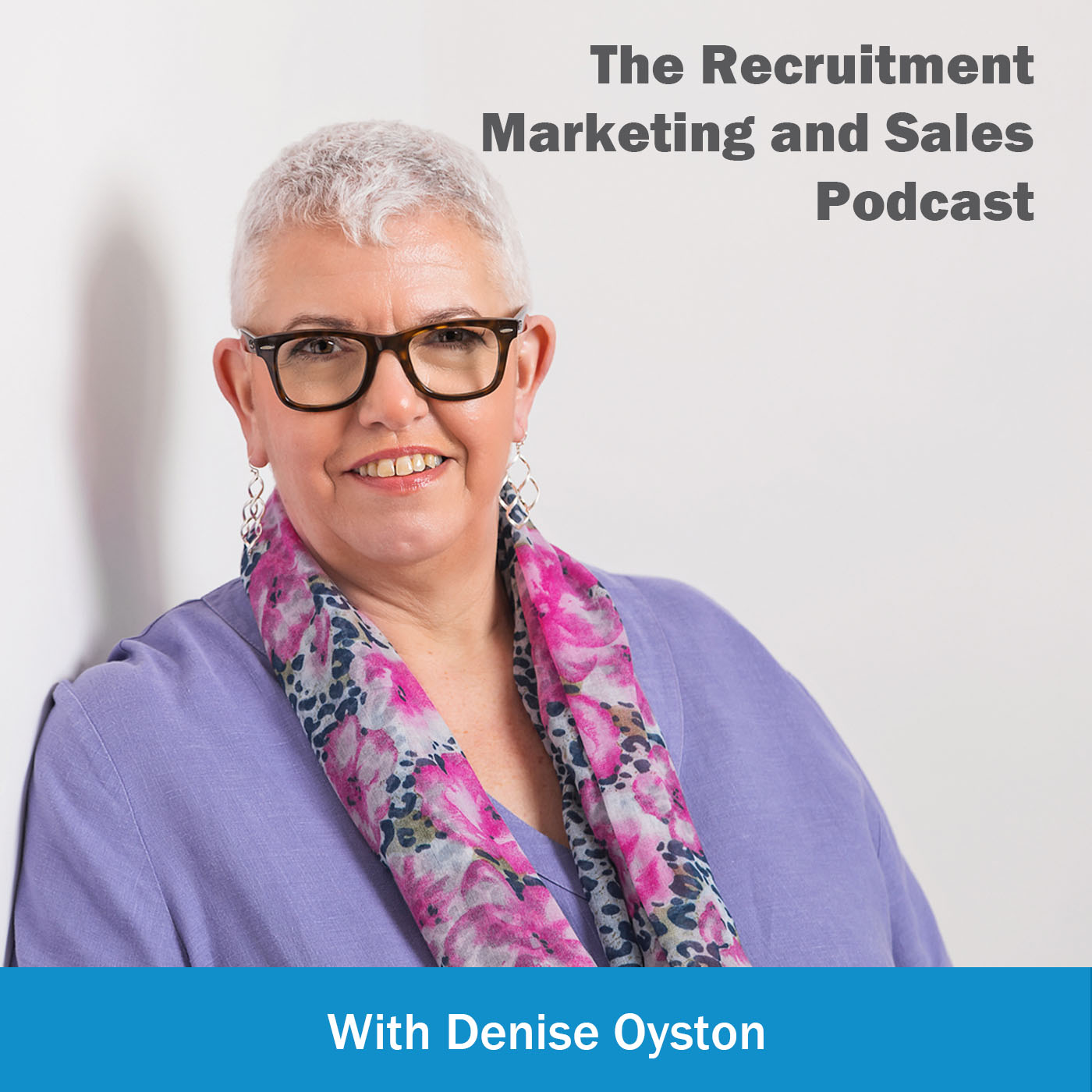
PODCAST · business
Branding Archives - Superfast Recruitment
by Denise Oyston
Specialist Recruitment Marketing
-
10
Consistency Isn’t a Content Strategy. It’s a Character Trait.
I want to start by being honest about something. Five hundred episodes sounds like an achievement. And I suppose it is. But it was never a target I was aiming for. The goal in 2013 was simple. There were very few voices in the recruitment marketing space talking practically to small recruitment businesses. Not the […] The post Consistency Isn’t a Content Strategy. It’s a Character Trait. appeared first on Superfast Recruitment.
-
9
Standing Out in 2026 Episode One: Mindset Habits Every Recruitment Business Owner Should Practice Daily in 2026
Let me describe a morning that might sound familiar. You wake up. Before your feet hit the floor, you have already grabbed your phone. You are scrolling LinkedIn. Checking emails. A client has chased. A candidate has pulled out. There is a message from a team member about a problem. And suddenly, before you have […] The post Standing Out in 2026 Episode One: Mindset Habits Every Recruitment Business Owner Should Practice Daily in 2026 appeared first on Superfast Recruitment.
-
8
Systems-Based Recruitment: Building Your Marketing Framework
This week’s post and podcast is about building effective marketing systems for recruitment businesses. I’m continuing our series on systems because I believe it’s the perfect time of year to get everything in place and prepare ahead of time. Last week, I covered why systems are so important – their beauty and the key ones you need in your business. Today, I want to provide you with specific examples of setting up systems and outline some actions you can take now to get them in place. If you’re new here, welcome! It’s great to have you. If you have a recruiter friend or colleague who would appreciate listening to this podcast, please share the link with them. Please share it with them on iTunes or Spotify or give us a shoutout on LinkedIn. I appreciate it. This podcast isn’t sponsored. Nobody pays for this. We do it because we want to help people, and we’re doing what we teach others to do because it works. We’re providing value upfront. If you could give us a shout out, we would love it. Please consider giving us a review as well if you find it useful – that would be greatly appreciated. Start With One System and Build Momentum Here’s what I love about building marketing systems: you don’t need to do everything at once. When our clients start working with us as a Superfast Circle member, we provide them with a straightforward, step-by-step approach that outlines the initial steps they need to take. Over the years, many of you will know that we’ve been content marketers for approximately 18-19 years in the industry. We know what works and what yields the best return on investment the fastest. There’s a system around this, and that’s something I always want you to remember. When people often ask where to start, I advise them to start with one thing. It’s easy to get confused and think you’re being proactive by doing all these things. It’s much better to start with one thing – I like to call it the “pick one philosophy.” Pick one system, build it out properly, then you can move on to automation. However, I think it’s much better to get something working first. Let’s see how it performs, then we automate it. Let’s test it and work out all the glitches. Why pick just one system? Because if you don’t, you end up trying to implement everything simultaneously. This is literally where people get overwhelmed and end up implementing nothing at all. That isn’t necessary. Start with one system, build it from there, and your momentum will start to build. Which System Should You Pick First Now let’s talk about which one you should pick, and I’m going to say it depends. It depends on your biggest pain point at the moment. Most of the people we work with suggest that they start with building out their client attraction system, particularly in the current market. For the majority of recruiters we work with, LinkedIn is their primary platform for finding new clients. This is where their business contacts are now. Starting with your LinkedIn content system is the fastest way to demonstrate your expertise and attract client attention. Here’s a framework for working with LinkedIn effectively. The first thing is to have different types of posts. I’m going to give a shout-out to us at Superfast Circle because we provide you with all these tools you can utilise, saving you time. However, for those of you in larger companies who wish to initiate this effort independently, here are the key considerations to keep in mind. Creating Your LinkedIn Content Framework You want market insight posts – what you’re seeing in hiring trends. You want educational posts on how to solve common hiring problems. You want social proof-style posts, such as story posts about candidate journeys, what’s happened, how you’ve helped people, different clients, and successful placements. Then there are the classic question posts – the polls people use on LinkedIn to engage with their network. You write them, you batch them, you write them in advance. Let’s say in your industry that March is a key time for people recruiting or hiring, when decisions are being made. Then you can build your content around how that might work. The next step is to create a publishing system. Many people, when they first come to us, might post once a week if we’re lucky. Unfortunately, that won’t move the needle. You need to post multiple times a week, in fact, numerous times a day. But let’s start with something easy. These aren’t just job ads you’re posting, by the way. This is content to nurture people in your market, including those you’re already connected to, as well as those you will be connected to in the future. How about posting Monday, Wednesday, and Friday? LinkedIn has a scheduling tool that’s not hard to utilise. There are several marketing automation tools you can use. Some people use Buffer. A favourite of mine recently is SmarterQueue – go and check it out. You can start posting and engaging with your client’s content. Allocate 15 minutes a day in your diary. I remember years ago – probably ten years ago, before personal branding became a thing – we suggested everyone take 15 minutes a day. I ran a webinar on it back then, and it still works. Just allocate 15 minutes. Sometimes I even set a timer. I’m on LinkedIn, interacting and engaging with people I want to engage with. Our posts are scheduled ahead of time, so they’re all ready, and I know they’ll appear. Setting up that system alone will put you ahead of so many recruiters and make a massive difference. Building Your Connection and Outreach Process One area where there’s often a disconnect for many recruiters is that they publish content but fail to connect it by making more connections and engaging in outreach. Everyone has a set number of LinkedIn connection requests they can send out, and this is something to do daily. It’s just like any system you create – the more you can do daily, the better it gets. One of the girls was talking about her “dailies” – she had daily tasks to complete. This isn’t necessarily around KPIs, but her dailies were what she had to do every day. When she did this, she knew it made a difference. I encourage you to create your dailies – however many connection requests you send out. Remember that momentum builds, but you must start it by being consistent. You send out a connection request. Once that person has accepted, share a piece of valuable content or an insight – no sales pitch, just value. You’re doing that with your LinkedIn connections. When it comes to what to do after that, you rinse and repeat. You continue because this is about building a process and people seeing you everywhere. I know that sometimes, if I see an ad on TV, then hear a radio ad, and then pick up a magazine, I suddenly think I should take a look at it. When I’ve seen it two or three times, there must be something about it. This is where building that system works for you. You’ve created the content, you’re now a publishing machine, and you’re connecting and doing outreach with people. The next step is to get clients on your email database or encourage them to join it. Here’s a hint: when you’re publishing things and doing connections and outreach, you can say, “I’ve got some great content and ideas for you. Would you like to join our email system?” Most people will say yes, or you send a link where they put their name and email address. You can see how all these systems build on one another. Candidate Attraction Systems Work Similarly If you need more candidates, it’s a similar system. Consider the content – you want to create a similar process that shares valuable content with them. When we talked about the client acquisition system, we mentioned market insights. It’s the same thing, only it comes from a candidate’s lens. We’re examining market insights because candidates are intelligent individuals. They want to know what’s going on in the market. You want to tell them about not just hiring trends, but career trends and career progression – what they need to be thinking about. You want educational posts, story posts, and those question posts. Do a survey, ask a LinkedIn poll – all these things you can use. That’s the system you set up with candidates exactly the same. You’re reaching out to candidates. You could do a certain number of LinkedIn connection requests for clients and a certain number for candidates. Add these candidates to your email system as well. Straight away, you’ve got very simple, straightforward systems that work for client attraction and candidate attraction. You take those to the next level by getting these people on the phone. You send them more messages, leave them a voice note, send them a video – all different things that make a difference. Advanced Systems Using LinkedIn Sales Navigator On LinkedIn, there’s Sales Navigator – a great piece of software where you can build lists of clients and candidates. This can be a systematised process. We receive emails stating that there are X number of leads in your LinkedIn list, so you can log in because you’ve set up the criteria. You can incorporate those systems into your process. When conducting outreach within LinkedIn Sales Navigator, review all new connections and people who’ve appeared on your list that meet your criteria. Then set the process to start reaching out to them. Most problems that occur for recruiters around systems are that their systems are so sporadic. If you have a specific process that’s dialled in and you’re doing it regularly, it’s going to make a difference. We’ve all received random cold emails in our inbox that aren’t particularly relevant, and we end up blocking people. That’s where having your systems organised makes a difference. Think about your client system and your CRM. If that’s sorted by industry, sector, experience level, hiring history, or company size—whatever it is—you can compile lists of people you need to contact. Once you’ve done that, you can create that systematic approach with your touchpoints. Perhaps you could send a monthly update to them, establish an immediate follow-up system when someone joins your list, or conduct a quarterly check-in. Your business priorities will dictate this. If you do those systematic touchpoints built into a system, you have a very productive nurture campaign. Let’s say that automated nurturing you could do with candidates: you could have a new registration sequence, a post-interview follow-up sequence, a placement preparation sequence, or a post-placement sequence. All these things – if you need predictability, set up the system, and you’ll see a huge difference. Sometimes it’s painful to go into that detail. And it’s incredibly useful. I’ll cover SOPs a bit more in next week’s podcast, when I delve into that topic. We’re all about systems, and my goal is for you to review the systems you have, refine them, clean things up, and put everything in place over the summer. If you’ve kicked off some systems, then your September will be very different. The key is to start with one system, build it properly, and then expand from there. Remember, momentum builds when you’re consistent, and consistency comes from having clear, systematic processes in place. Thanks Denise How We Can Help At Superfast Circle, we provide the complete framework and content you need to build these marketing systems effectively. Our members gain access to ready-made content templates, detailed implementation guides, and a paint-by-numbers approach that eliminates the guesswork from building your recruitment marketing systems. We’ve spent nearly two decades perfecting what works, so you don’t have to figure it out through trial and error. The post Systems-Based Recruitment: Building Your Marketing Framework appeared first on Superfast Recruitment.
-
7
Your Recruitment Marketing Content Questions Answered
Hi there, everyone. This is Denise. I hope you and yours are well. Since our mini-series on content, a few questions about channels, posting frequency, LinkedIn Creator Mode, and other related topics have cropped up. I wanted to make sure I answered everyone’s questions properly. If you’re new here, welcome! The Superfast Recruitment blog and website host another 470 or so podcasts. We’re also on iTunes and Spotify so that you can check out our recordings there. Everything is also on our website, and we have a YouTube channel that I referenced in the last podcast. How Good Is Your Marketing? First, how good are you at attracting the clients and candidates you want? This all comes down to your demand generation and marketing. We have a new tool you can use—a personalised scorecard tool that will rate you as low, medium, or high in different sections. We based the questions on what’s working now for our clients and the themes we’ve noticed over the last nearly 18 years working in the industry. You can take this scorecard for free. Completing the 15 straightforward questions will probably take about 3-4 minutes. You don’t need reams of financial data. Go to superfastrecruitment.co.uk/scorecard. We’ll send you a personalised PDF report, and for everyone who takes the scorecard, we offer a 45-minute debrief should you want more information. Just email us to arrange it. Which Marketing Channels Should You Use? Let’s discuss different channels and which ones you should be on. The key question is: Where is your market? It’s easy to say, “Oh, my market isn’t on Instagram,” “My market isn’t on TikTok,” or “My market is only on LinkedIn.” But beware—they might be on other channels, too. Who hasn’t seen a business opportunity or noticed something from a business leader while scrolling through Facebook? If you do that, I’m sure many in your market do too. I look at Instagram and LinkedIn all the time. I’m not a big TikTok user, but have visited that platform. I go on Instagram a lot. It’s important to consider where to place your content. And it’s easy to put it in many places, particularly if you’re using an automation tool like Hootsuite, Buffer, or SmarterQueue to help. For most people, LinkedIn is a key place to post. Ensure you’re posting on your company page and your personal profile. All the recruiters we know have more people following their profiles than their company pages, so make sure you post there. Facebook And Other Social Platforms Half the planet is on Facebook. It’s important to have a business page where you can post. What’s great about Facebook is that you can also deliver paid ads to people in your target market and demographic, and it’s not that expensive. In one of my previous posts, I discussed remarketing/retargeting. We all experience this—we go on a website, and then that website follows us around. Imagine if somebody has been on your website and then sees an ad (which isn’t expensive) on Facebook. That could help you get in front of your market. If you’ve regularly posted on your company page, people will see that you’re a real company adding value. That will make a difference for you. So yes, post on Facebook, have a business page, and use it as part of your strategy. Instagram (part of Meta) has 2 billion members. The age range is quite wide – 66% of people aged 30-49 in the US are on Instagram. It’s very popular in India and incredibly popular in the US. If you’re posting on Facebook, it’s very easy on your business page or your automation tool to click the button that also posts to Instagram. You don’t know where people are and where they might find you. TikTok also has 2 billion users. It’s very video-centric, with a slightly younger age group (around 18-24). Depending on the average age of your candidates or clients, it may be worth posting on TikTok. It’s a bit more involved because you want to share video content there. Google And Your Online Presence I’d like to draw your attention to the fact that the more Google sees you posting, the more likely it is to deliver you to the first page of Google results. Have you noticed that when you Google a company, you’ll see multiple links to that company? Some companies you’ll Google and struggle to find – generally because they haven’t got any content on their website. Big clue: that’s why you need content, because Google prioritises websites with content. Have you also noticed that when you Google somebody, multiple links come up to all their different social channels? I did this before recording this podcast – I Googled “Super Fast Recruitment.” When we come up, there are multiple links to different pages, our LinkedIn company page, several videos, our Facebook page, our Instagram page. We’ve got many links that shout out: “These are people who are around. These are people who are present. These are people who have a profile. These are people who possibly could help.” And that’s exactly the same for you, too. Do You Need Different Content For Different Channels? A great question is: Do I need to alter all my content for all the channels? The reality is: not really. You could say, “Well, it depends on the size of your organisation.” You’re not a marketing company. You’re a smaller recruitment firm. And really, it’s not necessary. You’re not Adecco. You’re not Hays. You’re not Randstad. I follow a couple of different business coaches online, and I see the same content shared on their LinkedIn, Instagram, and Facebook feeds. I also see a version of it dropping into my inbox. I know they’re probably making 30-40 million a year. So if it’s all right for them, I think it’s all right for us. And it does save you time. So if a social media company says, “We need to do all these different things for your different content,” don’t listen to them. For a small to medium enterprise, it doesn’t make a difference. Really, it doesn’t. How Often Should You Post? Many people ask how often they should post. I would say: as often as you can. Sharon and I use our profiles and post three times a day, occasionally four, with different content going down Sharon’s feed and different content going down mine. We could post the same, but we don’t. The goal is to post every day. Forget all this about LinkedIn racking back how present you are. The more you post, the more people will see you. In the last podcast, I shared about a client who increased the number of times he posts, going from a few hundred impressions to a few thousand impressions. Just think about that. It’s about regularity. Build up to it. Start where you are with what you have now. If all you’ve ever done is post job ads, start posting some value-add content a couple of times a week and build up. We’ve given you all the ideas, including on our YouTube channel. Start posting now and build your way up. One thing about posting at different times during the day is that many recruiters have clients in the US or other parts of the world, so their content needs to be spread across different time zones. Don’t worry if you see your content more – you’re looking for it. You’re filtering for it. People in your organisation are going to see it. Don’t worry about your consultants saying, “We’re posting too much.” You can never post too much because not everyone will always see it. It’s a scrolling feed. LinkedIn Creator Mode One of the other questions we had was about Creator Mode and whether you should use it to get all the data about impressions, shares, and comments. Linkedin created Creator Mode as something you could toggle off and on. Last year, they switched that facility off, so now everybody automatically gets Creator Mode. You can actually switch it off in your privacy settings, but I wouldn’t do that. It’s well worth having Creator Mode. The fundamental thing about having this creator feature is that you get a lot more data. You lose that there’s no connect button when people land on your LinkedIn profile—it’s a little bit more hidden. They need to go to the “more” section, and a dropdown menu says “connect.” Of course, you can always tell people to do that. You can even get a little screen grab image and share that in an email if you want. The great thing is that people can follow you, and there are no connection limits, so you can grow well beyond your connection limit on LinkedIn. Your connection limit is up to 30,000, which might seem huge, but several clients are nudging 30,000 connections. They’ve been on LinkedIn since its inception 20+ years ago and have been growing their market. However, if you have Creator Mode, you can grow your audience beyond that with people following you. LinkedIn also gives you better analytics, allows you to have LinkedIn Lives, and do LinkedIn newsletters. If you go back to the Super Fast Recruitment blog and look in the search bar, I did a whole series on LinkedIn a while back that explains more. But you’ll notice on your LinkedIn profile, if you have Creator Mode switched on (which all of you will), you can add featured sections to your profile. LinkedIn showcases them in a way that’s more impactful for you. Remember, less than 4% of people post actively on LinkedIn. If you’re one of those who do, you’ll grow your audience exponentially, and people will see you more. So, with Creator Mode, you get enhanced analytics, featured activity at the top of your profile (which is really good for people to see you), and more people can follow you. It’s well worth having in today’s market. LinkedIn Profiles And Content It’s a little off-topic, but I want to address LinkedIn profiles. When you share content, people will check you out more. The more you post online, the more visible you become, the more people want to check you out. Make sure your LinkedIn profile stands out. Make sure you’ve got a good, clear “About” section. With our Super Fast Circle clients, we give them templates to write their “About” sections based on what’s working now. If you’re unsure, look at mine and think about how to rework it yourself. Podcasting As Content We’ve had a couple of questions about podcasting. I didn’t mention it among the different content formats – video is prioritised on LinkedIn, so I focused on that. Podcasts are great, though they are more work. However, they are incredibly leverageable. A shout out to Mike Richards here, who used to work with us. He has a podcast in the Treasury sector and has done phenomenally well with it. He always says he got the idea after listening to our podcast. Podcasting is great. Many business leaders listen to podcasts, so if you have one, you can leverage that. They’re much easier to do than they used to be. You could go to a freelancer website like Fiverr, where somebody will help you create a podcast and set it up. Then all you need to do is record them. I record ours using free software called Audacity. Then, I get it edited using somebody on Fiverr. If you need a name, let me know. One great thing about podcasting is that it gets you out to an audience. You’ll be on Apple iTunes and Spotify, and more people can find you. But one of the great things is that our podcasts are leveraged in multiple ways. You’ll notice that you get an audio recording. Over the next few months, you’ll see multiple posts about the podcast series. Those posts are created from the audio recording—very easy to do. I get the audio transcribed using an AI tool called Sonix. I then use another AI tool to summarise it and ask it to create several posts, a detailed blog post, an email, and some social media posts. A caveat here: I edit everything because sometimes even the best AI tool can produce rubbish. But it does save time. You’ll notice that some of Sharon’s and my videos on social media also follow themes from recent podcasts. We get an AI tool to give us the key elements, and then we create a recording from that. Podcast Frequency Is Key Podcasts are worthwhile, but remember that frequency is important. Recording a podcast takes time and commitment. I’m batch recording several podcasts because we’re going to spend some time in another country and work from there. However, I want to ensure that our recordings are free of glitches, so I’m recording several podcasts over the next 2-3 days. A mentor of mine once talked about having a podcast every week, similar to ours. She notices that if her podcasts drop off, so does her listenership. She mentioned someone in the coaching space who used to record a podcast every week and has now gone to once a month – her podcast numbers have dived. People like regular episodes. Think about TV programmes – in the UK we have Coronation Street, EastEnders, and various other shows. People love that regularity. Remember Cialdini’s principles of influence. People listen to our podcast. Occasionally, we miss a week, maybe because I’ve lost my voice, or it’s Christmas, or something happens that prevents us from doing a podcast. But if you’re going to do a podcast, you need to be all in with it. It’s not something you do every so often because you won’t build traction. Content is all about traction. It’s much better to write a blog post for your website. If you miss a week, that’s not terrible. People aren’t going to notice it in quite the same way. Nurture Campaigns One final question concerns nurture campaigns. A couple of people said I didn’t say much about them, although we have lots of information about email marketing on our website. Nurture campaigns are important. I always discuss having an email campaign, not just an email blast. Remember the buyer cycle – only 3-7% of people are ready to act now. Many other people are in your world, in the ether all around you. They will be prepared to convert eventually, but you must be before them. That’s why nurture campaigns are something to build into your content process. If you’ve got emails written, our Superfast Circle clients get nurture campaigns because they’ve been working with us. Nurture campaigns have multiple emails in them, and I strongly suggest people do that. If you want to stand out as a different recruiter—one who cares and is committed—make sure you build a candidate nurture campaign and a client nurture campaign as well. A while ago, we ran an email marketing webinar. Those who attended can still access the recording by clicking through one of the links. In there, I talked about the must-do email campaigns from a content perspective. Again, just look on the Super Fast Recruitment website, as there are several posts about that too. Thanks, Denise and Sharon How We Can Help Hopefully, I’ve answered all your questions. If you have more, just email me at [email protected]. I answer all my own emails (well, the majority of them), so if you email me with a question, that would be great, and I’ll record a podcast about it. At Super Fast Recruitment, we understand the challenges of marketing for recruitment firms. Our Super Fast Circle membership provides done-for-you content resources, strategic guidance, and a supportive community to help you create consistent marketing that generates results. From social media posts to nurture campaigns, we’ve got you covered with content that positions you as an expert in your field. Take our marketing scorecard today, and let’s see how we can help elevate your marketing to the next level. The post Your Recruitment Marketing Content Questions Answered appeared first on Superfast Recruitment.
-
6
From Car Sales to Recuitment Empire Bish’s Story For International Womens Day 2025
As part of our International Women’s Day 2025 celebrations, we’re delighted to feature Sarah Bishop (known to many as “Bish”), founder of Recruit Recruit and one of our valued clients. In this special edition of the Recruitment Marketing and Sales Podcast, Sarah shares her remarkable journey from car sales to building a successful recruitment business. Her candid reflections on navigating industry challenges, embracing neurodiversity as a strength, and breaking barriers as a female business owner offer valuable insights for anyone in the recruitment sector. Join us as Sarah reveals how integrity, resilience, and authentic leadership have shaped her entrepreneurial path. Take the mic, Bish……. In the ever-evolving world of recruitment, finding your unique path to success often means breaking conventional rules and creating something authentic. Reflecting on my journey from selling Lexus cars to building a thriving recruitment business, I’ve realized that the greatest achievements come from staying true to your core values while having the courage to pivot when necessary. My story traverses economic downturns, personal challenges, and unexpected opportunities that ultimately shaped Recruit Recruit’s success today. If you’re a recruitment business owner navigating your own path, struggling with growth challenges, or simply looking for inspiration to do things differently, this candid account offers practical insights from someone who’s weathered the storms and emerged stronger. Discover how networking, embracing neurodiversity, and maintaining unwavering integrity helped build a recruitment business that stands out in a crowded marketplace. My Journey Into Recruitment I never grew up dreaming of being a recruitment consultant. I wanted to be Bugsy Malone, a vet, and David Attenborough. Fast-forward to university, where I studied environmental science to pursue David Attenborough’s path of saving the planet, but I quickly realized I was too loud and sweary for that role. After graduating with student debt, I discovered that environmental jobs didn’t pay well. My lofty ideals went out the window, and I decided to get a sales job based on my previous experience in Saturday jobs and holiday work. My dad had owned car yards when I was younger, so I had some exposure to sales environments. I distributed my CV to local car dealerships, even offering to work for free for a month to prove myself. A Lexus dealership in Stourbridge gave me a chance, and I sold cars for nearly three years. During this time, a friend who had studied politics at university joined a Ford dealership. We both became frustrated with working weekends and long hours. My friend transitioned to recruitment first, joining Brook Street, and kept telling me it was much easier to sell secretaries than cars. That prompted me to start applying to recruitment agencies in earnest. I received job offers from Kelly’s, Adecco, and Extra Personnel, a small local agency at the time. I chose Extra Personnel because it seemed entrepreneurial and was growing quickly. This decision led to 13 great years, during which I progressed from trainee to various management roles. Building My Own Recruitment Business After 13 years with Extra Personnel, I reached a point where I needed a different challenge. In some situations, I felt I cared more about our reputation than the business owners did. Being responsible for our public sector work, I constantly battle quality issues. The breaking point came with a contract with Tamworth Council. They wanted a weekly email listing new starters and temps who had finished or been taken permanently. Despite my team’s inability to consistently provide this basic service, my name was on the contract, and I had agreed to service levels. I realized that if I moved to another agency, it would be “the same issues, different logo.” I also couldn’t see how, with good conscience, I could tell clients that Extra Personnel was the best for 13 years and then suddenly promote a different agency. That’s when I decided to start my own business in 2009. I had incorporated a company 4-5 years earlier but never acted on it until then. I wanted to build something with simple, straightforward values: integrity, fun, and getting stuff done. My biggest initial mistake was trying to emulate where I’d come from and fixing the bits I didn’t like. I really wanted and should have created something very different, closer to what the business looks like today. The Power Of Networking In Recruitment My experience with networking while at Extra Personnel was limited to occasionally attending Chamber of Commerce events, distributing business cards, eating biscuits, drinking coffee, and heading back to the office. When I started my own business, I began attending any free networking events in my area out of desperation. At one Sandwell local authority event, Michelle Ibbs, founder of I’m Your PA, approached me. She invited me to a networking event in Wolverhampton the next morning. Though I had no intention of going, I couldn’t find her contact information to cancel, and my upbringing prevented me from simply not showing up. So I reluctantly went to the Novotel in Wolverhampton, where I found 25 people in this BNI group. I observed a lot of business being passed around, which impressed me. My then-business partner wasn’t interested but ironically joined BNI immediately after we split the company, despite having avoided it for nine years. For me, networking works because it provides routine and strategy. BNI has spent 40 years developing its approach, and if you follow it and remain accountable, it works. While other networking organizations exist, many were created by former BNI members who removed the accountability aspect—which is precisely what makes BNI effective. What keeps me in BNI is that being a local member gives me access to their global network across 77 countries. Being married to an Austrian woman and spending six months a year in Vienna, I discovered that an architect from two buildings from us is a BNI member. I’ve also joined an online group because of my lifestyle. Overcoming Business Challenges One of the most significant milestones in my business journey was also one of the most difficult times. In 2018, my business partner and I decided to split the business. What I thought was amicable turned out not to be. I discovered a large HMRC debt I wasn’t aware of, among other issues. This led to a nervous breakdown. I nearly lost my house and was in a terrible place. Just as I started to recover and relaunched our advertising packages to generate quick revenue, my ex-business partner tried to sue me. Fortunately, her solicitor likely realized the allegations were spurious, and it was all dismissed. Strangely, this was the best thing that could have happened. It triggered something in me – there was no way I would allow her to do this to me. I started getting back on track, seeing light at the end of the tunnel, and then COVID hit. However, I’m resilient. I knew an industry would always be doing well—we just needed to pivot. The luck I experienced was largely made possible by the networks and relationships I’d built over the years. We became involved with a startup business providing COVID testing for the film and media industry. We helped them grow from zero to £30 million turnover in 21 months, placing over 220 people in various roles from HR and finance to science and IT. My networks were crucial. I worked with Kerry Greenland from the team network, my niece came back into the industry, and Clare Reese-Paul, an ex-colleague and good friend, joined me. Not only did we have fun, but it kept four or five of us in business, generated good revenue, and left a positive legacy. Neurodiversity As A Business Advantage My neurodiversity has played a significant role in my career. I’ve always approached my business as a portfolio career, satisfying my needs more than feeling confined to a single lane. I was diagnosed with ADHD at age three, which was unusual in 1975, especially for girls. While boys with similar behaviours might be described as “rambunctious” or “a real boy’s boy,” girls are often labelled as “princesses,” “divas,” or “little madams.” Though diagnosed, I was never medicated. My condition was explained simply as an inability to pay attention and having excessive energy. It’s only in recent years, with more information becoming available, that I’ve better understood my condition. About 15 years ago, I was also diagnosed as high-functioning autistic, adding another layer of complexity. As a gay woman, I’ve had an easier time in business than many of my female friends and colleagues. Male colleagues often saw me as “one of the boys,” partly because I wasn’t a potential romantic interest. Additionally, I never wanted children, which has inadvertently helped my career progression. For women in business, confidence is crucial. So many women I’ve worked with would have been more successful if they had shown up with “the confidence of a mediocre white man.” There’s a certain confidence and bravado that many men project, often without merit, yet everyone begins to believe their hype. My advice to women entering the industry is to hone your skills, particularly relationship-building and people skills, be confident in your competence, and not be afraid to speak up and stand your ground. Studies show that men dominate conversations disproportionately in meetings. When women assert themselves, they’re often labelled negatively, while men exhibiting identical behaviours are praised for “knowing their minds” and “getting things done.” Those with neurodiversity recognize both its advantages and challenges. My ADHD allows me to see things others miss and read micro-expressions accurately – invaluable skills in recruitment and sales. However, it also brings dysregulation and other difficulties that neurotypical people don’t experience. What people see—my bluntness, oversharing, and apparent ease in picking up new skills—doesn’t reveal the self-doubt and anxiety behind it. Be kinder to yourself instead of feeling bad about being different. Creating A Business Based On Values The essence of what I wanted to create in my business hasn’t changed much over the years. We have straightforward values: integrity, fun, and getting stuff done. What we do isn’t rocket science, but there’s so much bad practice in the industry. Today, our sweet spot is helping fast-growing startups, businesses looking to exit, or companies seeking significant growth. The COVID experience helped us develop an agile working method that suits these client types perfectly. My business has evolved to include sales training for recruiters, coaching other recruitment business owners, and various consulting services. These additions have come organically through people asking for my expertise and preference for a portfolio career rather than staying in a single lane. I’ve worked with former team members who now have their own businesses and even with Extra Personnel, who hired me 13 years after I left to provide sales training when they were preparing to sell to Job and Talent. I’m continuing to refine my business operations and systems to make everything work more smoothly behind the scenes. Like the proverbial swan, people see me gliding along as if everything comes easily, but a lot of time, effort, energy, and emotion is expended beneath the surface. Ready To Transform Your Recruitment Business? If you want to grow your recruitment business with integrity while standing out in a crowded marketplace, we’d love to help. Our expertise in recruitment marketing can help you build a strong personal brand, develop effective marketing strategies, and create systems that allow you to work smarter, not harder. Whether you’re struggling with visibility, want to reach more clients, or need help articulating what makes your recruitment business special, we can help. To find out how book a call here. The post From Car Sales to Recuitment Empire Bish’s Story For International Womens Day 2025 appeared first on Superfast Recruitment.
-
5
Why A Compelling Employer Brand Is Critical For Recruitment Companies Too
In today’s competitive recruitment landscape, your employer brand is more crucial than ever. It’s not just about attracting top talent to work for you; it’s about positioning your recruitment firm as the go-to choice for both candidates and clients. This episode of the Recruitment Marketing and Sales podcast delves into the often-overlooked power of employer branding for recruitment business owners. As we navigate through an era where talent shortages are more prevalent than ever, with 75% of employers reporting difficulties in recruiting compared to 56% just a few years ago, your employer brand could be the differentiator that sets you apart. We’ll explore how your brand communicates even when you’re not actively promoting it and how it can build trust, credibility, and magnetism in the market. Whether you’re a solo recruiter or part of a larger team, this episode will provide valuable insights on crafting, refining, and leveraging your employer brand to attract potential employees and the clients and candidates you want to work with. Get ready to transform your approach to marketing and discover how your employer brand can become your most powerful asset in growing your recruitment business. The Power Of Employer Branding In Recruitment Welcome to episode 444 of the Recruitment, Marketing and Sales podcast. Today, we’re diving deep into employer branding and its impact on your recruitment business. As a recruitment business owner, you might wonder why we’re focusing on this topic. The truth is that your employer brand can significantly influence how candidates and clients perceive you in the market. Let’s start by defining employer branding. It’s the sum of a company’s efforts to communicate what makes it a desirable workplace. This includes the functional, economic, and psychological benefits of working for your organisation. But here’s the crucial point: your employer brand is always communicating, whether you’re actively managing it or not. The Importance Of Trust And Credibility In today’s uncertain market, trust and credibility are paramount. People tend to gravitate towards those they know, like, and trust. Your employer brand is vital in showcasing your reliability and expertise, explaining why candidates and clients should choose you over competitors. Consider this: How does your brand demonstrate your trustworthiness and credibility? Are you consistently sharing success stories, testimonials, and case studies highlighting your expertise and the positive experiences of those working with you? These social proof elements can be incredibly magnetising to potential candidates and clients. Differentiating In A Competitive Market The recruitment landscape is more competitive than ever. Recent data from Manpower shows that since 2019, the percentage of employers struggling to recruit talent has jumped from 56% to 75%. This talent shortage means clients desperately need the help of experienced recruiters like you. Your employer brand can be the key differentiator in this competitive market. Think of it like choosing a restaurant on holiday. You’re more likely to be drawn to the one that looks vibrant, clean, and full of happy customers. Similarly, a strong employer brand can make your recruitment firm the obvious choice for clients and candidates. Communicating Your Vision, Mission, And Values Your employer brand gives you a platform to share your company’s vision, mission, and values. This is crucial because people increasingly choose to work with companies that align with their values. By clearly communicating what you stand for, you attract potential employees, clients, and candidates who resonate with your ethos. For example, at Superfast Recruitment, our vision is to create a global community where small recruitment businesses can thrive, united by practical, effective marketing strategies. Our mission is to deliver comprehensive marketing solutions tailored to smaller recruitment firms. We value empowerment, community, and “heartfelt candor” – being honest with our clients about their marketing needs. Building Your Recruitment or Search Companies Employer Brand So, how can you start building and communicating your employer brand? Here are some steps to consider: Review your current employer brand. You have an employer brand, even if you’re a solo recruiter or a small team. It’s about demonstrating your values, expertise, and company culture. Develop your vision, mission, and values statements. These are the foundation of your employer brand and will guide all your communications. Communicate consistently across all channels. Use your website, social media, and all client interactions to showcase your employer brand. Share social proof. Use client and candidate case studies, testimonials, and success stories to demonstrate your value and build trust. Be authentic. Your employer brand should reflect who you are and how you work. Authenticity is key to attracting the right people and clients. Remember, building a strong employer brand is not just about attracting employees. It’s about creating a magnetic presence in the market that draws in the clients and candidates you want to work with. It’s about standing out in a crowded marketplace and communicating why you’re the best choice. As we approach the end of the year, it’s the perfect time to reflect on your employer brand. How well does it represent who you are and what you offer? How effectively is it communicating to your target market? Consider making employer branding a key part of your strategy for growth in the coming year. By focusing on your employer brand, you’re not just preparing for future hiring needs. You’re creating a powerful marketing tool that can help you attract more clients, engage better candidates, and ultimately grow your recruitment business. Thanks Denise How We Can Help Are you ready to take your employer brand to the next level and use it as a powerful tool for growing your recruitment business? Let’s talk. Book a call to discuss how we can help you develop and leverage your employer brand for maximum market impact. We’ll work with you to create a strategy that aligns with your vision, communicates your unique value, and attracts the clients and candidates you want to work with. Click the link to book your call. The post Why A Compelling Employer Brand Is Critical For Recruitment Companies Too appeared first on Superfast Recruitment.
-
4
The Power Of Personal Branding For Recruitment and Search Owners
In today’s competitive recruitment landscape, standing out isn’t just an advantage—it’s a necessity. Welcome to episode 441, where we explore the world of personal branding for recruiters. Since 2019, I’ve been honing my brand and seeing firsthand the transformative power of a strong personal brand. Whether you’re a seasoned recruiter or just starting, this episode is packed with practical strategies to elevate your online presence, engage your network, and become the go-to expert in your niche. From optimising your LinkedIn profile to creating compelling content, we’ll explore the key elements that make a personal brand truly shine in the recruitment world. It’s a good time to add something new to our routines as we enter autumn. That’s why I want to talk about personal branding today. I started building my brand five years ago, just before Covid hit. It has worked well for us, creating more connections. Currently, we are running a personal branding boot camp with our Superfast Circle clients. This marks the third or fourth iteration of the program, a testament to its value and the enthusiasm it generates among our clients. In today’s fiercely competitive market, distinguishing yourself is more pressing than ever. You must articulate why potential collaborators should choose to work with you over other recruiters. Personal branding is not just a choice; it’s a strategic necessity. It’s about crafting and nurturing your public image to stand out in the crowd. Optimising Your LinkedIn Profile The first step in personal branding is optimising your LinkedIn profile. In today’s market, people are conducting more outreach on LinkedIn and email. When they click through, they’ll go to your LinkedIn profile or website, which needs to communicate your brand effectively. Make sure your profile has a professional-looking image. Human beings are wired to look at one another’s faces. It’s how we work people out. Use a compelling banner with your contact details. If you’re comfortable sharing your phone number, include it. Otherwise, add your email address. Have a compelling positioning statement. Talk about who you work with and how you help them. In your ‘About’ section, clearly state who you work with, why you work with them, and how you can help. Include work experience and recommendations from clients and candidates. Creating Compelling Content The next step is sharing content. You can share industry insights, tell people about training you’re attending, or develop a regular content calendar for posting. Use a mix of videos, texts, and images. Post pictures of yourself – people like to see who they’re working with. The content you share gives people an understanding of who you are, how you can help them, and what person you are. It also demonstrates your values. Share posts focusing on your client’s challenges and how you address them. Share personal values, productivity tips, and glimpses into your life and business. Give people advice and help. Share behind-the-scenes content from your office, details about your recruitment process, or weekend activities related to current business trends. Engaging With Your Network Engage with your network and industry peers. Comment on their posts and give likes and shares. Add your thoughts to discussions. This will get you in front of more people and show what you stand for. Become a magnet for your audience by standing out for who you are and what you believe in. Share the things you’re doing. If you’re stuck for ideas, use AI tools like ChatGPT to generate content ideas related to your field. Leveraging LinkedIn Features Use LinkedIn’s tools and features to stand out. Create a unique URL for your profile. Add links to your website. Use the featured section to showcase your content, case studies, and popular posts. Include recommendations from clients and colleagues. Consider building thought leadership by running LinkedIn Lives or inviting people to events. Start where you are with what you’ve got. For our clients, we provide templates and structures for personal branding posts. They need to copy and paste their part of the post. Consistency Is Key Check your LinkedIn analytics regularly. Look at impressions, engagement, and who’s viewing your posts. While engagement is great, personal branding is about getting eyeballs on your brand and how you can help people. Consistency builds your brand. Commit to posting a personal branding post every week. You don’t need 52 different ideas – you can recycle and tweak posts. People don’t always remember what you’ve posted before. Remember, people must see a message multiple times before connecting with you. The more people know you, the more they like and trust you. Your personal branding will help with that. Thanks, Denise How We Can Help Ready to take your personal brand to the next level? At Superfast Recruitment, we’re passionate about helping recruitment business owners like you stand out in a crowded market. Our Superfast Circle program offers personalised guidance, including access to our popular Personal Branding Bootcamp. We’ll provide templates, strategies, and expert advice to build a brand that attracts the top clients and candidates you want. The first step is to book a call with us here. The post The Power Of Personal Branding For Recruitment and Search Owners appeared first on Superfast Recruitment.
-
3
Why Branding Is Key For Recruitment And Search SMEs
Hi everyone, this is Denise here from Superfast Recruitment. This podcast is about the importance of branding for solo micro and smaller recruitment and search SMEs. It’s a topic I’m passionate about, as I believe many smaller companies underestimate the power of a strong brand. In this summary, I’ve distilled the key points from the podcast, which explores what branding means for recruitment businesses, why it’s crucial for your success, and how you can start building a stronger brand today. Whether you’re just starting out or looking to take your company to the next level, I hope you’ll find some valuable insights here. Let’s dive in and discover how branding can transform your recruitment business. What Is Branding? Branding is a comprehensive process of creating and managing a company’s unique identity. It’s about crafting a distinctive impression and reputation that sets your business apart from competitors and resonates with your target market. Branding spans various elements elements, including: Your brand name and logo Visual elements and colours Messaging and tone of voice Overall brand experience Company values and culture Customer service approach Marketing and advertising strategies Effective branding will also shape how candidates, clients, and future talent perceive and interact with your business. It’s not just about what you offer but how you offer it and the emotions and associations your brand creates with people. Take a Holistic Approach To Branding Your Recruitment or Search Business When considering branding for your recruitment or search company, it’s essential to take a holistic approach. This means looking beyond just the visual aspects and considering how every touchpoint with your audience contributes to your brand image. Some key areas to consider include: Online presence: Your website, social media profiles, and digital content Offline marketing materials: Business cards, brochures, and other printed materials Customer interactions: How your team communicates with clients and candidates Office environment: If you have a physical office, how does it reflect your brand? Company culture: The values and attitudes that permeate your organisation Thought leadership: The expertise and insights you share with your industry Considering all these aspects, you can create a cohesive and powerful brand representing your company’s unique value proposition. Why Branding Is More Important Than Owners Realise In the competitive world of recruitment, customer loyalty is critical. A strong brand helps retain existing clients and candidates by creating a consistent and positive experience. When your brand is well-established and trusted, clients and candidates are likelier to stick with you, even when faced with other options. Consider the effort you put into acquiring new clients and quality candidates. Losing them due to a subpar brand experience can be costly. A strong brand helps maintain engagement and prevents customers from looking elsewhere. It creates an emotional connection beyond just your services, fostering long-term relationships. Branding=Premium Pricing One of the most significant benefits of a well-established brand is the ability to command premium prices for your services. Many recruiters tend to undercharge for their services. A strong brand communicates value and quality, justifying a higher fee. Clients who perceive your brand as premium are more willing to pay for the expertise and quality of service they associate with your company. This doesn’t mean just hiking prices willy-nilly! Instead, it is about aligning your pricing with the value your brand represents. Well-known consumer brands like Apple or Tesla can charge premium prices because their brands are associated with quality, innovation, and status. Though it’s on a different scale, the same principle applies to recruitment and search firms. A strong brand can position you as the go-to expert in your niche, allowing you to charge fees that reflect your true value. The Good News: A Strong Brand Expands Your Opportunities A strong brand opens doors to new opportunities and makes it easier to introduce new products or services. With a strong brand presence, your existing brand equity can support ventures into new areas. For example, if your recruitment company is known for excellent service in one industry sector, this reputation can help you expand into related sectors. Your established brand gives you credibility and a head start in new markets. It’s much easier to say, “We’re now offering executive search services,” when your brand is already respected in the recruitment field. This brand leverage also applies to introducing new services within your existing market. Whether it’s adding consulting services, launching a candidate training program, or offering retained search options, a strong brand makes these expansions more credible and attractive to your audience, giving you something else…. Branding Gives a Competitive Advantage In the crowded recruitment marketplace, a distinctive brand helps you stand out from the competition. It improves marketing effectiveness and makes your business more memorable to potential clients and candidates. Your brand becomes a shorthand for what you offer and stand for. When decision-makers are considering recruitment partners, a strong brand can be the deciding factor. It’s not just about being remembered but being remembered for the right reasons. A well-crafted brand strategy ensures that your target audience clearly communicates and understands your unique selling points. This could be your specialised industry knowledge, innovative recruiting techniques, or exceptional candidate care. Whatever sets you apart, your brand should highlight and reinforce these differentiators. You Will Gain More Credibility And Trust Building credibility and trust is crucial in the recruitment industry, where relationships are key. A strong brand serves as a trust signal to potential clients and candidates. People are more likely to choose a brand they recognise and trust, especially regarding something as important as their career or hiring decisions. Your brand is a promise to your customers. When consistently delivered, it builds trust over time. This trust translates into repeat business, referrals, and a stronger market position. In a field where many firms offer similar services, trust can be the factor that tips the scales in your favour. Branding Increases Business Value For many of you, the long-term goal is to sell the business. A strong brand can significantly increase the value of your business when it comes time to sell or transition. A well-branded company demonstrates that you have an established presence in the market, a loyal customer base, and a reputation that extends beyond the current owner or management team; which makes your business more attractive to potential buyers or investors. Your brand then becomes an intangible asset that can be quantified regarding goodwill. This goodwill can substantially boost your company’s valuation, sometimes accounting for a significant portion of the sale price. How To Start Building/Improving Your Recruitment and Search Brand The foundation of any strong brand starts with clarity about who you are as a company and what you stand for. Begin by defining: Vision: Where do you see your company in the future? What’s the big-picture goal you’re working towards? Mission: How are you going to achieve that vision? What’s your purpose and approach? Values: What principles guide your decisions and actions as a company? These elements form your brand’s core and should guide all your branding efforts. They help ensure consistency in your messaging and actions, which is crucial for building a strong brand. For example, if one of your values is innovation, this should be reflected in how you approach recruitment, the technologies you use, and how you present yourself to the market. If excellent customer service is a key value, it should be evident in every interaction clients and candidates have with you and your team. Identify Your Target Market A crucial step in building your brand is clearly defining your ideal clients and candidates. Understanding your target audience helps you tailor your brand to resonate with them specifically. Consider factors such as: Industry sectors you specialise in Size of companies you typically work with Seniority levels of positions you recruit for Geographic regions you serve Specific pain points or challenges your target clients and candidates face The more specific you can be about your target market, the more effectively you can craft your brand to appeal to them. This doesn’t mean excluding other potential clients but focusing your brand message on those you can serve best. Your Unique Brand Identity Once you clearly understand your target audience, it’s time to develop or tweak/change your brand’s visual and verbal elements. Here are a few things to consider. Logo: Design a distinctive logo representing your company’s personality and values. Colour scheme: Choose colours that reflect your brand’s character and appeal to your target audience. Typography: Select fonts that are both readable and align with your brand image. Visual style: Develop a consistent look for your marketing materials, website, and other branded items. The tone of voice: Define how your brand communicates – Are you formal, casual, serious, or playful? These elements should work together to create a connected brand identity that’s instantly recognisable and memorable. Consistency across all these elements is key to building a strong brand presence. Build a Strong Online Presence In today’s digital age, your online presence is generally the first point of contact between your brand and potential clients or candidates. Logically then use all the various online platforms to promote your brand: Website: Ensure your website is professional, user-friendly, and reflects your brand identity. LinkedIn: Maintain an active company page and encourage every employee to use their profiles in a way that aligns with your brand. Other social media: Use platforms like Facebook, X, or Instagram if relevant to your target audience. Content marketing: Share valuable insights through blog posts, reports, and social media updates. Email marketing: Develop email campaigns that are used with both clients and candidates. Consider starting a podcast or creating video content to increase your visibility and showcase your expertise. These mediums allow you to give your brand a voice and personality literally. Your Quality and Level of Recruiting Service Is Your Brand Your brand is not just about how you look or what you say – it’s primarily about what you do. Ensure that your recruitment service is up-to-date, efficient, and continuously improving. Some areas to focus on include: Streamlining your recruitment process Implementing the latest recruitment technologies Providing exceptional candidate care Offering valuable insights and market knowledge to clients Continuously training and developing your team Communicate these improvements and your commitment to quality as part of your brand messaging so that your actions reinforce your brand promise. Leverage Technology to Build Your Brand Impact Demonstrate that your brand is innovative and keeps up with industry trends by incorporating new technologies into your service offering, for example; Using AI-powered candidate matching tools Offering video interviewing options Using data analytics to provide insights to clients By positioning your brand as tech-savvy and forward-thinking, you appeal to clients looking for modern, efficient recruitment solutions. Provide Value-Added Services Enhance your brand’s perceived value by offering additional services or resources beyond basic recruitment. This could include: Developing a candidate advice program or career development resources Creating industry reports or salary guides Offering onboarding support for placed candidates Providing training or workshops for clients on hiring best practices These value-added services differentiate your brand and position you as a comprehensive resource in the recruitment field. Building a strong brand is an investment that pays dividends in the long run. A powerful brand can be the key differentiator in a competitive market for recruitment and search SMEs. It builds trust, attracts quality clients and candidates, justifies premium pricing, and ultimately drives business growth. Remember, your brand is more than just a logo or a tagline – it’s the overall experience and perception that people have of your business. It’s communicated through every interaction, every piece of content, and every service you provide. Developing a strong, consistent brand that reflects your company’s values and strengths can create a powerful asset that sets you apart in the market. Whether you’re looking to expand your business, enter new markets, or eventually sell your company, a strong brand will be a crucial factor in your success. Invest the time and resources into developing your brand now, and you’ll reap the benefits of customer loyalty, premium pricing, and long-term business success. In the world of recruitment, where relationships and trust are paramount, your brand could be your most valuable asset. Thanks Denise How We Can Help You Build Your Brand? Here at Superfast, we support our solo, micro, and small SMEs to stand out in their sector, and helping them develop a strong brand is just one of the things that we do. Interested to find out more? Then, book a quick call with us here. The post Why Branding Is Key For Recruitment And Search SMEs appeared first on Superfast Recruitment.
-
2
LinkedIn Profiles: 7 Mistakes You Might be Making
Today we’re talking about LinkedIn profiles and several mistakes you could be making. Your profile is a key piece of marketing collateral, and it’s important for every business owner, particularly if you work in the recruitment sector and you want to attract attention from clients and candidates. When we talk to people online who are […] The post LinkedIn Profiles: 7 Mistakes You Might be Making appeared first on Superfast Recruitment.
-
1
Building Your Recruitment Brand
[Excuse any strange typing errors; this is a direct transcription for your benefit.] Today’s topic is branding. While we will talk about logos and imagery, branding is something different. It is even more important for smaller recruitment and staffing companies and exec search firms to think about as you move forward in today’s marketplace. Before I talk about branding, I want to mention a useful free video series of ours. Many people come to us because they want consistent lead flow. They want to be able to nurture clients and candidates, and so they ask a lot of questions about creating that framework for bringing in the leads they want. We’ve created a video series that will help around this, where we share a couple of our frameworks that we use with our clients with great success. These are free videos that will give you a taste of us. No cost is involved apart from your email address. If you want to know the frameworks that you should be using to pull in the right type of candidates and clients, then head over to superfastrecruitment.co.uk/clf. Why Branding is Important Whenever you talk about branding, people always think about logos, email footers, colours, fonts, etc. That is part of branding, but building your business brand is a much bigger conversation. We tend to work with micro recruitment staffing companies and the smaller SME end of the market. And with this size of company, I’ve noticed a huge difference between having a real brand focus on how you interact with the market, and the value you give can make a massive difference because the market is shifting. Let’s talk about these five areas to consider. 1. Define How You Want to be Perceived Don’t rush and skip the pre-work. Apple didn’t launch the iPhone on a whim without planning around how it provided solutions for its customers and how it wanted to be perceived in the market. Think about you and your recruiting service. When a candidate or client has finished working with you, how do you want them to feel about the experience? People talk to their friends about their experience with you, and if people have a great experience, then obviously, referrals occur. They talk about it, and the word of mouth element of marketing happens. If you are the organisation that puts candidates first, what do you want your candidates to be saying? If Jane had gone through an experience with you, maybe she didn’t get the job, but your recruiter James was amazing. He kept conversations going. That is part of your brand. For instance, when I work with Acme Recruitment, I know that the recruiters are really good; I get a great service, and they help me in many different ways. It’s that experience you want to create. Are you an edgy brand, or are you a friendly, personable brand that looks after people? Are you uber professional? Are you working in the corporate sector? Are you working with clients that want all the I’s dotted and the T’s crossed? What promise are you giving your candidates and clients, and how will you communicate that? 2. Know Your Promise and How You are Perceived Plan your business and brand around your promise. For instance, you want to be perceived as an organisation that works closely with candidates and really supports them. Your marketing needs to communicate this; you need to demonstrate that this is what you do. There are different ways of doing this. We work with a company that has a candidate success representative. That person’s job is to interact with candidates, do market mapping and be close to them. They even have a whole training program for candidates and a dedicated Facebook group. What are some of the elements that you need to add to your brand? How do you differentiate yourself compared to other people in the market? Recruitment is a relationship business where people want to know what they need to do about their career and building their talent pipeline. We create a lot of content for our Superfast Circle members because it helps that individual recognise them and their service as knowledgeable, friendly, professional, and somebody that gets the job done. 3. Communicate Your Promise You need to communicate what you do and your promise in your marketing. Let’s say that you are friendly, honest, and interactive; how will you communicate that? This is where you can get into the bit around logos and branding. Think about the colours of your logo and the fonts on your website. You can even Google different colour palettes. Different brands have different colours and fonts. You can Google what colours represent whatever element or values you have as a brand. You’ll find lots and lots of information about that online. We’ve launched a new coaching brand for Sharon, a qualified coach. We’ve just been setting up her new brand and her new website, and we’ve been looking at different colours and how they work because it’s important that people get a consistent experience so they know they’re in the right place. If you’ve got a logo and specific colours you use, that needs to go through all of your social channels so that if people find you on LinkedIn and they go to your website, it needs to be the same brand and colour that they’re experiencing. It’s the same if they go to your Facebook page and the same when communicating. 4. Be Consistent This can be a challenge for some recruiters because they get very excited. They’re all over social media, or they’re all over email, and then suddenly they stop. That is because they haven’t implemented a system. One of the things we talk about is having a marketing system that’s always in place and working. That way, they are communicating; they’re the recruiter who always comes back to you, who always follows up. Also, be consistent about your service. Many of you will have heard me talk about Prof Robert Cialdini, who has six key strategies in his work on the Psychology of Influence. One is consistency because we need to see communication points multiple times, in various ways, in different areas before the message lands for us. If you’re not doing that with your brand, you’re missing that consistency piece, which does help. 5. Constantly Iterate That leads me on to the final part, which is constantly iterating. Why do I say that? Well, the market is always growing. People always have different things going on in their life. We only need to look at what happened at the pandemic’s start. People started working remotely and wanted to be more collaborative. They wanted to do things differently. Suddenly people were using products like Hinterview for their video interviews and Zoom. It’s thinking about how you can make your product and service better? A recruiter we are working with is currently signed up for Hinterview – he’d never even been on video before – and it’s going down a storm. It’s transformed his business because he’s starting to be able to communicate differently, and people see his expertise. Your brand always needs to move forward and iterate. We’ve just refreshed our branding. You’ll also see how we communicate solutions to our client’s problems. We do that in the way we communicate our brand. People see a consistent approach. We want to be recognised as the marketing training company for recruiters who holds your hand every step of the way. You’re not just given a training course and then left. You are given a training course, your hand is held through it, and that’s what we’re communicating in our brand, images, and colours. There are so many ways looking at your branding can make a massive difference to the revenues that you can achieve. How We Can Help We have many clients who are on for their best quarter because they implement what we teach and utilise the content and campaigns we provide. Book your call and demonstration here if you want a quick chat to see how Superfast Circle can work for you too. Thanks, Denise P.S. If you want to join Superfast Circle and would like to find out more, speak to us here. The post Building Your Recruitment Brand appeared first on Superfast Recruitment.
We're indexing this podcast's transcripts for the first time — this can take a minute or two. We'll show results as soon as they're ready.
No matches for "" in this podcast's transcripts.
No topics indexed yet for this podcast.
Loading reviews...
ABOUT THIS SHOW
Specialist Recruitment Marketing
HOSTED BY
Denise Oyston
CATEGORIES
Loading similar podcasts...
Frequently Asked Questions
How many episodes does Branding Archives - Superfast Recruitment have?
Branding Archives - Superfast Recruitment currently has 10 episodes available on PodParley. New episodes are automatically indexed when they're published to the podcast feed.
What is Branding Archives - Superfast Recruitment about?
Specialist Recruitment Marketing
How often does Branding Archives - Superfast Recruitment release new episodes?
Branding Archives - Superfast Recruitment has 10 episodes. Check the episode list to see recent publication dates and frequency.
Where can I listen to Branding Archives - Superfast Recruitment?
You can listen to Branding Archives - Superfast Recruitment on PodParley by clicking any episode. We provide an embedded audio player for direct listening, and you can also subscribe via your preferred podcast app using the RSS feed.
Who hosts Branding Archives - Superfast Recruitment?
Branding Archives - Superfast Recruitment is created and hosted by Denise Oyston.
URL copied to clipboard!