
PODCAST · news
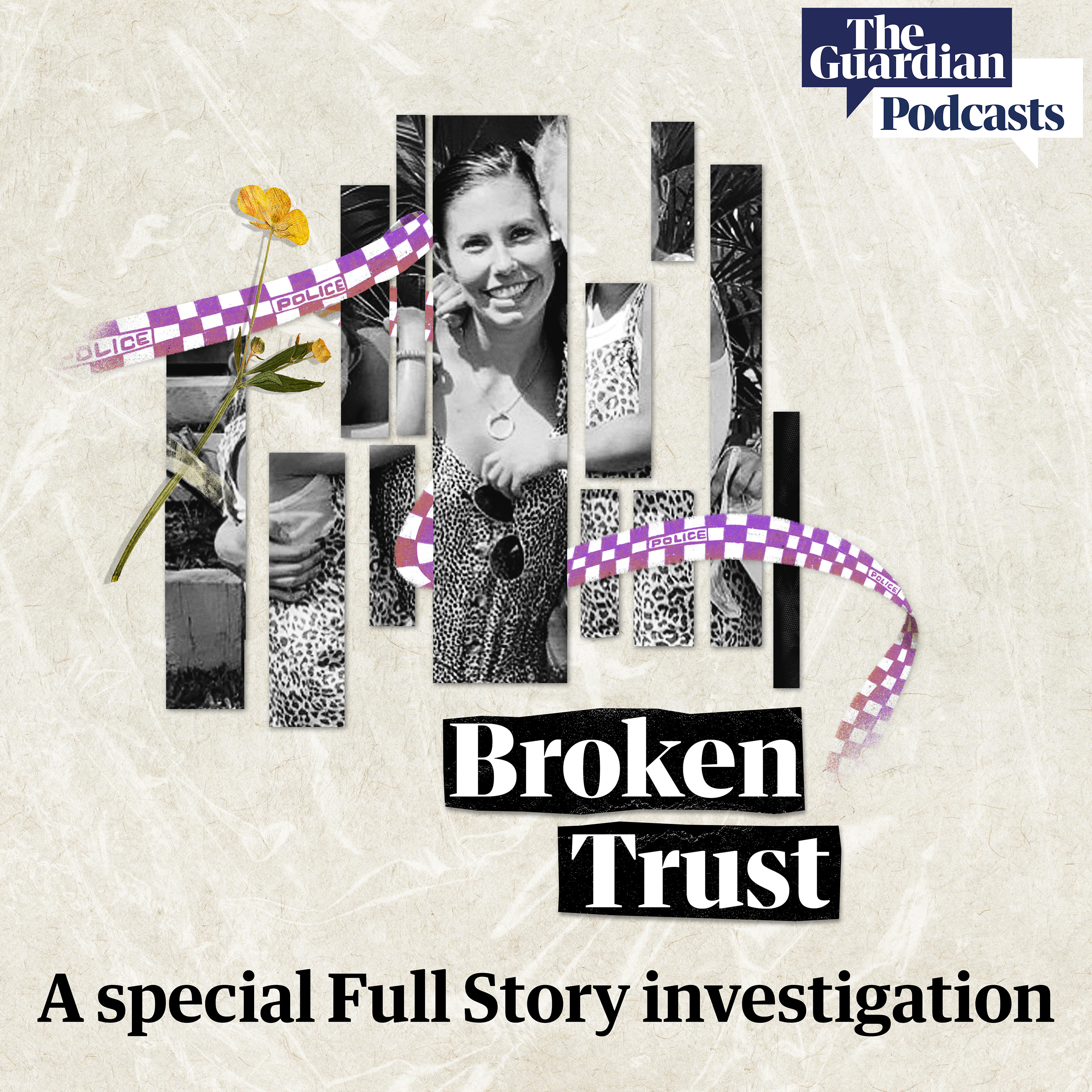
Broken trust
by The Guardian
Guardian Presents is the home of Guardian Australia’s investigative and longform podcasts
-
45
Gina: A day in court – episode 8
In this bonus episode of the Walkley-nominated series about Australia’s richest person, Guardian Australia senior correspondent Sarah Martin and producer Joe Koning examine Wednesday’s landmark court ruling that ends a 15-year-court battle between Gina Rinehart and rival heirs
-
44
Broken trust: why police are failing to learn from their own mistakes
Ben Smee, Guardian Australia’s Queensland correspondent, has been reporting on the national crisis of domestic and family violence, as well as the culture and attitudes inside the Queensland police, for years. In the final episode of this special Full Story investigation, Broken trust looks at how police are failing to learn from their own mistakes. Guardian Australia can reveal allegations from a former senior Queensland detective who has accused police of covering up their own failures in cases in which vulnerable women died after seeking police protection, and alleges she was ordered to ‘protect the organisation’s reputation at all costs’
-
43
Broken trust: how police failed Hannah Clarke and her children
Ben Smee, Guardian Australia’s Queensland correspondent, has been reporting on the national crisis of domestic and family violence, as well as the culture and attitudes inside the Queensland police, for years. In the first episode of this special Full Story investigation, Broken trust uncovers exclusive new evidence in the case of Hannah Clarke and her children. It looks at serious police failings in the lead-up to the murders that were overlooked by the coronial inquest and not investigated by homicide detectives
-
42
Introducing Broken Trust: a two-year investigation into the domestic and family violence crisis
Ben Smee, Guardian Australia’s Queensland correspondent, has been reporting on the national crisis of domestic and family violence, as well as the culture and attitudes of Queensland police, for years. In this special Full Story investigation, Broken Trust can reveal exclusive new evidence in the case of Hannah Clarke and her children, a domestic and family violence homicide that made national headlines. The series looks at serious police failings in the lead-up to the murders that were overlooked by the coronial inquest and not investigated by homicide detectives
-
41
Gina: What does she want? – episode 7
At 13 years old, a young Gina Rinehart read a book that would help shape her worldview – Ayn Rand’s Atlas Shrugged, which is having a moment around the world. The novel’s capitalist underpinnings promote the idea that people should strive to be their best industrial selves. In this episode, we explore how these values are playing out in Rinehart’s life today, including her proposal to build a coalmine in Canada’s Rocky Mountains. And we hear how author and environmental campaigner Tim Winton views her efforts to prevent an overhaul of Australia’s environmental laws
-
40
Gina: Mythmaking – episode 6
Gina Rinehart’s father, Lang Hancock, is well known as a pioneer of the iron ore industry in Australia but few realise Hancock started his mining career on a smaller scale and digging for a different substance – blue asbestos. Hancock and his partner started the mining operation at Wittenoom in the 1940s before selling it to another company, CSR, which mined the area for 20 more years. Wittenoom has become synonymous with an immense tragedy that unfolded upon thousands of the people who lived and worked there due to exposure to asbestos fibres. In this episode of Gina, we interrogate some of the stories her family chooses to celebrate – and others they don’t Listen and subscribe to the Gina podcast at theguardian.com/gina
-
39
Gina: The DNA request – update episode
In the last episode, we covered historical claims made over the years that Lang Hancock, Gina’s father, had two unacknowledged daughters with separate Indigenous women. Since then, the daughter of Sella Robinson, one of the Indigenous women who claimed to be Hancock’s daughter, has decided to speak publicly for the first time Listen to all the episodes of Gina at theguardian.com/gina
-
38
Gina: The portrait – episode 5
It’s the portrait of Gina Rinehart that launched 1,000 memes, went viral globally and became Australia’s Mona Lisa. But it’s also a symbol of how wealth intersects with other areas of life, including art and sport. How does Rinehart use her money to control her image – and what would she rather you don’t see? This episode of Gina is about power and control, and the colonial history of Australia. It contains references to outdated offensive language and events that Aboriginal and Torres Strait Islander people may find distressing. It also contains the names of Indigenous Australians who have died. Listen with care
-
37
Gina: The first-born son – episode 4
Twenty years ago, John Hancock had dinner with his mother, Gina Rinehart. He says it’s the last positive interaction he had with her. In an in-depth interview, he explains how his relationship with his mother fell apart and discusses a high-stakes legal case that could threaten the foundations of her empire Listen and subscribe to the Gina Podcast at theguardian.com/gina
-
36
Gina: Love and money – episode 3
Gina Rinehart has been Australia’s richest person for the last six years in a row. But where does her money come from? In episode three we unpack the bitter rivalries, court battles and family conflicts behind the Hancock fortune – and consider a fundamental question: is Rinehart a mining heiress or is she a self-made mining magnate? We then look at her crowning achievement to date in her time at the helm of Hancock Prospecting – owning and operating her own iron mine at Roy Hill, something her father was never able to do Listen and subscribe to the Gina Podcast at theguardian.com/gina
-
35
Gina: Like father, like daughter – episode 2
How does Gina Rinehart, like her father before her, use wealth and power to influence politics? Rinehart’s first major foray into the political spotlight was successfully lobbying against Labor’s mining super profit tax during the early 2010s. But what did she learn from Lang Hancock, who campaigned to overturn the iron ore export embargo in the 1950s, setting the foundation for their family fortune? Listen to all the episodes of Gina at theguardian.com/gina
-
34
Gina: Becoming Mrs Rinehart – episode 1
Gina Rinehart is Australia’s richest person – and as her wealth continues to rise, so does her power and influence. But what does she want? In the first episode of Gina, senior correspondent Sarah Martin explores the impact Rinehart could have on Australian politics. Rinehart grew up in the vast expanse of the Pilbara. To understand her story, we delve into her past and how her unique childhood under the influence of Lang Hancock shaped her
-
33
Gina: the billionaire who wants to make Australia great
Gina Rinehart is Australia’s richest person – and as her wealth continues to rise, so does her power and influence. But what does she want? As the federal election approaches, Guardian Australia’s new series explores the impact she could have on Australian politics. Senior correspondent Sarah Martin investigates decades of family history and infighting to make sense of how she became a mining billionaire, legal warrior and Trump admirer – and what she might do next.
-
32
How to: Zoë Foster Blake on how to write a book
How does a hugely successful entrepreneur and parent find the energy, creativity and time to write a novel? Zoë Foster Blake tells Bridie Jabour how she makes the most of 90 minutes and where she starts You can support the Guardian at theguardian.com/fullstorysupport
-
31
How to: face your fears and ocean swim with Alice Marklew
It’s obvious there are many benefits to open water swimming, but knowing how to prepare and where to begin can feel overwhelming. Founder of the Coogee Bay Cuttlefish swim club Alice Marklew takes Matilda Boseley through practical tips to jumping (safely) into the big blue You can support the Guardian at theguardian.com/fullstorysupport
-
30
How to: Dolly Doctor on how to talk to teens about sex and consent
For more than 20 years Dr Melissa Kang helped Australian teenagers navigate puberty with her much-loved column Dolly Doctor. Kang speaks to Reged Ahmad about why it’s more important than ever to have that conversation You can support the Guardian at theguardian.com/fullstorysupport
-
29
How to: Charles Duhigg on how to become a supercommunicator
Do you find yourself replaying an important conversation in your head and thinking - ‘why did I say that?’ Journalist and Pulitzer prize-winning author Charles Duhigg found himself at a similar impasse when he had to manage a project and struggled to connect with members of his team. So he learned everything he could about communication. Duhigg tells Reged Ahmad about the simple things anyone can do to improve their communication skills and why being a good listener is key You can support the Guardian at theguardian.com/fullstorysupport
-
28
How to: Karima Hazim on how to cook for a crowd
Whether we like it or not, some of us will have to host friends and family at home this holiday season. Karima Hazim, co-author of cookbook Sofra: Lebanese Recipes to Share, takes Reged Ahmad through her essential hacks for putting on a spread to impress – without the stress You can support the Guardian at theguardian.com/fullstorysupport
-
27
How to: Miranda Tapsell on how to cope with rejection
Whether you’ve been passed over for promotion or dumped by the love of your life, moving on from ‘no’ can be tough. Actor and writer Miranda Tapsell tells Reged Ahmad how she’s dealt with rejection throughout her career and how setbacks have made her stronger You can support the Guardian at theguardian.com/fullstorysupport
-
26
How to: Zara Wong on how to find your personal style
Fashion editor and consultant Zara Wong was attracted to the world of fashion from a young age. After successful stints at Harpers Bazaar, Vogue and Aje Collective she now works as a consultant and also produces her own fashion substack newsletter – Screenshot This. The fashion expert tells Matilda Boseley why you should ignore the rules and not try too hard You can support the Guardian at theguardian.com/fullstorysupport
-
25
How to: Xavier Mulenga on how to know when to quit alcohol
Thinking of breaking up with the booze? Addiction specialist and psychiatrist Xavier Mulenga tells Bridie Jabour the common reasons people think they can’t quit and the steps you can take to reduce your alcohol intake You can support the Guardian at theguardian.com/fullstorysupport
-
24
How to: Thomas Mayo on how to hold on to hope
The yes campaigner and author has had a hard year. After a heartbreaking voice to parliament referendum result and sustained attacks from the media, Thomas Mayo had to pick up the pieces and find a way forward. He tells Reged Ahmad how he found light in a dark time You can support the Guardian at theguardian.com/fullstorysupport
-
23
How to: James Colley on how to be funny
How do you tell a story that makes people laugh and what do you do when the joke lands flat? James Colley, a comedian and writer on ABC’s Gruen, tells Reged Ahmad why comics love a whinge and how he turns his life into laughs You can support the Guardian at theguardian.com/fullstorysupport
-
22
Who cared? The disappearance of Amber Haigh: the verdict
Amber Haigh was 19 years old when she disappeared in 2002, leaving behind an infant son. For months Robert and Anne Geeves sat in court accused of her murder but this week the verdict came down from the judge: not guilty. They are now free. Ben Doherty tells Bridie Jabour about the two ‘indispensable facts’ the judge says the prosecution failed to prove
-
21
Who cared? The disappearance of Amber Haigh, part 8
All the evidence in the trial of Robert and Anne Geeves for the murder of Amber Haigh has now been heard. Reporter Ben Doherty tells Bridie Jabour about the final week in the NSW supreme court, each side’s closing submissions and what happens next
-
20
Who cared? The disappearance of Amber Haigh, part 7
Last week the supreme court of NSW heard the voices of both accused of murdering Amber Haigh. This week you get to hear them too. Robert and Anne Geeves have both pleaded not guilty and have not testified in court but reporter Ben Doherty was there to hear their original police interviews. He tells Bridie Jabour about the interviews from June 2002. Listen to all episodes of Who Cared? The disappearance of Amber Haigh here: theguardian.com/amberhaigh
-
19
Who cared? The disappearance of Amber Haigh, part 6
In court so far we have heard much detail about the two accused of Amber Haighs murder. People have spoken about them and for them but we haven’t heard them speak for themselves, until now. This week reporter Ben Doherty tells Bridie Jabour about the recordings of Robert and Anne Geeves played to the court Listen to all episodes of Who Cared? The disappearance of Amber Haigh here: theguardian.com/amberhaigh
-
18
Who cared? The disappearance of Amber Haigh, part 5
The trial of Robert and Anne Geeves for the murder of Amber Haigh has now heard 22 days of public hearings. Reporter Ben Doherty has previously heard evidence from those in Amber’s community: neighbours, friends, family and people who met her briefly. But this week, he tells Bridie Jabour, the court heard from those who were in charge of the investigation into her disappearance Listen to all episodes of Who Cared? The disappearance of Amber Haigh here: theguardian.com/amberhaigh
-
17
Who cared? The disappearance of Amber Haigh, part 4
There have now been 38 witnesses called in the trial of Robert and Anne Geeves, who are charged with the murder of Amber Haigh. Ben Doherty tells Bridie Jabour about the evidence presented. This week the court heard more about the weeks and months following Amber’s disappearance, as well as further testimony and allegations about Robert Geeves’ past. Listen to all episodes of Who Cared? The disappearance of Amber Haigh here: theguardian.com/amberhaigh
-
16
Who cared? The disappearance of Amber Haigh, part 3
As the trial of Robert and Anne Geeves for the murder of Amber Haigh continues, Bridie Jabour speaks to Ben Doherty, who has been watching it unfold. This week he reports on evidence the court heard that Haigh had made a will, events surrounding a late-night visit to a neighbour’s house and further details of what’s been called ‘the tying up evidence’ Listen to all episodes of Who Cared? The disappearance of Amber Haigh here: theguardian.com/amberhaigh
-
15
Who cared? The disappearance of Amber Haigh, part 2
In Wagga Wagga the trial of Robert and Anne Geeves for the murder of Amber Haigh is now in its third week. Ben Doherty tells Bridie Jabour what was heard in court last week. For the first time prosecution witness testimony about what has been referred to as ‘the tying up evidence’ was heard, but it was the subject of some arguments in court. Other witnesses told us more about Haigh’s five months as a mother, before she disappeared Listen to all episodes of Who Cared? The disappearance of Amber Haigh here: theguardian.com/amberhaigh
-
14
Who cared? The disappearance of Amber Haigh, part 1
More than 20 years after Amber Haigh’s disappearance, two people stand accused of her murder – one of them the father of her child. Both have pleaded not guilty. Bridie Jabour speaks to Ben Doherty, who’s reporting on the trial. They discuss what we learnt about Amber Haigh’s life, the prosecution’s case against a married couple, and the defence’s counterargument that the case against them is weak and based on degraded memories from disapproving members of the community. Listen to all episodes of Who Cared? The disappearance of Amber Haigh here: theguardian.com/amberhaigh
-
13
Who screwed millennials? Yanis Varoufakis on the death of capitalism
In Guardian Australia’s new series Who screwed millennials, co-host Matilda Boseley spoke to Yanis Varoufakis about how the Australian housing market entrenches inequality. In this bonus episode, we hear more from Varoufakis on the state of the economy, how young people are coping with financial hardship and how capitalism has mutated into something he calls ‘technofeudalism’
-
12
Can millennials unscrew themselves? Part 5
There are no easy answers to undoing all the problems driving intergenerational inequality but hope is not lost. Young Australians are increasingly politically influential, making up 43% of voters at the last federal election. Jane Lee and Matilda Boseley call on Guardian Australia political reporter Amy Remeikis and the Australia Institute’s chief economist, Greg Jericho, to find out whether this is influencing policy debates on everything from housing to climate change, and how millennials can use their new-found power for good
-
11
Who screwed millennials out of affordable education? Part 3
How did a system that was meant to make access to university more equitable end up burdening students with the very $100,000 degrees John Howard promised Australia would never have? Jane Lee and Matilda Boseley talk to the Labor-appointed architect of the higher education contribution scheme to understand why student fees were introduced, who benefited and how he wound up at a dinner party where guests were planning to burn an effigy … of him. In part three of Who screwed millennials? we hear from economist Prof Bruce Chapman, Guardian Australia editor Lenore Taylor, university historian Julia Horne, VicWise founder Manorani Guy and education reporter Caitlin Cassidy to trace the dozens of ideological changes over decades that transformed the nature of our university system
-
10
Who screwed millennials out of affordable housing? Part 2
How did the government set fire to the Australian housing market? Jane Lee and Matilda Boseley look at how the threat of a communist uprising, a benign sounding tax review and one prime minister’s admiration for two world leaders changed the lives of young Australians
-
9
Who screwed millennials part 1: a generation left behind
With rising house prices, a decade of wage stagnation and ballooning student debt, young people in Australia are living through what author Jill Filipovic describes as ‘a series of broken promises’. In episode one of this new series from Guardian Australia, Full Story co-host Jane Lee and reporter Matilda Boseley sort through these broken promises, investigating why young people are living in a time of such economic strain. In this episode, we hear from a handful of experts featured in Who screwed millennials? – including author Jill Filipovic, youth researcher Intifar Chowdhury, author Malcolm Harris, Guardian Australia editor Lenore Taylor and former Greek finance minister Yanis Varoufakis about how millennials became the first generation to be worse off than their parents
-
8
Introducing: Who screwed millennials?
Australian millennials are the first generation to be worse off than their parents, and things are only heading in the same direction for Gen Z. In this deeply-researched yet tongue-in-cheek five-part podcast series, Full Story co-host Jane Lee and social media reporter Matilda Boseley investigate the mystery of who screwed young Australians out of affordable housing, education and secure work, and why inequality is rising in Australia Who screwed millennials? will be in your Full Story podcast feed from 25 March
-
7
Part eight: the pursuit of truth
At the heart of the defamation case Ben Roberts-Smith launched against three of Australia’s biggest newspapers were the articles published by Nick McKenzie and Chris Masters. In this episode Ben Doherty speaks to these journalists about what led them to start this investigation, how they overcame their doubts and fears to publish articles that accused Australia’s most decorated living soldier of war crimes, and what the results of the civil case mean for Australia’s military legacy
-
6
Part seven: a hero’s downfall
Australia’s most decorated living soldier has lost his defamation case against the Sydney Morning Herald, the Age and the Canberra Times. A federal court judge has found that the newspapers proved in their defence that Ben Roberts-Smith murdered unarmed prisoners while serving in the Australian military in Afghanistan. In this episode, host Ben Doherty combs through Justice Anthony Besanko’s full verdict which describes how Australia’s most decorated soldier lied to save his reputation How to listen to podcasts: everything you need to know
-
5
Ben Roberts-Smith v the media part six: judgment day
Australia’s most decorated living soldier has lost his defamation case against the Sydney Morning Herald, the Age and the Canberra Times. A federal court judge has found that the newspapers proved in their defence that Ben Roberts-Smith either murdered or was complicit in and responsible for the murder of unarmed civilians while serving in the Australian military in Afghanistan. Ben Doherty reports from court, sifting through the judge’s ruling and what it means for public interest journalism
-
4
Ben Roberts-Smith v the media part five: the letters
In June 2018, an SAS soldier known in this defamation trial as Person 18 says he received two threatening letters at his barracks in Perth. In their defence, the newspapers allege that these letters were written by Ben Roberts-Smith. He denies this outright. In this episode, Ben Doherty explains why the newspapers think these letters are important to their defence of this case and we hear testimony from Ben Roberts-Smith, as well as his former employee John McLeod and ex-wife Emma Roberts, who are witnesses for the newspapers, read by voice actors. We also hear closing arguments from both sides and from a defamation barrister about what this trial tells us about defamation law in Australia
-
3
Ben Roberts-Smith v the media part four: the tunnel
On 12 April 2009, the SAS arrive in the village of Kakarak in Afghanistan’s Uruzgan province. It’s a Taliban stronghold where an Australian soldier was killed just a month earlier. It’s here, in a compound known as Whiskey 108, that one of the most contested events in this extraordinary defamation trial takes place. In their defence, the newspapers allege that at Whiskey 108 Ben Roberts-Smith murdered an Afghan man with a prosthetic leg and ordered a junior member of his patrol to murder another Afghan man as part of a military ‘blooding’ ritual. Roberts-Smith strenuously denies these claims and says the two men who were killed were legitimate engagements shot lawfully in the heat of battle. In this episode, Ben Doherty takes us inside the raid on Whiskey 108. We hear evidence presented by Ben Roberts-Smith and others who support his version of events, as well as witnesses for the newspapers, read by voice actors
-
2
Ben Roberts-Smith v the media part three: the affair
An affair between Ben Roberts-Smith and a witness known to the court as Person 17 is one of the key contested elements of this extraordinary defamation trial. The newspapers as part of their defence allege that Roberts-Smith committed an act of domestic violence against Person 17. He denies this allegation, saying it is a complete fabrication. In this episode, host Ben Doherty takes us through both sides, detailing the breakdown of Roberts-Smith’s marriage to Emma Roberts and his affair with Person 17. We hear testimony from Roberts-Smith himself, as well as from Person 17 and Emma Roberts – who appear for the newspapers – read by voice actors
-
1
Ben Roberts-Smith v the media part two: death in Darwan
In the aftermath of an attack on Australian soldiers by a rogue Afghan soldier, the SAS is sent to the Taliban-controlled village of Darwan. They arrive by helicopter at dawn, looking for Hekmatullah, the soldier who shot dead three of their comrades. It is during this raid, the newspapers allege in court as part of their defence, that Ben Roberts-Smith kicked an unarmed, handcuffed Afghan man off a cliff and then ordered another soldier to shoot him dead. Roberts-Smith denies this outright and says he and another soldier lawfully shot and killed a member of the Taliban they found hiding in a cornfield. In this episode of Ben Roberts-Smith v the media, Ben Doherty takes us through one of the key incidents under dispute in this extraordinary defamation trial – the raid of Darwan. And we hear evidence as presented in court by witnesses for Roberts-Smith and the newspapers in their defence, read by voice actors
-
0
Ben Roberts-Smith v the media part one: reputation
In the defamation trial of the century, Australia’s most decorated living soldier is seeking to defend his reputation against reports in three newspapers that he says falsely accuse him of being a war criminal. His lawyers argue Ben Roberts-Smith has been unfairly targeted by envious comrades and assisted by credulous journalists. The newspapers’ lawyers say their reporting is true, and that Roberts-Smith broke the ‘moral and legal rules of military engagement’, something he denies outright. But who is Ben Roberts-Smith, and how did he earn the military’s highest honour, the Victoria Cross?
We're indexing this podcast's transcripts for the first time — this can take a minute or two. We'll show results as soon as they're ready.
No matches for "" in this podcast's transcripts.
No topics indexed yet for this podcast.
Loading reviews...
ABOUT THIS SHOW
Guardian Presents is the home of Guardian Australia’s investigative and longform podcasts
HOSTED BY
The Guardian
CATEGORIES
Loading similar podcasts...
URL copied to clipboard!