
PODCAST · education
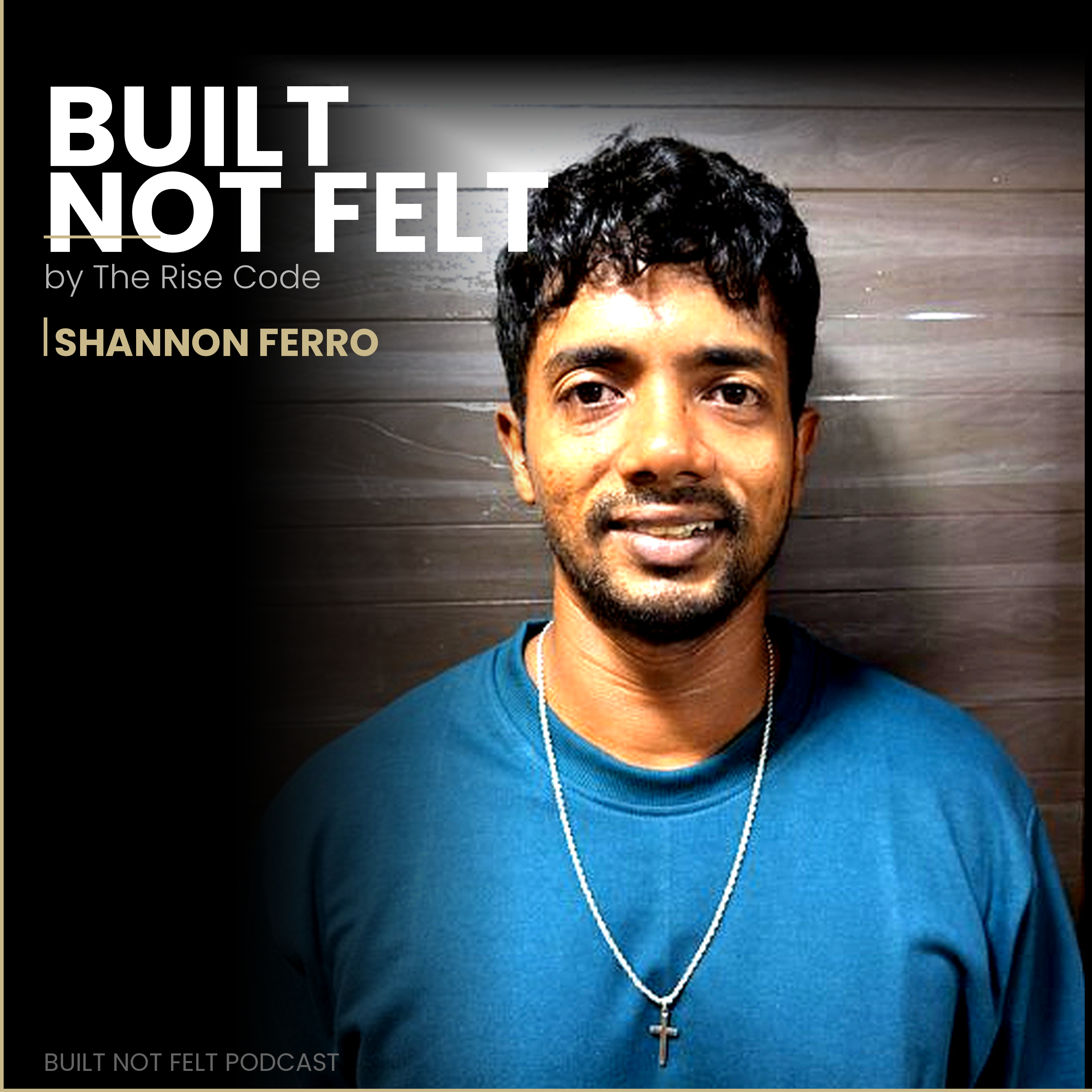
Built. Not Felt.
by Shannon Ferro
Honest reflections on discipline, faith, and becoming someone you respect.No hype. No shortcuts. Just the quiet, daily work of building structure, standards, and self-belief — rooted in real experience and Biblical conviction.For anyone who is done restarting.
-
37
Your Mind is What You Feed It
Your mind is what you feed it. We are careful about our physical diet, but we arecareless about our mental diet. Yet your mental diet determines your thoughts, your actions, your results, and ultimately your life. In this episode, we explore the power of intentionalconsumption and how changing your mental diet can transform everything. We examine the impact of what you consume, the principle of garbage in, garbage out, and the five angles of mental diet. Topics covered:• The impact of what you consume mentally• Garbage in, garbage out principle• The power of intentional consumption• Breaking free from toxic content• Mental diet vs. physical diet importance• Scripture on guarding your mind (Philippians 4:8,Proverbs 23:7, Romans 12:2, Proverbs 4:23, 2 Corinthians 10:5, Colossians 3:2)• Real-world examples (entrepreneur transformation,student transformation)• How to audit your current mental diet• How to replace toxic content with nourishing content• How to build a healthy information diet• How to protect your mind from toxicity• The invisible advantage of a healthy mental diet Key takeaway: Your mind is what you feed it. Be intentional about your consumption. Feed your mind with what is true, noble, right, pure, lovely, admirable, excellent, and praiseworthy. Send this to someone who needs to change their mental diet. #YourMindIsWhatYouFeedIt #TheRiseCode #MentalDiet #Mindset #Transformation #Growth
-
36
Discipline is What You Hate to Do But Doing It Like You Love It
Most people think discipline is about forcing yourself todo things you hate. But true discipline is about transforming your relationship with struggle and doing hard things with passion. In this episode, we explore the paradox of discipline—thethings we hate to do are often the most important things to do. We examine how commitment transforms perspective, how attitude determines experience, and how discipline is ultimately a form of love. Topics covered: • The paradox of discipline (things we hate are oftenmost important)• Transforming hate into love through commitment• The power of attitude and perspective• Discipline as a form of love• Scripture on discipline, love, and transformation(Colossians 3:23-24, Romans 12:2, Philippians 4:8-9, 2 Timothy 2:3-4, 1 Peter 1:6-7, Romans 5:3-4, Proverbs 22:29, Ecclesiastes 9:10)• Real-world examples (Kobe Bryant, Cristiano Ronaldo,Serena Williams, Steve Jobs, Oprah Winfrey, David Goggins)• How to shift your mindset about hard things (5strategies)• How to find love in the struggle (5 methods)• How to transform discipline into passion (5 principles)• How to maintain this mindset long-term (5 strategies)• The invisible advantage of loving the grind Key takeaway: Do what you hate like you love it. Transform your relationship with struggle. Become unstoppable. Send this to someone who needs to hear this. #DisciplineIsLove #TheRiseCode #Transformation #Greatness #Mindset #Discipline
-
35
It's Easy to Be Great Nowadays Because Most People Are Weak
Most people have chosen comfort. Most people have chosenease. Most people have chosen weakness. And because most people have made that choice, the opportunity for those willing to be disciplined has never been greater. In this episode, we explore David Goggins' powerfulinsight about modern society and the unprecedented opportunity it creates for those willing to be different. We examine the weakness of modern society, the opportunity created by others' weakness, the power of standing out through discipline, and the choice to be different. We study scripture on discipline and strength. We provide real-world examples from David Goggins, Cristiano Ronaldo, Steph Curry, and others. We discuss how to identify where you're weak, how to build discipline in a soft world, how to use others' weakness as motivation, and how to stand out through strength. Topics covered:• The weakness of modern society (comfort culture,entitlement, lack of discipline)• The opportunity created by others' weakness• The power of standing out through discipline• The choice to be different• Scripture on discipline and strength (Proverbs 12:24,13:4, 22:29, 6:6-11, 21:25, 24:30-34, 28:19, 31:17, 20:4, 14:23, 27:12, 10:4, 1 Corinthians 9:24-27, 2 Timothy 1:7, Hebrews 12:11, Romans 12:11, Colossians 3:23-24, Ecclesiastes 9:10, 2 Thessalonians 3:10)• Real-world examples (David Goggins, Cristiano Ronaldo,Steph Curry, Kobe Bryant, Serena Williams, Elon Musk, Steve Jobs, Muhammad Ali, LeBron James, Usain Bolt, Sara Blakely, Oprah Winfrey)• How to identify where you're weak• How to build discipline in a soft world (7 strategies)• How to use others' weakness as motivation• How to stand out through strength• The invisible advantage of discipline Key takeaway: It's easier to be great nowadays because most people are weak. All you have to do is be willing to do what most people aren't willing to do. Send this to someone who needs to hear this. #ItEasierToBeGreat #MostPeopleAreWeak #Discipline#Standing Out #Greatness #DavidGoggins #TheRiseCode #Transformation
-
34
Pain Heals, Glory Lasts Forever
Your pain is temporary. Your suffering is temporary. Yourstruggle is temporary. But your legacy is eternal. Your achievement is eternal.Your glory is eternal. Most people choose comfort. Most people avoid pain. Mostpeople take the easy path. And most people live mediocre lives. But some people don't.Some people choose pain for glory. Some people sacrificecomfort for achievement. Some people endure suffering for legacy. And some people live extraordinary lives. This is the difference between ordinary and extraordinary.This is the difference between comfort and greatness. This is the difference between a life forgotten and a life remembered. In this episode, we explore the power of sacrifice throughthe lens of pain and glory. We examine the temporary nature of pain vs. the permanence of achievement. We explore sacrifice as the price of greatness. We discuss enduring pain for eternal glory. We examine the choice between comfortand legacy. We study scripture on pain and glory. We provide a practical framework for making the choice for greatness. We discuss how to endure the hard season. And we examine the invisible advantage of sacrifice. Topics covered:• The temporary nature of pain vs. the permanence ofachievement• Sacrifice as the price of greatness• Enduring pain for eternal glory• The choice between comfort and legacy• Scripture on pain and glory (2 Corinthians 4:17, Romans8:18, Hebrews 12:2, Philippians 3:7-91, Peter 4:13, 2 Timothy 2:12, Matthew 5:11-12, James 1:2-4, 1 Peter 1:6-7, Colossians 1:24, 2 Corinthians 12:10, 1 Peter 5:10, Psalm 30:5, Hebrews 10:35-36, Romans 5:3-4)• Real-world examples (Kobe Bryant, Serena Williams,Michael Jordan, Muhammad Ali, LeBron James, Cristiano Ronaldo, Steve Jobs, Oprah Winfrey, J.K. Rowling, Sara Blakely, Walt Disney, Richard Branson, Usain Bolt)• How to reframe pain as temporary• How to focus on the eternal legacy• How to make the choice for greatness• How to endure the hard season• The invisible advantage of sacrifice Key takeaway: Pain heals.Glory lasts forever. The choice is yours. Send this to someone who needs to sacrifice. #PainHeals #GloryLastsForever #Sacrifice #Legacy#Greatness #TheRiseCode #Transformation
-
33
Persistence Wins: The Power of Refusing to Quit
A crow is dying of thirst. The crow finds a pitcher with alittle water in the bottom. The crow's beak is too short to reach the water.The crow could give up. Or the crow could persist. The crow sees pebbles nearby. The crow picks up one pebbleand drops it into the pitcher. Then another. Then another. Drop by drop. Pebble by pebble. The water level rises. Finally, the water is high enough for the crow to drink. The crow persists. The crow refuses to quit. The crowfinds a solution. And the crow survives. This is the power of persistence. This is the power ofrefusing to quit. This is the power of small actions, consistently repeated, that lead to big results. In this episode, we explore the power of persistencethrough the lens of the thirsty crow story. We examine persistence through seemingly impossible situations. We explore how small, consistent actions lead to big results. We discuss problem-solving and creative thinking. We examinewhy most people quit when others persist. We study scripture on persistence and never giving up. We provide a practical framework for identifying when to persist vs. when to pivot. We explore how to stay motivated when progress isslow. We discuss how to celebrate small wins. And we examine the invisible advantage of persistence. Topics covered:• The thirsty crow story and the power of persistence• Persistence through seemingly impossible situations(Nelson Mandela, Harriet Tubman, Viktor Frankl, Malala Yousafzai)• Small, consistent actions leading to big results (WaltDisney, Henry Ford, J.K. Rowling)• Problem-solving and creative thinking• Never giving up when others would quit (Michael Jordan,Serena Williams, Kobe Bryant, Muhammad Ali, Cristiano Ronaldo, Usain Bolt)• Scripture on persistence (Galatians 6:9, James 1:12,Romans 5:3-4, Matthew 10:22, 1 Corinthians 15:58, and more)• How to identify when to persist vs. when to pivot• How to stay motivated when progress is slow• How to celebrate small wins• The invisible advantage of persistence• Drop by drop, pebble by pebble Key takeaway: Persistence wins. Always. Drop by drop. Pebble by pebble. Small actions, consistently repeated, lead to big results. Send this to someone who needs to persist.#Persistence #NeverGiveUp #DropByDrop #SmallActions#BigResults #TheRiseCode #Transformation
-
32
It's only Delusional until it works
Every great achievement started with someone who wascalled delusional. Every great vision started with someone who was doubted.Every great success started with someone who believed before evidence. In this episode, we explore the power of belief beforeevidence, the difference between delusion and vision, faith as the foundation of achievement, taking action on what you believe, and handling criticism and naysayers. We examine the psychology of belief and why most people wait forevidence before they believe. We explore the critical distinction between delusion and vision. We examine scripture on faith and vision. We study real-world examples of people who were called delusional and succeeded anyway. And we provide a practical framework for distinguishing between delusion and vision. Topics covered:• The power of belief before evidence (belief comesfirst, evidence comes later)• The thin line between delusion and vision (thedifference is action)• Faith as the foundation of achievement (Hebrews 11:1,John 20:29, Proverbs 29:18, Mark 11:24, Proverbs 23:7, 2 Corinthians 5:7, Habakkuk 2:2-3, Romans 4:17, Proverbs 3:5-6, Isaiah 43:19, 1 Peter 1:8, Philippians 3:14, Colossians 3:2, Proverbs 16:3, Jeremiah 29:11)• Taking action on what you believe (belief alone is notenough)• Handling criticism and naysayers (everyone will doubtyou)• Real-world examples: Steve Jobs, Jack Ma, Sara Blakely,Oprah Winfrey, Richard Branson, Cristiano Ronaldo, LeBron James, Muhammad Ali, Thomas Edison, The Wright Brothers• How to distinguish between delusion and vision (6 keyquestions)• How to build unshakeable belief• How to take action despite doubt• The invisible advantage of belief• Small beliefs, big results Key takeaway: It's only delusional until it works. Belief comes first. Evidence comes later. Action is the difference between delusion and vision. Send this to someone who needs to believe in their vision. #Belief #Vision #Delusional #Faith #TheRiseCode#Transformation
-
31
Never Choose Comfort Over Effort
Every single day, you have a choice. Comfort or effort.Safety or growth. Stagnation or transformation. In this episode, we explore the seduction of comfort, whyit's dangerous, and how to choose effort even when it's hard. We examine the psychology of comfort and why most people choose it. We explore the critical distinction between comfort and growth. We examine scripture on effort and laziness. We study real-world examples of people who chose comfort andregretted it, and people who chose effort and succeeded. And we provide a practical framework for building tolerance for discomfort and making effort ahabit. Topics covered:• The seduction of comfort (why it feels good)• The price of comfort (what it costs you)• The invisible cost of comfort (how it compounds overtime)• Effort as the path to growth• The discomfort of effort (why it's necessary)• Scripture on effort and laziness (Proverbs 12:24,Proverbs 6:6-11, Proverbs 13:4, Proverbs 14:23, Proverbs 21:25, Colossians 3:23-24, Romans 12:11, 1 Corinthians 9:24-27, 2 Timothy 1:7, Hebrews 12:11, Ecclesiastes 9:10, Proverbs 10:4, Proverbs 22:29)• Real-world examples: Kobe Bryant, Steve Jobs, OprahWinfrey, Elon Musk, Sara Blakely, Michael Jordan, comfortable employee, comfortable entrepreneur, comfortable athlete, comfortable student• How to recognize when you're choosing comfort• How to build tolerance for discomfort• How to make effort a habit• How to measure the cost of comfort choices• The invisible advantage of choosing effort• Small efforts, big results Key takeaway: Never choose comfort over effort. The discomfort of effort is temporary. The results are permanent. Send this to someone who needs to choose effort over comfort. #Effort #Comfort #Growth #TheRiseCode #Transformation
-
30
To Get Something You Never Had, You Have to Do Something You Never Did
If you keep doing the same things, you'll keep getting thesame results. This is not punishment. This is just how it works. Same actions, same results. Different actions, different results. In this episode, we explore the law of change, why youhave to do things differently to get different results, and how to take new actions despite the discomfort. We examine the psychology of change and why most people resist it. We explore the critical distinction between staying stuck and transforming. We examine scripture on change and transformation. We study real-world examples of people who changed their actions and got different results, and people who stayed stuck. And we provide a practical framework fortaking new actions and getting different results. Topics covered:• The law of change (different actions, differentresults)• Same actions, same results (what happens when you don'tchange)• Different actions, different results (examples oftransformation)• Breaking old patterns• The discomfort of doing new things• Scripture on change and transformation (2 Corinthians5:17, Romans 12:2, Galatians 2:20, Proverbs 23:7, James 1:22-24, Proverbs 13:4, Philippians 3:12-14, Proverbs 27:12, Ecclesiastes 3:1-8, 1 Peter 1:13-14,Proverbs 6:6-11)• Real-world examples: Steve Jobs, Oprah Winfrey, ElonMusk, Sara Blakely, Kobe Bryant, Michael Jordan, stuck employee, stuck entrepreneur, stuck athlete, stuck relationship• How to identify what new actions you need to take• How to overcome the discomfort of doing new things• How to measure progress from new actions• How to stay committed to new actions• Small actions, big results• The cost of staying stuck• The invisible advantage of taking new actions Key takeaway: To get something you've never had, you have to do something you've never done. Same actions,same results. Different actions, different results. Send this to someone who needs to change their actions. #Change #Action #Results #TheRiseCode #Transformation
-
29
You are Greater than your Feelings
You feel afraid, but you are not fear. You feel sad, butyou are not sadness. You feel doubt, but you are not doubt. Your feelings are temporary. You are permanent. Your feelings change. You stay. In this episode, we explore emotional mastery, why you aregreater than your feelings, and how to exercise that power. We examine the psychology of emotions and how they work. We explore the critical distinction between feeling and identity. We examine scripture on self-control andemotional mastery. We study real-world examples of people controlled by their emotions and people who mastered them. And we provide a practical framework for observing your feelings without being controlled by them. Topics covered: • The psychology of emotions• The difference between feeling and identity• You have the power to choose your response• Feelings are data, not destiny• Scripture on self-control and emotional mastery(Proverbs 16:32, 2 Corinthians 10:5, Philippians 4:8, Romans 6:12, Proverbs 25:28, Galatians 5:22-23, 1 Peter 1:13, Proverbs 29:11, 2 Timothy 1:7, Ephesians 4:26-27, Romans 12:2)• Real-world examples: people controlled by emotions,people who mastered emotions, Michael Jordan, Serena Williams, Kobe Bryant, Steve Jobs, Elon Musk, Sara Blakely• How to observe your feelings without being controlledby them• How to choose your response to your feelings• How to use feelings as data (not destiny)• How to build emotional resilience• The invisible advantage of emotional mastery Key takeaway: You cannot always control your feelings, but you can always control your response to them.This is where your power lies. Send this to someone who needs to master their emotions. #Feelings #Emotions #Mastery #Power #TheRiseCode#SelfControl
-
28
Comparison is the thief of Joy
When you compare your life to someone else's life, yousteal your own joy. When you compare your possessions to someone else's possessions, you steal your own contentment. When you compare your success to someone else's success, you steal your own gratitude. In this episode, we explore the psychology of comparison,why it steals joy, and how to reclaim the contentment and gratitude that comparison has stolen from you. We examine scripture on contentment and gratitude. We study real-world examples of people destroyed by comparison and people who overcame it. We explore social media as a comparison trap. We provide a practical framework for breaking the comparison habit and cultivating gratitude and contentment. Topics covered:• The psychology of comparison• Why we compare• Comparison steals joy• The difference between healthy ambition and destructivecomparison• Social media as a comparison trap• Scripture on contentment (Philippians 4:4-7, 1 Timothy6:6-8, Hebrews 13:5, Proverbs 14:30)• Real-world examples: social media addicts, competitivecolleagues, influencer followers, people who overcame comparison• How to identify when you're comparing• How to break the comparison habit• How to cultivate gratitude and contentment• How to use comparison as motivation (not destruction)• The invisible advantage of contentment Key takeaway: Comparison steals joy, but you have the power to reclaim it through gratitude, contentment, and humility. Send this to someone who needs to stop comparing and start celebrating their own life.
-
27
Failure is where Growth is
When you're lifting weights, you train till failure because you know that's where growth happens. Failure is the point. Failure is where the muscle grows. But in our careers, relationships, spirituality, and creativity, we avoid failure at all costs. We stay comfortable. We stay safe.And that's exactly where we stop growing. In this episode, we explore the gym metaphor for life, whygrowth happens at the edge of your capacity, and what it costs to stay comfortable. We examine scripture on pushing to the edge and embracing discomfort. We study real-world examples of people who trained to failure (Serena Williams, Elon Musk, Sara Blakely) and people who stayed comfortableand stagnated. And we provide a practical framework for training to failure in different areas of your life: career, relationships, spirituality, creativity, and health. Topics covered:• The gym principle: training till failure• Comfort zone vs. discomfort zone• Why we avoid failure• Scripture on pushing to the edge (James 1:2-4, Romans5:3-5, 1 Corinthians 9:24-27)• Real-world examples: Serena Williams, Elon Musk, SaraBlakely• Training to failure in different areas of life• Training smart (push, then recover)• The progression of growth: failure → perseverance →character → hope• The cost of comfort• The courage required Key takeaway: Growth only happens when you're pushed beyond your current capacity. Growth only happens atfailure. Train to failure in your life. Send this to someone who needs to embrace discomfort.
-
26
The Work Works on You More Than You Work on It
The work works on you more than you work on it. Most of us think the work is a means to an end. We practice to win. We study to pass the test. We build to make money. But that's not how transformation actually works. The real work is not about the external outcome. The realwork is about who you become in the process. You're not doing the work to achieve something external. You're doing the work to become something internal. In this episode, we explore the philosophy of transformation through discipline, what it means to surrender to the process,and how to let the work shape you instead of forcing outcomes. We examine scripture on transformation and becoming. We study real-world examples of people who were transformed by their work: Kobe Bryant, Michelangelo, Vincent van Gogh, Steve Jobs, and the Apostle Paul. And we provide a practical framework for letting the work work on you. Topics covered:• The misunderstanding about work and outcomes• You become what you practice• Surrender to the process instead of forcing results• Scripture on transformation (Romans 12:2, 2 Corinthians3:18, Hebrews 12:11)• Real-world examples: Kobe, Michelangelo, van Gogh,Jobs, Paul• How consistency creates character• The invisible transformation• Becoming is continuous Key takeaway: The work workson you more than you work on it. The real transformation is who you become, not what you achieve. Send this to someone who needs to surrender to the process.
-
25
If you don't fail, you're not even Trying
If you're not failing, you're not trying. The people who never fail are the people who never attemptanything difficult. They stay comfortable. They avoid risk. They play it safe. But the people who become great? They fail constantly.They attempt things they might not succeed at. They push beyond their limits.They try and fail and try again. In this episode, we explore the philosophy of failure, whyit's necessary, and how to reframe it from something to fear into something to embrace. We examine scripture on trials and growth. We study real-world examples of people who failed and became unstoppable: Stephen Curry, CristianoRonaldo, Steve Jobs, Oprah Winfrey. And we provide a practical framework for reframing failure and using it as feedback. Topics covered:• The fear of failure and why it keeps you small• Failure as feedback, not defeat• The courage to attempt difficult things• Scripture on trials, perseverance, and growth (James,Romans, 1 Peter)• Real-world examples: Curry, Ronaldo, Jobs, Oprah• How to reframe failure (5-step framework)• The invisible advantage of being willing to fail• The challenge: attempt something difficult this week Key takeaway: If you're not failing, you're not even trying. The people who become great are the people who fail constantly and keep going. Send this to someone who needs permission to fail.
-
24
The Myth of Sisyphus
"One must imagine Sisyphus happy." — Albert Camus You have a boulder. It's not going away. The question isnot "How do I escape?" but "How do I accept this and findmeaning in it?" In this episode, we explore the ancient myth of Sisyphusand Albert Camus's philosophy of the absurd. We discover how acceptance, not escape, is the path to freedom. We examine scripture on labour and meaning. We study real-world examples of people who found greatness in repetition: Kobe, Michelangelo, Oprah, Paul. And we provide a framework for finding meaning in the repetitive work that defines your life. Topics covered:• The myth of Sisyphus and his eternal punishment• Camus's philosophy of the absurd and the absurd hero• Acceptance as liberation• Scripture on labour (Ecclesiastes, Colossians, Matthew,Proverbs)• Real-world examples: Kobe, Michelangelo, Oprah, Paul• The framework for finding meaning in your boulder• The invisible advantage of discipline• The appointed time is now Key takeaway: Your boulder is real. But it's also your opportunity. When you accept it and find meaning init, you become unstoppable.Send this to someone who needs to understandthat their struggle has meaning.
-
23
God Will Sell You Anything at the Price of Labour
Greatness is not free. There are no shortcuts. No hacks.No secret formulas. Only labour. In this episode, we explore the principle that separatesgreat men from ordinary men: the willingness to pay the price. We dive deep into Leonardo da Vinci's life, study the real-world examples of Kobe, Michelangelo, and Oprah, and provide a framework for understanding what greatness will cost you. Topics covered:• The nature of labour (physical, mental, emotional,spiritual)• Leonardo da Vinci: the master who paid the price• Real-world examples: Kobe, Michelangelo, Oprah, Paul• Scripture on labour and work• The framework for understanding the cost of greatness• The invisible advantage of paying the price• The appointed time is now Key takeaway: God will sell you anything at the price of labour. The question is: Are you willing to pay? Send this to someone who needs to understand the cost of greatness.
-
22
The Sun Doesn't Care If the Grass Appreciates the Rays, It Keeps on Shining
Most of us are waiting for someone to validate us. Someoneto appreciate us. Someone to recognize our work. And that's why we're stuck. In this episode, we explore the principle of doing yourwork regardless of recognition, building in silence regardless of appreciation, and staying consistent regardless of results. Learn how to detach from the need for validation while staying committed to your purpose. Featuring real-world examples of people who understoodthis principle: Steve Jobs, Vincent van Gogh, Denzel Washington, and the Apostle Paul. Topics covered:• Why validation is a trap• The cost of needing external approval• How to detach from the need for validation• The paradox of validation (stop seeking it, get more ofit)• Real-world examples of people who kept shining• The framework for building without needing recognition• Scripture on purpose and work Key takeaway: The sun doesn't care if the grass appreciates the rays. It keeps on shining. Be like the sun. Keep shining regardless of who's watching. Send this to someone who needs to stop needing validation.
-
21
Doubt and Faith, Two Sides of the Same Coin
"Doubt and faith are not opposites. They're two sidesof the same coin." Doubt is human. Even the greatest men of faith had doubt.But dwelling in doubt wastes time and energy. In this episode, we explore how to make the instant switch from doubt to faith, and why you have one opportunity to be great that most people don't take because they're scared. Learn the framework for training your mind to recognizedoubt and immediately choose faith. Featuring real-world examples of men who made the instant switch: Steve Jobs, Elon Musk, Nelson Mandela, and the Apostle Peter. Topics covered:• Why doubt and faith coexist• The instant switch (what separates great men fromordinary men)• How to train your mind to make the instant switch• Your one opportunity to be great• The framework for moving from doubt to faith• Real-world examples of men who chose faith despitedoubt Key takeaway: You have one opportunity to be great. One. And it's now. Make the instant switch. Choose faith. Always believe. Send this to someone who needs to hear it.
-
20
One Decision Away
Your life isn't accidents. Your life is decisions. The decision to go to college or not. The decision tostart a business or get a job. The decision to marry this person or that person. The decision to move or stay. The decision to take the risk or play it safe. These few big decisions shape your entire life. Theydetermine where you live, who you're with, what you do, how much money you make, how happy you are. But here's the problem: Most men make these decisions bydefault. They don't choose. They just let life happen to them. Your parents say go to college, so you go. Your friends are getting jobs, so you get a job. Your girlfriend wants to get married, so you get married. Your boss says stay, soyou stay. You're not making decisions. You're just following thepath that's already been laid out for you. But here's what I want you to understand: At any givenmoment, you can choose a different path. You can make one decision that changes everything. In this episode, we explore how one choice can redirectyour entire life trajectory. We talk about the power of a single decision, how to recognize when a life-changing decision is coming, the cost of not making it, and the framework for making it. What we cover: The Power of a Single Decision: How your life is shaped by a few big decisions, not a thousand small ones. How one choice can change everything. The Cost of Not Making the Decision: What happens when you ignore the pull. Why living someone else's life is a cost you can't afford. Why the appointed time is now. How to Recognize the Moment: The feeling in your gut. Therestlessness. The pull toward something else. How to acknowledge the crossroads and get clear on what you actually want. The Framework for Making the Big Decision: Step 1: Acknowledge the crossroads. Step 2: Get clear on your values. Step 3: Evaluate the options.Step 4: Trust your gut. Step 5: Make the decision and commit. Step 6: Take action immediately. Step 7: Adjust as you go. Real-World Examples: Steve Jobs (left Atari, started Apple in a garage, changed the world), Elon Musk (left finance, started multiple companies, revolutionized technology), Nelson Mandela (joined anti-apartheid movement, spent 27 years in prison, changed South Africa), and the Apostle Peter (lefthis fishing business, followed Jesus, became the rock of the church). The Appointed Time: How you don't know when your moment is coming,but it's coming. Why you need to be ready. Why you can't wait for perfect conditions or certainty. Why you need to make the decision and take action immediately. Key takeaway: You're one decision away from an entirely different life. Not ten decisions. Not a hundred decisions. One. The question is: Are you going to make it? Send this to someone who needs to hear it.
-
19
Million Voices
In a world of noise, the rarest thing is your own voice.There are a million voices competing for your attentionright now. Your mother's voice telling you to be safe. Your father's voice telling you to be strong. Your friends' voices telling you what you should want. Social media's voice telling you what's cool. Your boss's voice telling you what's possible. Society's voice telling you what's acceptable. But here's the problem: Most men have never heard theirown voice. They've been listening to everyone else for so long that they don't even know what their own voice sounds like anymore. They wake up at 40 and realize they've been living someone else's dream, working toward someone else'sgoals, becoming someone else's version of success. And they can't get those years back. In this episode, we explore how to hear your voice in asea of a million other voices. We talk about the noise that drowns you out, the framework for filtering voices, and the courage it takes to go against the grain. What we cover: The Noise: Why the crowd is so loud and why your voice is so quiet.Why it's so easy to get lost in the million voices and forget your own. Your Voice: What your voice actually sounds like. How it's different from the million other voices. Why it's quieter, deeper, more honest, and more true. Going Against the Grain: What happens when you start listening to your own voice. Why the crowd doesn't like it when you leave the crowd. Real-world examples of men who went against the grain and changed the world. The Cost of Not Listening: What happens when you don't listen to your own voice. Why living someone else's life is a cost you can't afford. Why the appointed time is now. How to Hear Your Own Voice: The practical steps to get quiet, ask yourself the hard questions, trust your gut, test it, and follow it. The Framework for Filtering Voices: The five-part test to filter the million voices and find your own. Does it align with your values? Does it feel true? Does it require courage? Does it serve something bigger? Does it feel like freedom? Real-World Examples: Steve Jobs (dropped out when everyone said finish college), Elon Musk (built rockets when everyone said stay in finance), Nelson Mandela (fought for freedom when everyone said accept apartheid), and theApostle Peter (kept preaching when everyone said stop). Key takeaway: Your voice is the only one that matters. It's quieter than the million voices. It's deeper. It's more honest. It's more true. And the only way to hear it is to get quiet enough to listen. Then you need the courageto follow it. Send this to someone who needs to hear it.
-
18
You don't have to be great to start. You have to start to be great.
Most men are waiting. Waiting to be ready. Waiting to beperfect. Waiting to have all the answers. Waiting to feel confident. But that's backwards. You don't become great by waiting.You become great by starting. By taking imperfect action. By being willing to look foolish. By being willing to fail. In this episode, we explore:• The core principle: You don't have to be great to start• The perfectionism trap: Why perfectionism isprocrastination• The power of starting: How starting creates momentum,learning, and opportunity• The cost of not starting: What happens when you waitfor perfection• Real-world examples: J.K. Rowling, Elon Musk, MichaelJordan, The Apostle Peter• How to overcome perfectionism: Accept imperfection,define your minimum viable start, set a start date, share your commitment• The Framework for Starting: Start small, do itconsistently, learn and adjust, celebrate progress, scale• Scripture on timing: Ecclesiastes 3:1 and Ecclesiastes11:4• Why the appointed time is now Here's the truth: You will never feel ready. You willnever have all the answers. You will never be perfect. And waiting for those things to happen is just another way of saying you're never going to start. Proverbs 14:12 says: "There is a way that appears tobe right, but in the end it leads to death." Perfectionism appears to be right. It appears to be wisdom. It appears to be excellence. But in the end, it leads to death. It leads to a life unlived. It leads to dreams unrealized. The men who become great aren't the men who wait untilthey're perfect. The men who become great are the men who start before they're ready. Who take imperfect action. Who are willing to fail publicly. So the question is: Are you going to start? Are you goingto take imperfect action? Are you going to be willing to look foolish? Are you going to be willing to fail? Because you don't have to be great to start. You have tostart to be great. Send this to someone who needs to hear it.
-
17
Nothing Changes if Nothing Changes
Nothing changes if nothing changes. You can listen to a thousand podcasts. You can read athousand books. You can watch a thousand videos. You can be inspired a thousand times. But if you don't change anything, nothing changes. Motivation is temporary. Inspiration is temporary. Butdiscipline? Discipline is permanent. Discipline is what creates lasting change. In this episode, we explore:• The Theo Von quote: "Nothing changes if nothingchanges"• Why most people want change without doing the work• What needs to change (mindset, habits, environment,standards, identity)• Why most people don't change (discomfort)• Discipline vs. Motivation: Why discipline beatsmotivation• The Framework for Change (Acknowledge, Define, Build,Execute, Adjust)• Real-world success stories (Steve Jobs, Dwayne Johnson,Oprah Winfrey, The Apostle Paul)• Scripture on transformation (Proverbs 23:7, 2Corinthians 5:17)• The cost of not changing• Why the appointed time is now Here's the truth: You already know what needs to change.You know you need to exercise. You know you need to work harder. You know you need to build discipline. But knowing and doing are two different things. Knowing is easy. Knowing doesn't require anything fromyou. You can know and still stay the same. But doing? Doing requires sacrifice. Doing requiresdiscipline. Doing requires you to become someone different. So the question is: Are you willing to do the work? Because nothing changes if nothing changes. And the onlyperson who can change you is you. Send this to someone who needs to hear it.
-
16
The Leap
Your deepest fear is not that you will fall. Your deepest fear is that you will live a full life and never fly. You're not afraid of dying. You're afraid of dying beforethe world sees who you truly are. Most men feel the calling. They feel the voice insidetelling them it's time to step into their power. But they ignore it. They push it down. They tell themselves it's not practical. It's not safe. It's not realistic. But that feeling is real. And it's calling you to leap. In this episode, we explore:• The Marianne Williamson quote: "Our deepest fearis that we are powerful beyond measure"• Why your light, not your darkness, frightens you• The three outcomes of the leap (fly, land soft, fallhard)• Why you already know how to get back up• Scripture on courage and faith (Joshua 1:9, 2 Timothy 1:7)• Real-world examples of men who leaped (Elon Musk, Kobe Bryant, Nelson Mandela, The Apostle Peter)• The Leap Framework (Acknowledge, Prepare, Leap, GetBack Up)• The cost of never leaping• Why the appointed time is now Here's the truth: You already know what it takes to getback up. You've fallen before. You've gotten back up before. So the question isn't whether you can survive the fall. The question is whether you're willing to leap. Because if you don't leap, you'll spend the rest of yourlife wondering who you could have been. And that's a cost that can't be recovered. Send this to someone who needs to hear it.
-
15
Be Ready Before The Door Opens
Most men wait for opportunity to show up, then theyscramble to get ready. They're reactive. They're desperate. They're unprepared. But the disciplined man? He's already prepared. He's beenpreparing for years. And when opportunity arrives, he doesn't have to thinkabout it. He just executes. In this episode, we explore:• The Parable of the Ten Virgins (preparation determinesyour outcome)• Why preparation is discipline, not motivation• Real-world examples of men who prepared for years(Steve Jobs, Oprah Winfrey, Denzel Washington, and more)• The Daily/Weekly/Yearly Preparation Framework• How to build systems so you're ready when opportunityarrives• The invisible advantage of preparation• Why the appointed time is coming—and whether you'll beready Most people see success and call it luck. But they don'tsee the years of preparation that came before. That's the invisible advantage.That's what separates the men who build from the men who talk about building. The disciplined man prepares in silence. And when themoment comes, he executes. And the world sees the result and calls it luck. But it was never luck. It was discipline. It waspreparation. It was years of daily work that nobody saw. Send this to someone who needs to hear it.
-
14
Built on the Rock - An Easter Special
Today is different.Every episode of Built. Not Felt. is about discipline, faith, and becoming someone you respect. But none of it exists without what this episode is built on.This is Easter Sunday. And I want to talk about my resurrection.I was lost — not in a dramatic way. In the quiet way. The invisible way. Moving through days, praying, but going nowhere. Feeling the potential inside me but living nowhere near it. That is its own kind of prison.Jesus saved me from myself. He gave me purpose. He gave me goals. He put ideas inside me that I know didn't come from me alone.But resurrection only happens after something dies first.The laziness had to die. The procrastination had to die. The fear of being seen had to die. Every version of me that was hiding, delaying, playing small — had to go. And when those things died, God filled the space with something real.In this episode I talk about what I was saved from, what had to die for this version to rise, the purpose He placed inside me, why forgiveness and trust are the bedrock of deep faith, and the three things to start with if you're exactly where I was — lost, stuck, feeling it but not living it.This episode is for one person. You know who you are."He who began a good work in you will carry it on to completion." — Philippians 1:6Your resurrection is coming.
-
13
The Courage to Look Foolish
Embarrassmentis temporary. Growth is permanent. The fear that's keeping you stuck is smaller than youthink.You're afraid of embarrassment. Of looking foolish. Offailing publicly. Of people judging you. But here's what's true: Embarrassmentlasts a few days. Maybe a week. And then it's gone.But the growth that comes from facing that embarrassment?That's permanent.In this episode, we explore:• Why embarrassment is the most under-explored emotion• The men who built legacies by being willing to lookfoolish• Real-world examples (Jesus, Cristiano Ronaldo, StephCurry, Rafael Nadal, Novak Djokovic, MS Dhoni, Virat Kohli)• How to overcome the fear of public failure• Why the strongest men are not afraid ofembarrassment—they're afraid of never trying• The three things that will change everything The men who build are not the ones who never lookedfoolish. They're the ones who looked foolish so many times that they stopped caring. They failed publicly so many times that they realized failure is justfeedback. Because they're not controlled by the fear ofembarrassment, they're free to do things that matter.
-
12
The Narrow Path to Greatness
It's easy to be great nowadays because most people are weak. Most people negotiate with themselves. Most people restart every Monday. Which means if you build a system and execute it consistently, you're automatically in the top 1%. This episode explores why discipline is the ultimate competitive advantage.
-
11
The Sower and the Seed
You're not failing because you lack motivation. You're failing because you lack roots.In this episode, Shannon breaks down the Parable of the Sower and reveals why most men stay stuck in the motivation cycle. You'll discover the three types of soil—and which one you're planting yourself in.The difference between a quick sprout and a deep harvest isn't willpower. It's foundation.Key Topics:•Why motivation is a trap•The three types of soil (and why most men are rocky)•How to build roots instead of chasing feelings•The invisible work that changes everything•Scripture on discipline, faith, and persistenceThis episode will change how you think about discipline.Listen now. Share with someone who needs to hear it.
-
10
You are Seen.
Whatever you believe — your brain starts finding evidence of it everywhere.Since the last episode I have been living this in real time. The more I believe due season is coming — the more I keep hearing it, reading it, seeing it in places I wasn't looking. Including a scene from The Chosen I wasn't expecting — Nathaniel under the fig tree crying out do you see me. And Jesus answering I saw you there. Before anyone else knew to look. In your lowest moment. I did not turn my face from you.This episode covers four things. What belief does to your mind and why it is one of the most powerful forces you control. Why the temptations get louder the closer you are to the breakthrough. The never miss twice principle that saved me from a bad day becoming a bad pattern. And why you are never unseen — even in the silence, even in the build, even in the moments nobody else witnesses.He saw you under the fig tree.🎙️ Built. Not Felt. by The Rise Code — Discipline, Faith, Becoming Someone You Respect.
-
9
Delayed. Not Denied.
I read three words in church that stopped me completely.Delayed. Not denied.But I want to add something to those three words. Because on their own they become a comfort blanket. Something you tell yourself to feel better about standing still.Delayed not denied only makes sense if you are constantly working. Without giving up. Without slowing down. Without waiting for the result before you decide to keep going.I am building something right now. I won’t tell you what it is yet. I want to show you when it’s done. But I am in the longest quietest stretch of the build — showing up every single day with no finished product to point to yet.This episode is about that stretch. The silence before the result. What scripture says about the vision that feels late but is never actually late. And what I’ve started to realise about belief — and why whatever you feed your mind is exactly what your mind will start finding everywhere.The appointed time is set. Keep going.🎙️ Built. Not Felt. by The Rise Code — Discipline, Faith, Becoming Someone You Respect.
-
8
Self-Love is the best kind of Love
The standard for loving others is how you love yourself. You cannot give what you don't have.This episode is about building that foundation. What real self love looks like when it's rooted in faith, discipline and standards. Why the best version of yourself starts with promises you actually keep. Why saying NO is not selfish — it's necessary. And why intentional living is the highest form of respect you can give yourself.Fortify your mind. Every single day.🎙️ Built. Not Felt. by The Rise Code — Discipline, Faith, Becoming Someone You Respect.
-
7
Hope Is Not Enough.
Hope got me started.Faith got me moving.Action made it inevitable.That's the episode.🎙️ Built. Not Felt. by The Rise Code — Discipline, Faith, Becoming Someone You Respect.
-
6
I don't want to be. I already am.
Stop saying I want to be.Start saying I already am.That's the episode.🎙️Built. Not Felt. by The Rise Code — Discipline, Faith, Becoming Someone You Respect.
-
5
Discipline is not a Cage. It is the KEY.
I worked out 450 days straight once. Some days it was 10 minutes. I called it discipline. It wasn't.Real discipline is following through on everything you scheduled. Every single day. Not just the parts that are easy. Not just the parts people can see.This episode is about what it actually took to understand that. Faith. Responsibility. Letting go of the old version of myself who blamed everyone else for where he was.I'm still early in this. But I know who I'm becoming. And I'm not going back.🎙️ Built. Not Felt. By The Rise Code — Discipline, Faith, Becoming Someone You Respect.
-
4
The One Person Who Changes Everything
There was a time in life that I did not believe in myself. I was stuck in a loop of doing things just for the sake of it to pass through the day. My morale was down, and self-belief was nowhere. But i still hoped that things would change. But hope without work is useless. And ive realized that over the past few months.
-
3
Early to Bed, Early to Rise
Many of us heard growing up that “early to bed and early to rise makes a man healthy, wealthy, and wise.” But only later in life do we begin to understand its depth.In this reflection, I share how waking up at 4 AM for the past 60+ days has changed my mindset, discipline, and clarity. The quiet hours before the world wakes up create space for faith, focus, and intentional living.Because the morning belongs to the one who wants to win.
-
2
Buried... or Planted?
Sometimes when life feels heavy, it’s easy to believesomething has gone wrong — that we’ve been pushed down, set back, or buried byour circumstances.But what if that season isn’t burying us?What if it’s planting us?In this reflection, I talk about how difficult seasons canbring clarity, strengthen discipline, and deepen faith. What feels like loss orconfusion in the moment may actually be preparation for the life we are meantto build.Drawing on personal experience and the message of Epistleto the Romans 8:18, this episode explores the idea that present strugglescannot compare to the growth that may be unfolding beneath the surface.Because seeds grow in the soil before they ever reach thelight.Sometimes the season you think is burying you…is actually planting you.
-
1
Life Gets Better — Not by Chance, but by Change.
Life rarely improves by luck. It improves through change.In this reflection, I talk about the shift that happens when drifting turns into discipline and hope turns into structured action. There was a time when my days had little direction — working enough to get by, hoping something bigger would eventually happen, but without the structure required to make it real.Over the past months, that changed.Through faith, reflection, and a commitment to routine, chaos slowly turned into clarity. My days became structured, my priorities became clearer, and discipline replaced hesitation. Instead of waiting for the right moment, I began building my days intentionally — one scheduled action at a time.This episode is not about sudden breakthroughs.It’s about the quiet power of routine, faith, and personal responsibility.Because life does not improve by chance.It improves when we decide to change — and follow through with discipline.No hype.No shortcuts.Just clarity, structure, and steady progress.
-
0
Your best friend and your worst enemy is yourself.
A thought that stayed with me:Your best friend and your worst enemy is yourself.This reflection explores the role of discipline, inaction, and personal responsibility in shaping the direction of one’s life.Looking back honestly, life is often less defined by wrong actions and more by delayed action — the things we knew we should do, but postponed, negotiated, or avoided. Over time, those small delays quietly compound into outcomes.This episode is a calm reflection on moving from an unstructured lifestyle toward disciplined execution, scheduled living, and internal clarity. It touches on the shift from waiting for the “right time” to acting with intention, and how faith, structure, and accountability reduce internal resistance.Rooted in real experience, not theory, this reflection focuses on discipline as internal alignment — where consistency replaces negotiation and action replaces delay.Because transformation rarely begins externally.It begins within, through the decisions we choose to execute or postpone.No hype.No shortcuts.Just quiet discipline, faith, and intentional follow-through.
-
-1
All the gods, all the heavens, all the hells are within you.
“All the gods, all the heavens, all the hells are within you.”This podcast is a space for calm, structured reflections on discipline, faith, inner alignment, and the quiet process of rebuilding life with intention.Published three times a week, each episode explores the internal world that shapes external actions — mindset, consistency, pressure, routine, and the renewal of the mind through discipline and faith.This is not motivational hype.Not loud self-improvement.Not performative productivity.It is slow, intentional reflection rooted in real-life discipline, Biblical grounding, and long-term growth.Some reflections focus on mental clarity.Some on consistency.Some on pressure, recovery, and rebuilding.But all are grounded in lived experience, not theory.Because lasting change does not begin externally.It begins within.No noise.No shortcuts.No empty motivation.Only quiet discipline, faith, and steady inner transformation — one reflection at a time.
We're indexing this podcast's transcripts for the first time — this can take a minute or two. We'll show results as soon as they're ready.
No matches for "" in this podcast's transcripts.
No topics indexed yet for this podcast.
Loading reviews...
ABOUT THIS SHOW
Honest reflections on discipline, faith, and becoming someone you respect.No hype. No shortcuts. Just the quiet, daily work of building structure, standards, and self-belief — rooted in real experience and Biblical conviction.For anyone who is done restarting.
HOSTED BY
Shannon Ferro
CATEGORIES
Loading similar podcasts...
Frequently Asked Questions
How many episodes does Built. Not Felt. have?
Built. Not Felt. currently has 39 episodes available on PodParley. New episodes are automatically indexed when they're published to the podcast feed.
What is Built. Not Felt. about?
Honest reflections on discipline, faith, and becoming someone you respect.No hype. No shortcuts. Just the quiet, daily work of building structure, standards, and self-belief — rooted in real experience and Biblical conviction.For anyone who is done restarting.
How often does Built. Not Felt. release new episodes?
Built. Not Felt. has 39 episodes. Check the episode list to see recent publication dates and frequency.
Where can I listen to Built. Not Felt.?
You can listen to Built. Not Felt. on PodParley by clicking any episode. We provide an embedded audio player for direct listening, and you can also subscribe via your preferred podcast app using the RSS feed.
Who hosts Built. Not Felt.?
Built. Not Felt. is created and hosted by Shannon Ferro.
URL copied to clipboard!