
PODCAST · education
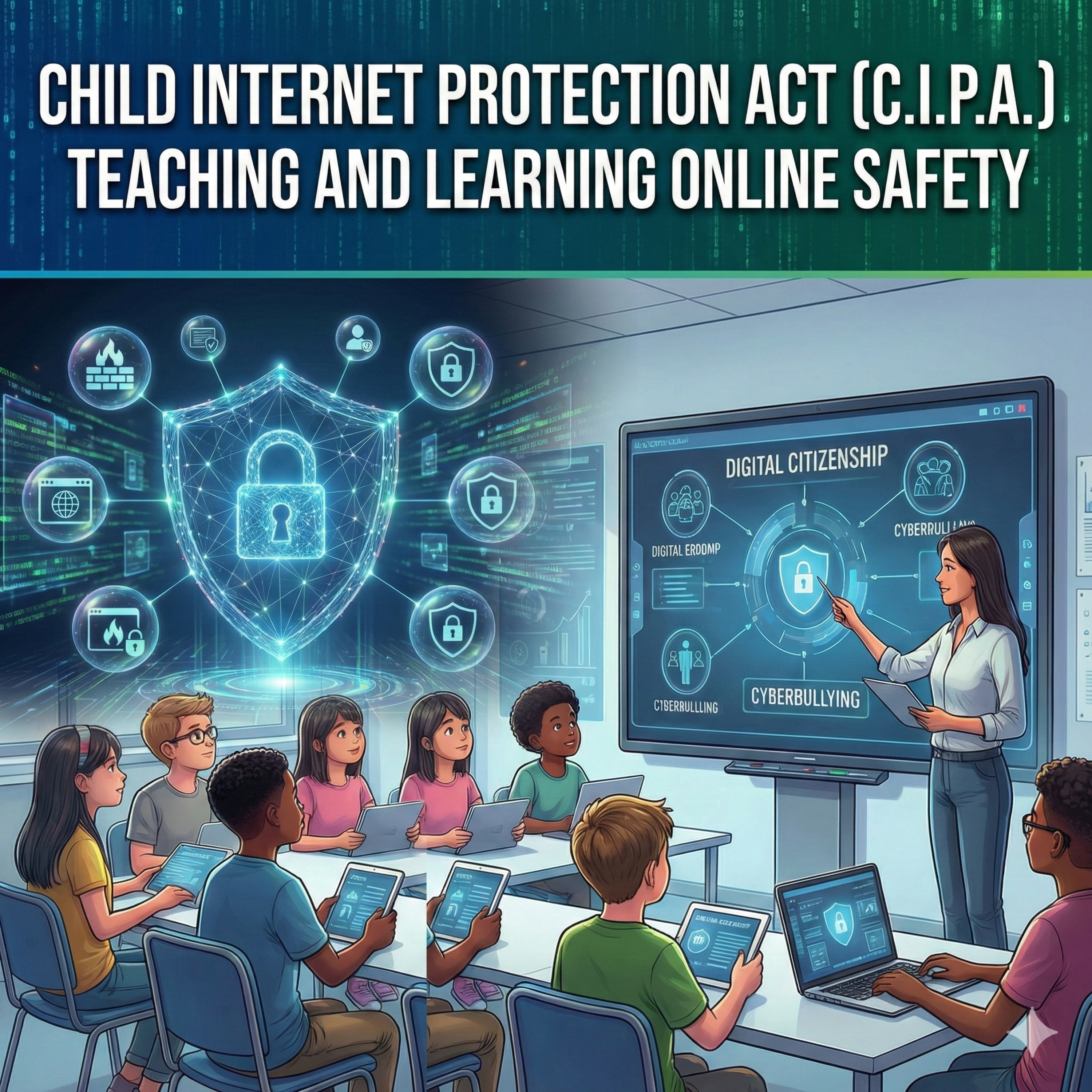
C.I.P.A. A guide to teaching and learning digital citizenship and online safety
by JNA
An overview of the Children’s Internet Protection Act (CIPA) and its application within a school environment. These videos define the legal obligations of educational institutions, such as implementing web filters and establishing safety policies, while emphasizing the collaborative roles of IT staff and teachers. Also provides a video overview of each module in the four part series for Students Guide to Digital Citizenship and Online Safety.
-
4
Module 4: Your Teacher's Role - Active Monitoring
Module 4: Your Teacher's Role - Active Monitoring This section explains that teachers practice active monitoring to maintain a safe learning environment, not to spy. Because it is impossible for a teacher to physically see every device screen in a classroom at once, schools may use technology like screen viewing software to help teachers ensure students are safe and on-task.
-
3
Module 3: Recognizing Modern Online Threats
Module 3: Recognizing Modern Online Threats This section warns that internet filters cannot stop every danger and that students are the "most important line of defense" against specific threats. It details three major risks:• Phishing: Fake emails or websites designed to steal passwords or sensitive info.• Internal Misuse: Threats coming from inside the school, such as a staff member accidentally leaking data or a student intentionally bypassing the web filter.• Cyberbullying: Using school tools like email or shared docs to harass others.
-
2
Module 1: The Rules of the Road - Understanding CIPA
Module 1: The Rules of the Road - Understanding CIPA This section explains that the Children's Internet Protection Act (CIPA) is a federal law serving as a safety framework for schools. To receive internet funding, schools must follow four core requirements: establishing an internet safety policy, using web filters to block harmful content, holding public meetings regarding these policies, and educating students about appropriate online behavior. It also outlines the roles of the IT department (managing technical tools) and teachers (monitoring and teaching students).
-
1
Module 2: Your Most Important Job - Being a Good Digital Citizen
Module 2: Your Most Important Job - Being a Good Digital Citizen This part focuses on the student's responsibility to act ethically and responsibly online. It highlights three key areas:• Cyberbullying: Strictly prohibited and must be reported to administrators.• Appropriate Behavior: Students must maintain a respectful, academic tone because online posts create a permanent "digital footprint". Protecting Personal Information: Students are warned never to share sensitive data—such as full names, addresses, photos, or geolocation—without permission.
We're indexing this podcast's transcripts for the first time — this can take a minute or two. We'll show results as soon as they're ready.
No matches for "" in this podcast's transcripts.
No topics indexed yet for this podcast.
Loading reviews...
ABOUT THIS SHOW
An overview of the Children’s Internet Protection Act (CIPA) and its application within a school environment. These videos define the legal obligations of educational institutions, such as implementing web filters and establishing safety policies, while emphasizing the collaborative roles of IT staff and teachers. Also provides a video overview of each module in the four part series for Students Guide to Digital Citizenship and Online Safety.
HOSTED BY
JNA
Loading similar podcasts...
Frequently Asked Questions
How many episodes does C.I.P.A. A guide to teaching and learning digital citizenship and online safety have?
C.I.P.A. A guide to teaching and learning digital citizenship and online safety currently has 4 episodes available on PodParley. New episodes are automatically indexed when they're published to the podcast feed.
What is C.I.P.A. A guide to teaching and learning digital citizenship and online safety about?
An overview of the Children’s Internet Protection Act (CIPA) and its application within a school environment. These videos define the legal obligations of educational institutions, such as implementing web filters and establishing safety policies, while emphasizing the collaborative roles of IT...
How often does C.I.P.A. A guide to teaching and learning digital citizenship and online safety release new episodes?
C.I.P.A. A guide to teaching and learning digital citizenship and online safety has 4 episodes. Check the episode list to see recent publication dates and frequency.
Where can I listen to C.I.P.A. A guide to teaching and learning digital citizenship and online safety?
You can listen to C.I.P.A. A guide to teaching and learning digital citizenship and online safety on PodParley by clicking any episode. We provide an embedded audio player for direct listening, and you can also subscribe via your preferred podcast app using the RSS feed.
Who hosts C.I.P.A. A guide to teaching and learning digital citizenship and online safety?
C.I.P.A. A guide to teaching and learning digital citizenship and online safety is created and hosted by JNA.
URL copied to clipboard!