
PODCAST · technology
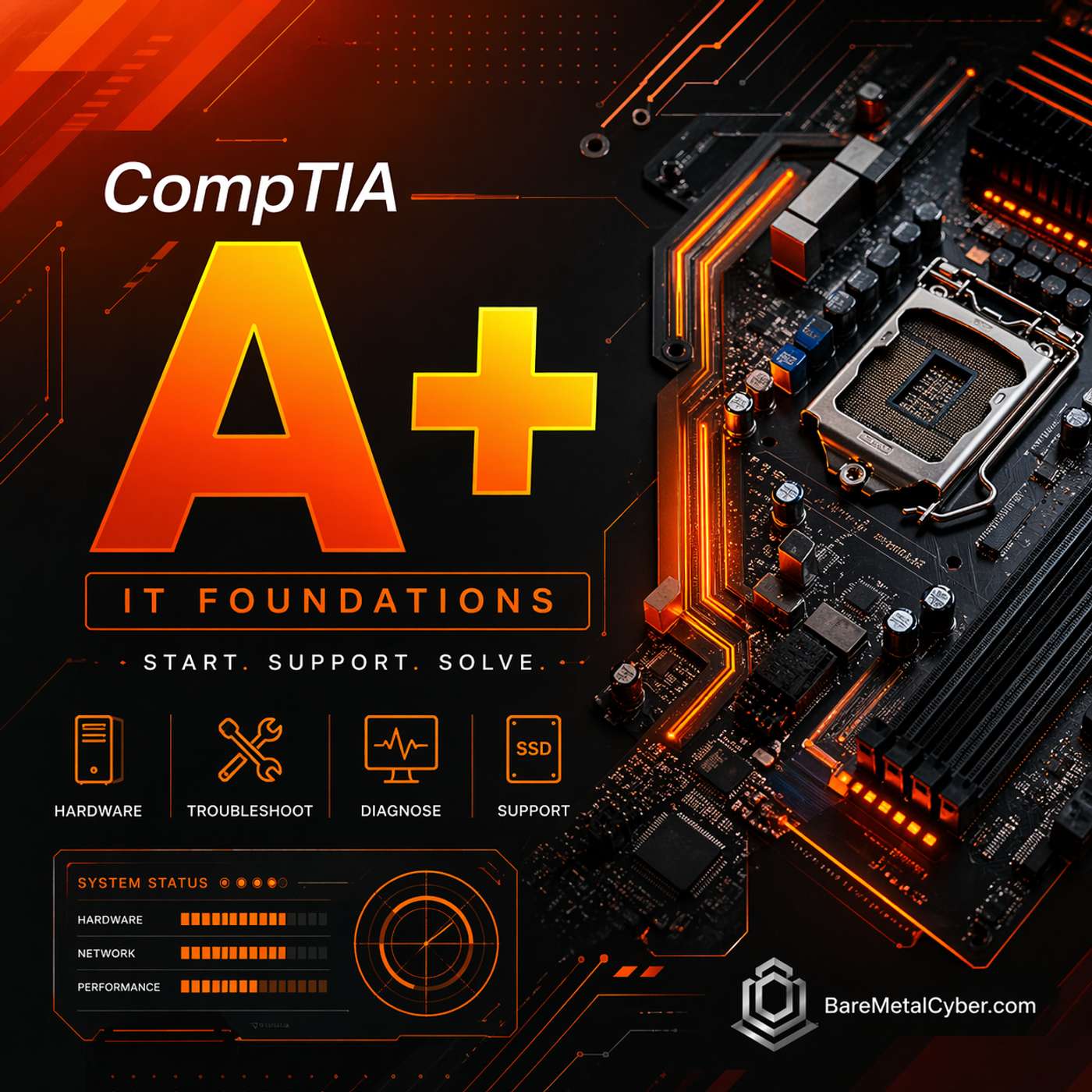
Certified - The CompTIA A+ Audio Course
by Dr. Jason Edwards
The A+ Audio Course is your full-spectrum audio study guide for the CompTIA A+ certification (Core 1 and Core 2). Whether you're brand new to IT or brushing up before exam day, this Audio Course breaks down every topic in the official exam objectives into clear, structured, and accessible episodes. Each lesson focuses on what matters most, helping you understand, retain, and apply essential IT concepts—from hardware and networking to operating systems, security, troubleshooting, and professional procedures.The CompTIA A+ certification is the industry’s foundational credential for launching a career in information technology. It validates the hands-on skills needed to support, configure, and maintain modern computing environments across a range of devices and operating systems. The exam covers critical areas such as mobile and desktop hardware, networking fundamentals, cloud computing, security best practices, and troubleshooting workflows. Earning the A+ demonstrates to employers tha
-
140
New A+ V15 Audio Course is now available!
The next version of the CompTIA A+, V15 for 2026, is now available for download. See it at BareMetalCyber.com or direct here: https://aplus2026.baremetalcyber.com/
-
139
-
138
Episode 138: Scripting and Remote Access — .bat, RDP, SSH, Risks
Automating tasks and supporting systems remotely are part of modern IT workflows. In this episode, we begin with scripting—specifically .bat and PowerShell scripts—and explain how they’re used to automate routine tasks like file transfers, user creation, or system reboots. Then we introduce remote access tools like R D P and S S H, showing how they allow technicians to manage systems without being physically present.We also explore the risks involved with remote access—such as unsecured ports, weak passwords, or man-in-the-middle attacks—and how to mitigate them through encryption, access control, and logging. CompTIA expects you to identify secure and insecure remote management practices, especially in troubleshooting and policy scenarios. Brought to you by BareMetalCyber.com.
-
137
Episode 137: Handling Confidential Materials
Protecting sensitive data requires not only digital safeguards but also physical and procedural awareness. This episode teaches you how to properly handle confidential information, whether it's on printed documents, storage devices, or screens. We cover methods like locked cabinets, badge-restricted rooms, and screen privacy filters to prevent unauthorized access.You’ll also learn about secure printing, shredding, and transporting sensitive materials between locations. These practices are often part of organizational policy and may be legally required in regulated industries. Expect exam questions that test your ability to recognize when extra precautions are needed and which techniques to apply. Brought to you by BareMetalCyber.com.
-
136
Episode 136: Communication and Customer Service Skills
Technical skills are vital, but soft skills are what turn technicians into trusted professionals. This episode focuses on communication techniques that improve user experiences and foster trust. We start with active listening—how to give users your full attention and confirm your understanding through paraphrasing and clarification. Then we cover tone and professionalism, especially when users are frustrated or confused.We also discuss documentation and follow-up, including how to set clear expectations, provide written summaries, and avoid technical jargon when communicating with non-technical users. The A Plus exam includes questions about interpersonal behavior and professionalism, so mastering these skills is essential. Brought to you by BareMetalCyber.com.
-
135
Episode 135: Data Privacy and Licensing — DRM, Chain of Custody
This episode explores the legal and ethical responsibilities of handling data and software in IT environments. We start with licensing—understanding the difference between OEM, volume, and subscription licenses, and how misuse can result in compliance violations. Then we discuss Digital Rights Management (DRM), which limits copying or modifying media and software based on licensing terms.We also explore chain of custody procedures, especially for incidents involving stolen devices, legal evidence, or internal investigations. Maintaining a documented path of who accessed what, when, and how is essential for both legal and security purposes. CompTIA expects technicians to know not just how to use tools, but how to do so within legal boundaries. Brought to you by BareMetalCyber.com.
-
134
Episode 134: Environmental Controls — Ventilation, Disposal, MSDS
Maintaining the physical environment around IT systems is just as important as managing the systems themselves. This episode begins with ventilation and cooling requirements—how airflow affects server performance, what happens when heat builds up, and how to monitor environmental thresholds. We explain how to position equipment in racks, monitor for overheating, and implement failover systems like redundant fans or power supplies.We also cover proper disposal methods for batteries, toner cartridges, and electronic waste in compliance with environmental regulations. Lastly, we introduce the Material Safety Data Sheet (MSDS), which provides safety information for handling chemicals and components. These details may appear in both compliance- and scenario-based exam questions. Brought to you by BareMetalCyber.com.
-
133
Episode 133: Safety Procedures — ESD, Handling, Fire Safety
Keeping yourself and your equipment safe is foundational to effective IT work. This episode covers essential safety practices beginning with Electrostatic Discharge (E S D) prevention—why grounding matters and how to properly use wrist straps, mats, and anti-static bags. We explain how improper handling can damage sensitive components like CPUs, RAM, and storage devices even before they’re installed.We also walk through best practices for lifting heavy equipment, handling tools in tight environments, and managing fire safety with the correct type of extinguisher for electrical equipment. CompTIA expects you to identify safe behavior in support scenarios, and this episode ensures you’re prepared to answer those questions accurately. Brought to you by BareMetalCyber.com.
-
132
Episode 132: Backup and Recovery Methods — GFS, 3-2-1, Testing
This episode focuses on the backup strategies and data recovery techniques that every IT professional must know. We begin with the Grandfather-Father-Son (GFS) backup rotation model, explaining how it balances data redundancy and storage space. Then we dive into the 3-2-1 rule—keeping three copies of your data, on two different media types, with one copy off-site.We also explore full, incremental, and differential backups, as well as the importance of regularly testing restores to ensure recovery plans actually work when needed. These strategies often appear in scenario-based exam questions, where you’ll need to select the best approach for business continuity or disaster recovery. Brought to you by BareMetalCyber.com.
-
131
Episode 131: Change Management Process
Change is a constant in IT, but managing that change responsibly is what keeps systems stable. This episode introduces the formal change management process, starting with the identification of proposed changes and their potential impact on systems, users, and business operations. You’ll learn about documentation requirements, stakeholder approvals, and the importance of scheduling changes during maintenance windows to minimize disruption.We also cover the post-implementation review process—verifying success, collecting feedback, and updating related documentation. CompTIA expects you to recognize not just technical solutions, but the policies and workflows that govern responsible IT behavior. Whether you're replacing equipment, upgrading software, or rolling out patches, understanding change management ensures smooth transitions. Brought to you by BareMetalCyber.com.
-
130
Episode 130: IT Documentation Types — AUP, SOP, Diagrams
There’s more than one kind of documentation in I T, and this episode explains the major types that appear on the A Plus exam. We start with Acceptable Use Policies (AUPs), which define what users are permitted to do with company devices and networks. These documents are key to setting boundaries and providing grounds for enforcement.Next, we cover Standard Operating Procedures (SOPs), which describe routine tasks and ensure consistency in system administration, user onboarding, or backup operations. Finally, we explore the use of network diagrams, wiring charts, and configuration maps to visualize systems and support faster diagnostics. These documents not only support daily operations but also play an important role in onboarding and audits. Brought to you by BareMetalCyber.com.
-
129
Episode 129: Asset and Inventory Management
Keeping track of hardware, software, and configuration data is vital for organizations of all sizes, and this episode explores how asset and inventory management supports that effort. We begin with physical asset tracking—using labels, barcodes, and location databases to monitor laptops, desktops, and peripherals. Then we move into software inventory, including how to track licenses, subscription renewals, and version compliance.We also discuss the importance of documenting configuration changes, warranty dates, and decommissioning procedures. These processes ensure proper lifecycle management and help enforce security policies. CompTIA may test your ability to select or explain asset tracking methods in support or audit scenarios. Brought to you by BareMetalCyber.com.
-
128
Episode 128: Documentation and Ticketing Systems
This episode focuses on the importance of clear, consistent documentation in every phase of IT support. We begin by explaining ticketing systems—how they track user requests, service histories, resolutions, and follow-up actions. You’ll learn what makes a good ticket entry, including timestamps, concise descriptions, and links to previous cases.We also cover other forms of documentation, such as change logs, asset inventories, and support knowledge bases. These resources help create continuity across shifts, teams, and long-term projects. The A Plus exam includes questions that require choosing the most appropriate documentation method for a given situation, and this episode prepares you to do that with confidence. Brought to you by BareMetalCyber.com.
-
127
Episode 127: Domain 4.0 Operational Procedures — Overview
The final domain in the Core 2 exam is Operational Procedures, and this episode introduces its wide-ranging content. You’ll learn what this domain includes: documentation standards, safety procedures, communication skills, licensing and privacy concerns, and basic scripting. While these topics may seem non-technical, they are just as important for a well-rounded technician as knowing how to fix hardware or configure systems.We explain how this domain emphasizes professionalism, user interaction, workplace policies, and secure handling of information. CompTIA expects you to demonstrate soft skills as well as technical ones, and this episode sets the stage for understanding how to balance both effectively. Brought to you by BareMetalCyber.com.
-
126
Episode 126: Mobile Malware — Rooted Devices, Data Leaks, Ads
Malware isn’t limited to desktops. In this episode, we explore the types of malicious threats that target mobile devices. We begin with adware, spyware, and malicious apps that gain access to sensitive permissions—like camera, microphone, or SMS—without the user’s knowledge. Then we explain the concept of rooting or jailbreaking, which removes manufacturer restrictions and increases exposure to security risks.We also discuss data leakage—where personal or business data is exfiltrated through unauthorized apps—and how to recognize suspicious behavior like sudden battery drain, popups, or background data usage. Understanding these threats helps you respond effectively to user complaints and enforce mobile security policies. CompTIA may test your ability to distinguish normal from compromised behavior, and this episode prepares you to do just that. Brought to you by BareMetalCyber.com.
-
125
Episode 125: Mobile App Issues — Crashing, Connectivity, Updates
Mobile devices introduce their own unique troubleshooting challenges, particularly when it comes to application behavior. In this episode, we start with app crashes—why they happen, how to review logs or force close misbehaving apps, and what steps to take before uninstalling. Then we examine connectivity issues within apps, such as those that rely on Wi-Fi or cellular data and behave erratically when those connections are unstable.We also cover app update problems, including how to trigger manual updates, clear cache or storage space, and deal with compatibility issues caused by outdated operating systems. These topics are increasingly relevant as mobile devices become central to business workflows. CompTIA expects you to know how to support apps just as thoroughly as desktops, and this episode ensures you can. Brought to you by BareMetalCyber.com.
-
124
Episode 124: Malware Removal Steps — Quarantine, Clean, Restore
Successfully removing malware requires following the right sequence, and this episode lays out that process according to CompTIA’s expectations. We begin with identification—recognizing that malware is present—followed by isolating the system from the network to prevent spread. Then we quarantine the malicious files using antimalware software and proceed with cleaning or deleting the infections.We explain how to schedule deep scans, remove residual entries, and check for persistent elements like registry changes or scheduled tasks. Finally, we discuss restoring system functionality, applying updates, and improving defenses to prevent re-infection. These steps form the core of several exam questions, especially in simulation or troubleshooting formats. This episode helps you internalize both the logic and the order of operations. Brought to you by BareMetalCyber.com.
-
123
Episode 123: PC Security Symptoms — Alerts, File Changes, Redirection
Security issues don’t always come with flashing warnings—sometimes they hide behind subtle behavior. This episode helps you identify the symptoms that often indicate malware or unauthorized access. We begin with security alerts—both real and fake—and how to distinguish between legitimate warnings and scareware popups. Then we cover unexplained file changes, such as altered timestamps, missing data, or renamed files.We also explore browser redirection, where users attempt to access one website and are taken somewhere entirely different—often a sign of hijacked DNS settings or malicious browser extensions. These symptoms are designed to test your pattern recognition and deductive reasoning on the exam. Knowing how to interpret unusual behavior is a key skill for real-world IT professionals, and this episode trains you to do just that. Brought to you by BareMetalCyber.com.
-
122
Episode 122: Repair Techniques — SFC, Reimage, Rollback
When something breaks in Windows, there are several tools you can use to restore functionality, and this episode breaks them down step by step. We begin with the System File Checker (SFC), which scans and repairs corrupted or missing system files using known-good versions. Next, we explain DISM and when to use it alongside or instead of SFC to fix more deeply embedded issues.We also discuss more significant recovery options like rolling back updates, restoring system images, and using manufacturer-provided reimage tools to return the device to factory settings. These techniques are tested heavily on the A Plus exam and require not just name recognition but an understanding of when each method is most appropriate. This episode prepares you for questions involving system instability, failed patches, and critical file loss. Brought to you by BareMetalCyber.com.
-
121
Episode 121: Windows Symptoms — BSOD, Boot Issues, Low Memory
This episode covers some of the most common and dramatic symptoms you'll face when troubleshooting Windows systems. We begin with the infamous Blue Screen of Death—also known as BSOD—explaining what causes it, how to interpret error codes, and what logs or tools to use when diagnosing the issue. Then we move into boot problems, such as systems getting stuck on the Windows logo, reboot loops, or messages like “Operating System Not Found.”We also explore low memory symptoms, including system sluggishness, app crashes, and excessive disk swapping. You’ll learn how to identify whether the issue is truly memory-related or if it’s caused by malware, excessive startup programs, or background services. CompTIA loves to present vague error descriptions and ask for the most likely root cause, so this episode will help you connect those dots efficiently. Brought to you by BareMetalCyber.com.
-
120
Episode 120: Domain 3.0 Software Troubleshooting — Overview
Troubleshooting software problems is a core responsibility in IT, and this episode introduces Domain 3.0 of the Core 2 exam. You’ll learn what kinds of software issues are covered, including application crashes, boot problems, security alerts, and general OS instability. We explain how this domain connects to others, such as security and user support, and how CompTIA expects you to diagnose problems using a methodical approach.We also preview some of the tools and techniques you’ll use—such as Event Viewer, Safe Mode, system file checking, and recovery tools. Understanding the types of symptoms you may encounter helps frame the lessons that follow. This episode lays the foundation for the focused troubleshooting episodes to come. Brought to you by BareMetalCyber.com.
-
119
Episode 119: Data Disposal and Destruction Techniques
Properly disposing of storage media is a critical part of data security, and this episode outlines the methods you need to know. We begin with data wiping—using software to overwrite existing files—and explain why a single delete or format isn’t enough. Then we move on to degaussing, which uses magnetic fields to scramble data on hard drives and magnetic tapes.Physical destruction is also discussed, including shredding, drilling, or incinerating drives, which is often required for high-sensitivity environments. CompTIA expects you to recognize which disposal method is appropriate for a given scenario, and this episode ensures you understand the benefits and limitations of each. Brought to you by BareMetalCyber.com.
-
118
Episode 118: Mobile and Embedded Device Security
Mobile and embedded devices require a tailored approach to security, and this episode explains how to apply protections without compromising usability. We begin with passcodes, biometrics, and auto-lock timers as primary defenses. Next, we explore mobile device management (MDM), including how organizations use it to enforce encryption, remotely wipe lost devices, and manage application permissions.We also touch on embedded systems—devices like smart thermostats, printers, and routers—and the unique security challenges they pose, such as hard-coded credentials and limited firmware update support. These topics often appear in exam questions that ask you to choose appropriate security measures based on device type. Brought to you by BareMetalCyber.com.
-
117
Episode 117: Workstation Security Best Practices
Securing a user’s workstation is about more than antivirus—it involves a full spectrum of proactive configurations. This episode outlines best practices for maintaining a secure endpoint. We begin with patch management, including automatic updates and reboot scheduling, then move to account management, such as disabling unused accounts and enforcing password complexity.We also cover security policies like disabling auto-run features, using standard user accounts instead of admin-level logins, and controlling which applications are allowed to run. These practices help prevent infections, data leaks, and unauthorized access, all of which are central themes in the A Plus exam. You’ll finish the episode with a comprehensive checklist of security configurations for any workstation environment. Brought to you by BareMetalCyber.com.
-
116
Episode 116: User Account Controls and SSO
In this episode, we cover two important mechanisms for managing user access and security: User Account Control (UAC) and Single Sign-On (SSO). We begin with UAC—how it prompts users before executing administrative tasks, how to configure its sensitivity level, and what role it plays in limiting malware execution. Understanding UAC’s purpose and behavior is key to answering questions about privilege management.Next, we discuss Single Sign-On—how it allows users to authenticate once and gain access to multiple systems without entering credentials repeatedly. We explain how SSO improves both security and user experience, and where it’s typically deployed, such as in domain environments or cloud services. These features are foundational to modern access control systems and frequently appear in Core 2 exam content. Brought to you by BareMetalCyber.com.
-
115
Episode 115: OS Security Settings — Defender, BitLocker, NTFS
Securing a system starts with built-in operating system tools, and this episode walks you through three key Windows security features. First is Windows Defender, which provides real-time protection against malware, network attacks, and unwanted software changes. We explain how to configure scanning, quarantines, and exclusion lists. Next is BitLocker, Microsoft’s full-disk encryption solution, which protects data even if a drive is removed from its host system.We conclude with NTFS permissions, which govern who can access, modify, or delete files and folders. These settings are often tested in exam questions related to securing user data or enforcing access controls. This episode helps you understand how to configure and manage each tool in ways that align with CompTIA objectives and best practices. Brought to you by BareMetalCyber.com.
-
114
Episode 114: Threats and Vulnerabilities — Zero-Day, SQLi, XSS
This episode explains the technical underpinnings of some of the most dangerous threats and vulnerabilities in modern systems. We start with zero-day exploits, where attackers take advantage of unknown software flaws before patches can be released. These are especially damaging because traditional defenses often can’t detect them. Next, we explore structured query language injection—SQLi—an attack that targets poorly secured databases.We also explain cross-site scripting, or XSS, which allows attackers to inject scripts into web pages viewed by others. These vulnerabilities are tested on the A Plus exam in the context of prevention, detection, and appropriate response. Understanding how they function and where they appear helps you recognize risks in both exam questions and real-world systems. Brought to you by BareMetalCyber.com.
-
113
Episode 113: Social Engineering — Phishing, Impersonation, Tailgating
Not all threats are technical—some are psychological. This episode focuses on social engineering attacks, which trick users into revealing information or granting access through manipulation rather than code. We start with phishing, covering both traditional email attacks and newer variants like spear phishing and smishing. You’ll learn what signs to look for and how users can be trained to respond appropriately.We then explore impersonation, where attackers pose as trusted figures like IT staff or executives to gain access or install malware, and tailgating, which involves physically following someone into a restricted area. These techniques are often the first step in a broader attack and are frequently included in exam scenarios involving user behavior or access violations. Brought to you by BareMetalCyber.com.
-
112
Episode 112: Detection and Prevention — Antivirus, Firewalls, Education
Preventing malware infections involves more than just scanning files—it’s about layering multiple defenses. In this episode, we start with antivirus and antimalware software, explaining how they use signature detection, heuristic analysis, and behavioral monitoring to stop threats. We describe how these tools are managed, updated, and configured for real-time protection across operating systems.Next, we examine the role of software and hardware firewalls in blocking unauthorized inbound and outbound traffic. Finally, we cover the human element—security awareness training—and how educating users on phishing, social engineering, and unsafe behaviors is just as important as having good software. The A Plus exam often includes questions on layered defenses and prevention strategies, so this episode helps tie those concepts together. Brought to you by BareMetalCyber.com.
-
111
Episode 111: Malware Types — Virus, Worms, Keyloggers, Rootkits
This episode dives into the various types of malicious software, or malware, that technicians must be able to recognize and address. We begin with viruses, which attach to legitimate files and require user interaction to spread, then move into worms, which self-replicate across networks and can bring down systems without any user action. We explain how these differ in propagation methods and damage potential, which is a frequent point of confusion on the exam.Next, we discuss keyloggers—software or hardware tools that silently record keystrokes to capture sensitive data—and rootkits, which deeply embed themselves into the operating system to avoid detection and persist over time. Understanding the characteristics and behaviors of each malware type is essential for selecting the correct remediation strategy. These distinctions also help when analyzing exam questions about symptoms, threats, or attack vectors. Brought to you by BareMetalCyber.com.
-
110
Episode 110. Authentication — RADIUS, TACACS+, Kerberos
Authentication protocols ensure that users are who they say they are, and this episode covers three of the most important ones for the A Plus exam. We begin with RADIUS—Remote Authentication Dial-In User Service—and explain how it centralizes authentication for wireless and VPN access. Next, we look at TACACS Plus, a Cisco-designed protocol that separates authentication, authorization, and accounting into distinct processes.Finally, we introduce Kerberos, a ticket-based authentication system used in Windows domains, and explain how it improves security over password-only systems. These protocols may seem abstract, but CompTIA expects you to recognize them by function, use case, and system type. This episode equips you with a solid understanding of when and why each protocol is used. Brought to you by BareMetalCyber.com.
-
109
Episode 109: Wireless Protocols — WPA2, WPA3, TKIP, AES
Wireless security standards are a frequent source of exam questions, and this episode breaks down the differences between key protocols. We start with WPA2 and WPA3, explaining how each provides encryption and authentication for wireless traffic, and why WPA3 is considered more secure with protections like forward secrecy and better brute-force resistance. We then contrast older protocols like WEP and TKIP, explaining why they are no longer recommended for use.We finish with AES—the Advanced Encryption Standard—used in both WPA2 and WPA3, and how it differs from older, less secure algorithms. You’ll learn how to interpret exam questions that involve wireless router settings, and how to recommend appropriate configurations based on risk and environment. Brought to you by BareMetalCyber.com.
-
108
Episode 108: Active Directory — Group Policy, Scripts, Domains
This episode introduces Active Directory (AD), Microsoft’s central system for managing users, computers, and security in domain-based environments. We explain how AD organizes resources into domains, trees, and forests, and how Group Policy Objects (GPOs) are used to enforce settings across multiple systems automatically. You'll learn about domain controllers and how they authenticate logins and apply access rights based on security groups.We also cover login scripts and startup policies—automated tasks that run when a user signs in, commonly used for mapping drives, setting environment variables, or launching applications. Understanding these elements is crucial for answering exam questions that involve centralized user management and system configuration in enterprise environments. Brought to you by BareMetalCyber.com.
-
107
Episode 107: Logical Security — MFA, ACLs, Tokens
In this episode, we move into the digital layer of defense, exploring logical security techniques that help ensure users access only what they’re authorized to. We start with multi-factor authentication (MFA), detailing its components—something you know, have, or are—and why it’s so effective. Then we look at access control lists (ACLs), which define who can access files, folders, and systems based on roles or permissions.We also explore physical and virtual security tokens, including USB keys and software apps like Google Authenticator. CompTIA may test your ability to compare authentication methods or choose the best access control mechanism for a given scenario. This episode prepares you to evaluate, implement, and troubleshoot logical security configurations. Brought to you by BareMetalCyber.com.
-
106
Episode 106: Physical Security — Locks, Guards, Surveillance
Protecting physical assets is the first line of defense in cybersecurity, and this episode explores the methods used to safeguard devices and facilities. We begin with door locks, cable locks, and biometric scanners—tools used to restrict access to equipment and data. Then we move into mantraps and security guards, which provide controlled entry to secure zones and deter unauthorized personnel.We also cover surveillance tools such as security cameras and badge systems, including how they are configured and monitored. These physical measures are often paired with logical controls, and CompTIA may test your ability to apply the appropriate solution based on risk and location. Knowing how to implement both basic and advanced physical security measures is essential for comprehensive IT protection. Brought to you by BareMetalCyber.com.
-
105
Episode 105: Domain 2.0 Security — Overview
This episode introduces Domain 2.0 of the Core 2 exam: Security. We provide an overview of the key areas covered, including physical security measures, logical access controls, malware prevention, authentication protocols, and data destruction practices. You’ll hear how CompTIA frames security as both a technical and procedural discipline that must be applied to desktops, laptops, mobile devices, and even networks.We also touch on the balance between user convenience and system protection, and how the A Plus exam tests your ability to configure and maintain that balance. This episode sets the stage for the more focused security episodes that follow, giving you a clear understanding of how the exam evaluates your defensive mindset and toolset. Brought to you by BareMetalCyber.com.
-
104
Episode 104: Partitioning, Formatting, Feature Updates
This episode focuses on disk setup and system maintenance—key areas tested on the A Plus exam and vital for support professionals. We begin with partitioning: the process of dividing a physical disk into logical sections. You’ll learn the difference between MBR and GPT partitioning, and how to configure primary, extended, and logical partitions using Disk Management or command-line tools.Formatting is next—converting partitions into usable file systems like NTFS or exFAT and preparing them for data storage. We finish with Windows feature updates, which are larger than security patches and often include major system changes. We explain how to check update history, defer updates, and resolve common update errors. Mastering these steps ensures successful disk configuration and ongoing system stability. Brought to you by BareMetalCyber.com.
-
103
Episode 103: Installation Methods — USB, PXE, Network, ISO
Installing an operating system requires choosing the right method for the environment, and this episode explores all the major approaches. We start with the most familiar: bootable USB drives created using tools like Rufus or the Windows Media Creation Tool. Then we introduce PXE booting, which allows network-based installations using a centralized server and is commonly used in enterprise environments.We also explain the use of network shares and mapped drives for installations, as well as mounting ISO files directly within a virtual machine or pre-boot environment. Knowing which method is most efficient for a given situation helps you make smart recommendations and troubleshoot installation failures. These topics are especially
-
102
Episode 102. OS Life Cycle and Compatibility Concerns
Operating systems, like all software, go through a defined life cycle—from launch to end of support—and this episode walks you through what each stage means. We begin by outlining the general stages: mainstream support, extended support, and end of life. You’ll learn how these stages affect security updates, driver support, and vendor troubleshooting assistance. We also examine how OS life cycle status impacts business compliance and risk management.Compatibility concerns are also addressed, including what happens when you try to install modern apps on older systems or legacy software on newer platforms. We explain how virtualization and compatibility mode can help bridge these gaps in some cases. These topics often appear in scenario-based questions where you must recommend an appropriate course of action based on an operating system’s support status. Brought to you by BareMetalCyber.com.
-
101
Episode 101: Filesystems — NTFS, exFAT, ext4, APFS
This episode explores the filesystems used by various operating systems, each with its own capabilities and use cases. We begin with NTFS, the default for Windows, explaining its support for file permissions, compression, encryption, and large volume sizes. Then we cover exFAT, which bridges compatibility between Windows and macOS, and is commonly used on USB drives and SD cards for its broad device support.Next, we introduce ext4, the most widely used filesystem for Linux, known for journaled integrity and robust performance on large volumes. Finally, we examine APFS—Apple’s proprietary file system designed for speed, snapshots, and space efficiency on macOS and iOS devices. Understanding these formats is crucial for recognizing compatibility issues, formatting needs, and file recovery scenarios on the A Plus exam. Brought to you by BareMetalCyber.com.
-
100
Episode 100: O S Types — Windows, macOS, Linux, Android
Not all operating systems are created equal, and this episode explores the strengths, purposes, and distinctions among the most common ones. We start with Windows—still the dominant OS in enterprise environments—and explore its versatility, support base, and administration tools. Next, we cover macOS, highlighting its tight hardware integration and common use in creative industries.Linux follows, with emphasis on its open-source nature, distribution variety, and use in servers and specialized desktops. Finally, we discuss Android, the dominant mobile OS, covering how it manages apps, updates, and security differently from desktop platforms. Being able to recognize and support multiple OS types is a core expectation of the A Plus certification. Brought to you by BareMetalCyber.com.
-
99
Episode 99: App Impact — Device, Network, Business
This episode focuses on the broader implications of application use and performance in business environments. We begin by analyzing how resource-hungry applications can affect system performance—leading to slow response times, overheating, or reduced battery life. We also examine how apps may consume excessive network bandwidth, resulting in congestion and reduced productivity.From a business perspective, we explore how software reliability, update frequency, and licensing models can influence overall operational efficiency. CompTIA expects you to recognize how apps impact systems beyond installation—this episode gives you a comprehensive view of those ripple effects. Brought to you by BareMetalCyber.com.
-
98
Episode 98: Installation Sources and Distribution Methods
Installing software isn’t just about double-clicking an installer anymore—it can come from a wide range of sources and methods. In this episode, we explore the most common installation types: local setup files, network shares, Group Policy deployment, and web-based installers. We also discuss digital storefronts like the Microsoft Store and their advantages and limitations.You’ll learn how installation methods affect update behavior, permissions required for setup, and troubleshooting failed installations due to missing files or corrupted packages. Whether you’re supporting end users or managing enterprise rollouts, this knowledge is critical both for the exam and on the job. Brought to you by BareMetalCyber.com.
-
97
Episode 97. Application Requirements and Compatibility
Before installing software, it’s essential to confirm that a system meets the application’s requirements. This episode explains how to assess compatibility based on OS version, architecture, memory, storage, and graphics capabilities. We also cover how to interpret software documentation and compare it against system specs to avoid installation failures.We go on to discuss compatibility settings within Windows, including the Compatibility tab in application properties and how to run legacy software in compatibility mode. These topics are frequently tested on the A Plus exam through questions involving failed installations or system errors. Knowing how to evaluate and resolve compatibility issues is a fundamental skill for IT professionals. Brought to you by BareMetalCyber.com.
-
96
Episode 96. VPN, Proxy, Wired, Wireless, WWAN
This episode explores a variety of network connection types and how they're configured or supported within a Windows environment. We begin with Virtual Private Networks (VPNs)—how they provide secure tunneling for remote access and what authentication methods are commonly used. Next, we explain proxy settings and their effect on web access and application communication.We also walk through the setup and troubleshooting of wired Ethernet connections, wireless network profiles, and WWAN—Wireless Wide Area Network—connections found in cellular-enabled devices. These various connectivity types may appear in performance-based questions that require analyzing connection status or selecting the appropriate technology for a scenario. Brought to you by BareMetalCyber.com.
-
95
Episode 95: IP Configuration — Static, DNS, Subnet, Gateway
IP addressing is the foundation of network communication, and this episode provides a deep dive into how it's configured on Windows systems. We explain how to assign a static I P address manually, including setting the subnet mask, default gateway, and primary and secondary DNS servers. Then we show how to switch back to dynamic addressing using DHCP when appropriate.We also review how improper IP settings can cause connectivity issues, such as inability to browse the internet or communicate with local devices. These types of misconfigurations frequently appear in scenario-based questions on the exam. By the end of this episode, you’ll be confident in interpreting and modifying IP settings through both graphical and command-line tools. Brought to you by BareMetalCyber.com.
-
94
Episode 94: Workgroup vs. Domain Setup
Understanding the difference between workgroups and domains is essential for both configuring and supporting business environments. In this episode, we define what a workgroup is—typically a decentralized network for home or small office setups where each machine manages its own users. We contrast that with a domain, where a central domain controller handles user authentication, permissions, and policy enforcement across all connected machines.We also discuss the prerequisites for domain membership, including supported editions of Windows and proper network configuration. Knowing when to recommend or troubleshoot a workgroup versus a domain is crucial on the exam and in professional IT support scenarios. This episode prepares you to make that distinction clearly and accurately. Brought to you by BareMetalCyber.com.
-
93
Episode 93: Windows Settings — Update, Privacy, Devices, Apps
This episode moves into the modern Windows Settings interface, highlighting how it’s used to manage essential system configurations. We start with Windows Update—how updates are delivered, paused, and configured in terms of restart behavior and update types. Next, we cover privacy settings, including location tracking, app access to camera and microphone, and diagnostics data collection.We also explore the Devices section, which manages printers, scanners, Bluetooth accessories, and input peripherals. Finally, we examine the Apps section, showing how to uninstall software, configure default programs, and restrict background app behavior. CompTIA expects you to recognize which system area handles which task, so this episode reinforces your understanding of Windows Settings categories. Brought to you by BareMetalCyber.com.
-
92
Episode 92: File Explorer and Power Options
Windows File Explorer is the graphical gateway to your files, drives, and folders, and this episode focuses on how to use it efficiently and troubleshoot common issues. We cover view settings, file extensions, hidden items, and folder options that affect how users interact with the file system. You’ll learn how to access mapped drives, navigate the address bar, and manage file types through properties and associations.We also explore Power Options—a critical utility for configuring energy settings on laptops and desktops. Topics include sleep mode, hibernation, advanced plan customization, and how power settings influence performance and device longevity. These features often appear in troubleshooting scenarios on the exam, especially when a system shuts down unexpectedly or drains battery too quickly. Brought to you by BareMetalCyber.com.
-
91
Episode 91: Control Panel Utilities — Firewall, User Accounts, Mail
This episode explores the legacy yet still-relevant Control Panel utilities that continue to play an essential role in Windows system management. We begin with Windows Firewall, explaining how to allow or block applications, configure advanced rules, and manage notifications for both public and private networks. Next, we review the User Accounts utility—how to add or remove users, change account types, and set up parental controls or local policies.We also discuss the Mail utility, a less commonly used but exam-relevant tool for configuring profiles and data files in Microsoft Outlook. While Windows Settings has absorbed many of these functions, the Control Panel remains important for granular configuration and legacy system environments. CompTIA may test your familiarity with both interfaces, so this episode provides a clear walkthrough of these classic tools. Brought to you by BareMetalCyber.com.
We're indexing this podcast's transcripts for the first time — this can take a minute or two. We'll show results as soon as they're ready.
No matches for "" in this podcast's transcripts.
No topics indexed yet for this podcast.
Loading reviews...
ABOUT THIS SHOW
The A+ Audio Course is your full-spectrum audio study guide for the CompTIA A+ certification (Core 1 and Core 2). Whether you're brand new to IT or brushing up before exam day, this Audio Course breaks down every topic in the official exam objectives into clear, structured, and accessible episodes. Each lesson focuses on what matters most, helping you understand, retain, and apply essential IT concepts—from hardware and networking to operating systems, security, troubleshooting, and professional procedures.The CompTIA A+ certification is the industry’s foundational credential for launching a career in information technology. It validates the hands-on skills needed to support, configure, and maintain modern computing environments across a range of devices and operating systems. The exam covers critical areas such as mobile and desktop hardware, networking fundamentals, cloud computing, security best practices, and troubleshooting workflows. Earning the A+ demonstrates to employers tha
HOSTED BY
Dr. Jason Edwards
CATEGORIES
Loading similar podcasts...
Frequently Asked Questions
How many episodes does Certified - The CompTIA A+ Audio Course have?
Certified - The CompTIA A+ Audio Course currently has 50 episodes available on PodParley. New episodes are automatically indexed when they're published to the podcast feed.
What is Certified - The CompTIA A+ Audio Course about?
The A+ Audio Course is your full-spectrum audio study guide for the CompTIA A+ certification (Core 1 and Core 2). Whether you're brand new to IT or brushing up before exam day, this Audio Course breaks down every topic in the official exam objectives into clear, structured, and accessible episodes....
How often does Certified - The CompTIA A+ Audio Course release new episodes?
Certified - The CompTIA A+ Audio Course has 50 episodes. Check the episode list to see recent publication dates and frequency.
Where can I listen to Certified - The CompTIA A+ Audio Course?
You can listen to Certified - The CompTIA A+ Audio Course on PodParley by clicking any episode. We provide an embedded audio player for direct listening, and you can also subscribe via your preferred podcast app using the RSS feed.
Who hosts Certified - The CompTIA A+ Audio Course?
Certified - The CompTIA A+ Audio Course is created and hosted by Dr. Jason Edwards.
URL copied to clipboard!