
PODCAST · science
Chat with Greg Fridman
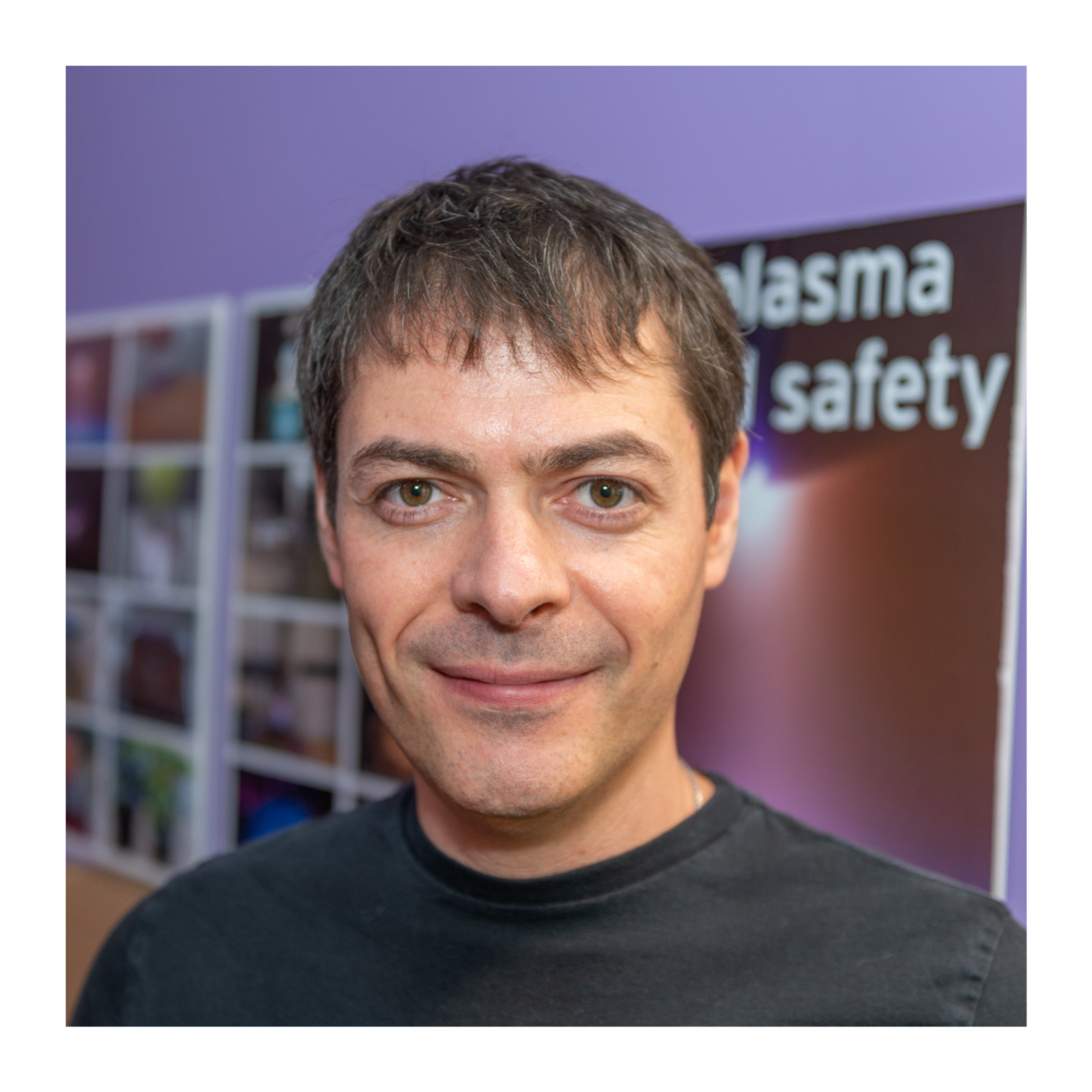
by Gregory Fridman
I'm Greg Fridman, a PhD in Bioengineering and an expert in non-equilibrium plasmas. This channel is a space for direct chats about the things that actually matter: the future of biotech, the fascinating physics of plasmas, and the unfiltered reality of the scientific life. No jargon, no gatekeeping—just the science. Subscribe to join the conversation as we explore how bioengineering is reshaping our world and what it’s really like to work at the edge of discovery.
-
37
Can plasma make fertilizer?
The “Magic Water” Story That Led Me to Plasma AgricultureToday, most nitrogen fertilizer is made using the Haber-Bosch process: nitrogen from air, hydrogen from natural gas, high temperature, high pressure, and massive centralized plants. It is incredibly important, but it also creates cost, logistics, storage, and supply-chain challenges.Plasma offers a very different idea: use electricity, air, and water to create reactive nitrogen species directly in liquid — things like nitrates, nitrites, and possibly small amounts of ammonia. In other words, plasma-activated water could become a way to produce nitrogen fertilizer closer to where it is needed.Is it cheaper than Haber-Bosch today? No.Is it stable like a bag of fertilizer from the store? Also no.But could it make sense for decentralized, on-site, renewable-powered fertilizer production in the future? That is where things get interesting.I also share the story of how a “dead” plant in our lab came back after being watered with plasma-activated water — and how that accident pushed me to ask bigger questions about plasma in agriculture.If you have a plasma or science question you want me to answer, leave it in the comments.#Plasma #Fertilizer #Agriculture #HaberBosch #Science #PlasmaActivatedWater #Farming #NitrogenFixation
-
36
Can Plasma Wash Fresh Produce?
Can plasma wash fresh produce? Surprisingly, yes — and there are several ways to do it.In this video, I kick off a new “Can Plasma?” series by looking at how plasma can be used to disinfect fresh produce like strawberries, spinach, and other foods that are difficult to clean with traditional methods. I talk about direct plasma treatment, why high voltage creates practical challenges, and how plasma-treated water or plasma-activated fog can offer a different approach.We’ll cover why strawberries are such a difficult disinfection target, how plasma creates reactive oxygen and nitrogen species in water, and why the real challenge is not whether plasma works — but whether it can be made commercially practical.If you have a “Can plasma…?” question, leave it in the comments.
-
35
Carbs, Calories, and the Tomato Trick That Helped Me Lose 70 Pounds
A viewer asked why some people avoid carbohydrates but still drink carbonated energy drinks — and whether our digestive system is meant to handle solid food naturally.My answer: people overcomplicate this stuff.In this video, I talk about calories, nutrition, digestion, weight loss, and the very simple trick that helped me lose about 70 pounds years ago: choosing one “forbidden” food I did not really care about. For me, it was tomatoes. Avoiding tomatoes forced me to pay attention to what I was eating, and that awareness changed a lot more than just tomatoes.I also talk about gaining some weight back after breaking my arm, getting out of the gym routine, and my plan to lose 20 pounds over the next two months by getting back to exercise, running, and paying more attention.This is not medical advice — just my personal experience and thoughts on why diet does not need to be mystical.If you have a science, plasma, health, engineering, or random life question, ask it in the comments and I’ll take a whack at it.
-
34
The Hardest Things in Life Can Lead to Something Better
A viewer asked me about my life journey, adversity, and my vision for the future.I did not try to tell my whole life story here. Instead, I answered with something I think matters more: how I look at adversity itself.In this video, I talk about:* why adversity is part of life* how perspective changes the meaning of setbacks* why many of the hardest things we face can lead to something better* why I still believe the world is improving* how struggle, work, and optimism shape a personThis is a more personal video than my usual science conversations, but I think it connects to the same bigger idea: the world is not perfect, but it is improvable, and so are we.If you have a question you want me to answer in a future video, leave it in the comments.#adversity #mindset #optimism #selfimprovement #perspective #lifeadvice #growth #youtubecreator
-
33
One Viewer Asked 5 Plasma Questions. Here Are My Answers
In this video, I respond to a viewer @anonymouscomment5722 who packed five plasma questions into one comment.We talk about:* antimicrobial and antibacterial coatings* why plasma solutions can work in theory but still fail in the market* whether plasma treatment damages surfaces* plasma nitriding of steel* other ways plasma modifies materials* how a hobbyist can safely explore plasmaOne of the big themes here is that plasma can often do the job — but cost, speed, complexity, and safety usually decide whether it makes sense in the real world.If you enjoy practical conversations about plasma science, engineering, and real applications, subscribe and leave your questions in the comments. I may answer yours in a future video.#plasma #materialscience #engineering #surfacemodification #steel #nitriding #science #plasmascience
-
32
Plasma TV vs LED TV: What Happened to Plasma?
Why did plasma TVs vanish if the picture looked so good?In this video, I answer a viewer question about plasma TVs vs LED TVs: what made plasma screens look so beautiful, what their drawbacks were, and why manufacturers eventually stopped making them.I talk about: • why plasma TVs were known for rich color, deep blacks, and vibrant images • how LED technology changed the market • the role of price, power consumption, heat, and long-term durability • why “better” technology does not always win in the consumer market • how blue LED development helped make modern displays possibleI also share a few personal memories from the early days of big-screen TVs and reflect on how quickly display technology has changed.If you enjoy questions about plasma, physics, and how real technology works, leave your questions in the comments.#PlasmaTV #LEDTV #PlasmaVsLED #DisplayTechnology #ScienceExplained #GregFridman
-
31
Water Is Way Stranger Than Most People Realize
This is the third video in my mini-series on plasma surface modification, water contact angle, and water itself.We use water every day, so it feels ordinary. But scientifically, water is one of the most fascinating liquids there is.In this video, I talk about: • why water molecules are polar • how hydrogen bonding gives water unusual behavior • why water has such high surface tension • why ice floats • why pure water can be surprisingly valuable in research • why water is such a powerful solvent • why water is so useful in surface science • and why, on very short time scales, water behaves in ways that are even stranger than most people realizeI also connect this back to plasma science and explain why water is not just a background liquid in the lab — it’s an active and fascinating participant in chemistry, physics, biology, and plasma processes.This video wraps up the 3-part series: 1. Plasma surface modification 2. Water contact angle measurement 3. Water as a fascinating liquidIf you like science explained in a conversational way, especially with a plasma twist, subscribe and leave a comment with your questions.#water #science #chemistry #physics #plasma #surfaceScience #materialscience #engineering #hydrogenbonding #wettability
-
30
How Water Contact Angle Measurement Works
This is the second video in my 3-part mini-series on surfaces, plasma treatment, and water.In the first video, I talked about plasma surface treatment. In this one, I explain one of the most common ways we measure whether that treatment actually changed a surface: water contact angle measurement.It’s a simple idea with a lot of practical value. Put a droplet of water on a surface and look at the droplet shape: • a high contact angle usually means the surface is more hydrophobic • a low contact angle usually means the surface is more hydrophilicIn this video I talk about: • what water contact angle actually is • why droplet shape tells us something about a surface • how a goniometer works • why this method is widely used in the plasma treatment industry • what surface energy, roughness, and chemistry have to do with wetting • why contamination, aging, and repeatability matter • why contact angle is useful, but doesn’t tell you everything by itselfI also touch on something I find especially interesting: water itself is a much more fascinating liquid than it first appears, which sets up the third video in this series.This channel is where I talk about science with a plasma twist, and try to keep it understandable without oversimplifying it.If you enjoy this kind of content, subscribe and leave a question in the comments.#plasma #surfacescience #contactangle #materialscience #plasmatreatment #wettability #hydrophobic #hydrophilic #engineering #science
-
29
How Plasma Surface Treatment Works
In this video, I kick off a 3-part mini-series by explaining plasma surface modification: what it is, how it works, and why it matters.The key idea is simple: plasma can change the very thin outer surface of a material without changing its bulk properties. That makes it incredibly useful in manufacturing, coatings, adhesion, wettability, biocompatibility, and many other applications.In this video I talk about: • what plasma surface modification actually means • how plasma cleans, activates, etches, or functionalizes a surface • why industry uses plasma before painting, printing, gluing, or coating • how different gases can create different surface effects • why plasma treatment is often not permanent • what hydrophobic recovery meansI also connect this topic to the next two videos in the mini-series: 1. Plasma surface modification 2. Water contact angle measurement 3. Why water is such a fascinating liquidMy goal with this channel is to make science approachable through conversation. My specialty is electric discharges and plasma, but I like exploring the bigger picture around those topics too.If you enjoy this kind of science discussion, subscribe, like, and leave a comment.#plasma #surfaceengineering #materialscience #plasmatreatment #surfaceModification #plasmatechnology #science #engineering
-
28
Is LED the Same Thing as Plasma?
A colleague asked me a simple question: if LEDs and plasma both make light when electricity is applied, are they basically the same thing?In this video, I break down the difference between LED light emission and plasma light emission in plain language. They may look similar from the outside, but the underlying physics is very different. I talk about electronic transitions, why both systems produce photons, and why that does not make them the same thing.I also touch on what makes plasma more flexible and tunable, and why LEDs are often more stable, cooler, cheaper, and easier to run. This is a short science chat for anyone who has ever wondered where the line is between similar-looking technologies and fundamentally different physical phenomena.If you enjoy practical science conversations with a plasma-heavy angle, subscribe and send me more questions.#plasma #LED #physics #science #engineering #light #semiconductor #electricity
-
27
A Viewer Asked: Could Antimatter Power Fusion?
A viewer asked a great question: if scientists can now trap and transport tiny amounts of antimatter, could it ever be used to trigger nuclear fusion for energy?In this video, I break down how antimatter is made, why producing and handling it is so difficult, and whether it makes any practical sense as an energy source. I also talk through the difference between what is scientifically possible and what is commercially realistic.This is an applied-science perspective on a very big physics question: not just “can it be done,” but “could it ever be practical?”Drop your questions in the comments. If I can answer them, I’ll do my best.#science #physics #antimatter #fusion #cern #energy #askmeanything
-
26
Are Corona Treaters Actually Plasma Treaters?
What’s the real difference between a corona treater and a plasma treater?In this video, I break down a question that comes up surprisingly often in surface treatment, printing, and web processing: are corona treaters and plasma treaters actually different, or are we sometimes just looking at different names for related technologies?I talk through the history of corona treatment in the printing industry, how early corona discharge systems evolved into dielectric barrier discharge systems, and why the terminology did not always evolve with the technology. I also use a few examples to show how marketing language can blur scientific meaning, especially when terms like “plasma” start getting used far outside their original technical context.If you work with web treatment, printing, coatings, or surface activation, this should help clarify the language a bit.I’m Greg Fridman, a bioengineer, and on this channel I talk about science, with a particular emphasis on plasma and related technologies, in a way that I try to keep accessible to non-experts.Let me know in the comments:Have you seen “corona treatment” and “plasma treatment” used interchangeably in your industry?#plasma #surfacetreatment #coronatreatment #printingindustry #webtreatment #dielectricbarrierdischarge #engineering #science
-
25
Is the Moon Made of Plasma?
A viewer asked me a deceptively simple question: is the Moon made from plasma?In this video, I answer that directly, but I also use it as a chance to talk about how science works, why asking basic questions matters, and how curiosity is often the start of real understanding. I also bring in Artemis by Andy Weir, because good science fiction can be a fun way to think more deeply about what the Moon actually is—and what it isn’t.This is less about memorizing facts and more about learning how to think through a question scientifically.#moon #plasma #science #physics #andyweir #artemis #space #gregfridman
-
24
Is the Scientific System Broken? (An Honest Answer)
Is the scientific system broken?You’ve probably heard criticisms about “publish or perish,” lack of reproducibility, and misaligned incentives. But what’s actually going on beneath the surface?In this episode, I break down:• Why incentives drive scientific behavior• The role of funding agencies in shaping research• The replication problem and publication bias• The difference between system-level issues and individual misconduct• What the system gets right• Why true breakthroughs are rare• Whether the system is actually broken — or just constrainedI’ve spent over a decade in academia and now run an R&D company working on plasma technologies for medical and environmental applications. This is a grounded, systems-level perspective from someone who has worked inside and outside academia.If you’re interested in how science really works — beyond headlines — this channel is for you.
-
23
Plasma art? (answering viewer's question)
Why are transient luminous events so rare? In this video, I respond to a question from @giangnguy1 and dig into the physics behind sprites, jets, elves, and other strange flashes in the upper atmosphere.Along the way, I talk about why lightning appears white, how different gases produce different plasma colors, and what determines how plasmas are generated here on Earth and in space. I also zoom out a bit and compare familiar atmospheric plasmas to the much broader world of space plasmas, where the rules can look very different from what we see in the lab or in thunderstorms.I also share a story about Serpent Mound in Ohio and why it makes me think of the Aurora Borealis. It’s a mix of plasma physics, natural phenomena, and a little human interpretation of the sky.If you enjoy conversational science and plasma physics explained without hype, subscribe and join the discussion.#Plasma #Lightning #TransientLuminousEvents #Sprites #AuroraBorealis #SpacePlasma #AtmosphericPhysics #ScienceExplained
-
22
The Real Future of Medical Devices (Not What You Think)
What is the future of medical devices?Most discussions focus on hype — AI, robotics, or breakthrough technologies. But real progress in medical devices is shaped by something else entirely: engineering constraints, regulatory pathways, and clinical realities.In this episode, I break down:• Why medical device innovation is slower than people expect• What actually drives adoption in healthcare• Incremental vs breakthrough technologies• The role of materials, sterilization, and manufacturability• Energy-based devices like plasma, RF, and lasers• The shift toward point-of-care and decentralized systems• Regulatory and economic constraints that shape designI spent over a decade as a research professor and now run an R&D company developing plasma technologies for medical and environmental applications. This is a grounded, engineering-focused look at where the field is actually going.If you’re interested in real-world science and technology — not hype — this channel is for you.
-
21
How to Read a Scientific Paper Like a Real Scientist
Scientific papers are often treated as final answers. But real scientists read them very differently.In this episode, I explain how researchers actually evaluate scientific papers:• Why the abstract can be misleading• Why figures are often the most important part of a paper• How to evaluate methods and experimental design• How to distinguish correlation from causation• Why limitations matter• How scientific consensus actually formsWhether you’re a student, engineer, researcher, or just curious about science, learning how to critically read papers is one of the most valuable skills you can develop.I spent over a decade as a research professor and now run an R&D company working on plasma technologies for medicine and environmental remediation. This discussion reflects how scientists actually approach the literature.This is the paper I referenced: https://www.tandfonline.com/doi/full/10.1080/15384047.2018.1504723#abstract
-
20
The Viral Lightning Photo Is Misleading (Here’s What They Actually Measured)
A recent Smithsonian Magazine article claims scientists captured “ultraviolet sparkles” coming from treetops during thunderstorms — and the image used is dramatic, cinematic… and completely unrelated to how the science was actually done.In this video, I break down the original research paper and explain: • What the scientists actually measured • Why ultraviolet emissions behave the way they do in atmospheric plasmas • And how the media presentation can unintentionally mislead—even when the science is solidThis is a great example of how visual storytelling can diverge from experimental reality.If you’re interested in plasma physics, lightning, or how science gets translated into headlines, this one’s worth a closer look.⸻🔬 References • Smithsonian article: https://www.smithsonianmag.com/smart-news/treetops-emit-ultraviolet-sparkles-during-thunderstorms-researchers-just-filmed-it-in-nature-for-the-first-time-180988275/ • Original paper (AGU): https://agupubs.onlinelibrary.wiley.com/doi/10.1029/2025GL119591⸻🧠 About the ChannelI’m Greg Fridman — plasma physicist and entrepreneur. On this channel, I break down real science, challenge assumptions, and talk through ideas in a conversational, podcast-style format.
-
19
Am I a Scientist? (A Viewer Asked Me This…)
A viewer asked me a simple question:“Are you a scientist?”It turns out, the answer isn’t as straightforward as it seems.In this video, I explore what it really means to be a scientist—starting with a comparison to photography, where not everyone who takes pictures considers themselves a photographer. I also touch on the work of Marcel Duchamp and how art challenges our definitions of identity and expertise.From there, I reflect on early experiences—like what we think science is back in 2nd grade—and how that definition evolves over time.Finally, I walk through four core elements (inspired by ChatGPT) that help define what being a scientist actually means in practice.This is less about credentials—and more about mindset, curiosity, and how we choose to engage with the world.⸻Topics discussed • What defines a scientist? • Science vs identity • Curiosity and experimentation • The influence of art on how we define roles • How our definition of science evolves over time⸻If you enjoy these kinds of conversations—where science meets philosophy and real-world experience—consider subscribing.#science #scientist #philosophy #research #curiosity
-
18
A Viewer Asked: Do Pressurized Plasmas Exist?
A viewer asked a great question:“You mentioned atmospheric plasmas and plasmas in vacuum. Do people research pressurized plasmas?”00:00 Intro00:35 Question about high pressure plasmas01:02 About this channel01:39 High, medium, low pressure plasmas02:09 Spark plug in your ICE engine04:47 Paschen's law07:19 Industrial high pressure systems08:36 Modern research directions09:46 Closing remarksIn this video, I break down how pressure affects plasma behavior and why researchers work across a huge range of pressures—from high vacuum plasmas used in semiconductor manufacturing, to atmospheric-pressure plasmas used for medicine and environmental applications, and even high-pressure plasmas studied in physics and industry.Pressure changes how plasmas form, how energy moves through them, and what kinds of chemistry they can drive. Understanding that relationship is essential in fields like materials processing, plasma medicine, aerospace, and environmental remediation.I also discuss how different pressure regimes affect collisions, temperature, and plasma stability, and why some technologies specifically require high-pressure or pressurized plasma systems.Thanks to @anonymouscomment5722 for the thoughtful question.⸻Topics covered • Vacuum plasmas • Atmospheric-pressure plasmas • Pressurized plasma research • Plasma collisions and pressure effects • Applications in industry and science⸻If you enjoy discussions about plasma physics, technology, and real research, consider subscribing.#plasma #plasmaphysics #science #physics #plasmatechnology
-
17
The Science of Sterilization: Heat, Radiation, Chemicals, and Plasma
Sterilization is fundamental to modern medicine, but most people don’t realize how complex it really is.In this episode, I break down how sterilization actually works and where different technologies succeed or fail.We discuss:• What sterilization really means (and how it differs from disinfection)• Heat sterilization and autoclaves• Chemical sterilants like ethylene oxide and hydrogen peroxide• Radiation methods including gamma and electron beam• Plasma-based sterilization technologies• Why device geometry, packaging, and materials matter• Regulatory validation and sterility assurance levelsI spent over a decade as a research professor and now run an R&D company developing plasma technologies for medical and environmental applications. This discussion looks at sterilization from an engineering and systems perspective.If you enjoy thoughtful, technically grounded conversations about science and technology, this channel is for you.
-
16
Plasma Bioengineering Myths
Bioengineering is full of oversimplifications.In this episode, I break down common myths that show up in research papers, startups, and even academic labs:• “More power = more effect”• “In vitro results translate directly to patients”• “Reactive species are always harmful”• “If it works once, it scales”• “Plasma is just oxidation”We’ll talk about dose-response behavior, mechanistic rigor, nonlinear biology, scaling challenges, and why systems thinking matters.I’ve spent over a decade as a research professor and now run an R&D company focused on plasma systems for medical and environmental applications. This is a calm, technically grounded conversation about where bioengineering narratives often drift away from reality.If you enjoy serious discussions about science without hype, this channel is for you.
-
15
From Lab to Prototype: The Ugly Middle of Innovation
Most technologies don’t fail in the lab.They fail in the messy middle — between promising data and a working prototype.In this episode, I talk about:• Why elegant theory breaks under engineering constraints• The first prototype shock• Thermal, electrical, and materials challenges• The TRL funding gap• Iteration discipline and kill criteria• When to pivot vs when to persistHaving spent over a decade as a research professor and now running an R&D company focused on plasma systems for medical and environmental applications, I’ve lived this transition firsthand.This is a calm, honest discussion about what innovation really looks like — beyond the paper.If you’re building technology, writing grants, or thinking about commercialization, this episode is for you.
-
14
Reactive Oxygen & Nitrogen Species: What They Really Are (And Why They Matter)
Reactive Oxygen and Nitrogen Species (RONS) are central to plasma medicine, sterilization science, and environmental remediation.But what are they really?In this episode, I break down:• What makes a species “reactive”• The major oxygen and nitrogen radicals• How atmospheric pressure plasma generates them• Why lifetimes and dose matter• Measurement challenges and common misconceptions• Where hype enters the fieldThis is a technical but accessible discussion from someone working in non-equilibrium plasma systems for medical and environmental applications.If you enjoy deep, calm, scientifically grounded conversations — this channel is for you.
-
13
4 Plasma Questions You Should Be Asking
In this chat, I answer 4 big questions about plasma physics inspired by a thoughtful viewer comment: 1. Should plasma appear on phase diagrams? 2. Does plasma move like a gas — or something else entirely? 3. What elements and compounds are most interesting to turn into plasma? 4. Are transient luminous events like sprites and blue jets scientifically important?Plasma is often called the fourth state of matter, but that description oversimplifies what’s really happening. Once ionization begins, electromagnetic forces, charged particles, and collective effects fundamentally change how matter behaves.As a PhD in bioengineering and someone who works with atmospheric pressure non-equilibrium plasma for medicine, environmental remediation, and PFAS destruction, I break down both the physics and what I’ve seen firsthand in the lab.If you’re curious about plasma physics, ionized gases, lightning phenomena, or how plasma is used in industry — this deep dive is for you.
-
12
How Science Really Gets Funded in the U.S.
How does science really get funded in the United States?In this episode, I break down:• How federal agencies allocate research funding• What reviewers actually look for• The difference between academic and industry incentives• Why “high-risk, high-reward” is more nuanced than it sounds• How funding shapes the direction of scientific researchHaving spent over a decade as a research professor at Drexel University and now running an R&D company focused on atmospheric pressure plasma systems, I’ve seen both sides of the system.This is a calm, honest conversation about how science funding really works — and why understanding incentives matters.If you’re a graduate student, engineer, founder, or just curious about how research gets supported, this episode is for you.
-
11
PFAS: What Actually Works (And What Doesn’t) — An Engineer’s Perspective
PFAS are often called “forever chemicals.” But what does that really mean?In this episode, I break down PFAS from an engineering perspective:• Why carbon-fluorine bonds are so difficult to break• The difference between removal and destruction• Why filtration is not the same as elimination• What incineration, electrochemistry, and plasma actually do• Where the real technical challenges lieThis is not a hype video. It’s a grounded look at the physics, chemistry, and systems engineering behind PFAS remediation.I have a PhD in bioengineering and spent over a decade as a research professor before founding an R&D company focused on atmospheric pressure plasma systems for medical and environmental applications.If you want deeper technical conversations — without flashy edits — this channel is for you.Let me know what topic you’d like to see next.
-
10
Bioengineering vs. Med School: Which is harder?
I get asked this a lot: "Greg, with your background, why didn't you just go to Medical School?"In this video, I’m sharing the personal reason I chose the lab over the clinic. It comes down to one thing: Scale. I wanted to build the technologies that would empower doctors to heal things we previously thought were "unhealable."If you’re a student or just curious about the path of a scientist, this one is for you. No jargon, no gatekeeping—just my journey through the world of bioengineering.If you had to choose between treating one person or inventing a tool for everyone, which would you pick? Let’s talk in the comments.#Bioengineering #MedSchool #CareerAdvice #ScienceLife #PhD #GregFridman
-
9
Atmospheric Plasma Surface Modification of Textiles Explained
Plasma isn’t just for rockets or fusion research — it’s used to treat fabrics for clothing every day.In this episode, I explain how atmospheric pressure non-thermal plasma modifies textile fibers at the nanometer scale to improve dyeing, adhesion, antimicrobial performance, and moisture wicking — all without heat damage or chemical baths.We cover:• Surface activation• Nano-scale etching• Functional group introduction• Industrial roll-to-roll plasma systems• Sustainability implicationsPlasma treatment allows precise surface modification without affecting the bulk material — one of the most elegant examples of electron-driven chemistry in manufacturing.If you’d like deeper dives into plasma polymerization, antimicrobial textiles, or PFAS-free water repellency, let me know in the comments.— Greg FridmanPhD | Atmospheric Plasma Applications
-
8
The End of Food Recalls? Plasma-Activated Water Explained
What if the secret to safer, fresher food wasn't a new chemical, but just a different kind of water?
-
7
The Reality of Plasma Weapons: Physics vs. Video Games
We see plasma weapons everywhere in gaming—especially in the Final Fantasy universe—but how would they work in our world? In this video, we analyze the energy requirements, magnetic containment, and heat management needed to turn the 4th state of matter into a tactical tool.
-
6
What is Plasma? The 4th State of Matter Explained
What is plasma? Most people think of blood or TV screens, but in physics, plasma is a high-energy "soup" of charged particles. From lightning bolts to the surface of the Sun, we explore the science behind the most common state of matter in the cosmos.
-
5
Advice to My 17-Year-Old Self: 3 Lessons in Engineering & Life
I recently had the opportunity to speak with three cohorts of seniors at Bexley High School in Columbus, OH, about my journey in plasma physics and engineering. While we talked a lot about science, the most important part of the day was sharing the "human" side of a technical career.
-
4
The Molecule That Protects Your Blood and Poisons Your Air
What if I told you there’s a molecule inside you right now acting as a microscopic assassin? In this video, we explore the strange world of Peroxynitrite.
-
3
Is the "Lightning Pen" the End of Acne?
Tired of harsh chemicals and endless plastic bottles in your skincare routine?
-
2
Why Physics Might Be the Future of Cancer Treatment
What if we could treat cancer without the "sledgehammer" approach of traditional chemotherapy?
-
1
Organ-on-a-Chip: The End of Animal Testing
What if we could test a new drug on a human heart or lung without ever putting a patient at risk?
-
0
The End of Chronic Wounds? Cold Plasma Explained.
Imagine a wound that hasn't healed for months, or even years. For millions of people dealing with chronic ulcers and "superbug" infections, this is a daily reality. In this chat, I’m breaking down why some wounds simply refuse to close and how we’re using non-equilibrium plasma (what I call "cold lightning") to fix them. We’re moving beyond traditional bandages and antibiotics to a future where physics does the healing. No jargon, no gatekeeping—just the science of how we’re solving one of medicine's most stubborn challenges. Have a question about plasma medicine or the future of healing? Let’s talk in the comments.
-
-1
Physics, Biology, and the Illusion of Chaos
I recently received a great question from a viewer about how studying non-equilibrium plasmas—what I call "cold lightning"—changes the way I look at the world.
-
-2
The End of the Antibiotic Crisis
Let's talk about what happens to us when antibiotics stop working...
-
-3
I’m a Bioengineer. Let’s chat.
I’m Greg Fridman, a PhD in Bioengineering. For a long time, I’ve used this channel to review technical papers. Today, I’m changing things up.I’m moving away from formal reviews to have a direct chat with you about the things that actually matter: the future of biotech, the fascinating physics of non-equilibrium plasmas (essentially "cold lightning"), and the unfiltered reality of life in science.No jargon, no gatekeeping—just the science. ASK A QUESTION: I want to kick this off by answering your questions in the next video. Whether it’s about how plasma can heal the human body, the "Star Trek" tech becoming reality, or what it’s really like to get a PhD, drop your question in the comments below. I’ll be picking the most interesting one to deep-dive into next.Share this with anyone curious about the intersection of physics and biology.#Bioengineering #PlasmaPhysics #Biotech #PhD #ScienceChat #GregFridmanPlease report errors, omissions, comments, & suggestions in the comments below, by email at [email protected], or @gregfridman on socials. https://scholar.google.com/citations?user=fNk59nMAAAAJ https://www.linkedin.com/in/gregfridman/ https://www.facebook.com/gregfridman https://twitter.com/gregfridman
We're indexing this podcast's transcripts for the first time — this can take a minute or two. We'll show results as soon as they're ready.
No matches for "" in this podcast's transcripts.
No topics indexed yet for this podcast.
Loading reviews...
ABOUT THIS SHOW
I'm Greg Fridman, a PhD in Bioengineering and an expert in non-equilibrium plasmas. This channel is a space for direct chats about the things that actually matter: the future of biotech, the fascinating physics of plasmas, and the unfiltered reality of the scientific life. No jargon, no gatekeeping—just the science. Subscribe to join the conversation as we explore how bioengineering is reshaping our world and what it’s really like to work at the edge of discovery.
HOSTED BY
Gregory Fridman
CATEGORIES
Loading similar podcasts...
URL copied to clipboard!