
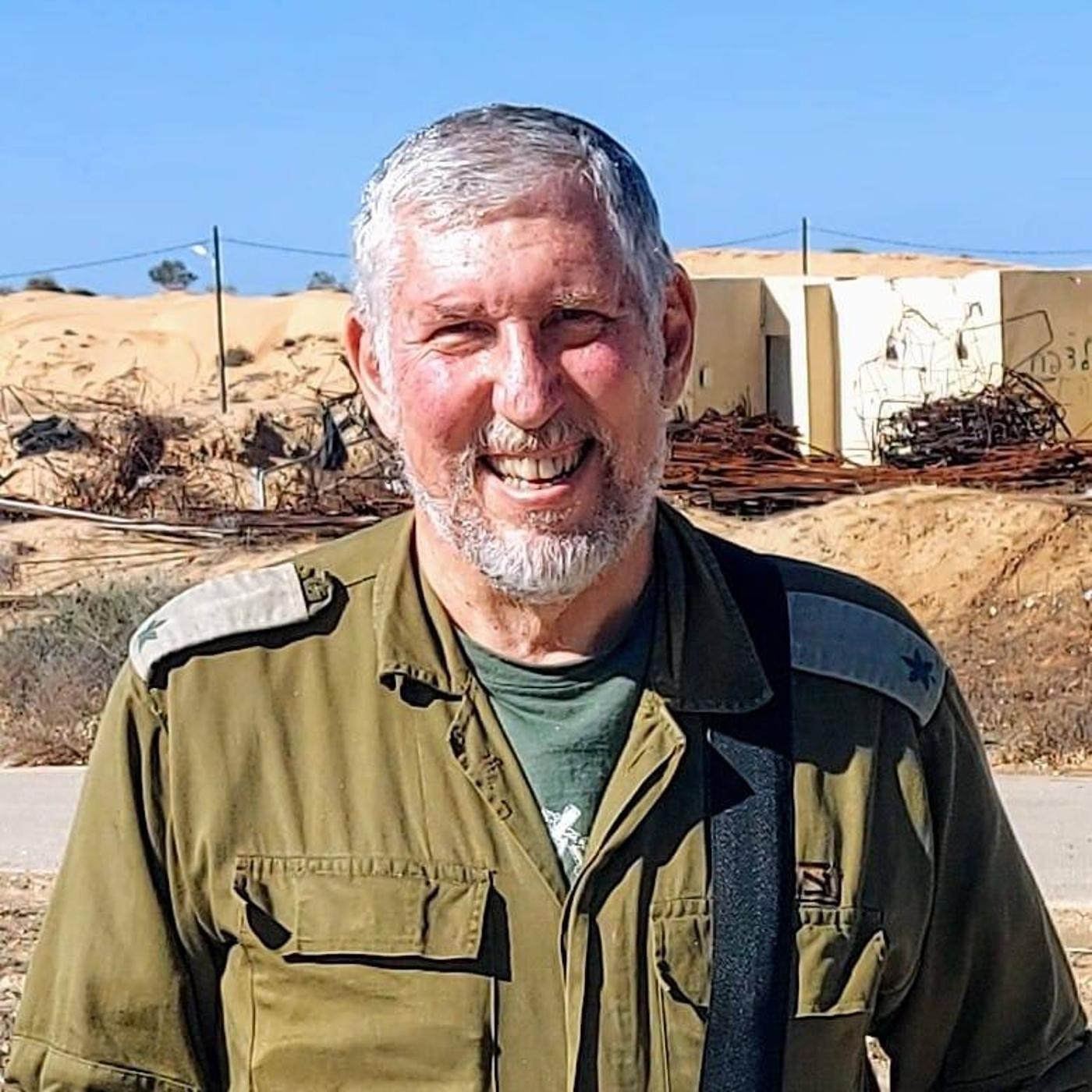
PODCAST · news
Conflict Uncovered with Elliot Chodoff (Another Rough Day in the Middle East)
by Eitan Rosenfeld
Welcome to ”Conflict Uncovered,” hosted by renowned military and strategic analyst Elliot Chodoff. This podcast delves deep into the complex and often misunderstood conflicts in the Middle East, providing listeners with a comprehensive understanding of the region’s current events and historical contexts.Episode Formats:Current Events Episodes: Stay informed with our timely updates and analyses of the latest developments in Gaza, Lebanon, and beyond. Elliot Chodoff offers expert insights into the ongoing conflicts, military strategies, and geopolitical shifts that shape the Middle East toda
-
54
Ep 54: May 8th 2026: The Long Road to October 7 Part 4
The Long Road to October 7, Part 4 Systemic Failure, Strategic Complacency, and the Illusion of Readiness Episode Description In Part 4 of The Long Road to October 7, Elliot Chodoff and Zev Uslan continue examining how Israel reached one of the most catastrophic security failures in its history. This episode moves beyond the question of what happened in the final hours before the attack and focuses on the deeper issue: how a military and intelligence system with decades of battlefield experience became vulnerable to a failure of this scale. The conversation looks at October 7 as the result of accumulated systemic decay rather than a single bad decision. Elliot and Zev discuss how decades of relative conventional quiet, peace treaties with Egypt and Jordan, counterterrorism routines, political assumptions, and efficiency-driven reforms changed the way Israel thought about war. The IDF remained active, but activity is not the same as readiness. Managing borders, running operations, and maintaining deterrence are not the same as preparing the whole system for large-scale war. A central theme of the episode is the difference between appearing prepared and being prepared. Large organizations often measure what is easy to count: budgets, personnel structures, equipment inventories, exercises completed, procedures followed. But war tests what cannot be faked: command judgment, logistics, training quality, operational memory, leadership under pressure, and the ability of different systems to work together when the assumptions collapse. Elliot and Zev also explore the psychological and cultural factors that shaped Israeli decision-making before October 7, including confirmation bias, groupthink, institutional confidence, and the tendency to interpret new threats through old frameworks. The failure was not simply technical. It was cultural, organizational, and strategic. The episode draws comparisons to other military systems, including lessons from World War II and the development of American military leadership, to ask a harder question: how does an army preserve professional competence when it is not being tested by the kind of war it may eventually have to fight? This is not an episode about conspiracy theories or individual scapegoats. It is about how successful institutions can become brittle, how peace can create dangerous habits, and how national security failures often begin years before the crisis itself. Show Notes In this episode of Conflict Uncovered, Elliot Chodoff and Zev Uslan continue their series on the long road to October 7 by examining the systemic failures that accumulated inside Israel’s defense establishment over decades. The discussion focuses on how readiness erodes when a military shifts from preparing for major war to managing a long-term security routine. The episode explores how peace treaties, political assumptions, efficiency measures, weakened exercises, logistics gaps, and institutional culture all contributed to a false sense of security. Main Themes October 7 as a systemic failure, not a one-day failure How strategic complacency developed over decades The difference between military activity and true wartime readiness Why peace treaties changed Israel’s threat perception How efficiency measures can weaken combat effectiveness The decline of large-scale exercises and full-system readiness testing The role of logistics in national defense Why successful institutions often become overconfident Confirmation bias, groupthink, and institutional blind spots Lessons from World War II military leadership and professional development Why blaming individuals alone misses the deeper organizational problem In This Episode Elliot and Zev examine the failure of Israel’s security system in the hours leading into October 7, while placing that failure inside a much longer historical pattern. They argue that the disaster cannot be understood only through intelligence warnings, missed signals, or last-minute decisions. Those matter, but they sit on top of a deeper structure. The episode looks at the way Israel’s military posture changed after decades without a major conventional war. Peace with Egypt and Jordan reduced the likelihood of the kind of multi-front armored conflict that had defined earlier Israeli military planning. At the same time, Israel became increasingly focused on counterterrorism, border control, deterrence, and limited operations. That shift created a new problem: the IDF was constantly active, but not necessarily training and organizing for the worst-case scenario. Over time, large-scale readiness, logistics planning, reserve competence, and full-system exercises became easier to neglect. A key part of the conversation is the distinction between efficiency and effectiveness. Efficiency asks whether a system is lean, cost-controlled, and administratively clean. Effectiveness asks whether it can fight, move, supply, command, adapt, and survive under real pressure. October 7 exposed the danger of confusing the two. The episode also addresses the psychological side of failure. Institutions do not only fail because people lack information. They fail because they interpret information through assumptions. Confirmation bias, groupthink, professional culture, political expectations, and previous success can all make warning signs easier to explain away.
-
53
Ep 53: May 1, 2026: The Long Road to October 7- Pt 3
Reserves, Logistics, and the Cost of Peacetime Thinking Episode Description In this episode of Conflict Uncovered, Elliot Chodoff and Zev Uslan continue tracing the long institutional road that led to October 7. The focus shifts from intelligence failure as a single event to the deeper military systems that had been weakening for decades: reserves, logistics, training, professional standards, and the slow corrosion that sets in when an army spends too long preparing for the wrong kind of war. The discussion begins with the Israeli reserve system, once one of the IDF’s greatest strategic advantages. In Israel’s early wars, reserve forces gave the country depth, scale, and flexibility that a small standing army could not provide on its own. But over time, the same system became harder to maintain. Reduced training, shifting threat perceptions, and budgetary choices all changed the relationship between readiness on paper and readiness in reality. Elliot and Zev also examine the development of Israel’s armored corps, including the role of figures like Israel Tal in professionalizing tank warfare. What appears inevitable in hindsight was often the result of individual initiative, hard-won experience, and the gradual institutionalization of practices that did not exist at the beginning. The episode then moves into the post-1982 era, when Israel entered a long period without the same kind of large-scale conventional war that had defined its earlier decades. Peace treaties with Egypt and Jordan changed the strategic landscape. So did counterterrorism, border security, and lower-intensity operations. The IDF remained active, but the nature of its activity changed. That shift created a dangerous illusion: that a military can remain sharp without repeatedly testing the full system under wartime strain. A central theme of the episode is the difference between efficiency and effectiveness. In peacetime, organizations often reward clean metrics, lean processes, and budget discipline. In war, what matters is whether ammunition, equipment, manpower, vehicles, communications, and command structures actually work when everything is under pressure. October 7 exposed what happens when bureaucratic efficiency is mistaken for combat readiness. This is not a conspiracy story. It is a systems story. It is about how militaries drift, how logistics decay, how professional standards become uneven, and how an army with a record of success can still carry unresolved weaknesses into the next war. For listeners interested in military history, Israeli security, organizational failure, or the gap between reputation and readiness, this episode offers a detailed look at the institutional problems that shaped Israel’s response before and after October 7.
-
52
Ep 52: April 28, 2026: The Long Road to October 7 Part 2
War is not just a sequence of violent events. It is a condition, a structure, and a long-term contest of will, power, and organization. In this episode, Elliot Chodoff and Zev Uslan go beyond the headlines to examine what war actually is and why misunderstanding its nature leads to bad analysis, weak preparation, and dangerous assumptions. Using Israel’s military history as a case study, they trace the evolution of war from 1948 to the present, showing how conflict can persist for decades even when large-scale combat is absent. The discussion unpacks the difference between conflict and war, between open fighting and an ongoing state of hostility, and between dramatic battlefield moments and the deeper institutional realities that determine whether an army is ready when the moment of truth arrives. Elliot and Zev explore how Israel, a state born without a long-standing military tradition, had to build an army under extreme pressure. In its early decades, the IDF developed through necessity, improvisation, and battlefield experience more than through formal doctrine or professional continuity. That approach produced resilience and adaptability, but it also left behind structural weaknesses that became harder to ignore over time. The episode examines how those weaknesses deepened in the decades that followed, especially from the 1980s onward, as continuity eroded, professional development weakened, and organizational gaps widened. It also looks at the unique nature of Israel’s “people’s army,” and how that model shapes leadership, training, readiness, and military culture in ways that differ sharply from more professionalized systems like the U.S. military. This is not just a discussion about Israel. It is a broader examination of how armies evolve, how institutions drift, and how nations prepare for the kind of wars they expect while remaining vulnerable to the wars they actually get. To understand October 7, you have to understand not only intelligence failures or tactical mistakes, but the deeper question of what war is and how states convince themselves they are prepared for it. For anyone interested in military history, strategy, organizational failure, or the long arc of Israeli security thinking, this episode offers a serious and nuanced look at the realities behind modern conflict. Topics covered The difference between conflict and war War as a long-term state, not just a battlefield event How Israel’s military developed from 1948 onward The role of improvisation, experience, and battlefield adaptation in the early IDF Organizational weaknesses that emerged over time The impact of continuity, leadership, and doctrine on military readiness How Israel’s “people’s army” differs from the U.S. military model Why understanding the nature of war is essential to understanding October 7
-
51
Ep 51: April 26, 2026: The Long Road to October 7, Part 1
Most people misunderstand the story behind October 7 not because they lack intelligence, but because they are looking in the wrong place. The roots of the failure run far deeper than a single day, a single decision, or a single intelligence breakdown. In this episode, Elliot Chodoff and Zev Uslan examine the organizational culture, military assumptions, and historical patterns that helped set the stage for one of the most devastating failures in Israeli history. The conversation traces these problems back to the pre-state period, exploring how the legacy of the Palmach and the early militia culture shaped Israel’s military identity. What began as a survival-driven ethos of improvisation, boldness, and ideological commitment also carried hidden costs. Over time, those strengths hardened into institutional habits, myths, and blind spots that continued to influence the IDF long after the state was established. Elliot and Zev challenge simplistic explanations, including conspiracy-driven claims that October 7 resulted from a deliberate stand-down or secret orders. They argue that the real story is both more troubling and more instructive: large human systems fail not because of cinematic plots, but because of culture, assumptions, fragmentation, overconfidence, and the slow accumulation of unresolved weaknesses. In this episode, they explore the gap between the myth and reality of Israeli military readiness, the long shadow cast by early military culture, and the difficulty of preparing any nation or army for the chaos of modern conflict. The result is not just a discussion about October 7, but a broader look at how institutions drift, how warnings get missed, and how deeply embedded habits can shape battlefield outcomes. This episode is essential listening for anyone trying to understand Israel’s military failures beyond slogans, espionage theories, or partisan talking points. The road to October 7 did not begin on October 7. It began decades earlier. Topics covered The gap between Israel’s military image and institutional reality How pre-state militia culture shaped the modern IDF The Palmach legacy and its long-term organizational consequences Why conspiracy theories about a deliberate stand-down do not hold up How human systems fail under pressure What October 7 reveals about military culture, intelligence, and institutional blind spots
-
50
Ep 50: April 21, 2026: Israel, Land, History, and the Narratives Behind the Conflict
In this episode of Conflict Uncovered, Eliot Chodoff sits down with Zev Uslan to examine one of the most misunderstood dimensions of the Israel-Palestine conflict: the land itself, and the narratives attached to it. While many outsiders frame the conflict as a straightforward dispute over territory, resources, or borders, Eliot and Zev argue that the deeper drivers are historical memory, identity, religion, language, and competing national stories. The conversation explores the long arc of Jewish connection to the land of Israel, going back thousands of years, and challenges modern claims that reduce the conflict to colonialism or simple territorial expansion. Eliot and Zev discuss the historical use of terms such as Judea and Palestine, the political significance of those names, and how shifting empires, migrations, and wars have shaped the modern debate. They also examine the widespread assumption that Israel is an expanding colonial project, contrasting that narrative with the historical record, the region’s changing borders, and the reality that the land itself lacks the kind of natural wealth many assume lies at the heart of the conflict. Along the way, the episode addresses Zionism, Ottoman and British rule, the role of Hebrew and archaeology, and the ways myth, history, and politics are constantly blended in public discourse. This episode is not just about historical claims. It is about how those claims are used today, how language shapes political understanding, and why simplistic narratives about “stolen land” or colonial conquest often obscure more than they reveal. For anyone trying to better understand the roots of the Israel-Palestine conflict, this conversation offers a deeper look at the land, the history, and the contested ideas that continue to shape the region. Key Topics Why the Israel-Palestine conflict cannot be understood only as a dispute over land or resources The historical Jewish connection to the land of Israel The origins and political use of the names Judea and Palestine The difference between migration, self-determination, and colonialism Misconceptions about Israel as an expansionist or resource-driven state The legacy of Ottoman, Roman, British, and other imperial rule over the land How religion, language, archaeology, and historical memory shape modern political claims Why competing narratives about identity and indigeneity remain central to the conflict Timestamps 00:36 – Introduction to the episode and guest Zev Uslan 00:45 – Zev’s opening reflections and the broader context of the moment 01:41 – Israel Independence Day and the historical background of the land 02:21 – Challenging the idea that the conflict is simply about land theft 03:39 – Why outsiders often misunderstand the territorial dispute 04:09 – Israel’s actual size and the question of territorial expansion 04:51 – How land disputes are often tied to resources and access 06:11 – Israel’s limited natural resources and water constraints 07:07 – If not resources, what is really driving the conflict? 08:15 – The biblical roots of Jewish connection to the land 10:37 – Jewish return to the land and Arab resistance in the modern era 11:42 – War, flight, expulsion, and the complexity of 1947–48 14:00 – How colonial narratives became central to modern criticism of Israel 15:00 – Why Zionism does not fit neatly into classic colonial models 16:00 – Hebrew, archaeology, and the question of indigeneity 19:08 – The Roman origins of the name Palestine 21:01 – From Judea to Syria-Palestina and the politics of naming 23:22 – Byzantine, Crusader, Ottoman, and British control of the land 24:42 – Borders, mandates, and the modern political map 25:16 – The debate over whether there was a prior Palestinian state 26:06 – Final thoughts on history, narrative, and the need for nuance Episode Note This episode examines highly contested historical and political questions surrounding Israel, Palestine, and competing claims to land and identity. Rather than repeating familiar slogans, Eliot Chodoff and Zev Uslan dig into the deeper historical frameworks that continue to shape how the conflict is understood today. Episode Companion: https://gamma.app/docs/Israel-Land-History-and-the-Narratives-Behind-the-Conflict-u3vtgz3pmnbjjxl
-
49
Ep 49: April 14, 2026: Is War Ever Proportional? Gaza, Hamas, and the Rules of Conflict
War, Proportionality, and the Gaza Conflict Episode Summary In this episode of Conflict Uncovered, host Eliot Chodoff is joined by Zev Uslan for a deep discussion on the Gaza war, proportionality in war, international law, and the ethics of modern conflict. Together, they examine how just war theory applies to the Israel-Hamas war, including the principles of discrimination, civilian immunity, and proportionality in asymmetric warfare. The conversation explores whether the public understanding of “proportionality” matches its actual meaning in military ethics and international law, and how Hamas’s use of civilian infrastructure complicates military decision-making. Eliot and Zev also discuss the distinction between punitive retaliation and full-scale war, the role of civilian casualties in urban warfare, and how political support, governance, and ideology shape perceptions of innocence and responsibility in Gaza. Drawing on history, military doctrine, and legal frameworks, this episode offers a serious examination of some of the hardest questions surrounding the Israel-Gaza conflict, including the laws of armed conflict, the morality of targeting decisions, and the broader debate over how democracies fight enemies embedded within civilian populations. This episode is essential listening for anyone seeking a deeper understanding of war ethics, Gaza, Hamas, Israel, civilian harm, and the legal and moral dilemmas of modern warfare. Main Themes The difference between punitive retaliation and full-scale war How World War II and Pearl Harbor are used as historical reference points The principles of just war theory, especially discrimination and proportionality Why proportionality is frequently misunderstood in discussions of war Hamas’s strategy of operating within civilian areas and institutions The legal and ethical implications of civilian casualties in asymmetric warfare Debates around collective responsibility, political support, and innocence in Gaza The tendency in Western political culture to reduce conflicts to individual leaders rather than systems and institutions Timestamps 00:38 – Introduction and framing the Gaza conflict 01:07 – Why the situation in Gaza requires deeper context 02:14 – A U.S. physician’s account and the moral questions it raises 03:10 – The debate over invoking October 7 to explain large-scale casualties 04:42 – Operational responses versus a declaration of war 05:11 – Punishment, war, and the question of disproportionate response 06:41 – Hamas’s founding ideology and long-term objectives 08:15 – Israel’s disengagement from Gaza and what followed 09:24 – From limited response to war, with a World War II comparison 11:26 – Pearl Harbor as a framework for understanding wartime escalation 13:02 – Why “proportional force” is often misunderstood 14:18 – Casualty ratios and the combatant versus non-combatant debate 15:01 – What international law says about targeting civilians 16:02 – Hamas support within Gaza and the question of civilian innocence 17:09 – Hamas as both governing authority and militant organization 18:59 – The Western habit of over-personalizing enemies 20:40 – Institutional power, ideology, and population support 21:17 – Public response to hostages and historical comparisons 22:12 – Just war theory: discrimination and proportionality 23:39 – The real-world difficulty of applying proportionality in asymmetric conflict 24:45 – Civilian infrastructure used for military purposes 25:19 – Hospitals, mosques, and the moral complexity of military targeting 26:16 – Reflections on casualties in hospital settings and the fog of war 27:07 – Closing thoughts and safety considerations during active conflict Resources Mentioned Just War Theory Hamas Covenant, including original and revised versions International law on civilian immunity and lawful targeting Background materials on the Israel–Gaza conflict Research on public support for Hamas in Gaza
-
48
Ep 48: April 7 2026: Western Misconceptions of Conflict
Understanding Radical Islamism and Cultural Perspectives on Violence In this episode, Elliot Chodoff and Zev Uslan explore the sociological, psychological, and ideological roots fueling radical Islamism and violent cultures. They discuss historical parallels, the influence of Western thought, and the religious narratives that drive violent behaviors today. Key topics: The comparison between radical Islamism and Nazi ideology, including influences from Nazism on contemporary Islamist groups The psychological impact of perceiving threats as existential, leading to normalized violence How secular humanism’s assumptions about human nature differ from cultures that view death and killing as legitimate solutions The influence of the Muslim Brotherhood and ideologues like Sayyid Qutb, blending Nazi and Islamic narratives The deeply ingrained narratives in radical Islam viewing Jews as enemies, inspired by Nazi anti-Semitism and Quranic interpretations Critique of Western values such as the universal sanctity of life, and how historically different societies perceive violence and death The ideological divergence between classical Islam’s protections for “dhimmis” and radicalist movements’ rejection of those principles The difficulty in Western societies understanding cultures that see violence as a first resort Timestamps:00:00 - Introduction to the episode’s focus on sociological issues behind current conflicts 01:12 - Differing perceptions of threats with multiple fronts in the Middle East 02:11 - Why radical Islamists want to kill Jews and the worldview of some Islamist groups 02:45 - The divergence between Western reporting and cultural acceptance of violence 03:15 - Nazi Germany as a historical model and ideological influence on radical Islam 04:15 - Psychological disempowerment when violence is seen as inevitable due to existential threat 05:42 - Culture that blatantly rejects Western liberal humanism and secular values 06:07 - The Enlightenment ideas about human nature, and their clash with cultures that accept violence as normal 07:12 - Comparing criminology insights with cultural training in violence 08:22 - The influence of Western rationality and the myth of universal human values 09:00 - The Judeo-Christian roots of the human value of life and their erosion in America 10:47 - Historical Japanese society where killing was normalized and its implications 12:15 - The impact of American immigration history on perceptions of violence and sanctity of life 14:38 - How Western societies increasingly detach from the reality of existential threats 15:22 - Cognitive dissonance in Western attitudes toward Israel and Islamist violence 17:08 - The influence of Greco-Roman rationalist thinking versus Jewish Talmudic tolerance for ambiguity 18:45 - Challenges in influencing Middle Eastern conflicts through Western criticism 21:24 - Ideological roots of radical Islam from the Muslim Brotherhood, influenced by Nazi anti-Semitism 23:21 - The fusion of Nazi ideology with religious Islam, especially through figures like Qutb and Khomeini 24:43 - The evolution of Islam from a protected religion (dhimmah) to radical movements rejecting those protections 27:12 - The importance of understanding the ideological and religious foundations behind violence and jihadism 28:50 - Future discussions on the influence of Islamic theology and possible reformsResources & Links: A Genealogy of Evil: From Nazi Ideology to Islamic Jihad by David Patterson On Killing by Dave Grossman Syed Qutb's Works Muslim Brotherhood Official Website Nightline Episode on Israel's 1981 Operations
-
47
Ep 47: March 30, 2026: The War with Iran: History, Escalation, and Strategic Insights
The War with Iran: History, Escalation, and Strategic Insights In this episode, Elliot Chodoff and Don Uslan explore the complex history and ongoing conflict between Iran, Israel, and the United States, unraveling the roots of recent hostilities and strategic intentions behind Iran's long-term actions. Main Topics Covered: The origins of the Iran-Israel-US conflict dating back to the 1979 Iranian Revolution The evolution of Iran's ideological stance and its influence on proxy groups like Hezbollah Key events such as the bombings of U. S. Embassies and Marine barracks in Lebanon Iran’s military strategy, including missile development and proxy warfare The importance of assessing Iran’s capabilities to understand their intentions How Western perceptions have historically underestimated Iran’s ambitions Timestamps: (00:37) Welcome and episode overview (01:07) Clarifying the timeline of the war with Iran (02:23) The fall of the Shah and the 1979 revolution (04:22) Iran’s relationship with Israel before the revolution (05:36) The nature of the Shah’s regime and the revolution’s hijacking (06:25) Khomeini’s rise and misconceptions in the West (07:11) Willful ignorance about Iran’s ideology (08:38) Iranian hostage crisis as an act of war (09:51) Ideological vs. political warfare (12:25) Hezbollah’s origins and Iran’s strategic use of proxies (14:14) Major attacks by Iran-backed groups against US and Israeli targets (18:41) The ongoing nature of Iran’s ideological war (21:42) Western misjudgments and Iran’s resurgence ambitions (22:40) How intelligence assesses capabilities and intentions (24:14) Iran’s missile technology and strategic signaling (25:26) Final thoughts and future topics Resources & Links: Khomeini’s Islamic Government (book for understanding Khomeini's ideology) Hezbollah Official Website IRGC (Islamic Revolutionary Guard Corps) Official Site Related articles on Iran’s missile program and proxy warfare strategies
-
46
Ep 46 March 26, 2026: Decoding Israel's Missile Defense: Iron Dome and Arrow Explained
Elliot Chodoff and Don Uslan discuss the complexities of the ongoing conflict with Iran, media perceptions, missile technology, and Israel's defense systems. They analyze the strategic and technical aspects of missile defense, media bias, and the broader war context. Keywords: Israel, Iran, missile defense, Iron Dome, Arrow, media bias, conflict analysis, military strategy Key Topics Israel's missile defense systems (Iron Dome, Arrow) Media bias and reporting in conflict zones Iran's missile capabilities and strategy
-
45
Ep 45: Oct 12. 2025- The Deal: Phase 1
In this conversation, Elliot discusses the ongoing conflict between Israel and Hamas, analyzing the military successes and failures of the IDF, the nature of the war as one of existence, and the implications of the hostage situation. He emphasizes the importance of understanding the historical context of the conflict and the future strategies Israel must adopt to deal with Hamas and ensure its security. Takeaways The war between Israel and its enemies is ongoing and rooted in existential issues. Israel's military has had tactical successes but faces significant strategic challenges. The hostage situation is critical and reflects deeper political implications. Hamas's power in Gaza is likely to persist despite international pressure. The return of hostages is important, but the cost of releasing prisoners is significant. Israel's standing in the world has diminished due to the conflict's prolonged nature. The nature of the conflict is not about territory but about Israel's existence. Future negotiations must address Hamas's disarmament to prevent further conflict. Turning away from enemies has historically led to severe consequences for Israel. The humanitarian situation in Gaza is complex and often misrepresented.
-
44
EP 44: June 22, 2025- The US Strikes Iran
In this conversation, Chodoff provides a comprehensive analysis of the recent military actions between Israel and Iran, tracing the historical context of their conflict, the strategic operations undertaken by Israel, and the implications of Iran's retaliatory actions. He discusses the role of the United States in supporting Israel and speculates on the future of the conflict, emphasizing the dynamic nature of the situation.
-
43
Ep 43, June 11, 2025: Flotilla and Militias
Elliot discusses the recent events surrounding the Freedom Flotilla to Gaza and the Israeli government's proposal to arm a Palestinian militia as a counterweight to Hamas. He critiques the decision, drawing on historical examples to illustrate the potential dangers of such actions. Chodoff emphasizes the need for a clear military strategy and the risks associated with arming groups that may not align with Israeli interests. takeaways The Freedom Flotilla was handled effectively by Israeli forces. Arming a Palestinian militia against Hamas is a controversial decision. Historical precedents show the dangers of supporting militant groups. The chaos in Gaza complicates the imposition of order. The Israeli government may be repeating past mistakes. Hamas was initially seen as a counter to Fatah, leading to unforeseen consequences. Current militia proposals could backfire against Israeli interests. The IDF has significantly weakened Hamas's leadership. A clear military strategy is essential for future operations. The ongoing conflict requires careful consideration of alliances.
-
42
Ep 42: May 13, 2025: Trump and Israel
In this conversation, Elliot discusses the current state of US-Israel relations under President Trump, addressing key issues such as the recent hostage release, changes in US military strategy, and the implications of Hamas's actions in Gaza. He emphasizes the importance of understanding the nuances of these relationships and the potential consequences of perceived shifts in US support for Israel. Takeaways Trump is still connected to Israel despite speculation. The release of hostages is a positive development. US military strategy changes can surprise allies. Consultation with Israel is crucial in military decisions. Hamas seeks a long-term ceasefire to rebuild strength. Trump's rhetoric may unintentionally align with Hamas. Negotiating with Iran requires careful consideration. Perceptions of US support for Israel can impact regional stability. A sense of abandonment can embolden adversaries. Engagement and awareness are vital for safety.
-
41
Ep. 41: April 30, 2025, Israeli Memorial Day
Elliot reflects on the significance of Memorial Day and the transition to Independence Day in Israel, particularly in the context of ongoing conflict and the recent war. He discusses the emotional weight of commemorating those lost while also celebrating independence, addressing calls from some families of hostages to refrain from celebration. We emphasize the historical and existential importance of the state of Israel, arguing that despite failures, the state remains a vital refuge and a fulfillment of a long-held dream for the Jewish people.
-
40
Ep 40: March 30, 2025: The Gaza's Protests
Elliot discusses the recent protests in Gaza, analyzing the motivations behind them and the implications for Hamas and Israel. He explores the possibility of a genuine opposition to Hamas, the role of public opinion, and the potential for an uprising against the regime. Chodoff emphasizes the complexities of the situation, including the fear of Hamas and the desire to prevent further Israeli military action. takeaways The protests in Gaza may not signify a true opposition to Hamas. Hamas's tolerance of protests raises questions about their authenticity. Demonstrators are primarily concerned about Israeli military actions. The lack of armed uprising suggests fear of Hamas's retaliation. Public opinion in Gaza is complex and not straightforwardly anti-Hamas. Demonstrations may be aimed at garnering international sympathy against Israel. The protests could be a strategy to delay Israeli military operations. Historical analogies highlight the nuances of opposition movements. The willingness to suffer casualties is crucial for any uprising's success. The situation in Gaza remains fluid and uncertain.
-
39
Ep 39: March 20, 2025: Ceasefire Broken
In this conversation, Elliot discusses the recent escalation of conflict between Israel and Hamas, focusing on the misinterpretation of the ceasefire, the rebuilding of Hamas's military capabilities, and the political dynamics surrounding hostage negotiations. He emphasizes the complexities of U.S.-Israel relations and the implications of military strategies in the ongoing conflict. takeaways The ceasefire officially ended on March 1st, not recently. Hamas has refused to negotiate for the release of hostages. U.S. involvement in negotiations has complicated the situation. Hamas has rebuilt its military capabilities during the ceasefire. Israeli airstrikes targeted key Hamas leaders and infrastructure. Political dynamics in Israel influence military decisions. Netanyahu's actions are supported by a broader political consensus. Hamas's offers have been inadequate and non-starters. Airstrikes provide flexibility in military strategy. The future of negotiations remains uncertain amidst ongoing conflict.
-
38
Ep. 38 March 5, 2025: Ceasefire Insights
Elliot discusses the recent ceasefire in Israel, focusing on Hamas's violations, the hostage situation, and the implications of US support for Israel. He highlights the ongoing tensions and the potential for future military operations as both sides prepare for a possible escalation in conflict. Key Takeaways: Hamas violated the ceasefire agreement almost immediately. Hostages were abused and tortured during their captivity. Hamas is holding onto hostages as their last assets. Israel is willing to negotiate for the release of hostages. The US administration's approach to Israel has changed significantly. Hamas's demands include an end to Israeli military operations. Israel is not willing to return to pre-October 7th conditions. The Biden administration has supported Israel's military actions. Both sides are preparing for potential military escalation. The situation remains volatile with ongoing negotiations.
-
37
Ep 37: Feb 13, 2025: Trump and the Gaza Plan
Elliot discusses the current situation in Israel, focusing on President Trump's relocation plan for the residents of Gaza. He explores the historical context of Gaza, the challenges of the relocation plan, and the implications for the Palestinian population and Hamas. Chodoff emphasizes the ideological barriers to relocation and the practical difficulties of moving a large population, ultimately questioning the feasibility of the plan.
-
36
Ep 36: Jan 22 2025 with guest Yisrael Ne'eman
With guest Yisrael Ne'eman
-
35
Ep 35: Jan 19, 2025. The Hostage Deal
Elliot discusses the complex dynamics surrounding the hostage deal between Israel and Hamas. He explores the ethical implications, the political pressures involved, and the potential consequences of the deal on Israel's security. Chodoff emphasizes the importance of understanding the broader regional context and the current state of the IDF as they navigate these negotiations. He concludes with a cautionary note about the future and the need for vigilance in preventing Hamas from regaining strength.
-
34
Ep: 34- Dec 31, 2024: The Houthi Front
Elliot discusses the recent Houthi missile attacks on Israel, exploring the ideological roots of the Houthis, their geopolitical significance, and the implications of their actions for regional stability. He emphasizes the psychological impact of these attacks on Israeli society and critiques the international response to the Houthi threat. We also examines the complexities of the relationship between the Houthis and Iran, highlighting the independent nature of the Houthi organization despite Iranian support. takeaways The Houthis' ideology includes slogans like 'death to America' and 'death to Israel'. Their hatred of Israel is rooted in anti-Jewish sentiment, not just political issues. The Houthis are a Yemeni Shiite tribe that has radicalized over time. Iran supports the Houthis with weapons and strategic guidance. Yemen's geographical position is crucial for global shipping routes. Houthi actions have led to increased shipping costs worldwide. Every Houthi attack on Israel is a significant violation of sovereignty. The psychological impact of Houthi attacks on Israeli citizens is profound. Israeli military responses aim to deter Houthi attacks but may not be effective. The Houthis operate independently of Iran, despite being a proxy force.
-
33
Ep 33: December 12, 2024
Elliot discusses the current situation in Syria, focusing on the recent Israeli airstrikes and the implications of the collapse of Assad's regime. He analyzes the dynamics of power in Syria, the role of various factions, and Israel's strategic positioning in response to the evolving conflict. Chodoff emphasizes the need for careful observation of the situation as it develops, highlighting the complexities of the geopolitical landscape. Takeaways The Israeli Air Force has targeted 350 sites in Syria. The collapse of Assad's regime could lead to a more stable Syria. Assad's army was surprisingly weak and disintegrated quickly. The new leadership in Damascus is not firmly in control. Israel's military strategy is evolving based on past lessons. Chemical weapons in the hands of rebels pose a significant threat. Israel is not expanding its territory in Syria. The situation in Syria remains highly dynamic and unpredictable. Future developments in Syria will be closely monitored by Israel. Engagement and safety are crucial in this volatile environment.
-
32
Ep. 32- Dec 5, 2024: The Syrian Game
Elliot Chodoff discusses the ongoing conflict in Syria, focusing on the recent offensive by Syrian rebels, the role of various key players including Israel, Hezbollah, and Turkey, and the implications for the region. He highlights the complexities of the situation, where opposing forces may not necessarily be the 'good guys', and examines Israel's strategic position in relation to the conflict. Takeaways The Syrian conflict is a long-standing imperial struggle involving multiple powers. HTS, formerly al-Nusra, is a significant player in the Syrian opposition. Israel is closely monitoring the situation in Syria without a clear ally. Hezbollah's weakening has opened opportunities for Syrian rebels. The civil war in Syria has resulted in a humanitarian crisis with massive casualties. Turkey's involvement complicates the dynamics of the conflict. The future of the Syrian rebels is uncertain against the Assad regime. Israel faces a dilemma in choosing between Assad and radical groups. The situation in Syria reflects broader geopolitical tensions in the region. The potential rise of radical groups poses a long-term threat to stability.
-
31
Ep 31- Nov 29, 2024: Paper Peace
Elliot delved into the recent ceasefire agreement between Israel and Lebanon, highlighting Hezbollah's immediate violations, the complexities of the agreement, and the historical context of Hezbollah's actions. It discusses the role of international forces, particularly the US and UN, in enforcing the agreement, and examines Israel's strategic considerations, including military readiness and logistical challenges. The speaker emphasizes the importance of Israel's response to any violations to prevent a return to conflict.
-
30
Ep 30: November 26th, 2024: The ICC & Arrest Warrants for Netanyahu and Gallant
Elliot and Dov Chodoff discuss the recent ruling by the International Criminal Court (ICC) regarding arrest warrants for Israeli leaders, including Prime Minister Netanyahu, on charges of war crimes. They explore the nature of the accusations, the procedural aspects of the ICC's actions, and the broader implications for international law and Israel's response. The discussion also touches on the global reactions to the ruling and the historical context of such legal actions against state leaders. Takeaways The ICC issued arrest warrants for Netanyahu and Galant. The charges include war crimes and crimes against humanity. The principle of command responsibility is complex in this context. The ICC's jurisdiction is questioned regarding the state of Palestine. The investigation timeline raises concerns about legal procedures. Global reactions to the ICC ruling vary significantly. The U.S. has a complicated history with the ICC. International law is becoming increasingly politicized. Israel's legal experts advocate for appealing the ICC's ruling. The conversation highlights the fragility of international law.
-
29
Ep 29: November 20: Understanding Genocide with Guest David Patterson
In this conversation, Elliot Chodoff and Author, David Patterson delve into the complex topic of genocide, exploring its origins, legal implications, and the current accusations against Israel. They discuss the historical context of the term 'genocide,' its legal definitions, and the challenges in prosecuting such crimes. The conversation also touches on the political motivations behind accusations of genocide, particularly in relation to Israel, and the broader implications for global responses to such claims.
-
28
Ep 28: Nov 18, 2024: Powder Keg at the Border: Inside Israel's Lebanon Crisis
Episode Overview Elliot breaks down the volatile Israel-Lebanon situation, revealing why conventional solutions may fail and what's really at stake for regional stability. Key Analysis Beyond the Ceasefire: Why traditional peace agreements fall short against Hezbollah's unique position Military Chess Game: Analysis of northern Israel's evacuation strategy and the true scope of rocket threats Defense Dilemma: Iron Dome's capabilities vs. Hezbollah's arsenal - a critical assessment Future Scenarios: What happens when Hezbollah rebuilds, and why it matters for regional peace
-
27
Ep 27- Nov 14, 2024: The UltraOrthdox and the IDF
Elliot sits down with Yisrael Ne'eman of Ne'eman Academy to unpack one of Israel's most contentious issues: military service in the ultra-orthodox community. Ne'eman explains how the exemption of religious scholars from military service has become a flashpoint between ultra-orthodox and national religious groups. The conversation reveals how ultra-orthodox leaders view Torah study as spiritual protection for Israel, while also fearing that military service could expose their community to secular influences and weaken their cultural autonomy. Particularly fascinating is the discussion of political figures like Smotrich, who must navigate between religious traditionalism and modern state requirements. The episode concludes by examining how this debate may reshape Israel's religious and political landscape in the years ahead.
-
26
Episode 26-November 4th, 2024: Hezbollah's Influence in Lebanon
Elliot delves into the complexities of the Second Lebanon War, focusing on UN Resolution 1701, Hezbollah's role, and the historical context of Lebanon's political landscape. It highlights the misunderstandings surrounding Lebanon's position regarding Israel and the effectiveness of UNIFIL in maintaining peace. The discussion also covers the rise of Hezbollah and the implications of Israel's withdrawal from Lebanon in 2000, emphasizing the ongoing conflict and the challenges in achieving lasting peace in the region.
-
25
October 30, 2024: Israel's Move Against UNRWA
This conversation delves into the recent legislative actions taken by the Israeli Knesset against the United Nations Relief and Works Agency (UNRWA), exploring the historical context of UNRWA's establishment, its controversial role in Palestinian refugee camps, and the implications of Israel's decision to cut ties with the agency. The discussion highlights the complexities surrounding humanitarian aid in the region and the ongoing challenges faced by Palestinian refugees. takeaways The Israeli Knesset passed laws banning UNRWA. UNRWA has been criticized for its ties to Hamas. Many UNRWA employees participated in the October 7th attacks. UNRWA's mandate has expanded to include descendants of refugees. Israel's support for UNRWA has shifted post-October 7th. The refugee camps managed by UNRWA have become terrorist breeding grounds. UNRWA operates under Israeli legal permission, not by right. The international community's response to Israel's actions has been critical. UNRWA's existence raises questions about humanitarian aid in Palestine. The future of humanitarian aid may shift away from UNRWA.
-
24
10/20/2024: Sinwar is Dead, Hamas in Transition: What Comes Next?
Elliot delves into the current state of Hamas following the elimination of Yahya Sinwar, exploring the implications of leadership changes, the immediate and long-term impacts on the organization, and the role of propaganda in shaping morale among its ranks. The discussion highlights the complexities of predicting future outcomes in the ongoing conflict and the resilience of institutional structures within Hamas despite the loss of key figures. Takeaways The future of Hamas is uncertain and complex. Yahya Sinwar's elimination is a significant blow to Hamas. Leadership changes may lead to a lack of cohesion within Hamas. The institutions of Hamas are likely to survive despite leadership losses. Morale among Hamas ranks may fluctuate after Sinwar's death. Propaganda plays a crucial role in maintaining morale. The immediate impact of Sinwar's death is a hit to command and leadership. Hamas's operational capabilities may be affected but not entirely diminished. The comparison to historical figures like Hitler is nuanced and careful. Future leadership may struggle to fill the void left by Sinwar.
-
23
10/09/2024: Operational Failures, Reflecting on October 7
This conversation delves into the operational failures that contributed to the disastrous outcome of the October 7th Hamas attack on Israel. Elliot Chodoff discusses how the reliance on technology, poor military planning, and a lack of preparedness led to a catastrophic situation where the Israeli defense was unable to respond effectively to the assault. He emphasizes the importance of maintaining a robust military presence and operational readiness, regardless of intelligence assessments.
-
22
10/07/24: The Intelligence Failure of October 7th
In this episode , we reflect on the intelligence and operational failures surrounding the October 7th attack, a significant event in Jewish history. He discusses the strategic miscalculations made by Israeli leadership, the overwhelming amount of information that led to confusion, and the historical context of similar intelligence failures. We emphasize the need for a diverse approach to intelligence gathering and analysis, cautioning against over-reliance on technology and the dangers of confirmation bias. Takeaways: The October 7th attack was a significant intelligence failure. There were both intelligence and operational failures involved. Strategic miscalculations by Israeli leadership contributed to the failure. Hamas was underestimated and misread by Israeli officials. Economic factors do not drive the decision-making of terrorist organizations. Historical examples of intelligence failures provide context for October 7th. Over-reliance on technology can blind intelligence operations. Confirmation bias can lead to critical oversights in analysis. The sheer volume of information can complicate decision-making. Lessons from past failures must inform future intelligence strategies.
-
21
9/29/2024: The Elimination of Hezbollah's Leader, Hassan Nasrallah-
This conversation discusses the recent elimination of Hezbollah leader Hassan Nasrallah and its implications for Hezbollah, Iran, and Israel. The speaker emphasizes the significance of Nasrallah's removal, the resulting leadership vacuum within Hezbollah, and the strategic advantages gained by Israel. The discussion also touches on the relationship between Hezbollah and Iran, the potential for Iranian retaliation, and the current dynamics in the region. takeaways Hassan Nasrallah's elimination is a significant blow to Hezbollah. Hezbollah has been left in a leadership vacuum. The Israeli Air Force's precision strikes have been highly effective. Iran's connection to Hezbollah is deeper than a mere proxy relationship. The recent strikes have disrupted Hezbollah's communication systems. Israel's intelligence capabilities have proven to be exceptional. The current situation presents a critical opportunity for Israel. Iran is likely to adopt a more conservative approach post-Nasrallah. The dynamics in the region are shifting rapidly. This moment could redefine the security landscape in the Middle East.
-
20
9/23/2024: Israel- Hezbollah Escalation
In this episode, we dive into the ongoing military escalation between Israel and Hezbollah, dissecting Israel's preventive strategies and Hezbollah’s retaliatory actions. We explore the historical defiance of UN resolutions by Hezbollah and the ongoing challenges Israel faces in proving the effectiveness of its military campaigns. Key Takeaways: Israel is currently ramping up preventive operations against Hezbollah. A successful preventive policy often faces condemnation, regardless of its outcomes. Hezbollah’s rocket attacks reflect their response to Israel’s actions, but they’ve struggled to recover from recent Israeli strikes. UN Security Council Resolution 1701 has been largely ignored by Hezbollah, yet its implementation is once again being reconsidered. Hezbollah’s stated goal remains the destruction of Israel, adding to the complexity of achieving peace in the region.
-
19
9/19/2024: Hezbollah's Humiliation
In this conversation, Elliot discusses the recent attacks on Hezbollah and their implications for the region. He analyzes the operational challenges faced by Hezbollah, the psychological impact of the attacks, and the international reactions from Europe and the United States. Chodoff emphasizes the shift in Israeli strategy and the potential future of Israeli-Hezbollah relations.
-
18
9/17/2024: Jihad: Myths vs. Reality
In this episode, we're joined by the other Chodoff, Major Dov Chodoff. Our conversation delves into the complexities of conflict dynamics, particularly focusing on jihad and its misconceptions. The speakers explore the global implications of these conflicts and the narratives surrounding them, aiming to clarify misunderstandings and provide a more nuanced perspective. Takeaways Understanding the multifaceted nature of conflict dynamics is crucial. Jihad is often misunderstood and misrepresented in global narratives. There is a significant gap between perception and reality regarding jihad. Global perspectives on conflict can vary widely based on cultural contexts. Misconceptions can lead to fear and misunderstanding in society. Recognizing the historical context of jihad is essential for understanding its implications today.
-
17
9/13/24: The Implications of American Forces Withdrawal for Israel – What’s Next?
The conversation discusses the withdrawal of American forces from the Middle East and its implications for Israel. It highlights the escalating tensions in the region, with Hezbollah firing rockets into Northern Israel and the increasing presence of Iranian-backed militias. The conversation also explores the potential consequences of America's withdrawal, including a weakened alliance and the possibility of a regional war. The speaker emphasizes the need for a stronger response from Israel and warns of the dangers of not having American support. Takeaways: The withdrawal of American forces from the Middle East has implications for Israel's security and the stability of the region. Hezbollah's rocket attacks on Northern Israel and the increasing presence of Iranian-backed militias are escalating tensions. The withdrawal sends a message to Israel's enemies that America may not support Israel in a larger conflict. Israel needs to consider a stronger response to protect its citizens and deter further aggression.
-
16
Sept 9, 2024: The Sticking Point of Hostage Release w/ Yisrael Ne'eman
In this conversation, Elliot Chodoff and Yisrael Ne'eman discuss the ongoing negotiations for a deal with Hamas. They explore the challenges and complexities involved in reaching an agreement, including the issue of hostage release and the differing objectives of Hamas and Israel. They also delve into the mindset of Hamas leader Yahya Sinwar and his belief in achieving victory through an Islamic alliance. The conversation highlights the importance of understanding the psychological and ideological factors at play in the negotiations. Chodoff suggests that a strong response to Hezbollah in the north could potentially impact the situation with Hamas. Takeaways Negotiations with Hamas are complex and challenging, with differing objectives and interests on both sides. Understanding the mindset and beliefs of Hamas leader Yahya Sinwar is crucial in comprehending his approach to negotiations. The issue of hostage release is a critical sticking point in the negotiations, with Hamas seeking the release of prisoners in exchange. The involvement of other actors, such as Hezbollah and Iran, adds complexity to the situation and impacts Hamas' perspective. A strong response to Hezbollah in the north could potentially influence the dynamics of the negotiations with Hamas.
-
15
Sept 5: Netanyahu's Speech and The Philadelphia Corridor
Prime Minister Netanyahu's recent speech focused on the Philadelphia corridor and the terms of a potential deal for releasing hostages and achieving a ceasefire. The speech was self-centered and did not address the real issues at hand. It was also poorly timed, as it took place in the middle of negotiations. The Philadelphia corridor is a strip of land and road along the border with Egypt that has been used by terrorists for smuggling weapons and people. Netanyahu's government has neglected the importance of controlling the corridor in the past. Hamas refuses to compromise on the Philadelphia corridor, the Rafiach crossing, and the Nitzarim corridor, as they want to regain control of northern Gaza. The difficult question is how far Israel should go to reach an agreement with Hamas without compromising its security. Takeaways Netanyahu's speech was self-centered and did not address the real issues at hand The Philadelphia corridor is a key area for smuggling weapons and people Hamas refuses to compromise on the Philadelphia corridor, Rafiach crossing, and Nitzarim corridor Israel must consider the potential risks and costs of reaching an agreement with Hamas
-
14
September 3: Elliot Chodoff and Yisrael Ne'eman on Hamas- Part 1
Host Elliot Chodoff and Yisrael Ne'eman discuss the failure to understand the true nature of Hamas and the ongoing conflict in the Middle East. They highlight the misconception that economic factors are the primary driver of people's actions, when in reality, ideology and religion play a significant role. They also discuss the liberal hubris of projecting Western values onto others and the difficulty in accepting that there is no solution other than fighting. The conversation emphasizes the need to defeat and discredit jihadism and the importance of understanding the historical background and ideology behind it. Visit The Ne'eman Academy (neemanacademy.com) to learn more about our special guest, Yisrael Ne'eman In this Episode: Economic factors are not the primary driver of people's actions; ideology and religion play a significant role. There is a tendency to project Western values onto others, leading to a failure to understand the true nature of groups like Hamas. Accepting that there is no solution other than fighting is psychologically difficult for many people. The only answer to jihadism is total and utter defeat, along with discrediting the ideology. Understanding the historical background and ideology behind jihadism is crucial.
-
13
Sept 1, 2024: Aftermath, Six Hostages Found Murdered in Gaza
The conversation discusses the recent discovery of the bodies of six hostages in Gaza and the turmoil it has caused in Israel. The host emphasizes that the purpose is not to defend or criticize Prime Minister Netanyahu, but to analyze the situation. The different types of hostage situations are explored, including criminal kidnappings for economic gain, inadvertent hostage situations, and hostage-taking as an insurance policy. The host also discusses the motives behind Hamas' actions and the two sticking points in negotiations: the Philadelphia Corridor and the Nitzarim Corridor. Takeaways The discovery of the bodies of the six hostages in Gaza has caused turmoil in Israel. There are different types of hostage situations, including criminal kidnappings for economic gain and hostage-taking as an insurance policy. Hamas' actions in holding and murdering hostages are meant to drive a wedge into Israeli society. The two sticking points in negotiations are the Philadelphia Corridor and the Nitzarim Corridor.
-
12
Israel's Preemptive Strike Against Hezbollah
The conversation between Elliot Chodoff and Dov Chodoff focuses on the recent activities in Israel, particularly the preemptive strike against Hezbollah and the ongoing rocket attacks in the north. They discuss the perception of success and victory, the role of Nasrallah and Hezbollah, the failures of the Israeli government, and the need for a new approach in dealing with the situation. The conversation highlights the challenges faced by the residents of the north and the impact of the attacks on daily life. Overall, it emphasizes the need for a comprehensive and effective strategy to address the ongoing threats.
-
11
August 21, 2024: The Last Chance SUmmit
The conversation discusses the ongoing last chance summit in the Middle East and why it is not working. The speaker introduces the concept of Rube Goldberg contraptions and explains how the American approach to the summit resembles one. The main themes include the failure of the American approach, the role of Hamas and Sinwar in the conflict, and the artificial urgency created by the United States. The speaker also highlights the importance of hostages and the need to bring them back alive. Overall, the conversation provides insights into the complexities and challenges of the peace process in the Middle East. Takeaways The American approach to the last chance summit in the Middle East resembles a Rube Goldberg contraption and is unlikely to succeed. Hamas leader Sinwar wants an escalation of the conflict and is using hostages as human shields. The United States has created an artificial urgency in the peace process, placing all the decision-making power in the hands of Sinwar. The importance of bringing back hostages alive and the need to avoid hostage negotiations in the future. The complexities and challenges of the peace process in the Middle East.
-
10
August 14, 2024: Analyzing the Upcoming Summit in Qatar
The conversation discusses the upcoming summit in Qatar and analyzes the dynamics and motivations of the key players involved. It highlights the inconceivability of inviting a terrorist organization like Hamas to a summit and questions the effectiveness of the summit in achieving peace. The conversation also explores the tactics used by Hamas and the role of intermediaries like Qatar. It delves into the objectives of the United States, including preventing an Iranian and Hezbollah strike on Israel. The conversation concludes by summarizing the positions and strategies of the different parties involved. Takeaways The summit in Qatar involves key players like Hamas, the United States, Israel, Iran, and Hezbollah. The invitation of Hamas to the summit raises questions about the effectiveness of the summit in achieving peace. Hamas employs tactics used by Yasser Arafat in the past to gain concessions without committing to negotiations. The United States aims to prevent an Iranian and Hezbollah strike on Israel. The outcome of the summit depends on the whims of Ayatollah Khamenei and the actions of Hezbollah.
-
9
Aug 8, 2024: Current Events, The West's Misunderstanding of Hamas and Sinwar's Demands: A Hamas Victory
This conversation discusses the appointment of Yechia Sinwar as the new leader of Hamas and the implications of his leadership. Sinwar is a hardline fanatic who has no interest in a hostage release deal but instead wants a deal that ends with a Hamas victory. He demands a cessation of the Israeli offensive and a full withdrawal of Israeli troops from Gaza. Sinwar has a history of violence and is known for his role in the October 7th attack on Israel. The conversation also highlights the misunderstanding of Hamas and the fantasy of reaching a grand deal with them. Takeaways Yechia Sinwar's appointment as the new leader of Hamas has far-reaching ramifications. Sinwar is a hardline fanatic who wants a deal that ends with a Hamas victory, not a hostage release deal. He demands a cessation of the Israeli offensive and a full withdrawal of Israeli troops from Gaza. Sinwar has a history of violence and is known for his role in the October 7th attack on Israel. The West's misunderstanding of Hamas and the fantasy of reaching a grand deal with them is concerning.
-
8
Understanding Hezbollah: Origins and Identities
summary This conversation provides an in-depth analysis of Hezbollah, its origins, and its relationship with Iran. It discusses the historical context of Shiism and the split within the Muslim world. The conversation highlights the rationality of Hezbollah's actions and its transformation from a terrorist organization to a military force. It also emphasizes the organization's goal of destroying Israel and the danger it poses to the region. The conversation concludes with a discussion on the current situation and the potential for a larger conflict. Takeaways Hezbollah is a complex organization with multiple identities, including Lebanese, Iranian, Islamic, terrorist, militia, and political. The core of Hezbollah is rooted in Shiism, and its leaders are disciples of Ayatollah Khomeini. Hezbollah's primary goals are to establish an Iranian deterrent force against Israel, turn Lebanon into an Islamic state, and destroy Israel. Hezbollah has evolved from a terrorist organization to a military force, with an army of about 60,000 and a significant missile arsenal. The danger of Hezbollah lies in its rationality and pragmatism, as well as its close integration with the Iranian regime. The current situation in the region is precarious, with the convergence of ideological extremism and Western leadership's lack of action. Israel faces the challenge of dealing with Hezbollah's military capabilities and the potential for a larger conflict. Verbal support from the international community is important, but it must be backed by tangible support to ensure Israel's security. Agreements and ceasefires with Hezbollah are unlikely to be effective, as the organization does not recognize or abide by them.
-
7
July 31, 2024: Elimination of Major Terrorist Leaders: Fuad Shukr and Ismail Haniyeh
SummaryTwo major terrorist leaders, Fuad Shukr of Hezbollah and Ismail Haniyeh of Hamas, were eliminated in separate strikes by Israel. The strike in Beirut was in response to a deadly Hezbollah attack on a soccer field in Majdal Shams. Shukr was responsible for Hezbollah's weapons acquisition and development. Haniyeh, the elected leader of Hamas, had been in Qatar but was in Tehran for the presidential inauguration. The elimination of high-ranking officers in terrorist organizations has a significant organizational impact. The United States may find it difficult to condemn Israel for taking out an arch terrorist they had a bounty on. Takeaways Israel eliminated Fuad Shukr of Hezbollah and Ismail Haniyeh of Hamas in separate strikes. The strike in Beirut was in response to a deadly Hezbollah attack on a soccer field in Majdal Shams. Shukr was responsible for Hezbollah's weapons acquisition and development. Haniyeh, the elected leader of Hamas, had been in Qatar but was in Tehran for the presidential inauguration. The elimination of high-ranking officers in terrorist organizations has a significant organizational impact. The United States may find it difficult to condemn Israel for taking out an arch terrorist they had a bounty on.
-
6
Current Events: 7/29/2024 The Nursery School Scenario: Israel's Strategic Dilemma
Welcome to Conflict Uncovered. In this episode, we delve into the tragic events of the past few days in Israel. On Saturday afternoon, a Hezbollah rocket struck the Druze village of Majdal Shams in the Golan, killing 12 children and wounding dozens more. This devastating incident, referred to as the "nursery school scenario," has placed Israel in a complex strategic dilemma. The episode explores the immediate international reactions, including condemnations from the United States and the West, and discusses the difficult choices facing Israeli leadership. With Prime Minister Netanyahu returning from Washington, the episode examines the potential military responses and the broader implications for regional stability. Join us as we analyze the incremental escalation tactics employed by Hezbollah and the challenges Israel faces in balancing retaliation with the risk of a full-scale war. Stay tuned for in-depth insights into this critical situation.
-
5
The Current State of Events: Hamas, Hezbollah and the Houthis: July 25, 2024
In this episode, Elliot Chodoff provides updates on various conflicts in the Middle East. He discusses the ongoing drone attacks by Hezbollah in the Western Galilee and the Israeli Air Force's response to the Houthi threat in Yemen. He also talks about the operation in Rafah in Gaza and the ongoing operations in Tulkarem in the West Bank. Chodoff highlights the agreement between Hamas and Fatah in Beijing and the escalating attacks by Hezbollah along the northern border. He concludes by mentioning upcoming topics to be discussed in future episodes. Takeaways Hezbollah has been launching drone attacks in the Western Galilee, posing a threat to Israeli towns and villages. The Israeli Air Force responded to the Houthi threat in Yemen with a major strike, causing significant damage to the Houthi port. Operations in Rafah in Gaza and Tulkarem in the West Bank are ongoing, targeting terrorist leaders and infrastructure. Hamas and Fatah signed an agreement in Beijing to set up a national unity government, possibly to prevent a violent overthrow in the West Bank. Hezbollah has escalated its attacks along the northern border, targeting populated areas and increasing the risk of casualties. Future episodes will cover topics such as Iran, Bibi Netanyahu's visit to the United States, and more. Chapters 00:00Hezbollah's Drone Attacks 04:16Operation in Rafah 05:15Ongoing Operations in Tulkarem 10:50Hamas-Fatah Agreement in Beijing 14:10Escalating Attacks by Hezbollah 15:03Upcoming Topics
We're indexing this podcast's transcripts for the first time — this can take a minute or two. We'll show results as soon as they're ready.
No matches for "" in this podcast's transcripts.
No topics indexed yet for this podcast.
Loading reviews...
ABOUT THIS SHOW
Welcome to ”Conflict Uncovered,” hosted by renowned military and strategic analyst Elliot Chodoff. This podcast delves deep into the complex and often misunderstood conflicts in the Middle East, providing listeners with a comprehensive understanding of the region’s current events and historical contexts.Episode Formats:Current Events Episodes: Stay informed with our timely updates and analyses of the latest developments in Gaza, Lebanon, and beyond. Elliot Chodoff offers expert insights into the ongoing conflicts, military strategies, and geopolitical shifts that shape the Middle East toda
HOSTED BY
Eitan Rosenfeld
Loading similar podcasts...
Frequently Asked Questions
How many episodes does Conflict Uncovered with Elliot Chodoff (Another Rough Day in the Middle East) have?
Conflict Uncovered with Elliot Chodoff (Another Rough Day in the Middle East) currently has 50 episodes available on PodParley. New episodes are automatically indexed when they're published to the podcast feed.
What is Conflict Uncovered with Elliot Chodoff (Another Rough Day in the Middle East) about?
Welcome to ”Conflict Uncovered,” hosted by renowned military and strategic analyst Elliot Chodoff. This podcast delves deep into the complex and often misunderstood conflicts in the Middle East, providing listeners with a comprehensive understanding of the region’s current events and historical...
How often does Conflict Uncovered with Elliot Chodoff (Another Rough Day in the Middle East) release new episodes?
Conflict Uncovered with Elliot Chodoff (Another Rough Day in the Middle East) has 50 episodes. Check the episode list to see recent publication dates and frequency.
Where can I listen to Conflict Uncovered with Elliot Chodoff (Another Rough Day in the Middle East)?
You can listen to Conflict Uncovered with Elliot Chodoff (Another Rough Day in the Middle East) on PodParley by clicking any episode. We provide an embedded audio player for direct listening, and you can also subscribe via your preferred podcast app using the RSS feed.
Who hosts Conflict Uncovered with Elliot Chodoff (Another Rough Day in the Middle East)?
Conflict Uncovered with Elliot Chodoff (Another Rough Day in the Middle East) is created and hosted by Eitan Rosenfeld.
URL copied to clipboard!