
PODCAST · society
Corporate Bodies
by Kate Swade and Mark Walton
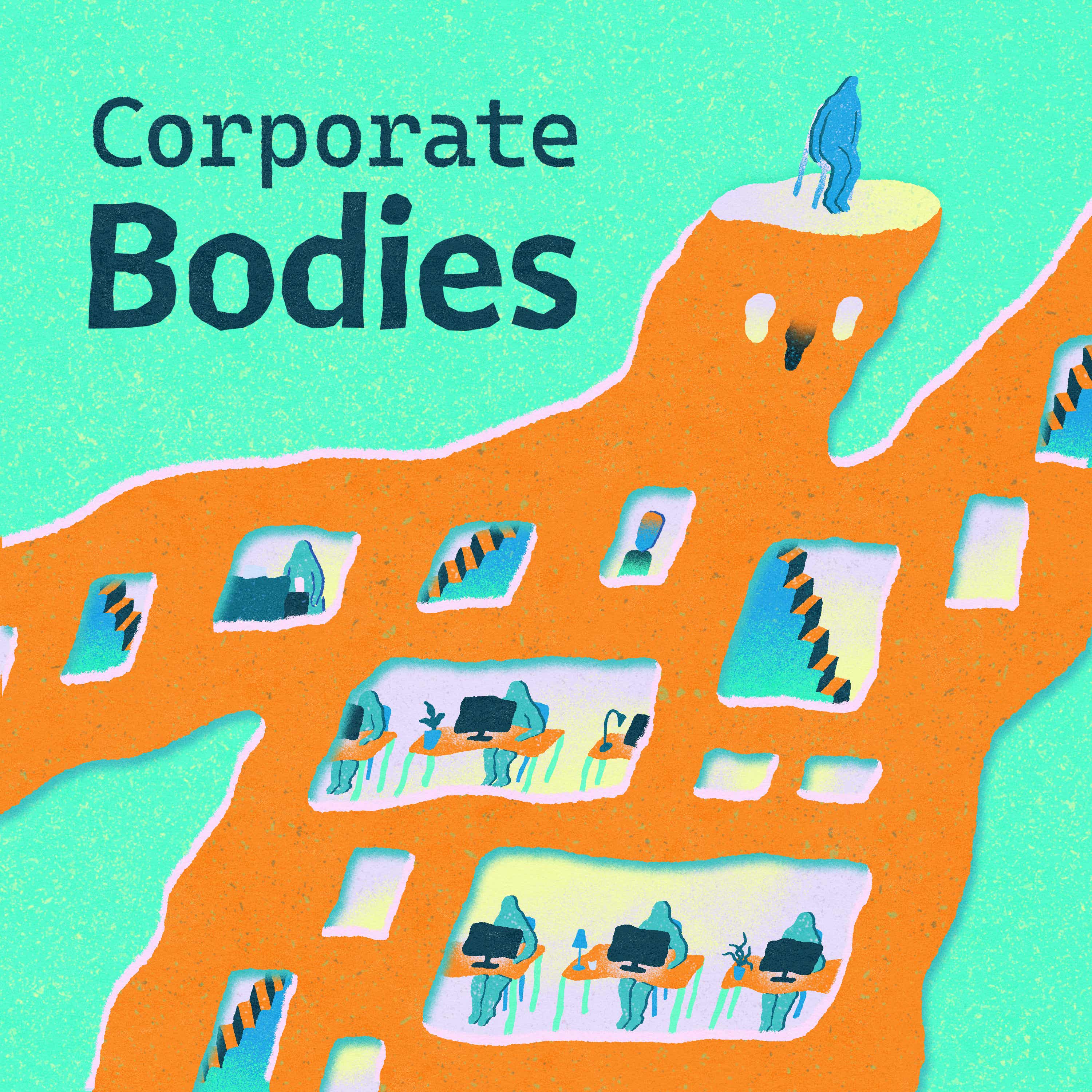
Corporate Bodies asks: why are organisations so weird? And what could we do to make them better?After all, most of us have worked in companies at some point in our lives and know one thing for sure: working life is odd. The dynamics are messy, the hierarchies are often unjust, and when things go wrong, people start acting very strangely indeed.Hosts Kate Swade and Mark Walton – the co-creators of Shared Assets – talk to people with a range of perspectives on organisational weirdness, providing practical examples of how we can make this relationship between people and organisations better.Join us on the journey as we turn and face the strange! corporatebodies.substack.com
-
12
Episode 11: Brainwaves
Join Mark and Kate as they look back over the last ten episodes of Corporate Bodies and talk about what they’ve learned. They particularly talk about how their thinking about legal personhood and the other “original sins” of incorporation has changed. They talk about how organisations might change if we conceptualise them as ecosystems that need tending rather than people that need animating, and other day-to-day practices we might use to change how we approach work.They also consider what the next step for the Corporate Bodies project might be – and are looking for funders, supporters, and fellow travellers as they explore next steps. Should they examine organisational weirdness in bigger organisations? Uncover more links between work and intimate relationships? Maybe think about more structural or legalistic changes to corporate structures? Let them know what you think by emailing [email protected] or dropping a voicenote to www.speakpipe.com/corporatebodiesResources:The article accompanying the episode is here.* You can see all the podcast episodes we refer to here* Find more on the original sins here: incorporation, limited liability, legal personhood and employment contracting* Annette Dhami and her team’s work on Beyond the Rules at Dark Matter Labs – more here, or a great overview here* Esther Perel’s “How’s Work” podcastFollow us: at … or wherever you get your podcasts.Email us: at [email protected]:Kate Swade (she/her), independent organisational development and governance consultantMark Walton (he/him), Founder and Director, Shared AssetsEditor: Katie Revell (she/her)Artwork: Hanna Norberg-Williams (they/them)Music: fête beat by Jean TobaSupporters:The series is supported by the Centre for the Understanding of Sustainable Prosperity (CUSP), which is a cutting edge research organisation based at the University of Surrey. CUSP explores the question: What does prosperity mean in a world of environmental, social, and economic limits? For more details, visit cusp.ac.uk. This is a public episode. If you would like to discuss this with other subscribers or get access to bonus episodes, visit corporatebodies.substack.com
-
11
Episode 10: Composting
What might lie beyond the corporation?In the previous episode (Death, with Louise Armstrong) we explored how the end of an organisation could liberate the people and resources within it to do new things. In this episode, Kate and Mark consider whether we might move beyond the idea of the corporate body entirely, and explore what other ways we might organise collectively.They are joined by Esther Foreman from Social Change Nest to talk about the potential for thinking about organising collectively as more like an ecosystem than a human body. They discuss how such a shift might need us to become more comfortable with mess and death, how we might need different rituals for marking endings and setting boundaries, and how we need to think differently about our own roles as individuals and about the sort of infrastructure a post-corporate world might require.Resources:The article accompanying the episode is here.* Esther’s organisations* Social Change Agency* Social Change Nest* Social Change Hive* Young Trustees Movement* Brent Giving* Mycelial networks resources* The Overstory by Richard Powers – novel* Bioneers: The Universe Beneath Our Feet: Mapping the Mycelial Web of Life – podcast episode* Suzanne Simard – researcher on forest ecology and plant intelligence* Kew Carbon Garden – exhibition* Good Ancestor Movement* Farming the Future* Healthy Food Healthy Planet* KIN* Scaling Land Based Social EnterprisesFollow us: at … or wherever you get your podcasts.Email us: at [email protected]:Kate Swade (she/her), independent organisational development and governance consultantMark Walton (he/him), Founder and Director, Shared AssetsInterviewee:Esther Foreman, Chief Encouragement Officer, The Social Change Nest CICEditor: Katie Revell (she/her)Artwork: Hanna Norberg-Williams (they/them)Music: fête beat by Jean TobaSupporters:The series is supported by the Centre for the Understanding of Sustainable Prosperity (CUSP), which is a cutting edge research organisation based at the University of Surrey. CUSP explores the question: What does prosperity mean in a world of environmental, social, and economic limits? For more details, visit cusp.ac.uk. This is a public episode. If you would like to discuss this with other subscribers or get access to bonus episodes, visit corporatebodies.substack.com
-
10
Episode 9: Death
What does it mean for an organisation to die? It’s relatively straightforward to close a company down and take it off the Companies House register – but emotionally, it’s much more complex. In this episode, Kate and Mark explore their own experiences of being part of organisations that are closing down.They are joined by Louise Armstrong, co-founder of the Decelerator, to explore organisational endings. This conversation covers the signs (beyond money!) that an ending might be on the horizon for an organisation, grappling with trying to do long-term work, the parallels between organisational endings and relationship breakups, and more. Endings are always beginnings – so are there opportunities that we are missing because of the stigma about shame and failure associated with organisational endings?This is a really timely conversation given how much change and volatility there is in the world at the moment – as Louise says, “the work of tending to endings is going to continue for lifetimes”.Resources:Read the article accompanying the episode here.* The Decelerator* Louise’s other work includes Thirty Percy Foundation and more.* Guidance from Companies House on dissolving and liquidating a company* New Constellations - entering into a chrysalis phase* A “just transition” explainerFollow us: at … or wherever you get your podcasts.Email us: at [email protected]:Kate Swade (she/her), independent organisational development and governance consultantMark Walton (he/him), Founder and Director, Shared AssetsInterviewee: Louise Armstrong (she/her), Co-Founder, The DeceleratorEditor: Katie Revell (she/her)Artwork: Hanna Norberg-Williams (they/them)Music: fête beat by Jean TobaSupporters:The series is supported by the Centre for the Understanding of Sustainable Prosperity (CUSP), which is a cutting edge research organisation based at the University of Surrey. CUSP explores the question: What does prosperity mean in a world of environmental, social, and economic limits? For more details, visit cusp.ac.uk. This is a public episode. If you would like to discuss this with other subscribers or get access to bonus episodes, visit corporatebodies.substack.com
-
9
Episode 8: The Soul
There is something ineffable in the life of an organisation that is essential to its definition or character, but is different from its culture, vision, purpose or activities. But what is it, who holds it, and how is it passed on?In this episode, Kate and Mark wrestle with the idea that corporate bodies might have a soul, and explore the idea developed by Peter Koenig and Tom Nixon that they do have a ‘source’: a single person who takes the first risk to realise an idea, and who often has a visceral sense of what’s right and wrong for the initiative.They are joined by Zahra Davidson and Daniel Ford from Huddlecraft, for an extraordinary and intimate conversation about their experience of ‘working with source’. Zahra, who founded Huddlecraft, has now left the organisation. During that succession process she, Huddlecraft’s new co-directors Dan and Anna, and the rest of the Huddlecraft team have worked to identify and pass on the singular role of source. We talk about separating source from our ideas of leadership whilst recognising it as a form of power, and what it means to be the singular holder of source in a context of co-leadership.It felt like a real privilege to be part of this – up to now – quite private conversation. This was also a very personal conversation for Mark as he considers his own succession from Shared Assets, the organisation that he founded and has co-directed for 13 years.Resources:Read the article accompanying the episode here.* Zahra and Dan’s organisation: Huddlecraft* Work With Source - Tom Nixon* Peter Koenig* Deep democracy* Process work* Embracing Complexity with Jean Boulton* School of Systems Change* Sophy Banks / Healthy Human Culture* Strange attractors* Hong Kong Phooey / Henry the mild mannered janitor* Beating the bounds* Eleanor Ostrom* Elinor Ostrom’s 8 rules for managing the commonsFollow us: at … or wherever you get your podcasts.Email us: at [email protected]:Kate Swade (she/her), independent organisational development and governance consultantMark Walton (he/him), Founder and Director, Shared AssetsInterviewee/s:Zahra Davidson (she/her), Non-Exec Director & Associate, and Daniel Ford (he/him), Co-Director, HuddlecraftEditor: Katie Revell (she/her)Artwork: Hanna Norberg-Williams (they/them)Music: fête beat by Jean TobaSupporters:The series is supported by the Centre for the Understanding of Sustainable Prosperity (CUSP), which is a cutting edge research organisation based at the University of Surrey. CUSP explores the question: What does prosperity mean in a world of environmental, social, and economic limits? For more details, visit cusp.ac.uk. This is a public episode. If you would like to discuss this with other subscribers or get access to bonus episodes, visit corporatebodies.substack.com
-
8
Episode 7: The Immune System
Humans have always co-operated with each other. And formal co-operatives have been around almost since the emergence of the modern corporation, creating structures where people can work together for mutual benefit and the benefit of their communities. In this episode, Kate and Mark start by thinking about the history of the co-operative movement and its influence on co-ops today.They are joined by Mark Simmonds from Co-op Culture, and together they explore some of the nuances of co-operation in the UK today, from worker co-ops to community and consumer co-ops. We talk about the different structures and practices that are available to us, and some of the pitfalls and opportunities of working co-operatively, and explore the role of the labour movement and unions in the co-operative world.Resources:Read the article accompanying the episode here.* Mark’s organisation: Co-op Culture* Co-operative principles* History of the co-operative movement (wikipedia)* Co-ops UK* Federation of UK Worker Co-operatives* Heptonstall Community Assets* Fox and Goose pub* Community Shares* Minimum viable product thinking* A quick guide to the different types of co-ops* The Labour Government’s promise to double the size of the co-op sector* Suma Whole Foods* Union Co-ops* Cybernetics and Viable Systems Model* Corporate Bodies Episode 2 on balancing power and responsibilityFollow us: at … or wherever you get your podcasts.Email us: at [email protected]:Kate Swade (she/her), independent organisational development and governance consultantMark Walton (he/him), Founder and Director, Shared AssetsInterviewee: Mark Simmonds (he/him), Co-operative and Community Business Advisor, Co-op CultureEditor: Katie Revell (she/her)Artwork: Hanna Norberg-Williams (they/them)Music: fête beat by Jean TobaSupporters:The series is supported by the Centre for the Understanding of Sustainable Prosperity (CUSP), which is a cutting edge research organisation based at the University of Surrey. CUSP explores the question: What does prosperity mean in a world of environmental, social, and economic limits? For more details, visit cusp.ac.uk. This is a public episode. If you would like to discuss this with other subscribers or get access to bonus episodes, visit corporatebodies.substack.com
-
7
Episode 6: Injuries to the Body
What happens when things go wrong at work? Inevitably in any organisation we have to deal with issues such as redundancy, grievance and poor performance. How do we make sure we have the policies and procedures that are both legally compliant and aligned with our values?In this sixth episode, Kate and Mark get intensely practical with Abbie Kempson from People Support Co-op. Abbie has a wealth of experience helping organisations that want to work collectively in ways that are non-hierarchical, collaborative, anti-oppressive, accountable and caring, to develop robust and legal policies and processes.We explore the practical realities of sharing power and the challenges of balancing organisational, collective and individual needs within the constraints of capitalism.Resources:Read the article accompanying the episode here.People Support Co-opBarefoot Co-op Development ProgrammeUnicorn GroceryCo-operative values and principlesEarth FirstAnarchist principlesThe Statute of Labourers 1351Master and Servant Act 1867Employment Rights Act 1996Equality Act 2010Acas Code of Practice on disciplinary and grievance proceduresNew protections from sexual harassmentJo Freeman’s Tyranny of StructurelessnessSociocracy – basic concepts and principlesNon violent communicationZapatistasKitty’s LaunderetteWorkers.coopRadHR guidesRadHR policy libraryFollow us: at … or wherever you get your podcasts.Email us: at [email protected]:Kate Swade (she/her), independent organisational development and governance consultantMark Walton (he/him), Founder and Director, Shared AssetsInterviewee: Abbie Kempson (she/her), Co-operative Member, People Support Co-opEditor: Katie Revell (she/her)Artwork: Hanna Norberg-Williams (they/them)Music: fête beat by Jean TobaSupporters:The series is supported by the Centre for the Understanding of Sustainable Prosperity (CUSP), which is a cutting edge research organisation based at the University of Surrey. CUSP explores the question: What does prosperity mean in a world of environmental, social, and economic limits? For more details, visit cusp.ac.uk. This is a public episode. If you would like to discuss this with other subscribers or get access to bonus episodes, visit corporatebodies.substack.com
-
6
Episode 5: The Heart
If the organisation is a body made up of real people, then where or who is its heart? What really is the work that needs to be done? How do we bring our whole selves to it? What is the leadership we need to address the challenges we face?Kate and Mark went into this conversation with Farzana Khan from Healing Justice London thinking that we would be talking about the challenges of bringing your whole self to work as a leader.What happened, though, was a really deep and expansive conversation about the real work that needs to be done – and how part of that work is being able to be fully yourself: to be “right sized” and fully human. Farzana shares how her work with Politicised Somatics informs her practice, and how Healing Justice London is a time-travelling organisation. She explains some of her practices, and together we ponder what it means to be able to thrive in the hardness of the work of systems change.Resources:Read the article accompanying the episode here.Articles, organisations and resources referenced during this episode:Healing Justice LondonResourcing Racial JusticeProject TallawaStaci K Haines and Generative SomaticsPoliticised SomaticsPanthea Lee’s writing on the impacts of incorporationGabriela Gomez MontFred MotenLife Affirming Organisational Practice eventThe Islamic concept of AmanaFollow us: at … or wherever you get your podcasts.Email us: at [email protected]:Kate Swade (she/her), independent organisational development and governance consultantMark Walton (he/him), Founder and Director, Shared AssetsInterviewee:Farzana Khan (she/her), Executive Co-Director, Healing Justice LdnEditor: Katie Revell (she/her)Artwork: Hanna Norberg-Williams (they/them)Music: fête beat by Jean TobaSupporters:The series is supported by the Centre for the Understanding of Sustainable Prosperity (CUSP), which is a cutting edge research organisation based at the University of Surrey. CUSP explores the question: What does prosperity mean in a world of environmental, social, and economic limits? For more details, visit cusp.ac.uk. This is a public episode. If you would like to discuss this with other subscribers or get access to bonus episodes, visit corporatebodies.substack.com
-
5
Episode 4: The Spirit
How do we create the culture within an organisation? What does it mean to be able to bring your whole self to work… and who gets to do it?In this fourth episode of Corporate Bodies, Kate and Mark explore organisational culture, the psychological conditions that enable us to show up fully at work, how professionalism is coded in terms of race, sex and gender, and who gets to feel safe in the workspace.They also interview Immy Kaur, Co-Founder and Director at CIVIC SQUARE, who talks about the challenges of creating a socially just organisation, balancing the desire to build a good workplace with the need to deliver the work, and the personal impacts of navigating racialised and gendered perceptions of competence and accountability.Resources:Find more about the origins of the idea of bringing our whole selves to work here.Find out more about the history of employment contracts here.Read the article accompanying the episode here.Articles, organisations and resources referenced during this episode:CIVIC SQUARETedX BrumIndy JoharProject 00Dark Matter LabsAnnette DhamiBeyond the RulesContract-ing Between the Rules: Employment contractsGrace Lee BoggsDr Gabor MatéFarzana KhanStaci HainesShared AssetsWe Can MakePortland Inn ProjectEast Marsh UnitedLand In Our NamesMAIA GroupDark Matter Labs FreeHouseCentre for Indigenous Innovation and TechnologyFollow us: at … or wherever you get your podcasts.Email us: at [email protected]:Kate Swade (she/her), independent organisational development and governance consultantMark Walton (he/him), Founder and Director, Shared AssetsInterviewee: Immy Kaur (she/her), Co-Founder & Director, CIVIC SQUAREEditor: Katie Revell (she/her)Artwork: Hanna Norberg-Williams (they/them)Music: fête beat by Jean TobaSupporters:The series is supported by the Centre for the Understanding of Sustainable Prosperity (CUSP), which is a cutting edge research organisation based at the University of Surrey. CUSP explores the question: What does prosperity mean in a world of environmental, social, and economic limits? For more details, visit cusp.ac.uk. This is a public episode. If you would like to discuss this with other subscribers or get access to bonus episodes, visit corporatebodies.substack.com
-
4
Episode 3: Creating the Body
What happens when you accept an employment contract? What are the unspoken and unexamined things that happen when a new person is recruited into an organisation? In this third episode of Corporate Bodies, Mark and Kate explore the feudal history of employment contracting, and how that plays out in working cultures today.They are joined by Liam Barrington-Bush, a co-founder of RadHR.org, to explore the challenges and dangers of not looking closely enough at how we welcome new people into companies. In a wide ranging conversation, they cover the problems with traditional recruitment processes, the optimum size of organisations, and the “exponential complexity” of bringing new people into a team.They talk about the impact of practices from social movement spaces becoming more mainstream, and it’s important to consider power when thinking about new ways of working. The conversation includes some practical steps organisations can take today as well as some larger and more challenging provocations.Resources:RadHR.org is a wonderful repository of HR policies and includes lots of very useful guides.Read more about the history of employment contracting here, and about the development of thinking about organisations as machines here.Read the article accompanying the episode here.Liam mentions the work of Maslaha and Transforming Together around Radical Safeguarding.Liam wrote a great book called Anarchists in the Boardroom which you can read here.Follow us: at … or wherever you get your podcasts.Email us: at [email protected]:Kate Swade (she/her), independent organisational development and governance consultantMark Walton (he/him), Founder and Director, Shared AssetsInterviewee:Liam Barrington-Bush (he/him), Director, RadHREditor: Katie Revell (she/her)Artwork: Hanna Norberg-Williams (they/them)Music: fête beat by Jean TobaSupporters:The series is supported by the Centre for the Understanding of Sustainable Prosperity (CUSP), which is a cutting edge research organisation based at the University of Surrey. CUSP explores the question: What does prosperity mean in a world of environmental, social, and economic limits? For more details, visit cusp.ac.uk. This is a public episode. If you would like to discuss this with other subscribers or get access to bonus episodes, visit corporatebodies.substack.com
-
3
Episode 2: The Head and Brain
How do decisions get made in an organisation? Who has power and control – and are they the same people who bear the consequences of their decisions? In this second episode of Corporate Bodies, we explore governance and limited liability – a form of legal protection for shareholders and owners of companies that prevents individuals from being held personally responsible for their company's debts or financial losses.Limited liability is something Kate and Mark previously identified as one of the “original sins” that impacts the way we run companies today. Here, they talk about their own experience of how power shifted at Shared Assets in a moment of crisis.They also interview Sarah McAdam, a Co-Steward at the Transformational Governance Collective, who talks about how we can take a much wider view of governance, what healthy power looks like, how we can distribute power more widely in organisations, and whether we should be able to consent to giving and receiving power.Resources:Find more on the original sins here – incorporation, limited liability, legal personhood and employment contracting.Read the article accompanying the episode here.Articles and resources referenced in this episode:#BeyondtheRules — Balanced governance and ‘behaving well’ everywhere, every day: Annette Dhami, Thomas Theodore and Himanshu Rohilla, Dark Matter LabsTransformational Governance CollectiveThe Wheel of ConsentUniversité du NousShared Assets’ draft Leadership ManifestoFollow us: at … or wherever you get your podcasts.Email us: at [email protected]:Kate Swade (she/her), independent organisational development and governance consultantMark Walton (he/him), Founder and Director, Shared AssetsInterviewee:Sarah McAdam (she/her), Co-Steward, Transformational Governance CollectiveEditor: Katie Revell (she/her)Artwork: Hanna Norberg-Williams (they/them)Music: fête beat by Jean TobaSupporters:The series is supported by the Centre for the Understanding of Sustainable Prosperity (CUSP), which is a cutting edge research organisation based at the University of Surrey. CUSP explores the question: What does prosperity mean in a world of environmental, social, and economic limits? For more details, visit cusp.ac.uk. This is a public episode. If you would like to discuss this with other subscribers or get access to bonus episodes, visit corporatebodies.substack.com
-
2
Episode 1: Birth
What does it mean to set up an organisation? In this first episode of Corporate Bodies, we explore incorporation – the creation of the corporate body – and we hear from Mark Walton and Kate Swade about who they are, and why they are embarking on this inquiry together.Kate and Mark both started this investigation with the assumption that the company – as a legal vehicle for collective action – is a useful tool for getting things done, and that there are some unexamined things, deep in its DNA, which contribute to some of the weirdnesses that play out in working life today. They also both have a pragmatic interest in creating nice and healthy places to work!In this episode, they talk about what they see as some of the original sins of companies, and why they think delving into history is important for creating healthy working cultures today.Across this series, they speak to ten brilliant people. In this episode, you’ll hear from each of them about their experiences and perspectives on setting up new ventures.Resources:Find more on the original sins here – incorporation, limited liability, legal personhood and employment contracting.Read the article accompanying the episode here.Some of the interviewees mention particular work:Immy mentions Dark Matter Labs and their work on employment contracts, and Open Systems Lab’s work on a new land contract.Farzana mentions Platform London, the organisation that hosted Healing Justice London. She also mentions Panthea Lee’s work on the importance of “minding the boring details” when setting things up (and much more!).Sarah talks about an amazing experience with the team at Université du Nous.Follow us: at… or wherever you get your podcasts.Email us: at [email protected]:Kate Swade (she/her), independent organisational development and governance consultantMark Walton (he/him), Founder and Director, Shared AssetsInterviewees (in order of appearance):Mark Simmonds (he/him), Co-operative and Community Business Advisor, Co-op CultureAbbie Kempson (she/her), Co-operative Member, People Support Co-opLouise Armstrong (she/her), Co-Founder, The DeceleratorEsther Foreman (she/her), CEO, The Social Change NestZahra Davidson (she/her), Non-Exec Director & Associate, HuddlecraftLiam Barrington-Bush (he/him), Co-Director, RadHRImmy Kaur (she/her), Co-Founder & Director, CIVIC SQUAREFarzana Khan (she/her), Executive Co-Director, Healing Justice LdnSarah McAdam (she/her), Co-Steward, Transformational Governance CollectiveEditor: Katie Revell (she/her)Artwork: Hanna Norberg-Williams (they/them)Music: fête beat by Jean TobaSupporters:The series is supported by the Centre for the Understanding of Sustainable Prosperity (CUSP), which is a cutting edge research organisation based at the University of Surrey. CUSP explores the question: What does prosperity mean in a world of environmental, social, and economic limits? For more details, visit cusp.ac.uk. This is a public episode. If you would like to discuss this with other subscribers or get access to bonus episodes, visit corporatebodies.substack.com
-
1
Corporate Bodies podcast: coming soon!
Most of us have worked in companies at some point in our lives, and know one thing for sure: working life is odd. The dynamics are messy, the hierarchies are often unjust and, when things go wrong, people start acting very strangely indeed.Corporate Bodies is a podcast series asking: why are organisations so weird? And what can we do to make them better?Across 11 episodes, organisational development practitioners Kate Swade and Mark Walton set out to explore how one core concept – that companies are legal people – impacts on the whole lifecycle of an organisation, and on everyone who works for it.In each episode, Kate and Mark explore a different aspect of organisational development with the help of a range of contributors, each with their own unique lived experience of organisational weirdness.Follow us: https://corporatebodies.substack.comEmail us: [email protected] us a voicenote: https://www.speakpipe.com/CorporateBodiesPresenters:Kate Swade (she/her), independent organisational development and governance consultantMark Walton (he/him), Founder and Director, Shared AssetsContributors:Liam Barrington-Bush (he/him), Director, RadHRImmy Kaur (she/her), Co-Founder & Director, CIVIC SQUAREDaniel Ford (he/him), Co-Director, HuddlecraftFarzana Khan (she/her), Executive Co-Director, Healing Justice LdnAbbie Kempson (she/her), Co-operative Member, People Support CoopEsther Foreman (she/her), CEO, The Social Change NestSarah McAdam (she/her), Co-Steward, Transformational Governance CollectiveEditor: Katie Revell (she/her)Artwork: Hanna Norberg-Williams (they/them) This is a public episode. If you would like to discuss this with other subscribers or get access to bonus episodes, visit corporatebodies.substack.com
We're indexing this podcast's transcripts for the first time — this can take a minute or two. We'll show results as soon as they're ready.
No matches for "" in this podcast's transcripts.
No topics indexed yet for this podcast.
Loading reviews...
ABOUT THIS SHOW
Corporate Bodies asks: why are organisations so weird? And what could we do to make them better?After all, most of us have worked in companies at some point in our lives and know one thing for sure: working life is odd. The dynamics are messy, the hierarchies are often unjust, and when things go wrong, people start acting very strangely indeed.Hosts Kate Swade and Mark Walton – the co-creators of Shared Assets – talk to people with a range of perspectives on organisational weirdness, providing practical examples of how we can make this relationship between people and organisations better.Join us on the journey as we turn and face the strange! corporatebodies.substack.com
HOSTED BY
Kate Swade and Mark Walton
Loading similar podcasts...
Frequently Asked Questions
How many episodes does Corporate Bodies have?
Corporate Bodies currently has 12 episodes available on PodParley. New episodes are automatically indexed when they're published to the podcast feed.
What is Corporate Bodies about?
Corporate Bodies asks: why are organisations so weird? And what could we do to make them better?After all, most of us have worked in companies at some point in our lives and know one thing for sure: working life is odd. The dynamics are messy, the hierarchies are often unjust, and when things go...
How often does Corporate Bodies release new episodes?
Corporate Bodies has 12 episodes. Check the episode list to see recent publication dates and frequency.
Where can I listen to Corporate Bodies?
You can listen to Corporate Bodies on PodParley by clicking any episode. We provide an embedded audio player for direct listening, and you can also subscribe via your preferred podcast app using the RSS feed.
Who hosts Corporate Bodies?
Corporate Bodies is created and hosted by Kate Swade and Mark Walton.
URL copied to clipboard!