
PODCAST · technology
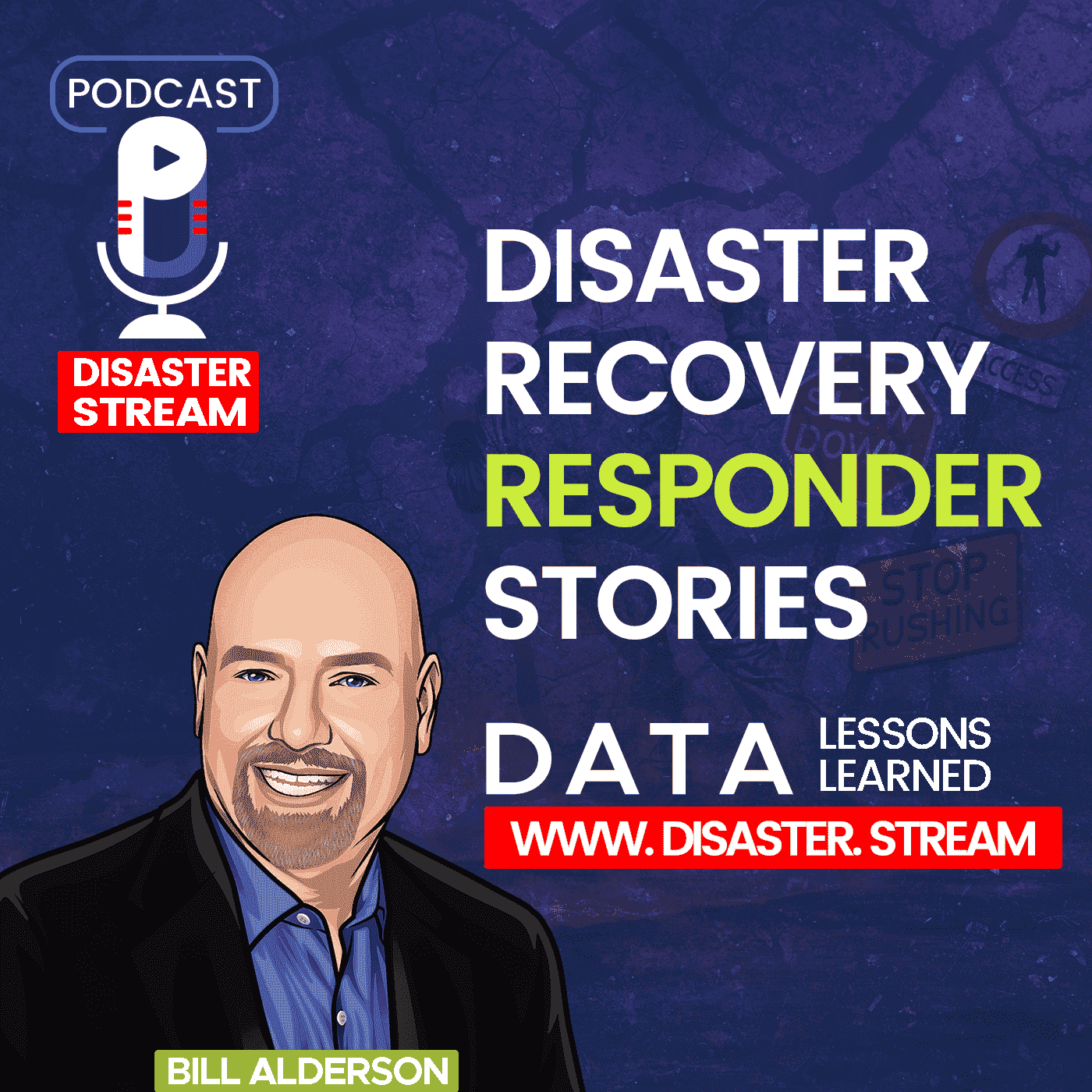
Disaster.Stream
by Bill Alderson
Disaster Stream is a podcast series that delves into the world of disaster recovery, cybersecurity incidents, and critical problem resolution in major organizations. Hosted by Bill Alderson, the podcast features expert insights, case studies, and interviews with leaders and pioneers in the technology and cybersecurity fields. Each episode shares lessons learned and best practices for crisis management, aiming to help organizations prepare for and respond to disasters effectively. Available in both audio and video formats, Disaster Stream is your go-to resource for understanding and navigating the complexities of disaster recovery and cybersecurity
-
5
When ATMs Fail: Banking Outages, Black Swans & Digital Risk
In this episode of the Disaster.Stream Podcast, host Bill Alderson sits down with Bill Genovese, CIO Executive Advisor at Kyndryl, to explore one of the most high-stakes failures in modern banking: a nationwide ATM outage during a holiday weekend.Drawing from decades of global experience with IBM, Kyndryl, and Big Four consulting, Genovese shares how banking systems can unravel in moments — and why recovery often requires more than just technology. Together, they examine how black swan events (rare, catastrophic failures) and gray swan events (compounding, foreseeable risks) threaten not just banks but entire national economies.🔑 What you’ll learn in this episode:The true impact of a bank losing all ATMs before a holidayBlack swan vs. gray swan risks — and why multiple gray swans can be worseLessons from IBM’s global SWAT teams on crisis response and remediationHow banking regulations, international oversight, and resilience standards shape recovery strategiesWhy digital transformation and multi-cloud dependencies increase complexityPractical lessons financial institutions can adopt to build resilience👥 Featured voices:Bill Genovese (Kyndryl) — global expert on financial services architecture, resiliency, and risk advisoryNick Leghorn (New York Times) — application security leader, on how to write cybersecurity policies people will actually followISSA (Information Systems Security Association) — professional community strengthening global cybersecurity practices💡 Key Takeaway:There is no cookie-cutter solution for disaster recovery. Each bank and enterprise has a unique “technology fingerprint” that requires holistic analysis across people, process, and technology. True resilience means planning for the compounding risks of our interconnected world.
-
4
US Military Biometric Systems: Digital War Lessons from Iraq
In this episode of the Disaster.Stream Podcast, host Bill Alderson takes you inside one of the most critical — and least understood — battles of the Iraq and Afghanistan wars: the fight to keep U.S. military biometric intelligence systems running in the middle of the digital war.Bill recounts how he was called by Army G2 at the Pentagon and deployed with U.S. CENTCOM to Iraq when a biometric watchlist system—used to identify insurgents through fingerprints, iris scans, and facial recognition—failed at a crucial moment. With millions of records in play and soldiers depending on accurate intelligence at checkpoints and bases, the failure threatened operational readiness.🔑 What you’ll learn in this episode:How biometric systems were used to enroll entire populations in Fallujah and beyondThe technical challenges of scaling biometric databases during wartimeWhy replication delays and network bottlenecks nearly crippled the system mid-warHow battlefield packet analysis and root cause troubleshooting restored operationsLessons learned that still apply today in cybersecurity, disaster recovery, and digital identity management👥 Special segments also feature:Charlene Deaver-Vasquez (FISMACS) on mathematical models for forecasting cyberattacksJon DiMaggio, author of The Art of Cyber Warfare, with insights into nation-state cyber threatsFrom the Pentagon and CENTCOM to forward-deployed teams in Iraq and Afghanistan, Bill shares firsthand experiences of solving mission-critical failures when lives were on the line. These stories carry timeless lessons on incident response, readiness, and building resilient systems.
-
3
Radia Perlman: Spanning Tree, Networking Lessons & SharkFest Keynote
In this special interview, I sit down with Radia Perlman — the visionary computer scientist and inventor of the Spanning Tree Protocol (STP), often called the “Mother of the Internet.” Her groundbreaking work made modern Ethernet and switching possible, shaping the way every network operates today.Radia shares her journey as a pioneer in networking, her reflections on how STP became a global standard, and her thoughts on why Layer 2 forwarding was always a compromise — and what the industry still gets wrong about it. We also look ahead at quantum-safe cryptography, CLNP vs. IP, and the future of protocols like QUIC.🔑 What you’ll learn in this episode:How Radia invented Spanning Tree and why it was meant to be “just a temporary fix”Why network loops and misconfigurations are still a common cause of outagesThe missed opportunity of CLNP and what it could have meant for the InternetThe realities (and misconceptions) around quantum computing and cryptographyRadia’s candid thoughts on hype cycles like blockchainA preview of her keynote at SharkFest — bringing theory and practice together👩💻 Beyond the protocols, Radia also reflects on her role as a trailblazer for women in technology, offering encouragement to the next generation of engineers and innovators.Whether you’re a network engineer, a cybersecurity leader, or simply curious about the hidden foundations of the Internet, this conversation with Radia Perlman is packed with insights, lessons, and history you won’t find anywhere else.👉 Follow the show for more conversations with the leaders shaping networking, cybersecurity, and disaster recovery worldwide.
-
2
Pentagon 9/11 Recovery: Lessons in Crisis Response & Readiness
On September 11, 2001, the Pentagon was left crippled by fire, water damage, and destroyed infrastructure after the terrorist attack. Days later, armed guards escorted my team and me into the still-smoldering building to restore critical communications for the U.S. Department of Defense.In this episode, I share that story firsthand — what it was like to step into the epicenter of national crisis and lead a forensic recovery team tasked with bringing the Pentagon back online.You’ll learn:🔎 What really happened inside the Pentagon’s network after 9/11⚡ The triage process for restoring thousands of servers and critical links under extreme pressure🧠 Why readiness beats reaction — and why lessons learned matter more than blame🏛️ Leadership under fire, featuring insights from Col. David Wills (U.S. CENTCOM & Joint Chiefs of Staff)📑 Best practices for disaster response, from documenting your infrastructure to building resilient “tiger teams”💡 How today’s organizations can apply these lessons to avoid catastrophic downtime — from data centers to Wall Street trading floorsThis is more than a war story — it’s a framework for crisis management, cybersecurity resilience, and business continuity. Whether you’re a technologist, executive, or leader of any kind, the lessons from 9/11 remain vital today.👉 Key takeaway: It’s always more fun to be ready. Preparation, documentation, and collaboration can turn disaster into an opportunity for growth.
-
1
Cyber Crises & Lessons Learned DDOS US Stock Markets
Disaster.Stream takes you inside the world of high-stakes cyber incidents and recovery operations, where seconds matter and lessons shape the future. Hosted by veteran network forensics expert Bill Alderson, this show unpacks the anatomy of disasters—from stock market outages to military communications failures—revealing what really happened, how teams responded, and what leaders must learn.Through vivid case studies, expert interviews, and frontline war stories, Disaster.Stream highlights:Cyber & IT disasters — from DDoS attacks to zero-day exploits.Human factors — ego, culture, and fear that complicate recovery.Proven best practices — building resilient organizations that bounce back faster.Voices of experience — McKinsey, NetScout, ExtraHop, Cloud Range, and pioneers like Vint Cerf, father of the Internet.More than technology, this podcast is about people under pressure, lessons hard-won, and the leadership required to turn disaster into opportunity.Whether you’re in IT, security, leadership, or just curious how systems survive when the unthinkable happens, join us to learn how organizations respond, recover, and evolve.👉 Got a story? Email [email protected] and share your team’s recovery win.
We're indexing this podcast's transcripts for the first time — this can take a minute or two. We'll show results as soon as they're ready.
No matches for "" in this podcast's transcripts.
No topics indexed yet for this podcast.
Loading reviews...
ABOUT THIS SHOW
Disaster Stream is a podcast series that delves into the world of disaster recovery, cybersecurity incidents, and critical problem resolution in major organizations. Hosted by Bill Alderson, the podcast features expert insights, case studies, and interviews with leaders and pioneers in the technology and cybersecurity fields. Each episode shares lessons learned and best practices for crisis management, aiming to help organizations prepare for and respond to disasters effectively. Available in both audio and video formats, Disaster Stream is your go-to resource for understanding and navigating the complexities of disaster recovery and cybersecurity
HOSTED BY
Bill Alderson
CATEGORIES
Loading similar podcasts...
URL copied to clipboard!