
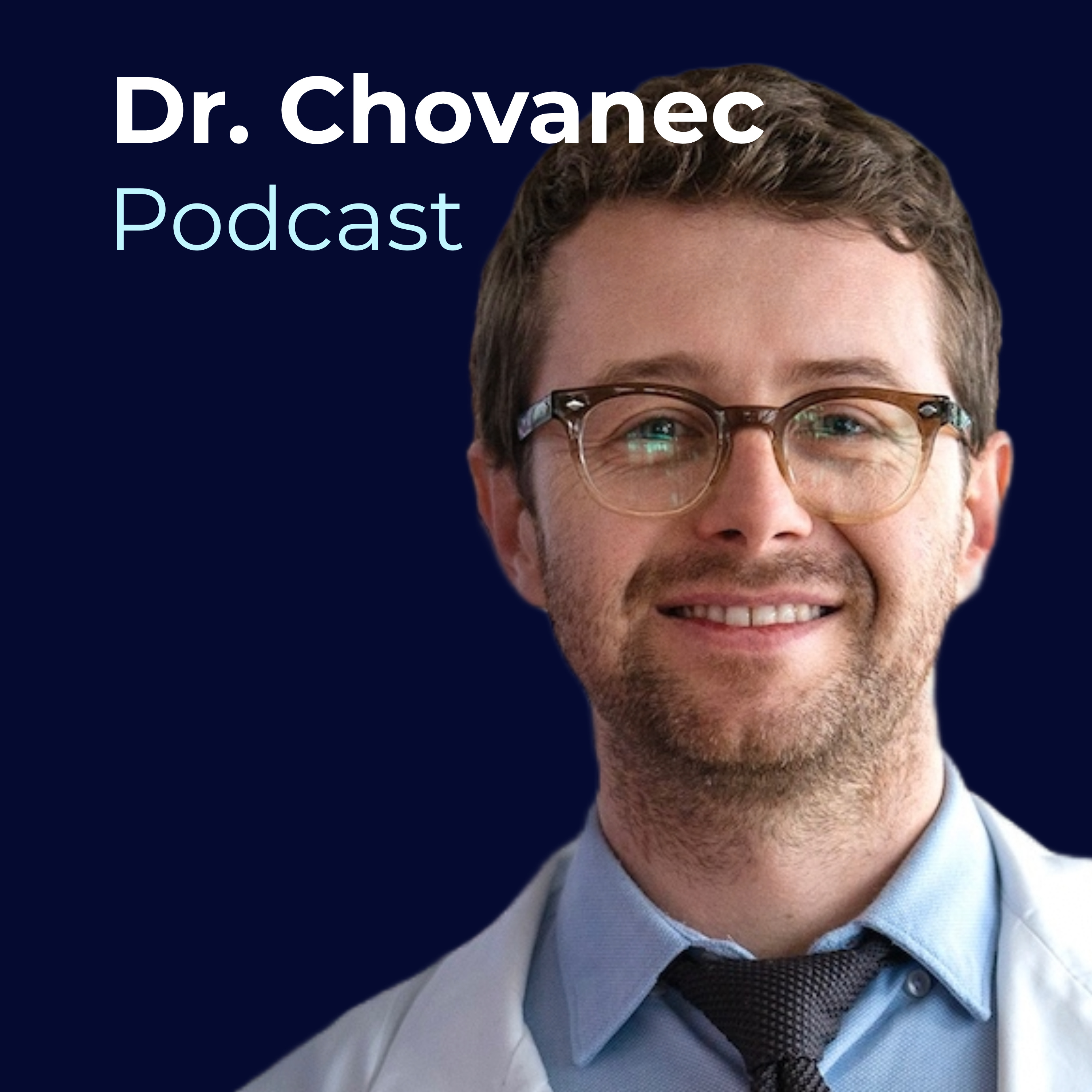
PODCAST · health
Dr. Chovanec podcast
by Dr. Michal Chovanec
Clear, evidence-based answers on cancer, men’s health, and survivorship.Hosted by Dr. Michal Chovanec, Associate Professor of Oncology (National Cancer Institute). Trained at Indiana University under Dr. Lawrence Einhorn, Dr. Chovanec translates complex science into simple answers for patients and survivors.Topics:Everyday Cancer Questions (Safety, Prevention, Diet)Men’s HealthMyth-Busting & SurvivorshipDisclaimer: Content is for educational purposes only and does not constitute medical advice. Please consult your physician.
-
22
94% Accurate Prostate Test? Here’s What It Really Means
There’s a new blood test being called 94% accurate for prostate cancer.It sounds like a breakthrough.But before you trust that number, you need to understand what it actually means.Because right now, many men are still being sent for biopsy based on a test — PSA — that was never designed to diagnose prostate cancer.And that’s where things start going wrong.In this video, I explain:Why PSA is often misleadingWhy many biopsies are unnecessaryWhat this new test (PSE) actually measuresWhat “94% accuracy” really means in real clinical practiceAnd how modern prostate diagnostics are shifting toward better decision-makingThe goal is not to avoid testing.The goal is to make better decisions before committing to invasive procedures.👉 Free Biopsy Checklist (1 page): Don’t go to your appointment empty-handed. Download and print: “Before Prostate Biopsy: 5 Essential Questions to Ask Your Urologist.”https://drchovanec.kit.com/30968ddb5c📘 Optional Paid PSA Guide (14 pages): If you want everything organised in one place, my 14-page PSA Guide includes the full step-by-step sequence, how to interpret common PSA/biomarker results, MRI basics, and a printable decision tree. All info is covered for free in the videos — this is the printable toolkit.https://chovano.gumroad.com/l/luikhi▶️ Subscribe to my youtube channel: https://youtube.com/@DrChovanec?si=A_pIsuLTnA408nAaResources "health in hands": https://zdravievhrsti.sk/en/ 🎥 Watch next:When do you actually need a prostate biopsy?→ https://youtu.be/KNTT5oWqxQQThis podcast is for educational purposes only and does not replace medical advice. Always discuss decisions with your treating physician.
-
21
Metastatic Prostate Cancer: What It Really Means (Not What You Think)
For many men, those words immediately mean one thing:👉 “This is the end.”But that assumption is often wrong.In this video, I explain what metastatic prostate cancer actually means — what is happening inside the body, why it spreads (especially to bone), and how modern treatment has changed what this diagnosis looks like today.We’ll break down:What metastasis really is (and what it is NOT)Why prostate cancer spreads to boneWhat happens to your body when it doesWhy treatment shifts from cure → controlAnd what this means for real life and long-term outcomesThis is not about false reassurance.It’s about understanding the biology — and making sense of a diagnosis that is often misunderstood.👉 Free Biopsy Checklist (1 page)Don’t go to your appointment empty-handed. Download and print:“Before Prostate Biopsy: 5 Essential Questions to Ask Your Urologist.”https://drchovanec.kit.com/30968ddb5c📘 Optional PSA Guide (14 pages)If you want everything organised in one place, this guide walks through how clinicians think about PSA, biomarkers, MRI, and biopsy decisions.All essential information is covered for free in the videos — this is the printable toolkit.https://chovano.gumroad.com/l/luikhiResources:Health in Hands → https://zdravievhrsti.sk/en/If this helped you understand the situation more clearly, consider subscribing.This channel is about helping you navigate cancer decisions with clarity — not fear.#prostatecancer #metastaticcancer #oncology #cancerexplained #menshealth
-
20
Enlarged Prostate or Cancer? The 3 Signs You Can't Ignore
Spotify Episode DescriptionIf you are waking up at night to urinate, dealing with a weak stream, or feeling like your bladder never completely empties, you might be asking yourself the question every man dreads: "Is this prostate cancer?"In this episode, Dr. Chovanec breaks down the crucial differences between Benign Prostatic Hyperplasia (BPH) and prostate cancer. We separate the facts from the fear, explaining why the location of a prostate issue determines your symptoms, and why early prostate cancer is usually completely silent.In this episode, we cover:The Anatomy Reality: Why BPH causes early urinary symptoms, while prostate cancer often does not.The "Zip Code" Rule: The difference between the transition zone and the peripheral zone of your prostate.The Retention Risk: Why a sudden inability to pass urine is a massive red flag.The 3 Actual Clinical Signals: What visible blood in the urine, PSA density, and recurrent UTIs really mean for your health.Next Steps: Why a multiparametric MRI is often a better move than an immediate systematic biopsy.👇 Resources & Guides Mentioned in this Episode:👉 Free Biopsy Checklist (1 page): Don’t go to your appointment empty-handed. Download and print: “Before Prostate Biopsy: 5 Essential Questions to Ask Your Urologist.” https://drchovanec.kit.com/30968ddb5c📘 Optional Paid PSA Guide (14 pages): If you want everything organised in one place, my 14-page PSA Guideincludes the full step-by-step sequence, how to interpret common PSA/biomarker results, MRI basics, and a printable decision tree. All info is covered for free in the videos/podcast — this is the printable toolkit.https://chovano.gumroad.com/l/luikhi🌐 Resources "health in hands": https://zdravievhrsti.sk/en/Disclaimer: The information provided in this podcast by Dr. Chovanec is for educational and informational purposes only and does not constitute medical advice. Listening to this content does not establish a doctor-patient relationship. Always seek the advice of your physician, urologist, or other qualified healthcare provider with any questions you may have regarding a medical condition, diagnosis, or treatment plan. #drchovanec
-
19
Sometimes the Best Prostate Cancer Treatment Is No Treatment
Hearing the words "you have cancer" triggers an immediate instinct: cut it out or radiate it. But what if the smartest, safest medical decision you can make is to do absolutely nothing?In this episode, Dr. Chovanec breaks down the paradox of prostate cancer. Because many prostate tumors grow incredibly slowly, rushing into aggressive treatments like surgery or radiation can permanently damage your urinary control and sexual function without actually improving your survival rate.We dive deep into Active Surveillance—the rigorous, evidence-based medical protocol where we carefully monitor the cancer instead of immediately attacking it.In this episode, we cover: • Why doing "nothing" is actually a highly structured medical strategy. • What the long-term clinical data shows (and why 50% of men on this protocol never need treatment). • The exact criteria that make you a good candidate for surveillance. • The critical difference between Active Surveillance and Watchful Waiting. • How to manage the intense psychological challenge of "scan-xiety."👇 RESOURCES TO NAVIGATE YOUR DIAGNOSIS 👇✅ FREE Urology Visit Checklist Download the exact questions you need to ask your doctor before making any treatment decisions: https://drchovanec.kit.com/30968ddb5c📘 The Complete PSA & Biopsy Guide (Printable) A step-by-step guide to help you deeply understand your PSA results, your pathology report, and your biopsy decisions so you can take back control of your health: https://chovano.gumroad.com/l/luikhiConnect with Dr. Chovanec: YouTube: [Insert YouTube Link] Website: https://youtube.com/@drchovanec?si=ge7yleqMunoTbMSiDisclaimer: This podcast is for educational purposes only and does not constitute individual medical advice. Always consult with your multidisciplinary oncology team regarding your specific diagnosis and treatment plan.
-
18
How to Choose the Right Prostate Cancer Treatment: Surgery, Radiation, or Waiting?
A prostate cancer diagnosis often leads to a single, urgent thought: "Get it out of me." However, rushing this decision can be dangerous, as the treatment you choose today will shape your urinary control, sexual function, and daily life for decades to come.In this episode, we break down how doctors categorize risk—low, intermediate, or high—using PSA levels, Gleason scores, and MRI findings. We explore the three main pillars of prostate cancer management:Active Surveillance: Why monitoring the cancer carefully through regular tests is often the preferred strategy for low-risk cases.Surgery (Radical Prostatectomy): The advantages of physical removal via robotic systems and what to expect regarding recovery and nerve-sparing techniques.Radiation Therapy: Comparing external beam radiation and brachytherapy to surgical options, including the role of hormone therapy.Whether you are newly diagnosed or supporting a loved one, this guide is designed to help you move from fear to a place of informed, deliberate decision-making. There is no universal "best" treatment—only the one that aligns with your life and goals.Free Checklist before biopsy: A printable guide to help you navigate your urology or biopsy discussion. https://drchovanec.kit.com/30968ddb5cComprehensive PSA & Biopsy Guide: An organized, printable resource to help you understand your results.https://chovano.gumroad.com/l/luikhiDisclaimer:The information provided in this episode is for educational and informational purposes only and does not constitute medical advice, diagnosis, or treatment. Always seek the advice of your physician or other qualified health provider with any questions you may have regarding a medical condition. Never disregard professional medical advice or delay in seeking it because of something you have heard in this podcast.
-
17
Prostate Surgery: What They Don’t Tell You About Side Effects
The fear of prostate cancer isn't just about survival—it’s about the life that comes after. Will I have an erection again? Will I leak urine? These are the questions that keep men awake at night, yet the answers in the doctor's office are often rushed or incomplete.In this episode, Dr. Chovanec, associate professor of oncology, breaks down the medical evidence behind post-surgical recovery. We dive deep into the reality of "nerve-sparing" surgery, why recovery can take up to 24 months, and the specific strategies—like penile rehabilitation and pelvic floor physiotherapy—that can change your outcome.The Nerve Truth: Why 70-80% of men may still require assistance for erections even after "perfect" surgery.Neuropraxia: Understanding the "temporary shutdown" of nerves and the timeline for recovery.Continence Realities: Why 80-90% of men regain control, and how to ensure you are in that majority.Active Recovery: Why you shouldn't be passive—the role of Tadalafil, Sildenafil, and Kegel exercises.Decision Making: How to balance cancer risk with your quality-of-life priorities.[FREE] Pre-Biopsy Checklist: Take this to your urologist to ensure no question goes unasked. https://drchovanec.kit.com/30968ddb5c[GUIDE] The PSA & Biopsy Organizer: A structured, printable guide to help you navigate your results and decisions. https://chovano.gumroad.com/l/luikhiConnect with the community: Share your story in the comments or on social media. Your experience might be the lifeline another man needs today.#drchovanec #prostatecancer #menshealth #oncology #survivorship #shortsDisclaimer: This content is for educational purposes only and does not constitute medical advice. Please consult your physician regarding your specific health situation.What you will learn:Resources for Your Journey:
-
16
Option 1: PSA Rising? An Oncologist's 4-Step Playbook to Avoid Unnecessary Biopsies
Episode DescriptionIf you logged into your patient portal tomorrow and saw your PSA rising, what would be your next move? Most men—and many doctors—panic and rush straight into a blind biopsy. As an oncologist, I see this mistake every day. In this episode, I’m taking off the white coat to share my personal playbook. If my own PSA spiked tomorrow, here is the exact 4-step sequence I would follow to protect my health, demand the right context, and avoid unnecessary procedures.In this episode, we cover:Step 1: Confirm – Why you must wait 2-6 weeks to rule out "noise" (like recent workouts, ejaculation, or lab errors).Step 2: Context – How prostate size changes the game and why you need to know your "PSA Density."Step 3: The Map – Why a multiparametric MRI (and understanding your PI-RADS score) is an absolute deal-breaker before any needle touches the prostate.Step 4: The Target – The crucial difference between throwing darts blindfolded and getting an MRI-guided fusion biopsy.The PREVENT Trial – Why you should ask your doctor about a transperineal biopsy instead of a transrectal one to reduce the risk of severe infection.You deserve the exact same standard of care that a doctor would demand for himself. Do not let fear choose your next step.Resources Mentioned in this Episode:📥 Download my optional payed 14-Page PSA Guide: chovano.gumroad.com/l/luikhi
-
15
Prostate Biopsy Trap: What Most Men Aren’t Told
Episode DescriptionMost men are never told the full truth about prostate cancer screening.When a single PSA test comes back high, the medical "conveyor belt" often kicks into high gear, moving you straight toward a biopsy without a second thought. This is what I call the Biopsy Trap.In this episode, I explain why a reflex biopsy can lead to "battleship medicine"—a blind sampling approach that can miss aggressive cancer or, worse, find low-risk "turtle" cancers that trigger unnecessary panic and life-altering overtreatment.What you’ll learn in this episode:Why you should never agree to a biopsy based on just one PSA result.The "Escape Routes": How MRI, biomarkers, and risk calculators provide a modern sequence for smart decision-making.The 2 specific questions you must ask your urologist to pause the conveyor belt.How to differentiate between a "clinically significant" cancer and one that can be safely watched.I’ve organized the exact testing sequences and modern tools which are discussed free in my videos and podcasts into an optional payed 14-page PSA Guide. It includes:The Blueprint: A step-by-step breakdown of how to read your lab results.The Context Framework: How clinicians use prostate size, your PSA trend, and MRI to reveal what a single number cannot.The Decision Matrix: Understanding when a biopsy is truly the right move.Download the Guide Here: chovano.gumroad.com/l/luikhiDisclaimer: I am a medical oncologist, but I am not your doctor. This episode is for educational purposes only and is not a substitute for professional medical advice, diagnosis, or treatment. Always seek the advice of your physician.#drchovanec #zdravievhrsti #prostatecancer #highPSA #menshealthFree PSA & Biopsy Guide
-
14
When a “Normal” PSA Isn’t Safe: What Every Man Should Know
You’ve been told your PSA is “normal” because it’s under 4.0.But what if that number doesn’t tell the full story?For decades, men were reassured that anything below 4.0 ng/mL was safe. Today, we know that prostate cancer risk is far more nuanced. PSA must be interpreted in context — including age, prostate volume, PSA density, and changes over time.In this episode, I explain:• Why the 4.0 cutoff is outdated• What PSA density actually means• When a rising PSA matters — even if it’s “normal”• Who should consider MRI before biopsy• How to avoid the common PSA interpretation trapsIf you want to understand your PSA results clearly before your next doctor’s visit, this episode will help you connect the dots.This podcast is for educational purposes only and does not replace individual medical advice.
-
13
5 Signs of Colon Cancer You Should Never Ignore
Many people notice symptoms like blood in the stool or changes in bowel habits and assume it’s “just hemorrhoids” or something benign. Most of the time, that assumption is correct — but sometimes, it’s exactly how colon cancer gets missed.In this episode, I walk through the most common warning signs of colon cancer that people tend to ignore, explain why early colon cancer is often silent, and clarify when symptoms should not be explained away.We discuss:• How hemorrhoids and colon cancer bleeding can look similar• Why right-sided colon cancers may cause anemia without visible blood• Which changes in bowel habits actually matter• When fatigue and unintentional weight loss are warning signs• The difference between FIT stool testing and colonoscopy• When a negative stool test is not enoughColon cancer is one of the few cancers that can often be prevented — but only if it’s recognized early and investigated properly.This podcast is for educational purposes only and does not replace care from your own doctor. If you have symptoms, please talk to a healthcare professional.I’m Dr. Chovanec. Thanks for listening.
-
12
Why I Don’t Recommend Most Prostate Supplements
Prostate supplements are a multi-billion dollar industry — and many men take them hoping to protect their prostate or lower their cancer risk.In this episode, I explain what the evidence actually shows. We talk about vitamin E, saw palmetto, vitamin D, lycopene, green tea extracts, and why “natural” doesn’t always mean safe or helpful.I also discuss an important lab-testing issue that can mislead PSA results, and why understanding your PSA matters more than adding another supplement.This episode is about separating reassurance from evidence — and helping men make informed decisions about their prostate health.
-
11
The Prostate Cancer Diet: 3 Foods to Avoid & 3 to Eat (Science-Based)
You can’t control your age.You can’t control your genetics.But you can control what you eat — every single day.In this episode, Dr. Chovanec, a medical oncologist, explains the practical nutrition strategy he discusses with patients concerned about prostate cancer risk and rising PSA levels.This is not about fad diets or selling supplements.It’s about the chemistry of food — and how what you eat can create an environment where cancer cells either thrive or struggle to survive.Foods to LIMIT (the risk side):• Why heavily charred meat isn’t just flavor — it’s chemistry• How high dairy intake relates to IGF-1 and aggressive disease• Why liquid sugar fuels inflammation and growth signalsFoods to PRIORITIZE (the protection side):• How cruciferous vegetables support DNA repair• Why green tea can shift your metabolic environment• The tomato “trap” — and the one preparation method that actually matters“Food will never replace medical care, but it does shape the environment of your body. You can start small — just swap one food this week.” — Dr. Chovanec🎥 Watch the video version on YouTube: https://youtu.be/vMnlGW7oOdw🔔 Subscribe for science-based prostate health updates.Disclaimer: This podcast is for educational purposes only and does not replace medical advice. Always discuss dietary changes with your healthcare provider.What you’ll learn in this episode:
-
10
The Dark Side of PSA Testing (An Oncologist Explains)
We are told the PSA test is a simple lifesaver. But for 12 out of 13 men, it can lead to a "trap" of unnecessary biopsies, anxiety, and permanent side effects.In this episode, Dr. Michal Chovanec reveals the hidden risks of prostate cancer screening that most doctors don't have time to explain. You will learn why a "high number" doesn't always mean cancer, and the exact protocol to follow to protect yourself from overtreatment.Topics covered:The Trade-Off: Why saving 1 life often means harming 12 others.The "48-Hour Rule": How cycling or even sex can give you a false cancer scare.The New Standard: Why you should demand an MRI before a biopsy.Reading the Results: Understanding PSA Velocity (Speed) and Density.⚠️ Disclaimer: This episode is for educational purposes only and does not constitute medical advice. Always consult with your physician.Did this episode help you? Please rate the show ⭐⭐⭐⭐⭐ to help us reach more men with evidence-based oncology education.Watch the visual version with charts on YouTube: https://youtube.com/@drchovanec?si=A8kBYvsKG3QeMuEYProstate Cancer, PSA Test, Mens Health, Oncology, Dr Michal Chovanec, Biopsy, MRI, Medical Education, Urology, Cancer Prevention, Zdravie V Hrsti
-
9
Oncologist Warns: 5 Hidden Dangers of Supplements
Is your daily vitamin routine actually helping you, or are you just creating "expensive urine"? 🚽💊In this episode, Dr. Chovanec breaks down the uncomfortable truth about the supplement industry. Many of us take pills in good faith, believing we are investing in our longevity, but without the right knowledge, we might be wasting money—or worse, risking our health.We cover the 5 major flaws of supplementation:The Expensive Urine Effect: Why poor bioavailability means you're flushing your money away.The Isolation Fallacy: Why a pill can never replicate the synergy of real food.The "License to Eat Trash": How supplements psychologically trick us into poorer lifestyle choices.Hidden Contaminants: What else is in that capsule? (Heavy metals and fillers).Chemical Warfare: Dangerous interactions between vitamins and minerals you should never mix.Tune in to learn how to stop guessing and start making smart choices for your health.Follow the show for more medical insights.#drchovanec #zdravievhrsti #health #oncology #supplements #longevity #prevention
-
8
Do Gel Manicures Cause Cancer? (The Truth About UV Lamps)
Every month, millions of women put their hands under a UV or LED lamp to get their gel manicure. We are told it's just light. We are told it's safe.But as an oncologist, I don't see a beauty tool. I see a miniature tanning bed for your fingers.In this episode, Dr. Chovanec breaks down the controversial 2023 study from UC San Diego that found significant DNA damage caused by nail dryers. He explains the physics of UVA radiation, why the "LED" label is a marketing lie, and—most importantly—how you can keep getting manicures safely using the "Smart Patient Protocol."In this episode, you will learn:The "Tanning Bed" Reality: Why concentrated radiation on your nails is dangerous.The 2023 Study: How just 20 minutes of exposure caused cell death and mitochondrial damage in human cells.The "LED" Myth: Why LED lamps are not safer than UV lamps.The Bucket Analogy: Understanding cumulative radiation damage over years.The Solution: The $10 accessory (UPF Gloves) that makes your manicure bulletproof.Key Quote: "You don't need to choose between beautiful nails and healthy skin. You just need the right armor."Disclaimer: This content is for educational purposes only and does not constitute medical advice.#drchovanec #gelnails #manicure #skincancer #dermatology #oncology #womenshealth #beautyhacks
-
7
The "Cancer Blood Test" Lie: Why Early Detection Can Be Dangerous
Everyone wants a simple blood test that finds cancer early. It sounds like the Holy Grail of medicine. But for many healthy people, relying on tumor markers is actually a statistical trap that can lead to unnecessary surgery and life-altering damage.In this episode, I expose the "False Assurance Trap" of tests like CEA and CA-125. We break down the massive PLCO trial, where thousands of women underwent surgery for ovarian cancer due to false alarms caused by simple inflammation—a "burnt piece of toast" acting like a house fire.We also explore the "Turtle" problem in Prostate Cancer (PSA), where we treat cancers that would never harm you, and the "Ghost Tumors" in Colon Cancer that blood tests completely miss.Topics Covered:(00:00) Why the "Dream Test" is often a lie(00:45) The Smoke Detector Analogy: Cancer vs. Inflammation(01:28) The PLCO Trial: How 3,000 false positives damaged women's lives(02:05) The Prostate "Turtle": When curing cancer causes more harm than good(02:45) The Ghost Tumor: Why 30% of colon cancers hide from blood tests(03:30) The False Assurance Trap(04:00) The Real Screenings: Colonoscopy, Mammogram, Pap Smear(04:35) The Exception: Why men need a pregnancy test#drchovanec #cancerprevention #medical #science #health #tumormarkersDisclaimer: This content is for educational purposes only and does not constitute medical advice. Always consult with your doctor before making decisions about cancer screening.
-
6
The NFL Player Who Tested Positive for Pregnancy
In 2014, NFL linebacker Alex Singleton did the unthinkable: he failed a drug test because he tested positive for pregnancy.It sounds like a joke or a lab error, but it was actually a biological warning sign that saved his life. In this episode, I break down the fascinating medical science behind why a male elite athlete would produce hCG (the "pregnancy hormone") and how this "biological cheat code" accidentally revealed a killer hiding in plain sight.In this episode, you will learn:The Science: Why testicular cancer cells mimic pregnancy hormones (hCG) and how they "hack" the body's receptors.The Troll: The legendary story of Singleton's "One Ball" celebration against the Commanders (and why the NFL didn't fine him).The Cure: How Dr. Lawrence Einhorn and the drug Cisplatin turned a fatal diagnosis into a 99% survival rate.The Check: Why your hands are your best medical tool.Timestamps: (00:00) The Strongest Man in the World? (00:42) The "Lego" Experiment: hCG vs LH (01:55) The "One Ball" Celebration (03:10) How we melt the tumor (Cisplatin) (04:05) How to check yourselfDisclaimer: The content in this podcast is for educational and entertainment purposes only and does not constitute medical advice, diagnosis, or treatment. Always seek the advice of your physician regarding any medical condition.Rate & Review: If you enjoyed this medical mystery, please leave a 5-star rating!
-
5
Life After Cancer: The 5 Ep. 4: Realities of Survivorship (Anxiety, Intimacy, and The New Normal)
You rang the bell. You finished the chemo. Everyone tells you that you should be happy. But for many, the reality of "Life After Cancer" is harder than the treatment itself.In this episode, Dr. Michael Chovanec (Professor of Oncology) debunks the myth that you should just "pick up the pieces" and return to your old self. Instead, he explains why survivorship is a distinct phase of life that requires a new strategy—covering everything from the friends who leave you to the physical side effects (like sexual dysfunction and scanxiety) that we need to stop ignoring.In this episode, you will learn:The "New Normal" Myth: Why trying to go back to who you were before is a mistake.The Physical Toll: Addressing fertility, neuropathy, and body image.The Silent Struggle: Honest talk about sexual health and "Scanxiety" (the fear of recurrence).The Social Shift: Why it’s normal to lose friends after a diagnosis, and how to build a new "Home Team."Exercise as Medicine: The science behind why physical activity isn't just a hobby—it's part of your treatment plan to prevent recurrence.Timestamps:(02:15) Reality #1: Physical Changes (Body Image & Fertility)(05:30) Reality #2: The Hidden Anxiety & Sexual Health(08:45) Reality #3: The Social Shift (Why Friends Leave)(10:20) Reality #4: Why Exercise IS Treatment(13:10) Reality #5: The Lifelong JourneyMemorable Quote: "Survivorship is not a consolation prize. It’s a second act. It’s a new beginning." — Dr. Michal ChovanecAbout the Host: Dr. Michael Chovanec is a Professor of Oncology dedicated to patient education. His goal is to bridge the gap between complex medical science and your daily life, helping you fight cancer—and live life after it—with confidence.Disclaimer: This podcast is for educational purposes only and does not constitute medical advice. Always consult your own physician for your specific medical needs.
-
4
Ep. 3: Silent Signs of Prostate Cancer (That Men Often Ignore)
Episode Summary: Men are taught to be tough and push through pain. But when it comes to prostate cancer, "pushing through" can cost you your life. In this episode, Dr. Chovanec breaks down the 5 specific changes in your body that you cannot afford to ignore.We often dismiss these symptoms as "just getting older" or a simple infection, but the data tells a different story. Dr. Chovanec reviews a massive Norwegian study of 21,000 men that revealed a shocking link between common urinary symptoms and cancer risk.What You Will Learn:The "Toughness" Trap: Why men delay diagnosis and why vulnerability saves lives.The Anatomy: Understanding the prostate without seeing it.Sign #1 (Nocturia): Why waking up at night isn't always normal.Sign #2 (The UTI Connection): What burning pain really means (and the 4.6x risk factor).The "Red Flags": Blood, bone pain, and signs of metastatic disease.The Good News: Why the 5-year survival rate is 100%—if you catch it early.Mentioned in this Episode:The HUNT 2 Cohort Study (Norway) on Urinary Tract Symptoms.Dr. Lawrence Einhorn and the history of curing testicular/urological cancers.Connect with Dr. Chovanec:YouTube: https://www.youtube.com/@DrChovanecLinkedIn: https://www.linkedin.com/in/michal-chovanec-44a04139/Twitter/X: https://x.com/mikechovanecDisclaimer: This podcast is for educational purposes only and does not constitute medical advice. If you have symptoms, please consult your doctor immediately.
-
3
Ep. 2: Just Diagnosed With Cancer? 10 Things to Do (From a Professor of Oncology)
If you just heard the words "You have cancer," you are likely feeling overwhelmed. You need a map. In this video, I break down the 10 practical, immediate steps you should take in the first 48 hours to regain control—from organising your medical team to managing your mental health.Trusted Resources Mentioned: National Cancer Institute (NCI): https://www.cancer.gov American Society of Clinical Oncology (Cancer.Net): https://www.cancer.net American Cancer Society (Cancer.gov)About Dr. Chovanec: I am Dr. Michal Chovanec, an Associate Professor of Oncology. My scientific background was shaped at the Indiana University Cancer Center, where I trained under Dr. Lawrence Einhorn. This channel brings you clear, evidence-based answers about cancer, research, and survivorship.Subscribe for clear answers on cancer and healthDISCLAIMER: The information on this channel is for educational and informational purposes only and does not constitute medical advice. I am a doctor, but I am not your doctor. Always consult your personal physician for any health concerns or before making any health-related decisions.#CancerDiagnosis #PatientAdvocate #DrChovanec
-
2
Ep. 1: 5 Cancer Myths I Hear Every Day (As an Oncologist)
Does sugar really feed cancer? Can deodorant cause cancer? In this video, I debunk the 5 biggest cancer myths I hear in my clinic every day. As an Associate Professor of Oncology, my goal is to separate the scary fiction from the scientific fact.About me: I am Dr. Michal Chovanec, an Associate Professor of Oncology. My scientific background was shaped at the Indiana University Cancer Center, where I trained under Dr. Lawrence Einhorn. This channel brings you clear, evidence-based answers about cancer, research, and survivorship.Subscribe for clear answers on cancer and healthDISCLAIMER: The information on this channel is for educational and informational purposes only and does not constitute medical advice. I am a doctor, but I am not your doctor. Always consult your personal physician for any health concerns or before making any health-related decisions.#Cancer #Oncology #MensHealth #Health #mythsbusted
-
1
Coming soon: The Dr. Chovanec Podcast
Welcome to the Dr. Chovanec Podcast. I am an Associate Professor of Oncology, bringing you clear, evidence-based answers on cancer, health, and survivorship. Subscribe now for our first episode launching this Tuesday.
We're indexing this podcast's transcripts for the first time — this can take a minute or two. We'll show results as soon as they're ready.
No matches for "" in this podcast's transcripts.
No topics indexed yet for this podcast.
Loading reviews...
ABOUT THIS SHOW
Clear, evidence-based answers on cancer, men’s health, and survivorship.Hosted by Dr. Michal Chovanec, Associate Professor of Oncology (National Cancer Institute). Trained at Indiana University under Dr. Lawrence Einhorn, Dr. Chovanec translates complex science into simple answers for patients and survivors.Topics:Everyday Cancer Questions (Safety, Prevention, Diet)Men’s HealthMyth-Busting & SurvivorshipDisclaimer: Content is for educational purposes only and does not constitute medical advice. Please consult your physician.
HOSTED BY
Dr. Michal Chovanec
Loading similar podcasts...
URL copied to clipboard!