
PODCAST · arts
Drawing Within
by Eileen Cubbage
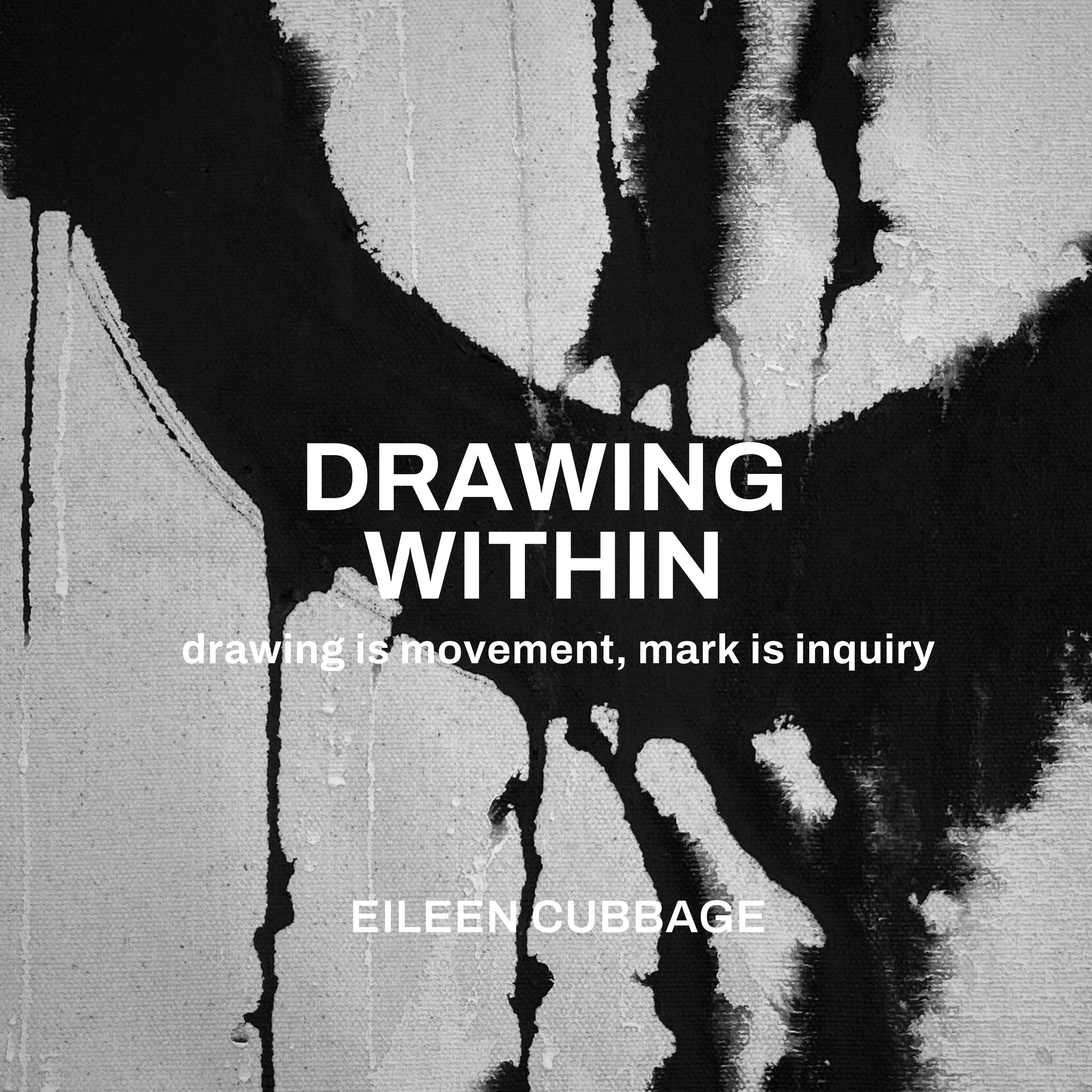
Drawing Within, hosted by artist Eileen Cubbage, positions drawing as a movement language—a practice where body, breath, and gesture generate trace. Each episode begins from the body and follows how line, mark, and surface register presence. Rather than representation, drawing becomes relation: a way of holding time, sensing orientation, and revealing transition. Those drawn to a body-based, process-led approach will find resonance in these conversations with form, gesture, and the unseen.
-
7
Drawing as Inquiry
Drawing doesn't begin with conclusions. It begins with questions—gestures that test, probe, search.This episode explores how authority emerges not from certainty, but from the rigor of sustained asking. When marks function as tests rather than declarations, when repetition accumulates evidence, when contradiction remains visible—the work gains conviction through its willingness to stay open.Inquiry is not hesitation. It's method. The drawing that records its own questioning often carries more authority than the one that performs resolution.In this episode: Gesture as hypothesis Iteration as searching Openness as rigorWays to practice:SHIFT 4-week online immersion is a live month-long practice following the Drawing Within podcast. Each week pairs an episode with a live session, translating inquiry into embodied mark-making.Keep drawing,Eileen
-
6
Making Marks that Endure
In a culture that prizes correction and refinement, drawing offers a counterpoint: authority built from what remains. Making Marks That Endure examines how presence persists not through polish, but through commitment to the uncorrected trace.This episode explores three conditions of endurance. First, the mark as commitment—how a single placed line becomes an irreversible decision that structures everything after. Second, endurance as conviction—how authority emerges not from certainty but from the refusal to retract. Third, irreversibility as compositional strength—how the unalterable mark becomes the real architecture of the work.These aren’t mistakes left visible out of laziness. They are decisions that organize the field. A committed line becomes a condition. A trace that stays becomes an axis. Drawing demonstrates that presence is carried forward through every subsequent act, not asserted once and abandoned.In this episode:Mark as commitment Endurance as conviction Irreversibility as strengthWays to practice:SHIFT 4-week online immersion is a live month-long practice following the Drawing Within podcast. Each week pairs a podcast episode with a live session, translating inquiry into embodied mark-making. Keep drawing,Eileen
-
5
The Art of Changing Mid-Line
Change rarely arrives at the beginning. More often it cuts into what is already underway: a line half-formed, a gesture extended, a rhythm moving across the page. Drawing makes this interruption visible. Instead of erasing, it records each hesitation, bend, and redirection as part of the work. What in other contexts might be concealed becomes continuity here: adaptation preserved openly in trace.This episode turns to the practice of changing mid-line. You’ll encounter interruption not as collapse but as threshold, redirection as a way of carrying origins forward, and resilience as elasticity inscribed into form. To alter course in the middle is not to fail but to persist with honesty.In this episode:– Interruption inside momentum– Redirection as continuity– Elasticity as resilienceWays to practice:The Core Sequence is a live, online 60-minute drawing practice built on body, breath, movement, and mark, and SHIFT goes even deeper, a 4-week immersion each month.Keep drawing,Eileen
-
4
Becoming Through the Page
A drawing is never static. Every mark alters what follows, every gesture inscribes transition. What is often hidden as error—hesitation, revision, erasure—becomes visible record. This episode explores how drawing reframes becoming as evidence, not deficiency. You’ll see how the body registers change before language, how marks form an archive of transition, and how presence is sustained through visible process. To see the page this way is to recognize becoming not as unfinished, but as the clearest form of transformation in motion.In this episode:– Transition is evidence, not error– Embodiment registers before language– Archive of becomingWant more than listening?The Core Sequence is a live, online 60-minute drawing practice built on body, breath, movement, and mark, and SHIFT goes even deeper, a 4-week immersion.
-
3
Drawing Without a Map
We’re taught that starting without a plan is reckless. That if you don’t map it out first, you’ll lose track, waste energy, or fail before you begin. A plan is framed as the only proof of seriousness.But drawing tells a different story. A line doesn’t wait for permission. It moves, bends, interrupts, or redirects—generating its own orientation as it unfolds. What looks like uncertainty is actually process at work: coherence emerging from relation rather than from rules set in advance. On the page, marks themselves become navigation.This week, we turn toward that practice of beginning without prescription. To draw without a map is to stay present, to let orientation surface mark by mark instead of forcing it. Rather than clinging to clarity as something you must have before moving, you discover that direction arises in motion. The invitation is simple: release the plan and let process lead.In this episode:Friction signals the end of prescriptionLine as navigationProcess as discovery, not destinationWant more than listening?The Core Sequence is a live, online 60-minute drawing practice built on body, breath, movement, and mark, and SHIFT goes even deeper, a 4-week immersion.Keep drawing,Eileen
-
2
Feeling Without Naming
We’re expected to explain, to put feelings into words. But drawing refuses that pressure. A mark doesn’t wait for language — it arrives on its own terms.On the page, states are carried directly: repetition builds, pressure thickens, a line falters and continues. These aren’t descriptions. They’re evidence. Drawing holds sensation in form without needing to label it.This episode explores what happens when you let sensation remain as it is, without collapsing it into language too soon. Drawing becomes a way of honoring the immediacy of experience: precise, unfiltered, and intact.In this episode:How sensation registers as markWhy refusing premature translation mattersHow drawing becomes a somatic archiveWant more than listening?At eileencubbage.com you’ll find The Core Sequence —a live, 60-minute drawing practice built on body, breath, movement, and mark, and SHIFT, a 4-week immersion to sustain deeper inquiry.Keep drawing,EileenMore:→ Listen and subscribe on Substack for reflections and audio practice→ Live sessions to experience the core sequence in real time
-
1
Drawing is a Movement Language
Drawing is a movement language, sustained in trace.Drawing is one of our oldest languages. Long before words, there was the trace: a hand pressed into pigment, a finger dragged across stone, a mark etched into clay. These were not decorations but orientation—evidence of relation between body, ground, and time.This podcast holds drawing in that lineage. Not as product or image, but as method. Every mark begins in motion—breath carried into gesture, weight pressed into line. What remains is evidence of presence, a residue of relation.Each week, we return to the same ground: body, breath, movement, and mark. From there, we explore how drawing functions as method, as archive, as language. What emerges is not resolution but continuity—gestures that register presence, transitions traced in time, marks that remain as evidence of being.In this episode:Why drawing is a movement language older than wordsHow body, breath, movement, and mark form the spine of practiceWhat it means to build continuity through traceWant more than listening?At eileencubbage.com you’ll find The Core Sequence —a live, 60-minute drawing practice built on body, breath, movement, and mark, and SHIFT, a 4-week immersion to sustain a deeper practice. Return through the mark.Keep drawing, Eileen More: → Listen and subscribe on Substack for weekly reflections and audio practice → Live sessions to experience the core sequence in real time
We're indexing this podcast's transcripts for the first time — this can take a minute or two. We'll show results as soon as they're ready.
No matches for "" in this podcast's transcripts.
No topics indexed yet for this podcast.
Loading reviews...
ABOUT THIS SHOW
Drawing Within, hosted by artist Eileen Cubbage, positions drawing as a movement language—a practice where body, breath, and gesture generate trace. Each episode begins from the body and follows how line, mark, and surface register presence. Rather than representation, drawing becomes relation: a way of holding time, sensing orientation, and revealing transition. Those drawn to a body-based, process-led approach will find resonance in these conversations with form, gesture, and the unseen.
HOSTED BY
Eileen Cubbage
Loading similar podcasts...
URL copied to clipboard!