
PODCAST · society
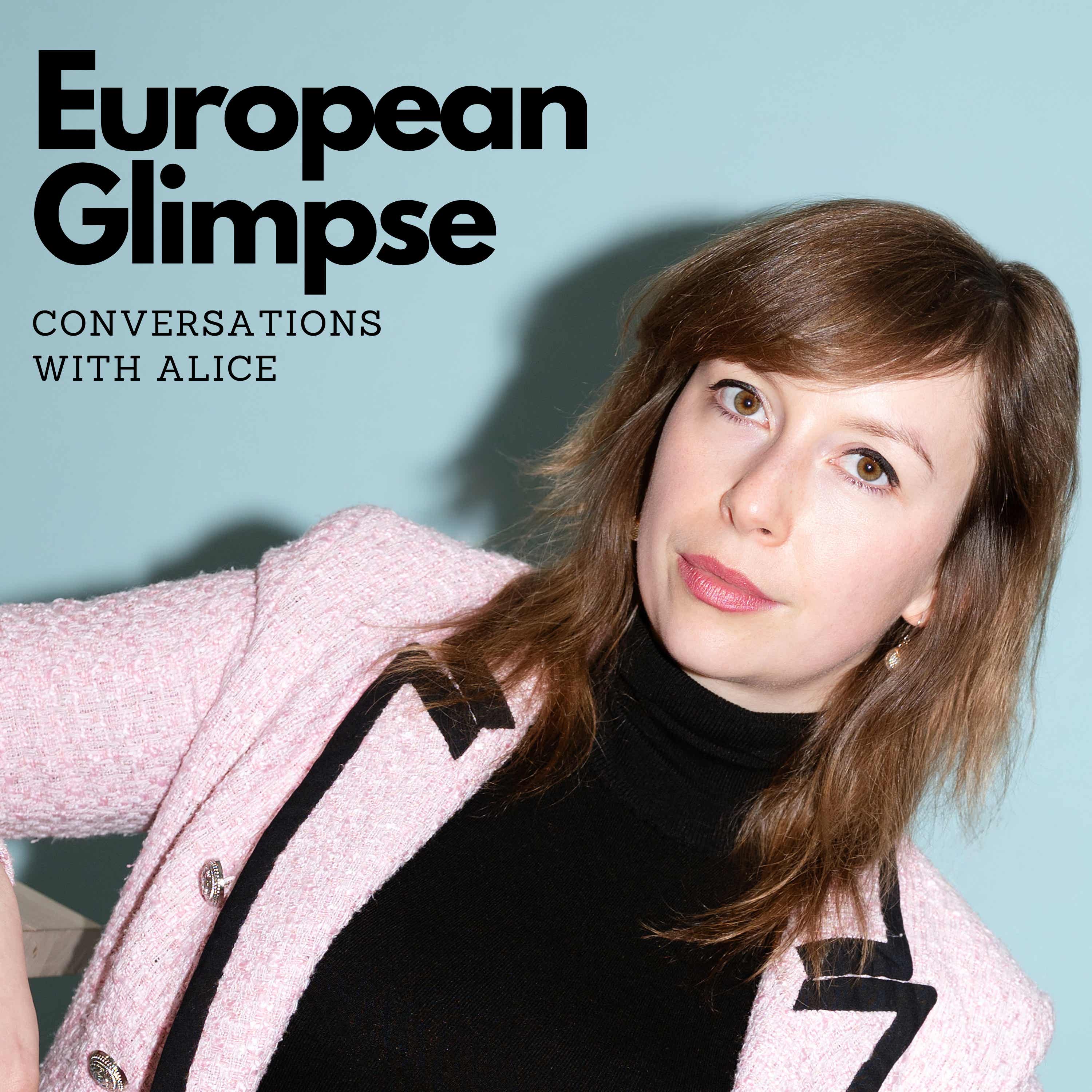
European Glimpse Podcast
by Conversations with Alice
Do you know what people care about in Germany, France, Greece, Sweden or Poland? European Glimpse is the place where Alice discovers what is going on in Europe. europeanglimpse.substack.com
-
24
Why Your Newsfeed Makes You Feel Like the World is Ending - Ep. 24
In this insightful interview, Aidan Hoyle, assistant professor at the Univesity of Leiden in disinformation and foreign influence, discusses the mechanisms of disinformation, its subtle techniques, and its impact on European societies. We explore how narratives of decline and chaos are crafted, the role of social media, and strategies for resilience in the digital age.Find more of Aiden's work:* Do(n’t) Shoot the Messenger: Psychological Responses to Kremlin Narratives in Nordic - Baltic Audiences* Portrait of liberal chaos: RT’s antagonistic strategic narration about the Netherlands* ‘Keeping an Eye on the Other Side’: RT, Sputnik, and Their Peculiar Appeal in Democratic Societies* How authoritarian states sculpt a warped alternative reality in our news feeds This is a public episode. If you would like to discuss this with other subscribers or get access to bonus episodes, visit europeanglimpse.substack.com
-
23
Wealthy but Hopeless? The Mental Health Crisis in Europe’s Fastest-Growing Economy - Ep. 23
In this conversation, Dominika Klimowicz, a political scientist from Poland, discusses the current political landscape in Poland, highlighting the tensions between pro-EU and anti-EU sentiments, the cultural wars affecting generational divides, and the mental health crisis among the youth. She reflects on the historical trauma that shapes the perspectives of millennials and the challenges they face in a rapidly changing society. The discussion also touches on the impact of social media, the political gridlock in Poland, and the potential for optimism in the country's future as it emerges as a significant player in Europe.You can find Dominika on Substack: Dominika | SubstackAnd on Academia.edu: Dominika Wiktoria Klimowicz - University of Warsaw This is a public episode. If you would like to discuss this with other subscribers or get access to bonus episodes, visit europeanglimpse.substack.com
-
22
From Solidarity to Skepticism: Changing Attitudes Towards Migration - Ep. 22
This conversation explores the evolving attitudes towards refugees in Germany, particularly focusing on the pivotal year of 2015, the emergence of solidarity and skepticism, and the impact of significant events like New Year's Eve. It delves into the nuances of public sentiment, the call for order in migration policies, and the implications for political communication in addressing these complex issues.Alice speaks to Tobias Hillenbrandt. He is a PhD Fellow at the United Nations University (UNU-MERIT) and Maastricht University. His research is centered around migration attitudes with a focus on refugee migration to Germany, using experimental methods. He holds a Master’s degree in Economics and Public Policy from Sciences Po Paris, as well as Bachelor’s degrees in Political Science and in Management and Economics from the University of Mainz.Sources mentioned in the podcast:Reforms welcome? Evidence on the nature of asylum backlash and orderly admissions as a remedyPolicy_Paper_Migration.inddhttps://forum-midem.de/polarisierungsbarometer-2025/https://bibliothek.wzb.eu/artikel/2016/f-19800.pdfIntegrationsbarometer 2024 - Sachverständigenrat für Integration und Migration gGmbHhttps://www.bertelsmann-stiftung.de/de/publikationen/publikation/did/willkommenskultur-in-krisenzeitenWhat asylum and refugee policies do Europeans want? Evidence from a cross-national conjoint experiment - Anne-Marie Jeannet, Tobias Heidland, Martin Ruhs, 2021How economic, humanitarian, and religious concerns shape European attitudes toward asylum seekers | SciencePopular by Design | Alexander Kustov | SubstackThe Stability of Immigration Attitudes: Evidence and Implications | The Journal of Politics: Vol 83, No 4PowerPoint PresentationSeptember ‹ 2024 ‹ Umfragen & Analysen ‹ Infratest dimap This is a public episode. If you would like to discuss this with other subscribers or get access to bonus episodes, visit europeanglimpse.substack.com
-
21
Ep. 21 - Behind the Scenes: What has it been like to make a podcast about Europe?
In this reflective episode, Alice reviews her journey with the European Glimpse podcast throughout 2025. She discusses the motivations behind starting the podcast, the importance of nuanced storytelling about Europe, and the diverse perspectives she encountered through her conversations with guests from various countries. Alice emphasizes the need to challenge prevailing narratives about Europe and expresses gratitude for the support from her audience. Looking ahead, she shares her aspirations for the podcast in 2026, aiming to continue exploring the rich tapestry of European life and culture. This is a public episode. If you would like to discuss this with other subscribers or get access to bonus episodes, visit europeanglimpse.substack.com
-
20
Ep. 20 - Does Europe Need a "European Dream"?
In this conversation, Alice and Polina explore the concept of the European Dream, contrasting it with the American Dream, and discussing the cultural, political, and economic challenges faced by different European nations. They delve into the historical context of the European Union, the ongoing protests in Bulgaria, the welfare state in Sweden, and the community-oriented values in Spain. The discussion highlights the need for a renewed European Dream that emphasizes growth, stability, and community support in the face of global challenges. This is a public episode. If you would like to discuss this with other subscribers or get access to bonus episodes, visit europeanglimpse.substack.com
-
19
Ep. 19 - Europe Needs to Develop Cultural Exports as a Strategic Asset
The podcast explores the complexities of European cultural exports, highlighting the contrast between historical perceptions and contemporary creativity. It emphasizes the need to move beyond stereotypes and recognize the dynamic contributions of modern European culture. This is a public episode. If you would like to discuss this with other subscribers or get access to bonus episodes, visit europeanglimpse.substack.com
-
18
Ep. 18 - Is Montenegro the Next EU Member?
SummaryIn this conversation, Nikoleta Đukanović discusses Montenegro's aspirations for EU integration amidst the backdrop of renewed interest in enlargement following the situations in Ukraine and Moldova. She emphasizes the importance of Montenegro's pro-EU identity and social resilience as foundational elements for achieving institutional change and navigating the challenges ahead. This is a public episode. If you would like to discuss this with other subscribers or get access to bonus episodes, visit europeanglimpse.substack.com
-
17
Ep. 17 - Is Denmark Going Plant-Based?
The conversation explores the limitations of awareness and education in food policy in Denmark, particularly regarding plant-based options. It highlights the value-action gap, where knowledge does not necessarily lead to behavioral change among consumers. This is a public episode. If you would like to discuss this with other subscribers or get access to bonus episodes, visit europeanglimpse.substack.com
-
16
Ep. 16 - Leaving Russia After the Partial Mobilization
In this conversation, Vladimir Kornev shares his personal journey as a Russian who left his home country amidst the war in Ukraine. He discusses the emotional and practical challenges of leaving, his experiences in Turkey, and the process of settling in Germany. The conversation highlights the cultural adjustments he and his family faced, their aspirations for the future, and the importance of individual connections in overcoming stereotypes and fostering understanding between people from different backgrounds. This is a public episode. If you would like to discuss this with other subscribers or get access to bonus episodes, visit europeanglimpse.substack.com
-
15
Ep. 15 - My Dutch Friend Bootstrapped A Film About Ukraine
My Dutch friend Maarten is an independent filmmaker who crowdfunded his recent short fiction film “Homefront” about two Ukrainian brothers. That in itself is quite a move. Enjoy the conversation!You can contact Maarten via mail or LinkedIn: [email protected]://www.linkedin.com/in/maarten-sleegers-b41b3aa0/Alice: Hey, my friend Maarten is from the Netherlands and we studied together 12 years ago. He is an independent filmmaker and this year he produced a short fiction film about two Ukrainian brothers , which I thought was quite interesting because he bootstrapped the entire project. So I asked him to join a conversation today and we spoke about, well, the movie, obviously, the process of making a movie with very little funds and the prospect of European movies, I guess. The conversation was about the entire production process of the movie, but as well about the meaning that producing movies gives him. Because it is quite interesting. The movie is not really political, even though it somehow is political, if you know what I mean. I mean, you’re making a movie about two brothers in Ukraine. So yeah, I hope you’re going to enjoy this conversation. By the way, I’m Alice, your host. So let’s get into it. Maarten, I’m very glad that you took some time to record this episode with me today. Because first of all, we have known each other for, I calculated like it’s 12 years by now. We studied together and it’s pretty exciting to see the products of your labor. You are now an independent filmmaker and you sent me your recent movie, Homefront , which I watched yesterday as a short movie. It’s very beautifully shot straight out. That’s like pretty much is the first thing that I noticed. It’s like very beautiful color palette. It looks very crisp. It’s a bunch of people in the credits. A lot of people were part of the production. So thank you for taking some time to talk with me about the movie. Let’s start with the beginning of the idea. So the movie is about two Ukrainian brothers, one brother stayed in Ukraine to fight, the other brother is in the Netherlands, and they meet. So how did you get to this idea and why did you decide to do a movie about Ukraine?Maarten: Good question, and of course also nice to be here. I thought it was very nice that you invited me for your podcast, always nice to chat with an old friend. Yeah, I’ve tried to analyze how I come to new ideas. And usually if I feel that I need to get a new idea, then in the following days or weeks, something comes to me unconsciously. Usually it’s about a topic that I find rather interesting. So as we studied together in Poland in the year that the war in the Donbass and Crimea already began , from that moment, my interest for Ukraine began. You know, we studied international relations, global studies. So I always felt very much like a European. So when it started back in 2014, to me, it really changed my view of Europe and defense and the urgency for us to wake up and not be so naive and prepare for potential war. So when the war began, the full-scale invasion in 2022, of course, I was surprised. But somewhere in my mind, I already thought, you know, I could see Putin do this. So I’m not a fighter, I’m not a soldier, but I felt like I need to do something. So that same year, I had an idea for a first short fiction film. It’s called Shelter or Onderdak in Dutch , which is about a Ukrainian boy living with his mother in the Netherlands at the beginning of the war. And he doesn’t really like it there. I mean, he finds it difficult to integrate. And then he comes up with this idea to cycle back to Ukraine. After I had made that film , together with a Ukrainian filmmaker who happened to live in my hometown in the Netherlands. So that’s a funny story. I felt like I want to make something else. And three years ago, at a film festival in the Netherlands I saw a Syrian short film about a mother and her son in an apartment and talking about the war. The story was very different, but from that moment I thought one day I would love to make a movie with just two characters and one setting. Because I think if you can tell an interesting story with those basic materials, you show that you know how to tell a story, but I never had a specific idea. So last year I wanted to make a new movie. And then all of a sudden, I don’t know if it was at night or in the morning, but you know, this idea came to me. I saw two brothers , one chose to fight, you know, join the military at the beginning of the war and the other fled to the Netherlands. I don’t know, this idea came to me because I think I thought a lot also about, you know, what would I do? Would I fight? Would I not fight? And I thought it was an interesting dilemma , also knowing that it’s very real and it’s happening every day to so many Ukrainians.Alice: What I found interesting in your short movie is the silences are very poignant, like the silences between both main characters are very powerful and the dynamic that you created there shows this dilemma between two brothers but as well like what are you going to do in that situation? So explain to me a little bit: you have this idea, you’re in the Netherlands, you come up with this idea, you want to do a movie about the war in Ukraine, about this personal dilemma that both main characters are facing. How, what do you do? Like how do you end up in the end filming in Ukraine, finding people? Like how does this idea materialize?Maarten: Yeah, a very interesting question. Yeah, I mean, this is my third fiction film, but when I got this idea last year, it was at the end of the spring or beginning of the summer, yeah, I thought, wow, I really like this idea, but, “How on earth will I make this film ?” So that was also a big challenge because I thought I must make this in Ukraine because I want to make this with people who actually have been living in a country at war for more than three years , because they will understand better than anyone else what it’s like. And I wanted this film to be very realistic. Also with my background in cultural anthropology , I just felt that making something in a different country, that’s me, the cultural anthropologist. So then the filmmaker and the cultural anthropologist can really merge. But I also thought, where to begin? So I met two documentary makers , Dutch documentary makers in Amsterdam who have made a documentary in Ukraine. And they told me, yeah, you can go there. It’s OK. You know, Kiev is OK. It can be a bit dangerous , but, you know, it’s a city with, I don’t know, two, three million people. So what are the odds? And then because I made this last film Onderdak with a Ukrainian filmmaker who graduated two years ago. So she still knew many beginning filmmakers or people who perhaps graduated in the last 10 years. So she gave me a few names. I made a telegram and then I started writing them and then they knew other people. When I finally decided to just go to Ukraine, it was the beginning of October last year. I met about 20 people. And from those 20 people, I made like a selection. So I already found like a DOP, director, photographer, you know, the cinematographer , and like a beginning producer and like a first and second director’s assistant and someone to do sound. So then we already had a small team, but of course we didn’t have any money, and that’s you can have a great idea, but if you don’t have money, you can’t make a film and making films cost quite a bit even short fiction films. So I thought, okay, you know, maybe there are some funds that will give me something. But there are very, very few Dutch funds. Because most Dutch funds, they say, which I understand, if you want to make a movie or if we give you money, we’ll only do it on a condition that your movie is will be shot here in the Netherlands, or if you do it abroad, there will be Dutch actors in it. But yeah, my movie was only with Ukrainians in Ukraine. So almost there were only two funds that I could even submit to , but they both rejected my submission , my application. So, yeah, then I had a script and I had an idea. I had a team and then I thought, OK, I’ll just do a crowdfunding campaign. That’s the only possibility left, you know. And yeah. And because of the crowdfunding , because we had a successful campaign , because I pretty much contacted everybody I have ever met in my life and because it was a relevant topic , I also got to, you know, got to do some interviews in Dutch media. So in the end, we had over 250 donors from 41 countries who gave money. And yeah, thanks to all of them, we were able to make this film.Alice: How much money did you raise in total? 17,000. I mean, that’s still quite a tight budget to make a short movie. I mean, given that there are so many people involved. When I watched the credits yesterday, I think it was like 20 names almost that I counted. Actors and people. Yeah, yeah, it’s quite a bit.Maarten: Yeah.Alice: So everybody kind of has to be in this project and be partially at least renumerated. And you got travel expenses, traveling to Kiev. I imagine this was still quite difficult.Maarten: Yeah, yeah. So €15,000 was not enough. So everybody in a crew got almost... Everyone got just paid like a decent salary. I also thought it was important just to be able to pay the crew and cast conventional salaries. It’s also very important for motivation and for the quality of your film. But in the end, yeah, it did not suffice. So I also put a lot of savings in this film, even took a small loan to finance this film. And, you know, all the trips to Ukraine, I paid it all myself. But if you really truly believe in doing what you do, you sometimes should go the extra mile.Alice: I mean, you clearly did. Talk to me about the production. How often did you go to Kiev? How long did the entire production time take?Maarten: Well, I went to Kiev. In total, I went six times. I spent 11 weeks just going from Amsterdam to Kiev and back again. In total, it took me 430 hours, approximately , just going there and back again. But yeah, the production, once we knew we had enough money, then, you know, if you have the key positions of your team, then they will look for their own team. So for example, the director photographer. Yeah, I already met him in October. I felt like I want to work with him. Bogdang Haidash is his name. And then I knew he would find a good gaffer. So gaffer is the head of lights, you know, the person who has also his own little team. And they put the lights in different places, you know, key lights, etc. And I knew he would find like a good focus puller, and first, second, camera assistant, and this whole team, so I don’t have to find all these people. And I also worked, of course, with, I produced the film , but I produced it together with an Ukrainian producer, Alona. And she also knew many people. So once we had the idea, once we had the money, once we knew we would make this film, we could start hiring all these people. The first time I went to Ukraine was in October. It was just to find a team. Then the second time was in December. It was to meet the team again and to already look for some locations and make a promotion video for the crowdfunding campaign. Then in February, I went again for three or four weeks. And then we already knew, okay, we’re going to make this film. Because I said from the first moment I came there, I said, I don’t know how, but we’re going to make this movie. There’s no question about it, no doubt. Doesn’t matter what it takes. This movie will be made. So everyone, I think also felt that I was very serious about this. So they knew we were going to make this film. So in December, in February, we already looked for locations. We did auditions and we, uh, yeah so exterior exterior locations, apartments, we had of course the director of the art director, so we already started looking for costumes, starting to looking for props, yeah. And then when I came in April, we had just like 10 days of preparation. And then we had the actual shooting. And then in June and July, I came back for post-production because we needed music. The sound design is very important. So the cool thing, this story is so close to reality that the sound, the explosions you hear in the movie were made by the sound recorders at night from his apartment. Because that’s just what you hear in Kiev, you know, when there’s an attack. So it’s all. That’s also what I experienced so many times. That’s the reality. And whilst we were recording this film , there were at least two people from my crew who had just heard that a very close friend had decided to enlist himself into the military, so that was also the very surreal thing about making this movie, that it’s fiction but it’s happening every day these kind of stories, and even whilst we were filming, we had several times that you know the alarm would go.Alice: How did this experience and your travels to Kiev change your perspective or perhaps broaden your perspective on what is currently going on?Maarten: Well, it just made me feel that, uh , that it’s insane that this is happening in Europe , that this is the biggest war since the Second World War. And it’s important to all of us. And you think during the day, you know, it almost feels like you’re in a normal city in Kiev. I mean, if you pay attention, you do see that there are almost no foreigners and you see quite some soldiers marching by and you see military vehicles. But then at night, all of a sudden, you know, there’s a big drone attack. And then you realize, wow, this is not a normal city. This is war. And you just feel like you’re in a normal European capital. And this is 2025. And yeah, to me, it just was, I have not really changed my opinion or anything. I just understand now even better how I feel more , even feel more profoundly how important this is. You know, I’m not someone who easily protests, you know, joins demonstrations. But this time I feel this is so fundamental to all of Europe. This is our very system that is being attacked. And I just felt as an engaged European that I wanted to do something , you know, also with these people. And because now I know so many and now dozens and dozens of Ukrainians , I’ve made many new friends there. So you also become more involved because every time there are attacks now , you know, I hope all my friends are okay.Alice: What is it that you want to convey with the movie? Because now you’re describing a lot the experiences that you have had and obviously the horrible experience that Ukrainians are still going through for years now. So there’s a perhaps a political dimension of messages, there’s perhaps a humanitarian level, but there’s as well perhaps just from a movie point of view a story which you want to convey. So when you look at the messages or the sentiments that you want people to experience, what would it be? You recently had the premiere in Kiev. Is that the international one yet?Maarten: It’s the closed premiere. So it’s not like official premiere. It’s just for the cast and the crew. Yeah, we had that last week.Alice: Tell me a little bit about the reactions of the Ukrainians , because I wonder if it was weird to them that somebody from the Netherlands came to shoot a movie about this very intimate relationship between two brothers , specifically coming to Ukraine, or if they were delighted that somebody has shown interest in narrating a story. How did people react to your idea on site in Ukraine?Maarten: Well, people were very enthusiastic, very positive, and already whilst making this movie, most people from the crew and the cast said, “Well, why do you come here? Why do you...” Some people thought I was crazy, you know, for taking the risk just to make this film, experiencing like drone attacks, etc. But they all very much liked the fact that I understood , they felt that I understood the struggle and that, you know, I had not forgotten about them because many Ukrainians told me they feel a bit forgotten about , which I can understand in the media, even though I do think, you know, Europe is definitely not just standing idly by, but things are being done, but I can understand that perhaps it’s not very visible, especially in the media. So I totally understand the sentiment of many Ukrainians that, okay, people, they are not really thinking about us. I think people are thinking about Ukrainians, but it’s not that much out there. So they very much liked it that I came to Ukraine. And after watching the movie, many people just were very pleased and impressed by the by the subtlety of the story and several people told me that they said they could not believe that it was, this sounds a bit like bragging, but people did tell me, they said, “Wow, I couldn’t believe that this was made by a non-Ukrainian because when I saw the film , I just felt this can only be made by a Ukrainian because other people really don’t understand what’s going on here and how complex things are in these type of situations.” So that to me was like an amazing compliment because... Yeah, probably the highest praise...Alice: That you could receive from somebody, you know, from Ukraine. They thought it’s made by somebody from Ukraine. But I was curious as well , as the film is in the Ukrainian language , how did the entire script writing and the researching go about so that you actually find the right approach, that you find the right tone to set the dialogues and to set the mood?Maarten: Well, as a cultural anthropologist, I know that each culture is a bit different. So I also know a bit about Ukrainian culture. But the essence of communication and subtext is universal. So people can say something and imply something else. So I think that that’s pretty universal. But I wrote everything in English. I worked in the Netherlands on a script. I had a Dutch script coach. So he helped me, you know, to... I like the story , but if you want to convey this, I’m reading something else. So perhaps you should rewrite. So then , of course, that makes it much easier to write the story you want to tell. And then my second assistant, Anna, she also studied film in Kiev. And her English is truly impeccable. So I asked her to translate the script from English to Ukrainian. And the great thing is that her English is very, very good. And she understands story and dramaturgy. So I knew she would translate it in such a way that it would be good Ukrainian and it would be good dialogue and not just a literal translation. And then, of course, also with the actors. So, I mean, that goes for any film you make, that together with the actor, you make something. And so there were certain things in the script. And then Gregory, the guy who plays the elder brother , you said like, “this word, it’s too much. It doesn’t feel natural .” And then you just analyze, okay, why would that be? How come? And then, yeah, then usually you find each other and you think, okay, it makes sense. And if for you, if that doesn’t feel natural, then you don’t say it. And then you do something else. But that’s everywhere. I think if you want to be a good director , you have to listen to what your actors say , how they experience the story. Because they need to feel what they play. And if something doesn’t feel right , then sometimes, not always , but sometimes it is for a good reason.Alice: How did you manage the safety topic when you were filming? Because I imagine it can be very distracting and horrifying when you hear gunshots somewhere. Well, not gunshots , but if you hear drones approaching the city and you hear explosions in the background. You said that one of the sound engineers actually recorded the background noise of explosions in Kiev one night. So did you feel unsafe and how did you manage the entire situation?Maarten: Well, um, if they recorded it at night, so during the day attacks are much rarer. So even if the alarm goes off, then chances that you will hear a drone are much smaller. It sounds a bit weird, but just becomes part of your life hearing the alarm and maybe that’s also irresponsible, but um. It’s similar to the one and a half meter rule at the beginning of COVID. I already forget about that. People take it very seriously , but after all, you know, so also , I mean , I had times I was in cinema in Kiev and then the alarm would go off and then the film is paused. Someone says something, okay, we paused the film because alarm is going off. You can go to a bomb shelter, blah, blah, blah. Everybody just, you know, stays in a in a cinema hall and waits until the movie resumes and nobody goes to a bomb shelter because otherwise you you’d be sitting in bomb shelters, I don’t know how many hours a week. And of course I would always tell anybody if you don’t feel safe go to a bomb shelter, but. Yeah, everybody has to make their own decision. In our case, yeah, people are so accustomed to the alarm that people are not that afraid of something. It’s just like, well, a bit indifferent. But yeah, there was my producer and people I work with , they’ve been filming commercials and other things for three years during the war. So for them, it’s very routine. It was especially me. I was not used to filming something in a country at war, but for them it was just business as usual , and I more or less followed their lead, you know, they know better what to do then than I do , and yeah. And of course, you know, in Ukraine you have like an app and like telegram, “big attack”. Most people, even I have it on my telegram. You see like, okay, many drones are in the air , there’s a big attack coming. I think if that had happened during the day and we knew, okay, it’s coming from Kiev, of course, we would have stopped shooting and we would have gone to a bomb shelter or we would have taken appropriate security measures. We would be very irresponsible to then just continue and say, ah, whatever, you know.Alice: So now you have the short film done. What is your plan with it? What do you want to do with it? What’s your approach to perhaps promoting it or make it seen by more people?Maarten: Well, the classical route is to submit it to festivals. So now I’ve been submitting it to bigger festivals and we very much hope it will be selected. Sooner or later, I’m sure it will be selected at some festival. And the bigger the festival, the better it is because it gives your movie much more visibility. And when people know about your movie, they will be perhaps interested to see it. If they don’t know about your movie, they can’t even be interested or curious about your movie. So the plan is for the next two years to have our film play at different festivals , mainly in Europe , because I think that’s the biggest audience for this film , perhaps North America as well , but especially Europe. And yeah, also make a play at Ukrainian festivals, of course.Alice: If you can already talk about this, because you’re relatively new in the filmmaking world. But I would just like to understand a little bit better what are the obstacles to producing film in Europe. I recently spoke to somebody on the podcast as well where we spoke about the importance of having European film and European narration as well on the big screen and how little there has been over the last years. Like you barely have mega hits, like European mega hits. It’s not that often anymore. And perhaps you already from your experience can spot some obstacles for people who have the ambition to create a movie but somehow it doesn’t work out.Maarten: Yeah, very difficult question. I don’t think I’ve got a lot of interesting things to say about that. The only thing I do know is that money is always the problem. Because making movies is expensive. In Europe we have much more a subsidy system. Which allows beginning filmmakers and also established filmmakers to make films that perhaps commercially are not necessarily very interesting or perhaps higher risk, but as always, there are many people want to make movies, but there’s only a limited amount of money, so there’s always a great deal of competition and chances are always very small that you will get the chance to to make your movie. So yeah, like general trends about European cinema, I have to admit, I’m not too much. Now, I don’t know enough about it to say something that makes sense.Alice: Would you do this entire process again? Like if you’re looking at , it’s been over a year , you said you were the first time in 2024 in October in Kiev. So this entire process from idea to production to publishing probably took like a year and a half. You bootstrapped the entire crowdfunding campaign, everything was pretty much organized by you and your close team. Would you do the whole process again?Maarten: Yeah, I mean, I’ve already got a new film idea. I also want to make a new crane. So the first film is about the beginning of the war. It takes place at the beginning of the war in the Netherlands. And it’s the perspective of a child. Then now Homefront is in the middle of the war about two brothers. So the perspective of a man. And now my new idea will be perspective woman after the war. And this movie I also want to make in Ukraine. The difficult thing is money. I don’t think I can organize another crowdfunding campaign because you can’t keep on asking money. And I’m super grateful that so many people were willing to give me money. But I couldn’t ask them again. And so I really, really just hope I can find a Dutch producer who wants to work with our Ukrainian team and then apply to Dutch and European funds. Because this film, I think the new film, we will need perhaps 100,000 euros. And that’s not something I can finance myself or through a crowdfunding campaign. So I just hope this film we’ve made, Homefront, will give me and my team enough legitimacy, enough credibility to get money from funds. I understand. But I’m willing to do whatever. You know, this is what I’m living for. I make movies because, of course, because I just greatly enjoy doing it. It’s just a passion. But also on a deeper level, I just want to make movies because it gives my life purpose. And I feel like my life matters. I can mean something. I can do something that means something to someone. So , for example, making this movie, Homefront , I will always remember two weeks before we had our shooting days , my producer, Alona , told me that one of her best friends had just died in combat. And, of course, this had a great impact on her. Also , her father has already been serving in the military for three and a half years , almost on my crew or cast. They have close family of friends. They are all, you know, serving in the military. That’s why I, again, wanted to make this film in Ukraine. But after her friend died , she told me , Maarten , usually I make commercials , web series , but I’m so happy to make this short fiction film . because for me it really feels like I’m doing something that that’s important. It’s not going to change the course of the war , but still for me on an emotional level it’s important. It feels like I’m doing something that gives me purpose , and then I said, “Well, thank you ,” you know, “if only if I make this movie just for you , I’m already happy and I’m already grateful that I , you know, that I had this idea and followed up on it .” Because if I already can make this difference to you, you know, what else do you want? You know, that’s why you want to make films, you know, to give some meaning to other people.Alice: Yeah. I mean , it sounds really like something you and your cast can be proud of , like creating this community and conveying something that probably a lot of people outside of Ukraine have not seen. And I think this is the value of creating such a movie . that it on one hand can represent something that is happening really on site , but on the other hand , I actually think put it back on the agenda a little bit , at least on the cultural agenda. Because what you said earlier about people not thinking about Ukraine , I don’t think that’s necessarily true , but the momentum is not the same as it was two, three years ago. That much is true. And if you can shift the focus again , back to the lives of people and how they’re being affected by this devastating situation. There’s definitely some purpose as you framed it or some deeper meaning which you can find. Would you recommend other filmmakers to choose a similar path and go the different route? Go, for instance, to Ukraine, search for the difficult complexities as you described them? Or would you say that this experience overall has been challenging enough to reconsider it if you don’t already have those ties and the connection that you already had?Maarten: I think making this film was also very much something that that’s very close to who I am as a cultural anthropologist who spent nearly 15 years abroad, 15 years of my life I spent abroad. So all my stories are always about, as I say, lost souls looking for a new home. And in that sense, this story itself rings very true because I recognize myself in it. So to me, it was absolutely worth it to make this film. It was a liberation . to feel that if you’re very motivated and you think you can do a nice crowdfunding campaign , you can make your own short fiction film. A lot is possible if you put your mind to it. That’s something I really learned from this. Like, I don’t want to give up. I just make it happen some way or the other. But to others, yeah, I mean, I think that everyone should find their own way. And if you are very passionate about this topic and you want to make a film about it , especially in Ukraine , then if my story shows to you that it’s possible , then yeah, then don’t be demotivated. But, you know, go for it because it’s possible. You know, there are filmmakers living in Ukraine and I’m sure they are willing to work with you. So that I could say. If your passion is not Ukraine, then I’m not going to tell you, OK, you can’t. Go to Ukraine, make a movie there. You should only do it if you really feel this urge to make this film to begin with.Alice: I think one nice aspect that you touched upon now is the conception of home. And it’s touched in your movie where one brother feels his home country and his home city to be his home while the other brother chose another destination for perhaps a new home. And you just touched upon that you’ve been around the world pretty much yourself. Perhaps after this movie , after as well the conversations with people who either stayed or had to leave the country , where do you stand now on the question of what home is?Maarten: You can find a home in different ways. So home can be a physical place. Home can be where your friends or family are. Home can be somewhere where you find purpose. So you may not like the place, but you’re doing something important there. Or home. I think can also be beauty because I strongly feel that beauty to a great extent is universal and that’s something one of the most important things in life is to experience beauty and it’s a unifying universal force, beauty. So I also personally feel that you can find home in beauty. Me, for example, Italy is one of my biggest passions together with film. And I’ve never felt so at home as in Italy. And one of the reasons is also because of history and just because of the sheer beauty of old medieval cities that is like looking at a beautiful landscape and then you are walking through a beautiful landscape made by people, you know? So...Alice: That’s a wonderful perspective to search for beauty. And perhaps people are going to find your movie to be beautiful. But what are going to be the chances or the opportunities to watch Homefront in the next period of two years , you said , where you’re going to try to submit it to festivals and promote it? So what’s the perspective on that?Maarten: The availability well all depends on festival selections , and after the festival selections we will try to sell the movie either to a streamer or perhaps to a TV channel or we will just put it on YouTube for everybody to watch , you know, depends, no, no idea what will happen, but yeah, it’s great if many people get to see it.Alice: I mean , if you allow me , I’m going to do a watch party in Berlin at some point when you’re done with promoting it. And I’m going to spread it here with the people. So, yeah. Maarten, thank you very much. Thank you very much for sharing your journey and sharing your perspectives. I think you can really be proud of yourself that you pulled this thing off. That’s quite something that not a lot of people would do. And yeah, congratulations. Congratulations to the completion of your short movie.Maarten: Well, thank you, Alice. And thank you for the nice interview. It was great catching up and I’m sure we’ll stay in touch.Alice: Thank you for listening to this episode of European Glimpse. This is a passion project of mine , and it would make me very happy if you subscribed or shared this episode with a friend. Now I’m curious to find a new guest. Are you a journalist, a scholar, a student, or perhaps an avid observer of society? If you’re living in a European country, as well outside of the European Union , reach out to me or recommend somebody I should speak to. I would as well love to hear your feedback on this podcast, as I’m always trying to improve. And my email is [email protected]. Take care. This is a public episode. If you would like to discuss this with other subscribers or get access to bonus episodes, visit europeanglimpse.substack.com
-
14
Ep. 14 - East German Views on German Unity
On German Unity Day, Alice reflects on the reunification of Germany 35 years after the Berlin Wall fell, noting that a deep division still exists between the capitalist West and the socialist East. East Germany continues to lag behind in economic and demographic indicators and many East Germans faced hardship in the 1990s as factories closed and people lost their jobs. Guests Kristin and Josefine discuss the ongoing impact of the past, with Kristin highlighting a sentiment of pride and pessimism among East Germans. Josefine notes that a lack of trust in public institutions stems from a history of surveillance under the GDR. Despite these challenges, there are signs of positive change and a belief in the potential for a more united future, though the process is not yet complete This is a public episode. If you would like to discuss this with other subscribers or get access to bonus episodes, visit europeanglimpse.substack.com
-
13
Ep. 13 - We're way too pessimistic in Europe
In this podcast episode, Alice discusses the pervasive pessimism in Europe, exploring its roots and implications. She highlights the contrast between personal optimism and national pessimism, the impact of education and political views, and the role of media in shaping perceptions. The conversation delves into the complexities of migration, demographic changes, and the influence of social media on public outlooks. Alice emphasizes the need for a shift in perspective, acknowledging successes while addressing challenges, and calls for a collective effort to foster optimism and embrace change for a better future in Europe.Music by Jarek Rytelewski This is a public episode. If you would like to discuss this with other subscribers or get access to bonus episodes, visit europeanglimpse.substack.com
-
12
Ep. 12 - Is Germany Failing Its Mothers?
This conversation explores the challenges faced by mothers in Germany, particularly in relation to labor market participation, child penalties, tax disincentives, cultural perceptions of motherhood, and the childcare system. The discussion highlights the urgent need for systemic change to support working mothers and families in navigating these complex issues.Music by Jarek Rytelewski This is a public episode. If you would like to discuss this with other subscribers or get access to bonus episodes, visit europeanglimpse.substack.com
-
11
Ep. 11 - Let's Talk About the Demographic Decline
In this episode, Alice discusses the pressing issue of demographic decline in Europe, particularly focusing on Bulgaria's changing fertility rates. She explores the historical context of population growth concerns, the economic implications of declining birth rates, and the effectiveness of various policy responses aimed at encouraging higher fertility. Alice also delves into the underlying causes of low birth rates, the role of immigration in addressing labor shortages, and the importance of fostering hope for the future as a potential solution to demographic challenges. This is a public episode. If you would like to discuss this with other subscribers or get access to bonus episodes, visit europeanglimpse.substack.com
-
10
Ep. 10 - How Detached are the EU Institutions?
In this conversation, Alice and Ruben discuss the unique experience of living and working in Brussels, particularly within the EU institutions. Ruben shares his first impressions as a trainee at the European Parliament, highlighting the sense of detachment from the surrounding city and the culture that develops within the EU bubble. They explore the similarities among individuals working in these institutions, including their educational backgrounds and interests, and how labor conditions and competitive salaries contribute to a distinct culture. The discussion emphasizes the diversity of Brussels as a city while acknowledging the homogeneity within the EU district. This is a public episode. If you would like to discuss this with other subscribers or get access to bonus episodes, visit europeanglimpse.substack.com
-
9
Ep. 9 - How Poland Became an Immigration Country
This conversation migration researcher Dr. Sara Bojarczuk explores the evolving landscape of migration policies in Poland, particularly focusing on the influx of Ukrainian refugees and the changing attitudes towards migrants. It delves into the historical context of migration in Poland, the current labor market dynamics, and the integration challenges faced by various migrant groups. The discussion highlights the need for more inclusive policies and the impact of political narratives on public sentiment towards migration.Music by Jarek Rytelewski This is a public episode. If you would like to discuss this with other subscribers or get access to bonus episodes, visit europeanglimpse.substack.com
-
8
Ep. 8 - The Eurozone and Bulgarian Youth: Progress, Protests, and Pragmatism
This conversation explores the complex landscape of Bulgarian youth, focusing on their perspectives regarding the Eurozone, political attitudes, migration, and identity. The discussion highlights the optimism among young Bulgarians despite the challenges they face, including political instability and societal divisions. The youth's engagement in political processes and their evolving views on migration and identity are also examined, revealing a generation that is both hopeful and critical of their circumstances.Youth Study Bulgaria. Optimism for the self, pessimism for society: Bulgariaʿs youth facing times of insecurity (2024) Youth Study - BULGARIAMore about Yanitsa: Yanitsa Petkova - MYARAMusic Music by Jarek Rytelewski This is a public episode. If you would like to discuss this with other subscribers or get access to bonus episodes, visit europeanglimpse.substack.com
-
7
Ep. 7 - How Does the EU Influence Universities?
In this conversation, Dr. Alina Felder-Stindt discusses her research on the intersection of higher education and European Union policy, focusing on the mechanisms through which the EU influences universities. She highlights the importance of coordination in higher education, the role of the European Universities Initiative, and the challenges faced in balancing excellence and inclusion. The discussion also touches on the impact of geopolitical events on higher education and the relationship between industrial policy and the green transition.Share your thoughts on the conversation or suggest new interview guests: [email protected] about Alina's research: Felder-Stindt, A. (2025): The Territorial Dimension of EU Knowledge Policies: Higher Education Institutions for Europe. London: Routledge.Durazzi, N.; Emmenegger, P.; Felder-Stindt, A. (2025): High Skills for High Tech: Higher Education as Industrial Policy. Governance 38(3), e70034, https://doi.org/10.1111/gove.70034Felder-Stindt, A.; Vukasovic, M. (2025): Who you gonna call … when developing a flagship EU initiative? A resource exchange perspective on the co-creation of the European Universities Initiative (EUI). Journal of European Integration, 1–24. https://doi.org/10.1080/07036337.2025.2498739Felder, A.; Tamtik, M. (2024): How Geopolitics Shapes Higher Education Internationalization: Institutional Responses to the Russian Invasion of Ukraine, in: Journal of Comparative & International Higher Education, 16(3), 163-177. https://doi.org/10.32674/jcihe.v16i3.6712Felder-Stindt (2025): Allies in the combat against climate change? The role of climate change for the formation and missions of university alliances, in: Pineiro/Kekkäle (Eds.) Higher Education Policy for Tackling Climate Change: Drivers, Dynamics, and Effects, Basingstoke: Palgrave Macmillan. This is a public episode. If you would like to discuss this with other subscribers or get access to bonus episodes, visit europeanglimpse.substack.com
-
6
Ep. 6 - Forum Europaeum: Building a European Identity Through Media
In this conversation, Dániel Kovács discusses the journey of Forum Europeanum (Forum Europaeum), a youth-led media platform aimed at fostering a European identity through cultural engagement. He shares insights on the evolution of the platform, the challenges of representing European culture in media, and the importance of dialogue in shaping political perspectives among young people. The discussion also touches on the impact of current events, the role of social media, and the vision for a more united Europe.Do you want to share your thoughts on the episode or suggest a guest? Reach out: [email protected] This is a public episode. If you would like to discuss this with other subscribers or get access to bonus episodes, visit europeanglimpse.substack.com
-
5
Ep. 5 - Is Europe Too Old for Growth? Addressing Workplace Ageism
This podcast explores the evolving perceptions of aging and ageism in society, particularly in the workplace. Dr. Trudy Corrigan and Lucie Stecker discuss their insights from the SNAW project, which investigates ageism across various European countries. They highlight the importance of intergenerational collaboration, the need for accessible training opportunities, and the impact of technology and AI on age perceptions. The conversation also delves into legal frameworks surrounding age discrimination and strategies to combat ageism effectively.More info on the SNAW project: https://www.snawproject.eu/ Reach out to me if you want to be on the podcast or share your thoughts on the episodes: [email protected] This is a public episode. If you would like to discuss this with other subscribers or get access to bonus episodes, visit europeanglimpse.substack.com
-
4
Ep. 4 - Ukrainian Resilience and Activism
In this conversation, Alice and Olga discuss the profound impact of the Russian invasion of Ukraine on Olga's life and her subsequent activism. Olga shares her initial shock and the emotional turmoil she experienced, as well as her determination to take action. They explore the formation of community support in Berlin and Portugal, the challenges of confronting Russian propaganda, and the importance of cultural activism. Olga reflects on her experiences at the Russian House in Berlin and her visits to Ukraine, emphasizing the resilience and vibrant life of Ukrainians despite the ongoing war. Want to be a guest in the podcast? Drop a message to [email protected] initial shock of the invasion was overwhelming for many.Community support played a crucial role in coping with the invasion.Activism can be a powerful response to feelings of helplessness.Cultural events can help bridge understanding and support for Ukraine.The Russian House in Berlin symbolizes ongoing propaganda efforts.Olga's activism evolved from personal expression to organized efforts.The Ukrainian community in Berlin is diverse and passionate.Portugal's response to Ukrainian refugees has been largely supportive.Technological advancements are seen as key to Ukraine's defense.Hope persists through community solidarity and cultural resilience. This is a public episode. If you would like to discuss this with other subscribers or get access to bonus episodes, visit europeanglimpse.substack.com
-
3
Ep. 3 - Sweden & The Downsides of the Cashless Society
In this conversation, Moa Petersén, an associate professor of digital cultures at Lund University, discusses the implications of Sweden's transition to a cashless society. She explores the digital imperative driving this change, the current state of cash and digital payments, and the impact on vulnerable groups, particularly the elderly and economically disadvantaged. The conversation highlights the constructed incompetence faced by those excluded from the digital system and the stigma associated with cash usage. Petersén emphasizes the need for inclusivity in digitalization and the importance of considering the voices of marginalized communities in shaping future policies.TakeawaysSweden's goal is to be the best in digitalization, not explicitly cashless.The digital imperative is deeply rooted in Swedish culture and identity.For many, the cashless system works well, but it excludes vulnerable groups.Elderly and economically disadvantaged individuals face significant barriers in a cashless society.Time is a crucial resource in navigating the digital landscape.Constructed incompetence arises when society changes faster than individuals can adapt.Public awareness of cash dependency issues is low among the general population.Stigmatization of cash users reflects a broader distrust in society.Immigrants may struggle more with digital inclusion due to language barriers.Future discussions on digitalization must prioritize inclusivity and social good.More research by Moa: Halldenius, L., & Petersén, M. (2024). Kontanternas värde: Fattigdom och utanförskap i Sveriges digitalaekonomi . Lund Human Rights Reports and Working Papers; Nr 2. Lund University. https://lucris.lub.lu.se/ws/portalfiles/portal/200870612/Kontanternas_v_rde_LHRRWP_2_2024.pdfHalldenius, L. & Petersén, M. (2024). Sweden is a nearly cashless society - here's how it affects people who are left out, The Conversation https://theconversation.com/sweden-is-a-nearly-cashless-society-heres-how-it-affects-people-who-are-left-out-216586Petersén, M. (2023). Body descriptions in biohacking and their overlaps and origins. DigitCult - Scientific Journal On Digital Cultures, 8(1), 7-24. https://digitcult.lim.di.unimi.it/index.php/dc/article/view/220Petersén, M. (2023). Jerry N. Uelsmann. Eighth Day Wonder. Kehrer Verlag https://www.kehrerverlag.com/en/moa-petersen-eight-day-wonder-jerry-n-uelsmann This is a public episode. If you would like to discuss this with other subscribers or get access to bonus episodes, visit europeanglimpse.substack.com
-
2
Ep. 2 - What is the "Be Manly" Movement in Croatia?
This conversation explores the Be Manly movement in Croatia, its roots in Catholicism, and the broader context of masculinist movements globally. Anamaria discusses the historical significance of Catholicism in Croatian identity, the influence of global trends on local movements, and the role of media in shaping public perception. The conversation also touches on the counter movements advocating for women's rights and the implications of these developments for Croatian society and politics.TakeawaysThe Be Manly movement is rooted in Catholic traditions.Catholicism plays a significant role in Croatian identity.The movement reflects a global trend of masculinist movements.Media coverage of the movement varies significantly by political alignment.Public perception of the movement is largely negative, with 75% opposing it.Counter protests are organized by feminist and LGBTQ+ groups.The Catholic Church has not publicly commented on the movement.Media sensationalism affects public trust in journalism.The birth rate decline is linked to economic factors, not solely cultural shifts.The normalization of the Be Manly movement raises concerns about future societal changes.Sources: Hanžek, Anamaria. 2025. “Mainstreaming Conservative Ideas Through Media Coverage: A Critical Discourse Analysis of Croatian Online Media Reporting on the ‘Be Manly’ Men’s Rights Movement”. Politikon: The IAPSS Journal of Political Science 59 (1). Online:63-87. https://doi.org/10.22151/politikon.12025.3.Nicholas Zalewski (2023): Let’s Tune In To The EU’s Periphery: “Be Manly” Catholic Mens Group Divides Croatian Society - The New Global Order This is a public episode. If you would like to discuss this with other subscribers or get access to bonus episodes, visit europeanglimpse.substack.com
-
1
Ep. 1 of European Glimpse - Why I'm Doing This
Welcome to European Glimpse! In this first episode, I will share why I believe it is important to talk about Europe!Here’s the transcript: What does it truly mean to be European? For me, that question is deeply woven into the fabric of my own family history, particularly through the lives of my two grandmothers. In this first episode of European Glimpse, I'll share how their very different worlds shaped my understanding of the continent and how it, frankly, inspired me to create this podcast.My grandmother on my father's side was a tall, eastern German woman with blue eyes and pink cheeks. She was born in 1937, many of her childhood memories were about war.The sounds of bombs falling on her homestead key of Magdeburg. The smell of ash. The sticky and hot air as people were huddling together in basements to stay safe. She rarely spoke of those horrors. But I'll never forget that one time when I wasBut I'll never forget that one time, when I was about seven, at a family gathering. She simply looked at me and then said, when I was your age, I ran through fire. Then, just as quickly, she looked away and changed the subject. That single sentence has always stayed with me, a glimpse into a childhood so utterly alien to mine.My grandmother's family had experienced two world wars which Germany lost. Later she saw how the Berlin Wall was built, separating families and friends.In her new home state in eastern Germany, the German Democratic Republic, school children and adults alike were taught that the West was the enemy.My grandmother learned Russian when she was young, both in school and on the streets. She shared stories about young Russian soldiers collecting the watches German women were wearing. Uri uri, they said, mispronouncing the German word for watch. Uo.Many years later she saw the collapse of the socialist system and Germany finally being reunited again. For some people this meant freedom, but for others it meant loss.I don't think my grandmother ever felt like she was a European.On the other side of my family, my maternal grandmother experienced a vastly different life. She was born in 1945 in a small village without proper plumbing in Bulgaria, close to the Greek border. In her family, the elders were sharing stories about that time when the Ottomans were in control of the areaand how the most beautiful woman in town was subjected to what is now Turkey. Since those days people had started to feel increasingly patriotic, yet politics seemed kind of irrelevant. Everyone in the village was a farmer, and taking care of the crops and animals was the most important task. After World War II, people found out that the monarchy in Bulgaria had collapsed,and quickly learned about the new ideas for the economic and social order under the name of socialism.When she was young, my maternal grandmother never learned about the political killings that took place during her childhood.but you did experience the expansion of education and the industrialization of that period.She received a professional training, started the family early and worked for decades. If you don't work, you can't eat. I remember her repeating the old communist saying.The socialist values in Bulgaria have withered away as the country has introduced the market economy, joined the European Union, and lost roughly a third of its population to migration and a plummeting birth rate. The children are all in the West, my grandmother and her friends say. I don't believe that she sees herself as European, but I shall ask her the next time I get the chance.My life is very different. I very much identify as European. Partly because of this mixed background I've just described and because I grew up between the values of both Eastern and Western Europe. I grew up in Germany.Another part is that I had the privilege to travel the continent. I remember one of the pivotal moments of my life was when I got a scholarship as I was studying in university. This meant I could spend a semester in Madrid. I fell in love with the city and its beautiful architecture and lively neighborhoods. I met people from all over the continent and realized that we had quite a bit in common.We wore the same clothing from big international brands, we liked the same music artists, and we watched the same Disney cartoons as we were growing up. However, I was particularly struck by the stories, questions, and even jokes surrounding World War II when I was in this international community, even though we were all born roughly half a century after the war ended. Later,I had the chance to study as well in Poland and Denmark, one year respectively. Even though the mentalities of both nations are very, very different, I always found ways to connect with the locals. Interestingly, World War II was something people would bring up. There must be something about those international communities where World War II is just defined as a pivotal moment that everybody has to talk about.Those experiences made me realize that Europe can only be understood against the backdrop of its own past. And frankly, European nations, their identities and stories mirror the interwoven history of the continent.To me, Europe is about experiences, different traditions, values, and personal stories of the many different people who live here. But I definitely feel I don't know what is going on in other countries. When I scroll through social media or the news, the timeline is full of world news, including stories about Chinese trade or US politics.It seems to me that I'm more likely to come across stories and trends taking place in the US than on what is currently happening in Austria, Greece or Sweden. But I think it's important for us Europeans to look at our own situation right now.I'm not saying that we should ignore the influence of other countries or that it's bad in any way. But our geographic location has a big effect on our culture, our politics, our economy. So does our history. Even when I read stories about Europe, as rarely as they appear, it as well seems to me that a lot of them are rather negative. And I've gotten tired to see memes about Europe becoming the world's museum.This observation or this meme doesn't correspond at all with my own reality.European Glimpse, this podcast, is my very own way of finding out what people are talking about in other countries, what types of problems they observe, and what they are creating in their very own spaces. And now, I want to hear from you. Whether you're a student, a professional, a journalist, a scholar, or simply somebody who's sensitive to the cultural differences in the continent. Send me your thoughts, your stories.I would like to talk to you and record a podcast episode. And you can reach out to me just by mailing me at europeanglimpse at gmail.com.Thank you for being here and listening to this very first short episode of European Glimpse. My name is Alice and I'm really excited to share more stories and insights in the upcoming episodes. Until then, take care and keep your eyes on Europe. This is a public episode. If you would like to discuss this with other subscribers or get access to bonus episodes, visit europeanglimpse.substack.com
We're indexing this podcast's transcripts for the first time — this can take a minute or two. We'll show results as soon as they're ready.
No matches for "" in this podcast's transcripts.
No topics indexed yet for this podcast.
Loading reviews...
Loading similar podcasts...
Frequently Asked Questions
How many episodes does European Glimpse Podcast have?
European Glimpse Podcast currently has 24 episodes available on PodParley. New episodes are automatically indexed when they're published to the podcast feed.
What is European Glimpse Podcast about?
Do you know what people care about in Germany, France, Greece, Sweden or Poland? European Glimpse is the place where Alice discovers what is going on in Europe. europeanglimpse.substack.com
How often does European Glimpse Podcast release new episodes?
European Glimpse Podcast has 24 episodes. Check the episode list to see recent publication dates and frequency.
Where can I listen to European Glimpse Podcast?
You can listen to European Glimpse Podcast on PodParley by clicking any episode. We provide an embedded audio player for direct listening, and you can also subscribe via your preferred podcast app using the RSS feed.
Who hosts European Glimpse Podcast?
European Glimpse Podcast is created and hosted by Conversations with Alice.
URL copied to clipboard!