
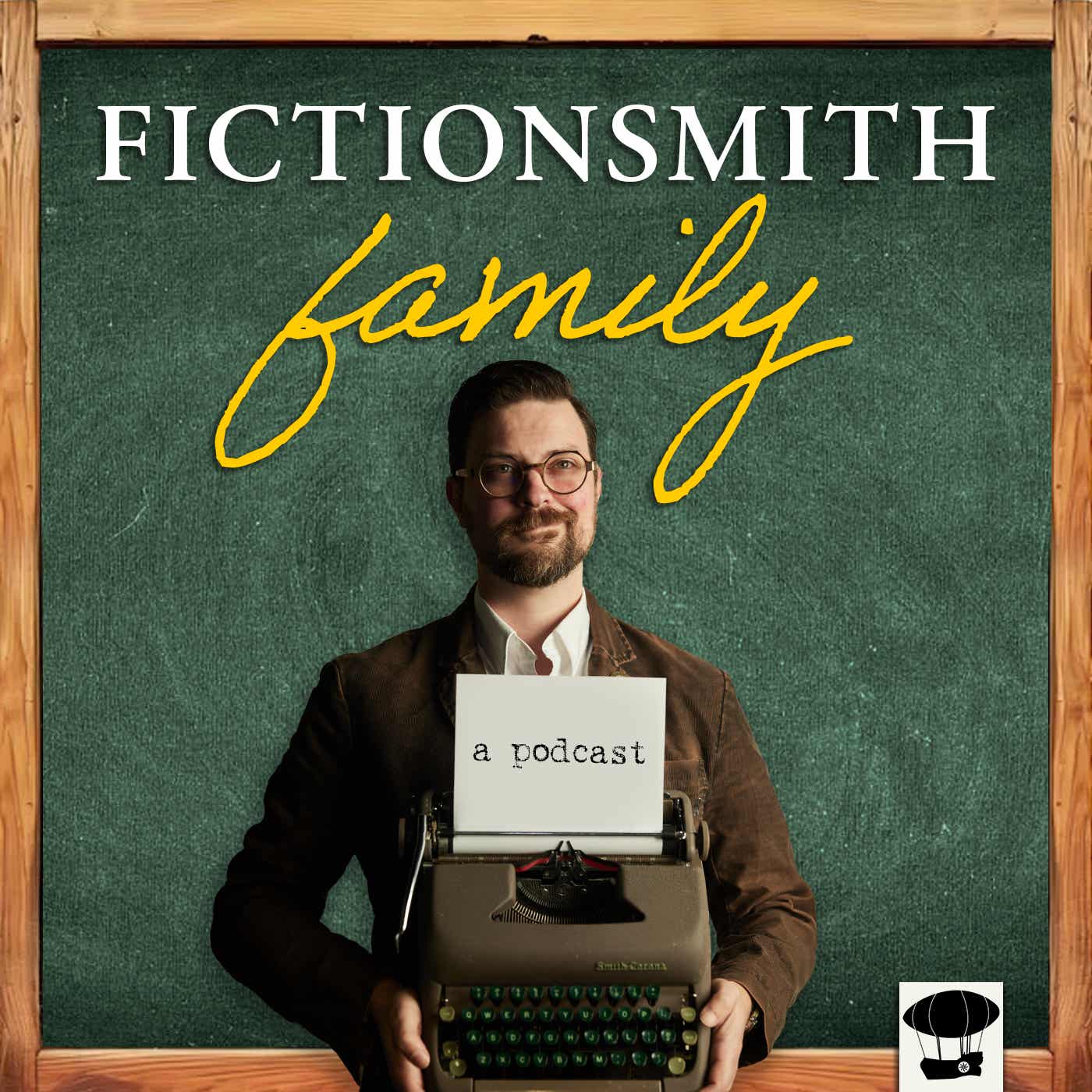
PODCAST · education
Fictionsmith Family
by Ryan Dunlap
Connecting families through storytelling. Invite your child into a meaningful story and reignite your own imagination as we walk you through the cooperative writing process with lessons and activities that helped my children and I publish our own books (and more importantly, spend time together). fictionsmith.substack.com
-
25
Summer Writing Project - Act Two Writing: Oh The Places You'll Go
One of the reasons stories are as interesting as they are is because it opens a window to us to places we've never been before.Having new places described to you allows you to be teleported into the shoes of the character, and it lets your imagination soar.I know everyone is different, but I have to ask myself how often I actually go new places. Sure, there's the occasional family vacation, and even sometimes those are to the same places we've been to before.Honestly, it's pretty rare. We might try a new restaurant from time to time, but with the way we pack our lives, we're all about getting from point A to point B as fast as we can, and we get in our routines to make sure we are as efficient with our time as we can be.But we crave new experiences. We read stories, or watch movies, or unfortunately, scroll endlessly on a screen looking for something fresh and entertaining... and I have many thoughts on phones and their roles in our lives... but those are filtered experiences. We're experiencing something new through someone else, and if we're drawing on that for our own storytelling, it will be a weaker (and eventually cliched) version of what you can do if you learn to describe something from your environment and your set of experiences.Activity: Not All Who Wander Are LostWhat I encourage you to do is to find some time to go somewhere safe that you've never been before. Maybe it's a walking trail you've always wanted to see. Maybe it's a different part of your town that you have never visited before.It's summer, I get it, so maybe even riding in the car somewhere to go down some streets you've never been before. No GPS, no mapping system, just go somewhere you haven't been before and take in the sights of somewhere new.And then, if you have the time and budget, find a restaurant you've never been to before and visit it. Check out the menu and maybe try something that isn't your usual go-to meal.Spend time together soaking in all of the new experiences and talk about what you notice. And when your food arrives, talk about what you taste.In Act 2 of stories, often our characters will find themselves in new places and experiencing new tastes and smells and sights. When you what you're experiencing first hand isn't what you're used to, your mind will be paying more active attention to it all and these can be great details to add into your book because you'll be more like your character who is taking it all in.If a restaurant trip is outside the budget, then maybe visit a grocery store you haven't been to and pick up ingredients for a dish you've never made before.Basically, I want you to jump out of the rut of your day to day and see if it doesn't jog your creativity in how you are writing your story and how you describe things.As an aside, I've found some of my more creative times have been during road trips to places I've never been to before. I was wondering why all of these ideas were coming to me and I believe it is because my mind was making new connections and firing on different cylinders than it usually was.Getting better at communicating what you are experiencing that is new to you will serve the story, and your reader. Plus I think it's an important life skill to pick up in general. Putting words to new ideas and concepts will serve you in so many areas of life.One more thing.What a character notices can actually tell you a lot about them. * Do they pay attention to the animals they see?* Are they always looking for where the exit is as soon as they enter a room?* Are they more likely to notice the style of clothes the other person is wearing more than what the other person is saying? Little details like that don't necessarily need to be pounded in, but they are little clues that we can give a reader about a character…and maybe can offer you some insight into yourself as well.Ask yourself when you experience someplace new, what are you paying attention to? Maybe that's something your main character can share.I hope your writing journey is going well. My apologies that these episodes are coming out a little less frequently. When I originally planned out the Summer Writing Project, I had it scheduled to run alongside Camp NaNoWriMo (National Novel Writing Month), but in the last year that program has gone away, so I figured I'd give myself a little more grace in releasing these as this month has been more about offering some writing advice and last month was more about how to understand story structure and using that to build out your story.Thanks for being a part of this! Get full access to Fictionsmith Family at fictionsmith.substack.com/subscribe
-
24
Summer Writing Project - Act Two Writing: Fighting Lulls with Conflict
As you write your story, you may eventually hit points where things feel like they've stopped being interesting.You may have the major events figured out by using your outline so you know how to get from Point A to B to Z, but sometimes when you are at those points, your characters may kind of run out of things to talk about or do.How do we fix this?Conflict.What is conflict? Things going wrong. Or are about to go wrong…Remember when we talked about characters being proactive, or taking initiative so that the events of the story are interesting because we get to see what they do when there are troubles?The things they're reacting to are usually trying an effort to fix a problem (or avoiding something that could become a problem). There may be a great big problem that they need to solve that is looming over the story, but it's going to take babysteps to get there…and those babysteps are going to be driven forward by handling problems that keep coming up.If there is tension, then there is something to talk about or do, and it will be hard to hit the dreaded standstill where there's nothing going on.What kind of problems can we introduce? And can we take a moment to feel a little sympathy for the characters out there who are constantly facing a tough time because of our imaginations?There are several types of conflict we can have in a story.1. The Big ProblemUsually our big problem is at least hinted at during the inciting incident and blooms into something bigger as the opening act develops. It's a driving force that causes our character to make steps and hopefully find a solution by the end of it.But because the hero won't be in a place where they can find that solution until they reach the end of the story, it means sometimes they can stall out and not know what else to do. So what else can we do to get them to the next part of the story?2. Internal ConflictWhen we start a story, our characters have flaws (or at least they should have some sort of problem that makes them interesting). It could be insecurity, or a character flaw like jealousy, or ego, or irrational fear.And because of those issues, we can poke that button from time to time and prod them along by having them react to the thing that they struggle with. Getting our characters into trouble because of those flaws is a way to have events that will keep things interesting, at least in the short run.We need to make sure that those problems aren't the major driving force, but instead are little interludes that remind us that the character still has to grow as a person too (besides solving the big problem of the story). Very frequently, the things that they have to overcome within themselves being resolved are the thing that both mirrors the big bad problem, and either the hero needs to figure out the solution in order to figure out the big bad problem, OR solving the big bad problem unlocks the personal problem and sets them free.3. The Ticking ClockIf we have something looming on the horizon the character knows is coming, but it's not coming immediately, it can be a big enough of a problem that it isn't the main problem...but it's something to focus on in the meanwhile.We could have a test that is coming up that the character is worried about. Or a hurricane can be slowly approaching and they have to evacuate and make it to safety. Or the character needs to buy something and don't have the money yet so they need to do something to earn it and save up. Deadlines that are approaching before the end of the story can be great for this and give you something to work toward.4. Wants (and Hobbies)A writing trick to make a character interesting and not having to always have everything be full of conflict is by having some low level or low stress stakes of giving a character a hobby they are trying to pursue.Maybe they like stamp collecting and just really want to try and find a special stamp. Maybe they love to draw and need to find some art supplies or want to win an art competition or make a special gift for someone they love.Not all conflict has to be a threat to their lives or some crazy big problem. Not all stories are like that, and there are some lower stakes problems that can be solved too, especially if you story is a calmer, more personal story.The point is that we just need to make sure that something is happening that is motivating the characters to take action. That keeps us from kind of just floating around with the story meandering and us getting bored as writers (or readers).One small warning, don't just throw something random at the characters for them to react to. If you're introducing new conflict into the story, just make sure it ties into something one of the characters want (or don't want), and it gives them a clear direction on what they should do next that will ultimately move them closer to the end of the story.Activity: Wants and ProblemsMake a list of all of the things your main character wants. Then come up with 3 reasons for each thing as to what is stopping them from getting those things.One of those wants met with one of the problems can help jumpstart you back on track for what can happen next if you're feeling stuck.Until next time! Get full access to Fictionsmith Family at fictionsmith.substack.com/subscribe
-
23
Summer Writing Project - Act One Writing: Prioritizing Your Time
When I set out to create the Summer Writing Project, I wanted to create something that parents and kids could join together and tell a story. I had no clue how many people would actively keep up with these episodes and how many projects would be written in real time as I send out these lessons.As of early July 2025, we crossed over 1,000 podcast downloads (mostly on Apple Podcasts, but it is available on Spotify and directly through Substack as well), and I'm encouraged that people are listening to and reading these lessons and hopefully participating in the activities.If you're joining me in real time, I'm immensely grateful and I'm trying to knock out 2-3 lessons per week and staying on top of this. But you might have noticed we only had one lesson last week, and this past weekend's lesson came out on a Monday.For that, I am sorry, but I also have an explanation.A missed opportunity.I had made an agreement with myself that Fictionsmith Family wouldn't keep happening if I wound up letting it take up the time that I usually spend with my family. That would kind of make me a hypocrite, telling people how to creatively connect with their children while I ignored my own kids.Early on, during the Prologue, I lapsed on that once.I had fallen behind on recording an episode I had written, and my wife took the kids to the pool and asked if I was coming along.I took it as an opportunity to have a quiet house so I could record without interruption, and then as I hit publish, I thought about my family making memories at the pool without me and the strain I was adding to my wife with managing the kids in a fairly chaotic environment so I could talk about spending time with your kids.It felt gross. I don't plan to let it happen again, and so far it hasn't.Summers can be busyAll that to say, summer can be a pretty hectic time in general when you have kids. Summer camps, birthday parties, sports, family vacations... the idea of sticking to somewhere around 50 lessons here and adhering to them in real time felt like it probably won't be the case for the majority of people who follow along.Also, for those of you who live in a place where the idea of taking a noticing walk means squinting through sweat and wondering why someone would subject you to the heat... I'm sorry. There are definitely alternatives to these exercises, and with this being my first time sharing these ideas with the public, there are going to be some growing pains and revisions going forward.Finding time to write togetherStaying consistent is important to any writing project. Or at least making sure that you aren't letting long gaps creep in to the point that when you pick the story back up you're struggling to remember the names of minor characters or forgetting important details.But if there are busy periods and you have to take a break, give yourself grace. Goodness knows on the third book of the Invisible House series called The Lost Saint, it took such a long gap that we had to re-read the first two books in the series before returning to the last half of the manuscript.I find what helps me is putting something down on my calendar daily as a reminder, and often I still have to initiate the time to work on the story together.Car trips are also helpful when it's just me and the kiddo I'm writing the book with because I can ask questions about what they think should happen next, or ask what they're going through in real life and then follow up by asking how they think the character we are writing would handle that situation.Overall, this is a time we get to spend together talking about life and story together. And because story is one of the ways we make sense out of life, conversations inevitably veer over in that direction until we're talking about what is on their mind, and ultimately the story we write is the secondary byproduct.This episode I know feels a little bit like it's taking a rabbit trail regarding writing a book, but if you've gotten this far and you have an outline of a story, my encouragement is to not give up and to understand that sometimes life gets busy and it's okay to take a pause if you need to.I'll do my best to stay consistent, and the beautiful thing about having this all in Substack and Podcast format is that through the magic of time travel, you can read or listen to this any time you want as long as it is available.One more thing about figuring out when to make the most of your time... ask yourself and your co-writer when you feel the most productive and creative. Some people like to be fresh in the morning, while others might like to wind their day down and then sit with a night light and put their story into words.How to team upIt may also be a situation where the two of you prefer to divide and conquer, or you have a creative meeting, then one of you goes off and drafts and you come back together to give feedback and talk about where the story is going next.Once you figure out when it makes the most sense to write together, put it in your calendar, or write it on a sticky note so neither of you forget.It can be easy to let time slip away, but if you're intentional enough to be following along with this process, then I think you can make it work.One last thingI understand this is a lot longer of a process than most kids would undertake, and interest in this may ebb and flow. We've had more than one writing project in our family kind of fade away, and I've always given my kids an opportunity to be honest with me if they decide they are done. I really don't want them to look back on the time we spend together and feel like it's only because I forced them into participating.I hope this is helpful, and thank you to everyone who has reached out so far and commented, emailed, and texted me about being a part of this process.Until next time! Get full access to Fictionsmith Family at fictionsmith.substack.com/subscribe
-
22
Summer Writing Project - Act One Writing: Remember this is the First Draft
I want to offer a quick reminder as we’re moving forward:This is the First Draft.We are in a magical time when it comes to telling a story. This is a time that belongs to you. Before this, the story existed only in your imagination, but that's not something that can be shared with others.This version of your story, the first draft, is something that nobody else is going to see, but it's finally all coming together in new and unique ways that might surprise you as you write.Is your writing perfect on the first draft? No.Do you need to keep going back and refining it and rephrasing and fixing things until you're happy? No. Not in the first draft.And that should be freeing!In the books that I've written, I've tried four different ways to write a first draft, and I'd like to share those with you.Pen and PaperFor my first trilogy of books, The Wind Merchant trilogy, and The Goldfish, I took nice notebooks that I had been gifted and I got out my trusty fountain pen and put ink to page.The beautiful thing about putting pen to paper is that you can't hit backspace on the keyboard and go back. And because I had an outline I was working from, only once ever in over 300,000 words did I ever cross out part of a page and rewrite something.And that was because I had decided to deviate away from the outline and quickly realized the idea wasn't right to pursue.There's something personal and special about sitting down with a pen and writing. There aren't any computer distractions that I have to worry about as long as I put my phone notifications on Do Not Disturb, and it was a great way to work on my handwriting and have a physical representation at the end of the story of the entire book...that nobody else would ever read but me.One of the silly things about this process though was that because I was so afraid that I wouldn't be able to fit the book into a single special notebook, I wound up writing so tiny that unless I typed up the words shortly afterward, sometimes I would struggle to read what I had written and if I did too many writing days in a row without adding it into the computer, it started to feel more and more daunting to type it all up.One fun side effect that came from doing it this way and having anywhere from 800-1,000 words on each page was that I could glance at from a bird's eye view.Usually there are about 250 words on a printed page, so I got to see what 3-4 printed pages would look like, and it helped me balance the page with dialogue, thought, and action like we talked about before.Plus, on those books, I usually kept chapters to about 4,000-5,000 words so I could tell that I needed 4 or 5 pages in my notebook to finish a chapter, and it helped me pace myself when it came to what needed to happen in the outline and how that would fit inside of the chapter.TypewriterWhen my daughter and I wrote The Invisible House, we bought a 1951 Smith-Corona Sterling and typed up first the outline, then the first draft on it.There is something special about the clacking of keys as you write. It's almost hypnotic as you create a typing rhythm and reach the little ding of the bell to let you know that you're nearing the end of the line.It also forces you to think through the word choices as you get to the end of each line because sometimes words might be too long before you need to pull the lever and start a fresh line.That has actually helped me think through ways I could be more compact and concise in how I explain something in stead of letting myself ramble on and on to pad my own word count.When I finished a page, I would use something called an OCRM scanner on my phone and it would turn the words on the page into text on my phone, and that saved me so much more time over typing everything up that I had hand written in my prior books.Plus I had photos of my manuscript on my phone as a backup too in case something happened to those pages.It wasn't a perfect process, but it was about 95% accurate.Plus, it's fun to say you used an old machine to tell your story. It does take a lot of work, and if little hands are typing, it might not be the easiest to hammer down on the keys. And not every typewriter is equal when it comes to a typing experience. I have a 1929 Underwood Number 5 that I used to write my first picture book when my oldest daughter was born, and my fingers would hurt for hours after typing on it. The Smith-Corona was a much nicer experience as I would never write 25,000+ words on the Underwood.DictationThis was a unique method that I attempted for part of The Glass Unicorn. Carrying my phone and opening an app that could listen to what I said and then transcribe it into text felt a little bit like magic.But there were definitely pros and cons to this. I loved being able to walk around and get some activity in while I was being creative instead of feeling stuck at a desk or in a chair.But you also have to learn to think a little differently as you dictate the sentences and switch from dialogue to thought to action. And figuring out when to say things like "new line" or "question mark, end quote" can kind of take you out of the storytelling experience.However, once I got the hang of it, I felt like I was back telling a bedtime story, and the back and forth dialogue scenes felt way more natural because what was being said matched up with how someone would actually speak.Sometimes when we write we can word things on the page in a way that is actually difficult to say out loud, or it creates a tongue twister.Later on during the editing phase, I actually will do a pass where I try and read as much as possible out loud to see how it sounds and if anything doesn't land right with my ear... or if I run out of breath before I finish a sentence and realize I need to break it up a little bit.There were some other technical issues I had with recording and walking and then going for a while and not realizing that halfway through the recording had either hit a limit or turned off and there I was telling a story to the wind. It was frustrating to have to say all of it again, and sometimes I would forget how things went.All that to say, if you're writing with a younger kiddo, it may even make sense to just record their voice when they tell the story and then take that and use tools that can transcribe the audio into text for you.At the moment, Adobe has a tool called Adobe Podcast which can do that for you for free. It's not perfect in recognizing words, but that is something you can clean up for the next draft.FreewriteThe device I use to draft the most now is called a Freewrite. Basically it's an e-ink screen attached to a mechanical keyboard that can connect to the cloud and email me what I've written or have it sync online to Dropbox or Google Drive. It's what I've written all of these lessons on and how I do a lot of drafting nowadays.While I love it, I recognize it is a big investment and there are cheaper alternatives out there like an Alphasmart, and there are cheaper Freewrite models as well.I like writing on it because I can step away from my phone and computer to save any strain on my eyes, and while you can do a little bit of editing, it's not designed to do that well so you'll keep moving forward.Some argue that getting a cheap laptop and just turning off the internet can accomplish the same thing. And that's possible. I'm just not great at avoiding checking other things while I write.Activity: Draw and Tell a StoryAs far as activities go, this time I want you to do something kind of silly.One of you draws a picture, it can be the worst picture ever, or you can put some effort into it.Then the other person writes a sentence to describe what is happening in that picture.Take turns doing that, then flip it around. One of you writes a sentence that the other person has to draw out, and then take turns.It's okay if you're not an artist. It's just fun to be creative together and consider how one person's imagination may picture something differently than another.Until next time! Get full access to Fictionsmith Family at fictionsmith.substack.com/subscribe
-
21
Summer Writing Project - Act One Writing: The Art of Noticing
One of the things that kicked all of this off and made it possible to do Fictionsmith Family was because of a noticing of a small detail that I had missed after passing it by dozens upon dozens of times.My oldest daughter, who was six at the time, saw a mailbox sitting on an otherwise empty grassy lot and came up with the idea of an invisible house.I had walked along that sidewalk countless times as I would train for half-marathons or just wanted to get my steps in for that day. I was always rushing, always focused either on getting the run over with or with handling a work email on my phone.When she noticed the mailbox, I was looking at my phone, handling something for work. I didn't have my imagination engaged the way she had.I truly believe that one of the reasons we'll look back and say 'wow, the time just flew by. Where did it go?' is due to how much we fall into the same routines, or do the same things over and over.If we've traveled the same route countless times, we're not looking out for the uneven piece of sidewalk that we've almost tripped over before, or the smell of the honeysuckle bushes we've stopped at once before.Part of making it more efficient for our brains does allow us to focus on other things we need to pay attention to, but I think if we don't stop and actively look at our surroundings, there is so much we are missing out on because we could be taking in new and amazing things, especially if we apply our imaginations to them.When my daughter and I had decided we were going to start writing a book together, we took noticing walks. The activity was simple: Find ten things you've never noticed before in our neighborhood.Sometimes that means you might need to walk a different path than you usually do. Or you may have to look closer at details around things you usually glance at.The beauty of the exercise is that it makes us more present, and it also helps train us in ways to communicate what we are seeing, feeling, smelling, hearing, etc.Adding in little details like that help bring a reader more fully into a story, and if you're showing them your neighborhood or trying to transport them into a moment that you are currently experiencing, that is a form of time travel.The better we can add in little details from what we notice around ourselves, the more vivid and alive we get to engage the imagination of the reader to transport them into their own version of our experience.And the better we can bring them into our world, the easier it is to tap into empathy of what it feels like to be another person. The more empathy, the easier it is to act with kindness as someone who might be a little bit different than you suddenly doesn't feel like they are 'the other.'Let's take a step back and do a practice run.As I'm sitting here writing this in my office, I want to try and bring you into my moment. I'm going to close my eyes and write down three layers of description and see what comes to mind for you.* As I sat in my chair and typed on my typewriter, the room felt peaceful.* Between the clacking of typewriter keys, the peace was barely disturbed by the rumble of thunder from the storm outside.* I took a deep breath, squeezing my eyes shut and focusing on the sound of the storm as the rain pattered against the rocks outside my window. The thunder was faint enough to still let in the traffic noise from the highway at the end of my neighborhood street.Not every moment in a book needs to be super descriptive, but as you go along you'll realize that adding in a few details here and there won't derail your story and will instead allow your reader to latch onto things that will bloom in their own imagination.Also, what they imagine will probably be very different than what you are imagining, and there is absolutely nothing wrong with that. As long as it doesn't detract from the story, it's totally fine to have those differences.Even outside of the realm of story, being able to notice things and communicate with each other effectively is a very important life skill.Activity: The Noticing WalkThis is something my daughter and I did early on in the process of telling our stories together when we were looking for little details to sprinkle into the story.What I want you to do is to go to a place that is very familiar to you. Could be a park or your neighborhood, or a store, or wherever you've both been to often enough that you could space out and not realize time has passed.I want you to cycle through the senses, trying to notice something that you've never spotted before.First, each identify something you haven't seen before and share it with the other. Then describe how you would put it into your book (if it would go in there) in a sentence. Notice the color, the shape, the way the light hits it. Anything that would be new to you and help you to have a reader imagine it as accurately as they can.Next, listen closely. What do you hear that you haven't noticed before? Is there a nearby highway with traffic in the distance? Are the birds out and about and calling to each other? What do your shoes sound like when you walk?What do you smell? You'd be surprised how effective adding in scents into a story can be to make it all feel more real. Often we kind of stop with what we see and hear like we're just watching a movie, but including more of your sense help put the reader more firmly into the moment.I won't ask you to taste anything unless you're going out for dinner afterward.For bonus points, either 'how did that get there?' or ‘what if the thing I just noticed...’ and fill in the blank with something fantastical that you wouldn't expect.I mentioned earlier that we turned a little lending library by our neighborhood pool into a place where someone mysterious left a message. We also took the trails into a wooded section by our home and came up with the idea of gnome houses and why someone would create those for decoration (or for hiding small treasures).Overall, I hope you're able to be present, notice the world around you more, and get to take that habit and pay attention to things you've closed yourself off from noticing because you've been there a million times.There's a lot to see if you keep your eyes open.I hope your story is starting to shape up and that you are getting to know your characters and setting even better as your story progresses!See you next time. Get full access to Fictionsmith Family at fictionsmith.substack.com/subscribe
-
20
Summer Writing Project - Act One Writing: Balancing the Page
Did you come up with your tense, perspective, and first or third person? I did find it a little funny that all of this is written and recorded in second person since I'm addressing you. Or y'all, which I feel qualified to say based on where I was born and raised.With some of the basics out of the way, it's time to put yourselves into the shoes of your protagonist. It takes a little while to get comfortable, and it may feel like wearing a costume that is too big or too small at first, but the more time you spend putting down words, the more natural it will be and the sooner you'll find the voice of that character.So where do we begin?Hopefully you have your trusty outline at the ready, telling you where your character is, what they want, and why they can't have it.I come from a background of movies and screenwriting, so if you're more used to watching movies or shows, it can be a slight transition to shift over being able to be inside of a character's mind to experience their thoughts.But since we as the readers, and you as the writer are also getting to know this character, it's okay to do a little practice run of a scene that will never make it into the book and you can just see how your character would react to something... like facing their biggest fear, or maybe they can experience something you went through yesterday and you can imagine what they would say or do if they were in your shoes.If writing prose is new to you, I like to think of how the story moves along like juggling three types of writing:* Action* Dialogue* ThoughtAction This is what I consider to be what your character sees and hears and feels, all described through the lens of the character to the reader.Samantha walked along the gravel path in the park, rocks crunching beneath her shoes. She squinted from the sunlight on the horizon and listened for her lost dog's barking.We'll go into how to put little descriptions of sensations for the reader to feel as well so they can know what it's like to be in that moment, but hopefully that paragraph helped you imagine someone named Samantha walking through a park and looking for her lost dog.There was no emotion behind it yet, and no dialogue. Unless she's calling for her dog or asking a stranger if they've seen her lost pet, she doesn't have anyone to talk to.All we're doing here is setting the scene, giving it some motion, and also a little bit of direction as to what goal she is after (finding her dog). It also gave a little bit of conflict and tension. She wants something and can't have it yet.ThoughtNow, going into a character's mind is a great way to give them a much more distinct voice. Sometimes people add in thoughts directly and italicize them, like:I can't believe Peter left the back door open again, Samantha thought. He should be the one out here looking.Samantha is already frustrated that she's doing something unplanned and the conflict wasn't her fault. If done properly, it won't feel like the reader is being spoon-fed all of the information and can understand what is going on as each sentence unfolds.DialogueLastly, we have Dialogue, which is when people speak out loud to each other. For example."Eddie!" Samantha shouted. "Here boy!""Excuse me," an elderly woman said from the park bench just behind Samantha. "Would Eddie be a golden retriever by any chance?"Samantha whirled around. "Yes!" she said. "Did you see him?"The woman pointed toward the pond. "I did, and so did the ducks. I don't think they cared for him chasing them into the water though.""Thank you so much."We have back and forth between two characters. They're exchanging information with each other relevant to the scene and its conflict. And by the end of it, we have a new direction as Samantha has a lead on where to go next and we don't have to have her wandering aimlessly in the moment and boring the reader because nothing new seems to be happening.For the three types of writing, I think it's good to find a balance. You don't want to spend pages and pages describing what is happening with no thought or dialogue.Sometimes there isn't someone else to talk to in a scene so you can only bounce between action and thought...and maybe the occasional musing out loud to themselves if they are the sort of character who would do that.Said vs. Other Dialogue TagsOne more little detail when writing dialogue. If you have just two characters speaking, you don't always need to add "Samantha said" to the end of the line of dialogue if it's easy to track the back and forth between the characters.Your audiobook narrators will thank you, if you ever decide to go that route.There are different thoughts about how to describe people talking. Sometimes they'll say things like "Samantha barked" or "Samantha growled" ...both of those make it sound like Samantha is the dog instead of Eddie.I highly recommend using "Said" in most cases. It is common enough that it becomes invisible to the eye of the reader and they're more looking quickly for who is speaking. If you want to let the reader know that someone is shouting or whispering, that's all right to do as well, but sometimes adding an exclamation point will convey a shout, and a character could lean in and add an adverb like "Samantha said quietly."Although many writers tend to avoid adverbs as much as possible.Lastly, sometimes it can take a while to get into your character's head. When I shifted over from screenwriting, I actually found I would have to take an editing pass on my book to make sure I included some of my main character's thoughts. So, while I don't recommend it fully, you can add that in later if it's not working for you on your first draft.Activity: Finding BalanceGrab your favorite book, and if you can either photocopy or take a picture of a page and print it off, use three different colored markers or crayons to highlight which type of writing it is so you can get a better idea of how a published work goes.If you're writing your story this month, you should still be in the first act, so a friendly reminder that by this point you should be introducing characters and places. Maybe even getting as far as someone stating the theme for the book.I'm proud of you, so keep on writing! Get full access to Fictionsmith Family at fictionsmith.substack.com/subscribe
-
19
Summer Writing Project - Act One Writing: A Tense Person's POV
Welcome to Act Two, the writing phase!We've spent a month and a half getting on the same page and brainstorming ideas to come up with the story that only the two of you can tell together.You might have pictures of awesome scenes dancing around in your mind and when someone asks what your story is about, you might even be able to walk them through what happens.But we're starting with a blank page. Chapter 1, word 1. You might be feeling the pressure to come up with some amazing opening line that will live alongside the great opening lines of literature.My advice: don't sweat it.Keep moving forward. This section is just for getting words down on the page (or the screen), and tell the story you have planned.The thing that most writers hate to admit is that writing often happens in the re-writing. It's not fun or glamorous, but also you can't start fixing things until you have your first draft written... and sometimes it requires getting to know your characters to better develop them...which requires interacting with them more and more and seeing how they react.You can always go back and fix things or adjust how you write later. But now is the time to get the story down. And it can be so much fun! Each scene is an opportunity to surprise yourself and dive deeper into ideas and characters and locations that you never would have considered before.So where do we start? I mean, before the opening line is written, there are a few things you'll want to figure out so you can stay consistent in how you tell your story.Figure out: Point of View (POV), Tense, & First or Third Person.Point of viewThe Point of View character, or POV as I'll shorten it, is the character that our reader will experience this story through, for the most part. You can have one character be the POV character, or you can have multiple. In some books I've jumped back and forth each chapter between two characters to help round out the story.Now, you need to decide if this story is being told with a Limited POV or Omniscient POV. Limited POV means that the reader can only experience what the POV character sees, smells, thinks, etc. You can't say:Ryan sat down on the park bench with some popcorn. The ninja hiding in the bushes was hungry and decided he would steal them.If the ninja is doing his job, then Ryan wouldn't know he was hiding in the bushes. And Ryan certainly wouldn't know that the ninja was hungry. We have to limit what we tell the reader to the things that our character is experiencing and can know.Jumping beyond the limited POV is Omniscient POV where we're being told a story by a storyteller who knows everything and can jump around to tell whatever details they like to the reader. You can read about what one person is thinking, then jump a thousand miles away to talk about what is happening somewhere else.Not a lot of stories can pull this off, and if this is one of your first stories, I highly recommend starting with Limited. Why?I find it incredibly helpful to be able to look around my world and figure out how to take in everything with my senses, and then put it all into words.The ability to communicate with others what we are seeing and what we are thinking and feeling is an incredibly valuable skill in life, and there will be some activities about how to work on that ability going forward. So, unless you have your heart set on omniscient storytelling, I really suggest you consider limiting what the reader understands through the POV character.Plus, the more a reader can feel like they understand another character, the more we flex our empathy muscle.TenseIs this story being told in the present or past tense? It's a grammatical way that you are either describing everything as though it is happening right now, or you are telling the story as though it has already happened and are describing everything in past tense.For instance:Ryan walks over to the bench and sits down.vs.Ryan walked over to the bench and sat down.I tend to prefer past tense because so much of what I read is in that tense, but sometimes new writers might accidentally switch between the two tenses in the middle of writing if they don't pick one to stick with.First or Third PersonFirst person is all about me. Or I. The storyteller is the POV character in a very intimate way of telling the story.I spotted the park bench and figured it was the best place to enjoy my popcorn.vs.Ryan spotted the park bench and figured it was the best place to enjoy his popcorn.This way we refer to the POV character in third person as though the story is being told ABOUT him and not BY him.Don't ask me why I'm on such a popcorn kick at the moment.For those wondering, yes, there is a Second Person narrative, but it is very rarely used. In that case, the POV character is you.You spotted the park bench and figured it was the best place to enjoy your popcorn.Deciding if you're doing limited or omniscient, past or present, or first or third person will help you stay consistent in your writing as you tell your story.And again, remember that you are embarking on your first draft. This should be fun, and anything you don't like, you can change later, but let's make sure you aren't spending an entire writing session trying to make that opening line the best it can possibly be.There's always a chance you can get well into your story and later decide that it would actually be the most interesting if you ditch the first two chapters entirely and start on Chapter 3. Or that the story needs a prologue to go before Chapter 1 to better set things up.Or you may decide your main character is interesting, but the story would be so much better if it was told from the perspective of the main character's little sister. Or the main character's teddy bear. Who knows? That's the fun of creativity.One last thing before you start telling your story. Every writing pair might approach this differently, but figuring out who will do the drafting (or if it will be a joint effort) is something that would be wise to talk about.When my daughter and I wrote The Invisible House, we would walk and talk through the brainstorming of what would happen in each chapter. Then we would together figure out the outline.Then when we started drafting, I started writing the sentences while saying them out loud...and I lost her attention (she was 6 at the time).So I took the outline we had created together and drafted the words for one chapter. Then I would read them aloud to her before bedtime and make sure I didn't use any words that weren't on her reading level and made notes on any points that created confusion. Then I took all feedback from her and went back and made sure I added those quick fixes.We'd repeat the process for chapter 2 the next day.Now that she's almost twice that age, our collaboration works a little bit differently, and there are some stories she writes all on her own that I read and give feedback on.There's no wrong way to do it if the two of you are collaborating and creating a story together. Well, there's one wrong way, and I'll go more into that at another time, but it involves letting something else do all of the writing for you, which kind of defeats the purpose of this.All right, hopefully once you've gotten this figured out, you'll be able to take your outline and start out your character on their journey! Get full access to Fictionsmith Family at fictionsmith.substack.com/subscribe
-
18
Summer Writing Project - Act Three Planning: A Complete Story
We have reached the end of the planning phase of your story! I know this has been a lot of information, but I sincerely hope that it has helped get your imaginations going and that you understand what goes into story structure a little more than before.I know when I started writing my first stories I would meander around trying to find things that were interesting to add into the story and it felt like halfway through I had gotten lost and it made the process not very fun.Hopefully you have a good idea for what ingredients you want to bring into a story as wind down toward the end of your tale.Speaking of finishing the tale, remember how I said the opening image is important because it will help you finish strong? Well, this is the end of the story! But the fun thing is, if the beginning and the end don't kind of mirror each other and show how much your character has changed, you can go back and change the beginning to better match it if you like.The only warning is that whatever you change in your outline you'll want to make sure everything still makes sense throughout the story from start to finish.After your hero has made their way past whatever challenge was stopping them (a villain or whatever was causing problems), we get to reflect on the journey that they've gone on and how much has changed. Back to the ShireSometimes the character returns to the Act One world and realize how different it feels because of how much they have grown. Sometimes they finish things out looking forward to whatever is on the horizon now that they have overcome the challenge they couldn't imagine facing at the start of the story.Let's look back at where the two of you came from. I'm guessing you might not have told a story together before. It might have seemed too big or too daunting to take on at first, but hopefully soon you'll have an outline of a story that the two of you have created.And the fun part is that this is a story that only the two of you together could come up with. You've put your imaginations and life experiences together and wound up with this particular story.I know right now we're just at the outline phase of the story, but it exists now when it didn't before.And even if you don't wind up sitting down and writing a manuscript, it's still a story you can tell someone. I do encourage you to continue on to the next phase of this project, but if you stop now, I do hope that the two of you have gotten to know each other better as you've spent this time together.I know when I get together with my kids and work on our books, it opens the doors to other conversations and gives us something to work on together. And someday either of us might crack open the book and remember all of the little details that went into this story and how it was all captured during this one little section of our time together.Looking AheadIn the writing section of the story (Act Two of the Summer Writing Project), I'm going to encourage you both to think about little details you can transport readers into your experience (or bring your future selves back to this time to remember what it was like).Some of the most fun elements for me in The Invisible House was going on a walk to try and notice little details to put into the book. There was a little lending library by our neighborhood pool that became a way for secret messages to be shared. There was a neighbor who flew a little motorized parachute glider over the houses, and of course that made its way into the books.And when there were these massive house-shaking booms from detonations happening just beyond our neighborhood, of course we made up our own reasons for why that happened and put them into the sequel, The Glass Unicorn. Each story was a time capsule of an exploration of what was going on in our lives at the time, and so each one has been fun to revisit from time to time to not forget the little details we captured along the way and placed into our stories.Activity Time: Tell Someone Else the StoryOne of the best tools I learned early on is that when you have a rough idea of the story where each big story moment has its own sentence, you talk to someone smart (who would be kind about the story) who would be willing to ask questions about it that can get you to think more deeply about the world you're creating..They're also great for helping spot plot holes or little points where the story might not make sense.And the beauty of having the outline be at such a high level is that if you need to change something, you're not throwing away a ton of work.After you talk to them, I recommend beginning the process of starting to add more and more details about what happens in each chapter.* Go from a sentence to a paragraph per chapter.* From a paragraph to 3 paragraphs in each chapter.* I recommend doing 3 paragraphs so each chapter has a beginning, middle, and end.And then, when you're ready, we'll kick off the actual writing part of the manuscript's first draft in the next phase of the project.If this is as far as you are going, then it has been an honor to be a part of your story.I hope you both can take these tools and tell more and more stories together.If the lessons and activities were helpful to you, please let others know about Fictionsmith Family, either the podcast, website, or Substack, or whatever iteration it exists in the future when you're reading or listening to this.For those of you continuing on this writing journey...let's get some words on the page. Get full access to Fictionsmith Family at fictionsmith.substack.com/subscribe
-
17
Summer Writing Project - Act Three Planning: Fight to the Finish
It’s showdown time!We've come out of the lowest point of the story as our hero has reached a moment of failure and introspection and learned something about themselves and why they are doing what they're doing...and why they can't give up.There is still a villain out there or an injustice or something that is causing a problem that they need to finally face (sometimes it could also just be their own character flaw or the need to reconcile with another character, so it doesn't always have to be a bad guy. Many relationship stories are about figuring out what needs to change within themselves in order to be the person they need to be to have the relationship with another character).The Try/Fail CycleThroughout the story there should be many versions of something called the "try/fail cycle" where our hero makes a plan, but things don't go the way they want. They try, fail, learn something, try, fail, learn something... but with each failure, they're growing and ultimately getting better.That's a tough lesson for us to face in the real world because we don't want failure. The hard truth is that failure is often the most effective teacher. We just have to keep trying in ways that aren't repetitions of past mistakes. And hopefully our hero will learn that too.And in Act Three, most stories will finally allow the protagonist to find the success that has been eluding them at the climactic moment of the story as they overcome the bad with good...but we're not there yet.Remember when I said that as we exit the low point we need them to gather together whatever friends and assets they've picked up along the way to make a plan to finish out the story and win the day?What happens if they make a plan and it immediately succeeds? It would be boring.The plan they make to launch into Act Three needs to be a good one, and one that the reader will think should probably work...and ultimately, it can work as long as enough things go wrong along the way. Either that, or they need to have their plans fall apart one more time, but that should allow an opportunity for them to take a lesson they learned along the way and apply it in a way that they figure out how to cleverly win the day.In many stories, it's the choice to be selfless and think about someone else.Because at the beginning of so many stories, it's all, “I Want, I Want, I Want, I'll sing a song about the thing I Want.”From ‘I Want’ to ‘Doing Good’It's not bad to want things, but sometimes that comes at the expense of considering the needs of other people. The more we grow and have life experiences, the more we figure out how to balance living and being around other people and how we need to still take care of ourselves, but also we can't ignore the community and world that we live in.I won't go into specific stories for spoiler reasons, but think about all of the stories where a character makes a sacrificial act for the sake of someone else and it's how they win the day.Not every story goes like that, but usually that willingness to think of others is what will separate our hero from the villain and give them the edge they need to win.Consider what I suggested about how the villain often mirrors the hero, but often they go way farther than they should to pursue the thing they want and that means hurting others because they are thinking so much about themselves.The hero then needs to realize how much is a healthy level of what they want, see how that mixes in with what they actually need, and then from that point, it gives them the wisdom required to overcome the badness that comes from being too selfish.The Why that they discovered during their low point is also going to be a factor that should give them an edge over defeating the villain, so make sure that is considered as well.Now, how can they fail at the task? The bad guy wouldn't be a very worthy foe if they couldn't hold their own in the final battle and just laid over when the hero showed up. They should have plans of their own that make things difficult for the hero, of usually they at least look like they have the upper hand once before they are defeated.Consider KindnessSomething for your consideration: I'm a big proponent of kindness being displayed in stories. Not every conflict needs to end in violence or physical force being the winning factor. Yes, there are some villains who can't be redeemed, and some stories have that.But for the sake of a mental exercise, let's consider what the motivations are of the villain, and if there is any way they can be redeemed. Sometimes they just haven't been given a chance or been shown kindness or sympathy and the lessons that the hero has learned are ones that the villain would do well to learn as well.Now, some stories may feel really weird if a bad guy who has destroyed a planet gets a free pass in the end because he just needed a friend, for example.When I was in 5th grade, there was a class bully who would threaten to sit on me and hang me up on a coat rack. Over time I realized he just needed a friend, so carefully, I offered to be friends.Not every situation is going to be like that, and I would never want my own kids to put themselves in situations that would be dangerous for them, but I think it's a very worthy exercise to consider that the antagonist is a person who has their own history and struggles and hopes and dreams and probably a lot of trauma that they've never dealt with in a healthy way.Activity: Back and Forth EscalationTo make a satisfying ending, we need to reach up, up, up on that chart we started to make on intensity. At about the 85-95% point of the story, we need to be at the height of the story. We can do scene/sequel and have some moments of reflection, but overall, Act Three is usually a race to the finish and we get a breather when the dust finally settles and we close out the story.So kind of like how we thought of 8 ways the hero could fail during the Bad Guys Close In section, let's think about how the conflict and tension can ramp up, and we trade turns about how the good guys and the bad guys keep one-upping each other until we can't go any further and the conflict is resolved.For this exercise let's think of 5 rounds of events that lead to the end like this:* First off, the hero does _____* Then the villain counters by ______* The hero bounces back by ______* The villain looks like they're going to win because they ______* But in the end, the hero wins because they had learned _______ and used that to be able to defeat the villain by _______.There are some more events we can flesh out during the writing phase for Act Three, but usually this section is one of the harder ones to plot out because when you start drafting your story, there will be parts of it that will surprise you along the way that you'll want to pay off at the end, and only by writing the story will you discover those. So sometimes it's best to hold loosely to the outline in Act Three and have an idea of the big events that wrap up the story.We're almost there! See you in the final episode of the outlining session! Get full access to Fictionsmith Family at fictionsmith.substack.com/subscribe
-
16
Summer Writing Project - Act Three Planning: Rally the Troops for the Finale
It's time to rise like a Phoenix! Or at least shake off the broken pieces from the crash our character just went through.Hopefully at this point our hero has discovered their motivation for picking themself back up, whether it is out of selflessness or duty or love or whatever it is they needed to learn at the beginning of the story.For example, in The Wind Merchant, the story starts off with a character who feels like a failure and is very much concerned that he is at the bottom of the list of wind merchants (whose job is to fly out in their airships and collect a valuable resource on the wind), and the last place on the list is called the Lack.So much of what he does early on is to avoid being seen as the inept person in the community, and it keeps him from discovering (for a while), that what makes him different is actually something that will serve him and make him uniquely qualified to save the day in ways that any other wind merchant couldn't.And to not be too spoilery, the biggest character change I reserved for the last book in the trilogy where he recognizes finally that whatever title he could earn or opinion others have on him is going to pale in comparison to making sure he is doing what he can for the most good, no matter what other people think. And it doesn't even matter if he gets the credit for being the hero or if others don't understand and think he is a villain for doing the right thing.When I got to that point in the story, I had to sit back and examine why it felt so right...and I realized that while the story had gotten bigger and bigger, if I went all the way back to the beginning, his flaw was that he was mostly concerned with being seen as a failure. I wanted him to be free from that.I wanted to be free from that.Taking this back to stories being a great way to work through your own thoughts and feelings, I didn't realize that telling his story would help me so much in what I was working through in my own life. I just wanted a story about a father and son reuniting in a fantastical way, but the more time I spent on it the more I realized that I couldn't help but put part of myself into a story.In The Invisible House, we had somewhat recently moved and my daughter was missing her old home. That story begins with a family approaching their new house and learning more and more about the mystery of the neighborhood.But the core of the story was having a strong family identity that carried through no matter where you lived...and even came in handy when she was feeling lost in the past through time travel.I'm not saying storytelling is something that will cover up for going to therapy and I don't think stories are served well if it is a moment for moment retelling of something you're going through in the real world.But even if you set out to tell a story, you're going to wind up with themes and ideas that you're wrestling with, and you might surprise yourself with what comes out on the page when you start to write. Characters might start to say things that you need to hear...or you would say those things if you felt braver.Why am I going on about this when we're talking about Act Three?It's because we need to really examine who our character was at the beginning of the story. What are the flaws or difficulties they face? Are they similar to ones you're currently going through?As we've put our hero through a lot of difficult things, they've survived. They've made it through everything the story has thrown at them, and while it probably hurt to go through, it's given them the opportunity to grow and feel more prepared as they're about to face down the thing that is causing the problems.So what does our hero need to have learned to allow them to reach the end of the story a changed character?That's going to be unique for each story and each writer, but it's an important thing to think through so we can have a satisfying conclusion to the story.Activity: What Are Our Assets?There's a moment in The Princess Bride where Westley is still mostly dead, but he's been rescued by Inigo and Fezzik. He's in no shape to save the day, so he has to be clever with the resources he has available to him.He asks what they have to work with, and forms a plan.At this point in the story, often our hero is going to realize they can't do this all on their own. They're going to need help still from the characters or resources they've had in Act Two, and in some cases some old friends from Act One.Often the mentor isn't around anymore, so the hero is the one who will have to come up with the plan and be the leader. It's going to feel really lackluster if we get to the end of the story and the hero is just following someone else's plan to victory like they were following a mentor character earlier on.Note: Even if the main character is going along with the plan, like Luke Skywalker joining the mission to attack the Death Star, it still requires him to make a choice of turning off his targeting computer and to trust the Force by the end.So, it's time to gather your allies and figure out what our hero has to work with.Make a list of characters and items that they can use in order to take on the villain (or whatever is causing the problem in the main arc of the story), and think through what the plan of action is our hero will take.Now, often times this plan is going to fall apart, so don't rely on this initial plan to be the thing that helps them save the day ultimately. The point is that we see our hero rise from a low point and take action once again.So, what's the plan? Get full access to Fictionsmith Family at fictionsmith.substack.com/subscribe
-
15
Summer Writing Project - Act Three Planning: The Story Rollercoaster
I think we might need a break from the heaviness of hitting the low point in the story. We talked about how to get our character to a low point by having failure hit them and taking away the things they've been relying on to get them this far into the story.Let's look at your story like a rollercoaster. It's going to be the most fun if things go up and down.There are two types of ups and downs we should consider:Tension and IntensityWhen you're riding a roller coaster and it's going slowly up, up, up, it creates this tension of 'I don't know what's coming, but I can't wait...' and if the entire ride was just building that tension, you'd get so tired of waiting for the release.On the other hand, if you were to start the ride and immediately drop into an intense free fall, it would feel relentless and you'd never be able to catch your breath.So when it comes to Tension, we need moments that build up some suspense and help give information, and then also the moments of action where we can just enjoy the ride and the crazy twists and turns it gives us.When I was younger and would run around telling stories in my backyard by myself (yes, I am an only child), I would then go and type them up on my family computer...and they consisted mostly of action scenes and big moments and I had no idea how to develop a character or build up to moments like that.Now, let's talk about Intensity.It's similar, but kind of opposite. Instead of build up and release, we're looking at high activity and reflection.Some people call this the scene/sequel method, where they will have a part of the story be the big events that happen, and devote a chapter to all of the big activity, and then they'll follow that chapter up with a 'sequel,' where they'll give the characters a chance to catch their breath, talk things through, and figure out what their plan of action is next.Having those moments in the story allows the reader to also not feel like the action is non-stop and it gives a great opportunity to explore the characters, what they're thinking and feeling, and to talk things through.Also, it gives us little three act structures within the scene.A beginning, middle, and end now get built into the major events of the story. It allows us to talk a little about what is going to happen, then the action or event happens, then the characters get to think through and process what just happened... then using that information, they plan on what is going to happen next.This isn't always the case, but it is a good way for us to have our hero impact the story with their choices instead of always just reacting to what is happening to them. Giving that moment between lets them (and us as readers) really give some thought to what should be done next in the story and we can better understand the character's motivation for making that choice.Activity: The Intensity ChartIn a screenwriting class I took in college, we were all tasked with taking a poster board and drawing a chart with how intense the moments of the story were, and if we were staying too high or too low for any period of time.Looking at the moments you have planned so far, which it's fine if you're still in the one-sentence snowflake part of the outline, think about each moment and rank it from 1 to 10, 1 being very low on action and intensity, 10 being wild and crazy.Now, we're at 75% of the way through the outline, and Act Three is usually where things ramp up to be the most intense part of the story, so unless there are some really crazy parts that have happened in the story so far, you might want to save a 9 or a 10 rating for the big climax of the story.If you're starting the story in the middle of a fun, active scene, then you may start at a higher number, but often stories will start kind of slow to allow the reader to get to familiarize themselves with the character and location.After that, you should have a spike upward when the inciting incident hits, then it drop down as the character debates if they want to move forward. Then the move from Act One to Two should be another jump upward. Do you see how things bounce up and down along the way?When you take each major moment from your story and rank them 1-10, do you see it staying too high for some parts, or too low for too long? If it's non-stop action, maybe think about how you can give your characters (and readers) a moment to catch their breath and relax. If the story has a long lull of what might be considered a boring pace, consider how the action or intensity could be bumped up with some interesting scenes thrown into the middle of it.The Edge of Act ThreeThis is the time where we are going to look at everything that has happened in Acts One and Two and think about how our character needs to change by the end of the story.Let's make sure that the flaws and difficulties they've had at the beginning can either be let go of or transformed by putting them through this darker period, because who they were at the beginning of the story shouldn't be enough to get them through the end, and only through changing are they going to be able to face what is coming in Act Three to win the day.Think about what their problem is in the beginning, think about what a mentor or friend sees in them that they can't see, and think about what they might have learned along the way as they adventured through the Fun and Games and Bad Guys Close In of Act Two, and you should start to have a recipe for what they need in order to finish out the story strong.See you in Act Three! Get full access to Fictionsmith Family at fictionsmith.substack.com/subscribe
-
14
Summer Writing Project - Act Two Planning: The Low Point
Were you mean to your hero? Was it hard putting them through a tough time? We spend so much effort to create these characters (and often we put parts of ourselves into them) so it can be especially difficult to see them go through trials and struggles, because it's hard when we go through things like that.Something that I find helpful is that if there is similarity, your hero gets to do something for you. They get to face your biggest fears with no real world consequences. In fact, they may help you to overcome your fears or the challenges you're facing because they've had to face what you were worried about.Sometimes the characters we write can be a big help to us in the real world, because in many ways story structure can imitate how life goes for many people. I'll save that lesson for another time as I'm still developing it, but I know from a personal level, when I put my character through an immensely difficult time that mirrors something I've had to face, it has let me safely explore and confront my imagination when it's being misused for worry.Our imaginations are very powerful tools, but so often we make up realities that will never happen, and all it does is stress us out.Now, don't get me wrong. I believe that thinking things through and being smart about what could possibly happen has merit to it. It's good to take life experiences and learn from them so you can watch out for making the same mistakes again. But so many times, they are just that...a story.So let's go back to our story. By this point, about 75% of the way through, we're approaching the darkest part when nothing seems to be going their way, and things have gotten so bad that they wonder why they even are on this journey. The thing they have wanted has fallen apart. Or, they feel like they have failed so completely that they'll never get what they hoped for. They may feel betrayed. They might be hurt, either emotionally or physically, and they probably think this could be the end of their journey.Even if they have lost their mentor or their guide along the way, we want to revisit the theme, or the advice that they should have received early on from a trusted friend, family member, or mentor, because usually there is a kernel of truth there about themselves that they just weren't ready to see or ready to believe.But now that they've been through this journey and have learned more and struggled to gain that wisdom that only comes from enduring difficulty, they're ready to do what needs to be done in order to rise up and decide it is worth it to continue on, despite the setbacks.And that's something that is incredibly valuable in life: the ability to get back up when the going gets tough or you've been knocked down.Stories can model ideas for us in the real world, and I like to hope that when someone reads a story when the hero has reached their lowest point, but still gets back up, it can be inspiration for the person reading the story to be motivated to get through their own set of circumstances and survive the difficult times.Finding Your Why (or Who)The light at the end of the dark tunnel can be found when the character recognizes why they really are on this journey. We usually start of with wants that are motivated from kind of a selfish desire, and over time, they hopefully start to see that the world is bigger than the things that they want, and that they have an opportunity to do things that help others and ultimately, the growth will help themself.Sometimes it's remembering that they are doing this because of another person (or a group of people), and that they can't give up at this point because giving up would directly impact not just themselves but others that they care about.As a writer and creative, I've been through some low times. I've used some of that to tell very honest stories that have helped me personally.While I do write for myself, I recognize that when I hit tough times, that my kids are watching to see what I do and how I handle myself during those hard times. Do I give up? Do I wallow in self-pity?I recognize that I have to get back up and show them what not giving up looks like.And sometimes our heroes in our stories can do that job for us as well as we remember that the characters we create are still kind of a part of us, and that part of us that decides we won't give up is the part that our story needs.Hopefully once you get past this part of the story, you'll learn something about yourself.Something I find useful is to look back at times in life when things were hard or disappointing, and think about how I (or a loved one) got through it.Activity: Remembering the way through.Now it's time for the two of you to think of 2-3 times in life where things really didn't go the way you hoped they would and it made life difficult for you.Each of you then thinks through how you got through it and share that with your writing partner.If you're in the middle of something hard right now and you don't know how you're going to get through, my hope for you is that thinking through all of this and processing it through story will be of some help to you during a hard time. It has been a help for me.Lastly, I want you to each think of the best advice you've ever been given before, and share that with each other.Telling stories is important, and not just the highlight reels. Let's get through this difficult time in the story and then we'll be ready to pick ourselves back up and fight to the finish as we enter Act Three. Get full access to Fictionsmith Family at fictionsmith.substack.com/subscribe
-
13
Summer Writing Project - Act Two Planning: The Downfall of the Hero
Let's face it. This is not an easy section of the story to plot out and write. We've created these characters, given them hopes and dreams and a quest...and now we have to make their lives more difficult.As much as it pains me to say it, if we skimp over this part, the story won't be very strong.Part of the hero's journey is being tested. If all they ever faced were easy things and everything went their way, they wouldn't grow.As I've said before, growth comes from the challenges they face, and that's something I believe is true in real life as well.In the first half of the book, our protagonist is hopefully very active in making choices and impacting the direction of the story. We've gone places and met people because of the decisions they've made.And now that we're past the midpoint, it's time for them to still make choices, but those choices are going to be largely in a reaction to things going wrong, either from bad guys, outside forces, or just the circumstances of how the plot goes.Remember in Aladdin when he's just soared through the sky on magic carpet with Jasmine, he's won her over, narrowly evaded his mishap about talking about Abu after Jasmine recognizes him (she's very clever in her own right and has many moments where you see her realizing things), and they have the moment on the balcony where they kiss.It's a false victory of a midpoint because he is still keeping up a lie about who he truly is.And for a moment, just about everything is right in his world. He got the kiss, he throws his arms up in the air and falls back onto magic carpet and says,"For the first time in my life, things are starting to go right."Less than a second later, three palace guards grab him the moment he gets to the ground, tie him up, and throw him in a lake to get rid of him.Side note, this happens about the 2/3rds mark of the story because Aladdin has a very long Act One to set up sympathetic characters, and the Fun and Games section is particularly long, because how can we cut any of the magic and musical numbers. It's a story about wish fulfillment, so we're going to have that part of the story expanded beyond the usual 25%.And that brings up a point that we don't have to be limited exactly by this outline framework. It's very important to understand story structure, and after that if you want to break free from it, knowing why you want to do that will help you understand what kind of story you're telling.Otherwise if you're kind of meandering with a story and it just doesn't feel right, it's hard to tell why.Now, back to Bad Guys Close In, because they literally just did that to Aladdin.Things get more and more intense. Aladdin has to blow one of his wishes on being saved by Genie, then the lamp gets stolen and Genie has to start serving Jafar, who outs Prince Ali as Aladdin, and before he knows it, Aladdin has been banished to a frozen wasteland.It all happens kind of fast.Aladdin does his best to escape all of these situations, but it requires the help of Genie (who gets taken away) and magic carpet. The Act 2 fun and games characters are the ones who help him the most during this part of the story where everything goes wrong.But while he is making choices, he is still having to react to the plans of the bad guy who is trying to get what he wants, which is power through Genie.In some ways, the Bad Guys Close In section is kind of like the Fun and Games section for the bad guys. They're making choices, usually smart ones, that make things more difficult for the hero in a similar way that the hero was winning and making choices that suddenly made things more difficult for them in the first half of the story.It's a lot of back and forth in stories, and honestly that is what helps keep stories interesting. If a character started off and kept winning and winning and winning, we'd just get really bored. If bad things happened to them and always kept happening, it would be a sad and depressing story. There is a place for tragedies, but I doubt that's the kind of story you're wanting to write.Ultimately, I want hope in my stories. Even when things look bleak and dark, I want the reader to feel like all isn't lost. We'll push as far as we dare to that point by the end of Bad Guys Close In, because it ends with the Dark Night of the Soul and All Is Lost.Yes, the antagonizing forces need to have an almost absolute victory to where our hero thinks maybe they can't go on. They need to doubt if what they did to get here was worth it. We'll dig more into that in the next lesson, but the point of this portion of the outline is to have moment after moment that wears down our hero.Sometimes that means the support that our main character has needs to go away. If there is a mentor character, they're usually gone by the end of this section because by the time we get to Act Three, our character has to figure some things out about themselves on their own instead of having someone hold their hand the entire way.So, as tough as it is, let's brainstorm ways that the hero can lose, or at least things that can go wrong. If they have a mentor, they probably need to be separated from them in some way. If they have friends or allies, maybe there is a misunderstanding or they have to leave for a little bit (they often come back in Act 3 when the hero needs it in a big way). Their goals that they've been working toward might fall apart. Or maybe they were mistaken about something important and they learn the truth in a hard way. Or maybe the decisions they've made that weren't great ideas are coming back to haunt them and people find out the truth.There are a lot of different ways that things can go wrong, but you'll want to make sure it hits the character in a way that they feel like maybe they need to quit.But next up, we'll figure out how to give them the motivation to go on.The best stories give us the ups and downs. If success feels like it's inevitable, it can be fun, but it won't be as satisfying. Because that's not how life works. We all have ups and downs, and sometimes the downs help us appreciate when things are going well. It's a gift we don't necessarily want in the moment, but it's still an chance to look at a tough time as something to grow from and make life better going forward.One last aside, if you're into sports, which can be fun because of how unpredictable the experience can be, I've found that the games that are the most satisfying are the ones where the team you're rooting for looks like they probably won't win the game. It's getting late in the game, they're behind...and the games where they dig deep and come back and win it in the last moments...those are the most fun ultimately, to me at least.So, in this part of the story we're going low so we can make the return and rebound and eventual win even better.Activity: Where Does It HurtLet's come up with 10 different ways that something could go wrong for the main character.After you have your list of 10, whittle that down to 3. One of them needs to be really bad for them, and put that last on the list. Then think of how the bad guys or whatever is working against our hero can use those three things and how our hero will react.Having those three things that happen to the character will help give you a roadmap to get to the lowest part of the story.But the light is coming. Don't give up hope. Get full access to Fictionsmith Family at fictionsmith.substack.com/subscribe
-
12
Summer Writing Project - Act Two Planning: Whoa! We're halfway there!
After today, we have hit the halfway point of our outlining proces! Which means... we're at the Midpoint of the story. We've just visited a new location or three and met at least one new B-story character.The story should have ramped up in fun and started to escalate. Our main character should have taken some positive steps toward their goal and the thing that they are pursuing seems attainable still.Also, at this point, most of our characters should have been introduced. Think about The Wizard of Oz. That's a story that has a very definitive punch into Act Two with the world suddenly going into color, and the fun and games being meeting the Scarecrow, Tin Man, and the Cowardly Lion and finally reaching the Emerald City.They spend their time being wowed by the spectacle of the giant city and all of it's fun and wonderful sights.The Rainbow ConnectionI want to talk a little bit about setting up promises and then payoffs. Let's look at the story kind of like a rainbow in structure.The top band of ROYGBIV is red, and it reaches the furthest left and right, and while we don't have to stay totally within this structure, a story packs the most punch if the things you set up at the very beginning are the things that are paid off at the very end and mirror the beginning as a way to show just how much has changed in the characters or the world.So, the things we set up in the first half of the story need to be have their part of the story conclude in the second half.Often you don't see many new characters pop up to be introduced in the back half of the story because there isn't much time to se them change.I will give a pass to villains on this. It's a very popular place for the midpoint to be the moment that a villain is revealed as a character. Sometimes they'll still be talked about so they don't come out of the blue absolutely, but the reveal is in the middle when things start to feel more real and grounded.Another option is that the villain is revealed late in Act Two but it's some sort of betrayal from a character that we thought was a good guy or a friend and it leads to a dark turn of sadness and the dark night of the soul.The MidpointThis is where the story shifts from the Fun and Games to The Bad Guys Close In. And it hinges on an event where we can't go back, kind of like we closed the door on Act One around the 25% point, we're about to close another door at the 50% mark.Sometimes this moment is also called the false victory or false defeat and both options work for stories.Either way, the character thinks things are going one way, and they'll be wrong, which makes the story interesting since when the character is surprised, hopefully the reader will be as well unless you're trying to be super obvious about where the story is going.A false victory may mean our hero has been having fun, maybe there's a lot of learning about what they need to do to succeed by the end (often there's a training montage in here that shows their progress if it's a film), and while we want to see them grow and make progress, the middle point is where the difficulty ramps up and something changes and they realize that they still have a ways to go.Sometimes it's a false defeat where they get to the midpoint and something bad happens, but it turns out things aren't as bad as they seem at first.Villains/AntagonistsLet's talk about the forces that are working against our main character. Not every story has a main individual villain. Sometimes it could just be a difficult situation that the hero has to figure out how to be clever to overcome. In The Invisible House, there aren't any villains directly in the first few books of the series. A slight spoiler, but even the person who we think is working against Charlotte in the second book turns out to not be a villain at all...which leads to a lot of confusion for her.But sometimes stories have a problem where the bad guys are way more interesting than the main character.Something that I've found to be helpful is to have the bad guy, or antagonist, to be someone who is kind of similar to the hero.It can be helpful for the bad guy to actually want something very similar to what the hero wants, but is willing to go about getting it in a way that is hurtful to others or just takes things too far. That's a good way for the hero to have their own boundaries about how far they're willing to go to achieve what they want. It's also a way help shift the main character from realizing what they want isn't all its cracked up to be and might be a little bit selfish...and seeing the villain in action makes them reconsider if what they wanted was the right thing to want. And then we get to pivot to the big realization that what they need may not be the thing that they want and it allows them to grow.That's usually when things get really bad and they have to dig deep and become the person they need to win the day.Let's think through what needs to happen in the middle of your story. There should probably be some kind of element of surprise that changes the direction of the story slightly. It needs to make things more complicated for our hero, and get the ball rolling on the forces that are working against our hero to give them an upper hand.It also could be that the thing that our hero was pursuing was at the tip of their fingers and they almost had it until something went wrong unexpectedly. Obviously a story can't be over at the midway point, so they wouldn't have gotten what they were after right away, but we need to show that the story won't be so simple and that our hero really needs to figure out how to grow and handle the disappointment.Activity: Fill in the Blank for your OutlineI still can't believe we're halfway there on the outline, and it may be that you have gotten this far and thought, "Well, this all sounds good Ryan, but how can we make the snowflake outline like you said at the beginning?"We can fill in the blanks.This is probably a little overly simple, but filling in this will hopefully give you a top down view to wrap your mind around the story. And if there are any missing parts, maybe it's an opportunity to look at all of the other parts you've figured out and to fill those spaces in.* Once upon a time there was someone named ________, who lived in a _________.* The thing they wanted in life the most was _______.* But they couldn't have it because of _______.* Then, one day, something happened. It was _________________, and it caught our protagonist by surprise. (Inciting Incident)* Because that happened, it meant ____________.* Now (character) had to make a choice if they would step up and do the right thing, or ignore what needed to be done. (Debate) But, because of __________, they decided they needed to move forward toward their goal.* After making that choice, (character) went to __________ (Act Two location) and met ________ (B-Story character(s)), who were different than anything they had experienced before because of _________.* And because of that, (character) was able to __________ (do something fun or interesting).* But suddenly, things changed again because of __________. (Midpoint Event)That's a lot of blanks. And hopefully you're able to fill in most of them. If you have any questions, feel free to go to the Substack for Fictionsmith Family and ask questions and I'll do my best to answer them.Oh, and one more thing. If you've made it this far, I'm incredibly grateful for you. What would be so helpful is if there are other storytellers you know to let them know about this Summer Writing Project and Fictionsmith Family. The more the merrier!Until next time! Get full access to Fictionsmith Family at fictionsmith.substack.com/subscribe
-
11
Summer Writing Project - Act Two Planning: Oh, the Places You'll Go
Now that we are out of Act One and have a mission in mind of what our hero needs to accomplish…what now?We leave the world of the familiar.Let's see what that looks like. We will set out to get where we know we need to go, and maybe initially our character has an idea of what they need to do, but very quickly they are going to feel like a fish out of water.This is an opportunity to introduce a new location that is unlike anything we've seen before and at least one new character who is going to keep things interesting.Let's look at Aladdin. The big moments that brought us into Act Two were going into the Cave of Wonders, finding the lamp, and getting betrayed so he became stuck. It's hard for me to think of a more fun B-story character to introduce into a film at this point than Robin Williams' Genie.Something to remember is that when we introduce new characters, they aren't just cardboard cutouts who are only there to serve the main character's mission. In order to keep them interesting, the Act Two B-Story characters need to have their own wants and desires that they will try to go after as well.For instance, Genie wanted to be free from having to answer to whoever held the lamp. The story does such a great job of wrestling with what he wants and how that intersects with what Aladdin is after.Aladdin promises that he will free Genie, and we as the audience get the new tension of 'will he or won't he live up to the promise by the end?' It makes it so that the story gets richer as we continue on and we learn more about our hero and how much character they have.And also, we get a lot of fun new locations. For example (yes, more Disney examples):* The Little Mermaid* Ariel gets her legs and heads to the surface.* Beauty and the Beast* Belle discovers the enchanted castle and all of the people who had been transformed. * Tangled* Rapunzel finally leaves her tower with Flynn Ryder and discovers the Snuggly Duckling musical crew.Aladdin is actually an example of how the Fun and Games section doesn't always have to introduce a new location, and we can return to the location of Agrabah, but something major has to be different. Aladdin is now Prince Ali and gets to go into the palace when he had only been looking at it from the outside... so in some ways we see different locations within the primary location.But this part of Act Two needs to be a lot of fun. It's an opportunity to delight the reader (and yourself) with unexpected twists and turns that are new and exciting to our hero, but nothing feels too dangerous or crazy yet. Unfortunately that starts to creep in later into Act Two, but for now, let's give our hero a little bit of a break and let them explore without too many negative consequences.Flying Into Act Two - No Turning BackIn my book, The Wind Merchant, our hero has accidentally caused his floating city to start sinking, and in that world, people can't survive beneath the clouds. So he has to leave the city in his airship and find something that can save his city.Act One ended with him flying away, and he couldn't go back and leave things like they were or else his city would sink. That's another thing to note about moving between Acts One and Two is that the hero can't go back to how things were before. That door needs to be shut and the only way to go is forward.As soon as they leave the smaller floating city, they hit a big metropolis that is so much bigger than they had ever seen, and soon they meet someone who is all too willing to be a tour guide for them and our heroes have to decide if she is actually helpful or maybe has other motives.Another thing about B-story characters is that they are an opportunity to explain things to the characters about how the bigger world works in a way that doesn't feel like you are info-dumping everything on the reader.You can allow the information to come out naturally instead of giving pages and pages of text explaining how the world works. We'll cover that next month in the writing portion of the lessons.But this is supposed to be one of the most fun things to write in the whole book, so be sure to brainstorm through all of the really cool things you can put into the story that are different or bigger or kind of upside down from the world we established first.Meanwhile, all of these steps need to take us forward toward the goals that the hero has still, so let's make sure this part doesn't feel too much like a distraction or a detour. They need to go to these fun locations for a reason, so they probably shouldn't just stumble into it and wander around.Activity: Drawing a MapI'm not an artist myself, but I have found it incredibly helpful to sketch out a rough map of where the characters need to go. And sometimes seeing that map will spark ideas of what could happen in those places.Let's try the rice map activity. If you don't have rice, there are plenty of other things you can use like dirt or sand or something small enough that it can bounce around on a page a little without getting too messy.But the idea is that you pour some rice on a piece of paper. Then you move it around into however many piles you want, and then trace over those to create the land masses once you're happy with how it looks.You can make islands, or show where a river would run through, and if there are any particularly bigger parts of the pile, you can remember those are the mountains.Then if you're having fun with that, put the rice back in the bag and start filling in where there might be towns, or forests, or deserts.After that, give them some names, and figure out where the story starts, and where it needs to go.You just might find some inspiration once it becomes a little more real in your head where your characters have to travel and how they have to get there.If everything stays within a neighborhood or a town, just draw out some streets and where stores or important buildings might be, add some railroad tracks and maybe a lake or river, and see where your imagination takes you.Also, this will help the world feel a bit more lived in if the characters have to consider how far they have to travel or how they might get somewhere next.Hope this helps, and I hope it was fun! Get full access to Fictionsmith Family at fictionsmith.substack.com/subscribe
-
10
Summer Writing Project - Act One Planning: Am I Good Enough?
When the world is shaken up, what will your main character do? Hopefully you've gone through some fun options about what your inciting incident will be, so the next question is...are they going to feel ready?They probably shouldn't.Or, if they do, they need to be mistaken about something. We're in the last part of Act One now, which is often referred to as the Debate.What is being debated? The hero should be questioning if they're the right person for setting things right. Again, I'll pull back to Star Wars a little, and Luke Skywalker just watched Leia ask for help and the mentor figure just handed him his father's lightsaber (!!!) and invited him to come and help.What does Luke say? Nope. He has to help his aunt and uncle with their farm.He doesn't see himself as a hero. He's a farm boy and not ready to enter into the world of space battles and the Force and just wants to get to the local station to see his friends and pick up some power converters.It would be pretty boring if he let Obi-Wan go off on own to rescue Leia, and the story needs to ratchet up and become more interesting. So, while the hero needs to be reluctant and resist the call to be more, we as the storytellers need to start turning up the heat a little.Or a lot.During the debate section, which is usually about 10% to 25% of the book, the thing that happened in the Inciting Incident that turned everything on its head needs to start impacting more and more things until our hero almost has to be forced out of their normal world and start going into the world of Act Two (which the first half of Act Two is probably some of the most fun of the story, and is often referred to as Fun and Games).Basically, we need to take away things from our character that might have been the reason they didn't want to go out on an adventure in the first place.For Luke, it meant losing his farm and his aunt and uncle. There was nothing left there for him, and now the call to save Leia and fight the Empire was motivated by seeing what the Empire is willing to do and why they need to be stopped.Not every story is going to be as epic on a grand scale or even have battles. None of my middle-grade stories have awful things happening to that level, but sometimes there is just the call to adventure that they need to figure out if they are equipped to handle it...and sometimes I have to give them a big oopsie nudge and bump them into a place where they can't go back.Mild spoilers for The Invisible House:After she discovers there's a lot in her neighborhood with a mailbox and no house there (which is what started all of Fictionsmith Family off in the first place in real life), she starts investigating. She's curious. She's not been invited into a big mystery (yet), but she starts discovering more and more clues and it draws her in to want to solve the mystery of something that feels off in her neighborhood.She starts discovering messages left for her, and she has to debate if it's okay to respond to them and try to figure out what she is getting herself into.And then when she decides she wants to fully investigate, she winds up getting stuck in the past through time travel, which is the big jump into Act Two where the world is so different from where we started in Act One that we get to come up with an entirely new set of locations and characters in what we'll call the B-story.Sometimes the debate section is merely the opportunity for the call to adventure to become more and more appealing with everything that happens.While it's okay for us to force the protagonist into Act Two, what we really want to see are characters who make a choice and have their choices impact the story. If all that ever happens are things happening to the character, they're not actually active in their own story. It wouldn't really matter who was the main character because everything happened TO them.The protagonist/hero/main character is going to be so much more interesting to go on a journey with if they're the one making decisions on what happens next.For now, as we're filling out what happens in Act One, it's okay to just call this the debate section, but we'll want to pencil in some things that happen that will cause the main character to eventually decide to step up and accept the call to grow.The jump into Act Two.This is a big, big moment in the story. It's the time when our hero leaves the world of the familiar Act One that we set up in the beginning, and they're heading off into the world of the unknown.Often they will physically leave their hometown or their city to go on their quest to stop or fix whatever is a threat to them or their loved ones. Or if we're looking at something lower stakes, they could be starting school somewhere new or going to a summer camp.Whatever it is, things will need to be very different, and in Act One we need to at least clue the reader in that this is the place our hero will need to go to even if they don't feel prepared for it.Usually this moment happens about 25% into the story, and it's easy to spot in books and movies because often we'll start to meet new characters and visit new places and we won't get back to where we started until the very end of the story and the character will be the one who has changed and grown.Since we're jumping into Act Two, let me give you a quick overview of it for the next two weeks so you know what is coming up:* We're currently breaking into Act Two from Act One with a big event that means the main character has to make a choice and leave the familiar to make things better or pursue what they want because there is an opportunity.* As soon as we have crossed that threshold, we are into the Fun and Games section where we meet interesting new characters and visit unique locations that make our character realize there is more to their life than what they've been a part of before. In movies, the trailers and previews often pull a lot of their moments from this section because it's so entertaining and we often see the character having a lot of fun.* Then we reach the midpoint of the story. It's usually another big moment where the character crosses a threshold and the fun and games kind of stop. Things get more serious, and there's a wrinkle in the story that means we can't look back anymore. This is a good time to introduce a plot twist or let whatever forces are opposing the main character to get a turn at winning.* The back half of Act Two is the Bad Guys Close In phase, where things start getting more and more difficult for our hero because the opposing side is starting to get more proactive and it's going to be a struggle to keep up with them.* Usually Act Two ends with something bad happening. If a mentor character has been traveling with them, they either leave or die and the main character suddenly starts feeling really alone. This is often the darkest point of the story and sometimes gets referred to as the Dark Night of the Soul.Act Two in general is where a lot of writers get kind of bogged down. They have a fun idea for a character and a world to build, and maybe even know what the big event is that sends the character off on an adventure... but then half of the story gets filled up with all of the messy middle and it can turn into a slog if you don't have your outline prepared.This week we'll cover the first half of act two, and next week will be the back half.So let's figure out the following so you're ready:* What arguments does your main character have to debate not going forward in the story?* How can you take those arguments away with events happening in the story?* What needs to happen to motivate the character to leave their familiar world and take their first steps into a bigger one?Activity: Noticing WalkSometime this weekend I want you to go on a walk or a drive together somewhere that is familiar to you.I want the two of you to talk about the first time you remember coming to this place and what it felt like when it was new to you, and then how it feels now that you're used to it.Lastly, I want you both to come up with fun ideas for how what is familiar to you now can be different or wacky or more fun.Brainstorm for a little bit, and then after this we'll start diving in on the B-story characters and locations that make up the Fun and Games section of the story! Get full access to Fictionsmith Family at fictionsmith.substack.com/subscribe
-
9
Summer Writing Project - Act One Planning: Turning the World Upside Down
A lot of stories start off just trying to get the reader or viewer comfortable with the world they've entered into by using the main character as the eyes and ears (and nose and tongue and, you get the point) to experience the story.Some stories are easy to get the hang of because they’re so similar to our own world, sometimes you have laser swords and spaceships and elves and dragons and it's a little different... although how awesome would a spaceship be? I know I'd probably lose a hand with a lightsaber, no matter how badly I wanted one growing up.But in the beginning of the story, we're just trying to get you to care about the main character so much that no matter what happens next, we're rooting for them in whatever journey they go on.I encourage you to really give it some thought as to what needs to happen to help a reader care about this character. It's great to give them a save the cat moment, and we want to make them clever or kind or interesting, but sometimes the best way to give the reader something to root for is to give the character a goal or a want that they are going after but might feel a little impossible when we first meet them.A writer friend once told me that the Pixar story team in their early days used to all get together and sit down and watch the Miyazaki film, My Neighbor Totoro together before they embarked on the next Pixar story.My family loves Totoro and we watch it on a regular basis, but part of the magic of that story is how long the story takes to have anything fantastical happen. Totoro doesn't even show up until the movie is 30% finished! But we get to know Mei and Satsuki as they familiarize themselves with the new house they're moving into and everything is different to them. The only familiar thing they have is their family, but their mom is sick and at a hospital and they really want her to get better. It takes a while before we get a hint that there is some fantasy at play, and we spend a lot of time watching the two of them just be sisters together.Because of how much time we invest in the two of them and their dynamic at the beginning, when there is peril at the end of the story, we really care and want everything to turn out okay.All this to say, you may be really excited that your story has, let's say, aliens arriving to shake things up with the stories. But if we haven't spent any time with the main character to get to know them, if the aliens arrive on page 3 (or even the end of a short first chapter), the story might start to feel more like a series of events happening to someone instead of going on a journey and figuring out what they want and need.The Inciting IncidentThis is the exciting part of the story where we've set up the main character and their world and we're just about to start getting comfortable... and then something really interesting happens.Often this happens about 10% of the way into a story. Usually if you're watching a movie this will happen about 10-15 minutes in. In My Neighbor Totoro, we get the first hint of fantastical elements when around 10 minutes in, they discover soot sprites living in the attic... but after that not much else happens until we meet Totoro in Act 2.It can be way more dramatic. A boy wizard can get an invitation to a wizarding school. A fancy new toy can be a birthday present and threaten the established favorite toy. Just think of your favorite stories and when things make a big shift that pose a threat to how things usually go.It's an opportunity for them to learn something about themselves, but usually it is an outside force coming in to change things in a way that means things can't go back to the way they were.Now, this isn't the time our hero runs off to immediately face the change. They aren't going to fight the dragon or save the day this early in the story. Remember they are still who they are at the beginning of the story so they aren't going to be ready to face this challenge yet.They have some growing to do.And growth comes from the facing of challening things and the learning that comes from that. Most characters (ourselves included) will usually want to have our day go as easily as possible. We'll make the choices that cause us the least amount of pain or discomfort...but that's not usually when we grow or develop.Learning from mistakes or having to change things to adapt to difficult situations help us grow, and it's also why we find stories so interesting. We get to watch someone else face a big challenge and figure out what they're going to do about it (and how it's going to change them, hopefully for the better).Writing can be therapeutic.Writing, for me, has been an opportunity to work through some tough seasons of my life. It has allowed me to create a character who is wrestling with the things I'm wrestling with, and then I get to send them off into their fictional world and face the challenges that I'm either facing or I'm worried I'll have to face.And writing their story is kind of a way for me to personally work through all of the 'what if' scenarios I would be afraid to face unprepared in life... and after the story is finished, I feeel a bit more prepared because I have examined that fear thoroughly and either realized it wasn't as bad as I thought it might be, or I feel more prepared for it and have a better idea of how I would handle it.Storytelling can be very theraputic for the writer, which is why I think choosing an inciting incident that maybe hits a little close to hope is an opportunity for you to work through your own worries or fears and come out the other side of the tale better off.Plus, if you're being honest about what you're wrestling with, then you're very likely not alone in that struggle, and someday someone else who is dealing with those same things might stop and read your story and feel a little less alone too, and then you'll have helped them as wel as yourself with your storytelling.Activity: What If BracketI want you to come up with 5 crazy ways the hero's life can get disrupted.Some examples could be:* New competition arises (classmate, pet, sibling)* Surprise change (they have to move, the thing they want is suddenly gone)* Something bad happened (to someone they care about perhaps)* They've been picked for something they don't feel ready for.* Something amazing happened unexpectedly, but there are strings attached (With great power comes great responsibility...)* They forgot something important was coming up and they feel unprepared.After coming up with 5... let's do 3 more. Dig deep. Sometimes the best ideas come when you push yourself a little past the surface level thoughts.Now, since we have 8 ideas... that's a great number to BRACKET! Make them face off against each other until you have the idea that the two of you think will be the most interesting thing that could happen to your character.Best idea wins! See you in the next lesson! Get full access to Fictionsmith Family at fictionsmith.substack.com/subscribe
-
8
Summer Writing Project - Act One Planning: Saving Kittens for Likability
We have our starting line, hopefully we have at least a name and general idea of our main character and how they start off the story... now, let's make them likable!As I've said before, there is a fantastic screenwriting book called Save The Cat that I am drawing pretty heavily from here, which for movies, you don't have as much time to develop the characters as you do a book, so sometimes you need a shortcut to show that a character has... well, character.In the example from the title of that book, the idea is that if you want to make a character likable, you have them do something kind for someone or something like, you guessed it, saving a cat.Usually the hero needs to do something that means they get no reward out of it aside from being a good person. Think of Aladdin who sings an entire musical number about how hard it is to make a living on the streets to get away with a piece of bread... which, side note, thievery wasn't exactly showing him in the brightest light, but it did show that he was very resourceful and clever, which were traits that were going to come in handy when he had to face off against Jafar at the very end of the story. Spoiler alert.But what does he do? He sees two starving orphan kids, and he gives them the bread instead. In one way it's an easy thing to show that he is kind hearted, and also it's maybe a little peek into his own past when he was little and had a hard time finding food.At that point, the genie hasn't shown up yet, but our main character has shown that he is willing to sacrifice things for himself in order to look out for other people. He may be rough around the edges, but inside we can believe he is capable of making good choices that we will root for.So let's think about what it is at this point in the story you could make a moment out of. Who is someone in your character's life that they could help or show kindness to? It could be a sibling, a friend, someone they've never met before. Sometimes helping a stranger has a way of coming back to help the main character later in some stories.The Theme: What’s this all about?Usually after we've introduced everyone and the world we'll be seeing in Act One, we have a character who is maybe a little older, a little wiser, who we can call the mentor. They'll often give a piece of good advice that the main character may not be ready to accept yet, and that's usually shorthand for telling us what the story is really about, and it's the lesson that the character needs to learn in order to change... but at this point they're probably too busy chasing after what they want, or they're about to get distracted by the Inciting Incident that we'll talk about in the next lesson that's like this big wrecking ball of fun that sends the story into an entirely new direction. Well, maybe it's more fun for the reader than the character.It's totally fine if you don't have the theme locked down for this story yet.Sometimes it takes figuring out how all of the moments in the story go before you're able to figure out what the story is even about.Parents, this is an opportunity for maybe investigating a little and figuring out what encouragement or lesson your younger half of the writing duo needs to learn through a story. I don't think all stories need to be lessons like this or try to beat someone over the head with a lesson, because nobody wants to get to the end of the story and realize "and this is why you should always eat your broccoli."But it's something to consider, especially if you want to work through difficulties through story.Activity: Kindness and Best AdviceFor the activity, I would like each of you to come up with 2 examples of how someone has been kind to you in your life, and share them with each other.Then, I want you to each come up with the best piece of advice you've ever been given and share that with each other.And then consider if any of those things should wind up in the story...Until next time! Get full access to Fictionsmith Family at fictionsmith.substack.com/subscribe
-
7
Summer Writing Project - Act One Planning: Let's Outline Our Story!
We’ve made it out of the prologue, and here we are in Act One, Chapter One, Page One.It's okay to be nervous or excited, and it's also okay to make mistakes and realize you have to change things later. A lot of times when I had an idea I loved, I got a little ways down the road and realized that maybe some things needed to change before I could get off to the races.But what I learned from that was that usually the better idea didn't come along unless the idea I came up with first didn't work. And that's part of the fun, if you let yourself just play and use your imagination and be open to ideas you never would have come up with on your own.You have a secret weapon: each other.You each have your own histories and stories and ideas to bring to this, and part of creativity is mashing them up together to create something new.Something else to consider is that for a first outing on storytelling, it might be a good idea for some of these characters to share at least some similarities to the two of you. For instance in our first series that I'm writing with my oldest kiddo, the main character is the oldest child, and those similarities help us to explore those relationships and sometimes work through issues in a creative way.I'm getting ahead of myself.Let's talk about the opening scene.As I mentioned in the Prologue, the opening scene is often a way to set up all of the promises you're going to make to the audience. They should be able to quickly figure out what kind of story this is. Are there spaceships? Elves and dragons? A normal kid routine?Now, sometimes those special elements don't come in until the Inciting Incident which we will get to in a little bit. The Pevensie children didn't start Page 1 in Narnia, but by seeing a Lion on the cover and the description on the back of the book, you get an idea that there will be some fantastical elements coming up. Meanwhile, Harry Potter starts off with a bit of magic from the beginning.Either way, we need to meet the person we will be going on a journey with, and we need to be able to get an idea of what kind of life they lead.A lot of the challenges that they face in the beginning of the story give the opportunity for the very end to mirror their situation, but show how much they have grown by going through the events of the story.So, let's try and figure out where your main character is, and for the ease of this maybe being your first book, let's put them somewhere that is familiar to you. It could be a home, a school, a place that you're used to going to often and feels comfortable to you.If I could ask for one thing... don't start with a dream sequence. It can be done well, but it has been done so many times and it kind of breaks the trust with the reader since what they've been reading has turned out to not be real and then it usually gets interrupted by an alarm clock and starting their day.Just because waking up is a way to start something, it doesn't mean your story needs to start that way too.The opening section of your story is an opportunity to show what is at stake for the whole story, and with our hero having a problem, it's a way to show what life might be like if nothing changes or they fail at what needs to happen.Activity: Who and Where?So, here's today's challenge. First, try to lock down WHO this story is going to be about. It's hard to start a book without that. We'll get into more about how to make them more likable or have the reader rooting for them later this week, but let's at least pick out a name and some general features.Let's ask the questions: * Do they have a family?* Who is in that family?* Do they get along?* Do they have any close friends?* What might be on the walls of their room?Lastly, let's pick a place where this story starts off. If it's the main character’s home, what might be happening in the house that would make the story interesting? Do we start it a place that shows what is going on in their life, like maybe a school classroom or a birthday party or they have to perform on stage? It's up to you, but do remember that the opening of a book has to be interesting and keep the reader's attention.Now, you can change this to whatever you want later. In fact, you may get to the very end of your outline and say, 'this ending is great, but it would be even better if the beginning mirrored it in this specific way.'Before we go, I'll let you in on a quick writing secret. You know how sometimes in a story there will be a big plot twist or mind blowing revelation? Usually a writer has that in mind and is working toward it... but sometimes the idea comes along and is so awesome that the writer decides to go back and add in little details that hint toward that thing earlier in the book that wasn't originally there! But we as readers have no idea at what point in the writing process that idea came, so the pressure is off for you to come up with fun ideas and put them wherever make sense. The reader will never know and won't even stop to think about it as long as they're having a good time reading.This is also why we are doing the Snowflake method and keeping these sections to one sentence. If you need to change something later, it's easy and you don't have to throw away thousands of words.Again, welcome to Act One. Our foot is out the door and there is no turning back! Get full access to Fictionsmith Family at fictionsmith.substack.com/subscribe
-
6
Summer Writing Project - Prologue: The End of the Beginning
I can't believe we're already at the end of the prologue! Two weeks in, and I'm proud of you both for sticking with this. I know it's a lot of time to invest in a project, but it's going to be worth it.I hope the ideas you came up with has gotten your minds spinning with characters, places, story ideas, and more. And if you're not quite sure yet what you want to tell a story about, that is totally fine.We have coming up what I like to call Act One, which in storytelling is where we start the story, and as I give a high level overview here on outlines and structure, you'll realize it's where we introduce our characters and the familiar world they start in.Note: This is going to be a really big lesson, and I recommend you listen to the audio over reading through this because I think it could paint a clearer picture.But we're going on a journey together.Over the next four weeks we're going to work on developing the ideas behind what happens in the story.When my daughter and I would brainstorm ideas that could happen while on our walks, we thought of all of the cool scenes and characters and moments that should make it into a book. And an outline really, really helps make sure the best moments find the right spot in the story to happen.There are a couple of places I've learned story structure. One of them is called Save The Cat, which started off breaking down story structure for screenwriting, but they've released versions for books as well. The other is called the Snowflake Method.Let's use both.We'll go through the different moments from Save The Cat's structure, but use the Snowflake Method.The Snowflake Method tries to emulate the way a snowflake is formed. You start with something simple, and then you expand from there.So, for instance, after we identify all of the parts of a story, we're just going to write a single sentence on what happens for that moment or chapter.Warning: Major spoilers for The Invisible House, but this is the initial single-sentence outline we came up with before we even began the first draft, but it took a lot of brainstorming walks to get here.And the story changed in some significant ways from here, but being able to explain this story to family at this basic of a level helped us understand if it was interesting or not and if we wanted to rewrite it, it wouldn’t take forever to change the sentences.Then, after we have single sentences plugged in for every moment, we have a basic story that we could explain to someone from start to finish. It won't have all of the fun details we want to add, but it will help you to look at a story and quickly be able to tell if part of it doesn't make sense, or if there's too much (or not enough) action.And that way, if you decide something doesn't work, all you're doing is throwing away a sentence and not a paragraph or a thousand words, or days or weeks worth of writing because you built the rest of the story on something you decided didn't make sense after you were off to the races.There are usually two types of writers:Plotters (outliners), and pantsers (those who write by the seat of their pants and just keep writing until they're done). The latter are more likely to accidentally paint themselves into a corner and have to rip up a big part of their story and figure out how to fix it.I don't want that for you, and since you might be new to the idea of structure, and we only have a short amount of time this summer to write, I want to make sure we are as efficient as we can be with your time.So let’s figure out what goes into an outline:Blake Snyder came up with his own Beat Sheet of the moments that go into a story, and having that as a reference while I talk you through this in the audio portion of the lesson will be helpful (and so I’m not copying what he had to say over here).Activity: Once Upon a Time There Was a _______This is an activity I used to do with my kids for bedtime stories that was very helpful in us both figuring out what went into an interesting story and it was a launching point for a lot of ideas.Kind of like the ping-pong activity we did, we go back and forth saying:“Once upon a time there was a ______, named ______, and they lived in a _____. The thing they wanted most in life was ______, but they couldn’t have it, because _____. Then one day…”And that’s enough to get us through the basics of an Act One structure (more or less).I recommend you run through 3-5 of these and see if anything strikes up an idea, because in the next lesson…we’re starting our outline! Get full access to Fictionsmith Family at fictionsmith.substack.com/subscribe
-
5
Summer Writing Project - Prologue: How Big is this Story?
I hope you had a fantastic movie night and came up with some ideas for your story and what kind of character you might want to write about. Did you figure out what they wanted, what was stopping them, and how they realized what it was they really needed?Now, interesting characters are great, but they don't exist against a blank background. They're in a place, maybe a world like our own or something a bit different. They could have laser swords on space stations or live on a farm in the past. It's good for them to start off somewhere that is familiar to them. It doesn't have to be that way, but usually the opening of a story starts off with the familiar, and to go on a big journey, they have to go somewhere that is new to them.But, before we start on some big, epic quest, we should probably decide how big of a story you want to tell.We call that scope.For instance, if you want to read The Lord of the Rings, you're in for a long haul, and to keep it interesting along the way, we have to introduce more locations and characters.If you're reading a short story or a young reader chapter book, you probably want to focus on just a few characters and locations so you're not cramming too much into the story.If this is your first time writing a story, I might recommend only having a few locations and a smaller cast of characters would be good.Let's keep talking about scope and word count. After this week, we're planning on spending a week developing the story and writing an outline, which is like the map that will take you on the journey of writing your book together so you don't get lost. We just have to figure out how big that map is depending on how long you want the story to be.Most of the books I write with my kids are about 25,000 words because we write middle grade together. If you've ever read something like The Magic Tree House, those books are about 5,000 words. Again, it's totally up to you, but as you take on this project, think about how much time you can put toward this on any average day.An outline helps you to not get stuck, but even when I have an outline, I'm able to get about 750 to 1,500 words written in an hour when I can block off part of my day for this.Let's not get in the weeds though, and just focus on if you want to write a big book, a medium book, or something very short. Let's plan on building out the number of characters in our cast and locations we visit accordingly.Activity: Interview WalkSince we're talking about locations, let's go for a little walk and talk somewhere nearby. It could be a backyard, your neighborhood, a nearby park, or even a drive around a familiar place. I prefer walking since it gets the whole body moving and gets the creativity going.We'll have more walks ahead of us, specifically to gather ideas about your surroundings and how to capture them into your story, but find a time in the next day or two where you can go for a walk and talk before or after dinner perhaps, because it's time to sync up with your writing partner and see if there are some things you can learn about each other.I randomly did this one day and it was a much more direct way to find out what she liked. There's an extra part of the workbook that can be implemented, and here are some of the questions:* What is your favorite story?* Who is your favorite character?* What is your favorite name?* What is your favorite animal?* If you could go anywhere in the world, where would it be?* What is a place that makes you feel safe?* What is a place that you find a little bit scary?* Who is your best friend?* Why are they your best friend?* What is your favorite color?* What is your favorite thing that is your favorite color?* What is your favorite toy? Why?Feel free to continue this line of questions as it's designed to just get some conversation flowing. Encourage your child to ask some of the following questions:* What is the first book you remember reading?* What movie did you watch a lot as a kid?* Did you have a favorite TV show?* Was there a book you remember checking out from the library more than once?* Did you have ever do book fairs or BookIt (the Pizza Hut reading initiative)?* Did you have a teacher who encouraged you?* What are things you used to do with one of your parents? Get full access to Fictionsmith Family at fictionsmith.substack.com/subscribe
-
4
Summer Writing Project - Prologue: Character Wants and Needs
Welcome to the weekend, or whenever you’re watching this video through the magic of time travel!Now, the way I’m structuring this is that there are two lessons and activities during the weekdays are shorter to account for any work days or school or extracurricular activities. But the weekend task is something a little bit longer, and hopefully something extra fun to look forward to.So this weekend, let's plan a movie night at home.If you want to make a big trip to the theater to see something you've been wanting to see, that's fine, but this would work best to be able to occasionally pause and talk about what just happened, or discuss the story or the character and why they made the decisions they did.Also, I hope the tic-tac-toe activity brought to life some fun and crazy combinations that might fuel some story ideas that you can both bring to the table when we get to brainstorming and outlining in the next section.Something to think about when you come up with a story idea is the 'big What if' that both makes a story interesting and also makes it easy to explain to someone else.Like, "What if a boy gets a letter to a wizard school?" or "What if toys came to life when you weren't in your room?" We'll get more into how we structure things, but a lot of times the part where things get interesting happens about 10 minutes into a movie and it's called the inciting incident.With some of your tic-tac-toe examples, see if they spark any what if questions that would be really interesting. It could be something based around a place or location "what if there was a city underwater and everyone there lived in a big bubble." or around a character "what if there was a kid who could fly" or an event "what if one day a new teacher replaced the old teacher and nobody knew why."The hope is that when you think of the big What If, it gets your imagination going and your reader will find it interesting too.Now, the next big question is WHO. Who is this story about? There's an old saying that goes 'write what you know,' and it might be good to have a main character that is a little bit like one of you.For my kids, we usually create a character that's a year or two older than them since most younger readers tend to prefer to read about a character they might look up to instead of someone younger.What does a main character want?What comes with character is figuring out what they want, and why they can't have it. In a lot of animated musicals, one of the first songs often has the words "I want" literally in there so we all know that there is a difficulty in this character's life. They want something and they don't have it and they believe life would be better if they just got what they wanted.However, here's a big trick to unlocking how stories work.What they want usually isn't what they NEED, they just don't know it yet.So often times, a story can simply be broken down into* Character wants something, but can't have it.* Character gets an opportunity to chase after the thing they want because something special happens.* Things are fun at first, getting to pursue what they want.* Then things start to go wrong, and they realize what they wanted either isn't possible, or they messed up.* Finally, because of the journey they have been on, they have changed and grown (hopefully), and discover what they really, truly need, and it's usually something deeper than what they said they wanted at the beginning…and figuring that out is the key to unlocking the end of the story.Phew, that was a lot. And we'll go into all of that way more in depth later.Activity: Movie Night!Okay, I've thrown a lot at you, but what I want you to do is to find a movie that is one of your favorites, and one you've seen a time or two. Maybe you can pick something from a bracket, or maybe you can do a bracket of your favorite films and figure out what to watch.However you decide, when it's time to hit play, I want you ready to think about the main character and WHY they are the main character for this story.Figure out what they want, what is stopping them, how they go after it, and how they figure out what it is they REALLY need by the end of the story for their life to be better.Now, not every story will be like this, but odds are pretty good that the one you pick will have some of these basic plot structures.Feel free to pause and talk about things when you come across certain moments that you recognize. Finding those moments will help you tell a story about an interesting character, and your reader will want to spend time with an interesting character and follow them wherever the story takes them.Oh, and don't forget the popcorn. Get full access to Fictionsmith Family at fictionsmith.substack.com/subscribe
-
3
Summer Writing Project - Prologue: Combining the Unexpected
Welcome back! Hopefully you’re starting this up having spent some time together learning about each other’s favorite stories... and maybe learned a little bit about each other.Let's see what common ground the favorite stories share. Adventure? Humor? A really cool world where the story unfolds? We call that world building (which we’ll cover later). Is there a genre or a type of story you both like? Fantasy, science-fiction, mystery, historical, or something else?Pretty soon we're going to start walking you through the path almost every story takes, but we need to figure out what the starting line looks like. We can't get halfway into our story and realize there's time travel... or can we? It's important to make sure we know the rules before we start breaking them.Every good building needs a foundation to work from, and once we've figured out the rules of the world we're dealing with and the characters who get to live in this world.Now, you don't have to have every detail figured out about your world in order to start telling a story. Not everyone can be J.R.R. Tolkien with his rich world built on languages, and honestly, I've known too many storytellers who have spent years and years trying to create a unique world and never even got word one of their story down on the page.Sometimes you have to work backwards and figure out what is at the heart of the story in order to build a world around it.For example, and apologies for some of the spoilers in my first book called The Wind Merchant, I wanted to tell a story about a father and a son reconnecting. I had recently moved away from my family, but had found that I was communicating more with my dad even though we lived 10 hours away instead of the twenty-five minute drive that we did for years. But I was also growing up and was trying to figure out what it must have been like for him when he was my age.So I had this scene in my mind of a son and a father meeting around a similar age. I didn't want to write time travel (yet), so I created a world where there were bubbles where time stood still, and if you got stuck in one, the world moved by quickly around you.So then I had to figure out WHY this world was built this way, what caused those time trap bubbles in a fantasy setting, and how the reunion would go between the two.Maybe there was a scene or a moment that you both loved in one or both of the movies that you watched together. Obviously we don't want to rip anything off from other stories, but when we find out what moves us emotionally, that's a good clue as to what sort of story helps us figure out something deep down about ourselves.Now I'm not suggesting that writing a story takes the place of therapy or other tools, but I think there is a lot of value in taking the time to examine when stories get you emotional and try to figure out why. For me, parent and child stories really resonate... as you can see, I'm passionate about the power of story and how it can connect families.By the way, don't worry if you are at a point and you don't have a main character in mind or a location or a world to build around them. We're still just gathering materials and exploring what it looks like for the two of you to connect creatively and find out what each other likes.But fundamentally, you should try and identify if you want to write fantasy, mystery, or whatever you both like that will keep you interested and excited to tell this story. And parents, err on the side of letting your kiddo influence the direction here. You don't want to try and railroad a project through that they've lost interest in a while back.Communication is important, and all of these lessons are designed to create some kind of discussion so you're learning more about each other and the stories you each love.Activity: Story Tic-Tac-ToeLet’s shake it up a little. There’s an exercise my daughter came up with all on her own that I think is absolutely brilliant. You know tic-tac-toe, right? Draw two lines vertically, two lines horizontally, first to get three in a row wins, right?This is kind of the same idea, but after you draw your grid, I want one of you to go first and come up with one of the following:A character, a time or place, an item, a genre (or a type of a story), and lastly I’ll leave some wiggle room to come up with something fun if the creative mood strikes you.So for example, on the middle left, I wrote “Teddy bear.” My daughter chose the bottom left and wrote “1800s” as a time period that a story could be set in. Then I wrote down in the bottom right “Mistaken identity” as a type of story. In the top left she wrote “long lost mansion” as a pace where a story could be set. Then we filled in the rest with things like a mysterious compass, time travel, an eccentric inventor, steampunk, and fiction land, which I left open to my daughter’s interpretation.After all 9 squares have been filled in, take turns drawing a line that incorporates three of those things in a row and see if anything sets your imagination on fire. You don’t have to commit to any of these ideas for your story, but it’s a fun example that sometimes when the two of you work together, you’ll come up with something you never would have thought of on your own.Try it out a few times, see what you come up with, and jot down any ideas that seemed particularly fun or that you might want to use for later.But hey, it’s almost the weekend! You completed your first week! I’m super proud of you, and so this weekend I want you to pick a night and watch a movie together that you both enjoy, and the next lesson will give you further instructions. Get full access to Fictionsmith Family at fictionsmith.substack.com/subscribe
-
2
Summer Writing Project - Prologue: Your Favorite Stories
I hope the bracket exercise was as fun for you as it has been for my family and that there weren't too many arguments along the way.But if there were arguments, or any of you felt particularly strongly about one character over another, I want you to pay attention to why you cared so deeply. Maybe the character was from a book, film, or game that connected deeply with you. Maybe it brought back a wave of nostalgia over how you felt and how that story connects you to a certain point in your life.The cool thing that we are getting to create is our own story and our own writing process that will bring us back to this time in our lives.Now that you’ve gone through the bracket and figured out which character traits you liked and put that to the side, let’s take a moment and think through what movies you each are your favorite. Try to come up with a list of 3 titles that you could watch over and over again. Parents, for the sake of this exercise, let’s make sure some of these are ones that you would be comfortable letting your writing partner watch...* The Princess Bride - I've watched the film countless times, and the book is great as well. I personally cannot think of a more quotable film and just about every single scene has a moment (or five) that are memorable. I don't know if I'll ever find a film that dethrones it.* The Return of the King - Well, the entire Lord of the Rings trilogy came at a special point in my life, but I remember sitting in a theater the day before it came out and watching all three films on the big screen back to back to back. Obviously the books are fantastic too, but to spend an entire day getting sick on popcorn and soda refills and watching this epic story unfold in front of me... so good.* Meet The Robinsons - Our family loves this one and how it’s about family being there for each other and the importance of ‘Keep Moving Forward.’ I’m also a sucker for time travel stories and really appreciated how they did such a good job of paying off all of the things they set up at the beginning of the story.Your answers don't need to be that long, but try and figure out what it is that connects with you. Or maybe it just made you feel a certain way and you can't put words to it, and that's fine too! Just create your list, and up next we have a little bit of homework for you both.Depending on how much time you have, may I propose a movie night this coming weekend?If you have an evening or two open, which I know is a big ask, each of you pick a movie from your list that you love and think the other might like, and if you own it or can stream it, give it a watch, but either person can pause the movie at any time to talk about what parts you love, little details you notice, or what makes it special for you.If that's too much time, then pull up YouTube or queue up scenes from a streaming platform that are special to you... but may I suggest if the other person hasn't seen the film, don't go and spoil something.There's something special about experiencing a story fresh through the other person's eyes who hasn't seen it. But also, just a reminder that not every story is for everyone. I know it can be hard to be excited to show my kid a movie and she or he just isn't into it, and parents, if your kid loves something that you just don't understand, let's just make this an opportunity to look through a window of what your child loves, and investigate why with curiosity instead of judgement.Because if we’re going to work on collaborating, it's important that both sides get to sprinkle in some story elements that are exciting.I hope you have a fantastic time remembering story moments and sharing worlds that speak to you. When you've done your homework, join me in the next video and we'll talk about how we're going to find the building blocks of your own stories.Activity: Ping-Pong StorytellingI want you to tell three stories together, ping pong style.First, you each only get one word before it’s the other person’s turn, bouncing back and forth. For example:* Once - there - was - a - dragon - who - loved - waffles.After that story is finished, give each other a full sentence.Lastly, new story where you each say a few sentences or a paragraph before handing it back to the other.One tip and one BIG rule. The tip: introduce a character, what they want, what is stopping them from getting what they want, and how they overcome the challenge.lNow, the BIG rule. This is a ‘yes/and’ activity. The point is to work together, building on each other’s ideas without shooting anything down or saying ‘no, no, I don’t want it to go that direction.’ This is just supposed to be fun. It’s okay to be silly or serious with this. We’re just practicing working together to tell super short stories first.Talk to you soon!It’s not too late to join us on our storytelling adventure and join us for the free Summer Writing Project! Get full access to Fictionsmith Family at fictionsmith.substack.com/subscribe
-
1
Summer Writing Project - Prologue: Time Traveling Together
Welcome to the Summer Writing Project, or as I like to call it The Society of Time Travelers! I am genuinely so excited that you've joined us on this storytelling journey. I know it can be hard to find time in your day to do things like this.First off, why am I calling this The Society of Time Travelers? Well, as far as we know, the only way to travel in time is forward, one second, then another, so on and so forth. Every decision we make today will impact our tomorrow, just like every yesterday has led up to where and who we are today.But there's a loophole! Kind of. The stories we write today will stick around, and in a way, what you write today is a message to yourself (and others) in the future. Parents, that’s an important thing to remember, especially as we consider how difficult it might become to share lessons and communicate in the future.All that said, I don’t think we necessarily want to live a life where we're only looking backward, but learning how to be present and paying attention to the world around us is now more important than ever, and I believe it will be a skill that is going to prove invaluable going forward as we all feel the draw of screens and the experiences and messages that are delivered there.But what is the biggest takeaway I hope for you? Spending time together, noticing the world around you, gathering the raw building blocks that the two of you can bring, and what's exciting is that the story you shape together can only be told by you... and working together is going to create something surprising and fun, and I'm going to help you step by step.In this class, we're going to help you brainstorm ideas, play some fun games, get you out on little adventures into the world, and in the end, you'll have tools that will help you tell stories. Whether or not that winds up turning into a book, or upgrading bedtime stories, or whatever that might look like for you, the time you two are getting to spend together is an investment I've found to be immensely worthwhile, and I believe it will be for you as well.So, let’s start traveling through time, shall we?Prologue: Week 1, Lesson 1Prologues are usually considered the introduction to a story, or a series of events that happen before the main event. Often you'll see them in front of novels, especially in science-fiction or fantasy, and usually you're introduced to something new.To tell our stories we need to first gather our building blocks. To do so, we need to identify what it is about our favorite stories that makes us love them.The best stories have memorable characters who want something (and if it's a musical, they usually sing a song about what it is they want most so that's pretty easy to identify), and then something incredible happens, their world gets flipped upside down by something, they meet new people, face their challenges, often times they'll lose and all hope seems lost, until they figure out what is they need and why that is a better fit compared to what they wanted in the first place, and in the end they overcome their challenges and leave the story changed for the better (most of the time, depending on what kind of story it is).But there are so many great stories to choose from out there, and so many great characters. Parents, think of some of the stories you've grown up with that you've already shared with your kids. Those are stories that are already getting passed down from generation to generation.Activity: The Bracket ChallengeWhat I want us to do is to play a fun game that my kids and I do called the Bracket Challenge. For anyone who has filled out a bracket for a sports tournament it's pretty simple, but instead of sports teams, we're going to have fictional characters from stories you love.This is an activity you can do over and over again with different categories. For instance, my kids started off with princesses from Disney movies, then we did one for sidekicks, then villains, then super heroes, and because they enjoyed doing this so much we wound up with favorite amusement park rides and even one night where things got especially crazy, we did a bracket of weird sounding words and we'd all vote on which one was the silliest.But for now, let's focus on the main character that you might enjoy telling a story about together.Let’s come up with 8 main characters from stories you like.Now, let's say say my favorite animated movie as a kid was Aladdin. I'll put Al up in the top left. Next up is Belle. How about Ariel in the top right, and we'll round out our top contenders with, let's say, Peter Pan. Then we'll cycle through, filling out the next steps.You can use the empty bracket above to print off or just any blank piece of paper and a pen with your own options.First up, we have Aladdin versus Rapunzel. We'll talk about what we like about each, make a case that Aladdin is very clever and resourceful, and can be kind to those in need. Rapunzel has a kind heart and a great big sense of adventure as she discovers a whole new world... wait, that’s not her song.Anyway, you can pick what criteria determines the winner, whether you just like that character more, or they're more fun, or you want to be them on Halloween. Whatever. The point is to look at the characters, figure out WHY you like them, and let the best character traits win.Go on and on as you make your way through the bracket, and talking about each character and comparing them to other characters will teach you something about the stories and character traits that you like and admire most about these people.All right, let’s take a note about who won your Main Character Bracket Challenge. Now, there may have been some character traits that you liked from some of the characters that made it pretty far into the tournament but didn't win, and let's remember those traits and why you liked them.But for now, let's explore the winner and write down three to five character traits that brought them to the winner's circle. These traits might serve you well later...For bonus points, at some point try and do this with:* Sidekicks* Villains* Locations* Whatever tickles your fancyAlso, this is something that is fun to do with the whole family. (If you have an even number of people, have a coin ready to flip.)Hey, congratulations! You've made it through the first exercise. Give each other a high five, or a fist bump, noggin, secret handshake... actually, you should come up with a secret handshake. The more creative the better, and you can start and end each session with it to get you ready for some creativity.See you soon in the next lesson of the Summer Writing Project!Please note: This was originally recorded as a video, so the activity will be represented visually in the text above. Get full access to Fictionsmith Family at fictionsmith.substack.com/subscribe
We're indexing this podcast's transcripts for the first time — this can take a minute or two. We'll show results as soon as they're ready.
No matches for "" in this podcast's transcripts.
No topics indexed yet for this podcast.
Loading reviews...
ABOUT THIS SHOW
Connecting families through storytelling. Invite your child into a meaningful story and reignite your own imagination as we walk you through the cooperative writing process with lessons and activities that helped my children and I publish our own books (and more importantly, spend time together). fictionsmith.substack.com
HOSTED BY
Ryan Dunlap
Loading similar podcasts...
Frequently Asked Questions
How many episodes does Fictionsmith Family have?
Fictionsmith Family currently has 25 episodes available on PodParley. New episodes are automatically indexed when they're published to the podcast feed.
What is Fictionsmith Family about?
Connecting families through storytelling. Invite your child into a meaningful story and reignite your own imagination as we walk you through the cooperative writing process with lessons and activities that helped my children and I publish our own books (and more importantly, spend time together)....
How often does Fictionsmith Family release new episodes?
Fictionsmith Family has 25 episodes. Check the episode list to see recent publication dates and frequency.
Where can I listen to Fictionsmith Family?
You can listen to Fictionsmith Family on PodParley by clicking any episode. We provide an embedded audio player for direct listening, and you can also subscribe via your preferred podcast app using the RSS feed.
Who hosts Fictionsmith Family?
Fictionsmith Family is created and hosted by Ryan Dunlap.
URL copied to clipboard!