
PODCAST · education
FOSIL, Education and School Libraries
by Elizabeth Hutchinson
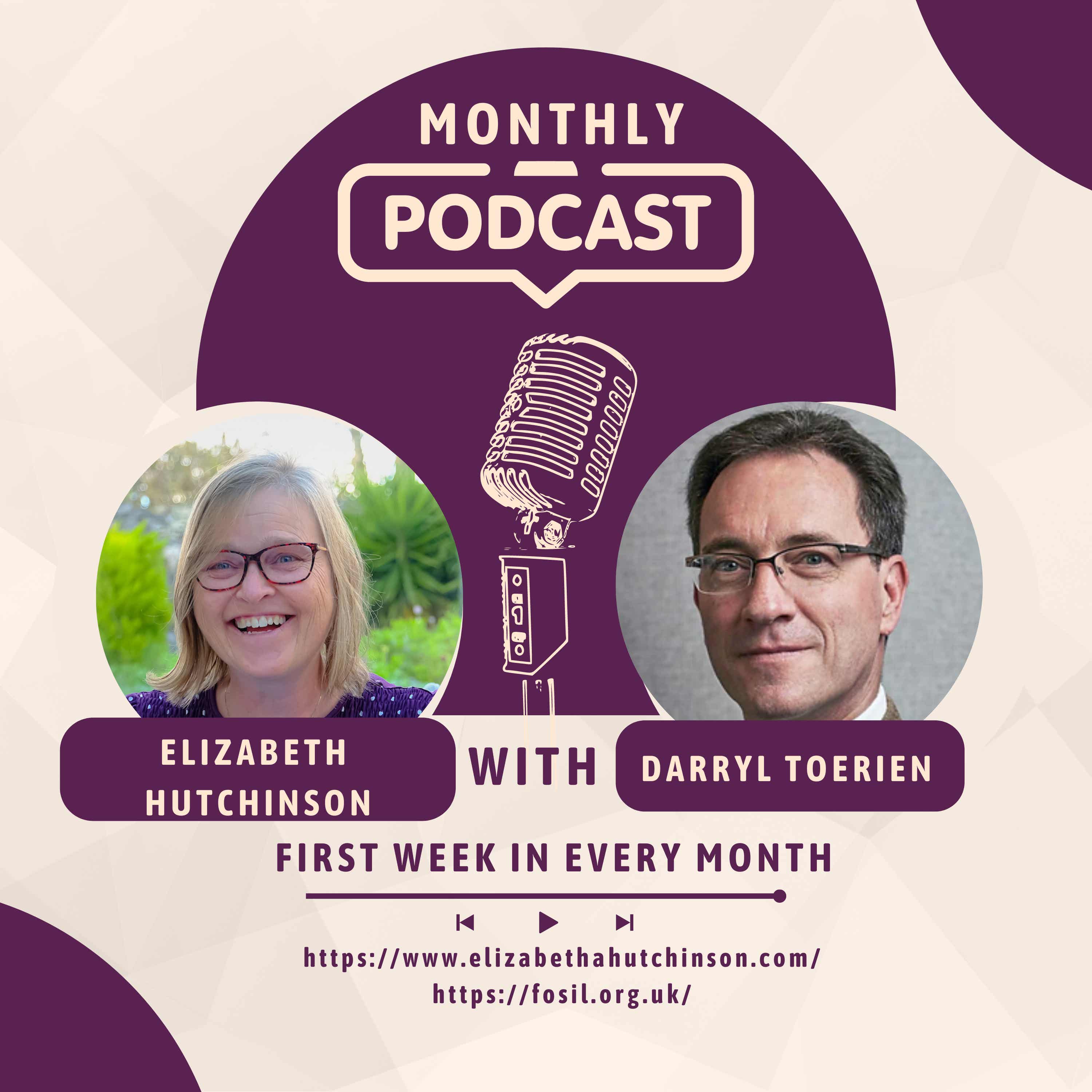
Welcome to our podcast where we hope to help you engage with the content on the FOSIL Group Website, introduce you to people using FOSIL in schools and most of all just have a conversation about the role of school librarians within education. elizabethhutchinson.substack.com
-
25
Generative AI through Inquiry (Part 4)
Welcome to FOSIL, Education and School Libraries Podcast, where Darrly Toerien and I (Elizabeth Hutchinson) talk about what we feel is important in school libraries and education now.Today’s discussion continues from last week’s podcast, which was part 3 of this conversation, where we focused on the INVESTIGATE and CONSTRUCT stage of FOSIL.This week, we focus on the WONDER stages in relation to learning. Highlighting the importance of students being able to create their own questions and that access to AI does not help in this area… we explain why we think this… “Only a person who has questions has knowledge” (Hans-Georg Gadamer).Links talked about in this podcastHans-Georg Gadamer, Truth and Method, 1960.PPT presentation for the ALiVE! Library conversation with David Loertscher: SJSU 2026 | ALiVE Library | Teaching Inquiry as Conversation.This includes a preview of Chapter 2 of our book, Inquiry as Conversation (or QR code below). Of relevance to the Podcast, the preview includes the following:* Inquiry as Conversation Is Driven by Questioning* Inquiry as Conversation Leads Beyond Questioning to Interaction This is a public episode. If you would like to discuss this with other subscribers or get access to bonus episodes, visit elizabethhutchinson.substack.com
-
24
Generative AI through Inquiry (Part 3)
Welcome to FOSIL, Education and School Libraries Podcast, where Darrly Toerien and I (Elizabeth Hutchinson) talk about what we feel is important in school libraries and education now.Today’s discussion continues from last week’s podcast, which was part 2 of this conversation, where we focused on the CONNECT stage of FOSIL. This week, we focus on the INVESTIGATE and CONSTRUCT stages in relation to Gen AI. Highlighting the importance of students being able to think, write and analyse information for themselves. We cover age restrictions, duty of care and what we really want our students to engage in learning. Links talked about in this podcast* Frank Landymore, Analysis Finds That Google’s AI Overviews Are Providing Misinformation at a Scale Possibly Unprecedented in the History of Human Civilization (8 April 2026)* BBC, Largest study of its kind shows AI assistants misrepresent news content 45% of the time – regardless of language or territory (22 October 2025)* Pedro Noguera, dean of the USC Rossier School of Education, Educators should seriously consider a pause on AI in classrooms (04/09/26)* The AI School Librarian, Should Schools Pause AI? The Question We Cannot Ignore Right Now (17 April 2026)We would love to hear what you think of this podcast… Do you find it useful?Are they enjoyable? Informative? Please do comment below… share your thoughts on our discussion. What do you think Generative AI is bringing to your school? Do you have any questions you would like us to consider? All comments welcome! This is a public episode. If you would like to discuss this with other subscribers or get access to bonus episodes, visit elizabethhutchinson.substack.com
-
23
Generative AI Through Inquiry (Part 2)
Welcome to FOSIL, Education and School Libraries Podcast, where Darrly Toerien and I (Elizabeth Hutchinson) talk about what we feel is important in school libraries and education now. Today's discussion continues from last week's podcast, which was part 1 of this conversation, where we discussed the importance of preserving human voice in education. In this chat, we cover the importance of helping students cultivate curiosity about learning without AI, so that when they do use it, they have an understanding of where it may be taking them. We ask 3 questions for school librarians to consider:-* Am I teaching something?* Am I teaching something using AI?* Am I teaching AI?This focus leads our conversation forward where we consider the importance of FOSIL’s CONNECT stage… I’m afraid we enjoy our conversation too much and once again we ran out of time. We hope you enjoy listening to where this took us. Next time we will focus on the INVESTIGATE and CONSTRUCT stage in relation to Gen AI. Links talked about in this podcast* Alfred Guy quotation from Inside Yale’s Quiet Reckoning with AI.* For Jane Rosenzweig, see Writing Hacks (her Blog) and The Important Work: Teaching Writing in the Age of AI (which she curates).* Paulo Freire quotation from Pedagogy of the Oppressed in “Human Beings! Human Beings!” An Open Letter to Educators on the Dangers of AI, by Ursula Wolfe-Rocca.* BBC news article about AI assistants misrepresenting the news is Largest study of its kind shows AI assistants misrepresent news content 45% of the time – regardless of language or territory.* Sam Altman Addresses BlackRock U.S. Infrastructure Summit | March 11, 2026 | AC15 (see from 10m22s for the bit about intelligence being a chargeable utility).We would love to hear what you think of this podcast… Do you find it useful? Are they enjoyable? Informative? Please do comment below… share your thoughts on our discussion. What do you think Generative AI is bringing to your school? Do you have any questions you would like us to consider? All comments welcome! This is a public episode. If you would like to discuss this with other subscribers or get access to bonus episodes, visit elizabethhutchinson.substack.com
-
22
Generative AI through inquiry (Part 1)
Welcome to FOSIL Education and School Libraries, a conversation about liberal education, signature inquiry, and how generative AI fits, or doesn’t, into real classroom practice.This episode follows on from last week’s podcast, Clarifying the purpose of education, explains the Year 9 Signature Work inquiry: an interdisciplinary, schoolwide project embedded in English that builds thoughtful reading, writing, and speaking skills and culminates in a spoken presentation and Q&A. It contrasts authentic human texts (like Laudato Si’) with AI-generated summaries, raising concerns about AI’s tendency to flatten voice and strip nuance.We argue that tools must be judged against clear educational aims: supporting student attention, authentic authorship, and the dialogic process of learning. * Eric O. Springsted -- discussing Simone Weil’s notion of attention in Attention, Availability, and the Reading of Books (2025).* Janet Salmons and the flattening of language in Finding Your Voice in a Ventriloquist’s World – AI and Writing (2025).* Claudio Nastruzzi and semantic ablation in Why AI writing is so generic, boring, and dangerous: Semantic ablation (2026).* Jane Rosenzweig (2022) on why we are not doing the thinking if a machine is doing the writing in The Fight About AI (2025) by Christopher Newfield.Please subscribe so you don’t miss our next episode, which explores practical ways (or limits) for using generative AI at each stage of inquiry. This is a public episode. If you would like to discuss this with other subscribers or get access to bonus episodes, visit elizabethhutchinson.substack.com
-
21
Clarifying the purpose of education
I am always grateful to have time to chat with Darryl Toerien about school libraries, FOSIL and inquiry. Today, we start to explore the need to clarify the purpose of education, especially in relation to the growing concern about adopting new technologies, including AI, in our schools. I personally find it very helpful to have these learning conversations. To be able to voice my thoughts and ideas certainly helps me clarify my understanding. I hope you learn from this conversation too… * ACCESS Article -- AI: The perfect storm that rages against the evolving dynamism through which we form ourselves as human beings (Darryl Toerien, 2025).* Anne Lutz Fernandez -- Resisting AI Mania in Schools - Part I (2025a), Part II (2025b), and Part III (2025c).* Sarah Winnicki -- I would be so ashamed to use generative AI, here’s why (2026).* Jenny Toerien -- Blanchelande College 2026 | AI and Academic Integrity (Parent Presentation).Follow and subscribe to listen to the next episode, which focuses on concrete strategies. This is a public episode. If you would like to discuss this with other subscribers or get access to bonus episodes, visit elizabethhutchinson.substack.com
-
20
Update: FOSIL, Books and the Institute of Advancement of Inquiry.
It has been a while since Darryl and I got together, October half term to be precise, so we thought it was time to give you an update. We both have books coming out and Darryl wanted to tell you more about the institute so we hope you enjoy! FOSIL Symposium - The Institute announcement. Focus on Inquiry with Prof. Dianne Oberg and Prof. Jennifer Branch-Mueller We both wish you the blessings of the season and hope you have a wonderful Christmas and New Year. We both look forward to sharing more with you in 2026 This is a public episode. If you would like to discuss this with other subscribers or get access to bonus episodes, visit elizabethhutchinson.substack.com
-
19
Inquiry Learning: Can Schools Do It Without Libraries?
We start this podcast with an update. Where are we now with FOSIL and inquiry learning? If you want to skip this part and just listen to our focused discussion, please start at 12.09m.We are heading back to the FOSIL Symposium that we ran in Feb this year to discuss something that has been on my mind. David Harrow from AKS Lytham did a presentation about the use of inquiry and particularly FOSIL in his school. There was not much talk about the use of the librarian and it got me wondering… Do schools need a library and a librarian to use FOSIL?We would love to hear your thoughts on this so if you have any please do post a comment. This is a public episode. If you would like to discuss this with other subscribers or get access to bonus episodes, visit elizabethhutchinson.substack.com
-
18
Beyond the Symposium: The Future of School Libraries and Inquiry Learning
In this episode of FOSIL Education and School Libraries, we reflect on the key ideas and developments following the recent FOSIL Symposium. With support from the likes of David Loertscher and members of the FOSIL Group, we discuss the growing role of inquiry in teaching and learning, and how school libraries are adapting and contributing in meaningful ways. We also introduce new initiatives like the open access journal Learning Hub and the Institute for the Advancement of Inquiry. Tune in to hear how school librarians are continuing to support thoughtful, inquiry-based education.From the FOSIL Symposium - AKS Lytham, Jannath Khanom and Ruth Maloney https://fosil.org.uk/forums/forum/fosil-presentations/2025-symposium/ Learning Hub journal, which includes the multimedia article Creative Commons Reboot of the FOSIL-based Heroic Inquiry Cycle, by Darryl Toerien and Hugh Rose.ALiVE! Library Initiative Interview with Darryl and Jenny Toerien by Dr. David Loertscher for School Library Central:"Welcome to the School Library Central Youtube Channel, created by SJSU iSchool Professor Dr. David V. Loertscher to support advances, research, information, resources, and leaders who are transforming traditional school libraries into vibrant centers of teaching and learning in K-12 education." This is a public episode. If you would like to discuss this with other subscribers or get access to bonus episodes, visit elizabethhutchinson.substack.com
-
17
The FOSIL Symposium Taster
In this episode, we provided some contextual information about the colleagues who will be sharing their valuable insights with us during the FOSIL 2025 Symposium on Saturday 8 February, which is free, online and will be recorded.The Symposium marks 15 years of thoughtful and purposeful development of FOSIL (2010), and 6 years of the FOSIL Group (2019).Elizabeth and I met in 2011, so she has been a companion on this journey since almost the very beginning.These are my preparatory notes on colleagues in order of appearance, with Elizabeth introducing Ruth Maloney and Jannath Khanom, who she has a closer working relationship with. Both Ruth and Jannath have made deeply thoughtful contributions to the FOSIL Group Forums.—I met Dianne and Jennifer at the IASL 2019 Conference in Dubrovnik, where I had been asked to deliver a keynote presentation – Between the Classroom and the Library (notice a recurring theme!) – following the IFLA 2019 World Library and Information Congress in Athens.Dianne and Jennifer had been instrumental in developing the deeply thoughtful Alberta Inquiry Model as part of Focus on Inquiry: A Teacher’s Guide to Implementing Inquiry-based Learning. You and I hosted an extended discussion of this enormously helpful document during October, November and December of 2019, which culminated in an online Q&A with Dianne and Jennifer in January of 2020 – see Focus on Inquiry in the FOSIL Group Forum, which includes links to the discussion and webinar. Dianne also authored E&L Memo 2 | Focus on Inquiry: Reflections on Developing a Model of Inquiry for the FOSIL Group Epistemology & Learning Memos series, which I need to revitalise.Also significant from our perspective is that Dianne was co-editor with Barbara Schultz-Jones of the IFLA School Library Guidelines (2015), followed by Global Action on School Library Guidelines (2015) and Global Action on School Library Education and Training (2019) in the IFLA / De Gruyter Publications series.Also significant from our perspective, and also in the IFLA / De Gruyter Publications series, is that Dianne was co-editor with Barbara Schultz-Jones of Global Action for School Libraries: Models of Inquiry (2022). Three of the five models included in the book are Stripling’s Model of Inquiry (more on this later), FOSIL and the Alberta Inquiry Model. The book also included a chapter by Joseph Sanders and Jenny Toerien on Deep Collaboration by Teacher and Librarian to Develop an Inquiry Mindset using FOSIL (see also Curricular Inquiry: Learning Between the Library and the Classroom for an online discussion of this work between Joe and Jenny and here for the accompanying PPT presentation).—Our relationship with Lee FitzGerald stretches at least as far back as 2021, when we wrote FOSIL: Inquiry As Mind Set, Skill Set, Tool Set and Community for her as Editor of ACCESS (Volume 35, Issue 2, June 2021), the national journal of the Australian School Library Association.Since then, I have developed a close working relationship with Lee, going on to write six more articles for ACCESS, the last two with Lee: Re/Dis-Covering the Promise of Freedom Through Inquiry – Part 1 (Volume 38, Issue 3, September 2024) and Re/Dis-Covering the Promise of Freedom Through Inquiry – Part 2 (Volume 38, Issue 4, December 2024).Lee, who is now also Adjunct Lecturer on the Master of Education: Teacher Librarianship course at Charles Sturt University, was previously Head of Service at Loreto Kirribilli in Sydney (Australia), an independent, Catholic school for girls from K-12. Lee oversaw an outstanding inquiry programme. She has remained in contact with Jo, who is the History Coordinator, particularly around the superb Grade 11 Ancient History inquiry. Lee and Jo have enormous experience of Guided Inquiry Design, and Jenny and I worked with them to reframe this inquiry through FOSIL, so I am very excited about that they will be sharing this extraordinary insight into inquiry with us.—Blanchelande College in Guernsey (Channel Islands) is an independent, Catholic school for boys and girls from PK-12. While we will not talk about our inquiry programme during the Symposium, we have established Signature Work inquiries in all phases of the College, which are backbone for other inquiry-based work across phases and academic disciplines/ subjects, and reflect on them as often as possible in the FOSIL Group Forum, specifically in Inquiry and resource design.—Mary-Rose Grieve | Hartland International School in Dubai (United Arab Emirates) is an independent school for boys and girls from PK-12, which offers a British education “through the National Curriculum for England.” Mary-Rose appears to me, like Elizabeth, to have been a companion on this journey for as long as I can remember. Her perspective is extraordinarily broad, and so particularly insightful. I am deeply envious of her broad and intimate knowledge of books, both non-fiction and fiction, that provoke and foster inquiry, especially for our youngest students.—Ruth Maloney | Tonbridge Grammar School in Tonbridge (England, UK) is a “selective grammar school with academy status, educating girls between the ages of 11 and 16 (Grades 6-10) and girls and boys in the Sixth Form (Grades 11-12).”Ruth’s perspective as a presenter is unique, in that they offer the International Baccalaureate Middle Years Programme in Grades 6-8, the GCSE in Grades 9-10, and the International Baccalaureate Diploma Programme in Grades 11-12. This is the same as Oakham School by the time we left, except that they also offered the A-level alongside the Diploma Programme.—Jannath Khanom | Connaught School for Girls in London (England, UK) is a “state funded independent academy” for girls between the ages of 11 and 16 (Grades 6-10).—David Harrow, Faye Marland, Nick O’Loughlin | AKS Lytham in Lytham St Annes (England, UK) is an independent school for boys and girls from PK-12. David was Academic Deputy Head at Oakham School and was both a visionary advocate for FOSIL-based inquiry, and inquiry more broadly, and so was instrumental in the establishment of the FOSIL Group as a free and open community of inquiry centred on FOSIL, but not limited to it. Within a year of starting at AKS Lytham, David, Faye and Nick were responsible for enviable celebrations of students as engaged and empowered inquirers across a range of school phases and within a GCE and A-level educational context. The highest compliment that I can pay to David is that, had circumstance been different, Jenny and I would have followed him to AKS Lytham.—Barbara Stripling, who [auspiciously, as far as I am concerned] shares a birthday with me, has been a formative influence in my professional development since I first stumbled into school librarianship in 2003.In that year, Barbara co-edited Curriculum Connections Through the Library, which included a chapter on inquiry-based learning, and introduced me to her model of the inquiry process, and her approach to teaching and learning. This led me to Learning and Libraries in an Information Age (1999!), which Barbara edited, and in which she noted: “A primary emphasis on learning in school libraries represents a paradigm shift for our field, one that is not yet universally understood or effectively implemented. School [librarians] must step forward as instructional leaders in their schools to design library … programs that help students learn important ideas in the curriculum and learn how to learn in the information age.” This identifies an abiding concern with a paradigm shift that we have not yet fully made, and what brings us together for the Symposium.Barbara also authored E&L Memo 1 | Learning to know and understand through inquiry for the FOSIL Group Epistemology & Learning Memos series, which I need to revitalise.In view of this, I am both humbled and honoured to be co-authoring Teaching Inquiry as Conversation: Bringing Wonder to Life with Barbara, also for Bloomsbury Libraries Unlimited and in collaboration with Jessica Gribble, Senior Acquisitions Editor.Darryl Toerien, Head of Inquiry Based Learning, Blanchelande College, Guernsey This is a public episode. If you would like to discuss this with other subscribers or get access to bonus episodes, visit elizabethhutchinson.substack.com
-
16
Are you Teaching Research Skills or Inquiry?
Engaging and Empowering School Libraries, a general school library podcast, and FOSIL, Education and School Libraries, a podcast that focuses on teaching through inquiry, came together this month. This session brought my two co-hosts together to discuss how school librarians can move on from teaching single research lessons to inquiry lessons, even if that is all they are being asked to do. This show includes pictures of the FOSIL cycle and FOSIL skillset both of which can be found and downloaded from here... https://fosil.org.uk/fosil-cycle/ Engaging and Empowering School Libraries Membership - https://www.elizabethahutchinson.com/aboutmembershipIf you wish to watch the Youtube recording of this discussion you can find it here No AI was used to create this podcast, as you will spot by the human mistakes we make... enjoy! This is a public episode. If you would like to discuss this with other subscribers or get access to bonus episodes, visit elizabethhutchinson.substack.com
-
15
Redefining the Role of School Libraries in Education
This episode explores the librarian’s evolving role in education, sharing practical strategies for fostering collaboration between teachers and librarians to create meaningful, student-centered inquiry experiences. We discuss recent publications, success stories from classrooms, and offer a preview of the upcoming FOSIL book, aiming to redefine how libraries contribute to holistic, impactful education.As always we would love to hear your thoughts on this episode.Links:* Re/Dis-Covering the Promise of Freedom Through Inquiry: Part 1, by Darryl Toerien and Lee FitzGerald for ACCESS (Volume 38, Issue 3, September 2024), the journal of the Australian School Library Association (ASLA). Aimed at principals, SLT and classroom-based teachers.* First SLA Blog post in FOSIL Group Forum: Between the Library and the Classroom: Becoming Integral to the Educational Process 2.1* “As We Begin, So Shall We Go”: FOSIL as Means to a “Transcendent and Honourable End”, by Darryl Toerien for Synergy (Volume 22, Number 1, June 2024), the journal of the School Library Association of Victoria (SLAV).Maritain quote: "Nothing is more important than the events which occur within that invisible universe which is the mind of [a person]. And the light of that universe is knowledge. If we are concerned with the future of civilization we must be concerned primarily with a genuine understanding of what knowledge is, its value, its degrees, and how it can foster the inner unity of the human being" (The Range of Reason, 1952, p. 3).Engaging and Empowering School Libraries is a membership that aims to support school librarians in teaching through inquiry. This is a public episode. If you would like to discuss this with other subscribers or get access to bonus episodes, visit elizabethhutchinson.substack.com
-
14
Breakthrough moments: Year 9 signature work inquiry
The work on FOSIL continues with Darryl practising what he preaches. Is this something we can all take and use or is it just great for him because he has been steeped in it for so long? Listen to his inspiring journey and be encouraged by his confidence that all school librarians can do this too. FOSIL Group Website - https://fosil.org.uk/Re/Dis-covering the promise of freedom through inquiry - https://fosil.org.uk/newsroom/article-asla-access-7/ Engaging and Empowering School Libraries Membership - https://www.elizabethahutchinson.com/aboutmembership This is a public episode. If you would like to discuss this with other subscribers or get access to bonus episodes, visit elizabethhutchinson.substack.com
-
13
FOSIL, Education and School Libraries a New Year... Looking Ahead
FOSIL, Education and School Libraries is a podcast that aims to encourage and support you to think of school libraries in a different way. We hope to develop your understanding of the value of school libraries, help you engage with the content on the FOSIL Group Website, introduce you to people who are using FOSIL and most of all just have a conversation about the role of school librarians within education.If you are looking for my Engaging and Empowering School Libraries Podcast you can find that here https://www.elizabethahutchinson.com/podcastToday Darryl and I look forward to what our new year of podcasting will bring, including:- Updates on Blanchelande projectsWorking with UK SLAPublished ArticlesBooks… to be writtenConferences - including an announcement of a FOSIL gathering - February 2025Strategic PartnersBlanchelande Yr 1 tourist brochure https://gsy.bailiwickexpress.com/gsy/news/written-children-children/BBC Report https://www.facebook.com/share/r/8EvX1rx5PVyre5SK/ This is a public episode. If you would like to discuss this with other subscribers or get access to bonus episodes, visit elizabethhutchinson.substack.com
-
12
Celebrating our First Year with Your Questions.
In this episode, hosts Darryl and Elizabeth celebrate their first year of podcasting about FOSIL, Education and School Libraries.After concluding a two-part history of school libraries last month, we decided to dedicate this session to answering listener questions. We began by addressing concerns about the IFLA School Library Guidelines and their relevance today, discussing the importance of adapting these guidelines to local and national contexts.We also look into how school librarians can balance inquiry-based learning with other responsibilities, emphasising the need to integrate core instructional activities into an inquiry-centered framework. The conversation then shifted to the role of school librarians in supporting their school's strategic development plans and how to align library missions with broader educational goals.Questions about the impact of artificial intelligence on academic integrity and the future challenges and opportunities it presents for school librarians are discussed and we finally, explore the historical development of school librarianship in America, Australia, and the UK, and speculate on the potential changes a new UK government might bring to the sector.Doctorow: Even if you think AI search could be good, it won't be good (15 May 2024).Engaging and Empowering School Libraries Membership -https://www.elizabethahutchinson.com/aboutmembership This is a public episode. If you would like to discuss this with other subscribers or get access to bonus episodes, visit elizabethhutchinson.substack.com
-
11
The History of School Libraries 1986-2024: Part 2
In the second part of our history of school libraries, we talk more about the evolution of school libraries from 1986 to the present day. We continue to focus on Norman Beswick's history of school libraries as an influential piece of research from the same period, which looked at the dramatic trajectory of librarianship, budget struggles, and changing roles with the advent of computers in education.We explore two crucial hopeful signals during that time - the rise of information skills and the increasing collaboration between teachers and librarians. The discussion also touches upon the concept of information literacy and how it differs from the inquiry model. Additionally, we critically examine Anne Irving's nine-question steps model from 1985 that set a new tone for the synergy between teachers and librarians.Our conversation highlights the role of school librarians in teaching information literacy skills, the difficult struggle for curriculum time, and the undeniable link between information literacy and education. We touch upon the internet’s impact, the devaluation of school libraries and the challenge of teaching information literacy amidst these changes. We discuss how a focus on information availability may have hindered a smooth transition during the introduction of computers to schools.The episode creates an understanding of the evolution of school libraries, touches on the impacts of AI, and the need for diverse, multicultural teaching methods. It emphasises librarians' role in diversifying teaching methods and portrays libraries, beyond academic learning centres, as hubs for personal development, independent learning, and more. We conclude by reemphasising the importance for school libraries and librarians to align their educational philosophy with the current concerns and aspirations in the educational sector.Portraits of an Engaged and Empowered Inquirer https://fosil.org.uk/forums/topic/portraits-of-an-engaged-and-empowered-inquirer/Membership Information https://www.elizabethahutchinson.com/aboutmembership This is a public episode. If you would like to discuss this with other subscribers or get access to bonus episodes, visit elizabethhutchinson.substack.com
-
10
The History of School Libraries from 1937 -1986. Part 1
In this episode, we delve into the rich history of school libraries and their crucial role in education and discuss various significant developments in school libraries over the years. We take a time-travelling journey, beginning at the inception of the School Library Association in 1937 to the progressive education era, illuminating the relentless evolution of school libraries. From the past, we make connections to the present and future, underlining the transformative journey of school librarianship in relation to education and philosophy. The underlying tone of our discussion revolves around employing academic honesty and fostering intellectual curiosity among students.The latter section considers the historical schism in the School Library Association and the changes in the focus of school libraries over time. We discuss the traditional and progressive approaches to education and their influence on library usage habits. The evolution from school libraries being mere conduits for recreational reading to valuable resources for independent learning is explored.Experience the journey of educational reform, from traditional to progressive, and witness the increasing prominence given to school libraries. Learn about the UK's unique path in teacher librarianship and the potential promise of introducing microcomputers into school libraries during the 1980s. Embrace the past, understand the present, and envisage the future as we delve into the world of school libraries and their profound implications for education. This is a public episode. If you would like to discuss this with other subscribers or get access to bonus episodes, visit elizabethhutchinson.substack.com
-
9
Empowering Education: The Vital Role of School Libraries
In this episode, we discuss the evolving role of school libraries within the broader educational system. Addressing pressing issues such as the undervaluation of librarians and the alignment of library programs with institutional educational goals, this conversation underscores the library's essential contribution to student development.With a focus on the IFLA School Library Guidelines, we also navigated the challenges of aligning libraries with the quantifiable outcomes often prioritised by schools. By examining strategies for librarians to articulate and advocate for their role in supporting holistic education, this episode presents a compelling call to action for educational leaders and librarians alike. Listen in as we explore the critical intersection of education, purpose, and the pivotal role of school libraries in shaping informed, curious, and well-rounded individuals.Membership information https://www.elizabethahutchinson.com/aboutmembership This is a public episode. If you would like to discuss this with other subscribers or get access to bonus episodes, visit elizabethhutchinson.substack.com
-
8
School Libraries Uncovered: Aligning with Guidelines and Enhancing Non-Fiction Collections
In our last podcast, Darryl and I talked about Douglas Knight’s two major and unique functions of a library and ended up having a great discussion about the purpose and function of our non-fiction collections.In this episode, we chat about:-* The similarities with the SLA guidelines, including their bookstock guidance. Stott (1947, 1955), School Libraries: A Short Manual (CUP for SLA) and SLA (1972) | Libraries in Secondary Schools* Understand the role of the school librarian via the IFLA School Library Guidelines* Staffing in school libraries* Collection development and in particular non-fiction. Making School Libraries Integral to the Educational Process https://www.sla.org.uk/Services/ItemDetail?iProductCode=8340&Category=GUIDELINESMembership information -https://www.elizabethahutchinson.com/aboutmembership Last month's podcast https://www.elizabethahutchinson.com/podcast/episode/adf7b60a/fosil-education-and-school-libraries-7 This is a public episode. If you would like to discuss this with other subscribers or get access to bonus episodes, visit elizabethhutchinson.substack.com
-
7
Unbounded Minds: Libraries as Catalysts for Idea Generation
In this episode, Darryl and I continue our conversation about Douglas Knight’s ideas about a library's two major and unique functions, regardless of type. These two functions are:- * First, it makes possible meetings of mind and ideas not limited by our normal boundaries of time, space, and social or economic level.* To say this is to suggest the second great function of a library. It is the institution in our society that allows and encourages the development and extension of ideas -- not their passive absorption, but their active generation. … The technical means of his encounter may be a record, a tape, a film, a print-out or -- most radical of all -- a book. Libraries are not bounded by means; they will and should employ any means to achieve their ends.Clarification on non-fiction to fiction ratio: NF to F ratio should rise from 50% NF to 50% F through 66% NF to 33% F to 75% NF to 25% F as children move from Primary through Secondary (Darryl)The link to Douglas Knight's document can be found here https://bit.ly/3ShxMSK Podcast - Non-fiction collections in school libraries: Do we still need them?https://www.elizabethahutchinson.com/podcast/episode/9d8adc04/non-fiction-collections-in-school-libraries-do-we-still-need-them FOSIL forum link -https://fosil.org.uk/forums/ Engaging and Empowering School Libraries Membership -https://www.elizabethahutchinson.com/aboutmembership This is a public episode. If you would like to discuss this with other subscribers or get access to bonus episodes, visit elizabethhutchinson.substack.com
-
6
School Librarians and Reading: For Pleasure and Learning
This month Darryl and I are heading back to something we mentioned briefly at the end of last month's conversation which was about reading and making sense of something….I know that many people associate school libraries with reading… However, the latest Reading Framework produced by the Government in the UK in July does not mention libraries as much as it should have and librarians even less…From a librarian's perspective that is sad but not surprising, so today we help listeners understand the value of the school librarian in reading, especially reading for learning. We expand on how reading fits within the FOSIL framework, across the whole cycle. More information about this topic can be read here...https://fosil.org.uk/forums/topic/year-9-grade-8-interdisciplinary-signature-work-inquiry-blanchelande-college/In this post - https://fosil.org.uk/forums/topic/year-9-grade-8-interdisciplinary-signature-work-inquiry-blanchelande-college/#post-80555 Membership information can be found here https://www.elizabethahutchinson.com/aboutmembership This is a public episode. If you would like to discuss this with other subscribers or get access to bonus episodes, visit elizabethhutchinson.substack.com
-
5
Measuring Academic Attainment Through Inquiry Based Learning
This month Darryl and I discuss the importance of Blanchelande's Year 9 Signature Work and its impact on student learning. The conversation highlighted the challenges of measuring academic attainment through signature work and explored the difference between student engagement and academic attainment.Key Takeaways from this podcast • The impact of the year nine signature work on student learning and engagement, highlighting the challenges of measuring academic attainment through this approach. • The discussion explored the change in students' attitudes towards learning as a result of their engagement with signature work. • Future directions and implementation strategies for the year nine signature work. • The conversation emphasised the importance of an early introduction to inquiry-based learning and its potential impact on the quality of work and attitude towards inquiry in the future. • We covered the role of habit in the learning process, drawing parallels between the development of information literacy skills and inquiry skills. • The conversation also highlighted the starting point of inquiry as an attitude of wonder and puzzlement, emphasising the importance of cultivating a desire to learn.Note: We did not explain fully why it is called 'signature' work. The short and simple explanation is that students are asked to produce something they would be happy to sign or put their signature to... Understanding that this is their work and should be proud to sign it. Darryl's explanation can be found here https://fosil.org.uk/forums/topic/year-9-grade-8-interdisciplinary-signature-work-inquiry-blanchelande-college/#post-81808 Other resources:LibGuide NewsLetter: https://blanchelande.libguides.com/LibraryGuide/News/The-Future-Needs-You-Living-Well-in-a-World-Worth-Living-insee Year 9 Individual Project and Year 9 FOSIL Inquiry Skills ProjectDon't forget to subscribe to all of the forum post in order to be notified if there are any new posts or replies https://fosil.org.uk/forums/topic/subscribing-to-the-forums/ My membership information - https://www.elizabethahutchinson.com/aboutmembership This is a public episode. If you would like to discuss this with other subscribers or get access to bonus episodes, visit elizabethhutchinson.substack.com
-
4
Redefining the School Librarian's Role in Education
In this podcast we delve deeper into Darryl’s chapter for the IFLA digital literacy book.The highlights of this podcast focus on:* The importance of school librarians gaining clarity about what they do and why.* The importance of school librarians understanding what education is and their role in it. "Our goal is not to get our children to the end of school but to equip them for what happens beyond school" LinksMaking school libraries integral to the education process https://www.sla.org.uk/product/making-school-libraries-integral-to-the-educational-processIFLA 2023 WLIC, Digital Literacy: Necessary but not sufficient https://fosil.org.uk/forums/topic/ifla-2023-wlic-digital-literacy-necessary-but-not-sufficient/IASL 2023 Recovering the educational promise of inquiry https://fosil.org.uk/forums/topic/iasl-2023-recovering-the-educational-promise-of-inquiry/Constitute of Knowledge by Jonathan Rauch ChatGPT et al https://fosil.org.uk/forums/topic/chatgpt-et-al/ Evolution of portraits https://fosil.org.uk/forums/topic/a-theory-of-the-role-of-the-library-in-the-students-intellectual-experience/ Membership information https://www.elizabethahutchinson.com/aboutmembership This is a public episode. If you would like to discuss this with other subscribers or get access to bonus episodes, visit elizabethhutchinson.substack.com
-
3
IASL Conference: The Need for Leadership in School Libraries
Darryl Toerien and I continue our monthly chat, FOSIL, Education and School Libraries.This month we are chatting about the IASL conference, the need to have leadership for school librarians and why inquiry skills should support students learning how to learn, as well as learning knowledge. IFLA presentation - Digital Literacy necessary but not sufficient https://fosil.org.uk/forums/topic/ifla-2023-wlic-digital-literacy-necessary-but-not-sufficient/Year 6 (Grade 5) Interdisciplinary Signature Work Inquiry https://fosil.org.uk/forums/topic/year-6-interdisciplinary-signature-work-inquiry/Membership information -https://www.elizabethahutchinson.com/aboutmembership This is a public episode. If you would like to discuss this with other subscribers or get access to bonus episodes, visit elizabethhutchinson.substack.com
-
2
The FOSIL Group website: What you can find and why it's important
Darryl Toerien and I continue our monthly chat, FOSIL, Education and School Libraries. This month we are chatting about what you can find on the FOSIL Group website and developments coming up over the summer.The topics we cover are:-- FOSIL Group website and why you set it up.- What can you find on the website?- Where would you suggest they start?- Why is the discussion forum so important?- If someone wanted to join in a forum discussion what do they need to be aware of? ( importance of subscribing to the conversation to see replies).- Future developmentsBooks mentioned:-Principles and Practice: Learning and Libraries in an Information Age (Edited by Barbara Stripling in 1999!)Carol Kuhlthau’s chapter is called Literacy and Learning for the Information Age. "Inquiry requires information literacy skills. When library media specialists and teachers collaborate to create an inquiry approach to learning, students develop dual competencies in subject content and information literacy" (p. 11)Empire State Information Fluency Continuum https://slsa-nys.libguides.com/ifc/gradeassessmentsFOSIL explained - Youtube The FOSIL Group Website overview -Courses available to explain the FOSIL cycle in more detail - https://www.elizabethahutchinson.com/payperview?Category=The+FOSIL+CycleMembership information - https://www.elizabethahutchinson.com/aboutmembership This is a public episode. If you would like to discuss this with other subscribers or get access to bonus episodes, visit elizabethhutchinson.substack.com
-
1
FOSIL, Education and School Libraries: What's it all about?
Once a month I'm going to talk about FOSIL, Education and School Libraries with Darryl Toerien originator of FOSIL. We hope to help you engage with the content on the FOSIL Group Website, introduce you to people who are using FOSIL in schools and most of all just have a conversation about the role of school librarians within education. The FOSIL Group Website - https://fosil.org.uk/ FOSIL explained - IFLA School Library Guidelines - https://www.ifla.org/wp-content/uploads/2019/05/assets/school-libraries-resource-centers/publications/ifla-school-library-guidelines.pdf Engaging and Empowering School Libraries Membership -https://www.elizabethahutchinson.com/aboutmembership This is a public episode. If you would like to discuss this with other subscribers or get access to bonus episodes, visit elizabethhutchinson.substack.com
We're indexing this podcast's transcripts for the first time — this can take a minute or two. We'll show results as soon as they're ready.
No matches for "" in this podcast's transcripts.
No topics indexed yet for this podcast.
Loading reviews...
ABOUT THIS SHOW
Welcome to our podcast where we hope to help you engage with the content on the FOSIL Group Website, introduce you to people using FOSIL in schools and most of all just have a conversation about the role of school librarians within education. elizabethhutchinson.substack.com
HOSTED BY
Elizabeth Hutchinson
CATEGORIES
Loading similar podcasts...
URL copied to clipboard!