
PODCAST · history
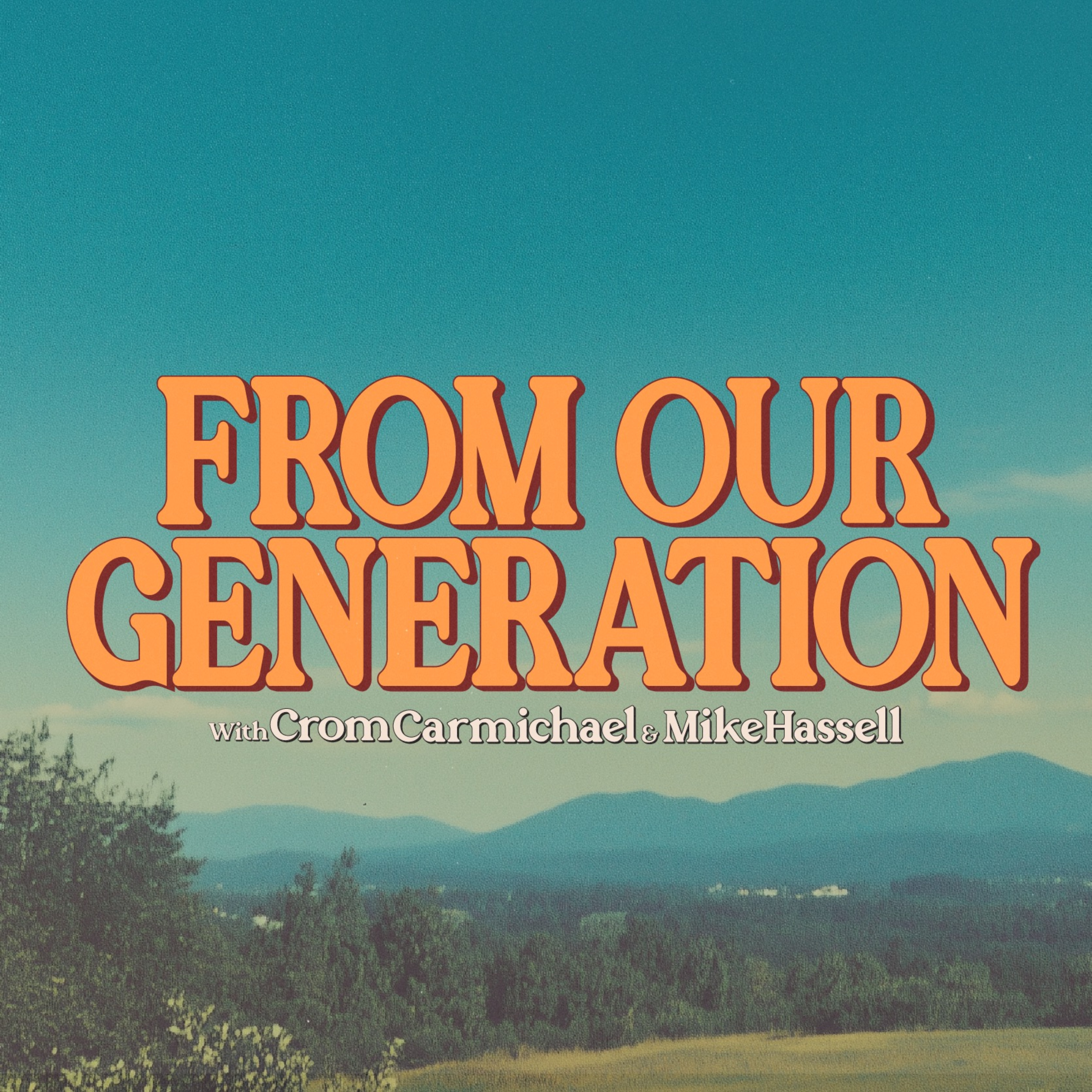
From Our Generation
by Crom Carmichael and Mike Hassell
From Our Generation is all about making sense of history, economics, and politics through real conversations. We dive into the ideas and events that shaped the world, how they still affect us today, and what they mean for the future. No lectures, just honest discussions about where we’ve been, where we are, and where we’re going.
-
56
RULES ON PAPER
Redistricting battles across multiple states expose the tension between constitutional process and partisan ambition. Virginia's legislature pushed through a redistricting referendum without following its own constitutional requirements, ignoring the fact that voters were already casting early ballots before the law was finalized. A lower court blocked it within a day. Florida and Texas followed their state constitutions and will likely prevail. The outcomes look partisan, but the real variable is whether each state followed its own rules.The U.S. Supreme Court's ruling that states cannot draw congressional districts by race reshapes representation in ways that cut deeper than seat counts. Louisiana is delaying its primary to redraw maps. Tennessee may call a special session. The short-term disruption is real, but the longer-term effect may be better candidates on both sides. Mixed districts force broader coalitions, which is closer to what representative government was designed to produce.A 9-0 Supreme Court ruling reinforced that a New Jersey pregnancy center could not be forced to hand over its donor list to the state attorney general. The threat itself was the harm. Separately, the Court agreed to hear a challenge to the Labor Department's in-house tribunals, where the agency writes the rules, prosecutes violations, and decides the outcome. The same institution that created the Chevron deference is now systematically dismantling the architecture that grew out of it.A machine gun case heading to the Supreme Court could redefine the scope of federal power over commerce that never crosses state lines, revisiting a Roosevelt-era ruling that allowed Congress to regulate a farmer's wheat even though it never left his property. The Constitution listed four federal crimes. By 1980, there were over 3,000.Medicaid fraud illustrates the cost of systems built on trust without verification. Obamacare required states to revalidate providers every five years. Most never did. Illinois alone has 58,000 unvalidated providers. SNAP recipients have purchased Lamborghinis, Ferraris, and over 2,000 Teslas. California's honor-system home care program costs $30 billion a year with no checks on eligibility. The fraud is not incidental. It has become a business model.California's billionaire tax proposal has enough signatures for the November ballot: a one-time 5% levy on net worth above a billion dollars. One-time taxes rarely stay one-time. The likely result is an exodus that won't reverse.Germany's chancellor publicly called Trump humiliated over Iran. European NATO allies blocked U.S. base access and overflight rights. Countries that depend on American security guarantees and refuse to cooperate when those guarantees are tested raise a simple question: what is the alliance actually for?Barney Frank, one of the most liberal members of Congress in his era, is releasing a book from hospice repudiating his party's progressive flank. That a figure once considered the far left of the party now occupies its moderate wing tells you how far the center has moved.Across every story, the same pattern holds: institutions built on specific rules are bending or ignoring them, and the people those institutions were designed to serve absorb the cost.For more episodes and resources, visit fromourgeneration.com.Dive deeper with Giants of Political Thought at giantsofpoliticalthought.com.
-
55
SUBJECT OR CITIZEN
The distinction between a subject and a citizen sits at the foundation of American law, and most people have never thought about it. A subject under British common law owes perpetual allegiance to the crown by birth. Blackstone described it as feudal: a debt of gratitude that cannot be forfeited, canceled, or altered. The Declaration of Independence rejected that doctrine outright. Edward Erler's Imprimis essay lays out the stakes, and Clarence Thomas has been making the same point in speeches: the founders asserted that sovereignty belongs to the individual, that governments derive their just powers from the consent of the governed, and that signing the Declaration was treason under British law precisely because it denied the king's claim on them.The 14th Amendment introduced the word "citizenship" into American law for the first time, and it did so with the phrase "subject to the jurisdiction thereof." That phrase was small, intentional, and underdeveloped, which is why birthright citizenship is now back at the Supreme Court. The 1868 Expatriation Act, passed alongside the 14th Amendment, called the right to renounce allegiance "a natural and inherent right of all people," which is the exact opposite of British perpetual subjectship. An American can renounce citizenship and leave. An American cannot renounce citizenship and stay. The unresolved question is whether someone born on US soil to parents who owe allegiance elsewhere becomes a citizen automatically, or whether jurisdiction means something more than physical presence.Secession is the same question at a different scale. If the individual is sovereign, can the individual withdraw? Can a state? South Carolina tried in 1861 and lost a war over it. Parts of Idaho, Oregon, and Alberta still raise the question. Thomas Jefferson believed the answer was yes. Current law says no.The Southern Poverty Law Center has been indicted by a grand jury in Alabama. According to the indictment, the organization was funding the Ku Klux Klan and other groups to manufacture the hate it then claimed to be fighting, soliciting donations on the back of a problem it was paying to keep alive. Shell bank accounts. Money allegedly sent to organizations involved in the Charlottesville riots. The endowment sits at $700 million. If the conviction holds, the federal government gains legal access to donor records that have been kept secret, and a lot of people who gave money will need to decide whether they were complicit or victims. The pattern echoes Lois Lerner at the IRS in 2012, when roughly 350 conservative organizations were denied tax-exempt status during the Obama administration, locking them out of bank accounts and the political process for a full election cycle. Nobody was indicted.The same logic applies to the California governor's race. Six Democrats remain on the debate stage, soon to be five. Steve Hilton looks likely to lock in one of the top-two primary slots. Tom Steyer, a white male billionaire, may well take the other, which will be entertaining to watch the party rally around. Medicaid fraud across blue states runs in the tens of billions, and a Republican governor with subpoena power is the only mechanism that can expose it. That is the existential threat, and it explains why Swalwell had to go.One thread runs through all of it: power flows to whoever controls the definition of who counts, what's hateful, and which laws get applied to whom.For more episodes and resources, visit fromourgeneration.com.Dive deeper with Giants of Political Thought at giantsofpoliticalthought.com.
-
54
SELECTIVE ALLEGIANCE
Pope Leo XIV called military action in Iran absurd and inhumane, said no cause justifies the shedding of innocent blood, and made the statement a day after meeting with David Axelrod. Trump told him to get his act together. The collision raises a real question about moral authority. The same Pope who condemns bombing is protected inside the Vatican by Swiss Guards with automatic weapons, behind walls no one can immigrate through illegally. The contrast with John Paul II, who openly fought communism and was shot for it, is hard to miss.Catholic catechism lays out conditions for just war. Pope Leo's blanket pacifism contradicts the doctrine of his own church. Mazara Amirzadeh, an Iranian woman who converted to Christianity, was arrested in 2009 and sentenced to death by hanging for apostasy. She was released only because of international pressure, including from Pope Benedict. Her question is direct: where was Pope Leo's moral outrage when the Islamic Republic slaughtered tens of thousands? She has watched the regime since 1979 use arrest, torture, and execution as instruments of state policy. She wants it gone.The strategic picture is more practical than the moral framing suggests. Tehran's reservoirs have dropped from 10% to under 8%, and once they reach 5% there isn't enough pressure to deliver water at all. Trump's blockade compounds the squeeze. The Strait of Hormuz remains Iran's leverage, but infrastructure work and an alternative choke point south near the Houthis are already in motion. Iran's window to project power is closing on its own.Eric Swalwell was leading the Democratic field in the California governor's race at 12 to 13 percent. Two Republicans were polling at 18 and 15 to 16. The Democratic Party publicly called for some of its eight candidates to drop out so a Democrat could survive the top-two primary. None did. Within weeks, the San Francisco Chronicle published accusations against Swalwell, and CNN, MSNBC, ABC, and NBC had the accusers ready to interview within hours. Swalwell, who held a high-level House Intelligence Committee clearance and once dated a suspected Chinese spy, dropped out. The takedown looks like a party operation, not investigative journalism.The reason California's governorship matters this much is fraud. Blue states spend two to four times more on Medicaid per capita than red states, and the federal match means every state dollar pulls down two or three federal dollars. A Republican governor with subpoena power could expose tens of thousands of fraudulent entities operating under the Newsom administration. The same pattern lives in Illinois, New York, Minnesota, and Massachusetts. Exposure at that scale is an existential threat to the funding model of the Democratic Party, which is owned lock, stock, and barrel by government employee unions whose interests are more pay, more benefits, more employees, and rules that make firing impossible."Follow the science" gets used as if science is a person. It isn't. Science is a method built on falsifiability and skepticism. Even E=mc² has been refined. Fauci was not the science. The political and economic and social sciences are legitimate efforts to bring rigor to the study of human nature, but rigor requires the willingness to be wrong, which is exactly what the loudest invocations of "the science" refuse to allow.One thread runs through all of it: institutions reward selective allegiance, and the gap between what they claim to stand for and what they actually fund keeps widening.For more episodes and resources, visit fromourgeneration.com.Dive deeper with Giants of Political Thought at giantsofpoliticalthought.com.
-
53
IRAN, NATO, & THE FINE PRINT
The Iran conflict resists easy labels. A ceasefire brokered through Pakistan unraveled almost immediately when Lebanon attacked Israel and Israel struck back hard. The ceasefire may have served a different purpose entirely: time to rearm, refine strategy, and clear civilians from targets that will be hit next.Trump has laid out four specific conditions to end the bombing: no nuclear weapons, surrender of enriched uranium, no offensive missiles, open Straits of Hormuz, and no more exporting terrorism. Whether those goals are achievable is a separate question from whether they exist. By the standard definition of a "forever war," this isn't one. The objectives are stated. The method is air power, not occupation. But if Iran refuses to capitulate, and history suggests they will absorb enormous punishment before bending, the timeline stretches toward something that looks like one even if it technically isn't.The technology gap changes the calculus. During the Iraq war, less than 10% of American ordnance was precision-guided. Now it's over 90%. Iran responds with cheap drones. The math only works in Iran's favor until laser defense systems arrive, likely within 24 to 36 months. The asymmetry is temporary.Europe's refusal to cooperate tells its own story. NATO allies blocked base access and overflight rights. The reason isn't complicated: Muslim populations of 5 to 8% across Western Europe make domestic blowback a more immediate threat than Iranian aggression. Even a fraction of a percent of that population turning to violence would be catastrophic. Europe's instinct to look away from danger until it arrives on their doorstep is centuries old, and it raises a harder question about NATO itself. If allies won't support operations against a regime that has killed Americans since 1979, what exactly is the alliance for?Regime change doesn't require replacing a government. Venezuela's vice president took over from Maduro and started making different decisions. If Iran's next leader, whoever survives the chain of command, agrees to stop exporting terror, that's a practical regime change even if the theocracy survives in name.The rapid-fire segment covers ground fast. Eric Swalwell leads the California governor's race while allegations of sexual harassment dating back to his Dublin City Council days gain traction. A social media journalist claims to have recorded Swalwell at a DC steakhouse bragging about Capitol Hill parties and trying to cheat on his wife. The Democrat primary itself is a mess: eight candidates splitting the vote so badly that two Republicans may lock out every Democrat from the general election ballot, and party efforts to force candidates out look a lot like the voter suppression they claim to oppose.The Obama Presidential Center requires photo ID for discounted tickets. Wisconsin's governor used a line-item veto to strike two digits and a hyphen from a bill, turning a one-year school funding measure into a 400-year mandate. The state Supreme Court upheld it 4-3. The DOJ has over 8,000 fraud cases under investigation, concentrated overwhelmingly in blue states. A California home care program built on the honor system is costing $30 billion a year with 800,000 participants and no verification. And Somalia's ambassador to the UN, the current president of the Security Council, is associated with a home health care agency in Cincinnati under federal scrutiny.One thread runs through all of it: the distance between what institutions claim to stand for and what they actually do keeps widening.For more episodes and resources, visit fromourgeneration.com.Dive deeper with Giants of Political Thought at giantsofpoliticalthought.com.
-
52
INSTITUTIONAL DRIFT
Executive power finds its limits not in law but in leverage. When a president pays federal workers without congressional appropriation by invoking national security, the legal gray area matters less than the political reality: no one with standing wants to challenge it. That dynamic, where principle yields to practical calculation, runs through the SAVE Act's stalled path in the Senate, filibuster mechanics, and the quiet ways procedural rules shape outcomes more than public debate.Institutional mission creep is everywhere. A city council debates foreign policy while local schools underperform. A university cancels a gubernatorial debate over the racial composition of its top candidates. NASA and the military absorb social objectives that sit outside their core functions. The original mission loses ground to political pressures these institutions were never designed to handle.Free speech and conscience are under direct pressure. Finland's Supreme Court labels a Christian pamphlet hate speech. European restrictions on expression continue to tighten, particularly around immigration and religion. In the U.S., a prominent vaccine researcher resigns from a federal advisory committee, driven out not by bad science but by bureaucratic hostility to dissent. Contrarian voices are being squeezed out of the institutions that need them most.AI regulation raises a new version of an old tension. Progressive calls for a moratorium on data centers may reflect less concern for consumers than anxiety over what automation means for government employment. The line from the Luddites to modern resistance is direct. The real divide is between autonomous AI and human-augmented productivity, and refusing to experiment guarantees falling behind.Canada's expansion of medically assisted suicide is the starkest example of policy disguised as compassion. What began as end-of-life care now extends to mental illness, backed by government advertising that aestheticizes the decision to die. Behind the language of personal freedom is a cost-driven calculus: a single-payer system that would rather fund an off-ramp than pay for treatment.Healthcare costs are reshaping American life at every income level. Tens of millions are delaying surgery, staying in jobs they want to leave, and abandoning education, all under the weight of a third-party payment structure that removes individual choice from the equation. When politicians talk about affordability, this is the issue that drives all the others.One pattern connects every headline: institutions designed to serve specific purposes are being redirected, expanded, or captured. The people they were meant to serve absorb the cost.For more episodes and resources, visit fromourgeneration.com.Dive deeper with Giants of Political Thought at giantsofpoliticalthought.com.
-
51
NO KINGS? NO PROBLEM
The development of democracy is not a sudden transformation but a gradual shift in where authority resides. The translation of the Bible into English in the 16th century marked a critical turning point, moving interpretive power from centralized religious institutions to individuals. This change extended beyond religion, elevating personal conscience as a legitimate source of authority and weakening both church control and the divine right of kings. Over time, this diffusion of authority helped lay the groundwork for representative government.These ideas unfolded over centuries. The gap between the printing press and the Glorious Revolution shows how long it takes for innovations to overcome entrenched systems. The transition from monarchy to parliamentary rule, and eventually constitutional governance, was neither linear nor stable, shaped by conflict, reversal, and compromise. Sovereignty was gradually redefined from God, to rulers, to the people.The American system reflects this evolution, attempting to formalize a balance between authority and liberty. The Constitution was not a perfect design but a negotiated framework to distribute power and prevent its concentration. Yet over time, expansions in federal authority and shifting interpretations have raised questions about whether that balance still holds.Modern political conflict revisits these same tensions. Disputes over institutional legitimacy, legal challenges between political actors, and competing claims about “threats to democracy” all point to a deeper question: what does democracy actually require? Majority rule alone, or stable institutions and shared acceptance of outcomes?Across both history and the present, one pattern persists: democracy depends not just on structure, but on how authority is distributed and trusted. When that balance shifts, the system itself is tested.For more episodes and resources, visit fromourgeneration.com.Dive deeper with Giants of Political Thought at giantsofpoliticalthought.com.
-
50
STALEMATE POLITICS
Major political conflicts often reveal more than their immediate stakes. They expose the underlying mechanics of power, incentives, and institutional design. Three simultaneous standoffs (federal funding for homeland security, voter authentication legislation, and a military confrontation with Iran) illustrate how unresolved disputes can shape the direction of policy and governance. Each represents an inflection point, not just in outcome, but in how decisions are made when consensus breaks down.At the core is the structure of political process itself. Senate rules, particularly the filibuster, are designed to prevent narrow majorities from imposing sweeping change, but they also create conditions where stalemate becomes the default. Mechanisms like the “talking filibuster” demonstrate how the system attempts to force resolution through endurance rather than agreement. These procedural dynamics parallel broader questions about electoral integrity, where debates over voter identification and citizenship verification hinge on competing interpretations of access versus security. Data, incentives, and institutional trust all collide in determining whether reforms strengthen or weaken confidence in elections.Foreign policy introduces a different but related dimension. Long-standing conflicts raise the question of whether persistent threats can be managed through diplomacy or require decisive force. Historical patterns, from undeclared wars to prolonged geopolitical rivalries, suggest that definitions of authority, legality, and necessity often evolve in real time. Competing perspectives frame intervention as either a necessary response to ongoing aggression or a failure to exhaust nonviolent alternatives. The divide is not just strategic but philosophical, reflecting differing beliefs about human behavior, state actors, and the limits of negotiation.Across all three arenas, a common theme emerges: systems under strain rely on rules, but outcomes ultimately depend on the willingness of individuals and institutions to act within (or push against) those rules. When stalemates persist, resolution is not guaranteed by design alone. It requires alignment of incentives, clarity of purpose, and, often, a forcing mechanism that breaks the deadlock.Can long-term adversaries be managed indefinitely, or do unresolved tensions eventually demand decisive action?For more episodes and resources, visit fromourgeneration.com.Dive deeper with Giants of Political Thought at giantsofpoliticalthought.com.
-
49
THE PRICE OF EVERYTHING
Economic prosperity does not emerge from a single policy. It requires a structure of reinforcing conditions: low taxation, limited regulation, sound money, low corruption, and equal treatment under the law. When these principles align, markets function and opportunity expands. When they weaken, prosperity erodes. At the center is a concept called ordered liberty. Freedom without rules produces chaos; excessive regulation suffocates initiative. Stable societies balance individual liberty with a rule of law that enforces contracts, protects property, and holds people accountable for their own decisions.Energy and technology form another critical dimension. Rising standards of living have always moved alongside rising energy consumption. Artificial intelligence, large data centers, and advanced manufacturing are accelerating that demand, not reducing it. Historical policy choices add further context. For the first 150 years of the United States, the federal government funded itself primarily through tariffs. The introduction of the income tax changed the relationship between citizens and their government in ways still playing out today. State-level differences in tax structure reveal how these choices shape outcomes in real time, with some systems promoting transparency and growth while others quietly discourage both.Modern politics increasingly revolves around a single word: affordability. Housing, healthcare, energy, and everyday purchasing power have become the dominant concerns of voters heading into the 2026 midterms. Competing narratives claim to address these pressures, but the policies behind them often push incentives in opposite directions. Political theater surrounding the State of the Union, fractures within Congress, and foreign policy tensions with Iran add noise to the signal. Emerging efforts to root out federal waste, proposals to expand individual asset ownership, and ongoing healthcare debates may reshape the landscape further. But elections hinge on outcomes, not promises. Rising wages, falling inflation, and real purchasing power will determine which narrative wins.If affordability becomes the defining argument of the next election cycle, which policies will actually lower costs and which will quietly make them higher?For more episodes and resources, visit fromourgeneration.com.Dive deeper with Giants of Political Thought at giantsofpoliticalthought.com.
-
48
THE FIVE PILLARS OF PROSPERITY
Five foundational principles determine whether a society grows stronger or slowly undermines its own prosperity: low taxes, sensible regulation, low corruption, sound money, and laws designed to treat people equally. Like a five-legged table, stability depends on each support holding firm.The central debate examines how these pillars function in practice. States with balanced budget requirements, broad-based taxation, and regulatory restraint are contrasted with states expanding spending, layering new rules, and increasing tax burdens. Migration patterns, commercial real estate values, and affordability serve as real-time indicators of which model fosters opportunity... and which one strains it.A pivotal moment centers on equality under the law. When policymakers secure tax-advantaged retirement structures for themselves while limiting ownership options for ordinary citizens, does that reflect fairness or a quiet double standard? If freedom includes control over one’s savings and future, what happens when that control is unevenly distributed?Historical parallels add depth to the analysis. The Smoot-Hawley tariffs and the prolonged Great Depression illustrate how economic decline rarely stems from a single cause, but from layered policy decisions that compound over time. Today’s debates over wealth taxes, rising property taxes, deregulation, and deficit reduction are measured against the same framework: do they reinforce the pillars or erode them?Prosperity does not emerge by accident. It follows policies that expand ownership, reward productivity, protect currency stability, and apply the law without favoritism.If freedom and prosperity rise or fall on these five pillars, which ones are being strengthened, and which are quietly being weakened beneath the surface?For more episodes and resources, visit fromourgeneration.com.Dive deeper with Giants of Political Thought at giantsofpoliticalthought.com.
-
47
BUILT, NOT BOUGHT
Financial independence is not the same as appearing wealthy. A high income, luxury cars, and an expensive lifestyle can vanish the moment paychecks stop. True independence comes from owning assets that generate income, investments that work even when you don’t.The central contrast is between consumption and ownership. Consumption absorbs income in the present; ownership multiplies it over time. Tax-advantaged accounts, employer 401(k) matches, and reinvested dividends create exponential growth through compounding. A dollar saved early does not simply grow; it doubles, redoubles, and accelerates over decades. Market declines, often feared, become opportunities to acquire productive assets at lower prices, strengthening long-term returns.Speculation promises sudden wealth but often destroys capital. Broad index investing, diversification, and disciplined reinvestment historically outperform attempts to outguess markets. The strategy is simple but demanding: start early, minimize fees and taxes, avoid emotional selling, and let time do the heavy lifting.Deferred consumption becomes the quiet engine of freedom. Money not spent on depreciating luxuries can compound into options, options to retire on your terms, withstand economic shocks, and avoid dependence on uncertain guarantees. Even retirement systems like Social Security reward strategic timing, underscoring the importance of understanding how income streams actually function.Financial independence ultimately means control: the ability to live from assets rather than wages, and to make choices without economic coercion.If wealth grows through discipline and ownership, why do so many chase the appearance of success instead of the substance of it?For more episodes and resources, visit fromourgeneration.com.Dive deeper with Giants of Political Thought at giantsofpoliticalthought.com.
-
46
POVERTY POLITICS
Wealth inequality is often blamed on billionaires, but never on government policy that systematically diverts workers’ income away from private ownership and into non-inheritable entitlement programs. Payroll taxes for Social Security and Medicare, combined with rising healthcare mandates, remove thousands annually from middle-class families, funds that could otherwise compound into long-term wealth.A central contrast emerges between ownership and promise. Private investments grow, compound, and can be passed down; entitlement benefits remain political guarantees that never appear as personal assets. Meanwhile, capital gains and reinvested corporate growth allow wealth to accumulate outside wage-based taxation, widening the structural divide.Historical tax policy, bracket creep, and modern state-level tax increases are presented as reinforcing the same pattern: shrinking disposable income while expanding government control.If wealth grows through ownership, why does the system keep us from building it?For more episodes and resources, visit fromourgeneration.com.Dive deeper with Giants of Political Thought at giantsofpoliticalthought.com.
-
45
SAINTS, SINNERS & SUBPOENAS
Immigration enforcement fractures further as state officials in Minnesota refuse cooperation with ICE, even in cases involving criminal convictions or formal deportation orders. The killing of Alex Pretti during an ICE confrontation becomes a political flashpoint, with legacy media altering images and Democratic senators invoking martyrdom. Selective outrage intensifies: Ashley Babbitt’s unarmed death on January 6 is dismissed, while armed resistance to federal agents is lionized.Elsewhere, the rule of law erodes in broader ways. Clinton-era subpoenas tied to Epstein go ignored, while former Trump officials were jailed for the same defiance. In Philadelphia, a Soros-backed DA vows to indict federal agents for enforcing immigration law, contradicting the supremacy clause he swore to uphold.On the policy front, the Trump Account program nears rollout: $1,000 investment accounts seeded at birth, with investment choices left to parents. Unlike Bush’s failed Social Security reforms, this initiative adds rather than replaces, opening a door to financial literacy and private ownership for the next generation. Paired with expanded HSAs and education tax credits, a quiet revolution in economic independence may be underway.Two systems of law. Two standards of justice. What happens when a republic decides it no longer wants to be one?For more episodes and resources, visit fromourgeneration.com.Dive deeper with Giants of Political Thought at giantsofpoliticalthought.com.
-
44
GREENLAND, DAVOS & THE GOLDEN DOME
What makes a political leader? Not just a head of state, but someone who changes the trajectory of history? From Davos to New York City, new battle lines emerge between technocrats who preserve the status quo and disruptors who define their leadership by promises kept, not polls followed. While Europe clings to procedure, Trump lays legal and strategic groundwork to bring Greenland into the U.S. security perimeter, pushing for a “golden dome” defense shield that NATO now cautiously supports.At home, the leadership question plays out in miniature: New York’s Manadani proposes massive new taxes to fund free housing, transit, and childcare... despite an acknowledged $10.4B budget hole. Gavin Newsom, uninvited at Davos, angles for relevance on the world stage as California’s deficits deepen. And in cities like Chicago and Portland, promises of equity and progress have turned into fiscal collapse and flight.Historical parallels, from James K. Polk to the Louisiana Purchase, offer a reminder: transformative leaders don’t follow consensus; they act on conviction.The real debate is whether that conviction serves the public... or just the base.For more episodes and resources, visit fromourgeneration.com.Dive deeper with Giants of Political Thought at giantsofpoliticalthought.com.
-
43
RULES FOR THEE, BILLIONS FOR ME
As new revelations surface about large-scale fraud in Minnesota’s Medicaid system, a broader pattern of government-enabled corruption comes into view. Federally reimbursed programs, designed to help the vulnerable, are now cash machines for politically connected networks. Phantom ride-share providers and daycare centers bill for services never rendered, and the state quietly approves the invoices. If whistleblower reports are true, even the governor’s office may have been aware.Meanwhile, the real cost of America’s healthcare system is finally on the table. With Trump’s four-pillar reform plan (drug price parity, HSA expansion, price transparency, and cutting insurer manipulation) the spotlight turns to a bloated industry that thrives on hidden fees and fake retail pricing. Most patients could pay less without insurance at all.On the global front, Greenland emerges as the Arctic’s geopolitical prize, as Chinese and Russian influence expands near U.S. territory. Iran faces collapse not from war, but from thirst; Tehran may run out of water within weeks. And Venezuela’s criminal state apparatus is under pressure, but the real question remains: who fills the vacuum?As the midterms approach, one thing is clear: corrupt incentives are embedded deep in the system, at home and abroad.For more episodes and resources, visit fromourgeneration.com.Dive deeper with Giants of Political Thought at giantsofpoliticalthought.com.
-
42
MADURO, MEDICAID & MONEY TRAILS
State-level fraud is becoming a feature of the system. States like Minnesota and California are exploiting federal matching programs (especially Medicaid) through systemic abuse masked as public service. From fake rideshare companies to inflated daycare operations, billions in federal dollars are redirected through fraudulent schemes that enrich political allies and deepen state-level corruption.The incentives are clear: the more states defy oversight, the more money flows in. Illegal immigrants are granted access to benefits banned by federal law, and those who question it are branded as bigots. Meanwhile, honest states foot the bill and watch housing costs soar from artificial demand fueled by fraud-based income.Abroad, the sudden U.S. capture of Venezuelan dictator Nicolás Maduro marks a return to muscular foreign policy. With echoes of Noriega, the operation reveals the scale of Maduro’s crimes... and the failure of prior administrations to act. At home, New York City embraces collectivism under new leadership, and California targets billionaires with a retroactive wealth tax that may backfire catastrophically.Will voters reward the states that break the rules or the ones that play by them?For more episodes and resources, visit fromourgeneration.com.Dive deeper with Giants of Political Thought at giantsofpoliticalthought.com.
-
41
SYSTEMIC CORRUPTION
Federal spending is surging, accountability is vanishing, and the rule of law is increasingly applied by political preference. Medicaid costs have exploded in states like New York and California, driven by policies that openly defy federal law, particularly around healthcare access for illegal immigrants. Billions flow into fraudulent systems while compliant states bear the cost.New data shows millions of Social Security numbers have been issued to non-citizens, raising alarms about illegal voting and bureaucratic defiance. Meanwhile, media institutions that once claimed neutrality are settling libel suits after selectively editing political coverage, fueling concerns that public trust is being eroded not by misinformation alone, but by deliberate distortion.As incentives align around power, not principle, the line between governance and corruption grows dangerously thin.For more episodes and resources, visit fromourgeneration.com.Dive deeper with Giants of Political Thought at giantsofpoliticalthought.com.
-
40
THE BATTLE OVER WORDS
America’s divisions often stem not just from values, but from language itself. Words like liberal, justice, federal, and freedom once carried widely understood meanings, but today, they’re used by opposing sides to mean nearly opposite things.This episode dives into a crucial but often overlooked truth: public discourse breaks down when shared vocabulary no longer exists. Classical liberalism becomes statism. Civil service becomes the deep state. Racism, once a clear moral failing, becomes a contested weapon. Even concepts like truth, rights, and equality fracture under the weight of subjective interpretation and moral relativism.At stake is more than semantics. When the same words point in different directions, democratic debate becomes incoherent... and governance unmoored.What happens when a nation can no longer agree on the meaning of its most essential ideas?For more episodes and resources, visit fromourgeneration.com.Dive deeper with Giants of Political Thought at giantsofpoliticalthought.com.
-
39
INDIVIDUALISM: GOOD OR BAD?
The American experiment began with a revolutionary idea: that the individual, not the state, is sovereign. But what happens when the meaning of individualism expands beyond self-reliance and liberty, into personal entitlement at others’ expense?This episode traces the cultural and political shift from classic individualism to what some call “radical individualism”, a worldview where personal identity and emotional preferences demand recognition, validation, and funding by society at large. Alongside this shift, the central government has grown dramatically, fueling unsustainable promises with borrowed money and expanding entitlements.At the root is a clash of rights: negative rights, which protect freedom from interference, versus positive rights, which obligate others to provide goods and services. As the latter dominate, the result is skyrocketing debt, bureaucratic sprawl, and moral confusion.Can a society survive when the definition of freedom no longer includes responsibility?For more episodes and resources, visit fromourgeneration.com.Dive deeper with Giants of Political Thought at giantsofpoliticalthought.com.
-
38
THE FOUNDER'S CONSTITUTION
The Constitution was designed to restrain government and prevent tyranny, but what happens when those in power claim the right to rewrite the rules?One vision, rooted in the Founders’ Constitution, limits federal authority to clearly defined powers. The other, emerging from Woodrow Wilson’s early 20th-century progressivism, reimagines the Constitution as a flexible document, evolving with societal needs. This “living” interpretation has fueled decades of expansion, from FDR’s New Deal and LBJ’s Great Society to today’s sweeping entitlements and executive actions.As rights shift from freedoms (speech, religion) to entitlements (healthcare, housing, identity), the cost of government explodes, crowding out investment, driving up debt, and eroding individual responsibility. The affordability crisis in healthcare can be traced all the way back to this constitutional drift, revealing how moral intentions have led to economic dysfunction.If each side plays by different rules (or no rules at all), can a nation still call itself governed by law?For more episodes and resources, visit fromourgeneration.com.Dive deeper with Giants of Political Thought at giantsofpoliticalthought.com.
-
37
THE LIVING CONSTITUTION
Two competing interpretations of the Constitution shape nearly every national debate: one that limits federal power to its original design, and another that expands it to meet the perceived needs of the present.What began with Woodrow Wilson’s “Darwinian” vision of government evolved into a century of sweeping federal authority, from FDR’s New Deal and LBJ’s Great Society to modern healthcare mandates and executive actions on rent, debt, and immigration.While courts once checked the size and scope of Congress, the rise of bureaucratic rulemaking and emergency powers has left Americans governed by unelected agencies and partisan courts.Today’s affordability crisis (in housing, healthcare, and education) traces back to decades of well-intended overreach.When law becomes a tool of politics and the Constitution bends to the moment, how long can a nation claim to be ruled by laws and not by men?For more episodes and resources, visit fromourgeneration.com.Dive deeper with Giants of Political Thought at giantsofpoliticalthought.com.
-
36
AFFORDABILITY
A political wave in New York City puts affordability at the center of the national conversation, as Mayor Mamdani’s sweeping promises (free childcare, rent freezes, and 200,000 housing units) collide with legal limits and economic realities.In Congress, leaders like Nancy Pelosi and Bernie Sanders celebrate decades of public service while presiding over an era where spending outpaces inflation and basic goods become harder to afford.At the root lies the bloated cost of healthcare, now the largest sector of the U.S. economy, driven not by medicine, but by a third-party payment system that distorts every other market it touches.Is America’s affordability crisis a matter of policy failure, or are we watching the cost of good intentions finally come due?For more episodes and resources, visit fromourgeneration.com.Dive deeper with Giants of Political Thought at giantsofpoliticalthought.com.
-
35
ARCTIC FROST
The extermination of sparrows in Maoist China triggered a famine that killed millions, exposing how expert-driven policy, untethered from market feedback, can lead to catastrophic unintended consequences.In the U.S., similar logic surfaces in progressive promises like free buses, a $30 minimum wage, and rent freezes, ideas gaining steam in New York under Mamdani, backed by voices like Robert Reich.But when economic incentives are replaced with ideology, the result isn’t fairness, it’s scarcity, decay, and dysfunction.A separate storm brews in Washington, where secret subpoenas and the “Arctic Frost” scandal raise new alarms about judicial overreach and weaponized bureaucracy.If both sides start playing by the same lawless rules, what happens to the rule of law?For more episodes and resources, visit fromourgeneration.com.Dive deeper with Giants of Political Thought at giantsofpoliticalthought.com.
-
34
SHUTDOWNS & TREATIES
A sweeping treaty between Israel and Hamas signals a potential turning point in the region, driven by credible American pressure and a clear threat of consequences. In Washington, a prolonged government shutdown highlights deep structural issues, from entrenched union power to runaway spending.Meanwhile, polling data reveals Donald Trump’s support remains remarkably stable, unlike leaders abroad, whose failure to deliver on promises is proving politically fatal.Is the ability to keep a promise now the rarest currency in politics?For more episodes and resources, visit fromourgeneration.com. Dive deeper with Giants of Political Thought at giantsofpoliticalthought.com.
-
33
VIRTUE, VICE, & THE FUTURE OF AMERICA
Is America still striving toward virtue, or drifting deeper into vice? Through the lens of classical morality, this episode examines how pride, greed, and sloth increasingly show up in policy, politics, and culture. From expanded subsidies for the wealthy to AI-driven escapism and institutional contradictions in church and state, the conversation reveals how incentives shape character... both personal and national.Can a nation preserve liberty without a moral compass?For more episodes and resources, visit fromourgeneration.com.Dive deeper with Giants of Political Thought at giantsofpoliticalthought.com.
-
32
A TURNING POINT
In the wake of Charlie Kirk’s passing, the future of Turning Point USA raises questions larger than leadership. Is its growth the product of design, or destiny? This episode explores the intersection of faith and politics, where divine providence and secular reason often collide. As centralized power expands and states begin to openly defy federal authority, the conversation turns to the core question of American governance: Who truly holds power... and who dares to use it?Can a movement outlive its founder when its foundation is something deeper than politics?For more episodes and resources, visit fromourgeneration.com.Dive deeper with Giants of Political Thought at giantsofpoliticalthought.com.
-
31
INSTITUTIONS & PRINCIPLES
As Turning Point USA rises in influence, the national response to threats against its leaders reveals deeper discomfort with free expression. This episode examines the cultural and institutional forces that increasingly view dissent as harm, and persuasion as provocation. From generational shifts in attitudes toward speech and violence to Elliott Abrams’ reversal on the two-state solution, the discussion turns toward humility, danger, and the cost of moral clarity in a divided age.Can a republic endure when speech itself becomes the battlefield?For more episodes and resources, visit fromourgeneration.com.Dive deeper with Giants of Political Thought at giantsofpoliticalthought.com.
-
30
CHARLIE KIRK
Political movements rarely emerge from institutions: they grow from individuals willing to challenge them. Through a provocative reflection on the rhetoric surrounding Charlie Kirk and the consequences for those who confront entrenched power, this episode examines why voices rooted in persuasion and principle often face the fiercest resistance. From campus activism to national influence, the conversation explores how moral clarity can unsettle systems more than force ever could, and why some figures inspire loyalty while others demand obedience.What happens when the courage to speak becomes more dangerous than silence?For more episodes and resources, visit fromourgeneration.com.Dive deeper with Giants of Political Thought at giantsofpoliticalthought.com.
-
29
CLASH OF CULTURES
What happens when a nation no longer agrees on its core values? From self-evident truths to shared respect for the Constitution, the cultural foundations that once unified Americans are increasingly fragmented. This episode explores whether a common American culture ever truly existed... and what’s replacing it. As debates over parental rights, gender identity, and justice intensify, the deeper question emerges: can a society function without agreement on what freedom even means?Is cultural division now the greatest threat to national unity?For more episodes and resources, visit fromourgeneration.com.Dive deeper with Giants of Political Thought at giantsofpoliticalthought.com.
-
28
PUBLIC VS PRIVATE SECTOR
Citizenship, representation, and jurisdiction sit at the heart of today’s most volatile political fights. From potential Supreme Court rulings on birthright citizenship to Trump’s evolving use of executive authority, this episode explores the legal lines that shape nationhood. As fragmented media reshapes what people trust, and non-state entities challenge traditional governance abroad, the stakes of sovereignty are higher than ever.If power depends on definition, who gets to decide the terms?For more episodes and resources, visit fromourgeneration.com. Dive deeper with Giants of Political Thought at giantsofpoliticalthought.com.
-
27
GERRYMANDERING
Redistricting, migration, and economic incentives are redrawing the American political map faster than Congress can keep up. This episode unpacks the history and future of gerrymandering, the battle over the census, and the rising influence of fast-growing states like Texas. Meanwhile, permanent tax cuts and crime policy debates point to a deeper question about who controls what, and where voters will reward or punish bold reform.What happens when the people move, but the system resists?For more episodes and resources, visit fromourgeneration.com.Dive deeper with Giants of Political Thought at giantsofpoliticalthought.com.
-
26
ONE BIG BEAUTIFUL BILL
The legal and political meaning of citizenship is under renewed scrutiny. From Civil War-era interpretations of the 14th Amendment to modern immigration policy, this episode explores how America defines who belongs... and what that definition costs. The conversation extends to sovereignty disputes abroad and rising distrust at home, as legacy media collapses and algorithmic news silos take its place.When the meaning of words weakens, do the consequences grow stronger?For more episodes and resources, visit fromourgeneration.com.Dive deeper with Giants of Political Thought at giantsofpoliticalthought.com.
-
25
TJ FERRARA
The playbook for reaching consumers has been rewritten. From '90s skate culture to Gen Z telehealth startups, this episode explores how social platforms, influencer dynamics, and shifting expectations have transformed American commerce. As business moves toward personalization and privacy, today’s buyers are shaping not just products, but the way capitalism inherently works.Is the next economy being built one niche at a time?For more episodes and resources, visit fromourgeneration.com.Dive deeper with Giants of Political Thought at giantsofpoliticalthought.com.
-
24
THE END OF PATRIOTISM
Patriotism is rising on the right and falling on the left. This episode unpacks what that divergence reveals about generational change, media influence, and the growing tension over what it means to be American. From Civil War divisions to postwar unity, the search for a shared national identity is nothing new, but the stakes may be higher than ever.What holds a country together when its citizens no longer feel connected?For more episodes and resources, visit fromourgeneration.com.Dive deeper with Giants of Political Thought at giantsofpoliticalthought.com.
-
23
WHAT IS PRIMACY?
Power concentrated is power at risk of overreach. Whether on the battlefield, in markets, or within cultures, primacy can stabilize (or destabilize) entire systems. From the Marshall Plan to modern tech monopolies, this episode examines how dominance takes hold, how it’s challenged, and whether America’s federalist framework is still strong enough to prevent supremacy from eclipsing liberty.Can any system remain free when one force becomes too strong?For more episodes and resources, visit fromourgeneration.com.Dive deeper with Giants of Political Thought at giantsofpoliticalthought.com.
-
22
POWER & ITS COUSINS
Power without responsibility breeds resentment. Responsibility without authority leads to failure. This episode examines how America’s founders balanced both through limited government and federalist design, and how that balance is eroding under regulatory sprawl, rising taxation, and a culture of victimhood. From families to politics, the rules of influence are changing.Can liberty survive when authority is no longer earned?For more episodes and resources, visit fromourgeneration.com.Dive deeper with Giants of Political Thought at giantsofpoliticalthought.com.
-
21
THE AMERICAN DREAM
The promise of prosperity through hard work once defined American life. Today, that dream faces mounting costs, from regulation and healthcare to housing and higher education. This episode explores how equal opportunity has been confused with equal outcomes... and why the difference is more than philosophical.Has government made upward mobility harder than ever?For more episodes and resources, visit fromourgeneration.com.Dive deeper with Giants of Political Thought at giantsofpoliticalthought.com.
-
20
THE FOUR PILLARS OF PROSPERITY
Markets allocate choice. Capital enables growth. Profit rewards risk. But wealth (the real goal) is independence, not income. This episode defines four cornerstones of economic life and explores how free enterprise creates value far beyond material gain. In a time of rising dependency and economic distortion, the fundamentals still matter.Can a free society thrive without understanding how it creates freedom?For more episodes and resources, visit fromourgeneration.com.Dive deeper with Giants of Political Thought at giantsofpoliticalthought.com.
-
19
RIGHTS GONE WRONG
Rights once meant protection from government. Today, they’re often framed as claims upon it. Drawing on Enlightenment thinkers and American founding principles, this episode examines how the meaning of “rights” has shifted: from liberty to entitlement, from natural law to government grant. As deficits soar and policy expands, the cost of moral confusion is becoming more than theoretical.Can a free society survive when every wish becomes a right?For more episodes and resources, visit fromourgeneration.com.Dive deeper with Giants of Political Thought at giantsofpoliticalthought.com.
-
18
WHO WORKS FOR WHOM?
What began as a constitutional republic is drifting into something else. With executive orders bypassing Congress, judges rewriting policy, and unions shaping governance from the inside, the balance of power has shifted. This episode traces how a government meant to serve the people has grown increasingly self-serving, and what it means for sovereignty, spending, and citizen control.Has the governed lost control of the government?For more episodes and resources, visit fromourgeneration.com.Dive deeper with Giants of Political Thought at giantsofpoliticalthought.com.
-
17
NON-PRODUCTIVE WORK
Spending is up, outcomes are flat, and wages are falling behind. From education to regulation, decades of non-productive and counterproductive policies have quietly eroded economic progress. Real education spending has tripled with no measurable gains, while compliance and bureaucracy now add thousands in hidden costs per worker. Portugal was forced into reform. Will the U.S. choose it voluntarily?What happens when too few produce... and too many depend?For more episodes and resources, visit fromourgeneration.com. Dive deeper with Giants of Political Thought at giantsofpoliticalthought.com.
-
16
ILLUSIONS OF INSURANCE
Behind every healthcare bill lies a system where no one pays their own way... and no one knows the true cost. Decades of tax policy and insurance expansion have built a maze of third-party payments, price opacity, and bureaucratic waste. This episode breaks down the real-world impact of misaligned incentives and outlines a bold shift: HSAs, catastrophic coverage, and consumer choice.If healthcare is essential, why isn’t it priced like anything else we value?For more episodes and resources, visit fromourgeneration.com.Dive deeper with Giants of Political Thought at giantsofpoliticalthought.com.
-
15
WHAT'S WRONG WITH CHINA? PART II
From its first emperor to Xi Jinping, China has been governed by a tradition of centralized, authoritarian rule. While America was built on consent and liberty, China’s rise has relied on control and discipline, now intensified under the Chinese Communist Party. This episode explores how Deng Xiaoping’s reforms unleashed growth, why Xi is reversing course, and how U.S. trade policy is forcing a clash between two incompatible systems.Can a command economy survive exposure to the open market?For more episodes and resources, visit fromourgeneration.com.Dive deeper with Giants of Political Thought at giantsofpoliticalthought.com.
-
14
TARIFFS & TURBULENCE
New tariffs mark a dramatic pivot in U.S. trade policy, aimed at reversing decades of economic decline tied to globalization. A long-term view of the trade deficit reveals how America’s manufacturing base was hollowed out while consumers saw only short-term gains. At the same time, federal audits are exposing staggering inefficiencies, from deceased beneficiaries to disconnected federal databases.Are these course corrections, or signs of a system still unwilling to change?For more episodes and resources, visit fromourgeneration.com.Dive deeper with Giants of Political Thought at giantsofpoliticalthought.com.
-
13
THE CLIFF AHEAD
Debt is rising, spending is exploding, and bureaucracies keep growing, yet no one seems to be hitting the brakes. Medicaid has expanded far beyond its original scope, schools spend more to achieve less, and courts are blocking reforms passed by voters. This episode explores how systems built on good intentions become immune to outcomes... and why accountability is the missing piece.Can a nation keep going when no one’s behind the wheel?For more episodes and resources, visit fromourgeneration.com.Dive deeper with Giants of Political Thought at giantsofpoliticalthought.com.
-
12
WHAT'S WRONG WITH CHINA? PART I
Budget showdowns in Washington now carry constitutional consequences. With tax battles ahead and a sweeping spending bill on the horizon, fiscal politics are testing the limits of American governance. Meanwhile, economic warning signs in China, from real estate collapse to demographic crisis, raise alarms of a different kind. This episode connects the dots between past and present, at home and abroad.Is America heading toward reform or simply delaying the reckoning?For more episodes and resources, visit fromourgeneration.com.Dive deeper with Giants of Political Thought at giantsofpoliticalthought.com.
-
11
HEALTH OR HARM? PART II
Decades of government intervention have produced a healthcare system where prices are hidden, incentives are skewed, and spending is out of control. While other industries (like air travel and telecommunications) benefited from deregulation and market competition, healthcare remains locked in a costly status quo. This episode dissects the systemic roots of waste and asks whether reform is still possible.Is healthcare too broken to be fixed, or just too protected to change?For more episodes and resources, visit fromourgeneration.com.Dive deeper with Giants of Political Thought at giantsofpoliticalthought.com.
-
10
A HISTORY OF WAR
The war in Ukraine raises urgent questions about peace, power, and precedent. Is deterrence still a viable strategy, or is negotiated neutrality the only path forward? Drawing from centuries of conflict, from Europe’s religious wars to Reagan’s Cold War gambits, this episode explores how nations fall into war, how they get out, and what history says about avoiding the next one.Is war always inevitable? Or is it just the failure to imagine something better?For more episodes and resources, visit fromourgeneration.com.Dive deeper with Giants of Political Thought at giantsofpoliticalthought.com.
-
9
IS TRUMP A FASCIST?
The word “fascist” is now a political weapon, but what does it actually mean? This episode cuts through the rhetoric to define where fascism fits between communism and capitalism, and whether modern accusations hold historical weight. Beyond slogans and slurs, the conversation turns to language itself: how misuse can obscure truth and fuel division.When power grows, is it always authoritarian, or sometimes just accountability in reverse?For more episodes and resources, visit fromourgeneration.com.Dive deeper with Giants of Political Thought at giantsofpoliticalthought.com.
-
8
RUSH EBY
From cassette tapes sold through magazine ads to multi-platform digital streaming, the evolution of Giants of Political Thought mirrors the shift in how ideas reach the world. The early days of analog marketing came with fixed costs and limited reach. Today’s tools allow centuries-old philosophy to thrive in a hypermodern age... if strategy keeps up. This episode traces how timeless content adapts, survives, and finds new audiences in a digital marketplace flooded with noise.Can the best ideas win without the best marketing?For more episodes and resources, visit fromourgeneration.com.Dive deeper with Giants of Political Thought at giantsofpoliticalthought.com.
-
7
ROOSEVELT VS TRUMP
Two presidents, two opposite philosophies: one expanded government through sweeping programs, the other tried to dismantle it with executive orders. This episode contrasts FDR’s New Deal centralization with Trump’s deregulatory agenda, asking whether America is experiencing a reversal (or merely a pause) in the growth of federal authority.Is the modern presidency still tethered to the Constitution?For more episodes and resources, visit fromourgeneration.com.Dive deeper with Giants of Political Thought at giantsofpoliticalthought.com.
We're indexing this podcast's transcripts for the first time — this can take a minute or two. We'll show results as soon as they're ready.
No matches for "" in this podcast's transcripts.
No topics indexed yet for this podcast.
Loading reviews...
ABOUT THIS SHOW
From Our Generation is all about making sense of history, economics, and politics through real conversations. We dive into the ideas and events that shaped the world, how they still affect us today, and what they mean for the future. No lectures, just honest discussions about where we’ve been, where we are, and where we’re going.
HOSTED BY
Crom Carmichael and Mike Hassell
CATEGORIES
Loading similar podcasts...
Frequently Asked Questions
How many episodes does From Our Generation have?
From Our Generation currently has 50 episodes available on PodParley. New episodes are automatically indexed when they're published to the podcast feed.
What is From Our Generation about?
From Our Generation is all about making sense of history, economics, and politics through real conversations. We dive into the ideas and events that shaped the world, how they still affect us today, and what they mean for the future. No lectures, just honest discussions about where we’ve been,...
How often does From Our Generation release new episodes?
From Our Generation has 50 episodes. Check the episode list to see recent publication dates and frequency.
Where can I listen to From Our Generation?
You can listen to From Our Generation on PodParley by clicking any episode. We provide an embedded audio player for direct listening, and you can also subscribe via your preferred podcast app using the RSS feed.
Who hosts From Our Generation?
From Our Generation is created and hosted by Crom Carmichael and Mike Hassell.
URL copied to clipboard!