
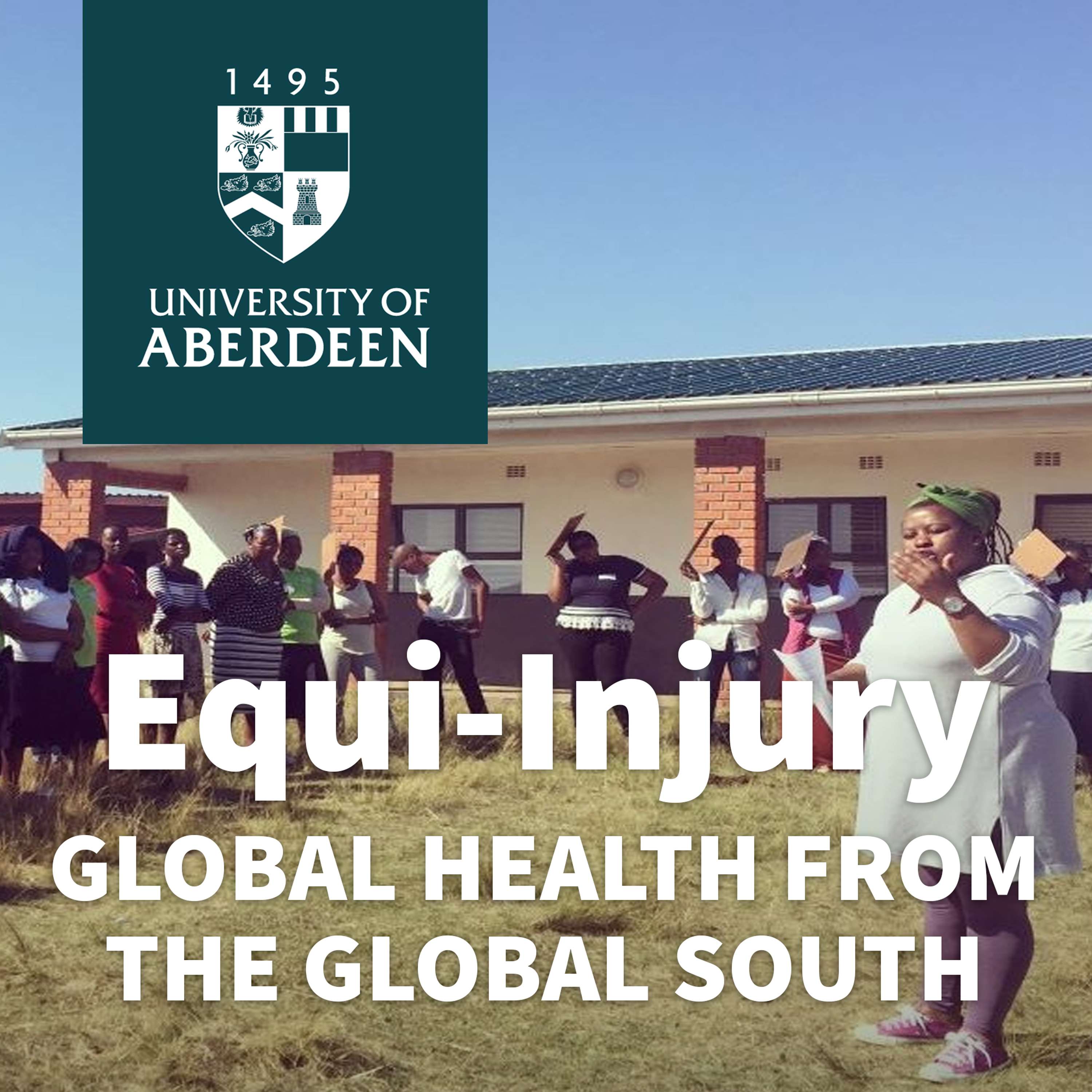
PODCAST · society
Global Health from the Global South: Learning and Exchange for Research on Injury Care
by University of Aberdeen
Every year, around 5 million individuals die due to various types of injuries like road accidents, burns, falls, or violence. Shockingly, 90% of these deaths occur in low- or middle-income countries (LMICs). Moreover, even for those who survive these injuries, disability rates are quite high, with around 40-50% of people being unable to work or disabled post-injury. To address this issue, the World Health Organization has called for the establishment of strong health systems that provide quality care to people who are injured to prevent death and disability. However, there is a lack of evidence on how to achieve this.Our research partnership is based in Ghana, Pakistan, Rwanda, and South Africa, and we are working towards promoting equitable access to quality care after injury. To ensure that our research is grounded in the real-life experiences of injury and injury care, we collaborate closely with various stakeholder groups, including patients, community members, healthcare provide
-
3
EQUI-Injury Community Engagement and Involvement: Views from Ngqamakhwe Community, Eastern Cape
The rural community site of the Equi-INJURY Project in South Africa is the Ngqamakhwe Community. Ngqamakwe is located in the Amatole District Municipality of the Eastern Cape province in South Africa. The community has 33 villages in its locality. Centrally located is the Ngqamakhwe Community Health Centre that services 6 local clinics. The local language is isiXhosa. Lead post-doctoral researcher, Dr Ntombekhaya Tshabalala held a Community Advisory Board (CAB) meeting with local residents to ensure community perspectives are included in the design and delivery of the research. In this episode, we hear some of their views. Ms. Nowelile Mlibali, a CAB member and secretary of the Ngqamakhwe Community Health Center Board, highlighted the need to raise awareness about injury and injury care in the local communities. Furthermore, Mrs. Sindiswa Mpepho, a Ngqamakhwe resident, discussed involving the Community Health Centre Committee in disseminating information about the project and its objectives - to improve quality care for injured individuals in the community. We are committed to partnerships research and will continue to work with the CAB and local community throughout the programme.NIHR Global Health Group on Equitable Access to Quality Health Care for Injured People in Four Low or Middle Income Countries: Equi-injuryUKRI Global Challenges Research Fund (GCRF) supported Study title: Knowledge exchange for evidence-informed injury care
-
2
Equitable partnership: A Research Assistant’s Perspective
Ntombekhaya and Tamlyn from EI South Africa team visited their colleagues in Ghana as part of the knowledge exchange program. Being intentional about expanding knowledge on relevant and sustainable forms of partnership, we explored perspectives from Ghana on this subject.This second episode features Jane Acquaye. Jane is a Research Assistant within the EI Ghana team. Jane shares her views on equitable partnership. Mutual respect, trust and benefit are key elements. Central to data accuracy and mutual goals is community engagement and active participation. Workshops need to respect community priorities, enabling and allowing them to discuss issues that are important to them. For more insights and perspectives on equitable partnership and injury care, continue listening to our episodes.NIHR Global Health Group on Equitable Access to Quality Health Care for Injured People in Four Low or Middle Income Countries: Equi-injuryUKRI Global Challenges Research Fund (GCRF) supported Study title: Knowledge exchange for evidence-informed injury care
-
1
Scientists’ views from South Africa and Rwanda
Ntombekhaya Tshabalala in South Africa and Derbew Fikadu in Rwanda worked together with Agnieszka Ignatowicz (University of Birmingham) and Lucia D’Ambruoso (University of Aberdeen) on a recent Equi-Injury stakeholder workshop in Rwanda. It was this south-south knowledge exchange workshop that culminated to this podcast. Here, they share their views on what they believe is the existing most common form of partnership, often one directional serving the interests of some while leaving others stagnant. They identify challenges to this partnership, including the undermining of indigenous knowledge and ignoring people's innate abilities.Despite the challenges, they acknowledge that well-intentioned partnerships exist and see the Equi-Injury project as a springboard for various stakeholders, including those whose voices are often marginalized, to introspectively examine their actions, share lessons learned, and encourage uncomfortable conversations. When we respect, appreciate and see people as unique individuals, this opens way for equitable partnerships.Stakeholders in the Equi-Injury project are encouraged to "throw away the box". Informing equitable partnerships, everyone is invited to "watch this space."NIHR Global Health Group on Equitable Access to Quality Health Care for Injured People in Four Low or Middle Income Countries: Equi-injuryUKRI Global Challenges Research Fund (GCRF) supported Study title: Knowledge exchange for evidence-informed injury care
We're indexing this podcast's transcripts for the first time — this can take a minute or two. We'll show results as soon as they're ready.
No matches for "" in this podcast's transcripts.
No topics indexed yet for this podcast.
Loading reviews...
ABOUT THIS SHOW
Every year, around 5 million individuals die due to various types of injuries like road accidents, burns, falls, or violence. Shockingly, 90% of these deaths occur in low- or middle-income countries (LMICs). Moreover, even for those who survive these injuries, disability rates are quite high, with around 40-50% of people being unable to work or disabled post-injury. To address this issue, the World Health Organization has called for the establishment of strong health systems that provide quality care to people who are injured to prevent death and disability. However, there is a lack of evidence on how to achieve this.Our research partnership is based in Ghana, Pakistan, Rwanda, and South Africa, and we are working towards promoting equitable access to quality care after injury. To ensure that our research is grounded in the real-life experiences of injury and injury care, we collaborate closely with various stakeholder groups, including patients, community members, healthcare provide
HOSTED BY
University of Aberdeen
Loading similar podcasts...
Frequently Asked Questions
How many episodes does Global Health from the Global South: Learning and Exchange for Research on Injury Care have?
Global Health from the Global South: Learning and Exchange for Research on Injury Care currently has 3 episodes available on PodParley. New episodes are automatically indexed when they're published to the podcast feed.
What is Global Health from the Global South: Learning and Exchange for Research on Injury Care about?
Every year, around 5 million individuals die due to various types of injuries like road accidents, burns, falls, or violence. Shockingly, 90% of these deaths occur in low- or middle-income countries (LMICs). Moreover, even for those who survive these injuries, disability rates are quite high, with...
How often does Global Health from the Global South: Learning and Exchange for Research on Injury Care release new episodes?
Global Health from the Global South: Learning and Exchange for Research on Injury Care has 3 episodes. Check the episode list to see recent publication dates and frequency.
Where can I listen to Global Health from the Global South: Learning and Exchange for Research on Injury Care?
You can listen to Global Health from the Global South: Learning and Exchange for Research on Injury Care on PodParley by clicking any episode. We provide an embedded audio player for direct listening, and you can also subscribe via your preferred podcast app using the RSS feed.
Who hosts Global Health from the Global South: Learning and Exchange for Research on Injury Care?
Global Health from the Global South: Learning and Exchange for Research on Injury Care is created and hosted by University of Aberdeen.
URL copied to clipboard!